


Free Restaurant Consult: Get Clearer Next Steps Before You Spend
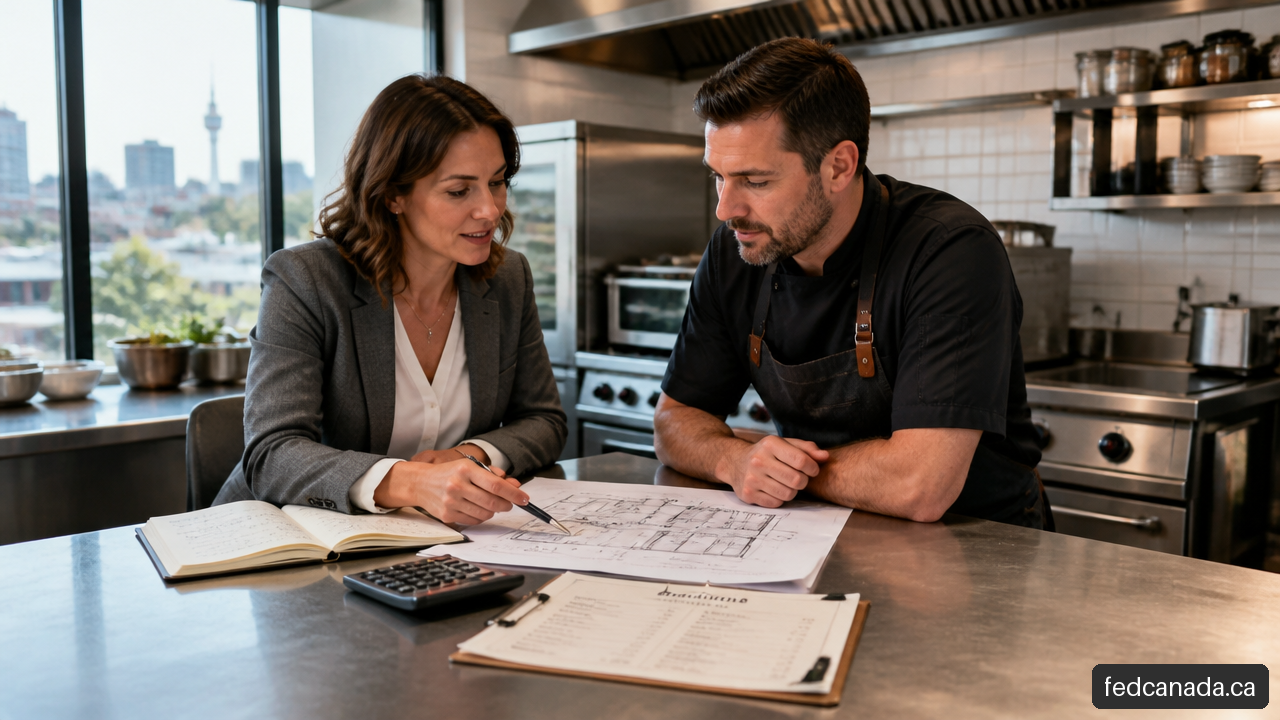
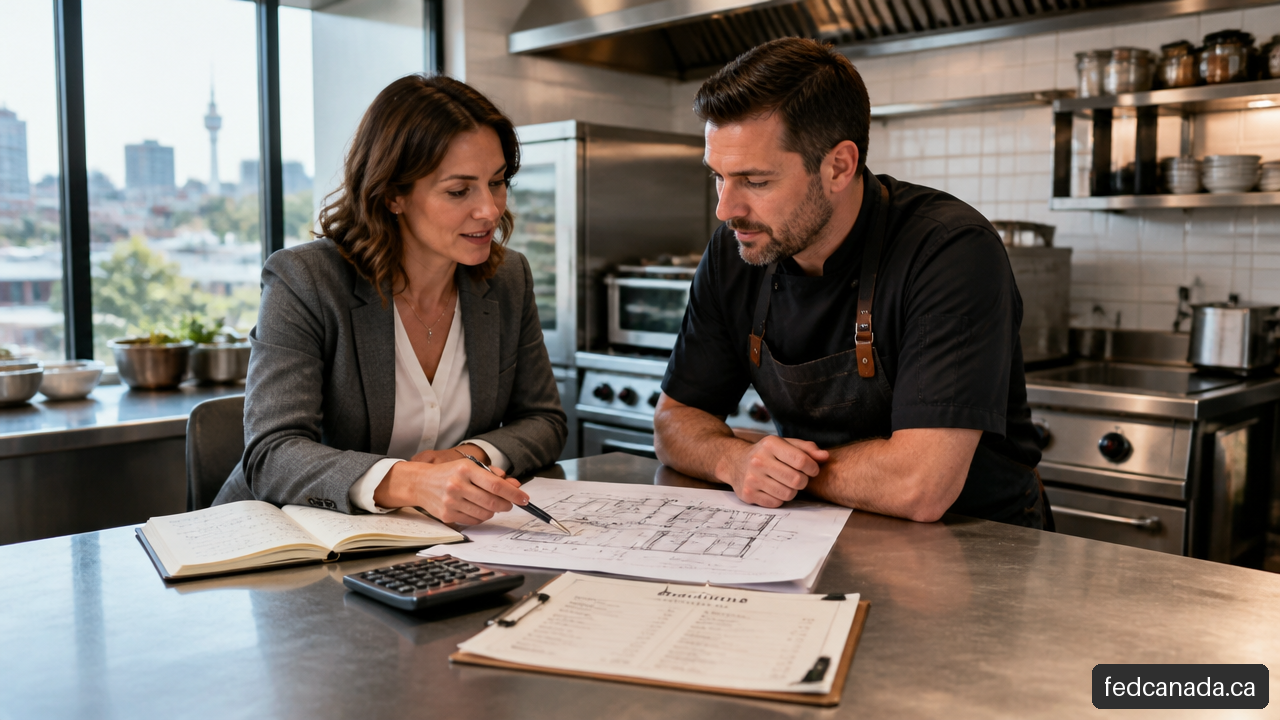
A Free Restaurant Consult can help us pressure test a restaurant idea, renovation plan, menu problem, or equipment decision before committing more money. The most useful free call is not one that promises every answer. It is one that gives us a clearer decision: proceed, pause, change the scope, or invest in deeper planning. For Calgary area operators, a free 15-minute call with a veteran restaurant and catering operator can be a practical starting point. Bring a focused question, a few key numbers, and an honest description of the challenge. That turns a short conversation into actionable direction rather than broad advice.
Table of Contents
- Key Takeaways
- What a Free Restaurant Consult Can Actually Do
- How to Prepare for a More Useful 15-Minute Call
- How to Evaluate Advice, Costs, and Commercial Interests
- Free Restaurant Consult FAQ
- Sources
Key Takeaways
A free consultation is most valuable when we use it to make a specific next-step decision, not to seek a complete restaurant business plan in one conversation.
- Define the decision first. Ask whether you are trying to assess a location, reduce food costs, choose equipment, adjust a menu, plan a renovation, or determine whether a concept is ready.
- Expect an initial diagnostic, not a finished project package. A short call may identify risks, priorities, assumptions, and possible next actions. It may not include drawings, permit applications, formal costing, or detailed financial projections.
- Prepare concise facts. Restaurant type, site status, service model, menu complexity, budget range, and timeline all affect the quality of the advice.
- Treat early cost figures carefully. A preliminary cost range can guide a conversation with a landlord or lender, but it is not automatically a construction estimate or lender-ready business plan.
- Ask about conflicts of interest. If the person offering advice also sells equipment, design, financing, construction, or implementation services, ask how recommendations are prioritized and what alternatives were considered.
- Confirm local requirements separately. Advice about zoning, ventilation, electrical service, permits, and change of use should be verified with the appropriate municipal or provincial authority.
A useful free consultation should leave us with a documented choice: what to do next, what information is missing, and what risk needs verification before spending more.
What a Free Restaurant Consult Can Actually Do
Start with a focused diagnostic, not a promise of complete answers
A Free Restaurant Consult is generally an introductory discussion about a restaurant concept, operating issue, site, or project. It may cover restaurant management questions, operational efficiency, customer experience, menu optimization, equipment needs, or growth plans. The word free describes the initial fee, not necessarily the amount of work included.
There is no universal Canadian standard defining what every free restaurant consultation must contain. One provider may offer a brief discovery call; another may include an initial project review and an early cost range. The scope matters more than the label.
For example, a café owner may ask why lunch sales are steady while profit remains weak. A useful consultation could identify likely pressure points such as food waste, portion inconsistency, unpriced modifiers, scheduling, purchasing practices, or low-margin menu items. It cannot responsibly diagnose every cause without sales, labor, purchasing, and recipe data.
Likewise, a prospective restaurant owner may ask whether a vacant retail unit can support a full commercial kitchen. The call can identify the right questions, but a consultant cannot replace formal confirmation from the authority having jurisdiction, landlords, engineers, or qualified trades.
Know the difference between screening and full feasibility work
We should distinguish between an introductory review and a deeper feasibility assessment. A feasibility assessment examines whether the concept, site, operating model, projected demand, budget, and regulatory conditions can work together. That usually requires more documentation and analysis than a short consultation can provide.
| Type of support | What it may provide | Best time to use it | What it usually cannot replace |
|---|---|---|---|
| Free initial consultation | Questions, risks, priorities, likely next steps | Before committing major funds or when an operating issue needs triage | Formal plans, final estimates, official approvals |
| Preliminary project review | Early scope, possible timeline, broad cost considerations | When comparing locations or planning a renovation | Construction tender, engineered design, detailed financial model |
| Paid feasibility study | Demand, concept, site, operations, financial assumptions, scenario analysis | Before signing a long lease or pursuing substantial financing | Official permit approval or guaranteed profitability |
| Implementation support | Systems, procurement, menu changes, training, buildout coordination | After a clear plan and budget are approved | Independent oversight unless roles and incentives are defined |
Northern Hospitality & Food Consulting states that its free food-business consultation application asks applicants to identify business type and project needs, while describing a first consultation that includes a project review, timeline estimate, and preliminary cost range. That is a useful model for setting expectations: an initial conversation can establish direction, but it should also make its limits visible.
Use the consultation to expose expensive unknowns early
The highest value often comes from identifying an assumption that deserves checking before it becomes an invoice. This can be especially important with restaurant locations.
Consider a proposed fast-casual restaurant in a former clothing store. The rent may appear manageable, and the dining room may need only cosmetic work. But the proposed menu includes charbroiling, frying, and high-volume refrigeration. That immediately raises questions about exhaust capacity, make-up air, grease handling, electrical service, gas availability, floor drains, landlord permissions, and the permitted use of the property. The location may still work. The point is that the apparent bargain needs a technical and regulatory review before the business bases its budget on it.
Northern Hospitality & Food Consulting notes that its Ontario project discussions may address zoning use, ventilation, electrical needs, change of use, timelines, and preliminary costing. These are strong questions to carry into any Canadian restaurant consultation, even though rules and approval processes vary by province and municipality.
How to Prepare for a More Useful 15-Minute Call
Bring the facts that change the recommendation
A short call becomes vague when we describe a restaurant only as “a café,” “a catering business,” or “a place with good food.” The service model, kitchen process, site condition, and financial constraints determine whether advice is relevant.
Before booking, gather the following information in a simple note. It does not need to be polished.
- Business model: Full-service restaurant, quick-service restaurant, café, bakery, food truck, caterer, ghost kitchen, cafeteria, or another format.
- Current project stage: Idea only, site search, lease review, signed lease, renovation, opening preparation, or established operation.
- Customer and service pattern: Counter service, table service, takeout, delivery, catering, events, or a mix.
- Menu and production complexity: Cooking methods, expected sales volume, prep requirements, refrigeration needs, and any specialty equipment.
- Budget range and deadline: Include what is already committed and what still needs approval.
- The central decision: State one question that would materially affect your next move.
For an existing restaurant, a one-page snapshot can be enough: monthly sales trend, major labor concern, food cost concern, best-selling items, slow-moving items, service complaints, and the change you are considering.
Fair warning: presenting only the desired outcome can weaken the advice. If the budget is tight, say so. If the lease is already signed, say so. If the menu needs a wood-fired oven but the building cannot accommodate the supporting systems, that constraint matters more than the menu concept itself.
Ask questions that produce a decision
The best consultation questions are neither too broad nor too narrow. “Can you help my restaurant succeed?” is too broad. “Should we install a 36-inch griddle?” may be too narrow if the service model and menu are not defined. Try questions such as these:
- What is the biggest operational risk in this plan as described?
- Which assumption should we verify before signing, ordering, or renovating?
- Does our menu require a different kitchen workflow or equipment mix?
- What information would be needed before a reliable cost or timeline can be developed?
- Are we dealing with a staffing, pricing, menu, process, or capacity problem?
- What work should be paid for next, and what work can wait?
A good answer includes reasoning. If someone recommends reducing menu items, ask why. The cause may be labor complexity, waste, ticket times, inventory burden, inconsistent quality, or inadequate sales contribution. The solution should match the mechanism.
Capture action items while the conversation is fresh
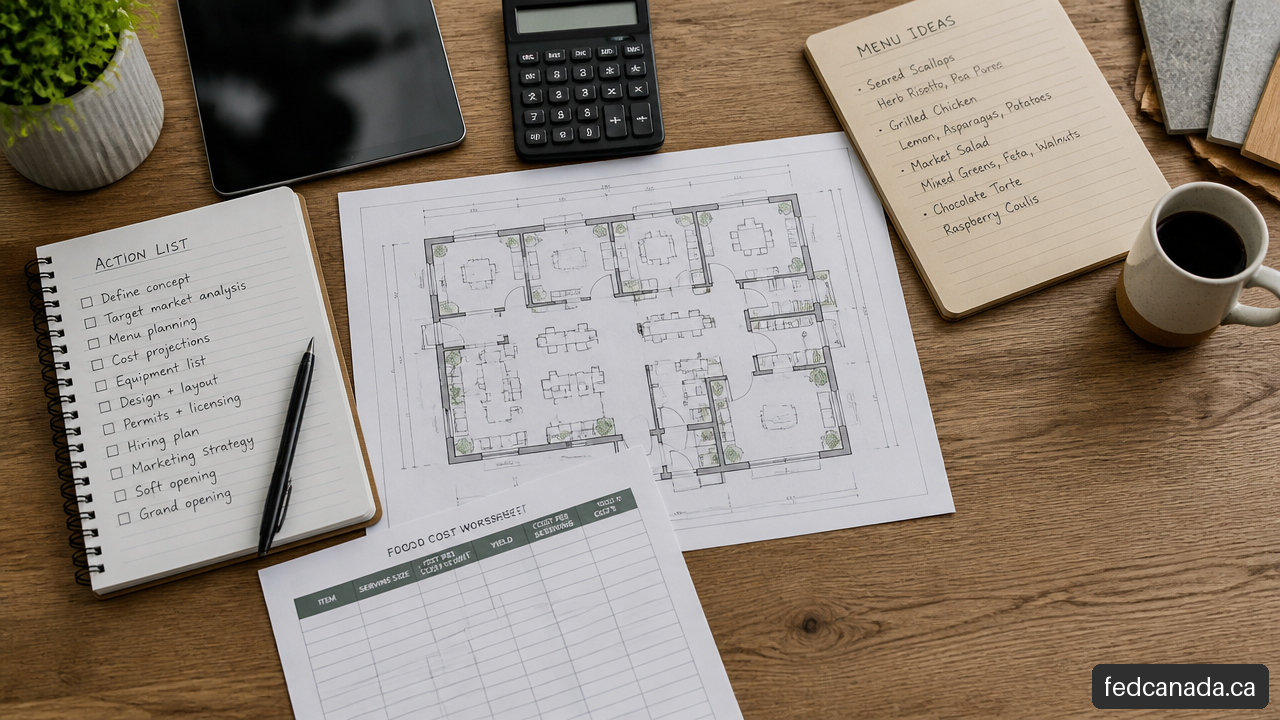
A free call can feel productive and still lead nowhere if nothing is written down. At the end, summarize the discussion in three columns.
| Decision area | What we learned | Next action |
|---|---|---|
| Site feasibility | Ventilation and electrical capacity need confirmation | Request existing building information and verify requirements locally |
| Menu optimization | Several items may create too much prep burden for projected sales | Review item sales, recipe costs, and prep time before changing the menu |
| Equipment planning | Exact equipment depends on production volume and kitchen workflow | Create a preliminary equipment list with capacity assumptions |
This simple record also helps us compare advice from multiple providers. We are not comparing charisma or the length of the call. We are comparing the clarity of the assumptions, risks, deliverables, and recommended next steps.
How to Evaluate Advice, Costs, and Commercial Interests
Separate preliminary costing from a committed estimate
Preliminary cost guidance can be useful. It may help us understand whether a project is closer to a modest refresh or a major buildout. Still, it should be treated as an early planning tool unless the provider clearly explains its assumptions, exclusions, level of detail, and intended use.
A preliminary range may exclude items such as utility upgrades, structural work, permit fees, landlord requirements, fire suppression changes, delivery constraints, taxes, professional design, or contingency. Those exclusions can change the decision substantially.
For example, imagine a restaurant concept with a $120,000 equipment allowance. That figure might be reasonable for the equipment list alone, yet the project could require additional spending for electrical upgrades, exhaust installation, freight, installation, refrigeration lines, fire suppression, and commissioning. The equipment budget is not wrong; it is incomplete if it is treated as the full opening budget.
Northern Hospitality & Food Consulting describes its initial consulting and project planning review as occurring before more extensive project services, while including a timeline estimate and preliminary cost breakdown. That distinction is worth protecting. Early guidance should help determine whether further drawings, analysis, or project work is justified.
Check whether recommendations fit your real need
Restaurant consultants, designers, contractors, equipment suppliers, and financing providers may each have legitimate services to offer. A combined service model can be convenient, especially when speed matters. It can also create an incentive to move quickly toward a particular solution. We do not need to assume bad intent. We do need to ask transparent questions.
- What is included in the free consultation, and what is excluded?
- What follow-on service is being recommended, and why is it necessary now?
- Can the recommendation be broken into phases?
- Are there lower-cost alternatives or ways to validate the issue first?
- Does the provider sell equipment, construction, financing, or implementation services connected to the recommendation?
- What evidence would change the recommendation?
The final question is especially useful. It tests whether the advice is based on defined conditions or simply a fixed sales path.
Know when free advice has reached its limit
We should move from free advice to paid professional work when the decision is high stakes, technical, or dependent on analysis that cannot be completed responsibly in a short conversation. Choose deeper support when:
- You are about to sign a long lease, buy a building, or accept a major construction quote.
- The site may require a change of use, significant ventilation, electrical upgrades, or a complex kitchen layout.
- You need a detailed financial model for investors, lenders, partners, or internal approvals.
- The restaurant has recurring margin pressure and needs analysis of sales, labor, recipes, purchasing, waste, and operations.
- You need documented systems for multiple locations, franchise readiness, food safety, or management accountability.
Avoid paying for a large package too early when the basic concept, site, or budget is still uncertain. In that situation, use the consultation to identify the smallest next step that meaningfully reduces risk.
Free Restaurant Consult FAQ
What is a Free Restaurant Consult?
A Free Restaurant Consult is an introductory conversation about a restaurant idea, location, renovation, operating issue, or growth plan. Its purpose is usually to clarify the challenge, identify risks, and recommend next steps. Scope varies by provider, so ask what deliverables are included before booking.
Is a free restaurant consultation genuinely no obligation?
It may be presented as no obligation, but we should confirm whether follow-up calls, reports, site visits, or implementation work are paid services. “No obligation” should mean we can decline further work without a penalty. It does not mean detailed professional work is automatically included.
Can a free consultation tell me whether my restaurant idea is financially feasible?
It can identify major questions affecting feasibility, such as concept fit, likely cost drivers, menu complexity, location risks, and operating assumptions. A reliable feasibility decision usually needs more detailed market, cost, sales, and financial analysis than a 15-minute call can provide.
Can a consultant evaluate my restaurant location?
A consultant can flag questions about layout, customer access, kitchen workflow, zoning use, ventilation, electrical capacity, and change of use. Final confirmation should come from the relevant authority having jurisdiction, landlord, qualified designer, engineer, or trade professional as needed.
Will a Free Restaurant Consult include menu and pricing advice?
It may identify menu optimization opportunities, especially when the issue involves complexity, weak margins, slow service, or inconsistent execution. A full menu engineering review generally requires sales data, recipe costing, portion information, labor considerations, and purchasing details.
Does a free consultation include a written business plan?
Usually, no. A short consultation may help define what a business plan should address, but a lender-ready plan requires documented assumptions, financial forecasts, startup costs, operating expenses, and supporting analysis. Ask directly whether any written deliverable is included.
When should I stop seeking free advice and hire a paid consultant?
Move to paid support when the cost of being wrong is larger than the cost of analysis. Examples include signing a lease, approving a major buildout, resolving sustained profit pressure, developing multi-location systems, or preparing financing materials. Free advice should help us decide whether that investment is warranted.
Sources
- Northern Hospitality & Food Consulting — Apply for a Free Food Business Consultation: https://nhfc.ca/start
- Northern Hospitality & Food Consulting — Food Business FAQ for Ontario Operators: https://nhfc.ca/faq
- Northern Hospitality & Food Consulting — Consulting & Project Planning: https://nhfc.ca/services/consulting-project-planning/
Recent Posts



Leave a Comment
Your email address will not be published. Required fields are marked *