




Meat Smoker Guide: Choose, Control, and Smoke Meat Safely
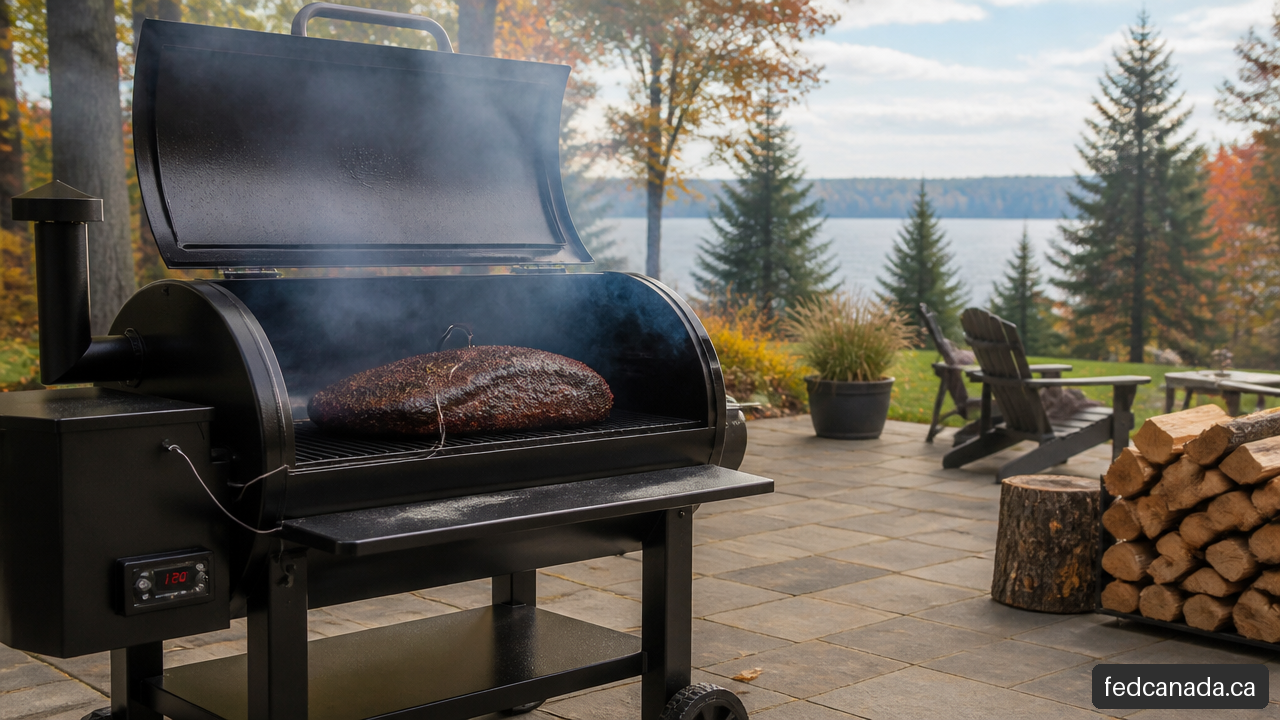
A meat smoker is built for controlled heat, steady airflow, and wood smoke over time. Unlike a grill that often cooks directly above intense heat, a smoker usually keeps food away from the primary heat source so larger cuts can cook gradually without scorching outside surfaces.
The best smoker is not necessarily the biggest, hottest, or most expensive model. It is the one that fits your available fuel, cooking space, batch size, weather conditions, and willingness to manage temperature. I recommend starting with control and usable capacity rather than chasing maximum advertised rack area.
Table of Contents
- Key Takeaways
- Choose the Right Meat Smoker
- Set Up Temperature, Airflow, and Smoke
- Smoke Meat Safely From Prep to Storage
- Meat Smoker FAQ
- Sources and References
Key Takeaways
The short version
- Choose an electric smoker for simple operation where reliable outdoor electrical power is available.
- Choose a pellet smoker when you want automated temperature management and wood flavour with less fire tending.
- Choose charcoal or an offset smoker when you enjoy active fire management and can monitor airflow, fuel, and weather.
- Verify the cooking chamber with an independent, calibrated probe thermometer. A built in display is useful, but it should not be your only measurement.
- Load racks with gaps between pieces. Advertised cooking area is not the same as usable capacity once airflow, bone in cuts, and drip clearance are considered.
- Treat smoking as a complete food handling process: raw preparation, controlled cooking, clean handling, cooling, storage, and reheating all matter.
A smoker can produce excellent bark and deep smoke flavour, but it cannot compensate for poor temperature measurement or unsafe post cook handling.
Choose the Right Meat Smoker
Match the fuel source to your cooking routine
The main smoker types all use smoke and indirect heat differently. Your practical choice comes down to how much control you want to manage manually.
| Smoker type | Best fit | Main advantage | Tradeoff to expect |
|---|---|---|---|
| Electric smoker | Beginners, small batches, accessible power | Straightforward temperature control | Requires outdoor electrical access and may have less live fire character |
| Pellet smoker | Convenience focused cooks | Automated pellet feeding and repeatable settings | Needs electricity and dry pellet storage |
| Charcoal smoker | Hands on barbecue cooks | Flexible heat and smoke control | Requires attention to vents, fuel, and ash |
| Gas smoker | Users with available propane | Quick heat adjustment | Wood smoke still needs to be added separately |
| Offset smoker or wood fired smoker | Dedicated live fire cooking | Strong wood fired flavour potential | Demands active fire management and more fuel storage |
Canadian retailers commonly group electric, pellet, charcoal, and other models together because these appliances can use direct or indirect heat arrangements and controlled low temperature cooking for smoke flavour. See this overview of Canadian smoker categories and heat arrangements for the basic product landscape.
For a first meat smoker, I would prioritize predictable temperature control over maximum firepower. A vertical electric smoker can be a sensible fit for poultry, ribs, sausage, and modest pork shoulder batches. A pellet smoker may suit cooks who want more capacity and the ability to move from slow smoking to hotter roasting. Charcoal and wood fired units reward attention, but they can be frustrating if the smoker sits in a windy, exposed area or if you cannot check it periodically.
Size a smoker by food geometry, not rack count
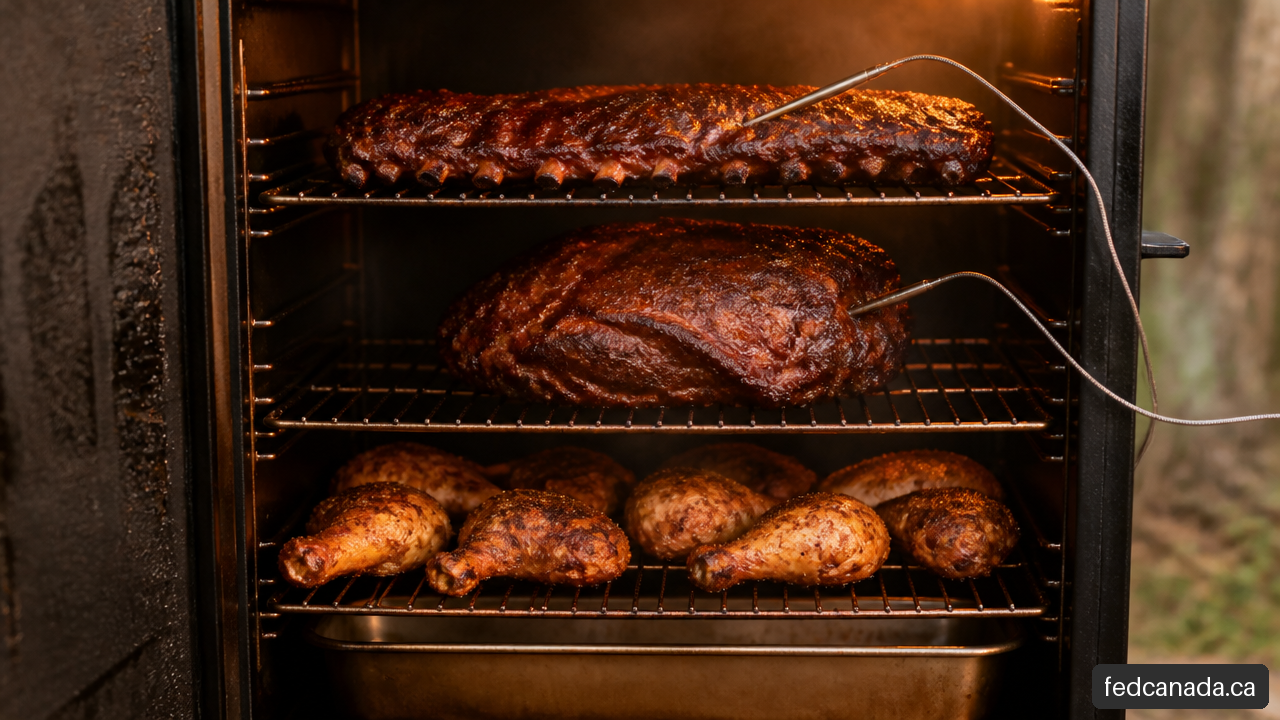
A smoker with four racks may sound large, yet rack count alone says little about usable capacity. A full brisket needs a wide, unobstructed surface. Bone in pork shoulders are tall and bulky. Ribs need flat room or a rack system that does not restrict airflow. Whole poultry needs clearance above the bird and enough space below for heat circulation.
Use this planning method before buying:
- Identify the largest cut you expect to smoke, such as a packer brisket, turkey, or multiple rib racks.
- Leave visible gaps between pieces instead of filling every inch of grate space.
- Allow for a water pan, drip pan, temperature probe wires, and enough headroom to close the lid without touching food.
- Reduce the manufacturer’s nominal food load when cooking unevenly shaped, bone in, or heavily wrapped cuts.
For example, Cabela’s lists one vertical electric unit with 1,155 square inches across four screens and advertised loads up to 30 pounds of brisket, 25 pounds of ribs, or 50 pounds of summer sausage. Those useful specifications appear on the Cabela’s Pro Series 50 product listing. Still, brisket, ribs, and sausage occupy space very differently. Thirty pounds of slim sausage can fit with airflow where one large brisket may limit access to adjacent racks.
Canadian Tire similarly lists a 30 inch analog electric model as holding up to three chickens, two turkeys, three pork butts, or three racks of ribs, with a listed maximum temperature of 275°F. Review the Masterbuilt vertical smoker capacity specifications as an example of why food shape matters as much as cooking area.
Plan for Canadian weather and placement
Cold air, wind, and frequent lid opening increase heat loss. That means longer thermal recovery, more fuel use, and potentially wider temperature swings. Electric and pellet models can be easier to manage in cool conditions, but no smoker is immune to wind exposure.
Place the unit outdoors on a stable, noncombustible surface with manufacturer required clearance from structures. Do not assume a balcony, enclosed patio, or covered area is suitable without checking the appliance manual, building rules, landlord requirements, and local fire restrictions.
A practical cold weather routine looks like this:
- Start with extra preheat time before food goes in.
- Shelter the smoker from wind and rain without enclosing it or blocking required ventilation.
- Keep fuel dry and ready before cooking begins.
- Open the lid only when a meaningful check is needed.
- Expect a slower return to target temperature after loading food or checking racks.
A Canadian smoking guide recommends outdoor operation, protection from wind and rain, and an application appropriate insulating blanket in cold weather. Its guidance on outdoor smoker ventilation and cold weather sheltering is useful, but any cover or blanket must also be approved for your exact model.
Set Up Temperature, Airflow, and Smoke
Validate the temperature before cooking
A digital controller measures a point inside the smoker, not necessarily the exact temperature at every rack. Heat rises, metal walls retain energy, and food blocks airflow. The top rack can cook differently than the lower rack, especially in tall cabinet smokers.
I recommend a simple validation routine before relying on a new or unfamiliar smoker:
- Preheat the empty smoker to your intended cooking temperature.
- Place independent probes near the food level on the upper and lower racks, keeping probe tips away from metal walls.
- Let readings settle with the door closed.
- Compare the independent readings with the smoker display.
- Repeat after adding a typical food load, since cold meat changes the chamber environment.
The Government of Nova Scotia emphasizes that smoking equipment should maintain consistent temperatures and that operators should verify temperatures using a calibrated probe thermometer. Its smoked meat food safety guidance also addresses sanitation, cooling, packaging, and humidity related risks.
This is not about chasing a perfect single number. A modest rack to rack difference may be manageable if you rotate food when appropriate and make decisions using internal meat temperature. A large, repeated gap is a signal to adjust rack placement, reduce crowding, check door seals, or reconsider where the smoker is positioned.
Use wood for flavour, not thick clouds of smoke
Smoking wood adds aroma compounds as it burns or smoulders. Different species produce different flavour profiles, although the effect also depends on combustion quality, meat surface moisture, cook time, and how much wood is used.
| Smoking wood | Typical flavour direction | Good starting uses |
|---|---|---|
| Hickory | Bold, savoury, bacon like | Pork shoulder, ribs, brisket |
| Oak | Medium strength, balanced | Brisket, beef roasts, mixed loads |
| Apple | Mild, sweet, fruity | Poultry, pork, fish |
| Cherry | Fruity, gently rich | Poultry, ham, pork ribs |
| Maple | Mild, slightly sweet | Poultry, sausage, pork |
| Mesquite | Very strong and earthy | Shorter beef cooks or blended wood use |
Start lighter than you think. Thick, billowing white smoke can make meat taste harsh or bitter, particularly on chicken, fish, and smaller cuts. Clean combustion often produces less dramatic visible smoke than beginners expect. If smoke becomes dense and acrid, check whether wood chips are overloaded, pellets are damp, airflow is restricted, or the fire lacks oxygen.
Control surface drying with heat, humidity, and timing
A dry exterior helps develop bark, but drying too aggressively can create a problem. High chamber heat combined with low humidity may toughen the surface before the centre reaches a safe internal temperature. The Government of Nova Scotia specifically warns that high heat and low humidity can dry meat before sufficient pathogen destruction occurs.
A water pan can help by adding thermal mass and moderating the cooking environment in some smoker designs. It is not mandatory for every unit, and it will not rescue a smoker running far too hot. Think of it as a stabilizer, not a cure.
For a pork shoulder, a water pan may reduce abrupt temperature changes when the door is opened. For poultry skin, too much humidity can work against crisping, so it can make sense to smoke at a controlled lower temperature first and finish with higher heat if the equipment and recipe support it. The key is to avoid treating chamber temperature, humidity, and internal doneness as separate issues. They interact throughout the cook.
Smoke Meat Safely From Prep to Storage
Follow a complete hot smoking workflow
Hot smoking cooks meat while adding smoke. Cold smoking is different: it occurs at temperatures too low to cook meat and requires separate controls, particularly for cured or ready to eat products. Do not treat cold smoked meat as automatically cooked.
For ordinary hot smoking, use this sequence:
- Keep raw meat cold until preparation and avoid leaving it at room temperature longer than necessary.
- Use separate tools, trays, and hands for raw meat and cooked meat.
- Preheat and stabilize the smoker, then place food with enough room for airflow.
- Monitor both chamber temperature and internal meat temperature with appropriate probes.
- Remove meat only when it has reached the required internal temperature for the product and your applicable food safety guidance.
- Rest meat using clean surfaces and clean utensils.
- Refrigerate leftovers promptly in shallow portions or smaller packages so they cool efficiently.
The Nova Scotia guidance treats raw handling, smoking, cooling, and packaging as connected controls. That matters because a safely cooked brisket can still be contaminated if it is sliced on the same board used for raw poultry or packed while cooling improperly.
Know what internal temperature is for
Internal temperature verifies safety and doneness, but tenderness is a separate question. Brisket and pork shoulder often need extended cooking time after they become safe to eat because connective tissue needs time to soften. Chicken can be safe at its proper endpoint yet still be unpleasant if it was cooked too hot and dry.
Use your thermometer in the thickest part of the meat, avoiding bone, large pockets of fat, or contact with a pan. For ground products and sausages, follow product specific instructions and applicable Canadian food safety guidance. The Nova Scotia factsheet states that at least 63°C or 145°F provides instantaneous destruction under the guidance it cites, while bacon and uncooked ham are listed at 70°C or 158°F. Different products, processes, and local requirements may call for different time and temperature controls, so commercial operators should confirm the rules that apply to their operation.
Troubleshoot common meat smoker failures
| Symptom | Likely cause | Practical recovery |
|---|---|---|
| Chamber temperature swings | Wind, fuel changes, open lid, crowded racks | Shield from wind, reduce checking, verify probes, allow recovery time |
| Meat is dry outside but underdone inside | Heat too high, low humidity, lean cut | Lower chamber heat, use a water pan where suitable, protect the surface if recipe appropriate |
| Bitter smoke flavour | Too much wood or poor combustion | Reduce wood input, improve airflow, use dry fuel |
| Top rack cooks faster | Heat rises and airflow differs | Move food between racks when practical and use separate probes |
| Food stalls at one temperature | Evaporation cooling the surface | Hold steady temperature, avoid panic adjustments, decide whether wrapping suits the recipe |
A stall is not necessarily a malfunction. As moisture evaporates from the meat surface, it can cool the exterior and slow the internal temperature climb. Brisket and pork shoulder commonly require patience here. Constantly increasing heat may shorten the cook, but it can also dry the exterior or reduce the time available for connective tissue to soften.
Meat Smoker FAQ
What is the difference between a meat smoker and a grill?
A grill is usually designed for faster cooking over direct heat, while a meat smoker is designed to manage heat and smoke over longer periods, commonly with indirect heat. Many pellet grills can do both, but their smoking performance still depends on stable low temperature operation and clean smoke production.
Which meat smoker is easiest for a beginner?
An electric smoker is often the easiest starting point because heat control is relatively simple. A pellet smoker is another approachable option if you want wood pellet flavour and more automated control. Choose charcoal or wood fired equipment when you are comfortable monitoring vents, fuel, and fire behaviour.
What temperature should a meat smoker run at?
Many hot smoking cooks run in the low and slow range, often around 225°F to 275°F depending on the cut and desired finish. There is no universal setting. Poultry, ribs, brisket, sausage, and pork shoulder can all need different approaches, so verify internal meat temperature rather than relying only on the chamber setting.
How do I know if the built in thermometer is accurate?
Use an independent calibrated probe at food level and compare it with the display after the smoker has stabilized. Check more than one rack in a tall smoker. If the difference is meaningful, use the independent probe as your primary reference and adjust your cooking strategy accordingly.
How much smoke is too much?
Smoke is excessive when it creates an acrid smell, harsh flavour, or a dark, sooty deposit. Add wood gradually, use dry fuel, and maintain airflow. A steady, lighter smoke profile is often more pleasant than a heavy cloud throughout the entire cook.
Can I use a meat smoker on a balcony or under a covered patio?
Do not assume it is permitted. Check the smoker manual, property rules, local regulations, clearance requirements, and fire restrictions. Smokers should operate outdoors with appropriate ventilation, but outdoor placement alone does not make every balcony or covered area suitable.
Why is my meat drying out before it reaches a safe temperature?
The chamber may be running hotter than indicated, airflow may be too aggressive, or the cut may be lean and exposed. Verify your chamber probes, avoid unnecessary lid opening, consider a water pan if your smoker design supports it, and use a cooking method suited to the meat. High heat with low humidity can dry the surface too quickly.
Sources and References
Verified sources
- Government of Nova Scotia — Smoked Meats Factsheet: https://novascotia.ca/nse/food-protection/docs/factsheet-meat-smoking2011.pdf
- Best Buy Canada — Smokers: Meat, Pellet, Electric, Charcoal Smokers: https://www.bestbuy.ca/en-ca/category/smokers/37517
- Cabela’s Canada — Cabela’s Pro Series 50 Smoker: https://www.cabelas.ca/product/177844/cabelas-pro-series-50-smoker
- Canadian Tire — Masterbuilt Outdoor Chrome-Plated Analog Electric Smoker, 30-in: https://www.canadiantire.ca/en/pdp/masterbuilt-outdoor-chrome-plated-analog-electric-smoker-30-in-0850339p.html
- Farm2Fork Delivery — The Ultimate Guide to Smoking Meats: https://www.farm2forkdelivery.ca/blogs/news/the-ultimate-guide-to-smoking-meats
Recent Posts

Leave a Comment
Your email address will not be published. Required fields are marked *