




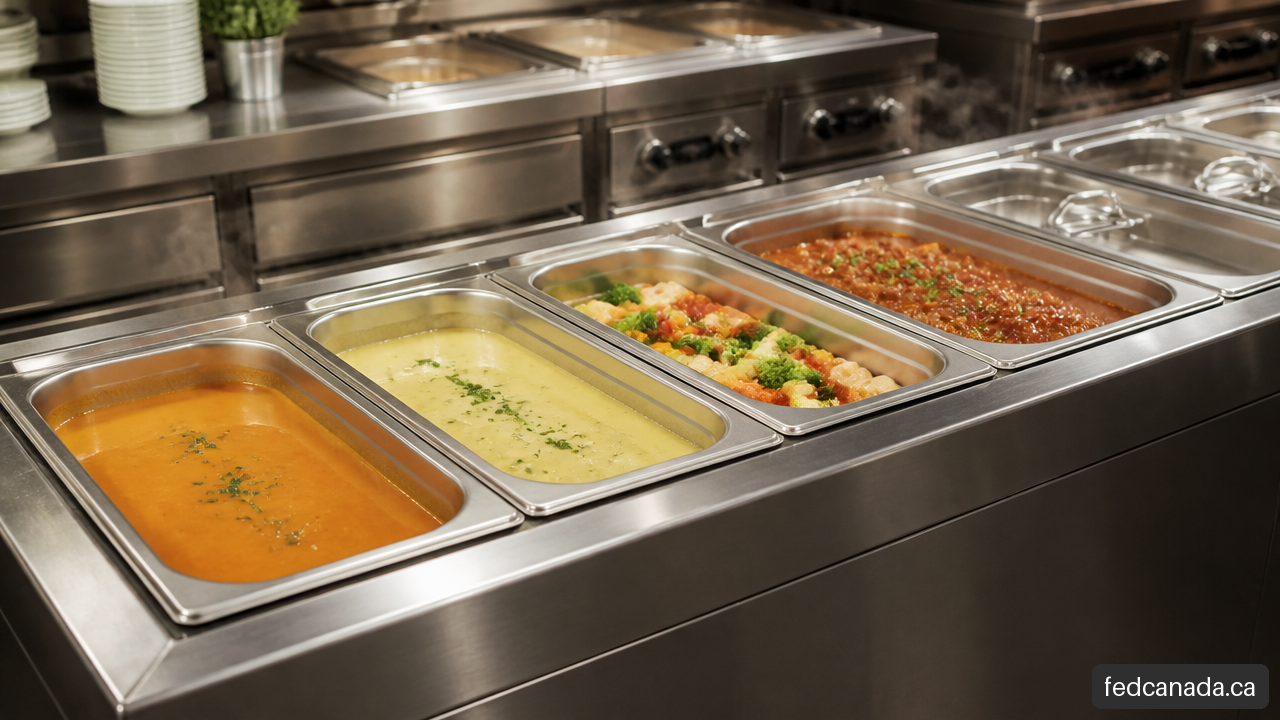
Bain Marie: How to Use It for Cooking and Hot Holding
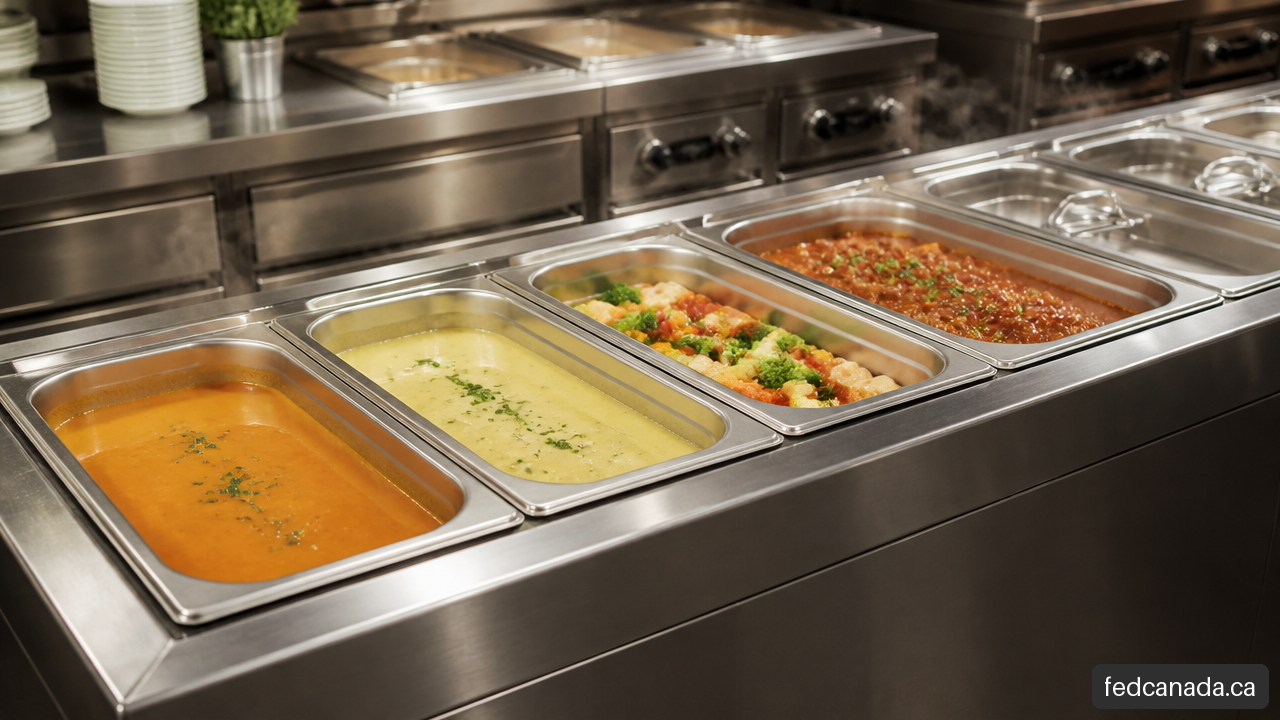
A Bain Marie uses hot water as a buffer between a heat source and food. That simple principle makes it useful in two very different situations: gently cooking delicate items such as custards or chocolate, and keeping already hot food ready for buffet, catering, or cafeteria service. I’ll separate those uses clearly, because treating a commercial hot holding unit like a reheating appliance can create disappointing results and food safety concerns.
Table of Contents
On this page
- What a Bain Marie Does
- Cooking With a Water Bath
- Using a Commercial Bain Marie
- Temperature Control, Safety, and Troubleshooting
- Key Takeaways
- Bain Marie FAQ
What a Bain Marie Does
A simple definition with two practical meanings
A bain marie is an indirect heating system. Water absorbs heat from a burner or electric element, then transfers that heat through the base and sides of a bowl, pan, or tray holding the food. Because water spreads heat more evenly than a direct burner, it reduces hot spots and slows the rate at which food heats.
In a home kitchen, this usually means a saucepan holding warm water with a heatproof bowl above or inside it. In a professional kitchen, it often means an electric countertop well or heated serving unit that holds gastronorm pans.
The same phrase is used for both setups, but their jobs differ:
| Type of bain marie | Primary purpose | Typical food | Main operating goal |
|---|---|---|---|
| Stovetop water bath | Gentle cooking or melting | Chocolate, custard, hollandaise | Prevent scorching or curdling |
| Oven water bath | Slow, even baking | Cheesecake, crème brûlée, terrines | Reduce harsh dry oven heat |
| Commercial electric bain marie | Hot holding for service | Soup, sauces, rice, prepared entrées | Maintain already hot food |
| Catering bain marie | Short term service holding | Buffet trays and plated components | Keep food ready to serve |
A useful way to think about it: a stovetop bain marie manages how food heats, while a commercial bain marie manages how long hot food stays service ready.
Bain marie versus double boiler
The terms bain marie and double boiler overlap. A double boiler commonly describes a fitted two piece pot system: water goes in the lower pan, and food goes in the upper pan. A bain marie is the broader culinary technique of heating through hot water.
That means a double boiler is one type of bain marie setup. A metal mixing bowl over a saucepan can also work as a bain marie, provided the bowl is stable and the water is controlled. A hotel pan in an electric warming well is another version.
The practical distinction matters less than the heat path. Food should not receive intense direct heat from the element, burner, or pan base. Instead, water moderates the transfer of energy.
Why indirect heat changes the result
Direct heat can create a small, intensely hot contact point beneath a pan. That may be useful for searing, sautéing, or boiling, but it is risky for eggs, dairy, sugar, emulsified sauces, and chocolate.
With a water bath, heat travels through the water before it reaches the food container. The food warms more gradually. This gives you more time to whisk, stir, observe texture, and stop heating before a delicate preparation crosses the line from smooth to split.
Consider hollandaise. The sauce needs enough warmth for egg yolks to thicken, but too much heat can cause the proteins to coagulate into scrambled egg particles. A bain marie does not make failure impossible, but it narrows the chance of a sudden temperature spike.
A bain marie is a heat moderator, not an automatic quality guarantee. Water temperature, food temperature, pan depth, stirring, and holding time still matter.
Cooking With a Water Bath
Set up a stovetop bain marie correctly
For cooking tasks, start with a saucepan or pot that is wide enough to support the inner bowl securely. Add water, then warm it gently. The water should usually be hot or lightly steaming rather than boiling aggressively.
Use this sequence:
- Add enough water to create steady heat around or beneath the inner bowl without splashing into the food.
- Place the heatproof bowl or upper pan over the saucepan and confirm it sits securely.
- Keep the heat low enough that the water produces a gentle simmer or steady steam rather than a rolling boil.
- Add the food and stir, whisk, or fold as the recipe requires.
- Check the water level during longer cooking periods and add hot water if evaporation becomes significant.
- Remove the food from the heat before it reaches the final texture when residual heat may continue cooking it.
The inner bowl does not always need to touch the water. For melting chocolate or holding a delicate sauce, steam and radiant heat from hot water can be enough. If the bowl contacts water, the setup may transfer heat more quickly, which can be useful for custards but requires closer attention.
Match the method to the food
A bain marie works best when the food benefits from slow, controlled heating. It is not the best choice for foods that need rapid reduction, browning, or high heat.
| Use a bain marie for | Why it helps | Avoid relying on it for |
|---|---|---|
| Chocolate melting | Limits direct heat exposure | Caramelizing sugar |
| Custards and egg sauces | Reduces curdling risk | Fast sauce reduction |
| Cheesecake baking | Cushions the oven’s dry heat | Crisp roasting |
| Keeping melted butter warm | Slows overheating | Searing or frying |
| Holding delicate sauces | Helps preserve texture | Reheating cold food quickly |
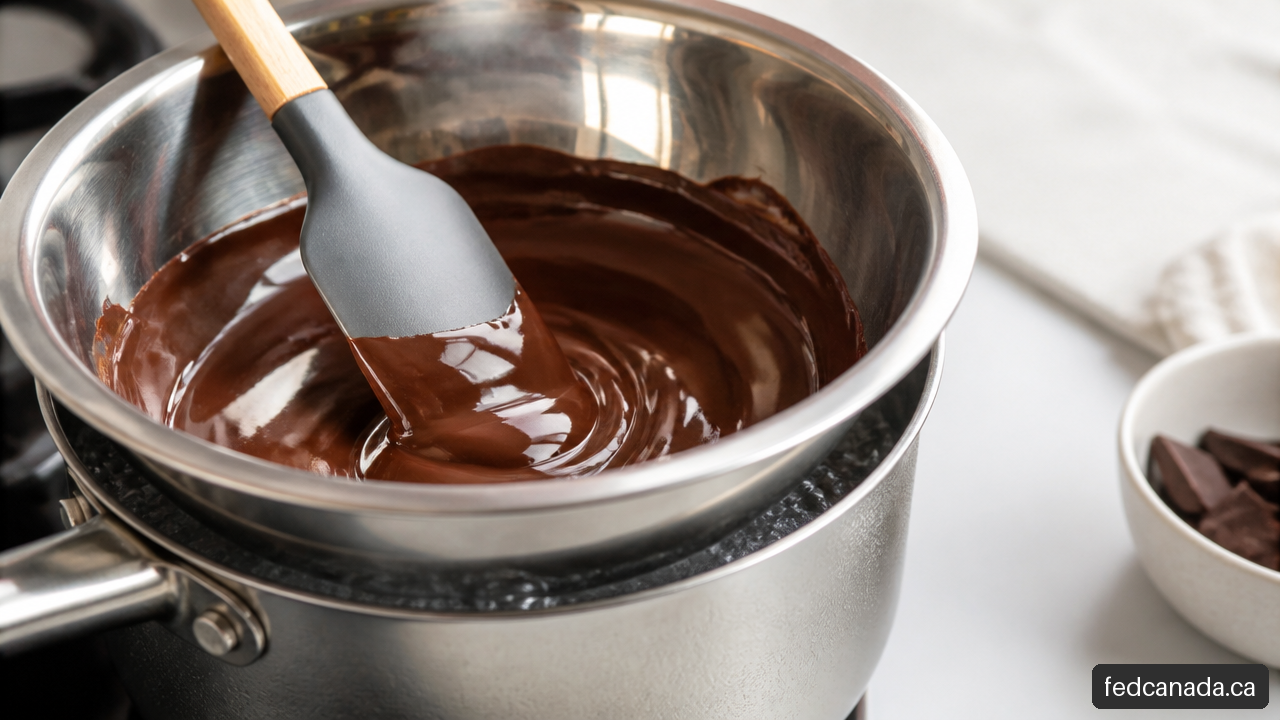
For instance, chocolate can look nearly melted while still holding its shape. Stirring lets retained heat finish the melting process without increasing burner heat. This is often safer than waiting for every piece to liquefy before removing the bowl.
Why chocolate can become grainy
Grainy, thick, or seized chocolate is often blamed on the bain marie itself, but the usual problem is control rather than the method. Chocolate can be damaged by excess heat, steam condensation, or a small amount of water entering the bowl.
A community discussion on Reddit Baking described chocolate becoming grainy when the water was too hot. That is anecdotal rather than controlled testing, but the practical lesson is sound: more heat is not always faster or better for chocolate.
To reduce the risk:
- Keep the water at a low simmer rather than a vigorous boil.
- Wipe the bowl and utensils completely dry before use.
- Prevent steam condensation from dripping into the chocolate.
- Stir often so warmer melted chocolate distributes heat through unmelted pieces.
- Remove the bowl early if the chocolate is mostly melted and finish stirring off heat.
If chocolate thickens from overheating, it may still be usable in some baked goods, but it may no longer be suitable for dipping, coating, or smooth decorative work.
Water baths in the oven
An oven bain marie works differently from a bowl over steam. Here, a baking dish sits inside a larger roasting pan partially filled with hot water. The water bath softens the oven’s heat around the dish and helps the custard cook more evenly.
This is particularly useful for baked custards and cheesecakes. The surrounding water slows the heating of the dish edges, which can help reduce curdling, cracking, or a rubbery outer ring.
Fair warning: an oven water bath adds handling risk. Hot water can slosh when the roasting pan is moved. It is often easier to place the empty roasting pan on the oven rack, set the filled baking dish inside it, then carefully pour in hot water after the pan is positioned.
Using a Commercial Bain Marie
Hot holding is not reheating
Commercial bain maries are generally designed to hold hot food, not bring refrigerated or room temperature food up to a safe serving temperature. This is one of the most important operating distinctions.
The Territory Events Hire bain marie instructions state that food should be loaded hot because the equipment is intended to keep food hot rather than heat it from cold. That principle applies broadly: a warming well may eventually warm cold food, but it is usually too slow and too uneven to treat as a proper reheating process.
For buffet service, cook or reheat food using suitable equipment first. Verify that it has reached the required temperature under your local food rules, then transfer it into preheated pans for hot holding.
A reliable commercial loading sequence
The order of operations affects recovery time and food quality. Loading several cold pans into an unheated bain marie can pull down the temperature of the water and create a long period of weak holding performance.
- Place the unit on a stable, level work surface.
- Install the drain plug or confirm the drain valve is closed, if applicable.
- Fill the reservoir to the appropriate level for the pans being used.
- Turn the unit on and allow the well to preheat.
- Load food that is already hot into compatible gastronorm pans.
- Cover pans when practical to reduce heat loss and moisture loss.
- Check water level and food temperature throughout service.
- Refill the reservoir with care if evaporation lowers the water level.
For timing, preheating the bain marie well for approximately 15 minutes before filled gastronorm containers are loaded. Actual heat up time can vary by unit size, water volume, starting water temperature, pan configuration, and room conditions.
Water depth depends on pan depth
There is no universal rule that water must sit exactly halfway up every pan. A shallow gastronorm pan and a deep gastronorm pan have different bottoms, different surface areas, and different heat transfer needs.
Water height should be matched to the gastronorm pan so the water contacts the pan bottom without reaching an overflow point; it also specifies a solid, level operating surface. This is the better decision rule than copying a fixed fill percentage.
If water is too shallow, the pan may receive uneven heat or lose contact as water evaporates. If water is too deep, inserting a full pan can displace water over the rim. Overflow creates burn hazards, wet work surfaces, and potential equipment damage.
Choosing dry heat or wet heat holding
Some foodservice warming units use water, while others use dry heat. A water based bain marie is often preferred for moist foods such as soups, sauces, curries, mashed potatoes, or braised dishes because water spreads heat more evenly around the pan.
Dry heat units may suit foods where added humidity is undesirable, though they can create more edge drying in some applications. The best choice depends on the menu, holding time, pan depth, and whether the food can tolerate moisture loss.
For a short lunch rush, either approach may be workable. For a buffet where gravy, chili, or soup must remain appealing over a longer service window, wet heat often offers a more forgiving margin.
Temperature Control, Safety, and Troubleshooting
Verify food temperature, not just the dial
A thermostat setting tells you what the appliance is attempting to maintain, not necessarily the actual temperature of every food pan. Water temperature, pan material, food volume, lid use, stirring, and frequent serving all influence the result.
The specific control range of 0–80°C and warns that inadequate water can activate thermal protection. That range should not be mistaken for a universal food safety setting or proof that food is at the correct internal temperature.
For Canadian food businesses, required hot holding temperatures and permitted holding times can vary by province, territory, municipality, and food premises rule. I recommend checking the requirements that apply to your operation and using a calibrated food thermometer to verify the actual food, especially when service is extended or high risk foods are involved.
A practical example: a dial may be set high enough to keep the water steaming, but a deep, frequently opened pan of dense food may still cool at the surface. Measure the food in the pan rather than assuming the control setting answers the question.
Evaporation is an operating issue, not a minor detail
Water evaporation gradually weakens the heat transfer that makes a bain marie work. In a commercial unit, it can leave heating elements insufficiently covered, cause uneven heating, or trigger a protective shutoff.
Water must exceed the heating pipe and remain within the marked reservoir limits. Check water at opening, during service, and before assuming a temperature problem is mechanical.
Pay particular attention when:
- The unit has been running for several hours.
- Covers are left off during busy service.
- The kitchen is hot or ventilation is strong.
- The water level started near the minimum mark.
- Multiple pans are removed and reinserted, causing splashing or displacement.
Add water carefully to avoid splashing hot surfaces. Follow the unit manufacturer’s instructions for safe refilling and draining.
When a bain marie heats but will not maintain temperature
A unit that warms initially but cannot maintain temperature needs a structured check. One community repair report described this exact symptom, but it did not document a confirmed final repair. Treat it as a reminder to diagnose systematically rather than as evidence of one common fault.
- Check water level first. Insufficient water can reduce thermal transfer or activate a thermal cutout.
- Confirm the thermostat setting. A low setting may be appropriate for holding but inadequate for the current load.
- Review the food load. Cold pans, oversized batches, or uncovered food can overwhelm a unit designed for holding.
- Inspect power supply basics. Confirm the plug, outlet, switch, and circuit are functioning as intended.
- Allow a safety cutout to reset if the manufacturer permits it. Do not bypass safety devices.
- Arrange qualified service for thermostat, sensor, wiring, or element faults. Electrical and heated water equipment should not be improvised with.
Cleaning and shutdown
After service, switch the unit off and allow the water and metal surfaces to cool before draining. Residual heat can remain significant even after the power is off.
Remove food pans, drain only when safe, wipe the well clean, and follow the manufacturer’s cleaning instructions. Mineral buildup can affect appearance and may interfere with performance over time, particularly where water is hard. Avoid treating a commercial bain marie like a sink or leaving food residue in the reservoir.
Key Takeaways
The operating principles worth remembering
- A bain marie uses water to provide indirect, more even heat.
- A double boiler is a common household form of bain marie, but the term also covers commercial hot holding wells.
- Use a stovetop bain marie for delicate cooking tasks where direct heat is too aggressive.
- Load commercial bain maries with food that is already hot; do not rely on them as the main reheating method.
- Match reservoir water depth to the pan depth and maintain sufficient contact with the pan bottom.
- Monitor evaporation throughout service, because low water can reduce performance or trigger safety protection.
- Verify actual food temperature with a thermometer instead of relying only on an appliance dial.
Bain Marie FAQ
What is a bain marie?
A bain marie is a water based indirect heating method. It can mean a cooking setup for gently melting, warming, or baking delicate food, or a commercial appliance used to hold prepared food hot during service.
What is the difference between a bain marie and a double boiler?
A double boiler is usually a specific two pot arrangement with water in the lower section and food in the upper section. A bain marie is the broader technique, which can include a bowl over a pot, an oven water bath, or a commercial hot holding well.
How much water should go into a bain marie?
For a stovetop setup, use enough water to provide gentle, steady heat without splashing into the food container. For commercial units, follow the minimum and maximum marks and match water depth to the depth of the gastronorm pan. Do not use a universal fill percentage for every pan size.
Should water touch the bottom of the inner bowl or pan?
It depends on the food and the setup. A bowl held above simmering water can be ideal for chocolate or delicate sauces. Commercial pans generally need appropriate water contact beneath the pan for effective heat transfer. Avoid vigorous boiling against the food container.
Can a bain marie be used to melt chocolate?
Yes. It is one of the most common uses. Keep the water gently hot, keep all tools dry, stir often, and remove the bowl when most of the chocolate has melted. Residual heat can finish the job.
Can a bain marie cook food, or is it only for keeping food warm?
Both uses are possible, but they are different. A stovetop or oven bain marie can cook delicate foods slowly. A commercial electric bain marie is typically intended for hot holding and should not be treated as the primary method for reheating cold food.
How long should a commercial bain marie preheat?
A practical starting point is approximately 15 minutes, based on commercial hot cupboard guidance. The actual time depends on the appliance, water volume, starting temperature, and pan load. Preheat before adding full pans of hot food.
Why is my bain marie heating but not maintaining temperature?
Start with water level,
Recent Posts
Leave a Comment
Your email address will not be published. Required fields are marked *