🔪Commercial Food Preparation Equipment
Foodservice Equipment Depot (FED) supplies new food preparation equipment to restaurants, bakeries, butchers, caterers, institutions, commissaries and food producers across Canada — mixers, food processors, meat equipment, dough equipment, blenders, cheese equipment, dehydrators, packaging equipment, dishwashers, sinks and stainless work tables.
Two things run through every purchase in this category.
The first is safety, and it's serious. Mixers, slicers, grinders, bandsaws, sheeters and processors cause more severe injuries than any other equipment in a commercial kitchen — amputations and deep lacerations rather than cuts. The mechanism is the same in each: a powerful drive, a blade or auger that doesn't stop instantly, and a feeding action that draws material in. Anything entering that path goes the way the food does.
That's not a reason to avoid prep equipment. It's a reason to specify machines with proper guarding, train everyone who touches them, and never tolerate a bypassed interlock. We've set it out below and it's the most important content on this page.
The second is that prep equipment is bought to replace labour. Unlike cooking or refrigeration, which you need to operate at all, most prep equipment is optional — it exists because doing the job by hand costs more in wages than the machine costs to own. That makes the purchase decision arithmetic: hours replaced per week against equipment cost. Where the numbers work, they work clearly. Where they don't, the machine occupies scarce bench space for no return.
Browse by equipment type below, or call 403.923.2270 and tell us where your prep is slowing down.
Shop at our Restaurant Supply Online Store and choose from a variety of Kitchen Preparation Equipment. Read More
Commercial Dishwashers Commercial Dishwashers – Powerful, Efficient Cleaning Solutions for Professional Kitchens. Commercial dishwashers are the backbone of cleanliness in any restaurant, cafeteria, hotel, or foodservice...
Commercial Blenders Commercial Blenders – Power, Precision & Performance for Professional Kitchens. Commercial blenders are a cornerstone of any professional kitchen, offering unmatched power, versatility, and durabi...
Commercial Dough Equipment Commercial Dough Equipment – Precision Tools for Perfect Pizza, Bread, and Pastry Dough. Achieve consistent, high-quality dough results with professional-grade commercial dough equipment from F...
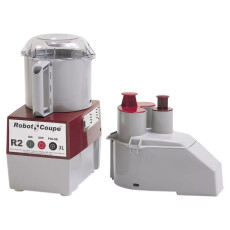
Commercial Food Processors Commercial Food Processors – High-Performance Prep Solutions for Professional Kitchens. Upgrade your kitchen efficiency with a commercial food processor from Food Service Equipment Depot (FED)....
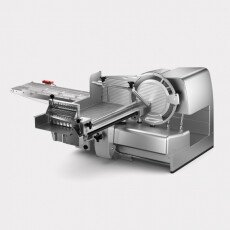
Commercial Meat Processing Equipment Commercial Meat Processing Equipment – Precision Tools for Butchers, Delis & Foodservice Professionals. Upgrade your meat preparation capabilities with high-performance Commercial...
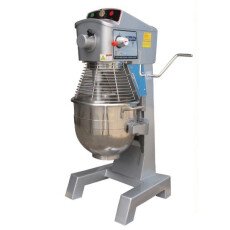
Commercial Mixers Commercial Mixers – Heavy-Duty Mixing Solutions for Bakeries & Foodservice Operations. Boost productivity and ensure consistent results with commercial mixers from Foodservice Equipment Depot (FED)....
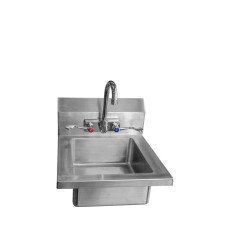
Commercial Sinks Commercial Sinks – Durable, Hygienic, and Built for High-Volume Use. Keep your kitchen compliant, clean, and efficient with commercial sinks from Foodservice Equipment Depot (FED). Designed for high-perf...
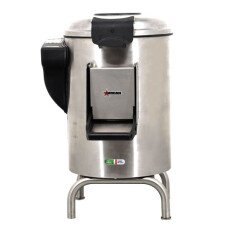
Commercial Specialty Food Equipment Commercial Specialty Food Equipment – Maximize Efficiency and Precision in Food Preparation. Commercial specialty food equipment is a game-changer for modern professional kitchens, off...
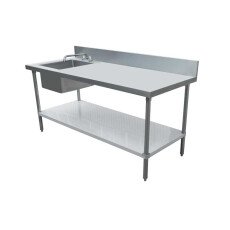
Commercial Work Stations Commercial Work Stations – Durable & Functional Food Prep Tables for Professional Kitchens. Upgrade your commercial kitchen with high-performance commercial workstations from Foodservice Equi...


Mixing and dough
Mixers — planetary and spiral mixers from countertop to large floor models, with attachments and hub accessories.
Dough equipment — spiral mixers, dividers, rounders, sheeters, presses and proofers.
Cutting and processing
Food processors — continuous feed, batch bowl, buffalo choppers, vertical cutter mixers and vegetable cutters.
Meat equipment — slicers, grinders, bandsaws, tenderisers, mixers, patty formers and sausage equipment.
Cheese equipment — cheese shredders, graters, slicers and block cutters.
Blenders — bar, smoothie, food and immersion blenders, including sound-enclosed models.
Preserving and packaging
Food dehydrators — cabinet and countertop dehydrators for jerky, fruit, herbs and garnishes.
Package sealers — chamber vacuum sealers, tray sealers, band and impulse sealers.
Specialty prep — juicers, pasta equipment, peelers, scales and application-specific machines.
Warewashing and workspace
Commercial dishwashers — undercounter, door type, conveyor machines and glasswashers.
Commercial sinks — three compartment, prep, handwash and mop sinks.
Work stations — stainless work tables, prep stations and equipment stands.
Not sure what you need? Call 403.923.2270 and describe the prep that's costing you time.
How these machines injure people. Every machine in this category shares a pattern — a drive powerful enough to process dense product, a blade, auger or roller that continues turning after power is cut, and a feeding mechanism designed to pull material in. Hands, sleeves and cloths entering that path are drawn in with the product.
The highest-risk machines are meat bandsaws, slicers, grinders, dough sheeters and mixers. Sheeter nip points and bandsaw blades cause the worst outcomes.
What to specify:
Guards that are present and fitted. Blade guards on slicers, bowl guards on mixers, nip point guards on sheeters, feed pan and stomper on grinders. A machine supplied without its guards is incomplete.
Interlocks that actually stop the machine. Opening a guard should stop the drive. Confirm it does, on delivery and periodically.
Feed designs that keep hands away. Proper pushers, thumb guards and stompers, and throat designs that physically prevent reaching the blade.
Emergency stops within reach of the operating position.
What goes wrong, every time. Guards get removed for cleaning and not replaced. Interlocks get taped, wedged or wired around because they slow someone down during a rush. Pushers get lost and hands substitute. Someone reaches in to clear a jam without switching off. Every one of these is preventable and every one causes injuries in Canadian kitchens.
Non-negotiables:
Compliance. Provincial occupational health and safety regulations across Canada require machinery guarding to be in place and functional. Inspectors check, and a bypassed interlock is a finding. More importantly, the consequence of getting this wrong is permanent.
One practical note on specification: ease of legitimate operation is itself a safety feature. If a machine's interlock is slow or awkward, someone will eventually defeat it. Machines that are quick to use correctly get used correctly.
Prep equipment is bought to replace labour, which makes the decision a calculation rather than a preference.
Where the numbers work clearly: a potato peeler replacing two hours of daily hand peeling. A divider-rounder replacing three people balling dough for two hours. A cheese shredder for a pizzeria buying pre-shredded at a premium. A continuous feed processor replacing hand-cutting vegetables for a salad program. In each case the payback is calculable from wages saved.
Where they often don't: a specialist machine used twice a week that occupies a metre of bench. Commercial kitchen counter space is genuinely scarce, and displaced workspace is a real cost that doesn't appear on an invoice.
How to work it out. Count the hours per week the machine replaces, multiply by your loaded labour cost, annualise, and compare to equipment cost. Add any secondary benefits that are real — better consistency, reduced waste, a product you couldn't otherwise offer — but be honest about whether those actually apply.
The bottleneck question is often more useful than the machine question. Operators frequently shop for a bigger version of what they have when the constraint is somewhere else entirely. Someone buying a larger mixer when the real delay is hand-portioning dough will spend money and fix nothing. Work out where prep actually slows down before choosing equipment.
Confirm electrical and phase before ordering. This is the most common reason a prep equipment order goes wrong. Floor mixers, larger food processors, bandsaws and automatic slicers commonly need 208V or 240V and frequently three-phase. Machines are built to a specific electrical configuration and generally cannot be converted in the field.
Size by the hardest work, not the average. Mixer capacity ratings assume medium-density product — stiff dough needs considerably more machine than the quart figure suggests. Blender duty ratings assume a blend rate. Processor throughput assumes a product type. Match to your most demanding case.
Treat cleanability as a specification, not a convenience. Prep equipment is disassembled and washed constantly, and machines that are tedious to clean get cleaned badly. On food contact equipment that's a sanitation issue as well as a labour one, and health inspectors examine it.
Check consumables and parts availability in Canada. Blades, discs, plates, grinder knives, bandsaw blades and seal elements all wear. Confirm supply before committing to a model.
Confirm NSF certification and CSA or cUL marks. Food contact equipment is examined closely for sanitary design, and residential-grade equipment in a commercial kitchen is a common compliance finding as well as a durability problem.
Measure the position including working clearance. Feed space, output space, overhead clearance for lids and bowl lifts, and the delivery path for heavy floor equipment.
Machinery guarding must be in place and functional under provincial occupational health and safety requirements.
Cross-contamination. Equipment used for both raw meat and ready-to-eat product needs thorough cleaning and sanitising between uses, and separate equipment is safer. Slicers used for both are a recognised risk and a recurring inspection finding.
Temperature control. Product should be kept cold through processing — it's a food safety requirement and cold product also cuts, slices and grinds better.
Processing for sale can bring requirements that cooking and serving doesn't. Grinding meat for retail sale, vacuum packing for extended storage and producing dried meat products each carry specific requirements that vary by province and by how the product is sold. Confirm with your health authority before building a program around new equipment.
Warewashing and sinks carry their own requirements around sanitisation, sink provision and handwash station placement. See those categories for detail.
All new equipment from FED is supplied with full manufacturer warranty coverage. Terms vary by manufacturer and model and are listed on each product page.
Worth noting: running equipment beyond its rated capacity — a mixer on dough denser than its rating, a blender beyond its duty cycle — is a common cause of failure and warranty rejection. Sizing to the hardest work protects both the machine and the coverage.
We ship from our Calgary warehouse to business addresses across Canada — Alberta, British Columbia, Saskatchewan, Manitoba, Ontario, Quebec and Atlantic Canada. Standard curbside delivery places equipment at ground level at the front or rear entrance of your address, typically within 2–7 business days depending on postal code. Remote and northern locations may require additional transit time and freight cost.
Countertop prep equipment ships easily anywhere in Canada. Floor mixers, bandsaws and dough equipment are far heavier than their footprint suggests — white-glove delivery is worth considering.
Local customers are welcome to pick up in person:
Foodservice Equipment Depot (FED)
6613 – 44 Street SE, Bay #5
Calgary, Alberta T2C 2C9
403.923.2270
Looking for a lower price point? Our clearance section carries used commercial prep equipment, load tested with guards and interlocks verified, and sold with warranty coverage.
What is the most dangerous equipment in a commercial kitchen?
Meat bandsaws, slicers, grinders, dough sheeters and mixers cause the most severe injuries in foodservice, typically deep lacerations and amputations rather than cuts. Each combines a powerful drive, a blade or auger that does not stop instantly, and a feeding action that draws material in. Proper guarding, functioning interlocks and trained operators are essential, and provincial occupational health and safety regulations across Canada require machinery guarding to be in place and functional.
What safety features should commercial prep equipment have?
Guards fitted and present, including blade guards on slicers, bowl guards on mixers, nip point guards on sheeters and feed pans with stompers on grinders. Interlocks that actually stop the drive when a guard is opened. Feed designs with proper pushers and thumb guards that keep hands away from blades. Emergency stops within reach of the operating position. A machine supplied without its guards is incomplete and should not be operated.
Why do interlocks get bypassed and why does it matter?
Interlocks get taped, wedged or wired around in busy kitchens because they slow operation during a rush. It matters because the interlock is the only thing stopping a machine while a hand is near the blade or auger, and a bypassed interlock on a running machine is among the most dangerous situations in a commercial kitchen. It is also an occupational health and safety finding. Machines that are quick to operate correctly are less likely to be defeated, which makes ease of legitimate use a safety consideration when specifying.
How do I decide whether prep equipment is worth buying?
Prep equipment is generally bought to replace labour, so the calculation is hours replaced per week multiplied by loaded labour cost, annualised, against equipment cost. Secondary benefits such as better consistency, reduced waste or a product that could not otherwise be offered should be added where they genuinely apply. Counter space is scarce in a commercial kitchen, so a machine used occasionally may cost more in displaced workspace than it saves.
How do I work out where my prep is slowing down?
Operators frequently shop for a larger version of equipment they already have when the constraint is elsewhere. Someone buying a bigger mixer when the actual delay is hand-portioning dough will spend money without fixing the bottleneck. Identifying which stage of the process consumes the most labour, and where product waits, generally points to different equipment than the assumed answer.
What electrical supply does commercial prep equipment need?
Countertop equipment often runs on standard 120 volts, while floor mixers, larger food processors, bandsaws and automatic slicers commonly require 208 or 240 volts and frequently three phase. Machines are built to a specific electrical configuration and generally cannot be converted in the field, so available voltage, phase and capacity should be confirmed before ordering. This is the most common reason a prep equipment order goes wrong.
Why does cleanability matter when choosing prep equipment?
Prep equipment is disassembled and washed constantly, and machines that are tedious to clean get cleaned badly in practice. On food contact equipment that is a sanitation issue rather than a convenience, and health inspectors examine food contact equipment for sanitary design, cleanability and condition. Tool-free disassembly and dishwasher-safe components make proper cleaning practical.
Can the same equipment be used for raw meat and ready-to-eat food?
Only with thorough cleaning and sanitising between uses, and separate equipment is safer. Slicers used for both raw meat and ready-to-eat products are a recognised cross-contamination risk and inadequate cleaning is a recurring health inspection finding.
Can residential prep equipment be used in a commercial kitchen?
It is not advisable. Health inspectors across Canada expect NSF-certified commercial equipment with CSA or cUL marks, and residential appliances in a food business are a common compliance finding. Residential equipment is also not built for commercial duty cycles and typically fails quickly under daily use.
Does processing food for sale require approval?
It can, depending on the process and how the product is sold. Grinding meat for retail sale, vacuum packing for extended refrigerated storage and producing dried meat products each carry requirements that differ by province and by whether product is served on premises, sold retail or distributed wholesale. Requirements should be confirmed with the local health authority before building a program around new equipment.
Does new equipment from FED come with a warranty?
Yes. All new equipment is supplied with full manufacturer warranty coverage. Terms vary by manufacturer and model and are listed on each product page.
Do you ship prep equipment across Canada?
Yes. We ship from Calgary to business addresses across Canada, including Alberta, British Columbia, Saskatchewan, Manitoba, Ontario, Quebec and Atlantic Canada. Curbside delivery is standard; white-glove delivery is available for heavier floor equipment. Local pickup is available at 6613 – 44 Street SE, Bay #5, Calgary, Alberta T2C 2C9. Call 403.923.2270.
Can you help me plan a prep area?
Yes. Call 403.923.2270 with your menu, volume, where prep currently slows down and your available electrical service, and we'll work through the equipment with you.
Read More