





Meat Grinder Canada: How to Choose the Right Model
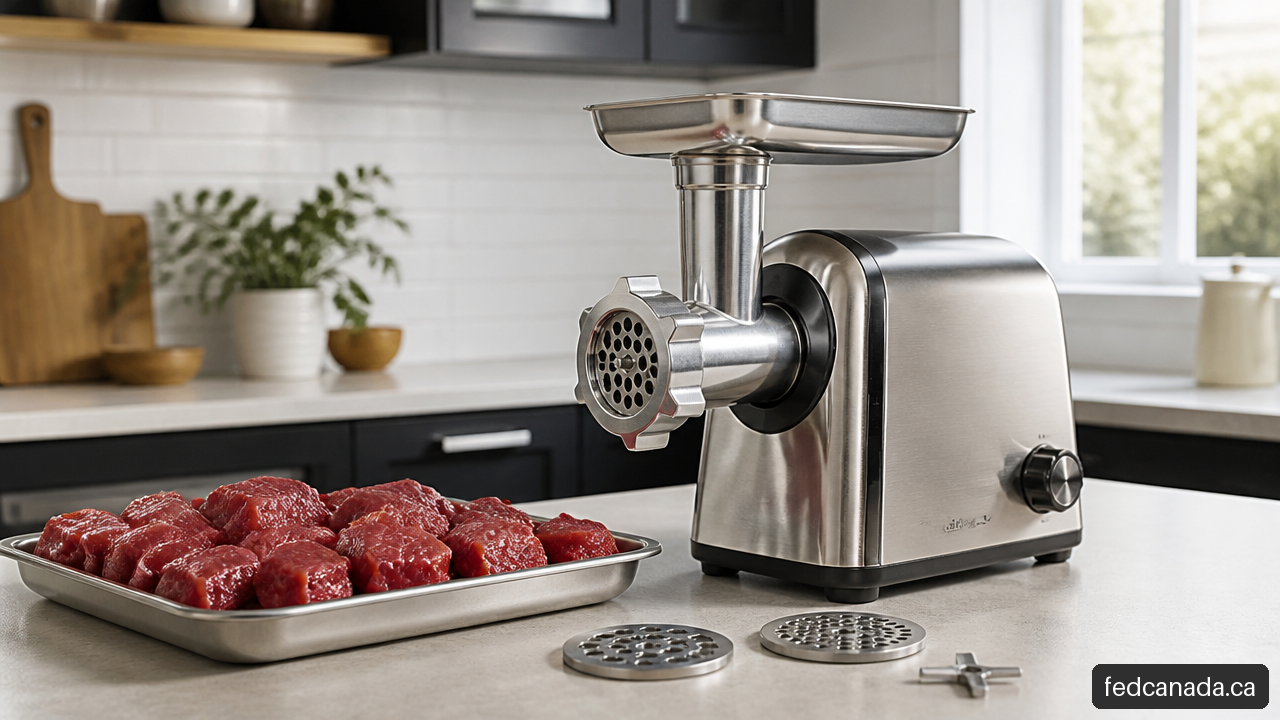
Choosing a meat grinder Canada shoppers can rely on comes down to more than motor wattage or a stainless steel finish. The right machine should match the size of your batches, the meats you process, the texture you want, and the level of cleaning and maintenance you can realistically manage. A grinder that works well for occasional burger patties may be a poor fit for venison processing or repeated sausage production.
Key Takeaways
What to prioritize first
A useful buying rule is to choose a grinder by batch size and frequency, then use motor specifications and advertised capacity as secondary checks. A compact electric grinder can be suitable for several pounds of trimmed meat at a time. Larger game, frequent sausage sessions, or repeated bulk batches call for a more robust electric or commercial style unit.
Table of Contents
- Choose the right grinder type
- Compare capacity, power, and grinding plates
- Handle meat safely and maintain clean grinding
- What to check before buying in Canada
- Frequently asked questions
Quick decision guide
| Your primary use | Practical grinder choice | Why it fits | When to avoid it |
|---|---|---|---|
| Small burger or meatball batches | Manual or compact electric meat grinder | Low storage needs and straightforward operation | Avoid manual units for frequent multi pound batches |
| Weekly family meal prep | Household electric grinder | Faster grinding, multiple plates, less physical effort | Avoid lightly built models if you regularly process tough game trim |
| Seasonal venison or other game | Heavy duty electric or commercial style grinder | Better suited to larger, chilled batches and repeated use | Avoid oversized equipment if it will sit unused most of the year |
| Sausage making several times per year | Electric grinder plus a dedicated stuffer when volume grows | Grinding is efficient; dedicated stuffing offers more control | Avoid assuming a stuffing attachment replaces a proper stuffer for large runs |
The practical shortcut: Buy enough grinder for your largest normal batch, not for the smallest task you might occasionally do.
Choose the Right Grinder Type
Manual meat grinders: simple, compact, and limited
A manual meat grinder uses a hand crank to turn the auger, knife, and grinding plate. Clamp style models can make sense for very small batches, occasional use, or situations where electrical access is inconvenient. Canadian product listings include manual grinders alongside electric grinder and stuffer combinations.
I would choose a manual grinder when the goal is modest: a few pounds of pork for a recipe, a small amount of beef for fresh burgers, or an occasional test batch of sausage. It has fewer electrical parts and can be stored in a small space.
The tradeoff is physical effort and feed consistency. Tough connective tissue, warm fat, or overfilled feed tubes can make cranking difficult. A manual model also demands a stable countertop and a secure clamp. If the grinder shifts during use, output becomes uneven and the process becomes frustrating quickly.
Household electric grinders: the balanced option
For many homes, an electric meat grinder is the most practical middle ground. A motor drives the auger, moving meat toward a rotating cutting knife and perforated plate. The knife should sit flush against the plate. When both edges are sharp and properly assembled, meat is cut cleanly rather than pressed or smeared through the holes.
Household machines commonly include a food pusher, one or more grinding plates, a tray, and sausage tubes. Their benefits are speed and reduced effort, but they are still best treated as batch appliances rather than continuous processing machines. Give the machine pauses if the housing feels unusually warm or the feed slows noticeably.
A useful example is the listed Cuisinart electric model at Canadian Tire. It has a stated 300 watt motor, medium and coarse cutting plates, reverse operation, and a manufacturer stated rate of up to 3 lb per minute under its specified conditions. Those features can suit normal home batches, but the rating should not be read as a guarantee for every cut, plate, or temperature of meat.
Commercial style grinders: capacity with bigger commitments
Commercial style grinders generally use larger heads, augers, trays, and motors. They are designed for operators or serious home processors who need to work through larger chilled batches without repeatedly disassembling the unit. Stainless steel components are common in this category, and their larger feeding paths can reduce the need to cut every piece into very small cubes.
That said, larger is not automatically better. Commercial style equipment takes more counter space, weighs more, and may require more involved cleaning. It can also be excessive for someone who processes only a few pounds of meat a month. Before choosing one, consider where it will be stored, whether replacement knives and plates are available, and whether the machine is supported in Canada.
Compare Capacity, Power, and Grinding Plates
Why advertised capacity is not a direct comparison
Capacity claims can look precise while describing very different conditions. Canadian listings include manual, household electric, and commercial style grinders with different advertised capacities. Some products use pounds per minute, while others use pounds per hour. Wattage and horsepower may appear beside either figure, but neither specification converts neatly into real output.
A grinder rated at 5 lb per minute is not necessarily faster in a home kitchen than another rated at 300 lb per hour. The first figure may reflect ideal feeding conditions, while the second may be based on a different plate size, cut of meat, duty cycle, or test method.
Real throughput changes with several variables:
- Meat temperature: Very warm fat can smear and stick to the plate; overly frozen chunks may stress the auger.
- Trim quality: Silver skin, sinew, bone fragments, and long connective tissue can slow the feed and cause wrapping around the knife.
- Plate size: A coarse plate generally processes meat more easily than a fine plate.
- Loading method: Steady, moderate feeding is better than forcing large pieces down the throat.
- Pauses and cleaning: Stopping to clear a plate or chill meat is part of realistic household throughput.
Motor power matters, but it is not the whole story
A 300 watt grinder can be adequate for properly trimmed, chilled beef, pork, poultry, or small game batches. It is not a promise that every tough cut will process at the same speed. Motor output works together with auger design, gear construction, knife sharpness, plate condition, and the amount of pressure created by the meat in the grinding head.
I would avoid selecting a grinder solely because it lists the highest watt number. A well maintained unit with a properly matched knife and plate can produce a cleaner grind than a more powerful model with dull components. For large, repetitive workloads, though, a higher capacity commercial style machine may reduce strain and processing time. Grinder capacities can range from several pounds per minute to much larger commercial style rates.
Choose plates for texture, not just speed
Grinding plates control the approximate coarseness of the finished meat. Plate hole sizes vary by brand, so the most useful approach is to think in broad texture categories rather than expecting identical results from every model.
| Plate type | Typical use | Texture result | Practical note |
|---|---|---|---|
| Coarse plate | Chili, rustic sausage, first pass grinding | Larger, more open pieces | Useful when planning a second grind |
| Medium plate | Burgers, meatballs, general purpose ground meat | Balanced texture | Often the most versatile household option |
| Fine plate | Smooth sausage mixtures, finely textured dishes | Tighter, denser output | More likely to show problems from warm meat or dull parts |
For burgers, a medium grind is usually a sensible starting point. For sausage, many recipes benefit from a coarse first pass followed by seasoning, chilling, and a second pass through a finer plate if needed. The second pass should not be automatic, however. If the meat is getting soft or greasy, chill it before continuing.
Handle Meat Safely and Maintain Clean Grinding
Keep the grinding process cold and orderly
Grinding increases the amount of surface area exposed to hands, equipment, and air. That makes clean handling especially important. I recommend preparing a clear workflow before switching on the grinder: trim the meat, portion it into manageable pieces, set out clean containers, and keep finished ground meat separate from raw pieces waiting to be processed.
Chill the grinder head, auger, knife, and plate before use when possible. Cold metal helps keep fat firm as it moves through the machine. Meat should be cold and firm enough to cut cleanly, not soft and sticky. Partially firm meat can be easier to grind, but hard frozen chunks should be avoided unless the manufacturer specifically permits them.
Do not leave ground meat sitting on the counter while completing other kitchen tasks. Package or refrigerate it promptly, and clean the grinder before residue dries inside the head or plate holes. Exact safe handling requirements can vary by product, intended use, and local public health guidance, so food businesses should verify the rules that apply to their operation.
Prevent cross contamination during cleanup
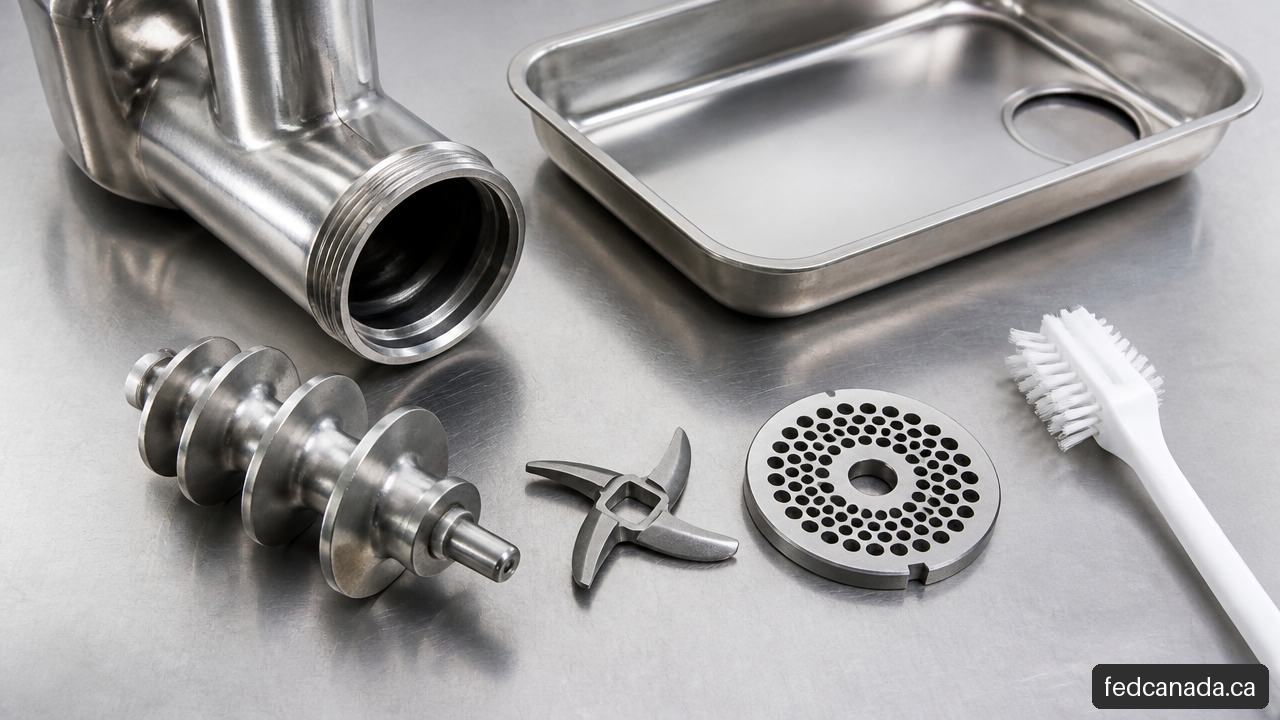
Disassembly is not optional after grinding raw meat. Meat residue can remain behind the plate, around the knife, inside the auger channel, and in seams around the feed tray. A rinse alone may not remove it.
A practical cleaning sequence is:
- Unplug an electric meat grinder and remove the grinding head, auger, knife, plate, tray, and pusher.
- Scrape away visible residue before washing so it does not dry in plate holes or threads.
- Wash removable food contact parts according to the manufacturer's instructions using hot, soapy water or the approved cleaning method for that model.
- Rinse and dry every component thoroughly, especially plates and knives that can corrode if stored damp.
- Reassemble only after all pieces are dry, then store the knife and plates where their edges will not be damaged.
Diagnose smearing, clogging, and uneven output
When a grinder smears rather than cuts, the problem is usually mechanical or temperature related. Smearing looks pasty or greasy. Instead of distinct pieces passing through the plate, fat spreads across the holes and blocks them.
Common causes include:
- Meat that is too warm
- A dull knife or worn plate
- A knife installed backward or not seated flat against the plate
- Excessive sinew or connective tissue in the feed
- Forcing meat through a fine plate too quickly
If output slows, stop feeding immediately. Use reverse only if the manufacturer provides it, then unplug the machine before inspecting the head. Reverse can release a minor blockage, but it cannot sharpen a dull knife or solve a plate that is clogged with warm fat. The most reliable recovery is often to disassemble, clean the plate, chill the meat and components, and restart with moderate feed pressure.
What to Check Before Buying in Canada
Verify support before comparing sale prices
A low price can be attractive, particularly for an imported commercial style grinder. Still, buyers should confirm what happens after the purchase. Canadian availability does not automatically confirm that replacement plates, knives, augers, seals, stuffing tubes, or gears will be stocked locally.
Before ordering, ask these questions:
- Is the warranty valid for purchases and service in Canada?
- Can replacement wear parts be ordered by model number?
- Is the electrical plug and voltage appropriate for the intended location?
- Does the product documentation identify its electrical approval or certification for Canadian use?
- Who handles damage claims, missing parts, and repair support?
This is especially relevant for marketplace listings. A grinder may be advertised through a Canadian storefront while parts support and warranty service remain uncertain. For example, replacing a common plate is manageable only if its diameter, centre hole, and notch pattern match the grinder head. “Universal” is not always universal.
Separate grinding from sausage stuffing
Many meat grinders include sausage horns or stuffing tubes. They can be useful for occasional sausage projects, especially short runs with wider casings. But grinding and stuffing require different handling. Grinding needs a cutting knife and plate; stuffing works best when seasoned meat is moved steadily without being unnecessarily reworked.
For a small batch, a grinder attachment can be adequate. For repeated sausage production, a dedicated vertical or horizontal stuffer may offer more consistent pressure and reduce heat buildup. The key issue is not simply motor strength. Tube diameter, feed path, casing size, meat texture, and air management all affect the finished sausage.
Fair warning: forcing a dense sausage mixture through a grinder attachment can compact the mixture, warm the fat, and create air pockets. If this happens regularly, the workflow has outgrown the attachment.
Buy for the full workflow
The grinder itself is only part of the setup. A workable station also needs chilled trays, a scale, containers, cleaning tools, storage bags or paper, and enough refrigerator or freezer space for ingredients and finished meat.
For a small foodservice operation, consider duty cycle and downtime. A machine may have enough peak capacity for one rush of production but still need rest periods or cleaning breaks that interrupt the schedule. For a home user, the more relevant question may be whether the unit can be cleaned and dried before the next meal needs to be prepared.
Frequently Asked Questions
Choosing a grinder
What is the best meat grinder to buy in Canada?
The best choice depends on batch size, meat type, and frequency of use. I would select a manual grinder for small occasional batches, a household electric model for regular home cooking, and a commercial style machine for substantial game processing or frequent bulk production. Compare support, replacement parts, and cleaning requirements before treating capacity claims as the deciding factor.
Should I buy a manual or electric meat grinder?
Choose manual for low volume work, simple storage, and no electrical dependency. Choose electric if you grind more than a few pounds at a time, process meat regularly, or want more consistent speed. Manual machines can be capable, but cranking becomes tiring when working through tougher trim or a full sausage batch.
Is a 300 watt grinder powerful enough for beef and pork?
It can be enough for chilled, properly trimmed beef and pork in normal household quantities. It may struggle with warm fat, long sinew, very fine plates, or large continuous batches. Treat 300 watts as one part of the specification, not a measure of guaranteed performance.
What plate size should I use for burgers or sausage?
A medium plate is a practical starting point for burgers. Coarse plates suit a rustic texture or a first grind before seasoning. Fine plates are useful for smoother sausage mixtures but require colder meat and sharp cutting components to avoid smearing.
Use, care, and support
Are advertised pounds per minute ratings realistic?
They can be realistic under a manufacturer's test conditions, but actual kitchen output is usually lower once trimming, loading, pauses, cleaning, and plate changes are included. Meat temperature and plate size alone can materially change the result. Use capacity ratings as a rough category signal, not as a precise promise.
Can I use the same grinder to stuff sausage?
Yes, for occasional small batches if the grinder includes an appropriate stuffing attachment. For frequent sausage making, a dedicated stuffer is usually the more controlled option because it is designed to push the mixture evenly into casings without additional grinding action.
Why does my meat grinder keep clogging?
Clogging often comes from warm meat, dull cutting parts, connective tissue, a blocked fine plate, or feeding too aggressively. Stop the machine, use reverse only if designed for that purpose, then unplug and inspect the head. Cleaning the plate and chilling the components often resolves the issue more effectively than adding more pressure.
Recent Posts


Leave a Comment
Your email address will not be published. Required fields are marked *