




Olis Explained: Which Brand or Product Are You Looking For?
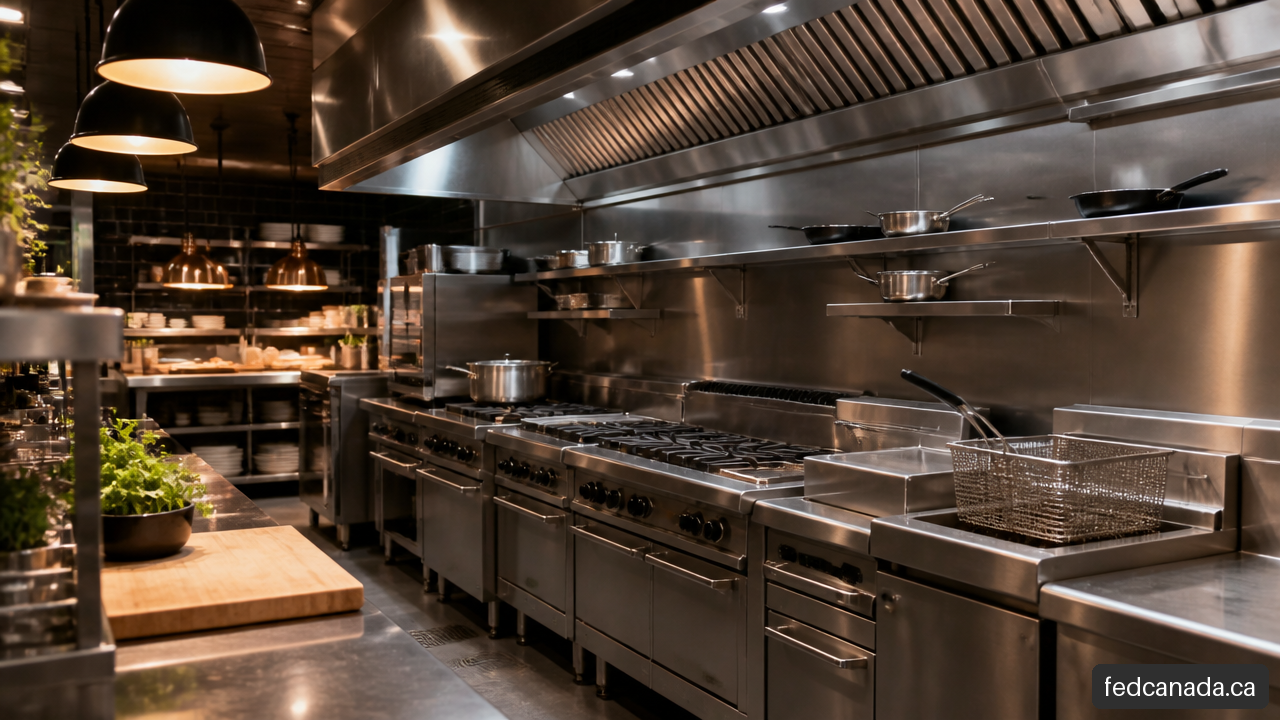
Olis is not one company, product, or industry. That is the first thing to know. Depending on where you encountered the name, it may refer to professional restaurant equipment, enterprise software, scientific spectroscopy instruments, an Icelandic fuel retailer, or grain processing machinery. For a restaurant kitchen, OLIS usually means the Italian commercial catering equipment brand.
Table of Contents
- What does Olis refer to?
- What OLIS means for restaurant kitchens
- How to evaluate OLIS equipment in Canada
- Other businesses and products called Olis
- Key Takeaways
- Frequently Asked Questions
What Does Olis Refer To?
The direct answer is that Olis is an ambiguous name. A restaurant owner looking at a cooking suite may be researching a completely different business than an IT manager evaluating workplace software or a laboratory buyer comparing optical instruments.
That distinction is more than a spelling detail. Choosing the wrong company website, requesting support from the wrong organization, or assuming one company backs another can waste valuable time, especially when a kitchen has an urgent equipment replacement need.
The five main meanings of Olis
| Name or spelling | Primary area | Typical buyer or user | What to look for |
|---|---|---|---|
| OLIS | Commercial catering equipment | Restaurants, hotels, institutions, kitchen designers | Cooking lines, fryers, refrigeration, preparation equipment |
| Olis AI | Enterprise knowledge software | IT teams, operations leaders, security teams | Connectors, enterprise search, private deployment |
| Olis laboratory equipment | Spectroscopy instruments | Laboratories, universities, research facilities | Absorbance, fluorescence, circular dichroism systems |
| Olís | Fuel and convenience retail in Iceland | Icelandic drivers and retail customers | Service stations, fuel, app and loyalty services |
| OLIS Ukraine | Grain processing machinery | Farms, mills, grain processors | Separators, cleaning and processing equipment |
For foodservice operators, the relevant entity is usually the first one. The official OLIS company overview states that OLIS manufactures cooking, refrigeration, food preparation, and kitchen organization equipment. That makes it the Olis most likely to appear on a kitchen equipment schedule, a dealer quotation, or an appliance data plate.
Why disambiguation matters before you buy
It helps to think of the name Olis like a shared street address with several businesses in the same building. The name gets you near the destination, but it does not tell you which door to open.
For example, imagine a chef searching for a replacement fryer component. A result for Olis AI may sound polished and relevant because it discusses workplace knowledge, but it cannot identify a heating element, thermostat, or model-specific part. Similarly, a lab instrument company may use technical language and product catalogs, yet those instruments have no relationship to commercial food production.
Before spending time on pricing or specifications, confirm these three basics:
- The industry: Is the product intended for foodservice, software, laboratory work, retail fuel services, or agriculture?
- The exact product type: Is it a modular cookline, refrigeration unit, spectroscopy system, or software platform?
- The service path: Can the seller identify the model, serial number, warranty status, installation requirements, and replacement parts process?
OLIS and Ali Group context
OLIS is associated with the professional foodservice equipment sector. Ali Group describes OLIS as a catering equipment brand operating since 1972 and offering commercial cooking systems on its Olis cooking equipment page. That corporate context may matter to a buyer assessing the brand’s place in the broader foodservice equipment market.
Still, corporate affiliation is not the same as local support. A manufacturer relationship can help explain brand positioning and product development, but it does not automatically confirm that a specific Canadian dealer stocks a model, performs warranty repairs, or carries parts in Canada.
What OLIS Means for Restaurant Kitchens
For restaurant kitchens, OLIS is best understood as a professional equipment brand rather than a single appliance. It may appear in projects involving cooking suites, batch cooking, frying, preparation, refrigeration, and coordinated kitchen layouts.
The equipment categories that matter most
The product category should drive the conversation, not simply the brand name. A compact café, a high-volume quick-service restaurant, and a long-term care kitchen can all need cooking equipment, but their operating demands are very different.
OLIS equipment is commonly associated with categories such as:
- Modular cooking ranges for line cooking, sautéing, boiling, grilling, and related production tasks.
- Commercial fryers for operators whose menu depends on consistent fried food output.
- Bratt pans for batch braising, frying, simmering, and versatile institutional production.
- Refrigeration and preparation equipment that support safe storage and efficient mise en place.
- Kitchen organization systems that help integrate appliances into a professional workflow.
A commercial bratt pan is worth pausing on because it illustrates why equipment selection cannot stop at a product category. It is a large, multifunction cooking vessel that can braise, shallow fry, simmer, and cook batch recipes. That flexibility may reduce the number of separate appliances a high-volume kitchen needs. But it may be excessive for a small restaurant with limited batch production, narrow aisles, or menu items that rely mostly on à la carte cooking.
How to match equipment to actual production
I would start with the food, then work backward to the appliance. That keeps the buying process grounded in daily production instead of showroom appeal.
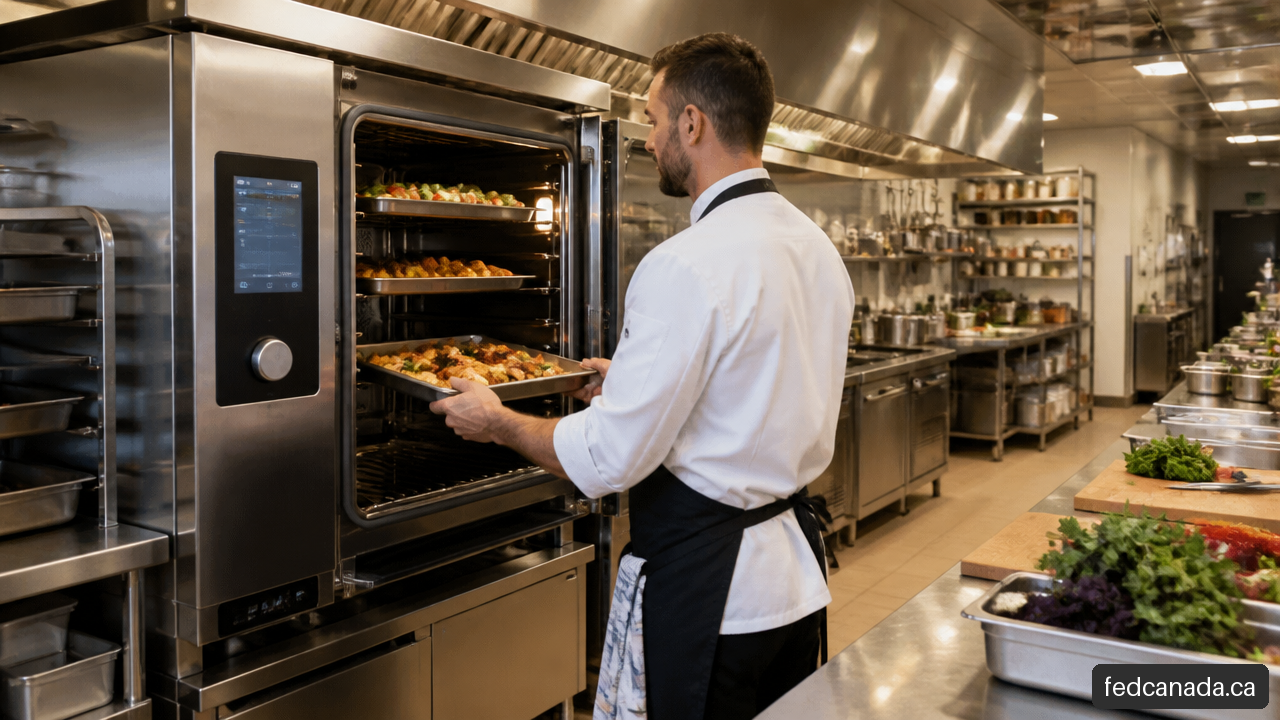
Consider two kitchens that both serve chicken. A quick-service operation may need a fryer that can recover temperature quickly during a lunch rush. A banquet kitchen may need a bratt pan for large quantities of braised chicken, sauce, vegetables, and side dishes. The menu ingredient is similar, but the workload is not.
Use this decision framework before comparing models:
| Kitchen question | Why it matters | Equipment implication |
|---|---|---|
| How many portions are produced during the busiest hour? | Peak demand determines capacity needs | Size fryers, burners, ovens, and holding equipment for rush periods |
| Is production batch based or made to order? | Batch cooking favors larger multifunction equipment | Consider bratt pans, combi cooking, or bulk production tools |
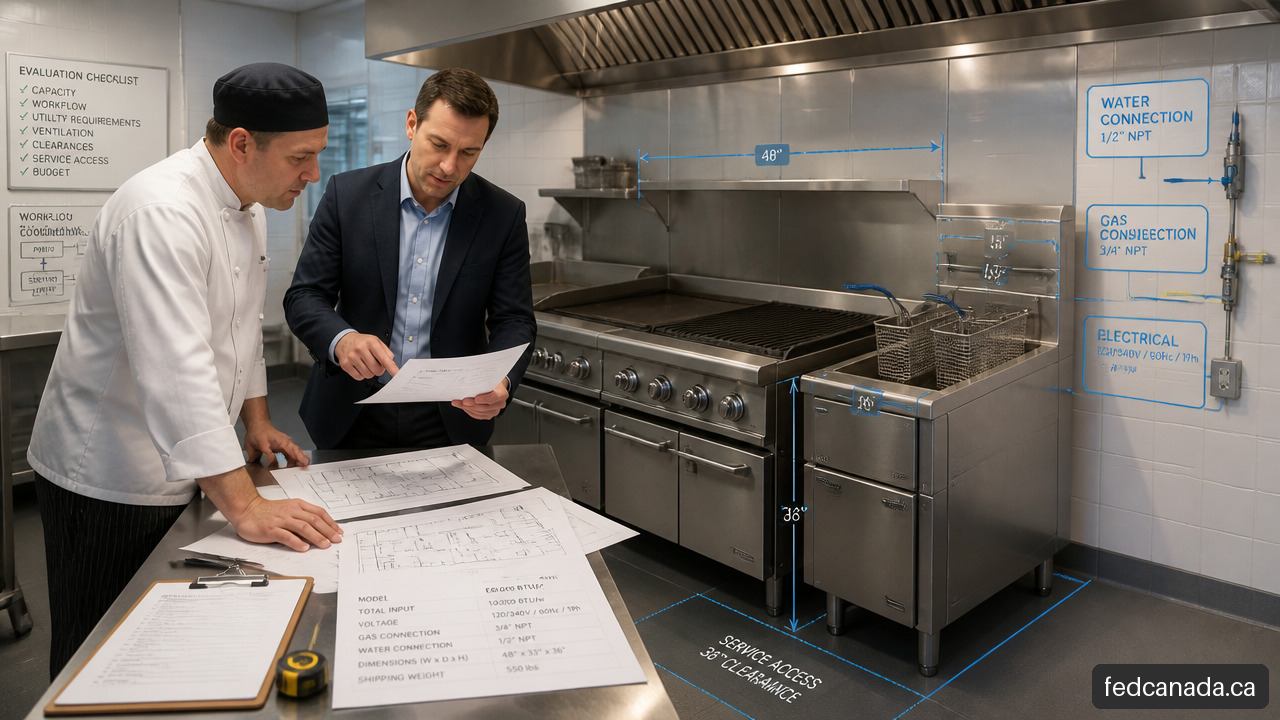
| What utility connections are available? | Gas, electrical, water, drainage, and ventilation affect feasibility | Verify site requirements before ordering |
| How much line space is truly usable? | Door swings, aisle clearance, and cleaning access consume room | Avoid selecting equipment solely by cabinet dimensions |
| Who will service the equipment locally? | Downtime can interrupt revenue and food safety routines | Confirm service capability before purchase |
Stainless steel is useful, but it is not the whole decision
OLIS emphasizes stainless steel craftsmanship, technology, and design in its product positioning. Those qualities can be meaningful in a commercial kitchen because surfaces need to tolerate heat, moisture, cleaning chemicals, frequent contact, and constant movement.
But “stainless steel” is not a complete buying criterion. A well-built cabinet does not solve an undersized gas line, an inaccessible drain connection, a poor ventilation plan, or a lack of local parts availability.
A more practical test is this: What happens at 6:30 p.m. on a busy Saturday if this appliance stops working? If the answer is that the kitchen cannot produce a signature menu item, service access should carry as much weight as the initial purchase price.
Why layout affects OLIS equipment value
Professional equipment works as a system. The best fryer or cookline can become a bottleneck if staff have to cross paths with dishwashing traffic, reach too far for refrigerated ingredients, or carry hot pans through a congested aisle.
For instance, a fryer station needs more than the fryer. It may also need landing space for baskets, a safe area for filtered oil handling, nearby refrigerated storage for breaded products, handwashing access, and adequate hood coverage. The appliance is one part of the work cell.
A commercial kitchen purchase is rarely just an appliance purchase. It is a decision about capacity, workflow, utilities, cleaning, safety, and service recovery.
How to Evaluate OLIS Equipment in Canada
Canadian buyers should treat availability and support as separate questions. A product may be purchasable through a distributor or project supplier, yet that does not automatically establish local commissioning, warranty labor, parts stocking, or emergency repair coverage.
Confirm availability before comparing prices
Published Canadian pricing for OLIS equipment is not consistently available in the materials reviewed. That does not mean the equipment cannot be sourced in Canada. It means a buyer should obtain a current, written quotation tied to a specific model and delivery destination.
Ask the seller to clarify all of the following:
- Exact model number and configuration, including gas type, electrical specification, accessories, and factory options.
- Price currency, taxes, freight, brokerage, delivery method, and whether site placement is included.
- Lead time, including whether the unit is stocked, inbound, made to order, or dependent on a project shipment.
- Warranty terms, including who performs warranty labor in the buyer’s province.
- Parts access, including common wear parts, control components, door hardware, burners, igniters, and gaskets where applicable.
- Installation responsibilities, including permits, gas fitting, electrical work, ventilation, fire suppression, plumbing, and commissioning.
Fair warning: a low initial quote can become expensive if the equipment arrives without compatible utilities, if a custom voltage arrangement delays installation, or if the buyer must arrange specialized service after delivery.
Technical documentation and spare parts
OLIS states that it provides technical support, documentation access, and spare-parts assistance through its manufacturer support channels. This is useful for owners trying to identify manuals, service documentation, or replacement components.
However, the available support information does not establish Canadian distributor coverage or Canadian after-sales arrangements. That gap matters most when the kitchen cannot wait days or weeks for diagnosis and parts.
A sensible recovery plan for an existing OLIS unit is:
- Photograph the data plate, including model and serial number.
- Record the equipment symptoms, error messages, utility type, and recent service history.
- Contact the original dealer or installer first if known.
- Ask the manufacturer or authorized channel for the correct documentation and part identification.
- Confirm whether a qualified local technician can work on the unit before authorizing a repair.
This process is less glamorous than comparing features, but it prevents the common mistake of ordering a part based on appearance rather than model-specific compatibility.
Performance claims versus proven local outcomes
Manufacturers can provide important product specifications, but buyers should separate three kinds of information:
| Evidence type | What it can tell you | What it may not prove |
|---|---|---|
| Manufacturer specifications | Dimensions, utilities, stated features, product range | Long-term reliability in a specific kitchen |
| Distributor quotation | Price, lead time, options, freight terms | Quality of future service response |
| Independent testing or operator records | Comparative output, energy use, downtime patterns | Availability for every model or market |
Independent Canadian comparisons of OLIS lifecycle cost, performance, and service outcomes appear limited in the available information. That calls for a practical procurement approach rather than a guess.
Request utility requirements in writing. Ask for installation drawings. Verify local technician availability. If the purchase is substantial, compare the total installed cost against alternatives rather than comparing equipment price alone. A unit that costs less but requires difficult parts sourcing can be the costlier decision over time.
Other Businesses and Products Called Olis
The restaurant equipment brand is important for foodservice buyers, but it is not the only valid meaning of the term. Knowing the alternatives helps prevent confusion when an unqualified search produces mixed results.
Olis AI: enterprise knowledge access software
Olis AI is a software product designed to surface organizational knowledge within a worker’s context. Its official site describes an enterprise ambient-intelligence layer with more than 100 connectors and private-deployment capabilities on the Olis AI official site.
For an organization evaluating the software, those claims should begin the assessment, not end it. “More than 100 connectors” does not tell a buyer whether the exact systems they use are supported, whether connector permissions are granular, or whether a particular connector is available in a private deployment.
A careful software review would ask:
- Which named systems and file sources are supported in the proposed implementation?
- What data is indexed, copied, retained, or deleted?
- How are access controls inherited from source systems?
- Can administrators audit user queries and data retrieval?
- Where is data processed, and can Canadian data residency requirements be met?
- What testing has been completed for accuracy, permission boundaries, and incident response?
Private deployment and encrypted data handling can be valuable capabilities, but the available public description does not by itself provide a complete architecture review, audit report, retention policy, or Canadian data residency commitment. A legal, privacy, and security review is still necessary before enterprise data is connected.
Olis laboratory instruments
Olis laboratory equipment is associated with spectroscopy, including absorbance, fluorescence, and circular dichroism systems. These tools are for scientific measurement, not restaurant operations.
The distinction is straightforward once the use case is clear. A commercial cooking system applies controlled heat to produce food safely and efficiently. A spectroscopic instrument measures how a sample interacts with light. Absorbance spectroscopy measures light absorbed by a sample, fluorescence measures light emitted after excitation, and circular dichroism examines differences in how a sample absorbs circularly polarized light.
The names overlap. The buyers, rooms, training, maintenance needs, and outcomes do not.
Olís in Iceland and OLIS Ukraine
Olís, spelled with an accented “í,” is a separate Icelandic fuel and service retailer. Hagar describes Olís in Iceland as a company founded in 1927 that operates service stations in Iceland. It should not be confused with the Italian catering equipment brand, even if an unaccented search query groups them together.
OLIS Ukraine is another distinct entity, associated with grain processing equipment such as separators used by commercial and farm-scale operations. That is relevant to agricultural buyers and grain processors, but not to restaurant equipment procurement.
Key Takeaways
The practical answer for most restaurant buyers
If Olis appears on a kitchen equipment quotation, specification sheet, or appliance label, it most likely refers to OLIS professional catering equipment. The brand’s scope includes cooking, refrigeration, preparation, and kitchen organization equipment.
What to verify before committing
- Confirm the exact manufacturer, product category, and model number.
- Match equipment capacity to peak production, menu format, utilities, and available floor space.
- Treat local service, parts access, commissioning, and warranty labor as core buying criteria.
- Request written confirmation of Canadian pricing, lead time, delivery terms, and after-sales support.
- Do not assume Olis AI, Olis laboratory instruments, Olís Iceland, and OLIS catering equipment are related businesses.
The most useful buying mindset
The right question is not simply, “Is OLIS good equipment?” A more useful question is, “Is this specific OLIS model properly sized, properly supported, and practical for this kitchen’s menu and location?” That is where a solid equipment decision begins.
Frequently Asked Questions
What does Olis refer to?
Olis can refer to several unrelated organizations. The most relevant meaning for restaurants is OLIS, a professional catering equipment manufacturer. Other uses include Olis AI enterprise software, Olis laboratory spectroscopy equipment, Olís fuel and convenience retail in Iceland, and OLIS Ukraine grain machinery.
Is OLIS a commercial kitchen equipment manufacturer?
Yes. OLIS manufactures professional equipment for cooking, refrigeration, food preparation, and kitchen organization. It is relevant to restaurant, hospitality, institutional, and other commercial foodservice environments.
Is OLIS affiliated with Ali Group?
Ali Group identifies OLIS as a catering equipment brand associated with its professional foodservice portfolio. That relationship provides useful corporate context, although buyers should still verify local distribution, warranty, and service arrangements for their own region.
What types of kitchen equipment does OLIS make?
OLIS is associated with commercial cooking systems, modular ranges, fryers, bratt pans, refrigeration, preparation equipment, and kitchen systems. The right category depends on menu volume, production style, utilities, ventilation, and available space.
Is OLIS equipment available and serviceable in Canada?
Canadian availability and serviceability should be confirmed with a seller or authorized channel for the exact model and province. The available manufacturer support information does not establish Canadian distributor coverage, Canadian parts inventory, or local after-sales service arrangements.
How can an OLIS owner obtain technical support or spare parts?
Start with the original seller or installer when possible. Keep photos of the data plate, model number, serial number, and a clear description of the issue. OLIS also provides manufacturer support, documentation access, and spare-parts assistance through its official channels.
What is the difference between OLIS kitchen equipment and Olis laboratory instruments?
OLIS kitchen equipment is used for food production, storage, and preparation in commercial kitchens. Olis laboratory instruments are scientific devices used for spectroscopic measurements such as absorbance, fluorescence, and circular dichroism. They serve entirely different environments and buyers.
Is Olís the same company as OLIS catering equipment?
No. Olís is an Icelandic fuel and service retailer, while OLIS catering equipment is associated with professional foodservice equipment. The accented spelling, industry, country, and business model are all different.
Sources/References
- OLIS — Company: https://olis.it/en/company/
- Ali Group — Olis Cooking Equipment: https://www.aligroup.com/brand/olis/
- OLIS — Support: https://olis.it/en/support/
- Olis AI — Official Site: https://www.olis-ai.com/
- Hagar — Olís: https://www.hagar.is/en/companies/olis/
Recent Posts

Leave a Comment
Your email address will not be published. Required fields are marked *