



Colander Guide: Drain Faster, Retain More Food
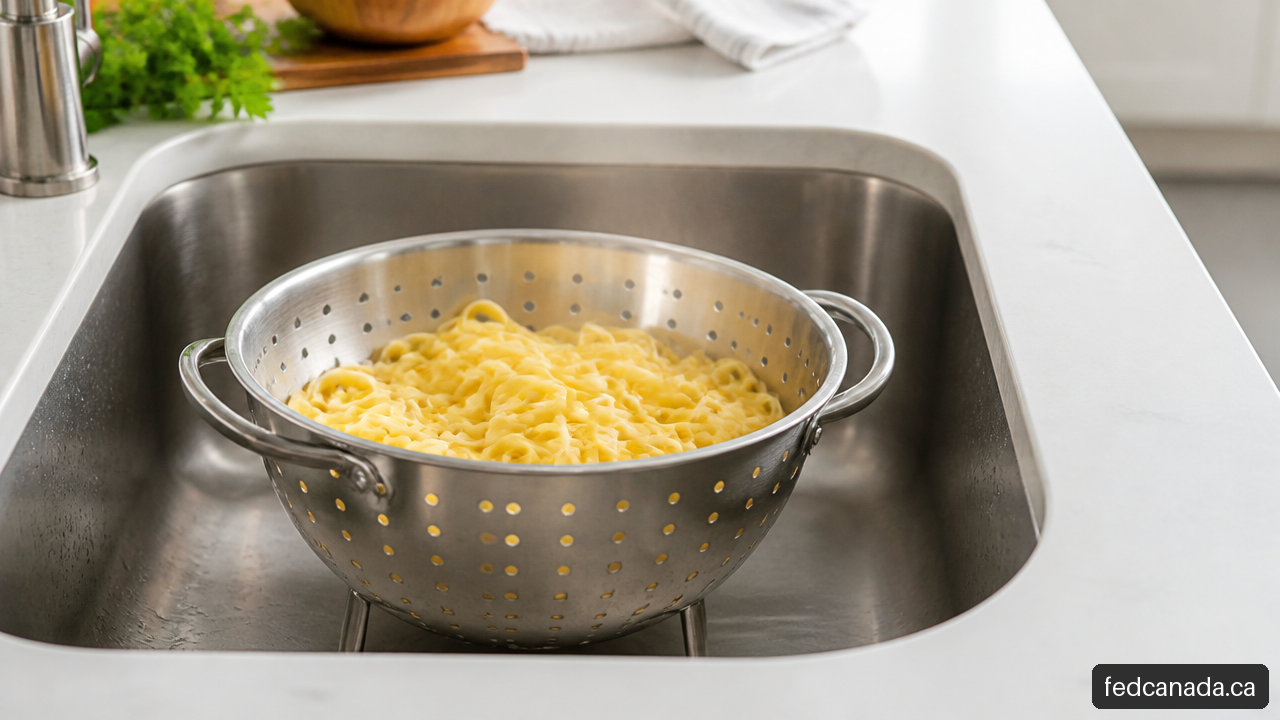
A colander is a perforated bowl or basket designed to separate food from liquid. That sounds simple, but the details matter: hole placement affects drainage, bowl shape affects residual water, and a weak base can turn a pot of pasta into a sink cleanup. The right colander should drain efficiently without losing food, remain stable under the intended load, and fit the way you use your sink.
Table of Contents
- How a Colander Actually Drains
- Choose a Colander by Food, Load, and Sink
- Use, Clean, and Troubleshoot a Colander
- Key Takeaways
- Colander FAQ
- Sources
How a Colander Actually Drains
What a colander does, and where it differs from a strainer
A colander is primarily a food preparation tool for draining larger batches. Its bowl or basket shape holds pasta, potatoes, vegetables, fruit, canned beans, and similar foods while water exits through perforations. Most colanders are wider and more rigid than a handheld strainer, making them practical for a full pot rather than a small portion.
The terms colander, strainer, and sieve sometimes overlap in everyday conversation, but their useful distinctions are based on particle retention.
| Tool | Typical opening size | Best use | Avoid using it for |
|---|---|---|---|
| Colander | Medium to small perforations | Pasta, potatoes, washed produce, canned beans | Flour, very fine grains, thin sauces |
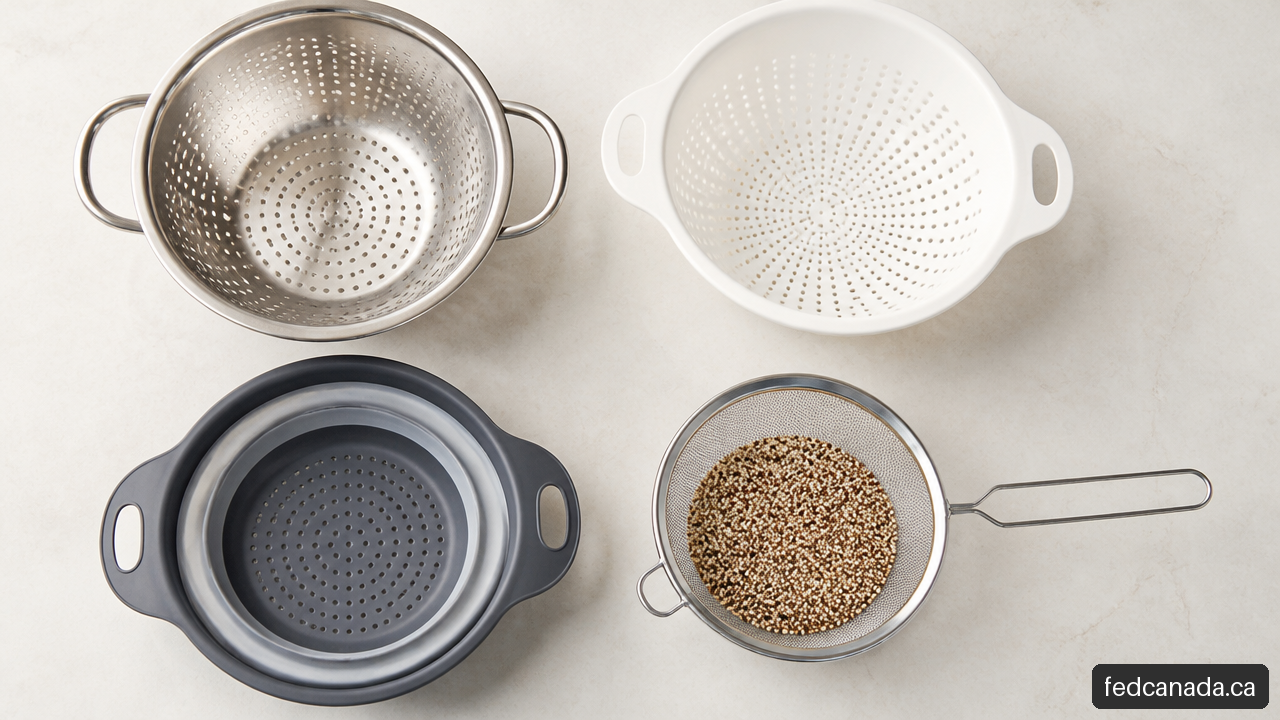
| Fine mesh strainer | Very small woven openings | Rice, quinoa, couscous, berries, stock clarification | Large hot loads if the frame is small or flexible |
| Sieve | Fine screen or perforated surface | Sifting dry ingredients, separating fine particles | Draining a large pot of pasta |
For example, a colander with broad perforations may drain penne quickly but allow orzo to escape. A fine mesh strainer will retain quinoa, but its woven surface can trap starch and food particles. The right choice is therefore less about which utensil is “better” and more about what must stay in the bowl.
Hole distribution matters as much as hole size
A common assumption is that larger holes always mean faster drainage. They can, but hole diameter is only one variable. Where the holes are placed changes how water moves through the food mass.
A colander with perforations across both its base and sidewalls gives water multiple exit paths. When a load of spaghetti settles against the bottom, water can still drain through the walls. In contrast, a design with few openings near the base may leave water pooled below the food, especially when the colander sits flat in a shallow sink.
In a comparison published by Serious Eats’ colander drainage testing, tested models drained in about 8 to 22 seconds under the publication’s conditions; evenly spaced holes supported efficient drainage while helping retain food. That range is useful because it shows why “fast draining” is not a complete product description. A rapid drain time is valuable only if the bowl remains stable and keeps the food where it belongs.
Think of a colander as a set of flow paths rather than just a bowl with holes. Water needs open routes through the food, across the base, and out through the perforations. If the bowl has large solid panels, heavily curved areas with few holes, or feet that sit directly over the sink drain, those routes can be restricted.
Drainage, containment, and residual water
A well designed colander balances three outcomes:
- Drainage time: How quickly water leaves the food.
- Containment: Whether food remains in the colander rather than passing through the openings.
- Residual water: How much water remains trapped in the bowl or under the food after draining.
Fast drainage and containment can pull in opposite directions. Larger openings increase the open area available for water, but small pasta, lentils, rice, quinoa, or chopped vegetables may pass through. Micro perforated rigid colanders often offer a practical middle ground for smaller ingredients because they use many closely spaced small holes instead of a woven mesh.
Residual water is not always a defect in the holes themselves. It can result from a bowl sitting in standing water, a flat base with no clearance, or food compacting into a dense layer. Consider rinsed canned beans. If the colander rests directly on the sink bottom and water rises around its base, the beans may remain wet even though the perforations are open. Raised feet can help keep the bowl above accumulated water.
A useful test is simple: before relying on a new colander for boiling pasta, run water through the empty bowl in your sink. Check whether water exits from the bottom, whether the feet provide clearance, and whether the bowl blocks the sink drain.
Choose a Colander by Food, Load, and Sink
Start with the food, not the material
Material matters, but the food being drained should set the first requirement. Ask four questions: How small are the particles? How hot is the liquid? How much food is being drained? Does the colander need to sit in or across the sink?
| Food or task | Most useful colander features | What can go wrong |
|---|---|---|
| Long pasta, potatoes | Large capacity, rigid rim, stable base, broad perforation coverage | Tipping or flexing under a heavy hot load |
| Short pasta, beans | Medium or small holes, comfortable handles, easy cleaning | Food catches in poorly finished holes |
| Rice, quinoa, couscous | Micro perforations or fine mesh | Small grains escape through standard holes |
| Berries and delicate produce | Smooth surfaces, small openings, gentle water flow | Thin skins tear against rough mesh or sharp edges |
| Leafy greens | Wide bowl, raised feet, room to toss or shake | Water remains under leaves if the base has poor clearance |
| Canned vegetables | Moderate hole size and a stable bowl | Food spills when the can is emptied too quickly |
For a family sized pasta pot, capacity should be close to the amount being cooked. A crowded colander drains less predictably because pasta compacts into a thick layer. Water then takes longer to move through the food, and lifting or shaking the load becomes harder. It is usually better to use a larger bowl with extra space than to fill a smaller model to the rim.
For rice and quinoa, do not rely on a standard pasta colander unless its holes are visibly small enough to retain the grain. Test with a dry spoonful over a plate before rinsing a full batch. That small check can prevent the frustrating discovery that part of the grain has entered the sink.
Stainless steel, plastic, silicone, and mesh
No material is universally best. The useful choice depends on heat, load, storage, and cleanup needs.
| Material or design | Choose it when | Consider another option when |
|---|---|---|
| Stainless steel | Draining hot pasta, potatoes, or frequent heavy batches | Weight or storage space is a major concern |
| Plastic | Rinsing cool produce, beans, and lighter food prep | The product does not clearly state suitability for hot liquids |
| Silicone collapsible | Storage is tight and the model has a supportive rigid rim | You need maximum rigidity for a large boiling hot load |
| Fine mesh | Retaining rice, quinoa, berries, or small particles | Quick cleanup matters more than fine retention |
| Over the sink design | You have a compatible sink and want hands free drainage | The arms slip, the sink rim is narrow, or the bowl blocks the drain |
Stainless steel is commonly selected for hot food because rigid metal construction can better support a heavy load. It is still worth checking handle attachment, rim stiffness, and the way the base contacts the sink. Material alone does not guarantee structural strength.
Plastic colanders are lightweight and often less expensive. They can be convenient for rinsing berries or canned beans, but hot liquid suitability should be checked on the product packaging or manufacturer information. There is no universal heat limit that applies to every plastic or silicone colander. A product labeled dishwasher safe is not automatically confirmed for direct contact with boiling water.
Collapsible silicone designs are useful in compact kitchens, camping setups, or cupboards with limited shelf space. Fair warning: their flexible walls can shift when a heavy load is poured into them. A rigid rim, firm feet, and solid handles are especially important if hot water is involved.
Sink fit is a performance requirement
An over the sink colander can free both hands, but it must match the sink geometry. Measure the inside width where the support arms will rest, not just the widest point of the basin. Check whether the arms have enough grip to stay put when wet and whether the bowl will hang high enough to avoid the drain or standing water.
A practical sink fit review should include:
- The distance between the sink rims where the colander will rest.
- The clearance between the colander base and the bottom of the basin.
- The location of the drain relative to the bowl.
- Whether faucet hardware, divided basins, or a garbage disposal flange interfere with placement.
- Whether the loaded colander can be removed safely without brushing the sink walls.
A deep single basin sink may work well with a footed bowl but poorly with a short over the sink model. A shallow double basin sink may create the opposite result. This is why measurements are more useful than a broad claim that one style fits “most” sinks.
Use, Clean, and Troubleshoot a Colander
A safer method for draining hot food
When draining boiling pasta or potatoes, stability takes priority over speed. Steam reduces visibility, wet handles are slippery, and the food can shift suddenly as liquid leaves the pot.
Use this sequence:
- Place the colander securely in a clean sink or confirm that its over the sink supports are firmly seated.
- Make sure the base is not resting in pooled water and the sink drain is not fully blocked by the colander.
- Grip the pot with dry, suitable hand protection and pour gradually rather than all at once.
- Pause if the colander begins to flex, tilt, or fill beyond a manageable level.
- Let the main flow stop before moving the colander or shaking food dry.
The need for this caution is not theoretical. In a Reddit post, one user reported a colander base breaking while draining spaghetti. That is an anecdote, not evidence that a particular material or style will fail at a known rate. Still, it illustrates a sensible rule: inspect the bowl, handles, feet, and seams before trusting a colander with a heavy hot load.
Avoid holding a lightweight colander in one hand while pouring a full pot with the other unless the quantity is genuinely small and the utensil is designed for that handling method. A supported bowl in the sink is generally easier to control.
Why water stays in the bottom
If water collects in your colander, look beyond the visible hole size. The cause may be one of several overlapping conditions.
| Symptom | Likely cause | Practical response |
|---|---|---|
| Pool forms at the base | Few bottom holes or poor sink clearance | Raise the bowl, reposition it, or choose a design with better base perforation |
| Water drains slowly through pasta | Bowl is overfilled or food is packed tightly | Drain in smaller batches or use a larger colander |
| Rice escapes | Holes are too large for the grain | Switch to micro perforation or fine mesh |
| Bowl tilts while draining | Uneven feet, narrow base, or unstable sink placement | Use a flatter surface or replace the unstable design |
| Drainage stops in spots | Food particles or labels block holes | Inspect and clear holes before use |
A Reddit user also reported a newly purchased bowl that retained water at the bottom in a discussion about a colander that did not drain. Again, it is a single report rather than a product category verdict. The useful lesson is to examine the full drainage path: holes, base shape, feet, sink contact, and drain position.
Cleaning without creating a hidden buildup problem
Cleaning effort is part of colander ownership. Large, smooth perforations are usually quick to rinse, while fine mesh and micro perforations require more attention. Starch from pasta, seeds from berries, leafy fragments, and bean skins can cling to openings even when the bowl looks clean at first glance.
For ordinary cleaning, rinse immediately after use and wash both sides of the perforated surface. Hold the bowl up to the light if needed; blocked holes are easier to spot from the outside. If particles have dried in place, soak the colander in warm, soapy water before washing rather than scraping aggressively at mesh or flexible silicone.
A small soft brush can be useful for fine holes, but avoid tools that bend mesh, score plastic, or leave metal bristles behind. Dry the colander thoroughly, particularly around folded silicone seams, handle joins, and stacked rims where moisture can linger.
Key Takeaways
The best selection rule
Choose a colander based on particle size, food temperature, batch size, and sink fit. Start with the food you drain most often, then evaluate material and storage needs.
- Use a rigid, roomy, well supported model for hot pasta and potatoes.
- Use micro perforations or fine mesh for rice, quinoa, couscous, and other small foods.
- Use a wide bowl with smooth surfaces for rinsing produce and leafy greens.
- Measure a sink before buying an over the sink model.
- Treat stated heat limits and food contact information on the actual product as more useful than broad assumptions about plastic or silicone.
The performance checks worth making
Before relying on a new colander, inspect its construction and test its drainage with running water. Look for evenly distributed openings, a stable rim, firm handles, raised feet, and enough clearance to keep the base out of drained water.
The goal is not simply the fastest possible drain. A dependable colander keeps food contained, stays stable, and leaves little residual water without creating a difficult cleaning job.
Colander FAQ
What is a colander used for?
A colander drains water from solid foods. Common uses include draining pasta and potatoes, rinsing produce, washing canned beans, and removing rinse water from vegetables. Its bowl shape makes it suitable for larger quantities than many handheld strainers.
What is the difference between a colander, strainer, and sieve?
A colander is generally a larger perforated bowl for draining batches of food. A strainer is a broader term that can include handheld baskets and fine mesh tools. A sieve usually has finer openings and is more appropriate for flour, powdered ingredients, or very small particles.
Which type of colander is best for draining pasta?
For pasta, choose a roomy rigid colander with a stable base, secure handles, and holes across the base and walls. Stainless steel is often a practical choice for frequent hot, heavy loads, though a sturdy heat suitable plastic model may also work when its labeling supports that use.
Can a colander safely handle boiling water?
That depends on the specific product, not only its material category. Check the manufacturer’s heat guidance, food contact labeling, and care instructions. For boiling pasta, inspect the rim, handles, feet, and base for flexing or damage before use, and support the colander in the sink rather than balancing it in one hand.
Are stainless steel or plastic colanders better?
Stainless steel is generally better suited to repeated hot, heavy draining because it is rigid and durable. Plastic is lighter and can be convenient for cool rinsing tasks. The better option depends on how you use it, its construction quality, and whether the product is labeled for hot food contact.
What hole size is best for rice and quinoa?
Rice and quinoa need very small openings. A micro perforated colander or fine mesh strainer is usually safer than a standard pasta colander. Test a small dry amount first if the hole size is uncertain.
Why does water collect in the bottom of my colander?
The bowl may have limited bottom perforations, the food may be packed too tightly, or the colander may be sitting in standing sink water. Reposition it, make sure the base is elevated, and check whether the sink drain is being blocked by the bowl.
Are colanders dishwasher safe?
Some are, but dishwasher suitability is product specific. Check the care label or manufacturer instructions. Fine mesh, flexible seams, and tightly spaced perforations may still need inspection after washing because particles can remain trapped.
Sources
- Serious Eats, We Tested 8 Colanders—Here Are Our 2 Favorites (for Pasta, Produce, and More): https://www.seriouseats.com/best-colanders-6361732
- Reddit, Colander does me dirty: https://www.reddit.com/r/mildlyinfuriating/comments/1wsi77d/colander_does_me_dirty/
- Reddit, Colander doesn’t actually drain.: https://www.reddit.com/r/mildlyinfuriating/comments/1of8bbn/colander_doesnt_actually_drain/
Recent Posts


Leave a Comment
Your email address will not be published. Required fields are marked *