



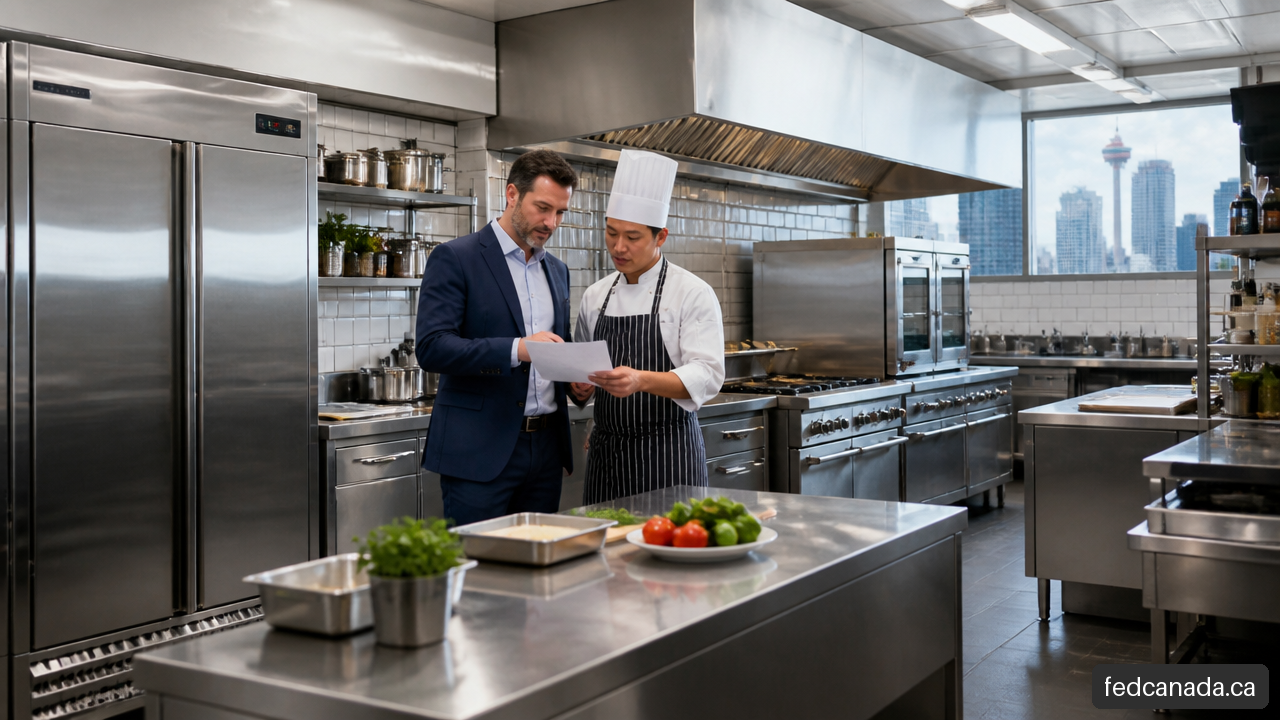
Restaurant Equipment Supplier Calgary: How to Buy Smarter
Choosing a Restaurant Equipment Supplier Calgary operators can rely on is about more than finding the lowest sticker price. The right supplier helps you match equipment to your menu, space, utilities, budget, and service needs. The wrong purchase can create expensive problems: a cooler that cannot clear a doorway, a fryer that needs an unexpected gas upgrade, or a used oven with no practical path to parts. I recommend treating equipment procurement as an operating decision, not simply a shopping task. A commercial kitchen works as a connected system. Refrigeration affects food safety, ventilation affects cooking capacity, dishwashing affects table turns, and reliable service support affects whether a busy shift can continue.
Table of Contents
- How to Choose a Calgary Restaurant Equipment Supplier
- Build a Purchase Plan Before Requesting Quotes
- New vs Used Restaurant Equipment in Calgary
- Key Takeaways
- Frequently Asked Questions
How to Choose a Calgary Restaurant Equipment Supplier
A useful supplier should be able to do more than send a product catalog. Look for a business that can confirm specifications, stock status, delivery requirements, warranty coverage, and whether it can support installation or repairs after the sale. Calgary has a broad local supplier market. The BBB category for Calgary restaurant equipment businesses shows that local companies may combine equipment sales with repair and other foodservice services. That mixed model can be valuable when downtime is costly, although you should still verify what each company actually services and how it handles emergency calls.
Prioritize support that protects uptime
For a restaurant, a failed reach in refrigerator or dishwasher can become a same day operational issue. Before buying, ask direct questions that reveal how the supplier handles support:
- Does the supplier stock common replacement parts or order them only after a service call?
- Is repair service performed in house, coordinated through a third party, or not offered at all?
- Which brands and equipment types can the service team support?
- Can the supplier explain warranty responsibilities for labor, travel, freight, and replacement parts?
- What information is needed to schedule delivery, installation, or a repair visit?
A supplier may offer excellent pricing but limited post sale support. That can still work for a simple stainless steel worktable or shelving package. It is a much riskier choice for refrigeration, cooking equipment, ice machines, warewashing equipment, and other systems that can halt production.
Confirm location, pickup, and delivery realities
Local availability matters, particularly when an opening date is near or a key appliance fails. Calgary listings show that restaurant equipment suppliers are commonly concentrated in NE and SE industrial areas, as reflected in YellowPages listings for Calgary restaurant equipment and supplies. This can make it practical to compare more than one showroom, warehouse, or used inventory selection in a single trip. Still, a supplier address does not guarantee easy pickup. I suggest confirming these details before arranging transport:
| Logistics question | Why it matters | What to confirm |
|---|---|---|
| Loading access | Large equipment may require a dock, forklift, or pallet jack | Whether the supplier loads pickups and what vehicle is required |
| Site access | Downtown, mall, and older building sites can have narrow routes | Door widths, elevator dimensions, alley access, and delivery windows |
| Freight handling | Curbside delivery may not include placement indoors | Whether delivery includes unloading, positioning, unpacking, and debris removal |
| Utility readiness | Equipment may arrive before gas, water, drains, or power are ready | Who verifies connections and when installers can attend |
| Storage timing | A missed delivery can create handling and storage costs | Whether the supplier can hold equipment and under what conditions |
For example, a 54 inch refrigerated prep table may fit your kitchen layout but not fit through the rear entrance after it remains palletized. Removing packaging too early can complicate freight claims; leaving it packaged can prevent it from clearing a tight hallway. Measure the entire route, not just the final kitchen location.
Compare suppliers by total cost, not product price
The lowest quote is not always the lowest cost. A realistic comparison includes freight, installation, permits where applicable, utility upgrades, accessories, warranty differences, and expected energy use. Ask every supplier for a written quote that identifies the exact manufacturer, model number, voltage, fuel type, included accessories, freight terms, and estimated availability. If two quotes appear similar but one lists a different model suffix, the units may have different doors, controls, casters, electrical requirements, or warranty terms.
A quote is useful only when it describes the equipment and the work around it clearly enough to avoid assumptions.
Build a Purchase Plan Before Requesting Quotes
A purchase plan prevents a familiar problem: buying attractive equipment first and discovering later that it does not suit the menu, ventilation capacity, production volume, or cleaning workflow. I recommend starting with production needs and working backward to the appliance list.
Buy equipment in the order your operation depends on it
Opening a full service restaurant, café, food truck, bakery, or catering kitchen requires different priorities. Instead of buying every category at once, identify the equipment that protects food safety and allows core production to begin.
| Operation type | Often prioritized first | Common purchasing mistake |
|---|---|---|
| Quick service restaurant | Cooking line, refrigeration, prep tables, holding equipment | Buying cooking capacity without matching ventilation and electrical capacity |
| Café | Espresso equipment, undercounter refrigeration, display case, dishwashing | Underestimating water filtration, drainage, and counter depth |
| Full service restaurant | Refrigeration, cooking line, dishwashing, prep equipment, shelving | Choosing attractive front of house equipment before back of house capacity is settled |
| Catering operation | Mobile holding, transport racks, refrigeration, prep surfaces | Ignoring loading, storage, and vehicle access requirements |
| Food truck | Compact refrigeration, cooking equipment, water systems, storage | Selecting appliances before confirming vehicle weight, ventilation, and utility limits |
Start with a concise equipment schedule. For each item, record the purpose, quantity, dimensions, utility requirements, desired delivery date, and whether used equipment is acceptable. This document gives suppliers enough context to recommend suitable options instead of substituting based only on what happens to be available.
Match specifications to utilities and compliance
Commercial equipment must be suitable for its intended environment. Before placing an order, verify electrical, gas, plumbing, ventilation, drainage, and fire protection requirements with the appropriate qualified trades and local authorities having jurisdiction.
Electrical certification deserves particular attention. Equipment designed for commercial use may still be unsuitable if its electrical configuration does not match your site. Confirm voltage, phase, amperage, plug type, hardwire requirements, and any certification markings required for installation. Do not assume a lower purchase price offsets the cost of changing a panel, adding circuits, or adapting equipment that local inspectors will not accept.
Gas equipment requires the same discipline. Confirm fuel type, gas pressure requirements, connection location, clearances, ventilation needs, and whether a qualified gas fitter must complete the installation. A gas range, fryer, or convection oven may look straightforward on a sales floor, but its installation can affect the exhaust hood, fire suppression system, makeup air, and commissioning sequence.
Choose cleanable designs, not just durable materials
Stainless steel is common because it is durable and generally easy to clean, but material alone does not make equipment sanitary. Food safety depends on whether employees can access seams, gaskets, drains, undersides, and contact surfaces during normal cleaning. When evaluating equipment, inspect these practical details:
- Welds and corners that are smooth enough to wipe clean
- Removable shelves, trays, filters, and gaskets
- Legs or casters that allow access below the unit
- Drainage paths that do not trap standing water
- Controls and handles that can tolerate regular cleaning
- Refrigeration door seals that sit flush without gaps or tears
A low profile unit pushed tightly into a corner may appear space efficient, yet it can make cleaning and service difficult. Leave working clearance where manufacturers require it and where staff need it. That decision can reduce grease buildup, pest risk, and repair delays.
New vs Used Restaurant Equipment in Calgary
Both new and used equipment can make financial sense. The better choice depends on failure risk, installation complexity, expected workload, warranty value, and your ability to inspect the item before purchase. Calgary buyers can find suppliers that sell both categories. For example, Canada Food Equipment’s Calgary commercial kitchen equipment page states that buyers can source both new and used restaurant equipment locally. That choice is useful, but it should lead to different buying processes rather than a simple price comparison.
When new equipment is the safer investment
New equipment is often the better fit for high use, business critical appliances. It typically provides a manufacturer warranty, current efficiency features, predictable condition, and a clearer path to parts. Consider new equipment when replacing an essential refrigerator, ice machine, combi oven, dishwasher, or primary cooking appliance. New also helps when your operation needs standardized equipment across several stations. Matching units can simplify training, cleaning routines, spare parts, and service records. For a new restaurant, this consistency can be more valuable than the initial savings available from mixing unrelated used models.
When used equipment can be worth buying
Used equipment can be a practical option for simple, durable items or for secondary capacity. Stainless steel worktables, shelving, sinks, some smallwares, and certain manually operated appliances often present less financial risk than used refrigeration or electronically controlled cooking equipment.
Used inventory can change quickly. Sunny Food Equipment’s restaurant equipment inventory information notes that used items may be in stock on a first come, first serve basis. If you find a suitable item, confirm whether it can be held, whether a deposit is refundable, and whether testing can occur before pickup. Use this comparison when deciding:
| Factor | New equipment | Used equipment |
|---|---|---|
| Upfront cost | Usually higher | Often lower, but condition varies |
| Warranty | Usually clearer manufacturer coverage | May be limited, dealer specific, or unavailable |
| Condition | Factory fresh and documented | Requires inspection and testing |
| Efficiency | May offer lower operating costs | Older models may use more energy or water |
| Lead time | May depend on warehouse stock or factory availability | Can be immediate if physically in stock |
| Best use | Core, high use, or regulated equipment | Tables, shelving, backup capacity, and carefully inspected units |
Inspect used equipment with a risk control process
Used equipment should be evaluated like a mechanical asset, not furniture. Ask for the model number, serial number, approximate age if known, electrical specifications, fuel type, condition notes, and any repair history that is available. If possible, inspect the unit while operating.
For used refrigeration, check door seals, hinges, compressor noise, fan operation, interior corrosion, drain condition, temperature pull down, and evidence of leaks or improvised repairs. A unit that feels cold during a quick showroom visit may still struggle to maintain safe temperatures under a full product load.
For used cooking equipment, inspect burners, pilot systems, thermostats, doors, racks, controls, grease areas, and exterior panels. Confirm that the appliance can be legally and safely connected at your site. Imported or heavily modified equipment can introduce certification and installation complications that erase the apparent savings.
Fair warning: the most expensive used purchase is often the unit that needs immediate repairs, new controls, a compressor, freight, and utility modifications before it can produce a single sale.
Know when to repair and when to replace
Repair is usually sensible when the equipment is otherwise reliable, parts remain available, the repair resolves a defined issue, and the unit still meets your production needs. Replacement becomes more compelling when breakdowns recur, parts are obsolete, performance is inconsistent, or energy and water consumption remain high even after service.
A practical example: replacing a door gasket on a reach in cooler is generally a maintenance decision. Replacing a compressor on an older unit with damaged seals, inconsistent temperatures, and uncertain parts availability requires a larger calculation. Compare the complete repair quote with the cost of a replacement unit, including freight, installation, downtime, warranty, and expected operating life.
Key Takeaways
A dependable supplier relationship reduces operational risk
I would make supplier selection part of your business continuity planning. The best fit is not automatically the largest catalog or the lowest price. It is the supplier that can provide accurate specifications, realistic availability, appropriate delivery coordination, and a clear answer about post sale support.
A disciplined buying process prevents costly surprises
Use this sequence before you commit:
- Define the menu, production volume, and core service model.
- Measure the kitchen, storage area, access route, and delivery path.
- Confirm utility and ventilation requirements with qualified professionals.
- Request itemized quotes with exact model numbers and delivery terms.
- Compare total installed cost, not equipment price alone.
- Inspect used equipment while operating whenever possible.
- Keep invoices, model details, warranty documents, and service records in one equipment file.
The right equipment improves profitability through consistency
Efficient equipment can reduce recurring utility use, service interruptions, food waste, and labor friction. A refrigerator that holds temperature reliably protects inventory. A dishwasher sized for actual peak volume prevents staff from hand washing during a rush. A prep table with adequate pan capacity keeps ingredients within reach instead of forcing repeated trips to walk in storage. The goal is simple: buy equipment that supports consistent production, safe food handling, and maintainable operations from day one.
Frequently Asked Questions
What should I look for in a restaurant equipment supplier in Calgary?
Look for accurate product specifications, transparent quotes, local pickup or delivery options, practical after sales support, and clear warranty information. Ask whether the supplier sells only, services equipment directly, or coordinates repairs through another provider. For critical equipment, also ask about parts access and how service requests are handled.
How do I compare restaurant equipment quotes in Calgary?
Compare identical model numbers first. Then compare freight, delivery, installation scope, accessories, utility requirements, warranty coverage, and estimated availability. A lower quote may exclude casters, shelves, delivery inside the building, commissioning, or required installation work. Put each quote into one table before choosing.
Do Calgary restaurant equipment suppliers offer delivery and installation?
Some may offer delivery, installation coordination, or related services, but the exact scope varies. Do not assume delivery includes moving equipment inside, assembling it, connecting utilities, or removing packaging. Request a written description of what is included and identify who is responsible for each stage.
Is used restaurant equipment worth buying in Calgary?
Used equipment can be worthwhile for durable, low complexity items such as tables, shelving, sinks, and selected backup equipment. It carries more risk for refrigeration, ice machines, dishwashers, and sophisticated cooking equipment. Buy used only after confirming condition, electrical or gas suitability, cleaning condition, and likely repair needs.
How do I check whether used equipment is safe and compliant?
Confirm the unit’s model, electrical specifications, fuel type, and applicable certification markings. Inspect it in person where possible, test operation, and have qualified trades confirm whether it suits your site utilities and installation requirements. Avoid relying solely on photographs or a seller’s general description.
What equipment should I buy first when opening a restaurant?
Buy the equipment needed for food safety and your core menu first: refrigeration, primary cooking or beverage production equipment, prep surfaces, handwashing and warewashing capacity, and storage. Decorative or specialty items can come later if budget pressure is high. Your menu and service volume should determine the order.
Can I get repair service from the same supplier that sold the equipment?
Sometimes, but not always. Calgary has suppliers with mixed service models, yet each company may support different brands, equipment classes, and service areas. Ask before purchase whether the supplier performs repairs, provides parts, refers technicians, or expects you to contact the manufacturer directly.
Should I buy locally in Calgary or order from outside Alberta?
Buying locally can simplify inspection, pickup, freight coordination, and follow up support. Ordering from outside Alberta may expand selection or improve pricing, but it can add freight exposure, longer service coordination, and more complex returns. For a specialized item, the outside option may be appropriate; for urgent replacement equipment, local availability can be more valuable.
Recent Posts


Leave a Comment
Your email address will not be published. Required fields are marked *