
When people ask what are healthiest cooking oils, I start with a simple answer: choose oils that are low in saturated fat, rich in unsaturated fats, fresh, and suited to how you cook.
For most kitchens, extra virgin olive oil is the strongest everyday choice, while avocado oil, canola oil, and other liquid plant oils each have useful roles.
The healthiest oil is not necessarily the one with the highest smoke point or the most expensive label. A salad dressing, a weeknight sauté, and a batch of high-heat roasted vegetables place different demands on an oil.
I recommend building a small, practical oil lineup instead of trying to force one bottle into every job.
Key Takeaways
- Extra virgin olive oil is the best all-around option for dressings, gentle cooking, and many everyday sautés because it provides mostly monounsaturated fat along with antioxidants and polyphenols.
- Avocado oil is a strong choice when you need a mild flavor and dependable performance at higher cooking temperatures.
- Canola oil is a practical, budget-friendly neutral oil with low saturated fat and a useful fatty acid profile for everyday cooking.
- Sunflower, safflower, peanut, soybean, corn, and vegetable oils can fit a heart-conscious diet when they replace butter, lard, coconut oil, or other fats high in saturated fat.
- Coconut and palm oils are not top everyday health choices because they contain substantially more saturated fat than most liquid plant oils.
- Avoid products with partially hydrogenated oils, which can contain trans fat. Check both the Nutrition Facts panel and ingredient list.
The most useful rule is not “never use a certain oil.” It is “make unsaturated liquid oils your default, then choose one that fits the heat, flavor, and dish.”
How to Judge Whether a Cooking Oil Is Healthy
A useful cooking oil decision has five parts: its fat profile, how it behaves under heat, its degree of refining, its flavor, and how fresh it is. Looking at only one factor can lead to a poor choice.
Start with saturated and unsaturated fat
The strongest nutrition priority is replacing saturated fat with unsaturated fat when possible.
Monounsaturated fats and polyunsaturated fats are the main fats in olive, avocado, canola, sunflower, safflower, soybean, peanut, and many other plant oils.
When these oils replace butter or other fats high in saturated fat, they can support a more heart-conscious eating pattern.
For a quick grocery-store screen, the American Heart Association’s practical cooking oil guidance recommends choosing oils with less than 4 grams of saturated fat per tablespoon and avoiding partially hydrogenated oils.
This is particularly useful in Canada, where ingredient lists and product names can vary across stores.
Look for words such as olive, canola, avocado, sunflower, safflower, soybean, or peanut on the front label.
“Vegetable oil” may also be reasonable, but it is a blend, so its exact ingredients and flavor can vary by brand.
Smoke point matters, but it is not a health score
Smoke point is the temperature at which an oil begins producing visible smoke. When oil smokes heavily, it can develop unpleasant flavors and break down more quickly.
That makes smoke point useful for cooking decisions, but it does not automatically tell you which oil is healthiest.
For example, extra virgin olive oil may have a lower smoke point than refined avocado oil, yet it remains an excellent choice for salad dressings, low-to-medium-heat cooking, and many normal stovetop sautés.
Conversely, an oil with a high smoke point may be useful for searing but still be a less ideal everyday choice if it is high in saturated fat.
I suggest treating smoke point as a kitchen performance measure, not a nutrition ranking.
Avoid letting any oil smoke repeatedly. If a pan is smoking before food goes in, lower the heat, let the pan cool briefly, and begin again with fresh oil.
Refined and unrefined oils solve different problems
Unrefined oils are less processed. They often retain more distinct flavor and naturally occurring compounds, but they can be more sensitive to heat and light.
Extra virgin olive oil is the classic example: peppery, fruity, and especially useful when its flavor can be tasted.
Refined oils are processed to remove compounds that can smoke or spoil more quickly. This usually gives them a milder taste and broader cooking flexibility.
Refined olive oil is not interchangeable with extra virgin olive oil: it is more neutral and often better when you want olive oil’s fatty acid profile without a pronounced olive flavor.
The British Heart Foundation’s comparison of cooking fats similarly distinguishes refined oils for everyday frying and roasting from extra virgin or cold-pressed oils for drizzling and gentler cooking.
Freshness is part of the decision
Oil is not shelf-stable forever. Heat, oxygen, and light gradually cause oxidation, which dulls flavor and can make oil smell stale, waxy, or paint-like.
An oil with an excellent nutrition label is less appealing if it has sat near a hot stove for months.
Use these storage habits:
- Buy a bottle size you can finish within a reasonable period after opening.
- Store oil in a cool, dark cupboard, not beside the oven or a sunny window.
- Choose dark glass, tin, or opaque packaging when possible.
- Keep the cap tightly closed and discard oil that smells rancid or tastes unpleasantly bitter in a stale way.
The Healthiest Cooking Oils Compared
No single oil wins every category. The table below separates nutritional strengths from kitchen use, making it easier to choose based on the meal in front of you.
| Oil | Main strengths | Best uses | When I would choose something else |
|---|---|---|---|
| Extra virgin olive oil | Mostly monounsaturated fat, plus antioxidants and polyphenols | Dressings, dipping, vegetables, soups, medium-heat sautéing | Very high-heat searing or recipes needing a fully neutral taste |
| Refined olive oil | Mild flavor and greater heat flexibility than extra virgin olive oil | Roasting, sautéing, baking, pan cooking | When you specifically want extra virgin olive oil’s fuller flavor |
| Avocado oil | Mostly unsaturated fat, mild flavor, useful for higher heat | Searing, roasting, grilling, mayonnaise | When cost is the main concern |
| Canola oil | Low saturated fat, neutral flavor, affordable | Baking, sautéing, stir-fries, everyday cooking | When a recipe benefits from a stronger flavor |
| Sunflower or safflower oil | Neutral taste and mostly unsaturated fat | Baking, roasting, pan frying | When you want omega-3 fatty acids, where canola may be a more useful option |
| Peanut oil | Mild nutty flavor and heat tolerance | Stir-fries, frying, some Asian-style dishes | If peanut allergy is a concern in the household or kitchen |
| Soybean or vegetable oil | Widely available and generally neutral | Baking, frying, large-batch cooking | When you want a single-ingredient oil with a more specific flavor profile |
| Coconut oil | Distinct flavor and solid texture at cooler temperatures | Occasional baking or dishes where coconut flavor is intentional | Everyday heart-focused cooking |
Extra virgin olive oil: the best everyday default
Extra virgin olive oil earns its reputation because it combines a favorable unsaturated fat profile with flavor and naturally occurring antioxidant compounds.
It works beautifully in vinaigrettes, bean dishes, tomato sauces, roasted vegetables, and eggs cooked over moderate heat.
The Cleveland Clinic’s guide to choosing and using oils identifies extra virgin olive oil as a top everyday option and offers practical guidance for matching oils to cooking methods.
There is a common failure mode here: treating extra virgin olive oil as too delicate to cook with at all. In ordinary home cooking, medium-heat sautéing is generally a sensible use.
The issue is not that the pan must never get hot. The issue is prolonged overheating until the oil smokes, burns, and tastes harsh.
Choose extra virgin olive oil when its flavor complements the food. Consider refined olive oil, avocado oil, or canola oil if you are searing steak in a very hot pan or baking a delicate vanilla cake where olive notes would be distracting.
Avocado oil: the flexible high-heat choice
Avocado oil is often the easiest recommendation for cooks who want one oil for high-heat roasting, skillet cooking, and grilling.
It is rich in unsaturated fat, has a mild flavor, and is available in refined and less-refined forms.
Its limitation is price. A large bottle may cost more than canola or standard vegetable oil, and its mild flavor offers little advantage in recipes where a less expensive neutral oil performs equally well.
I would reserve avocado oil for situations where its heat performance is genuinely useful rather than treating it as mandatory for every recipe.
Canola oil and other seed oils: where they fit
Canola oil is made from rapeseed and is one of the most practical everyday oils. It is low in saturated fat, neutral in flavor, and typically less expensive than avocado or extra virgin olive oil.
It also contains omega-3 fatty acids, though it should not be viewed as a replacement for omega-3-rich foods such as fatty fish.
The online debate around “seed oils” often creates more heat than clarity. From a heart-health perspective, oils such as canola, sunflower, safflower, soybean, and corn oil are generally considered reasonable choices because they contain predominantly unsaturated fats.
The Harvard Health discussion of healthy oil choices notes that avocado, canola, grapeseed, safflower, and sunflower oils can be useful neutral options when a strong flavor is not wanted.
The more useful question is what the oil replaces. Swapping butter in a sautéed vegetable dish for canola or sunflower oil is a different decision from repeatedly deep-frying food and reusing the same oil.
The first choice improves the fat profile; the second introduces a separate issue of oil degradation from repeated high-heat exposure.
Coconut oil and vegetable oil: use context, not hype
Coconut oil is popular for its flavor and its place in certain baking and cuisines, but it is not a leading everyday option for heart health because it is high in saturated fat.
It can still be used occasionally when coconut flavor or texture is central to the recipe. Think coconut curry or a specific baked good, not the default oil for every pan.
Vegetable oil is more complicated because it is a category rather than one single oil. Most standard vegetable oils are blends of unsaturated plant oils and can be practical for frying or baking.
Read the label if you have a flavor preference, allergy consideration, or want to know the exact blend. Also check that the ingredient list does not include partially hydrogenated oils.
Match the Oil to the Cooking Method
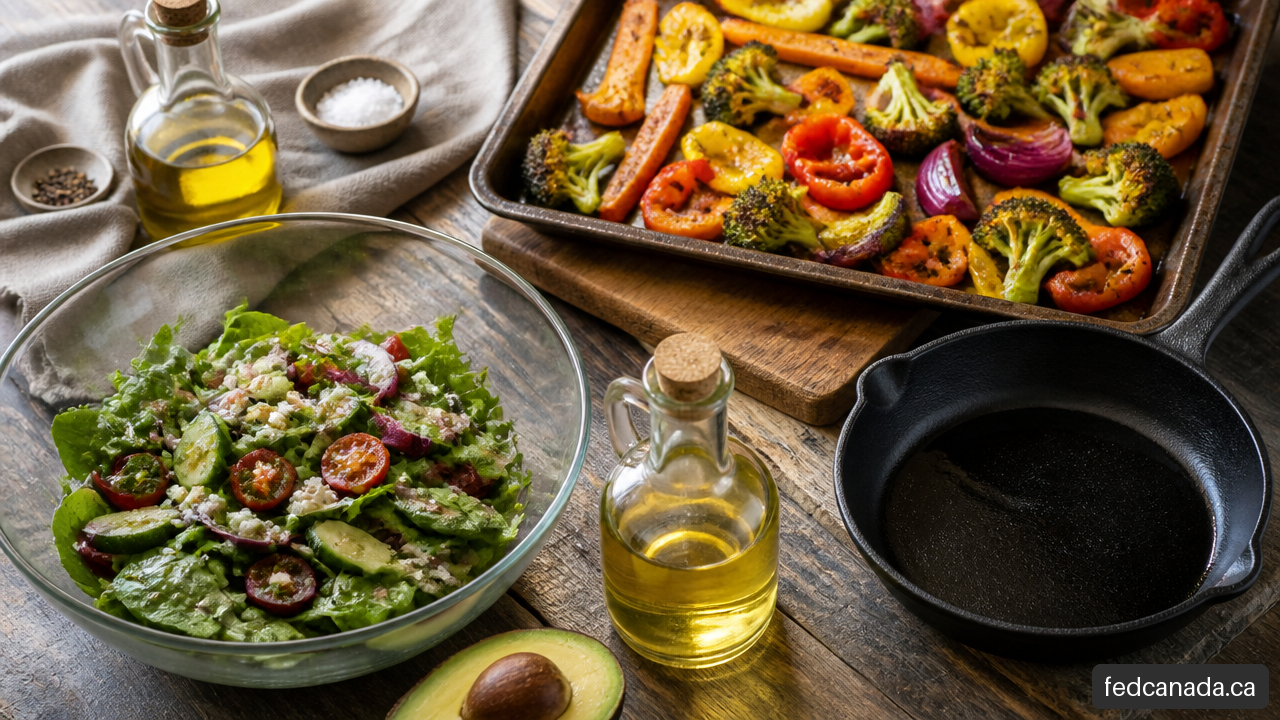
Choosing the right oil is easier when you start with the cooking task. The point is not to chase perfection. It is to avoid obvious mismatches, such as using an expensive peppery finishing oil for a hot, long fry or relying on coconut oil as the only household fat.
For salads, dips, and finishing
Use extra virgin olive oil first. Its flavor is part of the dish, and its antioxidants and polyphenols make it especially appealing in uncooked uses.
Walnut oil and flaxseed oil can also be interesting finishing oils, but they are more perishable and not ideal for high heat.
A simple example: whisk extra virgin olive oil with lemon juice, mustard, garlic, and herbs for a vinaigrette.
In this setting, a neutral refined oil may work, but it will not contribute the same depth.
For sautéing and weeknight cooking
Use extra virgin olive oil, refined olive oil, avocado oil, or canola oil depending on flavor and heat.
For onions, garlic, mushrooms, eggs, pasta sauces, and vegetables, extra virgin olive oil is usually an excellent fit.
For a large stir-fry where you need a neutral taste and a hotter pan, canola or avocado oil may be easier.
The Kaiser Permanente guide to oils for home cooking provides heat-specific suggestions and explains that refined and unrefined versions can perform differently.
That distinction matters more than many labels make clear.
For roasting, baking, and pan searing
For roasting vegetables at higher oven temperatures, choose avocado oil, refined olive oil, canola oil, sunflower oil, or safflower oil. Their milder flavor and heat flexibility make them practical choices.
For baking, canola, sunflower, safflower, soybean, and standard vegetable oil are often easy options because they do not compete with sweet flavors.
Olive oil can be excellent in cakes, quick breads, and savory baking, but use it intentionally. A fruity olive oil can make a citrus loaf richer; it may be less welcome in a plain yellow cake.
For pan searing, use avocado oil, refined olive oil, canola oil, or peanut oil. Preheat the pan, add only enough oil to coat the surface, and begin cooking before the oil starts smoking.
If the oil scorches, discard it, wipe out the pan carefully, reduce the heat, and restart. Adding more food to already burned oil only spreads the bitter flavor.
For deep frying
Deep frying is an occasional cooking method rather than a health strategy. If you do it, select a refined oil with a suitable smoke point and neutral flavor, such as canola, peanut, sunflower, safflower, soybean, or a vegetable oil blend.
Maintain a stable temperature and avoid reusing oil until it becomes dark, foamy, or unusually thick.
Even the healthiest oil cannot turn heavily fried food into an everyday heart-health food. The oil choice matters, but frequency, portion size, and the overall meal still matter too.
Frequently Asked Questions
What is the healthiest cooking oil overall?
For most people, extra virgin olive oil is the healthiest overall everyday choice. It is rich in monounsaturated fat and contains antioxidants and polyphenols.
It works especially well for dressings, vegetables, sauces, and moderate-heat cooking. Avocado oil and canola oil are excellent alternatives when you need a neutral flavor or higher-heat performance.
Is extra virgin olive oil healthier than avocado oil?
Neither is automatically better in every situation. Extra virgin olive oil has a notable advantage for uncooked and gentle cooking because it retains distinctive flavor and beneficial compounds.
Avocado oil is often more convenient for high-heat cooking and recipes that need a mild taste. The healthier choice is usually the one you will use instead of saturated fat while fitting the dish well.
Is canola oil healthy?
Yes. Canola oil is generally considered a heart-conscious choice because it is low in saturated fat and contains mostly unsaturated fats.
It is especially useful for baking, sautéing, and recipes where olive oil flavor would be too noticeable.
Choose a fresh bottle, store it away from heat and light, and use it as part of an overall eating pattern built around minimally processed foods.
Are seed oils unhealthy?
Broad claims that all seed oils are harmful are not supported by mainstream heart-health guidance.
Canola, sunflower, safflower, soybean, corn, and peanut oils are predominantly unsaturated oils and can be preferable to butter, lard, palm oil, or coconut oil for routine cooking.
The practical concern is repeated overheating, excessive frying, or using large amounts of any oil, not simply the fact that an oil comes from a seed.
What oil is best for high-heat cooking?
Avocado oil is a strong high-heat option, particularly when you want a mild flavor. Refined olive oil, canola oil, peanut oil, sunflower oil, and safflower oil can also work well.
Avoid overheating any oil until it smokes. If you want the flavor of extra virgin olive oil, save it for moderate heat or finish the cooked dish with a small drizzle.
Is coconut oil a healthy cooking oil?
Coconut oil can fit occasionally, but it is not a top choice for everyday heart-focused cooking because it is high in saturated fat.
Use it when its taste or texture is important, such as in coconut-based curries or specific desserts.
For routine sautéing and roasting, olive, avocado, canola, sunflower, or safflower oil are usually better defaults.
What does smoke point really mean?
Smoke point is the temperature at which oil begins visibly smoking. It signals that the oil is breaking down and may develop unpleasant flavor.
It is useful for selecting an oil for a cooking method, but it does not measure overall nutritional quality.
A higher smoke point helps with searing or frying; a favorable unsaturated fat profile matters more for regular heart-conscious use.
Sources
- American Heart Association — Healthy Cooking Oils: https://www.heart.org/en/healthy-living/healthy-eating/eat-smart/fats/healthy-cooking-oils
- Cleveland Clinic — Choosing and Using Cooking Oils: What to Use and When: https://health.clevelandclinic.org/how-to-choose-and-use-healthy-cooking-oils
- Kaiser Permanente — The Healthiest Oils for Home Cooking: https://healthy.kaiserpermanente.org/colorado/health-wellness/healtharticle.healthiest-oils-for-home-cooking
- Harvard Health — Expand Your Healthy Cooking Oil Choices: https://www.health.harvard.edu/healthy-aging-and-longevity/expand-your-healthy-cooking-oil-choices
- British Heart Foundation — Using Oils in Cooking: Which Oil Is the Healthiest?: https://www.bhf.org.uk/informationsupport/heart-matters-magazine/nutrition/ask-the-expert/comparing-cooking-fats