





Commercial Restaurant Equipment: Buy for Capacity, Cost, and Uptime
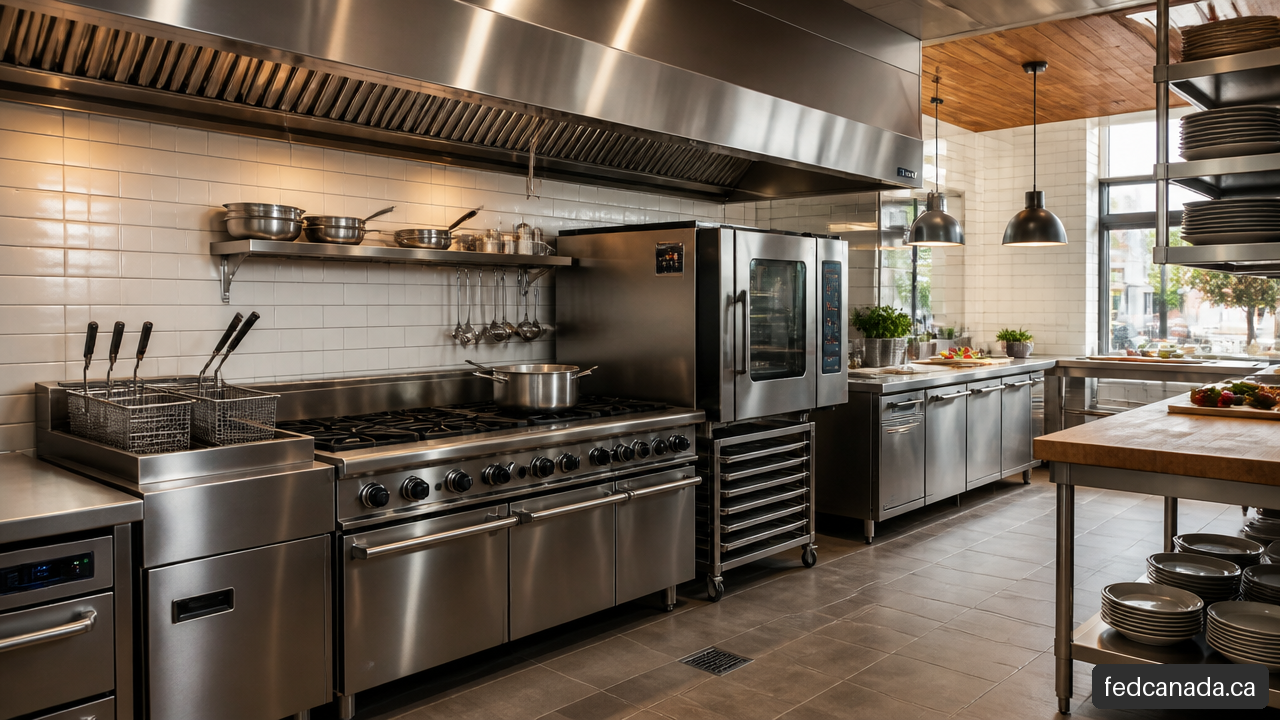
Commercial Restaurant Equipment is not simply a collection of ovens, refrigerators, and dishwashers. It is the production system behind your menu, food safety program, staffing model, utility bill, and customer experience. I recommend starting with the food you need to produce during your busiest hour, then selecting equipment that can meet that demand without creating expensive idle capacity or operational bottlenecks.
A smaller kitchen can outperform a larger one when its cooking, refrigeration, preparation, warewashing, ventilation, and storage equipment work as one system. The reverse is also true: one undersized fryer, poorly positioned refrigerator, or slow dish machine can affect the entire service period.
Table of Contents
- Key Takeaways
- Start With Menu Throughput and Workflow
- Compare Life Cycle Cost, Not Sticker Price
- Plan for Compliance, Installation, and Connected Technology
- Frequently Asked Questions
Key Takeaways
The equipment decision in brief
- Size equipment for peak-hour production, not average daily sales.
- Treat the purchase price as one part of the cost. Installation, energy, water, maintenance, repairs, downtime, and eventual replacement can matter just as much.
- Prioritize refrigeration, warewashing, and core cooking equipment that supports food safety and consistent service.
- Check utility requirements before ordering. Gas, electrical capacity, drainage, water supply, ventilation, clearances, and floor loading can change the real project cost.
- Use efficiency ratings by equipment category. An efficient fryer, oven, ice maker, or dishwasher does not necessarily deliver the same savings under every operating pattern.
- Buy used selectively. A simple stainless worktable may be low risk; a heavily used refrigeration compressor or complex combi oven needs a much deeper inspection.
The best commercial kitchen is not the one with the most equipment. It is the one that produces the required volume safely, predictably, and at a cost the business can sustain.
Start With Menu Throughput and Workflow
Define the production load before comparing models
The first question is not, “What size range should I buy?” It is, “What must the kitchen produce between the busiest order window and the last plate leaving the pass?” That is peak throughput.
I would map peak demand using a simple production worksheet:
| Planning input | What to measure | Why it affects equipment selection |
|---|---|---|
| Peak covers per hour | The busiest realistic service hour | Establishes the maximum production rate |
| Menu mix | Share of fried, grilled, baked, cold, steamed, and held items | Identifies the stations that carry the load |
| Portion size | Food weight or volume per serving | Converts sales into batch requirements |
| Batch and recovery time | Time to cook one batch and return equipment to temperature | Determines whether capacity keeps pace |
| Holding time | How long food can stay at quality and safe temperature | Affects holding cabinet and prep needs |
| Delivery and takeout mix | Orders requiring packaging and staging | Adds demand for holding, shelving, and assembly space |
Consider a quick service restaurant selling a high volume of fries during a lunch rush. A fryer may appear large enough based on basket size, but recovery time matters more. When cold product enters the oil, the fryer needs time and burner or element capacity to restore cooking temperature. If recovery is too slow, food may absorb more oil, cook inconsistently, and delay the entire line.
The same logic applies to refrigeration. A reach in refrigerator should not be sized only for the amount of food delivered each morning. It needs enough usable pan, shelf, and air circulation capacity for prep, service replenishment, safe cooling practices, and temporary disruptions. Overpacking a cabinet restricts airflow. Temperatures can become uneven even when the exterior display appears acceptable.
Build stations around movement, not catalog categories
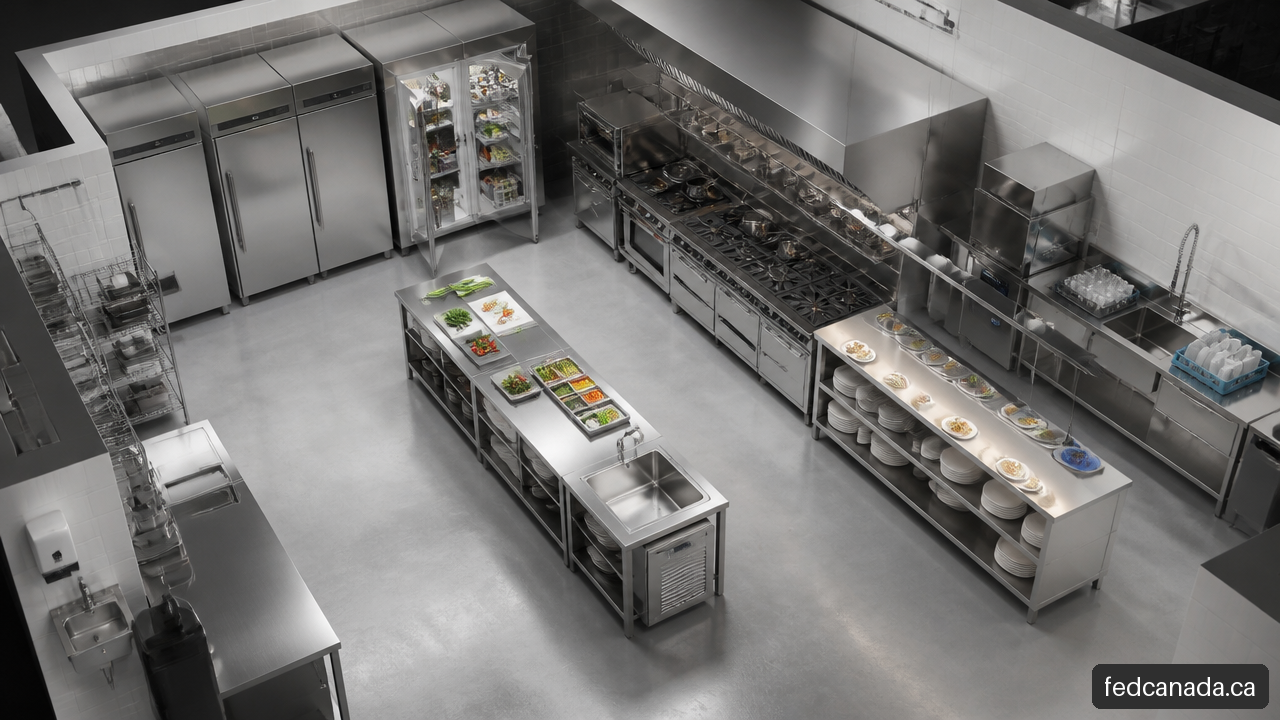
Commercial kitchen workflow normally moves through receiving, storage, preparation, cooking, plating or packaging, service, and warewashing. Each handoff adds time, handling, and food safety risk.
For a compact café, a practical flow may be cold storage to prep table to sandwich press or convection oven to pickup shelf. For a full service restaurant, the flow may include separate raw protein prep, vegetable prep, hot production, pass, dish drop, dishwasher, and clean-dish storage. The equipment list changes because the workflow changes.
Use these questions to test a proposed layout:
- Can staff move from refrigerator to prep surface to cooking line without crossing the warewashing path?
- Is there a handwashing sink accessible where food handling occurs?
- Can hot food move to service without crossing a receiving or waste route?
- Is there adequate landing space beside ovens, fryers, ice machines, and dishwashers?
- Can doors, drawers, and dishwasher hoods open without blocking aisles or adjacent workstations?
A prep table next to a hot line can be convenient, but proximity has limits. Heat from cooking equipment can increase refrigeration load and make nearby cold equipment work harder. Natural Resources Canada advises arranging commercial kitchen equipment so appliances do not interfere with each other’s energy performance. That operational detail is easy to miss on a floor plan and costly to correct after installation.
Match equipment classes to the operation
There is no universal “restaurant equipment package.” The right equipment depends on menu complexity, available utilities, staffing, and service style.
| Operation type | Usually needs priority investment | Equipment to scrutinize carefully |
|---|---|---|
| Café or bakery | Refrigerated display, prep refrigeration, ovens, mixers, coffee brewing, storage | Counter depth, electrical service, ventilation needs |
| Quick service restaurant | Fryers, griddles, holding equipment, prep tables, high speed warewashing | Recovery rate, holding capacity, order staging |
| Full service restaurant | Range or cookline, refrigeration, dish machine, prep equipment, ventilation | Workflow separation, hood capacity, dish volume |
| Catering operation | Mobile storage, hot holding, transport racks, batch cooking equipment | Loading access, transport durability, electrical flexibility |
| Food truck or mobile vendor | Compact cooking, refrigeration, water systems, power management | Vehicle weight, ventilation, generator or shore power capacity |
Avoid buying a larger appliance simply because it appears more professional. Oversized equipment can increase upfront cost, utility consumption, ventilation demand, and cleaning time. Buy excess capacity only when the menu, growth plan, or seasonal demand clearly supports it.
Compare Life Cycle Cost, Not Sticker Price
Use a repeatable ownership-cost model
A low purchase price can be attractive, especially during an opening. Still, commercial equipment should be evaluated as a life cycle cost decision. This means comparing what each option costs to buy, install, operate, maintain, repair, and replace over its useful working life.
A useful calculation is:
Life cycle cost = purchase price + delivery + installation + utilities + maintenance + repairs + downtime cost + replacement cost
Some inputs are straightforward, such as freight or electrical work. Others require estimates. Downtime cost is often the hardest because it depends on the item and the operation. If a second refrigerator can temporarily hold inventory, a failure may be inconvenient. If the only ice machine fails before a busy patio weekend, the business may lose beverage sales, staff time, and customer confidence.
| Cost category | Questions to ask before buying | Common oversight |
|---|---|---|
| Purchase and freight | Is the quoted price complete? Are accessories required? | Forgetting stands, casters, shelves, filters, or delivery constraints |
| Installation | What electrical, gas, plumbing, drainage, or hood work is required? | Assuming a replacement will use the existing connections |
| Utilities | How many hours will it run each day? What are local energy and water rates? | Comparing rated consumption without considering operating schedule |
| Maintenance | Are filters, descaling, seals, belts, and cleaning procedures manageable? | Treating maintenance as optional rather than planned work |
| Service | Are parts and qualified technicians accessible? | Checking warranty length but not regional service availability |
| Downtime | What happens if this unit fails during service? | Failing to plan a backup method or temporary replacement |
Put energy and water performance in context
Commercial kitchens use a concentrated amount of energy because they cook, refrigerate, clean, ventilate, and hold food for long operating periods. Natural Resources Canada reports that food preparation equipment accounts for about 35% of energy use in the average Canadian commercial or institutional kitchen. That makes cooking-line choices more consequential than a small difference in initial price might suggest.
Efficiency claims should be compared within the same equipment category. An ENERGY STAR certified oven, refrigerator, or dishwasher can reduce utility use, but the practical payback depends on operating hours, local utility costs, load patterns, and maintenance. A lightly used appliance may take longer to recover a higher upfront cost than the same model running two or three shifts daily.
For example, Natural Resources Canada notes that ENERGY STAR certified commercial fryers can use approximately 30 to 35% less energy than standard models, depending on fryer type. That is meaningful for an operation frying throughout the day. It may be less decisive for a menu where the fryer is used only for limited evening service. In both cases, oil management, cleaning, loading practices, and recovery performance still influence real results.
Water deserves equal attention. Steam cookers, ice machines, and warewashing equipment combine utility costs because they use both energy and water. ENERGY STAR certified steam cookers can achieve substantial energy savings and use far less water than standard equipment, while certified commercial dishwashers can reduce both energy and water use. These benefits are strongest when the machine is correctly sized and run with full, properly loaded racks.
Calculate utility payback with your own numbers
I recommend a simple payback test before paying a premium for efficiency features:
- Find the difference in installed cost between the standard and efficient models.
- Estimate annual electricity, gas, and water savings using manufacturer data and realistic operating hours.
- Multiply expected utility savings by your local rates.
- Divide the installed-cost difference by annual savings.
- Stress test the answer with lower operating hours and possible maintenance costs.
Suppose an efficient dishwasher costs more after installation but reduces water and energy use every rack cycle. A high volume operation running many racks daily may recover the premium quickly. A small café running only a few cycles may still benefit, but the financial case could be less immediate. The right decision can also depend on available water capacity, wastewater charges, and whether the machine removes a labour bottleneck.
Plan for Compliance, Installation, and Connected Technology
Verify standards before delivery day
Commercial restaurant equipment may require electrical, gas, plumbing, ventilation, fire protection, sanitation, and building approvals. Requirements vary by municipality, province, facility type, and equipment configuration. It is safer to verify the complete installation plan with the appropriate local authorities and qualified trades before committing to a model.
Canada’s Energy Efficiency Regulations establish minimum performance standards for certain commercial products, including categories such as commercial refrigerators, freezers, and ice makers. Product eligibility is not the same as confirming that an appliance fits your building, menu, or local inspection requirements. Both checks matter.
Before ordering, document the following:
- Electrical voltage, phase, amperage, plug or hardwire requirements, and available panel capacity
- Gas type, line size, shutoff placement, and required connections
- Water pressure, filtration, drainage, backflow prevention, and floor drain access
- Hood, fire suppression, make up air, and HVAC requirements for heat producing equipment
- Clearance requirements for service access, door swing, airflow, and cleaning
- NSF or other sanitation certification expectations that may apply to the equipment and local health authority requirements
Fair warning: replacing an old appliance with a similar looking model does not guarantee a simple swap. A new unit may have different electrical demand, a different condensate drain location, or larger service clearances. Verify drawings and specification sheets, not just exterior dimensions.
Protect food safety through equipment choices and routines
Equipment supports food safety only when the design and daily operating practices work together. Refrigeration needs accurate temperature monitoring, airflow space, clean condenser coils, intact gaskets, and a plan for responding to an alarm. Warewashing equipment needs the correct chemistry, water temperature, rack loading, and cleaning routine. Food holding equipment needs enough capacity to prevent overcrowding and enough controls to maintain the required temperature.
A useful recovery plan identifies what staff should do when critical equipment fails. For refrigeration, that can include moving product to another approved cold unit, documenting temperatures, and determining whether food remains safe. For dishwashing, it can include an approved temporary warewashing method if one is available. The exact response should align with local food safety procedures and health authority expectations.
Use smart features where they solve a real problem
Technology integration is becoming more common in commercial kitchens. Smart refrigeration alerts, remote temperature monitoring, connected ovens, automated chemical dispensing, and POS linked inventory tools can improve visibility. They are most valuable when they reduce a known operational blind spot.
For example, remote refrigerator alerts can help staff respond sooner to a temperature issue outside operating hours. That does not eliminate the need for manual checks, maintenance, or an emergency product-transfer plan. Similarly, inventory software can identify popular items and support purchasing decisions, but recipe yields, receiving accuracy, and waste tracking still determine whether its numbers are useful.
Choose connected equipment when these conditions are present:
- The operation has multiple units, locations, or long unattended periods
- Staff can act on alerts quickly and have defined escalation procedures
- Internet reliability and account administration are manageable
- The manufacturer offers clear support, data access, and update policies
Avoid paying for complex connectivity when the team does not have time to review alerts or when a simpler preventive maintenance routine would solve the issue.
Frequently Asked Questions
What equipment is essential for opening a commercial restaurant in Canada?
The essentials depend on the menu, but most operations need commercial refrigeration, food preparation surfaces and tools, primary cooking equipment, handwashing access, storage, warewashing capability, and appropriate ventilation. Start with the menu and peak service volume rather than buying a generic package. A sandwich café and a full service steakhouse may both need refrigeration and warewashing, but their cooking, holding, and ventilation needs are very different.
How do I calculate the right oven, fryer, refrigerator, or dishwasher capacity?
Calculate capacity from peak demand. Estimate the busiest hour’s portions, divide by batch size, then account for cook time, recovery time, holding capacity, and a reasonable buffer. For dishwashers, count racks or place settings generated during peak periods rather than total daily covers. For refrigeration, include active prep and replenishment capacity, not just bulk storage. If the peak is highly seasonal, compare the cost of extra capacity with the operational cost of working around an undersized unit.
What is the difference between commercial and residential restaurant equipment?
Commercial equipment is generally designed for higher throughput, more frequent cleaning, professional installation, service access, and foodservice operating conditions. It may require dedicated utilities, ventilation, and specific sanitation or safety certifications. Residential equipment can be unsuitable for sustained restaurant workloads and may not meet local commercial installation or inspection expectations. Confirm requirements with local authorities before assuming a product is acceptable.
Which commercial kitchen equipment uses the most energy?
Cooking equipment, refrigeration, ventilation, dishwashing, and ice production can all be significant users. The largest contributor varies with the menu and operating hours. A fryer intensive quick service restaurant may focus on frying and holding efficiency, while a café may see more continuous refrigeration and coffee brewing demand. Measure or estimate usage by category rather than relying on one universal answer.
Is ENERGY STAR equipment worth the higher purchase price?
It can be, particularly for equipment that runs for long hours or many cycles each day. Compare installed price with expected electricity, gas, and water savings using local utility rates. Efficient equipment may also reduce heat output or water use, which can help surrounding systems. For low use equipment, a lower purchase price, repairability, or local parts availability may carry more weight.
What should I buy new, and what can I safely buy used?
New equipment is often the lower risk choice for refrigeration, ice machines, dishwashers, cooking equipment with complex controls, and units that are difficult to replace during service. Used stainless tables, shelving, sinks, basic racks, and some simple prep equipment can be practical value purchases if they are structurally sound and easy to sanitize. Inspect used equipment for certification labels, electrical condition, door seals, corrosion, compressor operation, drainage, burners, controls, missing parts, and service history where available.
Does commercial equipment require special electrical, gas, plumbing, or ventilation connections?
Often, yes. Requirements can include dedicated electrical circuits, gas connections, water filtration, drainage, backflow prevention, mechanical ventilation, fire suppression, and make up air. The required work depends on the appliance and building. Review specification sheets with qualified trades and local authorities before purchase, especially for cooking equipment, dish machines, steam equipment, and ice makers.
How can I reduce commercial equipment downtime?
Build downtime prevention into purchasing and daily operation. Choose equipment with accessible parts and service support, follow cleaning and filter schedules, train staff on normal operating signs, and keep a record of temperatures, maintenance, and repairs. For critical equipment, define a backup plan before failure occurs. That could mean spare refrigeration space, a temporary cooking method, or a service contact that can respond in your area.
Sources/References
- Natural Resources Canada: natural-resources.canada.ca — https://natural-resources.canada.ca/stories/spotlight-energy-efficiency/eco-friendly-food-service
Recent Posts

Leave a Comment
Your email address will not be published. Required fields are marked *