



Stockpot Buying Guide: Size, Materials, Uses, and Care
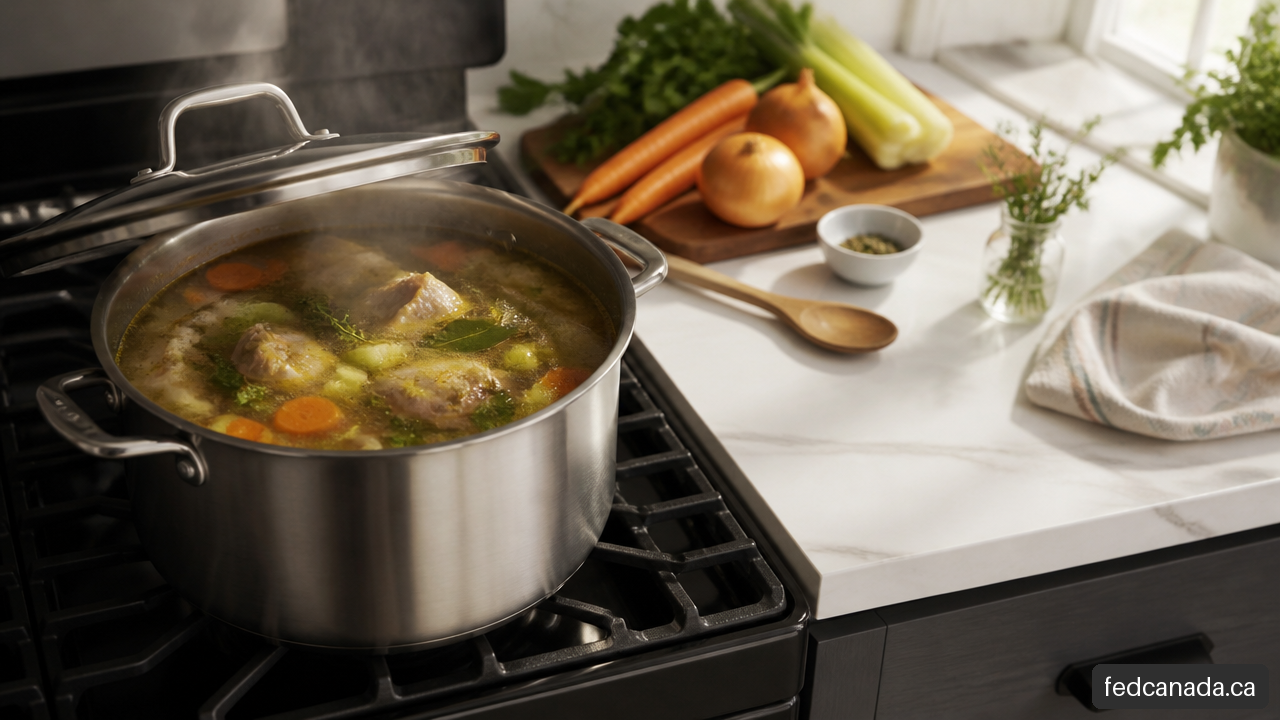
A **stockpot** is the workhorse for big pots of broth, pasta, chili, beans, and make ahead meals. I recommend choosing one based on more than its listed capacity: the pot must also suit your burner, sink, storage space, and ability to safely handle hot liquid.
**Table of Contents**
• [Choosing the Right Stockpot](#choosing-the-right-stockpot)
• [Using a Stockpot Well](#using-a-stockpot-well)
• [Stockpot Care, Cleaning, and Safe Cooling](#stockpot-care-cleaning-and-safe-cooling)
• [Key Takeaways](#key-takeaways)
• [Stockpot FAQ](#stockpot-faq)
• [Sources](#sources)
## Choosing the Right Stockpot
### What a stockpot does best
A stockpot is a tall, deep cooking vessel made for liquid heavy cooking. It gives ingredients room to circulate in water or broth, holds a substantial batch, and limits splashing better than a shallow pan. Stockpots are useful for stock, soup, stew, pasta, beans, chili, sauces, chowder, and oatmeal. Retail listings from Best Buy Canada’s cookware category also show how stockpot materials and layered constructions can vary across large volume cookware.
The important distinction is this: a stockpot excels at **simmering and boiling**, not necessarily at browning. A tall sidewall keeps heat and moisture in the pot, which is useful for stock extraction and soup. It also means moisture evaporates more slowly than it would from a wide Dutch oven or braiser.
That can be an advantage or a limitation.
• Choose a stockpot when you want a clean broth, boiled pasta, tender beans, or a generous batch of soup.
• Choose a wide sauté pan, braiser, or Dutch oven when browning meat is the main job and reducing sauce quickly matters.
• Use the stockpot for both only if its base is broad enough for your burner and you are willing to brown in smaller batches.
For example, browning two pounds of ground beef in a narrow 12 litre stockpot can trap steam. The meat releases moisture faster than that moisture can escape, so it may gray and simmer rather than develop a deeply browned surface. Brown in batches or start in a wider pan if that flavour step matters.
### Capacity: convert litres into a real cooking plan
Capacity labels can be misleading because the full stated volume is not the amount you should cook with. A pot filled to the rim is hard to stir, likely to boil over, and unsafe to carry. Leave **headspace**, the empty area between food and the rim, especially for starchy pasta water, frothy beans, or a rolling boil.
I recommend planning around approximately 70 to 80 percent of the stated capacity for most liquid heavy recipes. The remaining space gives you room to stir, add ingredients, and manage bubbling without splashing.
| Listed capacity | Practical batch use | Best fit | Things to check first |
|---|---|---|---|
| 6 to 8 L | About 4 to 6 servings of soup, a small chicken stock, pasta for a family meal | Smaller households and everyday cooking | Confirm the lid height fits beneath cabinets |
| 10 to 12 L | Large soup batch, chili for guests, pasta for a group, meal prep stock | Family cooking and frequent batch cooking | Check burner width and sink clearance |
| 14 to 16 L | Bone broth, party sized pasta, preserving related prep, freezer meal batches | Large households, avid batch cooks, caterers | Consider full pot weight before buying |
| 20 L and above | Very large stock, event cooking, institutional or commercial prep | High volume food production | Requires stable burners, storage, and a cooling plan |
Stockpots are often sold in approximately 8 to 16 quart capacities, or roughly 7.6 to 15.1 litres, as shown in ZWILLING Canada’s stockpot selection. That range covers many household needs, but a larger pot is not automatically more useful.
Consider a 16 litre pot holding 12 litres of stock. Liquid alone weighs roughly 12 kilograms before bones, vegetables, and the pot itself are added. Moving that volume from stove to sink can be awkward even for a confident cook. A 10 or 12 litre model may be the more practical choice when batches will be cooled and portioned at home.
### Material, base construction, and cooktop compatibility
Stainless steel is usually the most flexible stockpot material. It is durable, relatively non reactive, and suitable for tomato sauces, wine based braises, and other acidic foods. Aluminum heats rapidly and conducts heat well, but bare aluminum may react with strongly acidic ingredients and does not work on every induction cooktop. Copper responds quickly to heat changes but usually requires more maintenance and may need an induction compatible base.
The base construction matters as much as the surface material. A stainless stockpot with an aluminum core or layered base can spread heat more evenly across the bottom than a thin single layer vessel. Some models use this type of construction specifically to improve heat distribution and help reduce bottom scorching, as described in Best Buy Canada’s large stockpot listings.
Still, a thick bottom is not magic. Heat performance depends on several interacting factors:
• **Burner size:** A small burner concentrates heat in the centre of a wide pot.
• **Food depth:** A deep pot of dense chili receives heat differently than a thin layer of broth.
• **Stirring:** Thick soups, dairy based sauces, and grains need more movement near the base.
• **Sidewall construction:** A layered bottom improves the base, but it does not make tall sidewalls heat exactly like fully clad cookware.
For induction, look for a clearly stated induction compatible base. A simple home check is to hold a magnet against the bottom contact area. If it adheres securely, the pot likely has a ferromagnetic base that can work with induction. That is only a first check: confirm the manufacturer’s compatibility statement and ensure the magnetic area is large enough to meet the cooktop’s burner zone. A pot can be stainless steel yet still fail to work if its base is not magnetic.
## Using a Stockpot Well
### Match pot geometry to the recipe
A tall, narrow stockpot and a wider, shorter soup pot can hold similar volumes but cook differently. Geometry changes the exposed surface area of the liquid. A broader surface generally encourages faster evaporation, while a narrower opening tends to retain more liquid during a gentle simmer.
For a clear chicken stock, slower evaporation may be useful. Keep bones and aromatics covered with water, maintain a quiet simmer, and adjust with a lid slightly ajar if the liquid is reducing too quickly. For tomato sauce or a concentrated braising liquid, a wider vessel may be more efficient because more surface is exposed to steam.
There is no universal “best” shape for broth. A taller pot can hold a large quantity of bones with enough water to cover them. A wider pot may make skimming foam easier and can reduce more quickly. The better choice depends on whether your priority is volume, evaporation, or stovetop footprint.
> A stockpot should support the cooking method, not force the recipe to behave differently.
### Build flavour without scorching the base
Many stockpot recipes begin with onions, garlic, celery, carrots, tomato paste, or spices. You can sauté these ingredients directly in the pot if the base is heavy enough and the burner is not too aggressive. Use medium rather than high heat, add enough fat to coat the base, and stir before browned bits become dark spots.
When you add liquid, scrape the bottom with a wooden spoon or heat safe spatula. This loosens flavourful browned bits before they burn. Then lower the heat once the pot reaches a boil. A stock should barely tremble rather than violently churn. A hard boil can cloud stock, break down delicate ingredients, and create more splashing.
Thick foods require a different approach. Chili, split pea soup, oatmeal, polenta, and cream sauces can settle at the bottom and scorch even in a quality pot. To reduce that risk:
1. Use a burner that is close to the pot’s base diameter.
2. Bring food up to temperature gradually rather than starting at maximum heat.
3. Stir from the bottom and corners, not only across the surface.
4. Reduce heat before the pot looks aggressively active.
5. Add small amounts of liquid if a thick mixture becomes difficult to move.
If scorching begins, do not scrape the burnt layer into the food. Gently transfer the unburnt portion to a clean pot, leaving the stuck residue behind. This may save the dish from a bitter flavour.
### Beyond stock: pasta, steaming, and batch meals
A stockpot earns its cabinet space when it handles more than one recipe category. It can boil long pasta without snapping it, cook corn or shellfish, blanch vegetables, steam dumplings with an insert, and hold a large batch of soup for portioning.
For steaming, add only enough water that it remains below the steamer basket. The food should cook in steam, not sit in boiling water. Keep the lid on as much as practical because removing it releases heat and extends cooking time.
For pasta, choose a pot that leaves room above the water line. Starchy foam can rise quickly, especially during the first minutes after pasta is added. Stir immediately, then again after a minute or two, to prevent pieces from sticking together or to the bottom.
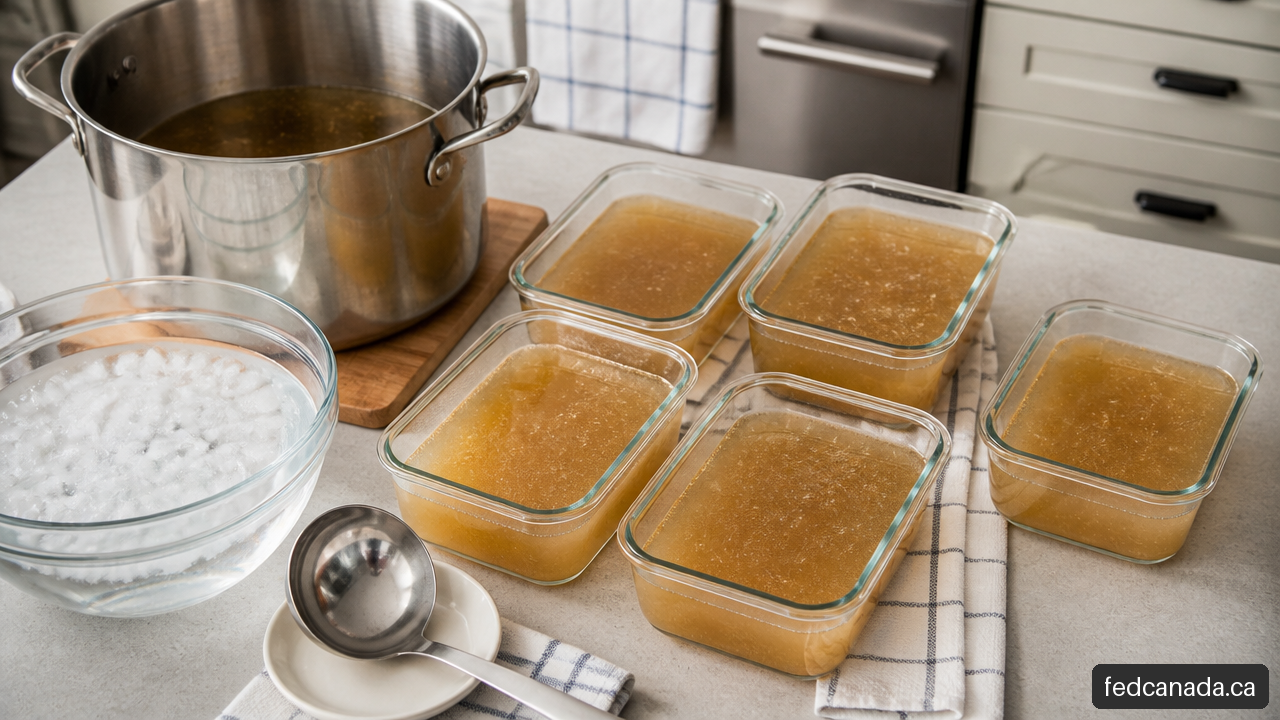
Large batch stock making commonly uses 12 to 16 quart stockpots, and rapid cooling methods can include an ice bath, cooling wand, or blast chiller, as outlined in The Eating Channel’s stock making guide. The practical implication is easy to miss: cooking capacity and cooling capacity are separate decisions. A pot that makes 12 litres of stock is only useful if you have shallow containers, refrigerator space, or a safe cooling setup ready afterward.
## Stockpot Care, Cleaning, and Safe Cooling
### A practical cleaning decision tree
Stainless steel stockpots can often go in the dishwasher when the manufacturer permits it, but hand washing can make it easier to inspect the base, handles, and interior after heavy cooking. Let the pot cool enough to handle before washing. Sudden temperature changes can be hard on cookware and may warp some bases over time.
Use this quick approach for common problems:
| Problem | What likely happened | First response | Avoid |
|---|---|---|---|
| Food stuck to the bottom | Heat was too high or food was not stirred | Cover residue with warm water and dish soap, then soak | Forcing it off with sharp metal tools |
| Burnt starch or protein | Thick food settled and scorched | Simmer water in the pot, loosen gently, then wash | Scrubbing aggressively while the pot is dry |
| Cloudy white marks | Mineral deposits from water | Simmer a small amount of water with a mild acidic cleaner suitable for cookware, then rinse | Assuming the marks mean the pot is unsafe |
| Rainbow or blue tint | Heat discoloration on stainless steel | Wash normally, then use a stainless safe cleaner if desired | Overheating an empty pot repeatedly |
| Persistent odour | Food residue caught near rivets or lid edge | Soak, clean seams carefully, and dry completely | Storing with the lid sealed while damp |
Fair warning: a dishwasher safe label does not mean every cleaning situation is best handled by a dishwasher. Burnt residue usually needs soaking first. Also avoid abrasive products that can scratch a polished surface or damage a nonstick interior if your stockpot has one.
### Store and handle a large pot safely
Before lifting, assess the pot rather than assuming you can manage it by the handles. A full pot can shift suddenly, and the liquid may surge toward one side. If the pot is very heavy, it is often safer to ladle food into containers where it sits than to carry it across the kitchen.
Useful handling habits include:
• Keep both handles dry and use dry oven mitts.
• Turn handles inward so they do not project over another burner or walkway.
• Avoid draining boiling water through a crowded sink or a small colander that can tip.
• Use a stable trivet if the pot must leave the stovetop.
• Check that the pot base sits flat and centred on the burner.
A standard home stovetop can support a stockpot, but its largest burner may not heat a very wide base evenly. If the pot overhangs the burner substantially, use lower heat and allow more time for the contents to warm. This is especially relevant with dense soups and sauces.
### Cool stock as a separate kitchen task
Do not treat the stockpot as a storage container for hot food. A large, deep volume cools slowly, especially with a tight lid on. Instead, divide hot stock into smaller, shallow containers when practical. An ice bath around the pot or containers can speed cooling; a cooling wand is another option for larger batches.
Plan the process before cooking:
1. Clear refrigerator space and prepare containers before the stock is finished.
2. Remove large bones, vegetables, or solids that retain heat.
3. Portion the liquid into shallow containers or use a suitable cooling method.
4. Label and refrigerate once safely cooled, following food safety guidance appropriate to your setting.
5. Wash the stockpot after it has cooled enough to handle, rather than leaving residue to harden overnight.
## Key Takeaways
### Choose for the full cooking system
The best stockpot is not simply the largest or heaviest option. I recommend matching its capacity to the batch you will realistically make, leaving room for headspace, stirring, cooling, and storage. A 10 to 12 litre pot is often a workable middle ground for households that cook soup, pasta, and freezer meals regularly.
### Prioritize construction where it affects results
A layered or heavy base can help with gentler, more even heating, but burner size, recipe thickness, and stirring still control whether food scorches. Select a clearly induction compatible model for an induction cooktop, and verify the magnetic base rather than relying on stainless steel alone.
## Stockpot FAQ
### What is a stockpot used for?
A stockpot is used for liquid heavy foods and high volume cooking. Common jobs include making stock, broth, soup, stew, chili, beans, pasta, sauces, and steamed foods with a basket or insert. Its deep shape is particularly useful when ingredients need to stay covered with liquid during a long simmer.
### What is the difference between a stockpot and a soup pot?
The terms overlap, but a stockpot is usually taller and deeper, while a soup pot may be shorter and wider. A taller pot is useful for broth and boiling pasta. A wider soup pot may be easier for browning ingredients and reducing liquid. Compare dimensions, not just the product name.
### What size stockpot is best for a family of four?
For most families of four, an 8 to 12 litre stockpot offers useful flexibility. Choose closer to 8 litres for everyday pasta and soup. Choose 10 to 12 litres if you regularly make freezer meals, larger pots of chili, or chicken stock. Avoid sizing up only for occasional holiday cooking if storage and handling will be difficult.
### Is stainless steel better than aluminum for a stockpot?
Neither is automatically better. Stainless steel is a strong choice for durability and acidic ingredients. Aluminum responds quickly to heat and is often used as a conductive core inside stainless cookware. For an all purpose stockpot, stainless steel with an aluminum core or layered base is often a practical balance of durability and heat distribution.
### Can a stockpot be used on an induction cooktop?
Yes, if it has an induction compatible ferromagnetic base. Test the bottom with a magnet, then confirm the manufacturer’s specification. A magnetic bottom is a helpful sign, but the pot should also sit flat and have enough magnetic contact area for the induction burner.
### Why does food scorch in the bottom of my stockpot?
Scorching usually comes from concentrated heat, a thin base, insufficient stirring, or a thick recipe that settles at the bottom. Lower the heat, match the pot to the burner, stir the bottom corners, and add liquid as needed. For frequent thick soups or sauces, consider a pot with a heavier or layered base.
### Can I put a stockpot in the dishwasher?
Many stainless steel stockpots are dishwasher safe, but check the manufacturer’s care instructions first. Hand washing may be better after a burnt or sticky recipe because soaking and gentle cleaning are more effective than running a heavily soiled pot through a dishwasher cycle.
### How should I cool a large batch of stock?
Cool a large batch in smaller, shallow containers when possible, or use an ice bath or cooling wand for faster cooling. Avoid leaving a full stockpot on the counter for an extended period. Plan refrigerator space before cooking so the stock can be chilled promptly and safely.
## Sources
### Cookware construction and stockpot uses
• Best Buy Canada — Pots & Saucepans: Large, Medium, Stainless Steel & more: https://www.bestbuy.ca/en-ca/category/pots-saucepans/34487
• ZWILLING Canada — Stock Pots & Soup Pots: https://www.zwilling.com/ca/cookware/pots/stock-pots/
• Le Creuset Canada — All About Stockpots: A Comparative Guide: https://www.lecreuset.ca/en_CA/blog/all-about-stockpots.html
### Heat distribution and cooling
• Best Buy Canada — Large Stock Pots: https://www.bestbuy.ca/en-ca/shop/home-living/large-stock-pots
• The Eating Channel — Stock Making: Complete Guide: https://theeatingchannel.com/techniques/stock-making-guide
Recent Posts
Sanitizer Test Strips and Dish Sanitizing Basics
25th November, 2026
Commercial Vacuum Sealers: Chamber vs External Buying G...
25th November, 2026
Garland Commercial Ranges: Settings, Troubleshooting an...
25th November, 2026

Probe Thermometers: Calibration and Use Made Reliable
23rd November, 2026
Leave a Comment
Your email address will not be published. Required fields are marked *