




Planetary vs Spiral Mixer: Which Commercial Mixer Fits?
Planetary vs Spiral Mixer: Which Commercial Mixer Fits?
The planetary vs spiral mixer decision is less about choosing the machine with the biggest motor and more about matching mixing technology to your menu. A planetary mixer is usually the better all-purpose choice for kitchens that make batters, fillings, whipped products, cookies, and modest dough batches. A spiral mixer is built for repeated bread and pizza dough production, where dough temperature, gluten development, and usable batch capacity matter every day.
A mixer that can technically knead dough is not always the mixer that should carry a dough-heavy production schedule. The right choice depends on what you make, how much you mix per batch, and how many cycles the machine must complete before service or delivery.
Table of Contents
- Key Takeaways
- How Planetary and Spiral Mixing Technology Works
- Dough Quality, Hydration, and Mixing Intensity
- Capacity, Workflow, Durability, and Buying Decisions
- FAQ: Planetary vs Spiral Mixer
- Sources
Key Takeaways
The short answer
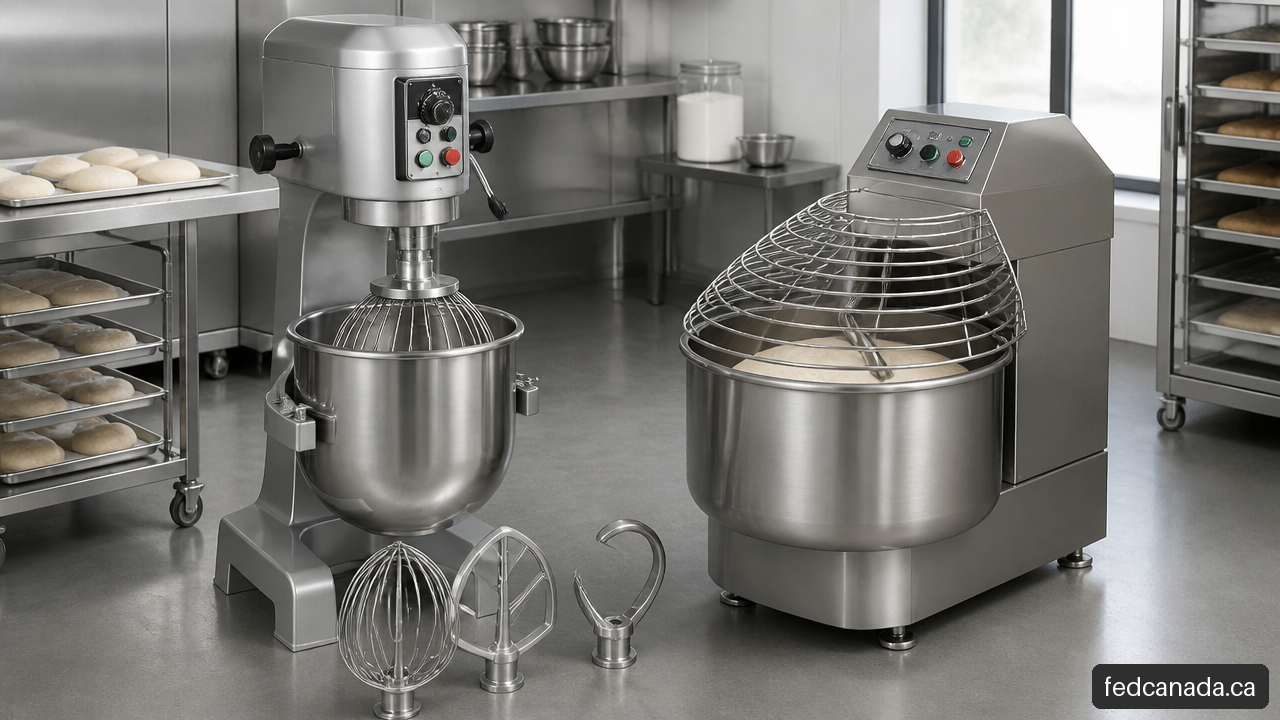
I would choose a planetary mixer when the kitchen needs one machine for varied prep: cake batter, frosting, mashed potatoes, whipped cream, cookie dough, sauces, and occasional dough batches. Its interchangeable flat beater, wire whip, and dough hook make it a flexible prep station.
I would choose a spiral mixer when bread, pizza, bagels, buns, or similar yeast doughs are a central production task. Its mixing action is designed to knead dough efficiently while generally producing less friction heat than a planetary mixer used for the same heavy dough workload.
The operational distinction that matters
A planetary mixer incorporates ingredients effectively. A spiral mixer is designed to develop dough structure. Those are related jobs, but they are not identical.
| Decision factor | Planetary mixer | Spiral mixer |
|---|---|---|
| Primary purpose | General mixing and prep | Bread and pizza dough production |
| Bowl movement | Bowl remains stationary | Bowl usually rotates with the dough |
| Tool movement | Attachment orbits inside the bowl | Spiral hook kneads a moving dough mass |
| Best menu fit | Mixed prep and lighter dough output | Dough-first bakery and pizzeria production |
| Attachments | Flat beater, whisk, dough hook, optional tools | Usually dedicated spiral hook system |
| Heavy dough workflow | Suitable in controlled batches | Better suited to frequent, dense dough batches |
| Non-dough prep | Strong capability | Limited capability |
A practical buying rule
Buy based on the smallest and largest dough batches you actually need to make, not the bowl size printed on the machine.
A 20-quart planetary mixer and a 20-quart spiral mixer should not be assumed to have the same useful dough output. Bowl geometry, minimum dough requirement, hydration, flour strength, and the machine’s intended loading range all affect real capacity.
How Planetary and Spiral Mixing Technology Works
Planetary action: broad coverage and attachment flexibility
A planetary mixer has a stationary bowl while the attachment rotates on its own axis and travels around the bowl. That orbital movement is why it can work with several attachment types and reach a broad area of the bowl. Hobart’s overview of planetary and spiral mixer selection describes this fundamental motion difference and its effect on equipment choice.
The planetary design is useful because the tool can be changed to match the product:
- A wire whip introduces air into egg whites, cream, mousse bases, and light whipped products.
- A flat beater blends cake batter, cookie dough, mashed potatoes, fillings, and many savory preparations.
- A dough hook pulls and folds yeast dough for lower-volume bread or pizza production.
This versatility is operationally valuable in a café, restaurant, hotel kitchen, or small bakery with a varied menu. One mixer can support morning baking, lunch prep, dessert production, and catering work. The compromise is that its dough hook is an attachment within a general-purpose system rather than a dedicated dough-mixing mechanism.
Spiral action: focused kneading and dough movement
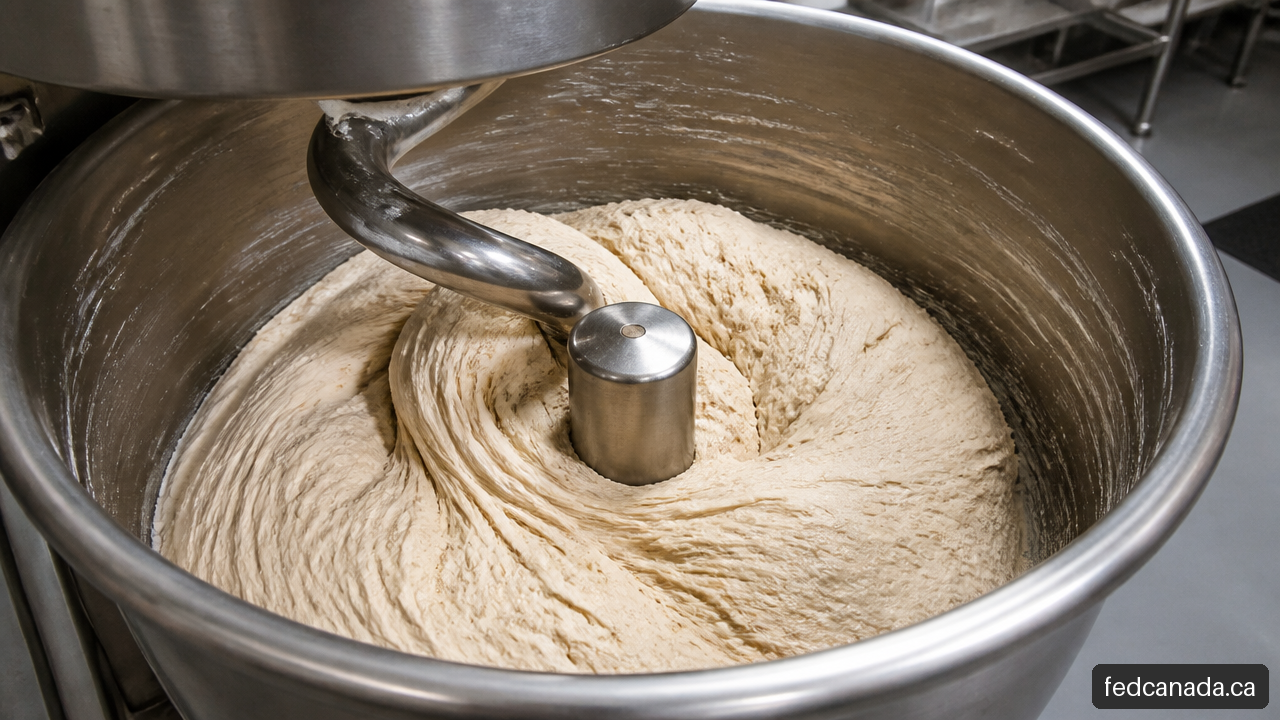
A spiral mixer uses a spiral hook and a rotating bowl in many common designs. Rather than spinning a tool through a largely stationary dough mass, the machine continuously moves the dough around the hook. That action stretches, folds, and compresses the dough repeatedly.
This creates a more specialized kneading pattern. The dough circulates through a smaller working zone around the hook instead of having the entire mass aggressively swept by a planetary attachment. The result is often more controlled gluten development for bread and pizza dough, especially when production involves repeated batches.
Spiral mixers are not designed to replace a planetary mixer for whipped cream, cake batter, buttercream, or small quantities of sauces. They may combine some ingredients, but that does not make them efficient general-purpose prep tools.
What the breaker bar does
Some spiral mixers include a breaker bar, a fixed vertical bar positioned in the bowl. As dough rotates, the bar resists the dough mass and helps it fold back through the spiral hook instead of simply traveling around the bowl as one large ball.
Empire Bake’s explanation of the breaker bar and spiral dough mechanics identifies it as a feature that supports dough organization during kneading. In practical terms, the breaker bar creates an additional point of resistance. That resistance improves the folding action needed to align and strengthen gluten. Not every spiral mixer uses the same bowl, hook, or breaker-bar arrangement. Buyers should confirm the actual machine design rather than assuming every model performs identically.
Dough Quality, Hydration, and Mixing Intensity
Ingredient incorporation is not the same as dough development
A mixer can bring flour, water, salt, yeast, and preferment together quickly while still producing dough that is too warm, unevenly developed, or overworked for the intended product. Good dough mixing requires more than eliminating dry flour.
Gluten development occurs as hydrated proteins form a network that gives dough elasticity and gas retention. Mixing must provide enough energy to build that network, but excessive intensity can raise dough temperature and increase oxidation. Too little development can leave dough weak and sticky. Too much can make it overly tight, warmer than planned, and harder to manage during fermentation.
A spiral mixer’s gentler, repetitive folding action is often preferred for this balance in bread production. Smart Restaurant Owner notes that spiral and planetary mixer differences in heat and gluten development are especially relevant for dough work. That is the real reason a spiral mixer is usually recommended for a pizzeria or bread bakery: it is not merely faster at turning ingredients into a mass.
Hydration changes the decision
Hydration is the ratio of water to flour, expressed as a percentage. A dough with 1,000 grams of flour and 650 grams of water is 65% hydration. The figure does not tell the entire story because flour strength, fat, sugar, preferments, and inclusions also affect resistance, but it is a useful starting point.
For many moderate doughs around 60% to 65% hydration, a properly sized planetary mixer can be workable when batches are modest and dough production is not continuous. Enriched doughs containing butter, milk, eggs, or sugar can also fit a planetary workflow because the same mixer may be needed for related fillings and batters.
As dough becomes wetter, particularly around 70% hydration and above, it becomes stickier and more extensible. High-hydration dough may still be mixed in a planetary unit, but it can climb the hook, smear around the bowl, or require frequent pauses and bowl scraping.
A spiral mixer often manages these doughs more consistently because the rotating bowl keeps the mass moving through the kneading zone. There is no universal hydration cutoff. A 70% pizza dough made with strong flour behaves differently from a 70% dough with whole grain flour, oil, or a long autolyse. Treat hydration as a decision signal, not a guaranteed threshold.
Heat, oxidation, and fermentation control
Mixing converts some mechanical energy into heat. Dough temperature matters because it influences yeast activity, fermentation timing, and final handling characteristics. If a dough exits the mixer warmer than planned, the production schedule may shift before the next task is complete.
A planetary mixer can generate more friction when a dense dough is worked hard with a dough hook, particularly if staff compensate for slow development by extending the mix. Signs include dough that feels unusually warm, a tight or torn surface, and a mixer that strains or rocks under load.
A spiral mixer generally offers a better heat-control approach for high-volume dough work, although it is not heat-free. Warm ingredients, long mix times, a hot room, and excessive speed can still push final dough temperature upward. The recovery step is not simply “mix longer.” Use colder water where the formula permits, shorten the intensive mix phase, allow rest periods, and verify the batch against a target final dough temperature.
When planetary mixing is still the better dough choice
A spiral mixer is not automatically the right purchase for every operation that sells bread or pizza. Choose a planetary mixer for dough when these conditions describe the operation:
- Dough is a secondary menu item rather than the core revenue driver.
- Batches are small enough that the machine operates within its dough rating.
- The kitchen also needs frequent whipping, creaming, beating, and general prep.
- Production can use rest periods, folding, or fermentation time rather than relying on intensive mechanical mixing alone.
- Counter space, capital budget, and electrical capacity support only one flexible machine.
For example, a café making a few pans of focaccia twice weekly, plus muffins, whipped toppings, and cookie dough every day, may get more value from a planetary mixer. A pizzeria mixing dough for lunch and dinner service every day has a different workload. In that case, a dedicated spiral mixer can prevent the dough station from becoming the equipment bottleneck.
Capacity, Workflow, Durability, and Buying Decisions
Start with dough weight, not quart labels
Nominal bowl capacity is a poor substitute for an actual dough-loading plan. A mixer may hold a certain volume, but heavy dough has different operating limits than whipped cream or cake batter. The lower limit matters too: some larger spiral mixers do not handle very small dough batches well because the dough cannot engage consistently with the hook and bowl.
Before comparing models, calculate each formula in total dough weight and record the expected range.
- List the flour weight per batch.
- Add water, salt, yeast, oil, preferments, sugar, and inclusions to calculate total dough weight.
- Identify the smallest regular batch, the standard batch, and the peak-day batch.
- Compare those weights against each manufacturer’s stated minimum and maximum dough capacities.
- Include the number of batches required per day, not only the weight of one batch.
KaTom’s comparison of high-volume spiral mixing and planetary limitations emphasizes that spiral models are designed for thick bread and pizza dough at higher output, while planetary units are not purpose-built for sustained heavy dough production. A useful example: if a pizzeria needs 45 kilograms of pizza dough before lunch, a mixer that handles 15 kilograms comfortably in three controlled cycles may be more practical than a larger-looking machine that struggles with dense dough near its maximum rating. Capacity is about repeatable output, not one ambitious batch.
Match the machine to the production flow
The right mixer should reduce labor pressure instead of moving it elsewhere. Consider the full sequence: scaling ingredients, loading, mixing, unloading, dividing, resting, cleaning, and preparing the next batch.
| Workflow question | Planetary mixer implication | Spiral mixer implication |
|---|---|---|
| Do you switch products often? | Fast attachment changes support varied prep | Best when consecutive dough batches dominate |
| Do you make multiple doughs daily? | May require conservative loads and longer schedules | Designed for repetitive dough cycles |
| Is staff scraping bowls frequently? | Can be normal for some batters and sticky mixes | Less suited to products needing frequent scraping |
| Is counter space limited? | Available in countertop and floor styles | Often heavier and dedicated to one station |
| Is dough timing sensitive? | Watch friction heat and mix duration | Better control for dough-focused production |
Noise and stability deserve attention during equipment planning. Heavy dough can create torque that makes lighter planetary mixers shift if they are not secured on a stable work surface. Spiral mixers are often heavier and more stable under dough load, but they can also create noticeable operating noise. Test placement, floor strength, clearance around the bowl, and staff access before installation.
Maintenance and mismatch warning signs
Both mixer types need routine cleaning, inspection, and correct loading. Dough residue left around bowls, guards, hooks, and drive areas can harden and interfere with operation. Follow the manufacturer’s cleaning instructions, check attachment pins and bowl locks, and address unusual vibration or sounds early.
A planetary mixer may be mismatched to the job when it repeatedly overheats dough, stalls, rocks on the counter, requires operators to stop and redistribute dough, or develops persistent drivetrain strain during normal production. A spiral mixer may be mismatched when the kitchen needs frequent small batches, whipped products, sauces, and batters that require tools it does not support.
For Canadian buyers, pricing and availability can vary by brand, electrical configuration, freight requirements, and whether the mixer is new or used. Zanduco’s Canadian mixer buying guidance similarly frames spiral mixers as a dough-first choice and planetary mixers as the more practical fit for mixed-prep kitchens. Compare CAD pricing, warranty terms, local service coverage, replacement parts, and shipping logistics before treating the initial purchase price as the total cost.
FAQ: Planetary vs Spiral Mixer
What is the main difference between a planetary mixer and a spiral mixer?
A planetary mixer moves an attachment around a stationary bowl and accepts multiple tools for different tasks. A spiral mixer uses a spiral hook and typically a rotating bowl to knead dough. The planetary machine is broader in function; the spiral machine is more specialized in dough handling.
Which mixer is better for bread dough?
A spiral mixer is generally better for frequent bread production, dense dough, and larger dough batches because its action is designed around gluten development and controlled kneading. A planetary mixer can make bread dough adequately when volume is modest and the kitchen also needs it for other prep tasks.
Which mixer is better for pizza dough?
For a pizzeria producing dough daily, a spiral mixer is usually the stronger choice. It supports repeated dough cycles and helps manage the mixing intensity that affects dough temperature and extensibility. A small pizza program can still use a planetary mixer if batch sizes stay within the machine’s dough rating.
Can a planetary mixer knead dough well enough?
Yes, within limits. Use the dough hook, respect the manufacturer’s maximum dough load, and avoid treating a general-purpose mixer like a high-output dough machine. If staff routinely extend mixing time, stop the mixer to clear dough from the hook, or notice excess heat, the workflow may need a spiral mixer instead.
Is a spiral mixer better for high-hydration dough?
Often, yes. Wet doughs can be difficult for a planetary hook because they may climb, smear, or require extra intervention. A spiral mixer’s bowl and hook action generally keeps high-hydration dough moving more consistently. Still, flour type and formula matter, so a 70% hydration dough is not automatically difficult in every machine.
Why does a spiral mixer develop gluten differently?
The rotating bowl moves dough continuously through the spiral hook and, on some machines, against a breaker bar. This produces repeated stretching and folding of the dough mass. A planetary mixer works more broadly through a stationary bowl, which is effective for many products but can be more aggressive on a heavy dough batch.
When is a spiral mixer not worth the extra cost?
It may not be worthwhile when dough represents a small part of production, batch sizes are limited, or the operation needs one mixer to handle frosting, whipped cream, batters, fillings, and dough. In a mixed-menu kitchen, the lack of attachment versatility can outweigh the spiral mixer’s dough advantages.
How do I choose the right mixer size?
Use total dough weight and the manufacturer’s stated dough range, not bowl volume alone. Confirm the smallest batch that must mix reliably, the largest normal batch, dough hydration, and daily cycle count. Include future growth, but avoid buying so large that routine small batches cannot engage properly.
Sources
Recent Posts



Leave a Comment
Your email address will not be published. Required fields are marked *