




Restaurant Suppliers: How to Choose Better Partners
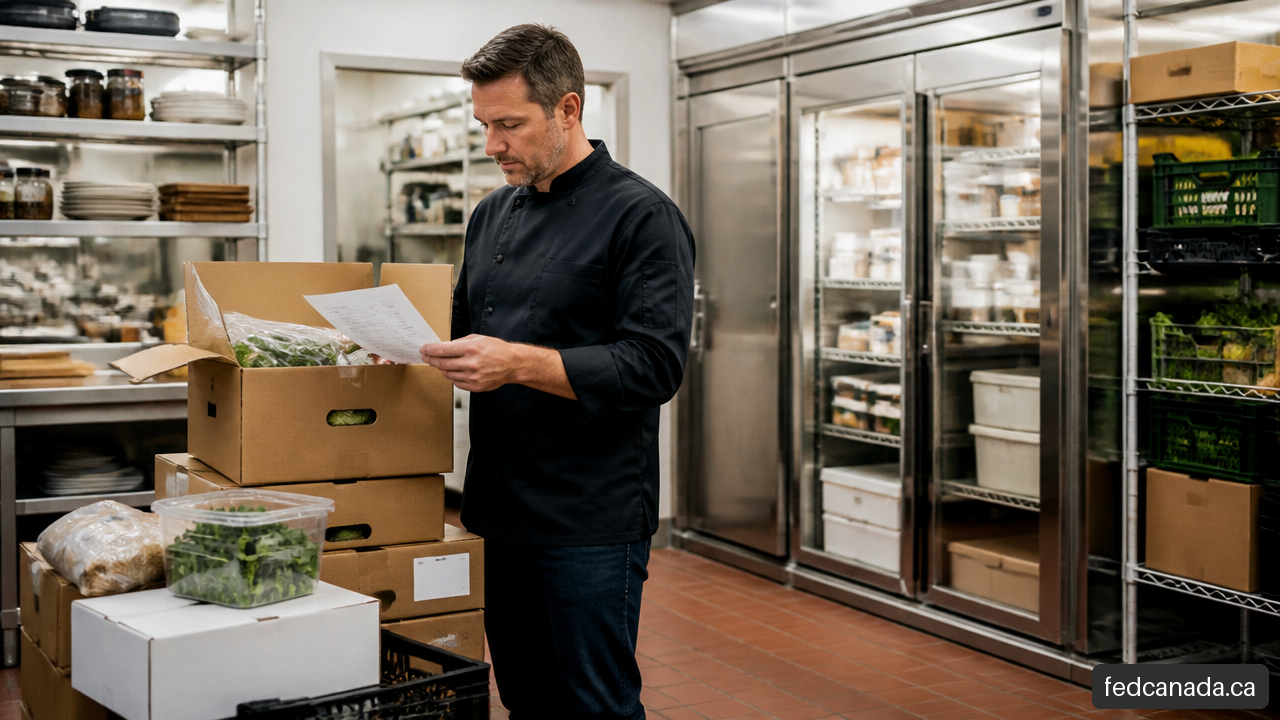
Restaurant suppliers do more than fill shelves. They influence food safety, menu consistency, labour efficiency, guest experience, and the real cost of every plate served. I recommend treating supplier selection as a procurement decision rather than a catalogue comparison: the lowest listed price is rarely the full story.
## Table of Contents
• [Key Takeaways](#key-takeaways)
• [Understand the Different Types of Restaurant Suppliers](#understand-the-different-types-of-restaurant-suppliers)
• [Build a Supplier Qualification Process](#build-a-supplier-qualification-process)
• [Compare Total Delivered Cost, Not Just Unit Price](#compare-total-delivered-cost-not-just-unit-price)
• [Choose Equipment Suppliers for Serviceability](#choose-equipment-suppliers-for-serviceability)
• [Frequently Asked Questions](#frequently-asked-questions)
## Key Takeaways
• **Restaurant suppliers should be assessed by category.** Food distributors, packaging vendors, and commercial equipment suppliers solve different operational problems and should not be evaluated with the same checklist.
• **Food safety and traceability deserve a place beside price.** Lot codes, receipt dates, supplier identities, and recall-response procedures can determine how quickly a restaurant can isolate affected products.
• **Total delivered cost is the useful comparison.** Freight, minimum orders, case sizes, spoilage, storage requirements, and emergency purchases can outweigh a lower unit price.
• **Delivery coverage is not the same as dependable service.** Confirm delivery days, order cutoffs, temperature-control expectations, rural or remote-area charges, and emergency options before committing volume.
• **Equipment procurement continues after checkout.** Installation responsibility, warranty terms, parts availability, and local repair coverage can matter more than a small difference in purchase price.
• **A backup source is prudent for critical items.** Dual sourcing is most useful when a product interruption would stop service, create a food-safety concern, or force an expensive menu change.
## Understand the Different Types of Restaurant Suppliers
Restaurant suppliers are B2B vendors that provide the food, equipment, materials, and support needed to operate a foodservice business. That simple definition covers very different supply relationships. A weekly produce delivery and a one-time commercial refrigeration purchase should not be managed the same way.
### Broadline distributors, specialty vendors, and local sources
A broadline distributor can simplify purchasing by combining many categories into one account, order process, and delivery schedule. This can reduce administrative work for operators who need dry goods, dairy, frozen foods, beverages, cleaning products, and disposable packaging on a regular basis.
Specialty suppliers focus on narrower categories such as seafood, produce, meat, bakery ingredients, coffee, packaging, or imported goods. They may be useful when product characteristics directly affect the menu. A restaurant known for fresh oysters, for example, may need specifications and sourcing information that a general food catalogue cannot consistently provide.
Local suppliers can also make sense when short lead times, seasonal products, or direct communication are priorities. Still, local does not automatically mean lower cost or better availability. A nearby vendor may have limited delivery days, while a larger distributor may have stronger logistics. The right choice depends on the item and operating model.
| Supplier type | Best fit | Main advantage | Main risk to evaluate |
|---|---|---|---|
| Broadline distributor | Frequent multi-category replenishment | Consolidated ordering and invoicing | Substitutions, minimums, category depth |
| Specialty food vendor | Menu-critical ingredients | Product knowledge and focused range | Delivery frequency and backup availability |
| Packaging or sanitation supplier | High-volume consumables | Case pricing and category expertise | Storage needs and changing case quantities |
| Local producer or regional vendor | Seasonal or differentiated menu items | Shorter chain of communication | Capacity, continuity, and weather exposure |
| Equipment supplier | New builds, replacements, renovations | Product selection and technical support | Installation, parts, warranty, service coverage |
### Consumables and equipment require different buying logic
Consumables are recurring purchases. The operational questions are straightforward but demanding: Is the item available in the correct case size? Does it arrive when needed? Is the packaging compatible with the menu? Can the supplier provide a substitute that staff can use safely?
Equipment is a capital purchase. The purchase decision must include dimensions, utility requirements, ventilation, installation, commissioning, warranty rules, replacement parts, and repair access. A refrigerator that fits the budget but cannot be serviced promptly can become a much more expensive choice during a busy period.
> A supplier with a broad catalogue may be convenient, but catalogue breadth alone does not prove that its delivery model, traceability process, or after-sales support fits your operation.
### Provincial delivery and serviceability need separate checks
Many Restaurant Suppliers sell across Canada, but nationwide shipping does not guarantee equivalent service in every city or province. A supplier may ship equipment to a remote location while relying on a third-party carrier for final delivery. That can change freight costs, appointment requirements, curbside versus inside delivery, and damage-claim procedures.
For food and consumables, ask whether the route serves your postal code on a fixed schedule. For equipment, ask whether qualified technicians are available within a practical distance. A restaurant in a major city may have several service options; a seasonal lodge or rural café may need to hold more backup parts and plan longer repair windows.
## Build a Supplier Qualification Process
I recommend scoring suppliers before moving substantial spend to them. A simple supplier scorecard helps prevent one attractive quote from overshadowing weaknesses in food safety, delivery, or communication.
### Start with requirements, not products
Define what the supplier must do before reviewing brands or catalogues. Requirements should reflect the actual consequences of a missed delivery or unsuitable product.
For a food supplier, document:
• Required product specifications, including pack size, grade, dietary claims, and acceptable substitutions
• Ordering cutoff times, delivery windows, and receiving procedures
• Temperature-control expectations for chilled or frozen products
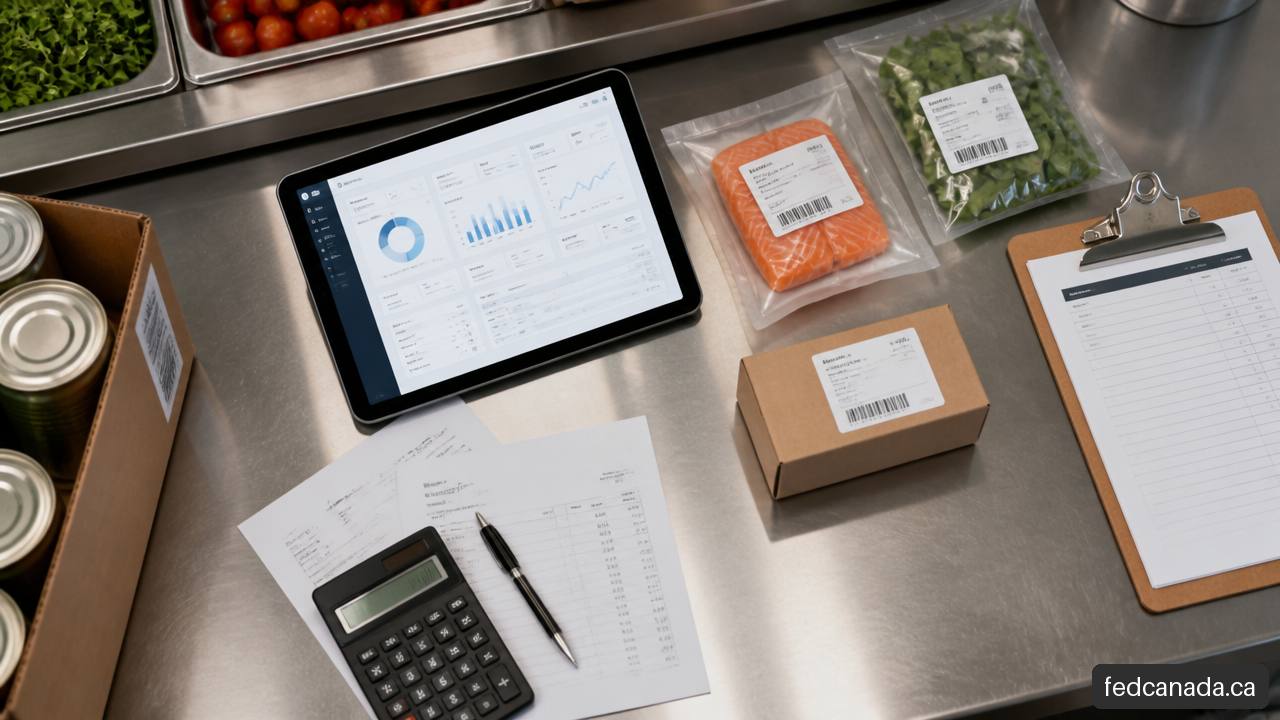
• Lot code visibility, invoice detail, and recall-contact information
• Minimum order values, payment terms, and return rules
For packaging, clarify container size, lid fit, leak resistance, labelling needs, and whether the item works with hot food, cold food, delivery, or reheating. For equipment, add electrical or gas requirements, ventilation needs, access dimensions, installation responsibility, warranty coverage, and service contacts.
### Use a weighted supplier scorecard
Not every category needs the same weighting. Price may be decisive for generic napkins, while product consistency and traceability may deserve more weight for raw proteins or ready-to-eat ingredients.
| Evaluation area | Questions to ask | Suggested importance when food is menu-critical |
|---|---|---|
| Product fit | Does the item meet written specifications? | High |
| Food safety and traceability | Are lot details and supplier records clear? | High |
| Delivery performance | Are routes, cutoffs, and receiving windows workable? | High |
| Total delivered cost | Are all fees, case sizes, and wastage considered? | High |
| Communication | Who handles substitutions, shortages, and recalls? | Medium to high |
| Technology | Can staff see inventory, orders, invoices, and credits? | Medium |
| Sustainability or origin requirements | Can claims and documentation be supported? | Depends on the menu |
Score each category on a consistent scale, then record the reason for each score. This creates a defensible decision trail and makes annual reviews easier. If a vendor’s performance changes, the restaurant can identify whether the issue is isolated or part of a repeated pattern.
### Treat traceability as an operating tool
The Canadian Food Inspection Agency describes traceability as the ability to follow food through the supply chain. Wholesalers and distributors that buy and sell food in Canada across provincial or territorial boundaries generally need records that trace food one step back to the supplier and one step forward to the purchaser.
Restaurants selling meals are generally excluded from those specific Safe Food for Canadians Regulations traceability requirements. That does not make restaurant records optional from an operational perspective. Keeping clear receiving records can reduce confusion during a supplier notice or product recall.
At minimum, maintain records that connect:
• Supplier name and contact information
• Product name, pack size, and internal item code where used
• Lot code, best-before date, or other unique identifier
• Quantity received and date received
• Invoice, purchase order, or delivery document
• Storage location if the product is split across stations or sites
Consider a recall involving a particular sauce lot. Without the lot code and receipt record, staff may need to discard all similar inventory as a precaution. With a clear record, they can isolate the affected cases, check whether any product remains, and document what happened. That is faster, less wasteful, and easier to communicate.
## Compare Total Delivered Cost, Not Just Unit Price
A lower price per case is meaningful only when the restaurant can use the full case, store it safely, and receive it without extra friction. Total delivered cost captures the costs that appear after the quote.
### Calculate the real procurement cost
A practical comparison includes more than the product line price:
**Total delivered cost = item price + freight + fuel or remote-area charges + handling fees + receiving labour + storage cost + expected spoilage + emergency replacement cost**
Some costs are difficult to predict precisely, so use reasonable assumptions rather than false precision. The goal is a consistent comparison, not a perfect forecast.
Consider two packaging suppliers. Supplier A offers a lower case price but requires a larger minimum order and charges freight below that threshold. Supplier B charges slightly more per case but has a lower minimum, delivers on the regular food route, and allows the restaurant to order less inventory. For a small operation with tight storage, Supplier B may produce the lower total delivered cost despite the higher unit price.
### Ask direct questions about commercial terms
Before opening an account or changing primary vendors, request written answers to these questions:
1. What are the minimum order value and minimum order quantity?
2. Which delivery, fuel, handling, pallet, or remote-area fees may apply?
3. What is the cutoff time for the next scheduled delivery?
4. How are shortages, damaged cases, and incorrect products credited?
5. What substitutions can be made without approval?
6. Are prices fixed, quoted by period, or subject to frequent change?
7. Does the supplier offer online ordering, live inventory visibility, order history, and digital invoices?
Technology does not eliminate supply disruptions, but it can make them visible earlier. Online ordering systems, inventory indicators, substitution approvals, electronic invoices, and shared order histories reduce the chance that staff discover a problem only at receiving time.
### Know when one supplier is enough and when it is not
One primary supplier may be sufficient for low-risk, easily substituted products. It may not be enough for critical inputs where an interruption would halt service or compromise standards.
A dual-sourcing plan is worth considering for:
• Menu-defining ingredients with limited acceptable substitutes
• Refrigeration parts, water filters, and other components that protect food safety
• Takeout packaging required for a delivery-heavy business model
• Sanitation chemicals and disposable protective supplies
• Seasonal products with volatile availability
This does not mean splitting every order between vendors. That can dilute volume discounts and increase receiving work. Instead, qualify a secondary source, confirm its lead time, and test a small order before an emergency occurs.
## Choose Equipment Suppliers for Serviceability
Commercial kitchen equipment has a longer decision horizon than most restaurant supplies. The useful question is not only, “What does this unit cost?” It is, “What happens if this unit fails during service?”
### Confirm installation and commissioning responsibilities
Equipment may require electrical work, gas connections, plumbing, ventilation, fire-suppression coordination, or floor and doorway planning. The seller, installer, contractor, and building owner may all have separate responsibilities.
Request clarity on these items before purchasing:
• Exact dimensions, weight, clearance requirements, and delivery path
• Electrical voltage, phase, amperage, plug type, or hardwire requirements
• Gas, water, drain, ventilation, or hood requirements where applicable
• Whether delivery is curbside, threshold, inside placement, or installation
• Who performs startup, commissioning, and staff orientation
• What documentation is required to preserve warranty coverage
Fair warning: a unit can be technically correct and still be a poor fit if it cannot pass through a doorway, connect to existing utilities, or receive local service. Verify site conditions before ordering, especially for used, open-box, scratch-and-dent, or clearance equipment where availability may be limited.
### Evaluate warranty, parts, and repair pathways
Ask for warranty terms in writing and distinguish manufacturer coverage from supplier support. Confirm whether labour is included, whether travel is covered, which components are excluded, and what steps are required to make a claim.
Parts availability matters just as much. A common component may be readily available, while a specialized control board could have a longer lead time. No universal service-response benchmark applies across Canada, so I would avoid relying on verbal assurances alone. Ask which service companies handle the brand in your area and what information they need when a repair is requested.
### Use value-priced equipment carefully
Used, open-box, scratch-and-dent, and clearance equipment can be sensible options when capital is limited. The trade-off is that cosmetic condition, included accessories, warranty terms, and replacement availability can vary.
A disciplined review includes model and serial information, condition notes, photos, included components, utility requirements, warranty details, and the estimated cost of any missing installation parts. Savings are real only if the equipment can be deployed safely and maintained at a manageable cost.
## Frequently Asked Questions
### What is a restaurant supplier?
A restaurant supplier is a B2B vendor that provides food, beverages, packaging, smallwares, cleaning products, commercial equipment, replacement parts, or related services to foodservice operations. The best supplier depends on the category being purchased and the operational risk attached to it.
### How do I find Restaurant Suppliers in my province or city?
Start with suppliers that clearly state they serve your postal code, then verify actual route schedules or shipping terms. Ask about delivery days, cutoffs, minimum orders, freight, temperature control for food, and service technicians for equipment. Provincial coverage on a website is only the beginning of the verification process.
### Should I use one broadline distributor or several specialized suppliers?
Use a broadline distributor when consolidated ordering, predictable replenishment, and lower administrative workload are priorities. Add specialized suppliers when product quality, menu differentiation, technical knowledge, or a second source for critical inputs matters more. A mixed model is common: one broadline relationship plus selected specialty vendors.
### How can I compare restaurant supplier pricing fairly?
Compare the same specification, pack size, delivery terms, and payment conditions. Then calculate total delivered cost, including fees, case quantities, storage pressure, expected waste, and the cost of emergency purchases. A lower unit price is not automatically the lower-cost option.
### What supplier records should a restaurant keep for recalls?
Keep invoices or receiving records that identify the supplier, product, receipt date, quantity, and applicable lot code or unique identifier. Store records where managers can retrieve them quickly. Even when a restaurant is not subject to the same traceability requirements as certain distributors, these records support faster product isolation.
### Does an equipment supplier install and service what it sells?
Sometimes, but it should never be assumed. Equipment suppliers may sell the unit, arrange delivery, recommend installers, coordinate service, or provide varying levels of direct support. Confirm exactly who is responsible for delivery placement, installation, startup, warranty claims, repairs, and replacement parts before purchase.
### When should a restaurant keep a backup supplier?
Maintain a qualified backup when a shortage could stop service, create a food-safety issue, or force a costly change to the menu. Good candidates include menu-critical ingredients, takeout packaging, sanitation supplies, refrigeration parts, and high-use water filters. Test the secondary supplier before a crisis, not during one.
### Are local suppliers always better than national distributors?
No. Local suppliers may offer closer communication, regional products, or shorter delivery distances. National distributors may offer broader inventory, established ordering systems, and more regular routes. Compare the actual service model, product fit, total cost, and contingency options instead of relying on supplier size or location alone.
The strongest supplier program is rarely built around a single perfect vendor. It is built around clear specifications, documented expectations, reliable records, and a practical plan for when routine ordering does not go as expected.
Recent Posts
Free Restaurant Consult: Get Clearer Next Steps Before...
10th October, 2026
Meat Smoker Guide: Choose, Control, and Smoke Meat Safe...
11th October, 2026

Tandoor Cooking: Heat, Flavor, and Smart Setup
12th October, 2026

Butcher Block: A Practical Guide to Choosing, Caring, a...
12th October, 2026
Leave a Comment
Your email address will not be published. Required fields are marked *