




Butcher Block: A Practical Guide to Choosing, Caring, and Installing It
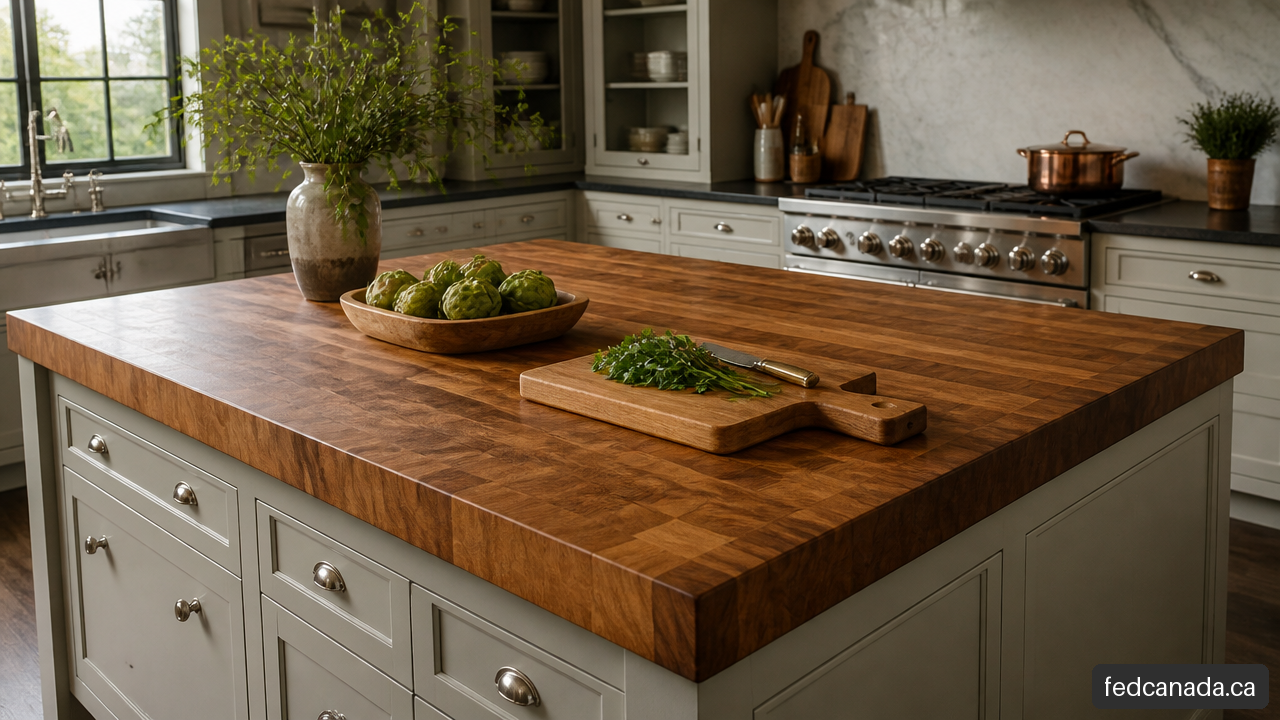
Butcher Block brings a warmth that stone, steel, and laminate cannot quite reproduce. Its grain patterns soften a kitchen visually, while its solid wood construction creates a work surface that can often be renewed rather than discarded. Still, it is not a carefree material. We recommend it when you want a repairable, tactile surface and are prepared to manage moisture, finish upkeep, and careful installation details.
Table of Contents
- What Butcher Block Is and Where It Works Best
- Choosing Construction, Wood Species, and Finish
- Maintenance, Food Preparation, and Repair
- Key Takeaways
- Butcher Block FAQ
- Sources
What Butcher Block Is and Where It Works Best
Butcher Block is a wood surface made by joining strips, blocks, or boards into a thicker slab. It may be used for countertops, islands, tables, bakery worktops, or dedicated chopping blocks. The term is often used broadly, so the construction matters more than the label alone.
A countertop marketed as butcher block is not automatically intended to be a daily cutting board. It may have a food-contact-safe finish, a decorative film finish, or a surface treatment chosen mainly for water resistance. Before cutting directly on it, we suggest confirming the finish manufacturer’s intended use and deciding whether visible knife marks fit the way you want the kitchen to age.
Understanding Grain Direction
Grain direction changes the appearance, feel, and practical behavior of the surface.
| Construction | What you see on top | Best fit | Practical trade-off |
|---|---|---|---|
| Edge grain | Long, narrow wood strips | Countertops, islands, worktables | Strong visual linearity and relatively simple refinishing |
| End grain | The ends of wood fibers arranged in blocks | Dedicated chopping blocks and statement islands | Traditional chopping-block look, but often more expensive and detail-sensitive |
| Face grain | Broad board faces | Tables, shelves, lower-wear surfaces | Wide, expressive grain patterns but can show dents more readily |
Edge grain is a common choice for counters because it creates a stable-looking, consistent surface that is straightforward to sand and refinish. End grain has the classic checkerboard appearance associated with old butcher blocks. It can be appealing for a freestanding island where the top is a focal point, but it is not automatically the best answer for every kitchen.
Where Butcher Block Performs Well
Butcher block works especially well in dry or moderately exposed zones. Think of a kitchen island used for baking, a coffee station, a dining ledge, a buffet counter, or a section of counter away from a sink. In these locations, the surface gets the benefit of its warmth and repairability without being asked to resist constant water.
It also makes sense when visual continuity matters. A wood island top can connect painted cabinets, stainless appliances, and stone perimeter counters without making the room feel overly hard or reflective.
The best location for butcher block is often the place where hands gather and food is prepared, not the place where water sits every day.
Where We Would Be More Cautious
The critical question is not whether wood can get wet. It can. The question is whether repeated water exposure can enter seams, cut edges, or unprotected areas faster than the finish can shed it.
Sink runs, dishwashers, drainboards, and poorly ventilated appliance interfaces deserve extra caution. A sink cutout creates fresh exposed wood, often including thirsty end grain. Water can work below the visible surface through a failed caulk joint, a faucet-base leak, or moisture held under a sink rim. Once that happens repeatedly, swelling, dark staining, joint separation, or localized rot may develop.
SlabWise notes that new butcher block may need more frequent initial oiling and that sink cutouts, exposed cut edges, undersides, leaks, and dishwasher vapor create distinct moisture risks. That distinction matters: a well-maintained open island can perform very differently from a countertop surrounding a busy sink.
Choosing Construction, Wood Species, and Finish
A good butcher block decision starts with use, not appearance. Ask whether the slab will be decorative, lightly used for food preparation, regularly exposed to water, or expected to handle direct cutting. The answer guides the wood, finish, thickness, and installation plan.
Wood Species and Visual Character
Hardwood is usually preferred because it resists everyday denting better than softer woods. Maple is commonly associated with traditional cutting surfaces because its fine, even grain reads clean and restrained. Walnut offers a deeper brown tone and bold contrast. Oak has pronounced grain patterns that can suit a more textured, casual look.
No species is immune to damage. A hardwood surface can still dent under a dropped pan, stain under a forgotten wet cloth, or move as indoor humidity changes. Species selection is therefore partly practical and partly aesthetic. Choose a grain pattern you will still like after the surface has gained a few honest marks.
For a busy kitchen, avoid selecting wood solely from a small showroom sample or online thumbnail. Request information about the slab’s construction, thickness, finish system, glue lines, and whether all faces will be treated. These details affect performance more than a species name alone.
Select the Finish for the Job
Finish determines how water behaves on the surface, how easy it is to renew, and whether direct food preparation makes sense. There is no universally best finish because water resistance, repairability, and routine maintenance pull in different directions.
| Finish approach | Best when | Benefits | Limitations |
|---|---|---|---|
| Penetrating oil | You want a renewable food-preparation surface | Easy spot renewal; natural feel; no thick surface layer | Requires repeated conditioning and limited standing-water tolerance |
| Oil-and-wax system | You want a low-sheen finish with improved water beading | Pleasant hand feel; can be renewed in targeted areas | Needs compatible maintenance products and periodic attention |
| Film-forming finish | The top is decorative or used like furniture | Stronger initial barrier against spills and stains | Scratches or cracks can allow water below the film; local repairs may be more visible |
A penetrating oil finish is often chosen for a countertop that will occasionally function as a cutting surface. It does not create a waterproof shield. Instead, it conditions the wood fibers and makes short-term moisture exposure easier to manage. The owner accepts more frequent maintenance in exchange for simple repairability.
A film-forming finish is often better for a bar top, table, or counter where food is plated rather than chopped. It can reduce day-to-day staining concerns, but it should not be treated as permanent armor. Once the film chips at an edge or around a sink, water can travel into the wood beneath it.
Plan for Wood Movement Before Installation
Wood responds to changing moisture in the surrounding air. In a Canadian home, indoor conditions can shift meaningfully between a dry heated winter and a more humid season. The slab may expand or contract mostly across its width, not merely along its length.
That is why a butcher block top should not be rigidly trapped by fasteners, walls, or appliance panels. Installers commonly allow movement through slotted mounting methods or hardware designed to hold the top down while permitting small seasonal changes. A rigid bead of adhesive across the entire underside can fight that movement and increase stress at seams or edges.
We also recommend asking these questions before ordering:
- Will the top be finished on the top, underside, edges, sink cutout, and any field-cut openings?
- How will the slab be attached while allowing seasonal movement?
- What protection will separate the underside from dishwasher heat and vapor?
- Who is responsible for sealing sink rims, faucet penetrations, and backsplash joints after installation?
A beautiful slab can fail at one unremarkable opening. The hole for a soap dispenser, faucet, or filtered-water tap is just as important as the visible top surface because it exposes a new path for moisture.
Maintenance, Food Preparation, and Repair
Butcher block care is less about following a perfect calendar and more about reading the surface. When the wood looks dry, feels rough, absorbs water quickly, or loses its even sheen, it may be ready for compatible conditioning or finish renewal. A high-use island near a window may need attention sooner than a lightly used bar top in a stable indoor environment.
Clean for Daily Use and Raw-Meat Preparation
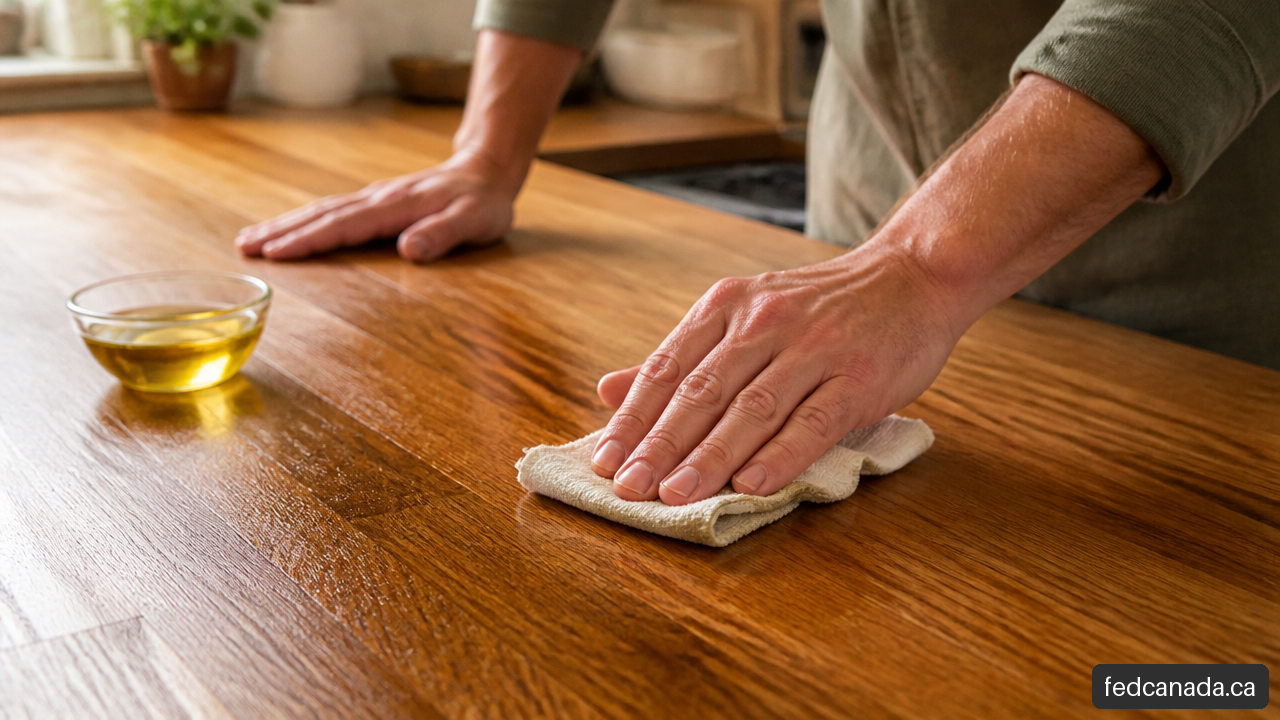
For everyday cleanup, remove food debris, wash with mild dish soap and water, then dry the surface promptly. Bob Vila describes this same basic approach, along with food-safe oil maintenance and localized repair through sanding and re-oiling.
For raw meat, we recommend using a separate washable cutting board rather than relying on the countertop itself. This is not because wood is automatically unsuitable for food contact, but because a large installed counter is difficult to wash, rinse, sanitize, inspect, and fully dry like a removable board. Grooves from knife use can also hold residue. A dedicated board can go directly to the sink for cleaning while the surrounding butcher block remains a clean work surface.
There is no simple rule that one wood species or finish makes a countertop intrinsically sanitary. Good food safety comes from removing residue, preventing cross-contact, washing hands and tools, and drying the surface rather than trusting the material alone.
Use a Condition-Based Maintenance Routine
Newly installed butcher block may absorb finish quickly during its early conditioning period. Instead of applying oil on a fixed schedule forever, assess water behavior and surface condition.
- Put a few drops of water on a clean, dry area away from seams.
- Watch whether the drops bead briefly or soak in almost immediately.
- Check for pale, dry-looking patches, raised grain, or roughness near the sink and front edge.
- Apply only a finish compatible with the existing surface treatment, following the product directions.
- Let it cure fully before heavy use or food contact.
Do not layer mineral oil over an unknown film-forming finish and assume it will improve protection. It may sit on the surface, create a greasy feel, or complicate future refinishing. If the existing finish is uncertain, test an inconspicuous area or seek guidance from the manufacturer or a qualified refinisher.
Protect the Moisture Failure Zones
The sink area requires a different level of attention from the rest of the countertop. It includes end grain, caulked joints, plumbing penetrations, and often a lower surface hidden from view. Protecting only the visible top misses the places where water may enter.
A practical installation approach includes sealing all freshly cut edges, applying a compatible treatment to the underside, maintaining flexible caulk where appropriate, and checking plumbing connections after installation. Above a dishwasher, use the appliance maker’s specified protective approach and ensure the countertop is not exposed to repeated bursts of hot vapor without a barrier.
Community reports reinforce why this is worth taking seriously. In one r/CounterTops discussion, users repeatedly raised sink-edge sealing and dishwasher vapor protection as practical concerns. In a separate r/kitchenremodel thread, one owner reported sink-area deterioration after about one year despite ongoing maintenance. These are anecdotes, not measured failure-rate data, but they point to a useful lesson: localized water exposure can outweigh otherwise careful maintenance.
Decide Whether to Repair, Refinish, or Replace
One of butcher block’s strengths is that many surface problems remain repairable. The key is recognizing when damage is cosmetic and when it has become structural.
| Damage | Usually repairable? | Typical response | When replacement may be necessary |
|---|---|---|---|
| Fine scratches and light knife marks | Often | Light sanding with the grain, then renew finish | Rarely, unless the surface is already very thin |
| Shallow stain or small burn | Often | Sand affected area gradually and refinish evenly | If discoloration is very deep or wood is badly charred |
| Raised grain or dry patches | Often | Smooth lightly and recondition with compatible finish | If recurring moisture has opened joints |
| Open seams or delamination | Sometimes | Investigate moisture source before any repair | If joints no longer hold or layers have separated widely |
| Swollen, soft, or dark sink-area wood | Uncertain | Stop leaks, dry thoroughly, assess depth of damage | If decay, severe warp, or structural instability is present |
A small scratch is usually a maintenance task. A seam that repeatedly opens next to a sink is a system problem involving moisture, movement, or installation. Sanding the top alone will not solve it.
Key Takeaways
Make the Location Do the Work
Butcher block is a strong choice for islands, dry prep zones, tables, and counters where warmth and repairability matter. It is a higher-maintenance choice around sinks, dishwashers, and areas with frequent standing water.
Choose the Finish Before You Choose the Routine
A penetrating oil finish suits surfaces you expect to renew and possibly use for light food preparation. A film-forming finish may better suit decorative or lower-contact counters. In either case, protect cut edges, undersides, seams, and appliance interfaces as carefully as the visible top.
Butcher Block FAQ
Choosing and Using Butcher Block
Is butcher block suitable for a kitchen countertop or island?
Yes, especially for an island or dry counter section where the surface will be used for prep, serving, baking, or seating. We would be more selective around a sink because moisture control becomes the deciding factor. Pairing a butcher block island with a more water-resistant perimeter counter is often a practical compromise.
Can butcher block be used as a cutting surface?
It can be, provided the finish is suitable for direct food contact and you accept visible knife marks and more frequent upkeep. For routine raw-meat preparation, a separate cutting board is the more practical option because it can be washed and dried independently.
What is the difference between butcher block and an ordinary wood countertop?
Butcher block usually refers to a thicker, joined wood surface built from strips or blocks, often intended for heavier kitchen use. An ordinary wood countertop may use similar materials, but its construction, finish, and intended use vary widely. Verify those details rather than relying on the product name.
Care and Installation
How often should butcher block be oiled?
There is no reliable universal interval. Check whether water beads, whether the wood looks dry, and whether high-exposure areas feel rough. New surfaces may need attention more often, while a lightly used, well-conditioned top may need less. Follow the finish manufacturer’s directions rather than applying products automatically.
Can butcher block be installed around an undermount or farmhouse sink?
It can, but it requires a careful moisture-management plan. The cutout, sink rim, underside, caulk joints, faucet holes, and nearby dishwasher interface all need compatible protection. If the kitchen sees frequent wet dishes left around the sink, a more water-tolerant countertop may be the lower-risk choice.
Can scratches, burns, stains, and knife marks be repaired?
Many shallow marks can be sanded and refinished because solid wood has usable depth. Deep burns, widespread delamination, persistent swelling, and soft wood near leaks are different. Those conditions may require partial replacement or a new top after the moisture source is corrected.
Sources
Consumer Guides
- Bob Vila + Butcher Block Countertops: Pros and Cons to Consider Before Buying — https://www.bobvila.com/articles/butcher-block-countertop-pros-and-cons/
- SlabWise + Butcher block countertops pros and cons: the full picture — https://slabwise.com/guides/butcher-block-countertops-pros-and-cons
- Reddit r/homeowners + Those who have butcher block countertops in their kitchens: What do you think? — https://www.reddit.com/r/homeowners/comments/95rr4v/those_who_have_butcher_block_counters_in_their_kitchens/
Community Discussions
- Reddit r/CounterTops + Butcherblock issues — https://www.reddit.com/r/CounterTops/comments/1q3mv3d/butcherblock_issues/
- Reddit r/kitchenremodel + Butcher block counters — https://www.reddit.com/r/kitchenremodel/comments/1h46213/butcher_block_counters/
Recent Posts
Leave a Comment
Your email address will not be published. Required fields are marked *