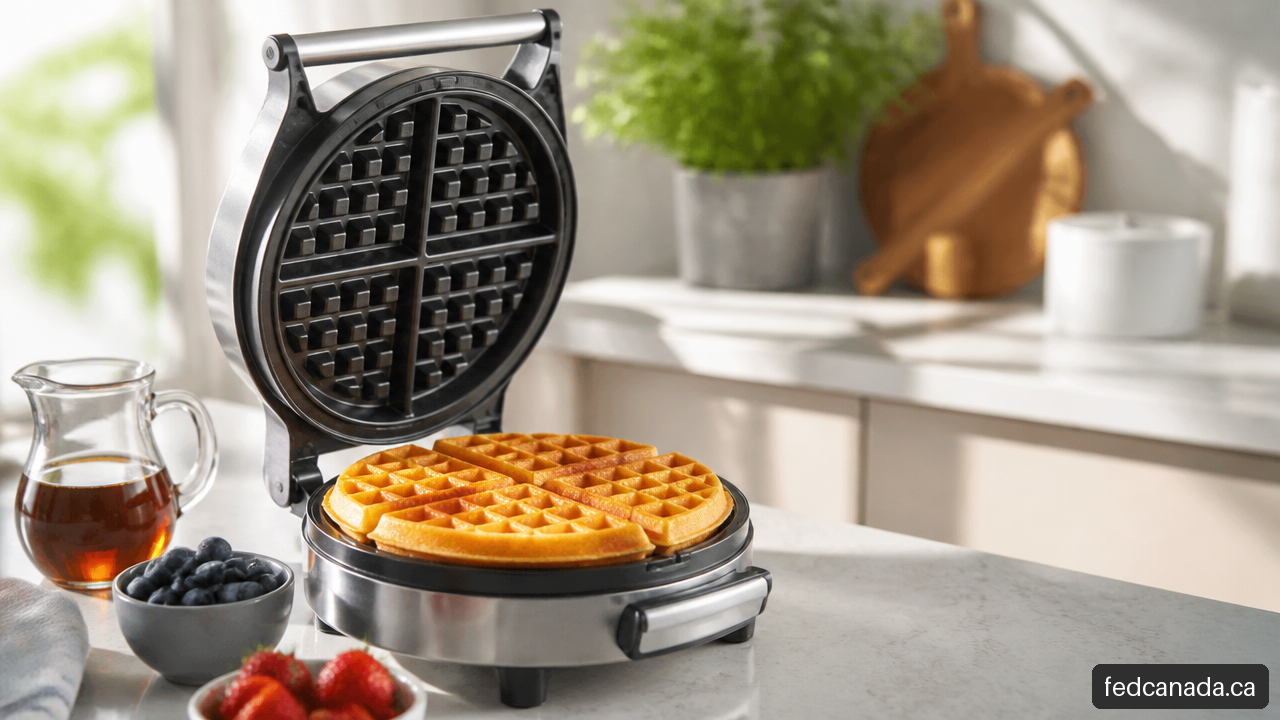
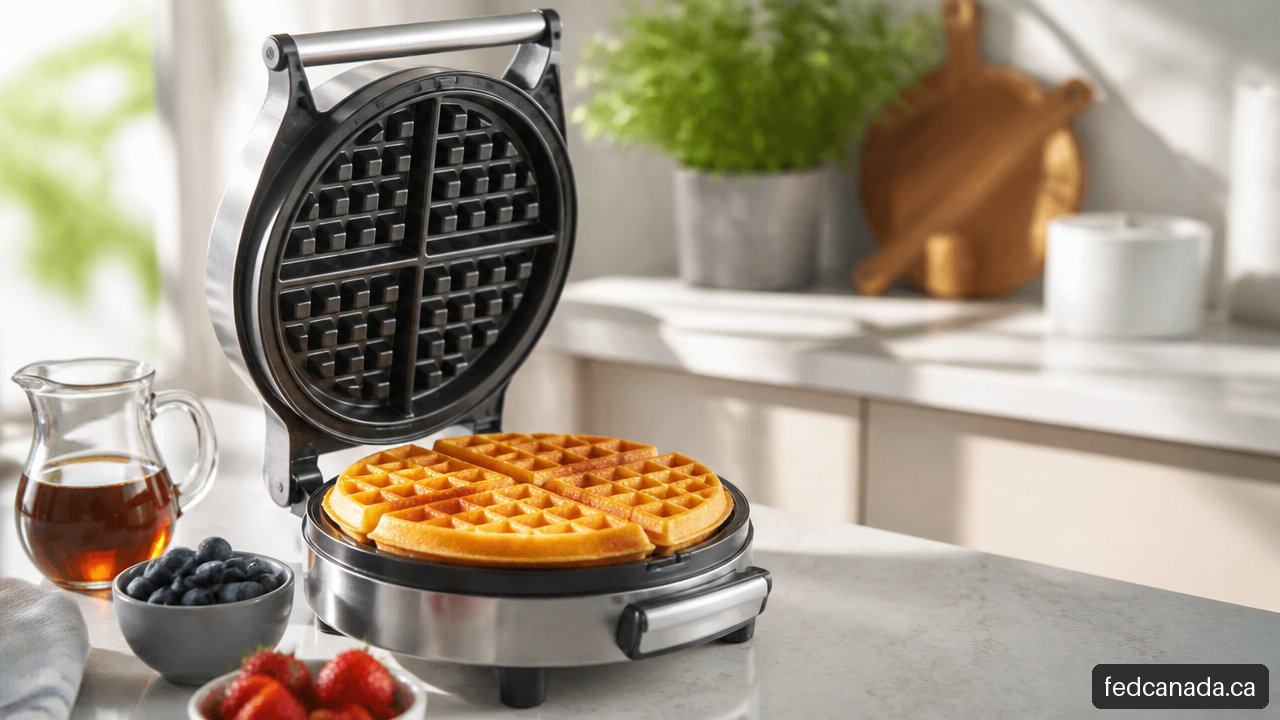
A waffle maker is a countertop appliance with patterned upper and lower cooking plates that shape batter into crisp, pocketed waffles. The right one is not necessarily the largest or most powerful model. It is the one that matches how many people you feed, the waffle style you prefer, and how much cleanup you are willing to handle after breakfast.
Are you making one quick waffle before work? Serving a family on weekend mornings? Planning a brunch where everyone expects a warm waffle at once? Those are very different jobs. This guide breaks down what matters before you buy, how to use a waffle maker well, and how to avoid the common frustrations of sticking, overflow, and uneven results.
Table of Contents
- Choose a waffle maker for your household
- Compare features that affect cooking results
- Make better waffles with less mess
- Key Takeaways
- Frequently Asked Questions
- Sources and References
Choose a Waffle Maker for Your Household
Start with throughput, not just waffle style
The first buying question is simple: How many waffles need to be ready within the same 10 to 15 minutes? A waffle maker that produces a beautiful single waffle may be ideal for one or two people but frustrating for a larger household. Capacity determines the rhythm of breakfast.
A single round or square unit works well when you cook one serving at a time. A four-section model can be more practical when several people eat together, even if each section is smaller. For example, RICARDO lists a model rated at 1,000 watts that makes four separate waffles per batch and includes controls intended for home use, such as a heat dial and indicator light.
| Household need | Best starting format | Why it fits | Potential drawback |
|---|---|---|---|
| One person or occasional use | Mini waffle maker | Small footprint and quick portion control | Slow for multiple servings |
| Couple or small household | Single classic or Belgian maker | Enough capacity without taking much storage space | Back-to-back batches may feel slow |
| Family breakfast | Multi-section waffle maker | Several portions cook at once | Larger appliance to clean and store |
| Brunch or frequent entertaining | High-capacity or rotating model | Better workflow when batches are continuous | More counter space and moving parts |
Do not assume the stated number of waffle sections equals finished servings. A four-section maker may produce four small pieces that form one large round waffle. Read the plate layout carefully. Product photos can make this distinction easier to spot than a capacity number alone.
Belgian, classic, mini, or vertical?
Belgian waffle makers generally create thicker waffles with deeper pockets. Classic makers usually produce a thinner waffle with a shallower grid. But thickness and pocket depth deserve separate attention.
A thick waffle is not automatically a deep-pocket waffle. Plate depth affects how much batter is needed, how much syrup or fruit the waffle can hold, and how much room it requires in storage containers. A deep grid also gives steam more space to escape while the interior sets, which can change the texture of a batter that contains whipped egg whites or extra sugar.
Buyers can choose among Belgian, mini, vertical, and other formats. That variety matters because the format changes the workflow as much as the final waffle shape.
| Format | Choose it when | Avoid it when |
|---|---|---|
| Belgian | You want thick waffles, deep pockets, and substantial toppings | You prefer thin, crisp waffles or have limited cabinet height |
| Classic | You want familiar, thinner waffles and modest batter portions | You want deep pockets for fruit, sauces, or ice cream |
| Mini | You have little storage space or make individual portions | You regularly feed several people at once |
| Vertical | You want batter added from the top with a controlled fill point | You want the widest choice of models and accessories |
| Rotating | You value a more hands-on cooking process and batch production | You need the simplest appliance possible |
Mini models are not merely novelty appliances.
Consider total ownership cost in Canada
The shelf price is only one part of the decision. Before purchasing, compare the full ownership picture:
- Current price in Canadian dollars
- Manufacturer warranty length and Canadian coverage
- Retailer return window and whether opened appliances are eligible
- Availability of replacement plates, drip trays, or service support
- Shipping charges, especially for larger rotating models
- Counter space and cabinet space required after purchase
A lower-priced unit can be the better value if it fits your routine and is easy to store. On the other hand, a very inexpensive model that sticks, leaks, or cannot be cleaned comfortably may become an appliance that stays in the back of a cupboard.
For imported models, confirm that the appliance is intended for the Canadian electrical market and that warranty support applies in Canada. A plug may fit physically while warranty or servicing arrangements remain unclear.
Compare Features That Affect Cooking Results
Non-stick surfaces and plate design
A non-stick surface helps batter release cleanly, but it is not a promise that every batter will release without preparation. Sticky trouble often comes from a combination of factors: low preheat temperature, a batter with little fat, damaged coating, excess sugar, or opening the plates too soon.
The best plate design for you depends on cleaning habits. Fixed plates are often simpler mechanically and may be easy to wipe when used carefully. Removable plates can be more convenient when batter reaches the edges or when crumbs collect in deep grids. Still, do not assume every removable plate is dishwasher safe. Check the exact manufacturer instructions before buying.
Temperature control, browning settings, and indicator lights
A browning control gives you repeatability. Once you find a setting that works with a favorite batter, you can return to it instead of guessing each time. It also helps when you switch between batter styles. A yeasted batter, a protein-rich batter, and a boxed mix can brown differently even in the same waffle maker.
Think of temperature control as a way to manage the balance between color and doneness. If the exterior browns too quickly while the center remains soft, lower heat may help, assuming the maker has an adjustable setting. If waffles are pale and limp, the unit may need more preheat time, a higher setting, or a batter adjustment.
Indicator lights are useful cues, not perfect judges. A ready light generally signals that the appliance has reached or returned to a target temperature. It does not know whether a particular batter has released enough steam or set completely inside. Look for a combination of steady steam reduction, a finished-looking edge, and the manufacturer’s recommended timing.
Wattage is not the same as speed
Wattage is easy to compare because it appears prominently in product listings. Canadian listings include models around 400, 900, 1,000, and 1,400 watts. Yet wattage alone does not prove how quickly a waffle maker will preheat, cook, or recover between batches.
Why? Cooking throughput depends on more than rated electrical power. Plate mass, thermostat behavior, plate contact, insulation, grid depth, batter volume, and the time spent opening the appliance all affect the next waffle. A higher-wattage model may have strong heating potential, but only a controlled comparison could establish whether it consistently cooks faster or recovers better than another specific model.
Use wattage as a screening detail rather than a final verdict. For a household making occasional waffles, plate quality, control layout, and cleanup may matter more. For frequent batch cooking, look for a design that supports steady work: clear indicators, stable construction, useful capacity, and a plate layout that fits your preferred servings.
Is a rotating waffle maker worth it?
Rotating waffle makers are marketed around even cooking because turning the cooking assembly can spread batter through the grid.
That does not mean every rotating model will outperform every fixed model. Retail descriptions do not provide standardized measurements for browning uniformity, heat recovery, leakage, or durability. Choose a rotating unit if you like the format and are comfortable with its size and moving mechanism. Avoid it if you want the quickest setup, the smallest footprint, or the fewest parts to maintain.
Make Better Waffles With Less Mess
Use the right amount of batter
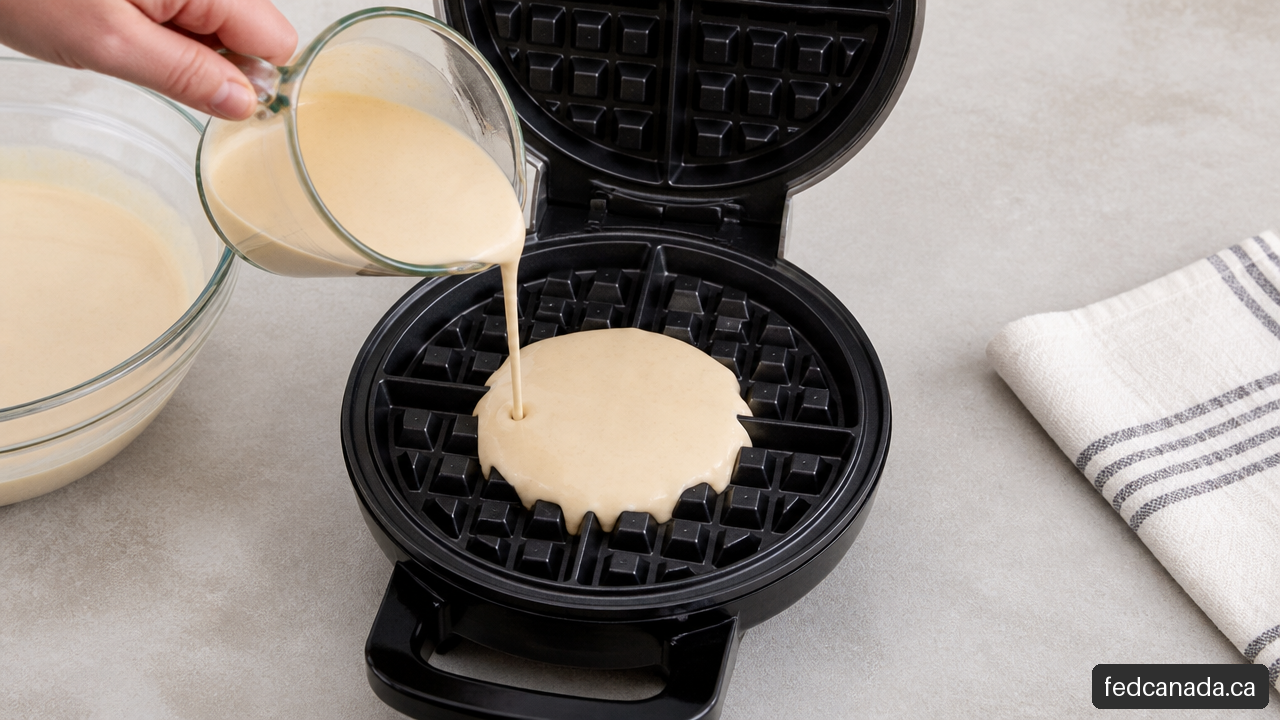
Overflow is usually not just a careless pouring problem. It happens when batter quantity, batter expansion, plate volume, and lid pressure do not match. Thick batters can spread slowly, while batters with baking powder or whipped egg whites may expand more as they heat.
Start with the manufacturer’s recommended amount. If there is no specific measurement, begin conservatively. Add batter to the center, leaving a visible margin near the outside edge. Close the lid gently and watch the first batch. That first waffle is your calibration batch.
Use this simple adjustment method:
- If the waffle does not reach the outer grid, add a small amount more on the next batch.
- If batter reaches the edges but does not spill, keep that amount as your reference.
- If batter leaks from the sides, reduce the portion slightly rather than trying to force the lid shut.
- If a rotating model leaks, check the fill level before rotating. A full grid has little room for expansion.
A measuring cup or ladle makes this easier. Once you know the right portion for a particular maker and recipe, repeatable waffles become much more realistic.
Prevent sticking and raw centers
Preheating matters. Batter begins setting when it touches hot plates. If the plates are not fully heated, the batter can cling to the surface before a stable crust develops.
Greasing is not always required on a healthy non-stick surface, but a light application of oil or cooking spray may help with certain batters. Fair warning: heavy spraying can leave residue over time, particularly around the plate edges. Follow the appliance instructions first, especially if the manufacturer gives coating-specific guidance.
If waffles brown outside but remain raw in the middle, review these likely causes:
- The batter portion is too large for the plate depth
- The selected heat level is too high for that batter
- The lid was opened before the waffle finished setting
- The batter is unusually thick or contains additions that slow cooking
- The maker was not fully preheated before the batch began
A useful recovery step is to lower the browning setting slightly, reduce the batter portion, and let the next waffle cook longer without opening the lid early. Change one variable at a time. Otherwise, it becomes difficult to tell what solved the problem.
Batter choices and serving ideas
A waffle maker can handle more than standard pancake-style batter, but recipes should suit the plate and coating. Batters with chocolate chips, cheese, fruit pieces, or high sugar content can create hot spots and cleanup challenges. Keep additions small, distribute them evenly, and avoid overfilling.
For crisp edges, a batter with enough fat and a proper preheat often helps. For a lighter interior, recipes that use whipped egg whites may work well, although they can expand more and require careful portioning. Yeasted batter can offer a different flavor and texture, but it needs planning because the batter must rise.
Serving choices should match the waffle style:
| Waffle style | Serving direction | Why it works |
|---|---|---|
| Deep-pocket Belgian waffle | Berries, yogurt, whipped cream, syrup | The pockets hold soft toppings and sauces |
| Thin classic waffle | Butter, jam, fried chicken, savory spreads | A thinner waffle is easier to stack or sandwich |
| Mini waffle | Ice cream, fruit, snack-sized toppings | Small portions suit individual desserts or quick snacks |
Some waffle makers are promoted for snacks and other preparations beyond breakfast waffles. Keep expectations realistic. A waffle maker is not a universal grill, and recipes with loose fillings, wet vegetables, or melted sugar can create difficult cleanup. Use recipes intended for a waffle iron and avoid anything that could run into the hinge or electrical housing.
Clean without damaging the coating
Unplug the waffle maker and let it cool before cleaning. Never immerse a standard countertop unit unless the manufacturer specifically says it is safe to do so.
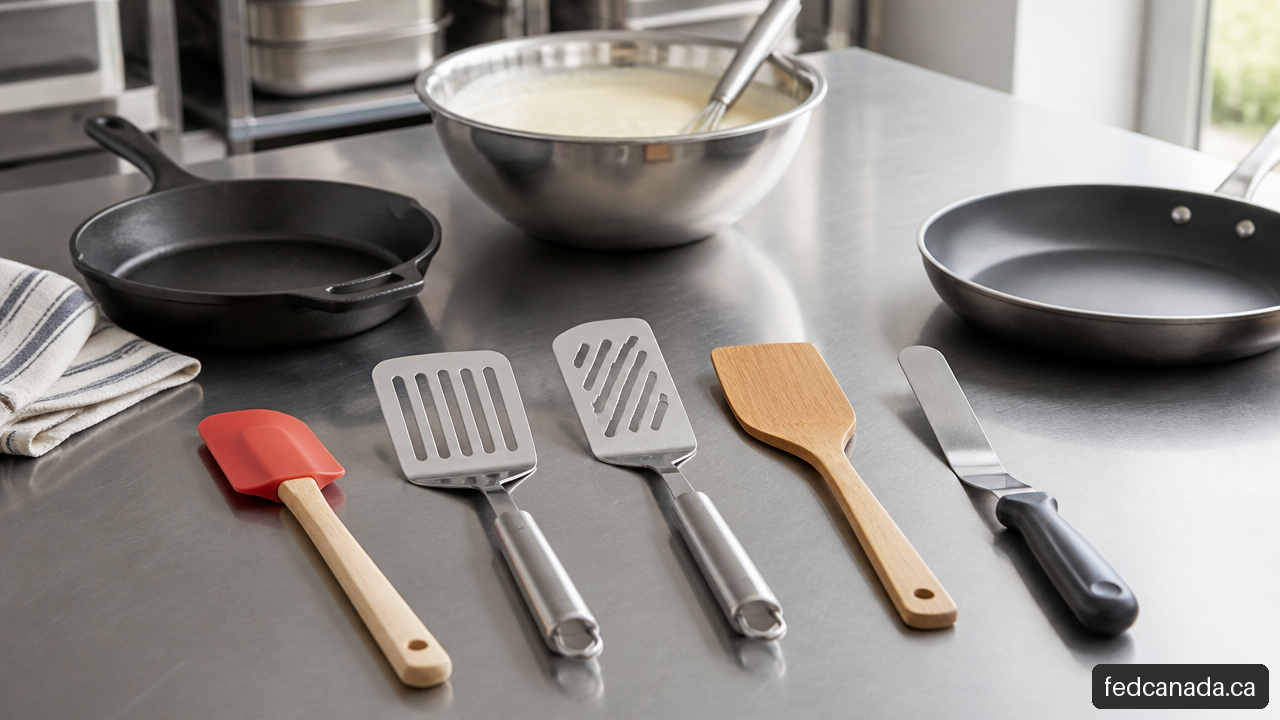
For fixed plates, use a soft cloth, paper towel, or nonabrasive brush to remove crumbs and residue. A wooden or silicone utensil can help lift cooked batter from grid corners. Avoid metal utensils, scouring pads, and harsh cleaners that can damage a non-stick surface.
If batter has baked onto the plates, place a lightly dampened paper towel on the cooled plates for a short time, then wipe gently. Do not pour water directly into the appliance. For removable plates, follow the manual on whether hand washing or dishwasher cleaning is permitted.
Key Takeaways
Buy for your real breakfast routine
- Choose capacity based on how many people need waffles at the same time.
- Treat Belgian versus classic style as only one decision. Plate depth, batter volume, storage size, and topping preferences matter too.
- Compare warranty, return policy, intended Canadian electrical market, and service options alongside the advertised price.
Focus on useful controls, not marketing claims
- A non-stick surface and clear indicator light can simplify daily use, but correct preheating and batter portioning still matter.
- Browning control helps create repeatable results with different batter types.
- Wattage is a specification, not proof of cooking speed or batch throughput.
- Rotating designs may suit some cooks, but published retail listings do not establish a standardized performance advantage across every model.
Make the first batch a test batch
- Start with less batter than you think you need.
- Watch for overflow, edge coverage, steam reduction, and release before changing settings.
- Adjust one factor at a time: batter amount, heat setting, or cooking duration.
Frequently Asked Questions
What is the difference between a Belgian waffle maker and a classic waffle maker?
Belgian waffle makers generally create thicker waffles with deeper pockets. Classic waffle makers usually produce thinner waffles with shallower grids. Choose Belgian style for substantial toppings and a thicker bite. Choose classic style for thinner waffles that stack easily, cook with less batter, and fit neatly into sandwiches.
How much batter should go into a waffle maker?
Use the manufacturer’s recommended quantity when available. If not, begin with a conservative amount placed in the center of the lower plate. The ideal amount fills the grid after the lid closes without forcing batter out the sides. Record the amount once you find it, especially if you use the same recipe regularly.
Why do waffles stick to the plates?
Sticking can result from insufficient preheating, opening the waffle maker too early, a batter that is low in fat, excess sugar, or worn coating. Let the appliance fully preheat, wait for the waffle to set before lifting the lid, and use a small amount of oil only if the manufacturer allows it.
Should waffle maker plates be greased every time?
Not necessarily. Many non-stick plates are designed to release batter without added grease. However, certain recipes may benefit from a light coating. Check the manufacturer’s instructions, and avoid excessive spray buildup, which can make plate cleanup harder over time.
Are removable plates better than fixed plates?
Neither is universally better. Removable plates can make thorough cleaning easier, particularly with deep grids or messy batters. Fixed plates may offer simpler construction and quick wipe-down cleaning. The deciding factor is whether the specific plates are removable, dishwasher safe, and available as replacements, not simply the label on the product page.
Is a mini waffle maker practical for everyday use?
Yes, for one person, small portions, compact kitchens, or occasional snacks. It is less practical when several people want full-size waffles at once. A mini waffle maker can become slow during family breakfast because each portion cooks separately.
Why is my waffle browned outside but raw in the middle?
The heat may be set too high, the batter portion may be too large, or the batter may be thicker than the waffle maker can cook evenly at that setting. Reduce the portion slightly, lower the browning setting if possible, and give the next waffle more time without opening the lid early.
Can a waffle maker cook foods other than waffles?
Some models are marketed for snacks and other preparations. Stick with recipes designed for waffle irons, use manageable amounts of filling, and avoid wet or loose ingredients that can run into the hinge. The safest rule is simple: if a recipe could leak deeply into the appliance, it is probably not a good fit.