A Wood Spoon is one of the quiet workhorses of a kitchen. It stirs a simmering sauce without the sharp scrape of metal, folds batter with a gentle edge, and feels warm and steady in the hand. Whether the goal is a simple everyday utensil or a well-made serving spoon, the best choice comes down to material, shape, construction, and care.
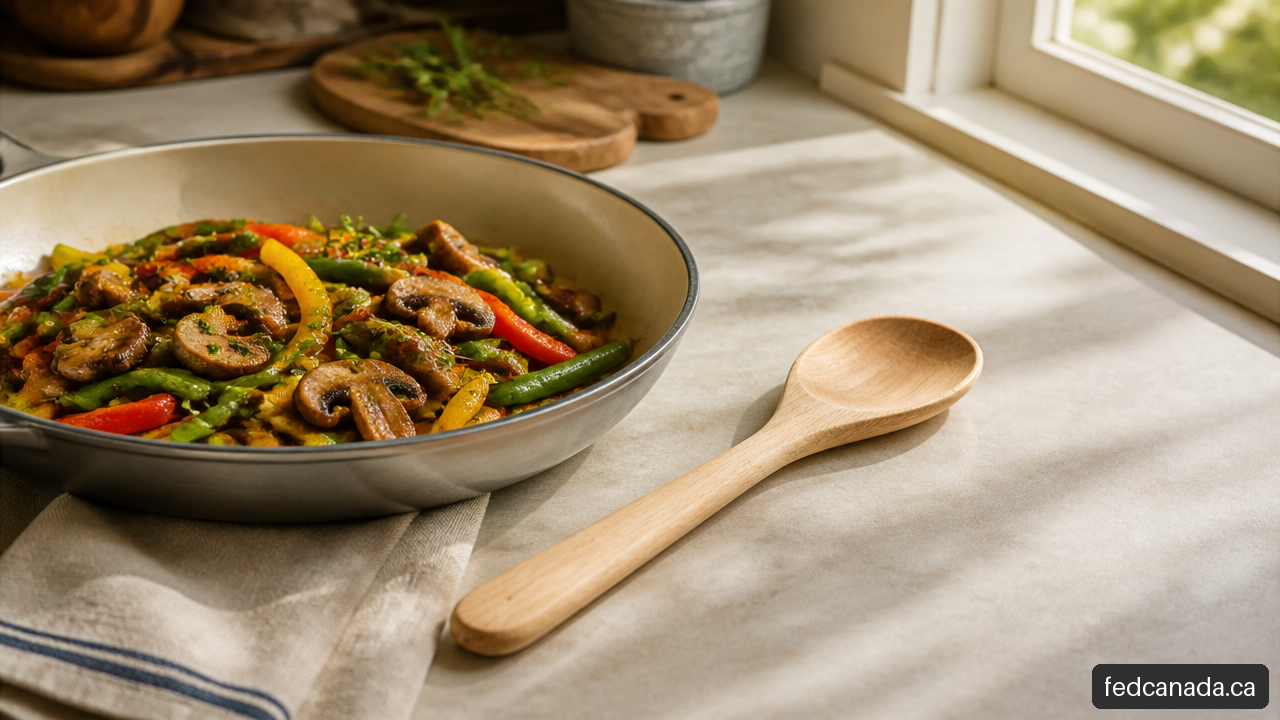
Table of Contents
- Key Takeaways
- What a Wood Spoon Does Best
- Choosing Wood and Construction
- Matching Spoon Shape to the Job
- Cleaning, Oiling, and Inspecting Wooden Spoons
- Wood Spoon FAQ
Key Takeaways
The practical answer
A wooden cooking spoon is useful for stirring, mixing, scraping, tasting, and serving. Smooth wood is widely used with nonstick cookware because it is less likely to scratch a coated pan than a sharp-edged metal utensil. It also stays reasonably comfortable to hold around hot pots, unlike a metal handle that can quickly conduct heat.
The best all-purpose option is usually a smooth, solid piece of dense hardwood with a comfortable handle and a bowl shape suited to the foods you cook most often. Beech, maple, olive, walnut, cherry, and acacia are all commonly used woods, but no species wins every task.
What matters most when buying
Focus on the details that affect daily use rather than the label alone:
- Construction: A spoon carved from one continuous piece of wood has no glued joint to loosen or separate.
- Surface condition: Choose a spoon that feels smooth from handle to bowl, with no splinters, open cracks, tacky coating, or sharp rim.
- Shape: A flat edge helps move food across a pan. A rounded bowl helps stir soups and sauces. A slotted bowl is better for lifting food from liquid.
- Length: A spoon around 11 to 13 inches suits many stovetop tasks. A longer handle is more useful for deep stockpots, while a short spoon offers better control in a shallow skillet.
The care rule worth remembering
Hand wash promptly with mild dish soap, dry it soon after washing, and store it where air can circulate. Do not leave it soaking in a sink or run it repeatedly through a dishwasher. Wood responds to moisture and heat much like a cutting board: too much water, followed by fast drying, can lead to warping, rough fibres, or splits.
What a Wood Spoon Does Best
Stirring without rough treatment
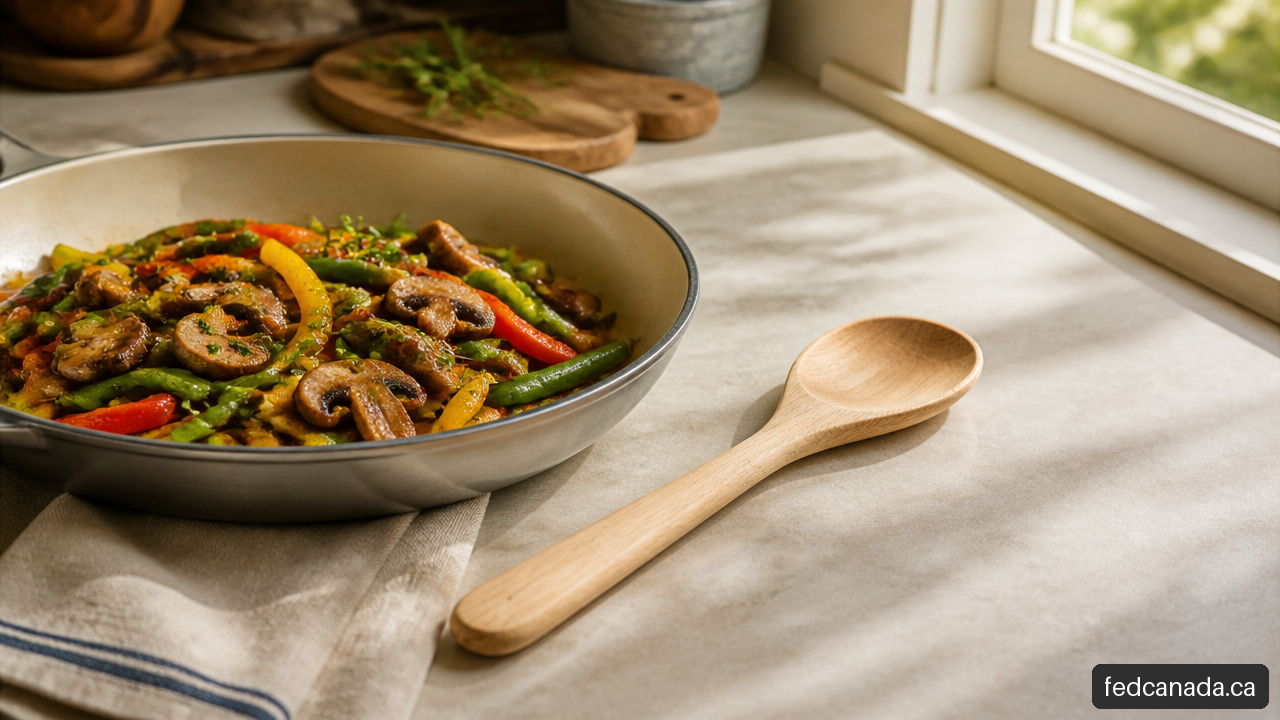
Wooden spoons are especially useful for sauces, soups, risotto, oatmeal, stews, batters, and sautéed vegetables. Their edges are generally softer than metal, which makes them a practical choice for coated pans and enamel cookware. That does not mean every wooden spoon is automatically gentle. A chipped edge, hardened residue, or rough raised grain can still drag against a cooking surface.
For everyday stirring, a wood spoon provides a little resistance against thick food. That resistance can be helpful. When making a roux, for example, the spoon needs enough rigidity to move flour and fat across the full base of the pan. Community discussions about roux often favor a sturdy, flat-ended wooden spoon over a thin, flexible utensil. That is a useful preference, though it is not controlled performance testing.
A good cooking spoon should feel like an extension of the hand, not a stick fighting the pot.
A utensil with a long kitchen history
Wooden spoons have remained common across many cooking traditions because they are simple, repairable in a limited sense, and versatile. A broad wooden paddle can turn vegetables in a pan, while a narrow spoon can reach the corners of a saucepan. Hand-carved serving spoons also appear in many regional food traditions, where grain pattern and wood colour become part of the table setting.
The appeal is not only decorative. Wood has a softer contact point than steel, and a wooden handle does not become as hot as bare metal during normal stovetop stirring. These qualities make a wood spoon feel at home beside bubbling sauces, thick porridges, and slow-cooked dishes.
Where wood is less convenient
A wooden spoon is not the right answer for every task. It is not ideal for cutting through dense food, flipping delicate fish, scraping baked-on residue, or measuring precise portions. It can also retain strong aromas if it is poorly cleaned or left wet.
Choose another utensil when the job requires flexibility, thinness, or a sharp edge:
| Kitchen task | Better utensil choice | Why |
|---|---|---|
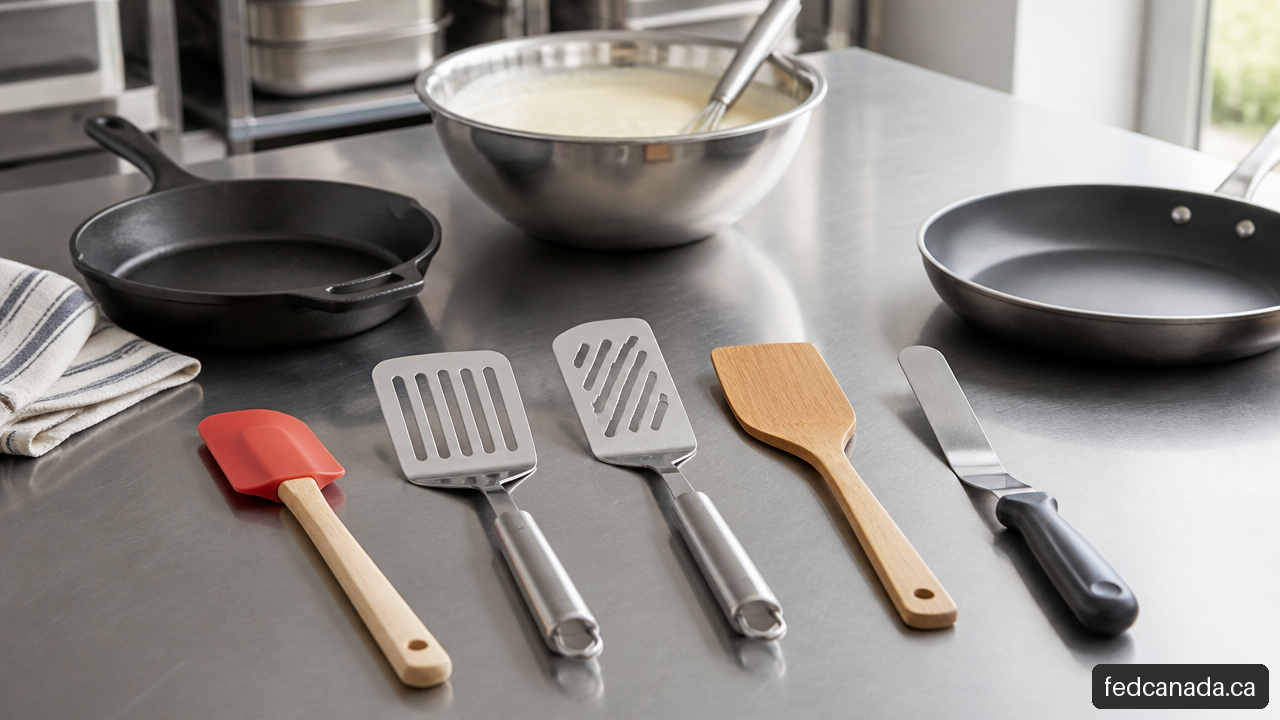
| Flipping eggs or fish | Thin silicone or fish spatula | Slides under delicate food more easily |
| Scraping a bowl clean | Flexible silicone scraper | Conforms to curved bowl walls |
| Turning food on a grill | Tongs | Provides reach and grip |
| Measuring ingredients | Measuring spoon | Offers consistent volume |
| Stirring a thick roux | Flat wooden spoon | Gives leverage and broad contact with the pan |
Choosing Wood and Construction
Dense hardwood is usually the sensible choice
For a cooking spoon, dense hardwood is generally preferred because it holds up better to repeated stirring, washing, and drying than softer woods. Common choices include beech, maple, olive, walnut, cherry, and acacia. Each offers a different balance of appearance, feel, grain pattern, and expected upkeep.
There is no reliable universal ranking that proves one species lasts longer in every household. A well-finished maple spoon may outlast a poorly made olive wood spoon, for instance. Construction, drying, finish quality, and care can matter as much as the name of the wood.
| Wood type | Useful characteristics | Best fit | Consider before buying |
|---|---|---|---|
| Beech | Light colour, smooth appearance, commonly used for utensils | Everyday stirring and baking | May show stains over time |
| Maple | Fine grain and familiar light finish | General cooking and mixing | Check for a smooth, fully finished surface |
| Acacia | Often darker with visible grain variation | Stirring, serving, and giftable sets | Grain and colour can vary widely by product |
| Olive wood | Dense, dramatic grain, often sold as premium | Serving and light cooking | Shape may be more decorative than practical |
| Walnut | Dark colour and refined appearance | Serving, mixing, and countertop display | Dark finish can make wear less obvious |
| Cherry | Warm tone that deepens with age | Handmade-style utensils and serving | Product availability may be more limited |
One piece versus glued construction
A one-piece spoon is carved or formed from one continuous piece of wood. This design removes a joint where water, food residue, or stress could concentrate. It does not make the spoon indestructible, but it is a practical sign of simpler construction.
A glued spoon is not automatically unsuitable. The concern is whether the joint is fully sealed, stable, and intended for repeated food contact and washing. If a seam is visible, rough, opening, or difficult to clean, it is sensible to choose another spoon. Food debris can lodge in a failing seam, and moisture can work its way into the join.
Do not rely on “food safe” as a complete answer
Product listings often use the phrase food safe, but the phrase alone does not explain the wood species, finish, adhesive, or care limits. For a confident purchase, look for clear product information rather than vague reassurance.
Ask these practical questions before choosing a spoon:
- Is the wood species identified?
- Is the spoon one solid piece or assembled from multiple parts?
- Does the seller identify the finish, such as mineral oil, plant-based oil, wax, lacquer, or another coating?
- Are washing and oiling instructions included?
- Does the spoon have cracks, loose finish, rough spots, or an odour before first use?
Canadian shoppers may find inexpensive grocery store utensils, imported sets, handmade marketplace listings, and premium hardwood spoons at very different price points. Price can reflect the wood, origin, carving work, finish, and included set pieces. It does not automatically predict a better tool. A modest beech or maple spoon with a sound finish and a useful shape can be a better everyday purchase than an ornate spoon that feels awkward in a saucepan.
Matching Spoon Shape to the Job
Bowl shape controls how the spoon moves food
The bowl is the working end of the spoon, so its shape affects more than appearance. A shallow bowl is good for turning vegetables and spreading food through a pan. A deeper bowl gathers sauces, soups, and cooked grains. A pointed or angled tip can reach into the curved edge of a pot, while a round bowl tends to glide through liquids.
Think about the path the spoon must travel. In a wide skillet, a broad, slightly flattened tip can push onions or sauce across the base. In a narrow saucepan, a slimmer spoon can trace the inside curve without leaving a band of food stuck around the edge.
Handle length changes control and safety
A long-handled spoon helps keep hands farther from steam and splatter, especially when stirring deep pots of soup, chili, or pasta sauce. Yet the longest spoon is not always the most useful. It can feel top-heavy in a small sauté pan or a mixing bowl.
Use this quick guide when selecting length:
- Short spoon: Best for small bowls, condiment jars, and close control in compact pans.
- Medium spoon: Best all-around choice for sauces, vegetables, batters, and daily stovetop cooking.
- Long spoon: Best for stockpots, preserving pots, tall containers, and high-heat stirring where distance from steam matters.
Flat, rounded, slotted, and angled options
Keeping more than one shape is often more useful than buying several nearly identical spoons. A small working set can cover most cooking without crowding a utensil crock.
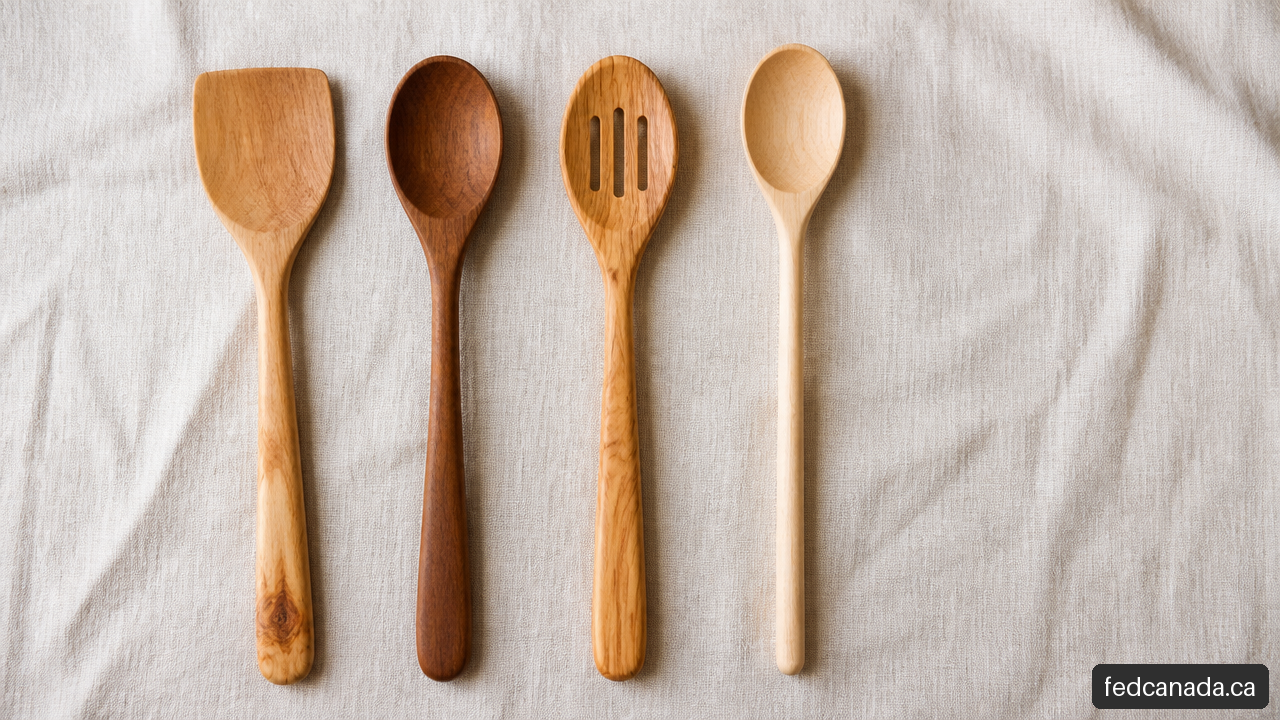
| Spoon style | What it does well | When to avoid it |
|---|---|---|
| Flat edge spoon | Roux, sautéing, pan scraping, thick sauces | Deep soups where a bowl is more useful |
| Rounded spoon | Soup, oatmeal, sauces, batters | Reaching into pan corners |
| Slotted spoon | Lifting vegetables, dumplings, or pasta from liquid | Measuring or moving thin sauces |
| Angled spoon | Reaching along pot walls and corners | Tasks needing a deep scoop |
| Serving spoon | Portioning salads, grains, and side dishes | Heavy pan scraping or thick roux |
A simple three spoon setup
For most kitchens, we can keep the collection practical with three pieces:
- A medium rounded spoon for sauces, soups, and general stirring.
- A flat-edged spoon for sautéing and thick mixtures.
- A long-handled spoon for deep pots and hot liquids.
This setup also reduces wear. Instead of forcing one small spoon to do every task, each utensil has a job that suits its shape and leverage.
Cleaning, Oiling, and Inspecting Wooden Spoons
Wash promptly, then let the wood breathe
Hand washing is the gentlest routine for a wood spoon. Use warm water, mild dish soap, and a soft sponge or cloth. Wash both sides of the bowl, the neck, and the handle, then rinse thoroughly. Towel dry first and leave the spoon in a ventilated location to finish drying.
Avoid soaking. When wood sits in water, moisture enters the fibres unevenly. As the spoon dries, different parts can shrink at different speeds. That movement can cause warping, tiny splits, or raised grain. A dishwasher can intensify the problem with long exposure to hot water, strong detergent, and drying heat.
Match care to the finish
Not all wooden spoons are finished the same way. Care should follow the maker’s instructions where they are available.
| Surface type | Typical appearance | Practical care approach | Main risk |
|---|---|---|---|
| Raw or lightly finished wood | Matte, natural feel | Hand wash quickly and oil if the maker recommends it | Absorbing moisture and stains |
| Oiled wood | Soft sheen and visible grain | Hand wash, dry promptly, refresh with food-appropriate oil when dry | Neglect can leave the surface dull or rough |
| Waxed wood | Slightly silky surface | Gentle washing and minimal scrubbing | Aggressive washing can wear the coating |
| Lacquered or sealed wood | Noticeable protective coating | Follow product instructions and inspect coating closely | Peeling or chipped finish can create rough areas |
| Engraved spoon | Decorative grooves or text | Clean grooves carefully with a soft brush | Food residue collecting in recessed areas |
If an oiled spoon begins to look pale, dry, or rough after cleaning, a light coat of food-appropriate mineral oil can help restore the surface. Apply a small amount to clean, fully dry wood, let it sit briefly, then wipe away excess. Do not use cooking oils such as olive oil or vegetable oil for routine conditioning because they can become sticky or develop off odours over time.
When cleaning is no longer enough
A spoon does not need to be discarded for every stain. Tomato colour, turmeric tint, or a darker cooking patina can be cosmetic. The more important question is whether the food-contact surface remains smooth, intact, cleanable, and free of persistent odour.
Replace the spoon when one or more of these conditions remain after washing and drying:
- A split runs into the bowl, neck, or handle.
- Deep grooves or open cracks trap residue that cannot be cleaned out.
- The surface stays rough, splintered, or sharply raised after gentle smoothing and conditioning.
- A sour, rancid, smoky, or garlic-like odour remains despite careful washing and full air drying.
- A coating is peeling, sticky, or flaking into food.
- A glued joint is separating or flexing.
A small patch of raised grain can sometimes be smoothed with very fine sandpaper, followed by thorough cleaning and appropriate reconditioning. A deep crack is different. Once the structure opens, moisture and residue can enter where a sponge cannot reliably reach. That is the point to retire the spoon from food contact rather than trying to rescue it indefinitely.
Wood Spoon FAQ
Everyday use
What is a wood spoon used for?
A wood spoon is used for stirring, mixing, folding, tasting, sautéing, serving, and moving food around a pan. Rounded versions work well for soups and sauces, while flat-edged versions are useful for thick mixtures such as roux, polenta, and reduced sauces.
Can a wood spoon be used in a nonstick pan?
Yes, a smooth wooden spoon is commonly used with nonstick cookware because it is less abrasive than metal. Inspect the spoon first. A rough edge, embedded grit, cracked bowl, or splintered tip should not be dragged across a coated surface.
What length of wooden spoon is best for a deep pot?
Choose a long-handled spoon that lets your hand stay comfortably above the pot rim while the bowl reaches the bottom. For many kitchens, a spoon longer than a standard 11 to 13 inch everyday utensil is more comfortable for stockpots. The exact size depends on the depth and width of the pot.
Materials and buying decisions
Which wood is best for a cooking spoon: maple, beech, acacia, olive, or walnut?
For everyday cooking, maple and beech are straightforward choices because they are commonly used, smooth, and practical. Acacia offers visual grain variation and is often sold in modern utensil sets. Olive wood and walnut can be attractive premium options, especially for serving. Choose by shape, construction, surface quality, and care instructions first; wood species is only one part of durability.
Is a one-piece wooden spoon better than a glued spoon?
A one-piece spoon is usually the simpler choice because it has no assembly seam that can loosen or hold moisture. A well-made glued spoon may still perform well, but avoid any product with a visible opening, rough joint, or unclear care instructions.
Cleaning and replacement
Can wooden spoons go in the dishwasher?
It is better not to put them in the dishwasher. Repeated hot water, detergent, and drying heat can pull moisture into and out of the wood too quickly, raising grain and increasing the chance of warping or cracking. Hand washing and prompt drying are more protective.
How do you remove smells or stains from a wooden spoon?
Wash the spoon thoroughly with mild soap and warm water, rinse it well, and let it dry completely in moving air. For lingering surface odour, gentle scrubbing with a paste of baking soda and water may help, followed by a full rinse and dry. If a strong odour persists from deep cracks or worn grooves, replacement is the safer practical choice.
How can you tell when a wooden spoon needs replacing?
Replace it when it has deep splits, persistent roughness, peeling finish, loose joints, trapped residue, or odours that remain after careful cleaning and full drying. Cosmetic stains alone are usually not a reason to discard an otherwise smooth, intact spoon.
A well-chosen Wood Spoon earns its place through quiet reliability. Select a smooth hardwood utensil that suits the pots and foods you use most, keep it clean and dry, and inspect it occasionally. With that simple routine, it can remain a useful part of cooking for a long time.