




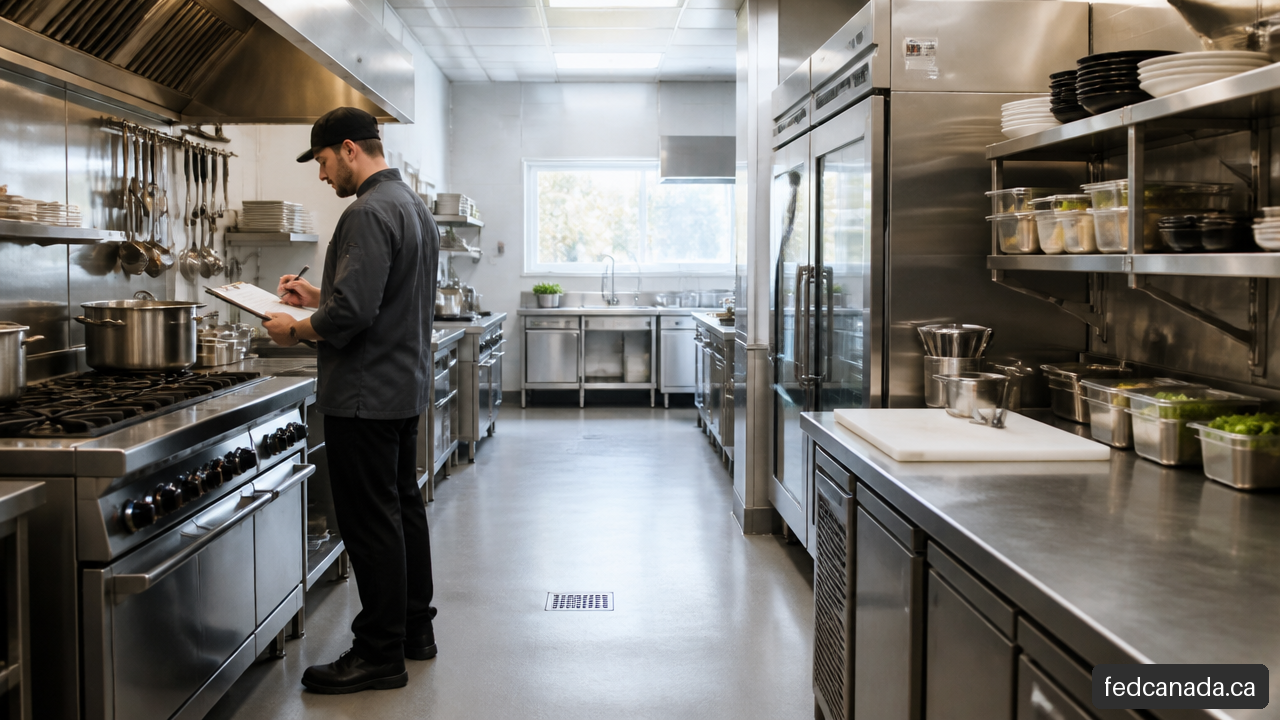
Restaurant Supply: A Practical Guide to Smarter Procurement
Restaurant Supply is more than ordering a refrigerator, fryer, or box of utensils. It is the procurement system behind safe food handling, consistent service, inventory control, and kitchen uptime. A strong supply plan connects the menu, expected volume, available space, local requirements, delivery constraints, and long-term maintenance needs before an order is placed.
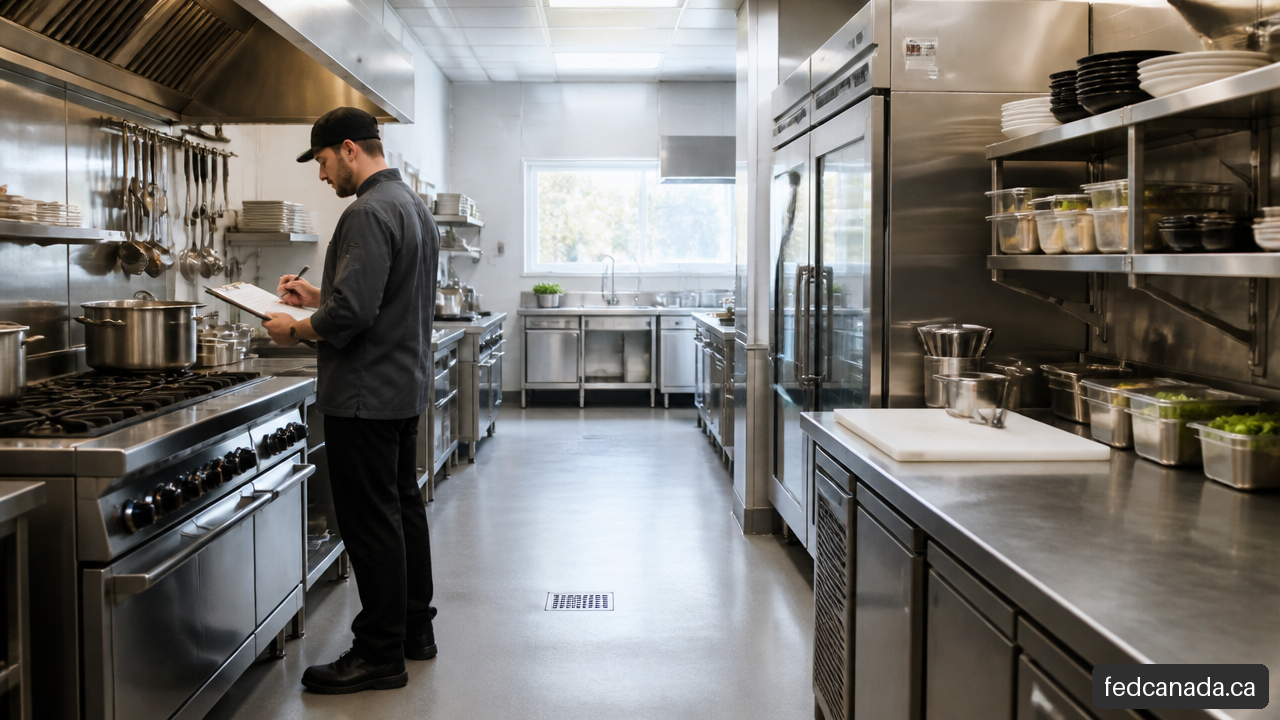
Table of Contents
In This Guide
- Restaurant Supply as an Operating System
- Build a Procurement Plan Around the Menu
- Compliance, Delivery, and Serviceability
- Frequently Asked Questions
Key Takeaways
- Restaurant supply decisions should begin with the menu and peak service demand, not a generic equipment list.
- Major equipment, smallwares, food ingredients, cleaning supplies, and tableware have different purchasing cycles and inventory risks.
- Food-contact equipment must be selected for cleanability, corrosion resistance, sound construction, and the applicable local food-premises requirements.
- The lowest purchase price is not always the lowest operating cost. Freight, installation, parts availability, maintenance, and downtime can change the comparison.
- Large equipment deliveries need a separate plan for access, unloading, inspection, utility connections, and damage reporting.
Restaurant Supply as an Operating System
Restaurant supply covers the products and procurement activities needed to prepare, store, serve, package, clean, and maintain foodservice operations. That includes fixed commercial kitchen equipment, portable smallwares, ingredients, disposables, cleaning products, storage systems, and front-of-house items.
The useful way to think about Restaurant Supply is not as a catalogue. We can think of it as a chain of connected decisions. A prep table affects cold storage capacity. Cold storage affects receiving schedules. Receiving schedules affect ingredient inventory. Equipment placement affects labour movement, sanitation, and whether a kitchen can safely produce the menu during a busy hour.
The Core Supply Categories
Most restaurant purchasing can be organized into the following categories:
| Supply category | Typical items | Primary decision question |
|---|---|---|
| Cooking equipment | Ranges, ovens, fryers, grills, steam equipment | Can it produce the menu at peak demand? |
| Refrigeration | Reach-in refrigerators, freezers, prep tables, walk-ins | Does it protect product while supporting prep workflow? |
| Food preparation | Mixers, slicers, processors, worktables, scales | Does it reduce bottlenecks and support consistency? |
| Warewashing and sanitation | Dishwashers, sinks, shelving, chemical dispensers | Can staff clean and sanitize without creating a service delay? |
| Smallwares | Pans, knives, utensils, thermometers, containers | Are quantities sufficient for one full service cycle plus washing time? |
| Front-of-house and packaging | Tableware, trays, takeout containers, labels | Does it match the service model and brand standard? |
| Ingredients and consumables | Food, beverages, paper goods, cleaning products | Can supply levels be maintained without excessive waste? |
A new operator can underestimate smallwares because individual tools appear inexpensive. The issue is quantity. A single sauté pan does not support a busy line if it remains in the dish area between orders. Likewise, too few food pans can force staff to wash and reuse containers during production instead of preparing ahead.
Equipment and Smallwares Solve Different Problems
Commercial equipment establishes capacity. Smallwares determine how smoothly that capacity is used.
Consider a bakery with a capable mixer and convection oven but only a small number of sheet pans and cooling racks. The oven may technically have enough production capacity, yet baking pauses while pans cool or are washed. In that situation, the constraint is not the oven. It is the supporting inventory around it.
We recommend separating these two budgets from the beginning:
- Capital equipment budget: appliances, refrigeration, ventilation, fabrication, sinks, and durable fixtures.
- Opening smallwares budget: cookware, food pans, containers, utensils, thermometers, knives, racks, labels, and cleaning tools.
- Operating supply budget: ingredients, chemicals, gloves, towels, packaging, filters, and other recurring purchases.
This separation makes it easier to see whether a quote funds a functioning kitchen or only fills the room with large appliances.
Supply Chain Management Is a Service Issue
Supply chain management is often treated as a back-office concern. In food service, it is visible to guests. A stockout of takeout containers can interrupt delivery orders. A failed refrigerator can limit the menu. A delayed replacement part can leave a high-margin station idle.
The goal is not to carry maximum inventory. Excess food inventory can increase spoilage, tie up cash, and crowd refrigeration. Instead, establish reorder points that reflect delivery lead time, storage capacity, sales variability, and the consequences of running out.
For critical consumables, identify an approved substitute before there is a shortage. For example, a restaurant that relies on a specific clamshell container should know which alternate size or material still fits its food, branding, and delivery process. This is basic resilience, not overbuying.
Build a Procurement Plan Around the Menu
The first equipment question should be simple: What must the kitchen produce during its busiest service window? A menu determines cooking methods, holding needs, refrigeration requirements, prep intensity, warewashing volume, and ventilation needs.
Buying equipment by category alone can lead to an expensive mismatch. A grill may be commercially built, but it is not necessarily right for a menu centred on fried food, baked goods, or high-volume steamed production.
Start With Peak-Hour Throughput
Peak-hour throughput is the amount of food an operation must produce in its busiest period. It is more useful than average daily sales because equipment failure usually appears during the rush, not at 3 p.m. on a quiet weekday.
Use this planning sequence:
- List each menu item and its cooking, finishing, holding, and plating steps.
- Estimate how many portions may be ordered in the busiest hour.
- Identify shared equipment. A fryer, oven, prep table, or dishwasher may serve several menu items at once.
- Check recovery and turnaround time. A piece of equipment that performs well for the first batch may slow when demand is continuous.
- Add realistic space for staging, cooling, clean pans, dirty dishes, and staff movement.
For instance, a quick-service restaurant may sell several fried items. The purchasing decision is not simply whether to buy a fryer. The relevant questions include how many baskets are needed, whether different foods require separate oil management, where frozen product is staged, and whether finished food can be held without losing quality.
There is no universal Canadian formula for sizing every type of restaurant equipment. The correct capacity depends on menu mix, operating hours, batch size, staff workflow, and the concentration of orders in a short period. When the volume forecast is uncertain, choose flexibility where possible, such as modular equipment, additional mobile worktables, or refrigeration that supports more than one prep task.
Match Refrigeration to Product Flow
Commercial refrigeration should be sized for inventory movement, not just cubic capacity. A refrigerator can have enough shelf space but still fail operationally if staff must repeatedly walk away from the line to retrieve ingredients.
A practical cold-storage plan separates three jobs:
| Refrigeration role | What it supports | Common purchasing mistake |
|---|---|---|
| Bulk storage | Delivered ingredients and backup product | Buying too little capacity for delivery-day volume |
| Prep storage | Mise en place and ingredients being portioned | Using distant storage that slows preparation |
| Line storage | Frequently used items during service | Overloading a unit designed for fast access, not long-term stock |
A sandwich shop, for example, may need a refrigerated prep table at the line, separate reach-in refrigeration for backup containers, and freezer capacity for deliveries. One large refrigerator may store the food, but it may not support the workflow.
When comparing units, verify exterior dimensions, interior configuration, door clearance, electrical requirements, drainage needs where relevant, ventilation clearance, and whether the equipment can physically enter the building. “It fits the floor plan” is not enough if it cannot pass through a doorway, elevator, or hallway turn.
Compare New, Used, Open-Box, and Financed Equipment by Total Impact
The best purchasing method depends on cash position, urgency, risk tolerance, and service needs. We should compare ownership and operating implications, not just the monthly payment or sticker price.
| Option | May suit | Main advantage | Key caution |
|---|---|---|---|
| New equipment | Long-term buildouts and critical production stations | Warranty coverage and current condition | Higher initial cash requirement |
| Used equipment | Budget-focused projects and noncritical stations | Lower acquisition cost | Condition, parts, and warranty coverage vary |
| Open-box or scratch-and-dent | Operators able to accept cosmetic imperfections | Potential value on functionally sound equipment | Inspect the exact unit and confirm coverage |
| Financing or leasing | Buildouts needing to preserve working capital | Spreads payments over time | Compare total obligation, ownership terms, and maintenance responsibility |
Some Canadian suppliers offer equipment financing or leasing through specialist partners, as described by KitchenEquipment.ca’s equipment-financing information. That option can help align an equipment purchase with a broader renovation or opening budget, but it should still be evaluated with a lender or qualified financial adviser where tax treatment, interest, and ownership terms matter.
A used stainless-steel worktable may be a reasonable value if it is stable, cleanable, and suited to the space. A used refrigeration unit for the only cold-storage station is a more consequential decision because a failure can affect food safety, inventory, and service. The level of backup available should influence how much risk is acceptable.
Compliance, Delivery, and Serviceability
Procurement is not complete when a product is selected. Equipment must also be suitable for food handling, practical to clean, deliverable to the site, installable with the available utilities, and serviceable after the sale.
Turn Food-Premises Rules Into a Purchasing Check
Ontario’s food-premises regulation provides a useful example of the questions buyers should ask. Under Ontario Regulation 493/17 on food premises, equipment and utensils must meet requirements related to sound construction, good repair, cleanability, sanitizability, suitability for purpose, and food-contact materials. Food-contact surfaces must also be corrosion-resistant, non-toxic, and free of cracks, crevices, and open seams.
Those requirements have practical purchasing consequences:
- Choose food-contact surfaces that can be reached, washed, rinsed, and sanitized without dismantling unrelated equipment.
- Inspect welded joints, edges, gaskets, handles, cutting boards, and container lids for areas that can trap food residue or moisture.
- Avoid treating “commercial grade” as proof of compliance. Equipment must still be appropriate for its intended task and local requirements.
- Document specifications, invoices, manuals, and model information. These records can help during installation, maintenance, warranty requests, and inspections.
Provincial, territorial, municipal, and local health authority requirements can differ. Before finalizing a buildout, confirm the requirements that apply to the specific site rather than relying on another province’s regulation.
The distinction between food-contact and non-food-contact surfaces matters. A storage shelf may not touch food directly, but it still needs to be durable and cleanable in a kitchen environment. A mixing bowl, prep pan, cutting surface, or utensil needs closer attention because it contacts food and must support effective sanitation.
Plan Oversized Deliveries Before Ordering
Freight is a separate procurement task for ovens, refrigeration, dishwashers, hoods, and other heavy equipment. Smaller parcels and oversized restaurant equipment can require different carriers and delivery arrangements.
Before shipping, confirm the following in writing:
- The exact model dimensions, packaged dimensions, weight, and shipping method.
- Whether delivery is curbside, dock delivery, inside placement, or a white-glove service.
- Access conditions, including loading dock availability, door width, stairs, elevators, hallway turns, and parking restrictions.
- Who provides unloading equipment, moving labour, utility connections, assembly, commissioning, and debris removal.
- The process for inspecting freight and documenting visible damage before accepting delivery.
A common failure point is assuming that delivery includes installation. It may not. Restaurant-equipment purchasing can involve product supply, delivery, installation, and service coordination as separate scopes; HABCO’s dealer information reflects how those services may be combined or handled separately. A quote should identify exactly what is included.
If equipment arrives with visible damage, take photos, note the issue on the delivery record when possible, and contact the supplier and carrier promptly. Do not wait until installation day if the packaging or unit appears compromised.
Make Serviceability Part of the Specification
A product specification should include more than dimensions and price. For critical equipment, ask about warranty duration, exclusions, parts availability, authorized service coverage, response procedures, and preventive maintenance requirements.
This is especially important for refrigeration, cooking equipment, dishwashers, and ice machines. The operating impact of a breakdown depends on whether there is redundancy. A café with two undercounter refrigerators may be able to relocate product temporarily. A restaurant with one walk-in cooler and no alternative storage has less room for disruption.
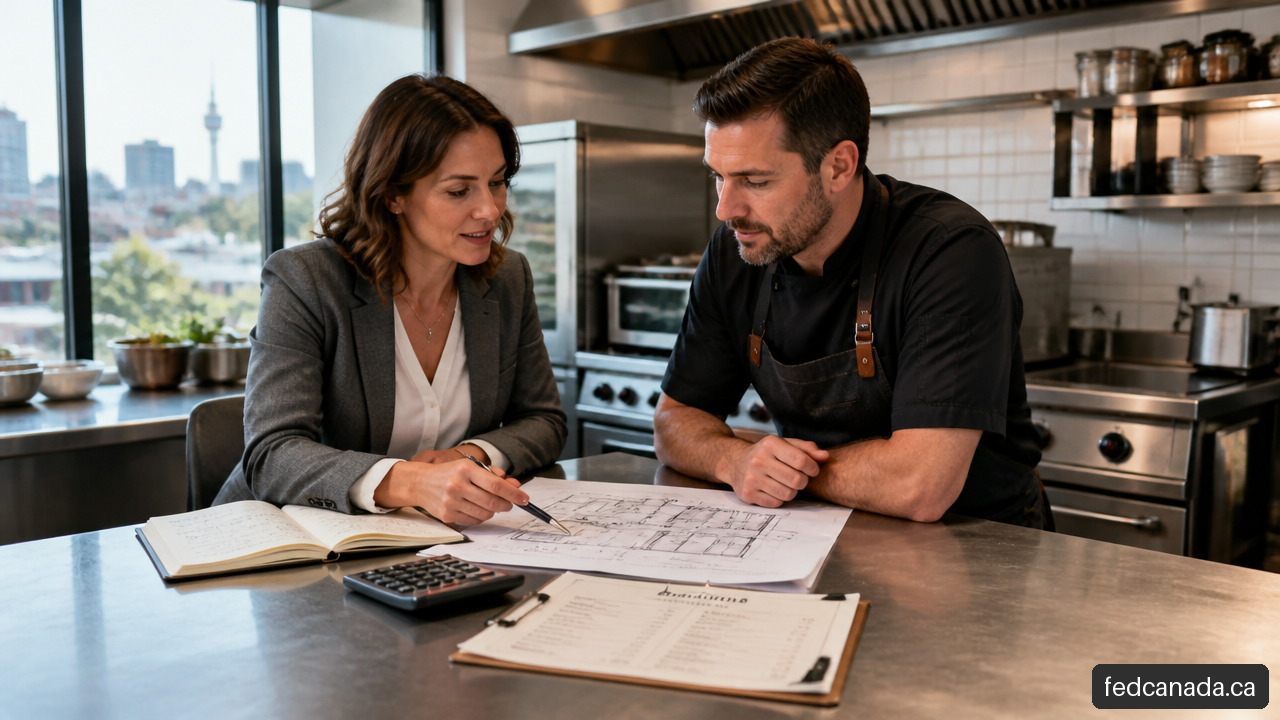
Canadian suppliers may support projects beyond product sales, including commercial kitchen design, equipment supply, consulting, and project support, as described by Canadian Restaurant Supply’s service overview. Layout help is particularly valuable when a project changes ventilation, gas, electrical capacity, plumbing, accessibility, workflow, or occupancy requirements.
For a simple replacement of a like-for-like unit, design services may not be necessary. For a renovation that shifts cooking methods or adds production volume, a layout review can prevent expensive mistakes such as blocked aisle space, insufficient utility capacity, or equipment that cannot be cleaned around.
Frequently Asked Questions
What does restaurant supply include?
Restaurant supply includes commercial kitchen equipment, refrigeration, food-preparation tools, smallwares, warewashing products, storage, cleaning supplies, tableware, packaging, and ingredients. It also includes the procurement activities around those products: quoting, freight planning, installation coordination, inventory management, warranty support, and replacement planning.
What equipment does a new restaurant need first?
Start with the equipment required to produce and safely hold the core menu during peak service. For most operations, priorities include refrigeration, cooking equipment, prep surfaces, handwashing and warewashing facilities, storage, and essential smallwares. Buy specialty equipment after confirming that it supports a meaningful menu need rather than an occasional item.
How do I choose the right commercial refrigerator?
Choose refrigeration based on product flow, not only capacity. Confirm what must be stored in bulk, prepped daily, and accessed repeatedly during service. Then verify physical dimensions, door swing, ventilation clearance, electrical needs, shelving configuration, and access through the building. A line refrigerator should support speed; a bulk-storage refrigerator should support receiving and inventory rotation.
Should I buy new, used, leased, or financed restaurant equipment?
Buy new when warranty protection, predictable condition, and long-term use matter most. Consider used or open-box equipment when the budget is tight and condition can be assessed carefully. Leasing or financing may fit a project that needs to conserve operating cash, but compare the total cost, payment terms, ownership outcome, maintenance obligations, and early-payment conditions rather than focusing only on the monthly amount.
What should I check before ordering restaurant equipment online?
Confirm the exact model, dimensions, utilities, warranty terms, included accessories, freight method, delivery scope, installation responsibility, and return conditions. For large units, verify building access and unloading arrangements before ordering. Also make sure the product is suitable for the intended foodservice task and applicable local requirements.
How do provincial health regulations affect restaurant equipment purchases?
They can affect materials, cleanability, construction, installation, and intended use. Ontario, for example, has specific requirements for equipment and utensils in food premises, including food-contact surfaces. Other jurisdictions may apply different requirements or interpretations. Check with the appropriate local authority before committing to a design or equipment package.
How can I avoid freight damage when ordering large kitchen equipment?
Confirm the shipping method and who handles unloading, placement, and installation. Inspect the shipment immediately, photograph any visible damage, and record concerns on delivery paperwork where possible. Keep all packaging and documentation until the equipment is inspected and the claim process, if needed, is clear.
Recent Posts

Leave a Comment
Your email address will not be published. Required fields are marked *