




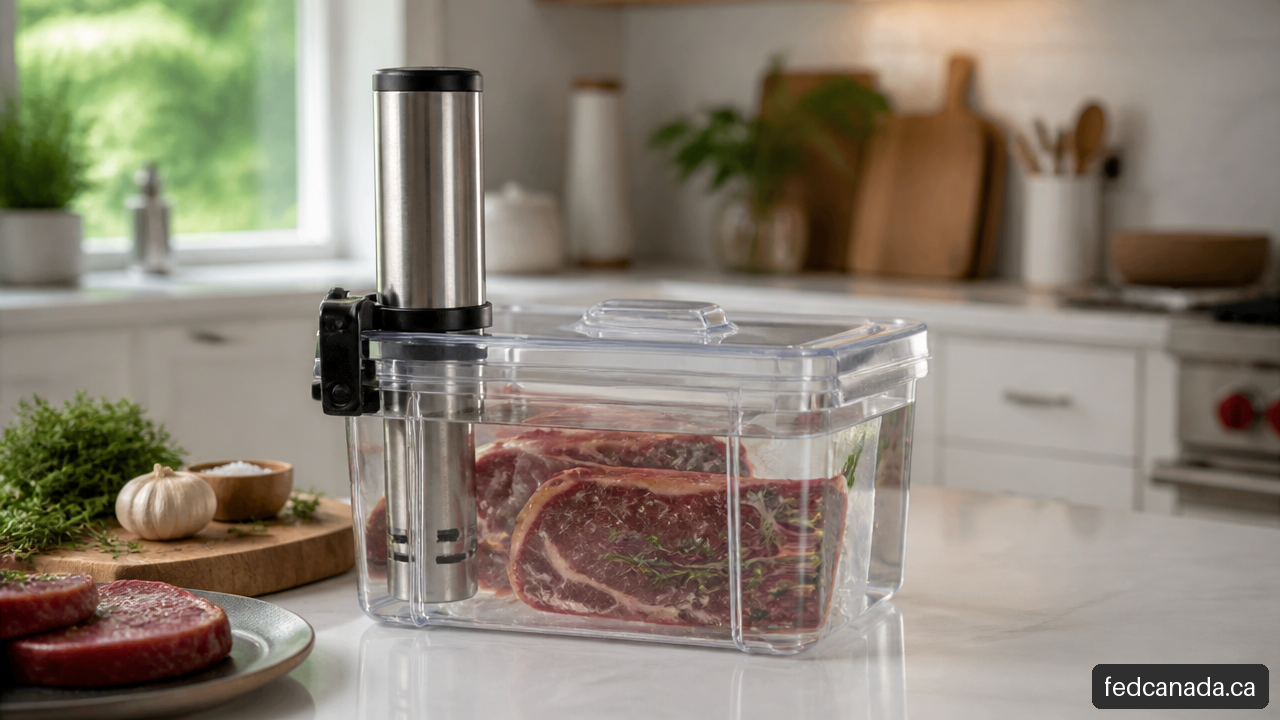
Sous Vide Machine Guide: Choose, Use, and Maintain One
A sous vide machine gives you unusually close control over cooking temperature, helping meat, fish, eggs, vegetables, and meal prep foods reach a specific texture with less guesswork. The best setup is not necessarily the most expensive one. It is the one that fits your vessel size, cooking frequency, storage space, and the kinds of foods you actually plan to cook.
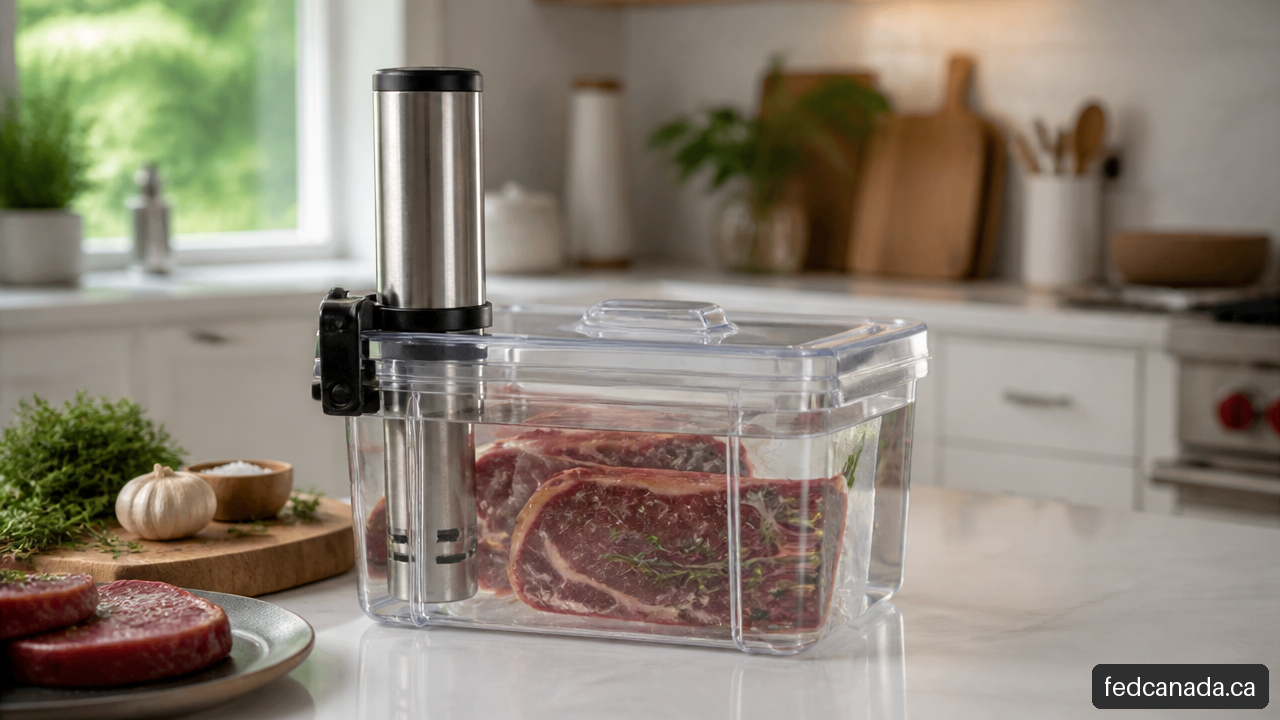
Table of Contents
- Key Takeaways
- How a Sous Vide Machine Works
- How to Choose the Right Sous Vide Setup
- Bags, Water Baths, and Reliable Operation
- Cooking Safely and Getting Better Results
- Frequently Asked Questions
Key Takeaways
- A sous vide machine usually means an immersion circulator, a compact device that clips to a pot or container and holds the water at a selected temperature.
- You do not need a vacuum sealer for every recipe. A quality zipper bag and the water displacement method can work well for many solid foods.
- Vessel size matters as much as the circulator itself. A compact setup suits one or two portions, while batch cooking needs more water capacity and a lid.
- Long cooks need active evaporation management. Water must stay within the circulator’s marked minimum and maximum levels throughout the cook.
- External vacuum sealers are practical for dry, solid foods. Chamber sealers are generally better for liquids, marinades, and frequent high volume use.
- A finishing sear still matters for foods such as steak, pork chops, and chicken thighs because the water bath cooks the interior but does not create a browned crust.
The practical advantage of sous vide is repeatability. Once you identify a time and temperature that produces the texture you want, the result is easier to reproduce than with many high heat cooking methods.
How a Sous Vide Machine Works
What an immersion circulator actually does
An immersion circulator is the device most people mean when they say “sous vide machine.” It clamps to the side of a stockpot, food storage container, or dedicated water bath. Inside, a heating element raises the water temperature while an impeller or pump moves water around the vessel.
An immersion circulator heats and circulates the bath, which is the critical mechanism behind even cooking. Moving water matters because still water can develop warmer and cooler pockets. Circulation keeps the bath closer to the temperature shown on the display.
The food sits in a sealed pouch, jar, or occasionally its natural shell, as with eggs. Heat gradually moves from the water into the food. Once the center of the food approaches the bath temperature, it cannot keep rising far beyond that setpoint. That is why a steak cooked at a moderate temperature can become evenly pink from edge to center rather than showing a gray band beneath an overcooked exterior.
Why temperature control changes texture
Temperature is not only about whether food is hot enough. It shapes texture.
At lower cooking temperatures, proteins tighten less aggressively, which can preserve a tender, juicy texture. At higher temperatures, proteins firm up and moisture loss becomes more noticeable. Time also matters. A tough cut may need many hours for connective tissue to soften, while a delicate fish fillet can turn soft if held too long even at a relatively gentle temperature.
Consider two different goals:
| Food and goal | What matters most | Practical implication |
|---|---|---|
| Steak with a rosy interior | Precise target temperature | Use a short to moderate cook, then dry and sear quickly |
| Tough beef roast with a spoon tender texture | Time plus temperature | Plan for an extended cook and manage water loss carefully |
| Delicate fish | Moderate heat and restrained timing | Avoid treating it like a long cooked beef cut |
| Eggs for a specific yolk texture | Narrow temperature control | Small temperature changes can noticeably affect the result |
A sous vide machine is therefore not a shortcut for every recipe. It is a control tool. It is especially useful when a narrow texture target matters more than fast cooking.
What sous vide does not solve
Precision cooking does not replace food handling, seasoning, browning, or recipe judgment. The machine cannot correct a poorly sealed bag, a bath that runs low on water, or food that was not stored safely before cooking.
It also does not automatically make every food better. Crisp vegetables, roasted potatoes, and foods that depend on dry heat may still need roasting, frying, grilling, or broiling. Sous vide is strongest when you want the inside of food cooked with consistency, then use another method to build flavor and surface texture.
How to Choose the Right Sous Vide Setup
Start with your real batch size
When comparing a sous vide machine, begin with the size of the water bath you expect to use. A circulator can only work within its stated water level range, and the food itself displaces water. A device that seems sufficient for two chicken breasts in a pot may feel cramped when you try to cook six portions for a family meal.
Use this decision framework:
| Your cooking pattern | Sensible vessel approach | What to prioritize |
|---|---|---|
| One or two portions once in a while | Stockpot or compact container | Small storage footprint and simple controls |
| Weekly meal prep | Medium lidded container | Reliable clamp, water capacity, easy cleaning |
| Family meals or entertaining | Larger food safe container with a rack | Strong circulation, stable mounting, evaporation control |
| Frequent liquids or high volume prep | Circulator plus chamber sealer, if justified | Workflow efficiency and liquid handling |
For a small Canadian kitchen, a wand shaped circulator and a stockpot are often the most space efficient entry point. The circulator can go in a drawer, while the pot remains useful for everyday cooking. A countertop water oven can be convenient, but it takes permanent storage space and limits you to its built in vessel dimensions.
Immersion circulator versus countertop water oven
An immersion circulator offers flexibility. You choose the container, which means you can use a modest pot for dinner or a larger insulated container for batch cooking. It is usually the better fit when storage is limited or portions vary widely.
A countertop water oven combines the heater, circulation system, and vessel in one appliance. It may appeal to cooks who prefer a dedicated, self contained setup, but capacity is fixed. Before choosing one, check whether its interior can comfortably hold the portions you expect to cook without crowding.
The better option depends less on cooking quality than on kitchen habits:
- Choose an immersion circulator if flexibility, compact storage, and vessel choice matter most.
- Choose a countertop water oven if you want an all in one appliance and have stable counter or cabinet space.
- Avoid buying based only on wattage or app features. Those specifications do not tell you whether the machine will fit your actual cooking routine.
Decide whether connectivity is worth it
Wi Fi and Bluetooth features can be convenient for monitoring a cook from another room, but they are not essential to precise cooking. Physical controls that are easy to read, responsive, and straightforward to adjust are often more valuable than an app you may rarely open.
Paying extra for connectivity can make sense if you routinely run longer cooks and want remote status checks. It is less useful for a 45 minute meal when you are already in the kitchen. In either case, do not rely on remote control as a substitute for checking water levels during an extended cook.
Account for total ownership cost
The purchase price is only part of the decision. A practical budget also includes bags, a vessel, a lid or cover, clips or weights, and occasional replacement parts. Reusable bags may reduce disposable bag use, but they require careful cleaning and may not seal as tightly as a purpose made vacuum pouch.
There is no reliable universal estimate for household energy cost because vessel size, lid use, ambient temperature, cooking duration, and local electricity rates vary. A covered, appropriately sized bath will generally waste less heat and water than an oversized uncovered pot. For example, a six hour cook in a lidded container is a different operating situation from a long overnight cook in an uncovered stockpot.
Bags, Water Baths, and Reliable Operation
Do you need a vacuum sealer?
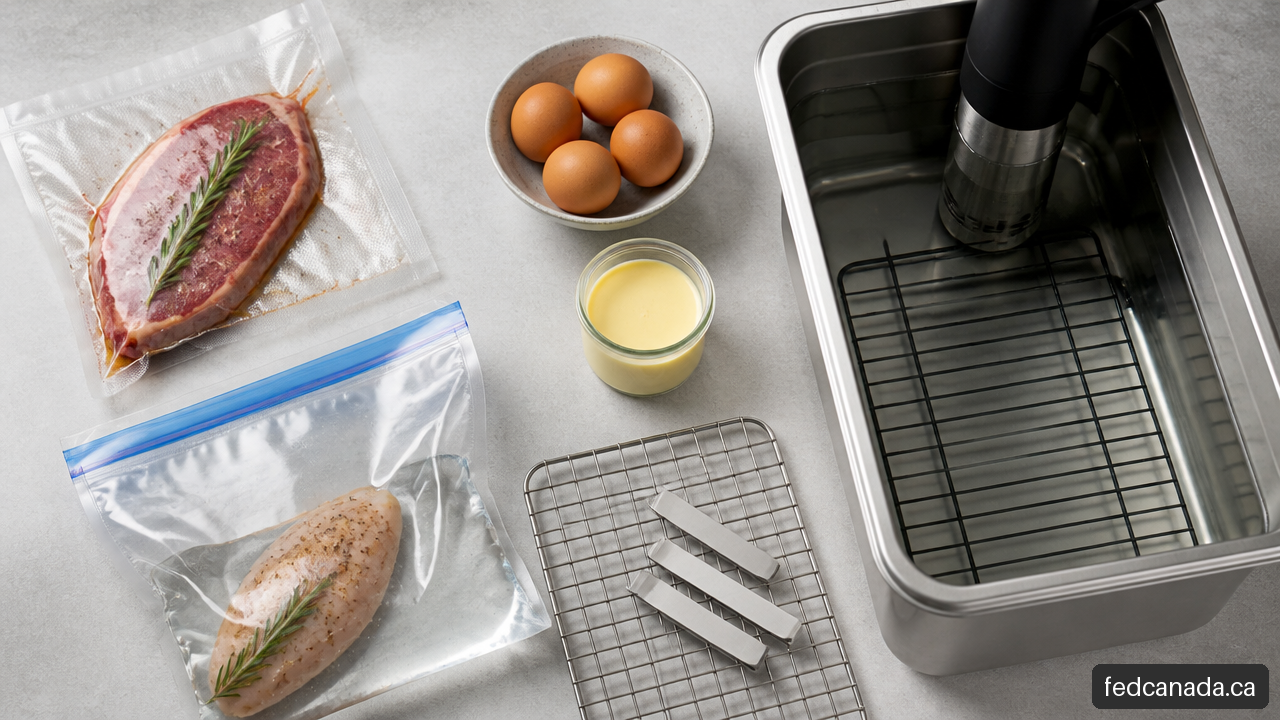
No. A vacuum sealer is helpful, but it is not mandatory for most solid foods. The water displacement method works by partially closing a zipper bag, lowering it into water so pressure pushes air upward, then sealing the final corner before the bag goes fully under. This can be a practical approach for chicken breasts, pork chops, vegetables, and many short to moderate cooks.
The bag must be suitable for food contact and intended to tolerate the cooking temperature. Thin ordinary storage bags are not a dependable choice for heated water baths.
For vacuum sealers, the distinction is important. External suction sealers are commonly suited to solid foods, while chamber machines are more appropriate for liquids and intensive use. That difference affects both purchasing cost and daily convenience.
Choose the bagging method for the food
| Food or preparation | Best practical containment option | Why it fits | Watch for |
|---|---|---|---|
| Dry steak, chicken, pork, vegetables | Vacuum pouch or zipper bag with displacement | Simple and low mess | Trapped air and floating |
| Marinades or liquid rich foods | Chamber bag, jar, or partially frozen liquid method | Reduces the risk of liquid entering an external sealer | Overfilling and seal contamination |
| Custards or soft mixtures | Suitable glass jar | Keeps liquids contained | Leave appropriate headspace and avoid overtightening |
| Eggs | Shell on | No bag required | Cracks and careful handling |
| Frequent bulk meal prep | External vacuum sealer with compatible textured bags | Fast workflow for solid portions | Ongoing bag cost |
Sealed bags are common, while jars can suit some preparations and eggs can be cooked in their shells. Jars are useful for custards and delicate mixtures, but they are not a universal replacement for flexible pouches. They occupy more water bath space and require enough water around them for consistent heating.
Prevent floating bags and weak seals
A floating bag is more than an annoyance. The food may sit partly above the water, reducing even heat contact. The usual cause is trapped air, although buoyant ingredients can contribute.
Use this recovery sequence:
- Stop and inspect the bag before continuing. Confirm that the seal has not opened.
- If the bag contains trapped air, reseal it using the water displacement method or a vacuum sealer.
- Use a rack, clip, or food safe weight to keep the bag submerged without blocking the circulator’s intake or outlet.
- Keep individual bags separated. A tightly packed bundle can restrict water flow around the food.
Weak seals are often preventable. Keep the sealing area clean and dry, avoid placing food too close to the top edge, and do not overfill the pouch. For external sealers, moisture near the weld can interfere with a reliable closure. Freezing a wet marinade until slushy before sealing may help in some recipes, though a jar or chamber sealer is usually a cleaner choice for very liquid preparations.
Manage evaporation before it becomes an alarm
Long cooks need a cover. Long cooking projects require attention to marked water levels and evaporation, and that a cover can reduce water loss. The cover must leave room for the circulator and should not block its operation.
A dependable long cook protocol is simple:
- Fill the vessel within the machine’s marked water range before heating.
- Add the bagged food, then check the water level again because the food displaces water.
- Cover the vessel with a purpose made lid, a modified lid, or a heat safe cover that leaves circulation unobstructed.
- Check periodically during extended cooks, especially early in the process when you are learning how quickly that vessel loses water.
- Add warm water cautiously if needed, keeping the level between the minimum and maximum markings.
Do not fill above the maximum line in anticipation of evaporation. The device’s markings are operating limits, not rough suggestions.
Cooking Safely and Getting Better Results
Build a dependable workflow
For most foods, the process is straightforward: season, bag, cook, dry, then finish if browning is desired. The details determine whether it feels effortless or frustrating.
- Start with food that has been handled and refrigerated appropriately before cooking.
- Set the water bath to the recipe’s target temperature and allow it to stabilize.
- Submerge the bag fully and make sure water can circulate around it.
- Use a timer based on the recipe, the thickness of the food, and the texture you want.
- Remove the food, dry its surface thoroughly, and sear quickly in a very hot pan, on a grill, or with another suitable high heat method when a crust is desired.
Drying before searing is essential. A wet surface steams before it browns. For a steak, a brief high heat sear after the bath builds flavor without substantially changing the carefully controlled interior.
Treat time and temperature as a pair
Sous vide safety and quality depend on both time and temperature, not temperature alone. Follow a tested recipe from a reliable source for the specific food, thickness, and desired result. This is especially important for poultry, ground meats, fish, and extended cooks.
Avoid treating sous vide as a way to leave food unattended indefinitely. Some recipes may take many hours, but that does not mean every food benefits from extra time. Delicate fish, tender vegetables, and already tender cuts can lose their ideal texture when held longer than necessary.
Frozen foods can often be cooked sous vide, but they usually need additional time for the center to heat through. Keep them sealed and frozen safely before cooking, and use a tested recipe rather than guessing at the adjustment.
Verify performance without overcomplicating it
Most home cooks do not need laboratory grade calibration. Still, if accuracy matters to you, use an independent, reliable thermometer to compare the bath temperature after the water has stabilized and food has been added.
Check at more than one location in a larger vessel. A small difference may be normal depending on the thermometer and placement. A consistent, meaningful gap between the display and your measurement is a reason to consult the manufacturer’s instructions, descale if appropriate, or seek service.
This kind of check is most useful after a machine has been stored for a long time, if it has started showing unusual behavior, or before an extended cook where a narrow temperature range matters.
Clean, dry, and store the machine carefully
After cooking, unplug the circulator and allow it to cool before cleaning. Wipe down the exterior, empty the vessel safely, and dry the unit before storage. If mineral buildup is visible, follow the manufacturer’s instructions for descaling rather than scraping inside the housing.
Keep the intake and outlet clear during use. If water flow seems reduced, stop the machine and inspect it only after it has cooled and been disconnected. A cover can create condensation around the work area, so dry the counter and appliance exterior before putting the circulator away.
Frequently Asked Questions
What is the best sous vide machine for a small kitchen?
For most small kitchens, a compact immersion circulator is the most flexible option because it can clip to an existing stockpot and store in a drawer. Choose one with controls you can read easily, a secure clamp, and a water capacity that suits your normal portion size. A dedicated countertop water oven can work well, but it requires more permanent storage space.
Can I use a regular stockpot as a sous vide water bath?
Yes. A regular stockpot can work well if the circulator clamps securely and the water remains within the appliance’s marked minimum and maximum levels. For short cooks, a stockpot is often enough. For large batches or long cooks, a lidded food safe container may provide more capacity and better evaporation control.
How much water can a sous vide machine heat?
The answer depends on the individual model, vessel shape, room temperature, and whether the bath is covered. Use the manufacturer’s stated capacity as a guide, but do not crowd the bath with food or ignore the machine’s water level markings. A wider vessel filled with many bags may need more circulation room than its volume alone suggests.
Why is my sous vide bag floating?
Floating usually means there is trapped air in the bag or the contents are buoyant. Reseal using water displacement or a vacuum sealer, then use a rack, clip, or food safe weight if necessary. Keep the bag completely under water and away from the circulator’s moving water stream.
Can I sous vide liquids without making a mess?
Yes, but the best method depends on volume. For small quantities such as custard, a suitable glass jar is often practical. For larger liquid rich preparations, a chamber vacuum sealer is generally better suited than an external suction sealer. Another option is to partially freeze the liquid before sealing, provided the recipe and bag are appropriate for that method.
Why does my sous vide machine show a low water warning?
The water level may have dropped below the device’s minimum line because of evaporation, or the initial level may have been too low after food was added. Turn off the machine if required by its instructions, add water carefully within the marked range, and cover the bath for the remainder of a long cook without obstructing circulation.
Is Wi Fi control worth paying more for?
It is worth considering if you regularly cook for several hours and want to monitor progress from another room. For occasional shorter cooks, clear onboard controls may be more useful than connectivity. Remote monitoring should be treated as a convenience feature, not a replacement for checking water levels and safe operation.
Recent Posts
Leave a Comment
Your email address will not be published. Required fields are marked *