



Barbeque for Restaurant: Equipment, Smoke, and Service Planning
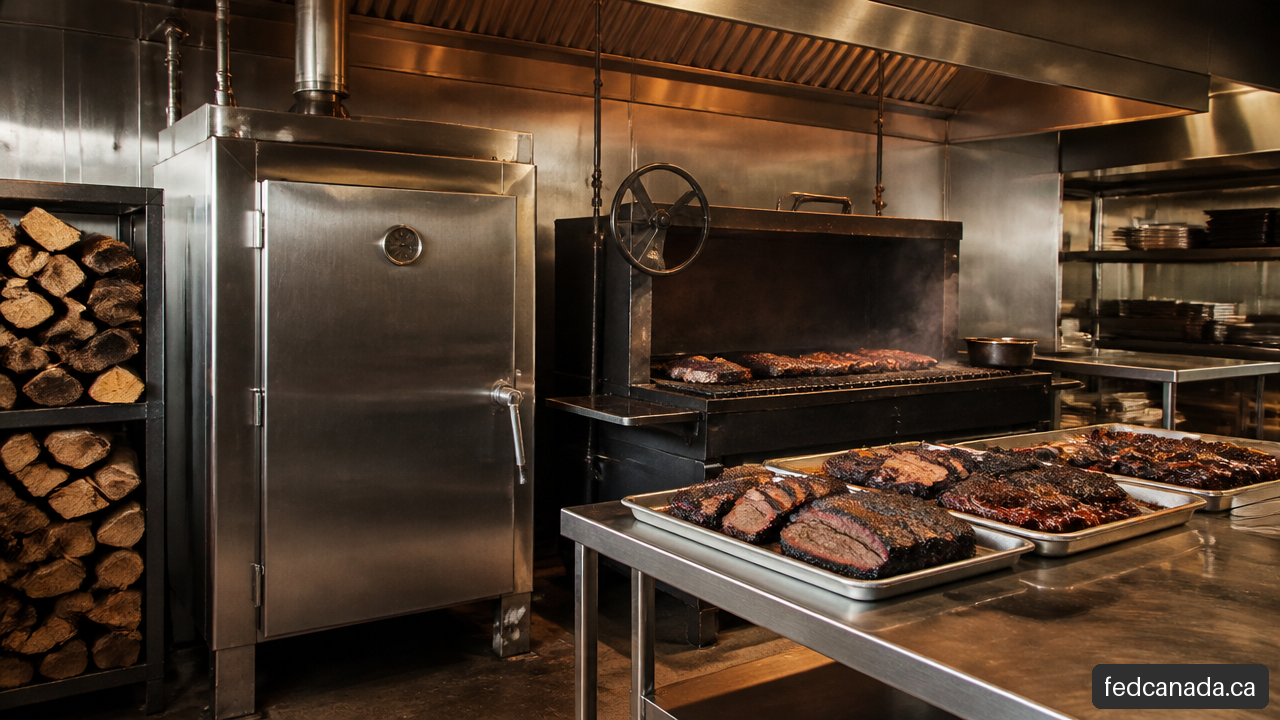
Barbeque for Restaurant service is more than choosing a smoker with a large cooking chamber. We need to plan for the whole system: the fuel, the smoke profile, the pace of service, the building, the hood, the holding equipment, and the cleaning routine. A brisket can emerge with a beautiful bark and smoke ring, yet the operation can still struggle if the pit cannot recover heat, the exhaust cannot control grease, or the pass has nowhere safe to hold sliced meat during a rush.
The most reliable restaurant barbecue programs begin with a simple truth: the equipment must fit the menu and the premises, not just the flavor vision.
Table of Contents
- Choose Equipment for the Menu and Service Model
- Approve the Space Before Buying the Smoker
- Build a Barbecue Workflow That Holds Up During Service
- Key Takeaways
- Frequently Asked Questions
Choose Equipment for the Menu and Service Model
A commercial barbecue smoker is designed for repeated, large scale low and slow cooking. A commercial grill, by contrast, is built for faster direct or indirect heat. Many restaurants need both: a smoker for overnight brisket, pulled pork, ribs, turkey, or chicken, plus a grill or charbroiler for finishing, reheating, or cooking made to order items.
Start with the food you must serve at peak time
We should size barbecue equipment from the busiest service window backward. Do not begin with total weekly sales. Begin with the question: How much finished barbecue must reach guests during the busiest 60 to 90 minutes?
For example, a lunch focused on brisket sandwiches may require a steady flow of sliced product from a hot holding cabinet, with small replenishment batches at the cutting station. A dinner menu centered on full racks of ribs may need more smoker rack space and a finishing zone that can glaze and set sauce quickly. The food may cook overnight, but the service bottleneck often appears at slicing, saucing, holding, or replenishing.
Use this planning sequence:
- List every barbecue item and its cooking method: smoked, grilled, roasted, finished over fire, or reheated.
- Estimate the number of portions needed during the busiest service period.
- Convert portions into raw product weight or rack count, allowing for trimming, cooking loss, and portions that do not sell evenly.
- Identify how long each item occupies smoker space, resting space, hot holding space, and the service line.
- Add recovery capacity for late deliveries, uneven demand, equipment cleaning, and a batch that does not meet quality standards.
There is no dependable universal formula for pounds per rack, fuel use, or daily throughput across all smokers. Chamber geometry, shelf spacing, weather, product size, loading density, wood type, and pitmaster technique all affect results. A large offset smoker may look generous on paper but still run short on usable space if airflow is blocked by tightly packed briskets.
A smoker is not just a cooker. In a restaurant, it is a production schedule with a firebox attached.
Compare fuel systems by operating reality
Wood, charcoal, gas, electricity, and pellets can all produce compelling barbecue. The best choice depends on the flavor target, available labor, local approvals, ventilation limits, and how much variation the menu can tolerate.
| Equipment type | Strong fit | Main advantage | Operational caution |
|---|---|---|---|
| Offset wood smoker | Traditional barbecue focused on wood smoke and long cooks | Deep smoke character and hands on fire control | Requires active fuel management, space, smoke control, and a robust installation plan |
| Charcoal smoker or grill | Live fire cooking, finishing, and charred flavor | High heat and pronounced ember driven flavor | Ash, grease, and combustion management can complicate indoor use |
| Gas smoker or grill | High volume service with fast recovery | Responsive heat and repeatable operation | Adds smoke less naturally unless designed with wood chips or a separate smoke source |
| Electric smoker | Controlled smoking in a production kitchen | Predictable temperature control and simpler operation | May not deliver the same live fire profile expected by some barbecue guests |
| Pellet smoker | Operators seeking automated wood fuel cooking | Setpoint control with wood smoke character | Pellet availability, electrical needs, and recovery performance should be verified for the menu |
A wood fired offset can suit a restaurant whose identity depends on a bold post oak, hickory, maple, apple, or cherry smoke profile. But it needs disciplined fire management. A clean fire burns differently from a smoldering one. Too little oxygen can produce bitter, heavy smoke that clings to fat and leaves meat tasting acrid rather than rich.
Electric, gas, or pellet equipment can make more sense where consistency matters more than tending a fire overnight. This does not mean flavor must become flat. A thoughtful rub, a controlled smoke phase, high quality meat, and careful rendering can still deliver tender brisket, lacquered ribs, and juicy pulled pork. The difference is that the restaurant shifts more of its craft from fire tending to recipe control and repeatable production.
Match the flavor profile to the technique
Great barbecue is built in layers. Salt and spice in the rub season the surface. Smoke settles during the early phase of the cook. Heat renders fat and softens connective tissue. Resting allows the finished product to settle before slicing or pulling.
Wood selection should support the food rather than overpower it:
- Hickory can bring a strong, savory profile to pork shoulder and ribs.
- Oak is often chosen for its steady, balanced smoke and compatibility with beef.
- Apple or cherry wood can add gentler sweetness and color, especially with poultry or pork.
- Mesquite is intense and can be useful in smaller amounts, though it may dominate delicate items.
Marinades can add moisture and seasoning, but they do not replace proper cooking control. A wet surface can also slow bark formation. For a restaurant menu, standardize rub weights, marinating time, wood additions, resting time, and finishing steps. That turns a signature flavor into a repeatable process rather than a lucky shift.
Approve the Space Before Buying the Smoker
The most expensive barbecue mistake is purchasing equipment before confirming that the restaurant can legally and safely support it. A smoker may fit through the door and still be unsuitable for the building.
Treat ventilation as a purchase requirement
Smoke, heat, grease laden vapours, and combustion byproducts do not become a ventilation problem only after installation. They are part of the equipment decision from day one.
The City of Calgary notes that cooking appliances producing grease laden vapours or smoke may require an NFPA 96 ventilation and fire protection system, including automatic fire suppression in applicable installations and specific exhaust location requirements. This can affect the feasibility, cost, and layout of a barbecue concept long before the first brisket reaches the smoker.
Make up air matters as much as exhaust. A hood removes air from the kitchen; make up air replaces it. Without a balanced system, the kitchen can develop negative pressure. Doors may become difficult to open, smoke can drift into guest areas, pilot flames may behave unpredictably, and the hood may not capture emissions as intended.
In Alberta, the Food Retail and Foodservices Code ventilation guidance says ventilation should control grease, condensation, smoke, and contaminated airflow while preventing deposits from reaching food and food contact surfaces. That is a layout issue, not merely a maintenance note. Place raw meat prep, clean utensils, plating, and finished food away from dirty airflow and grease accumulation pathways.
Follow an approval first sequence
Before committing to an indoor smoker, outdoor pit, or auxiliary barbecue station, bring the proposed menu and equipment specifications to the relevant authorities and qualified design professionals. Provincial and municipal requirements differ, and the installation details can change the answer.
A practical approval sequence looks like this:
- Define the menu, fuel source, daily production volume, and whether cooking is indoor, outdoor, mobile, or temporary.
- Obtain the manufacturer specifications for fuel, electrical load, gas connection, clearances, dimensions, emissions, and intended commercial use.
- Discuss the concept with local building, fire, and health authorities before signing for equipment or construction.
- Confirm hood type, duct routing, fire suppression, make up air, gas work, electrical work, and roof or wall penetrations.
- Plan the inspection path and keep equipment documents available for review.
The British Columbia Centre for Disease Control advises operators to consult an environmental health officer during food business planning and describe the proposed ventilation method, location, and type. The larger lesson applies broadly: an early conversation is cheaper than redesigning a completed kitchen.
Indoor, outdoor, and mobile equipment are different cases
A portable barbecue is not automatically a shortcut around commercial installation requirements. Residential safety advice and restaurant operating conditions are not interchangeable.
For mobile or auxiliary barbecue equipment, the British Columbia Centre for Disease Control states that non permanently attached barbecue equipment may require health authority approval; its guidance also addresses nearby handwashing, controlled hot and cold holding, and adequate ventilation where cooking produces extensive grease and vapours. That matters for pop ups, patio service, catering trailers, and seasonal operations.
A compact grill may be technically portable, but it still needs a safe location, cleanable workflow, handwashing access, fuel handling procedures, and a plan for ash, grease, and weather.
Ontario’s food premises regulation also requires ventilation to be maintained to eliminate odours, fumes, vapours, smoke, and excessive heat. That requirement is relevant when an operation considers whether a food premises ventilation system is being properly maintained, rather than assuming a hood that exists is automatically sufficient for barbecue production.
Build a Barbecue Workflow That Holds Up During Service
The long cook is only the first half of restaurant barbecue. The second half is protecting the product through resting, holding, slicing, serving, and cleanup.
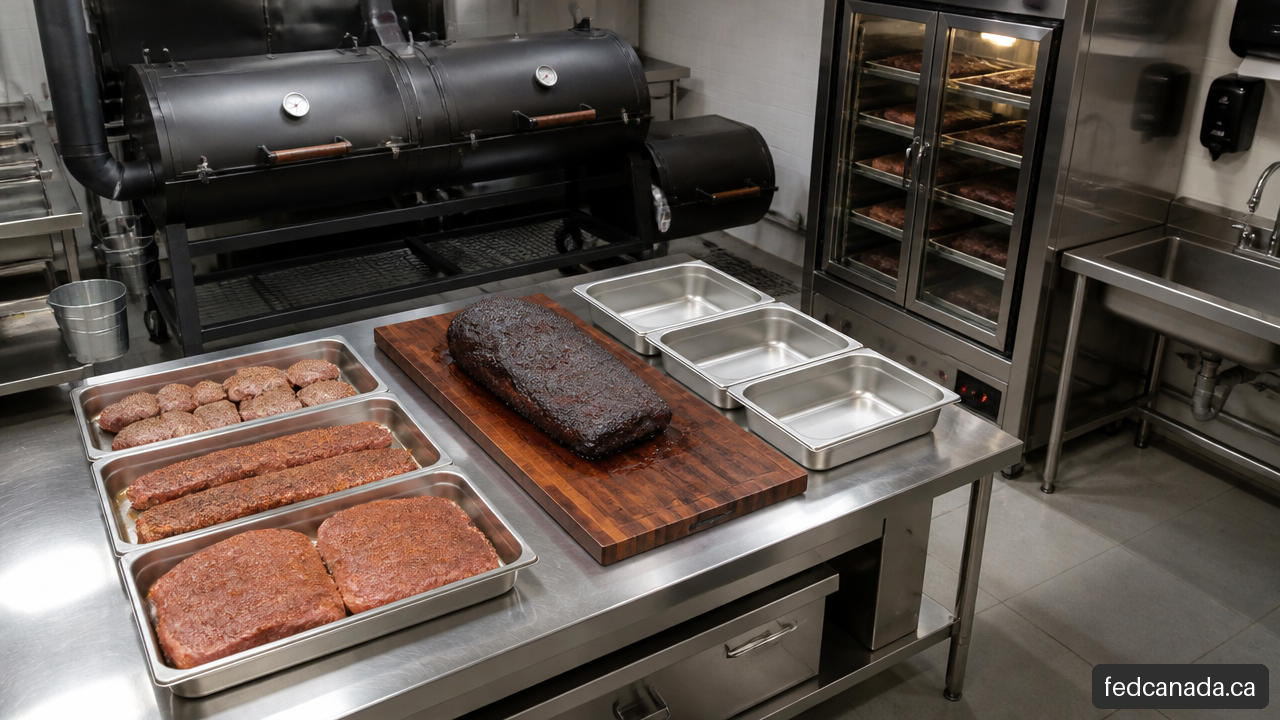
Design the kitchen around product flow
A useful barbecue layout moves food forward with minimal backtracking:
- Receive and store raw meat under refrigeration.
- Trim, season, and stage product in a dedicated prep area.
- Load the smoker with clear labels for time, product, and batch.
- Rest cooked meat in a controlled area before slicing or pulling.
- Hold finished food safely and replenish the line in manageable batches.
- Return utensils and pans to warewashing without crossing raw meat traffic.
This flow limits cross contamination and makes rush periods calmer. A carving board beside raw pork trim, for instance, creates a contamination risk even if employees are careful. Separate the jobs physically where possible, then support the layout with color coded tools, labeled containers, and clear cleaning routines.
Manage holding as carefully as cooking
Barbecue is especially vulnerable to the gap between “done cooking” and “ready to serve.” A pork shoulder may be safely cooked and beautifully tender, but a long wait in the wrong temperature range can create food safety and quality problems. Brisket can dry out after repeated slicing. Ribs can become soft if they sit too long in steam.
For potentially hazardous foods on mobile food premises, B.C. guidance specifies holding at 4°C or colder or 60°C or warmer. Those temperature controls are a useful operational benchmark for barbecue service planning, alongside the specific requirements that apply to your jurisdiction.
Use a thermometer system that records more than pit temperature. The team needs to monitor:
- Raw storage temperature.
- Internal cooking temperature where applicable.
- Resting conditions and time.
- Hot holding temperature.
- Cold holding temperature for prepared sides, sauces, and garnishes.
- Reheat temperature when product is cooled and served later.
For poultry, the B.C. Centre for Disease Control guidance specifies 74°C or 165°F at the deepest portion of the meat. Probe the thickest section, not a thin edge or a spot touching bone. A single reading from the wrong location can give false confidence.
Protect quality during the service rush
A restaurant can preserve barbecue quality by holding whole muscles as long as practical, then slicing smaller quantities to order. This reduces exposed surface area and slows moisture loss. Pulled pork can be held in shallow batches and replenished rather than stirred constantly in one deep pan.
For a practical example, consider a brisket focused lunch menu. Instead of slicing every brisket before doors open, hold rested whole briskets, slice one at a time, and watch sales pace. If demand spikes, the service team can increase slicing frequency. If demand slows, fewer slices sit under heat and dry out.
Temperature instability is another common failure mode. It may come from loading too much cold product, opening the door repeatedly, poor fuel quality, wind exposure outdoors, ash buildup, blocked airflow, or an exhaust system that changes the cooker’s draft. Recovery begins with logs: record loading times, pit temperatures, fuel additions, door openings, and finished product outcomes. Patterns become visible quickly.
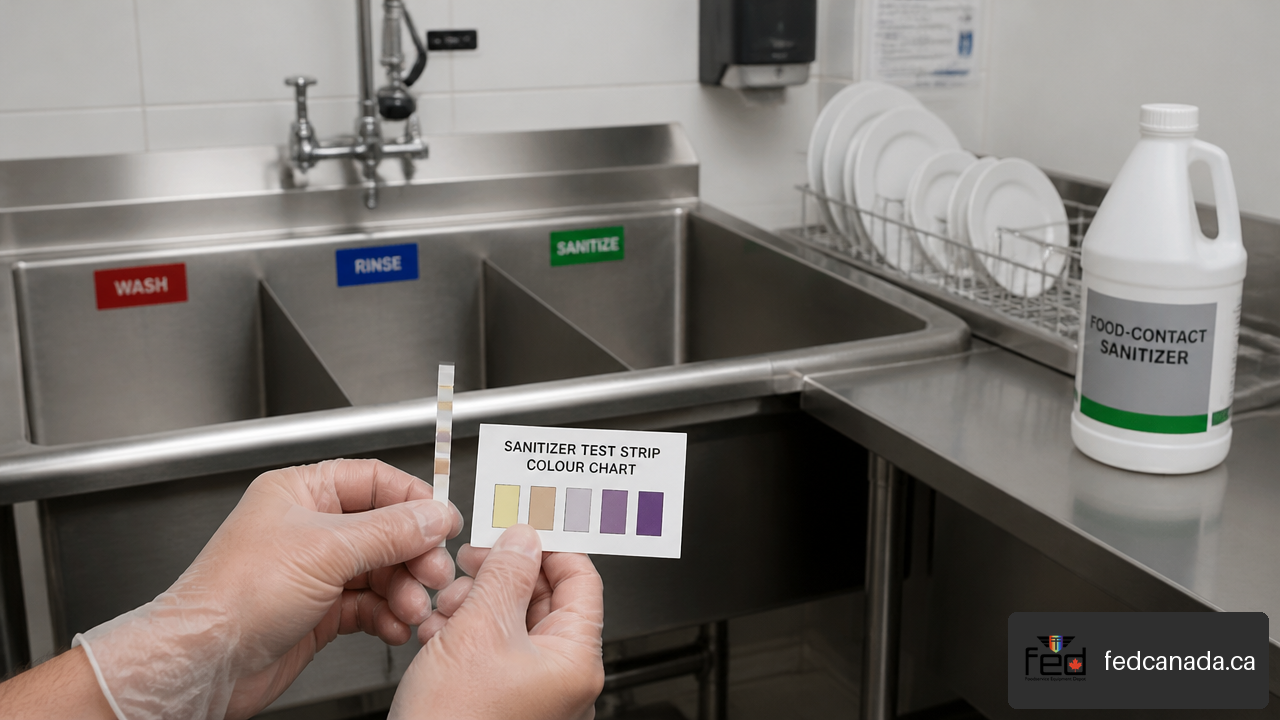
Clean smoke and grease before they become a shutdown
Grease is not only a sanitation problem. It affects airflow, fire risk, odour control, and food quality. Filters should be accessible enough that staff can remove and clean them on schedule. Ducts, hood surfaces,
Recent Posts

Leave a Comment
Your email address will not be published. Required fields are marked *