




Butane: Properties, Uses, Safety, and Cold Weather Limits
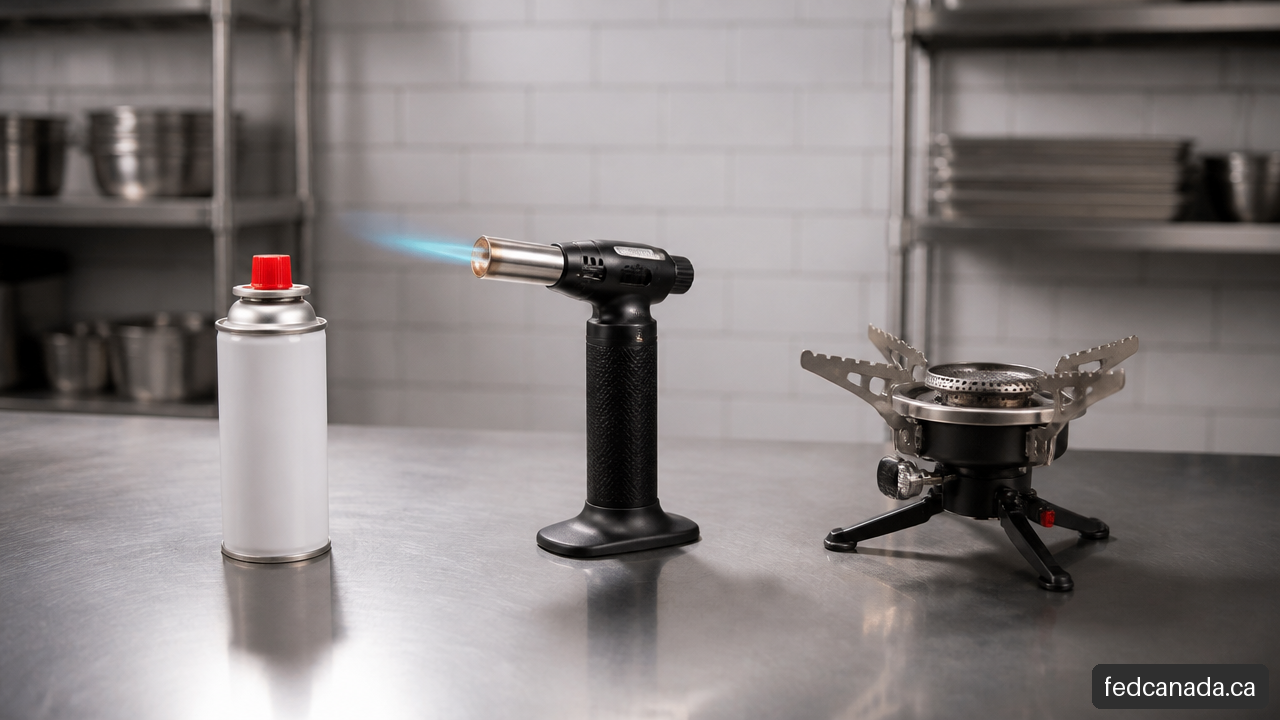
Butane is a liquefied petroleum gas used in refillable lighters, culinary torches, portable stoves, aerosol products, and industrial processes. Its compact storage and reliable heat output make it useful, but its behavior changes sharply with temperature, container pressure, and ventilation. Understanding those limits matters more than simply knowing that it is flammable.
Table of Contents
- Butane chemistry, structure, and common uses
- Choosing between butane, isobutane, and propane
- Butane safety, storage, and disposal
- Key Takeaways
- Butane FAQ
- Sources
Butane Chemistry, Structure, and Common Uses
What butane is
Butane is a hydrocarbon with the molecular formula C4H10. It belongs to the alkane family, meaning its carbon atoms are connected by single bonds and the molecule contains hydrogen atoms only. At ordinary room temperature, butane is a gas. Under pressure, it becomes a liquid, allowing a relatively large amount of fuel to fit inside a small canister, lighter reservoir, or aerosol container.
Two structural isomers share the same C4H10 formula:
| Form | Molecular arrangement | Practical relevance |
|---|---|---|
| n butane | Four carbon atoms in a straight chain | Common in lighter fuel and commercial fuel blends |
| Isobutane | A branched carbon structure | Often used in blends intended to perform better in cooler conditions |
The distinction is not merely academic. Molecular arrangement affects boiling behavior and vapor pressure. Vapor pressure is the pressure created by a liquid’s vapor inside a closed container. A fuel device depends on that pressure to push vapor toward the valve or burner.
Butane is typically recovered during natural gas processing and crude oil refining. It is then sold as a pure component, a commercial blend, or one ingredient in a broader LPG product. Product composition can vary, so the label and safety data sheet for the exact fuel matter more than the broad word butane alone.
Where butane is used
Butane’s main role is as a controllable energy source or pressurized formulation ingredient. The Government of Canada identifies butane as a material used in fuel, fuel additives, solvent carriers, propellants, and product formulations, including certain consumer and industrial applications. See the Government of Canada’s overview of butane uses in Canadian products for that specific use classification.
Common applications include:
- Refillable lighters and butane inserts
- Culinary and workshop torches
- Portable cassette stoves and some camping appliances
- Aerosol propellants and pressure dispensing systems
- Refrigerant blends and petrochemical feedstocks
- Industrial solvent carrier and formulation applications
Combustion converts butane and oxygen into carbon dioxide, water vapor, and heat when oxygen is sufficient. In a properly adjusted burner, the flame is generally blue because fuel and air mix efficiently before ignition. A yellow or orange flame can indicate incomplete combustion, contamination, restricted air flow, or a burner design that needs cleaning or adjustment.
Why liquid volume and temperature change performance
A canister can feel partly full yet provide a weak flame. This is often a pressure problem rather than a fuel quantity problem.
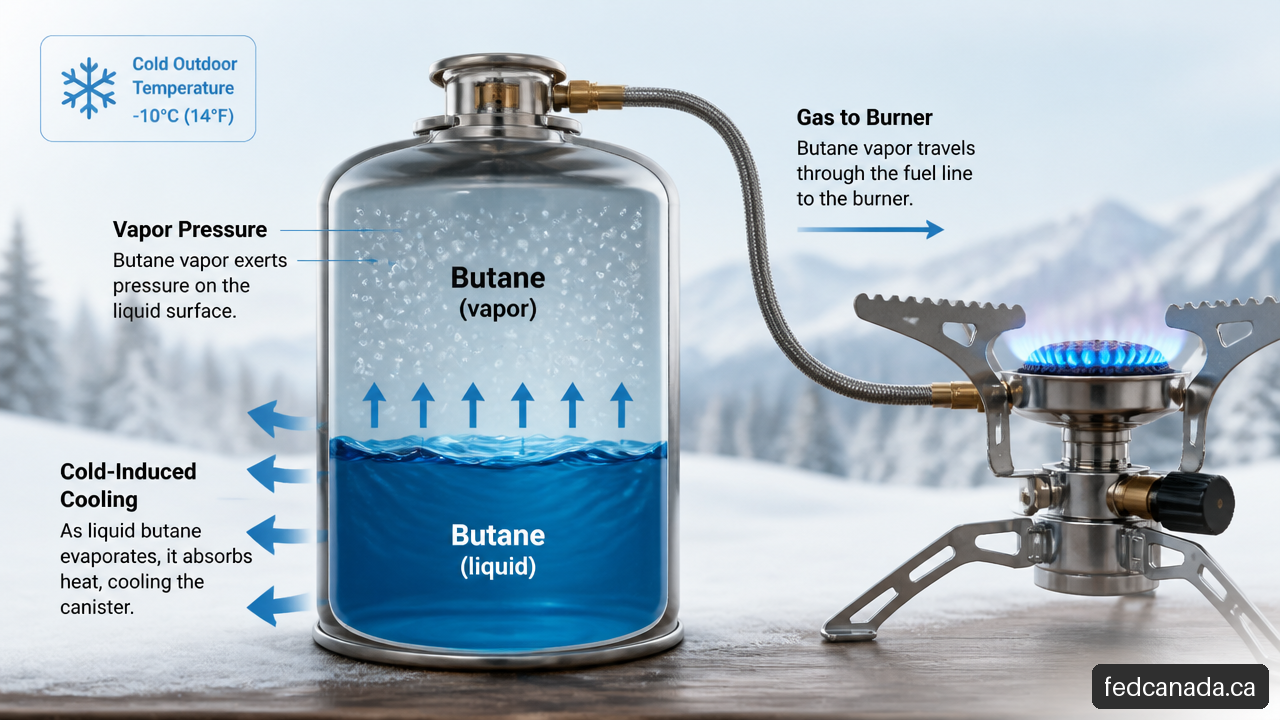
Inside a butane canister, liquid fuel and vapor usually coexist. The liquid continually evaporates to replace vapor used by the appliance. As the device draws fuel, evaporation absorbs heat from the remaining liquid and container. That cooling can reduce vapor pressure. Cold outdoor air compounds the effect.
A torch used during a cool Calgary evening, for example, may sputter after several minutes even though liquid remains in the canister. The canister has cooled from evaporation, so it cannot produce vapor at the rate required by the burner. Turning up the flame control may not solve the issue and can make combustion less stable.
The practical rule is simple:
More liquid fuel does not always mean more available fuel vapor.
Allow a cold canister or lighter to return naturally to room temperature. Do not place it near a heater, open flame, hot water, or direct sunlight to force pressure upward. Heating a pressurized container creates a rupture hazard.
Choosing Between Butane, Isobutane, and Propane
The right fuel depends on the appliance and conditions
Butane, isobutane, and propane are all LPG fuels, but they do not behave identically. Their names do not provide a complete safety rating. Appliance design, cylinder type, burner output, ventilation, expected temperature, and manufacturer instructions matter just as much.
| Fuel or blend | Best suited for | Main limitation |
|---|---|---|
| n butane | Lighters, refillable torches, indoor rated cassette stoves used as directed | Pressure falls noticeably in cool weather |
| Isobutane blend | Backpacking and portable fuel systems intended for variable outdoor temperatures | Must match the specific threaded canister and appliance design |
| Propane | Higher demand outdoor cooking and colder conditions | Higher vapor pressure requires propane rated cylinders, hoses, and regulators |
| Commercial butane blend | Appliances designed for a particular proprietary or regional fuel specification | Composition can vary between brands and seasons |
For a countertop culinary torch used indoors for brief finishing tasks, a compatible refined butane refill product may be appropriate if the torch manufacturer permits it and ventilation is adequate. For extended outdoor cooking during cold weather, a stove designed for propane or an appropriate isobutane blend may maintain pressure more consistently.
Never substitute fuel simply because the connector appears to fit. A fuel container, regulator, valve, and burner function as a system. A mismatch can cause leaking, excessive flame, poor combustion, damaged seals, or unsafe pressure conditions.
What “pure” or “refined” butane can and cannot tell you
Refill cans often use terms such as refined, premium, filtered, or near pure. These descriptions may indicate manufacturing specifications, reduced odor, fewer nonvolatile residues, or a higher stated hydrocarbon content. They do not create a universal performance standard.
A useful comparison starts with the information that can be checked:
- Confirm the fuel is approved for the appliance.
- Compare net fuel mass where it is disclosed, not can size alone.
- Check whether the product identifies a blend or a specific hydrocarbon.
- Review storage and refill instructions.
- Watch for repeatable device symptoms, such as valve clogging or inconsistent ignition.
Two cans with similar printed volume may contain different net fuel mass because can construction, fill level, and product design differ. Community discussions often focus on residue and perceived performance, but those reports are not laboratory purity tests. A torch that misfires may have a dirty nozzle, weak piezo igniter, trapped air, low temperature, or a worn valve rather than poor quality fuel.
Diagnosing a weak, yellow, or unstable flame
Start with the lowest risk checks. Do not disassemble a pressurized appliance unless the manufacturer provides a safe procedure.
- Check temperature first. Move the device to a safe room temperature environment and allow it to warm naturally before trying again.
- Confirm fuel level and orientation. Some appliances require a particular operating angle. Tilting a canister can feed liquid fuel instead of vapor, producing flare ups or unstable flames.
- Inspect the burner opening. Food debris, soot, dust, or oil can disrupt the air fuel mixture. Clean only as the manufacturer directs and only when the appliance is off, cool, and disconnected from fuel where applicable.
- Adjust the flame control gradually. A maximum setting does not guarantee a better flame. It may overwhelm the available air supply in a small torch.
- Consider purging before refilling a refillable device. Residual air or degraded fuel can interfere with pressure and ignition. Follow the device instructions, work in a well ventilated area away from ignition sources, and avoid overfilling.
- Stop using damaged equipment. A persistent fuel smell, visible frost at a valve, hissing, cracked seals, or repeated flare ups calls for replacement or qualified service, not repeated troubleshooting.
Butane Safety, Storage, and Disposal
The hazards that matter most
Butane is extremely flammable. It can form an ignitable mixture with air after a leak, and because it is heavier than air, released gas can collect in low areas such as floor level spaces, vehicle interiors, pits, basements, or enclosed storage rooms.
There is also an oxygen displacement hazard. A Superior Propane safety data sheet explains that released butane can displace oxygen and cause rapid suffocation, particularly in confined spaces. Review its butane confined space hazard guidance before treating a leak as a minor inconvenience.
Butane itself is not a poison in the same way as a corrosive chemical, but high vapor concentrations can cause dizziness, impaired coordination, unconsciousness, or asphyxiation by reducing available oxygen. Deliberate inhalation is dangerous and can be fatal. A low overall public exposure conclusion does not make concentrated indoor releases safe.
Some butane products may also contain very low levels of 1,3 butadiene, a separate refining related contaminant. The concern depends on concentration, product composition, and exposure route. This is one reason to use fuel only as intended, avoid inhaling vapors, and choose properly labeled products rather than improvised or decanted fuel sources.
Storage and transportation in Canada
Store butane canisters upright where the product instructions require it, in a cool, dry, ventilated area away from heat, sunlight, electrical sparks, pilot lights, smoking materials, and open flames. Keep fuel away from children and prevent containers from rolling, crushing, or being punctured.
Avoid leaving canisters in a parked vehicle. Interior temperatures can rise quickly, especially in direct sun, increasing pressure inside a liquefied gas container. A trunk, glove box, dashboard, or enclosed work vehicle is not a long term storage location.
For transport, take only the quantity needed, keep containers protected from movement, and avoid carrying leaking or visibly damaged products. If a canister smells strongly of gas, hisses, shows frost around a valve, or has a damaged seam, do not bring it indoors or place it in a vehicle.
What to do during a suspected leak or fire
If a leak is suspected, do not operate switches, start vehicles, use a phone nearby, light a match, or create any spark. If it can be done without risk, move people away from the area and eliminate ignition sources. Follow the instructions on the product label and contact emergency services when there is a fire, a significant indoor release, or uncertainty about safe evacuation.
For a leaking gas fire, do not try to extinguish the flame unless the fuel source can be stopped safely. Extinguishing the visible flame while fuel continues to escape can allow an unignited gas cloud to accumulate and ignite later.
Disposal and workplace responsibilities
Do not puncture, crush, incinerate, or place a butane canister in household recycling unless the local program specifically accepts it. “Empty” containers may retain flammable vapor and pressure.
For households, the practical route is to check municipal household hazardous waste or designated pressurized container programs. Rules vary by province and municipality, so a can accepted at one depot may be refused elsewhere. Keep the original label readable and transport the container according to the collection site’s instructions.
Workplaces have additional duties. Under WHMIS, employers must maintain product hazard information, ensure appropriate labeling and training, and make safety data sheets accessible for controlled products. Restaurant kitchens, catering operations, maintenance shops, and event venues should also establish a clear process for receiving fuel, separating damaged containers, and responding to leaks.
Key Takeaways
The practical decision points
- Butane is C4H10, a flammable hydrocarbon stored as liquid under pressure.
- n butane and isobutane are different isomers. Isobutane blends can offer better cool weather behavior, but only in compatible equipment.
- Cold performance is a vapor pressure issue. A partly full canister can still deliver a weak flame when the liquid and container become too cold.
- Fuel compatibility outranks convenience. Use only the fuel type, connector, and canister specified by the appliance manufacturer.
- A yellow flame is a diagnostic signal. Check temperature, air flow, nozzle condition, fuel orientation, and appliance condition before assuming the can is empty.
- Leaks require immediate caution. Butane can create both a fire hazard and an oxygen displacement hazard in enclosed spaces.
- Do not treat empty cans as ordinary scrap. Use the local hazardous waste or pressurized container pathway unless local instructions clearly say otherwise.
Butane FAQ
Is butane the same as propane or isobutane?
No. Butane, isobutane, and propane are related LPG hydrocarbons but have different molecular structures and vapor pressure behavior. Isobutane is a branched form of butane. Propane generally maintains usable pressure at lower temperatures, but it requires propane rated equipment.
Is butane safe to use indoors?
Only use a butane appliance indoors when it is specifically designed and approved for indoor use, operated according to its instructions, and used with adequate ventilation. A torch, lighter, or stove still creates fire, combustion, and oxygen displacement risks. Never use portable fuel appliances for space heating or in sleeping areas, tents, vehicles, or poorly ventilated rooms unless the manufacturer explicitly approves that use.
Why does my butane torch stop working in cold weather?
Cold reduces butane vapor pressure. As fuel evaporates, it also cools the canister, which can lower pressure further. Let the equipment return naturally to room temperature and use a fuel system designed for the expected outdoor conditions. Do not heat the canister directly.
Why is my butane flame yellow instead of blue?
A yellow flame often means incomplete combustion. Common causes include restricted air intake, a dirty burner, poor fuel vaporization in cold conditions, incorrect flame adjustment, or a damaged nozzle. Turn the appliance off, let it cool, and follow manufacturer cleaning instructions. Stop using it if flare ups, leaks, or instability continue.
How can I tell whether a butane canister is leaking?
A sulfur like odor from an odorized product, audible hissing, persistent frost around the valve, visible damage, or a flame that changes unexpectedly near a connection can indicate a leak. Do not test for leaks with a flame. Move away, avoid creating sparks, ventilate only if it can be done safely, and follow emergency instructions for the product.
Can butane canisters be left in a car?
No. A parked vehicle can become hot enough to raise internal container pressure. Remove canisters after transport and store them in a cool, ventilated location away from ignition sources and direct sunlight.
How should empty butane cans be disposed of?
Treat them as pressurized containers unless local authorities say otherwise. Do not puncture or put them into regular recycling by default. Contact your municipality or household hazardous waste facility for the accepted disposal method in your area.
Does butane contain 1,3 butadiene?
Butane can contain low levels of 1,3 butadiene from refining related processes, but it is a separate chemical rather than another name for butane. The practical precaution is to minimize inhalation, use products as labeled, keep fuel out of enclosed spaces, and follow workplace controls where occupational exposure is possible.
Sources
Verified references
Recent Posts
Leave a Comment
Your email address will not be published. Required fields are marked *