




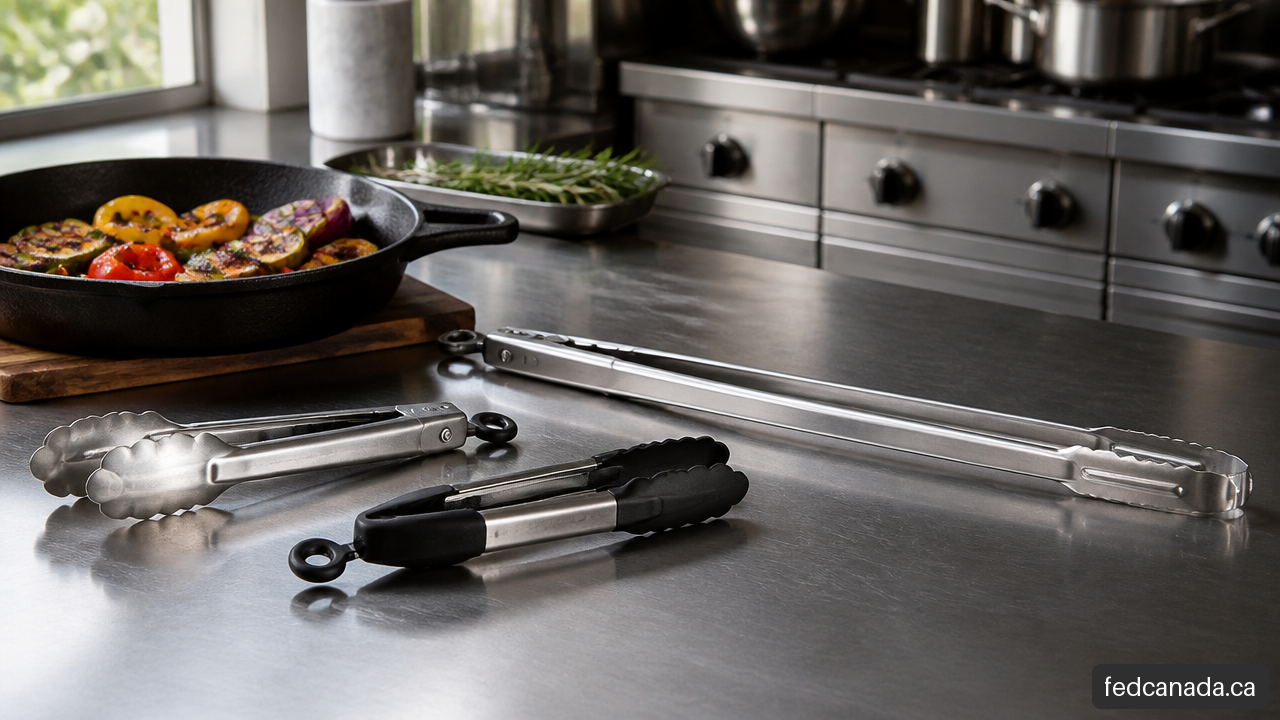
Tongs: How to Choose, Use, and Maintain the Right Pair
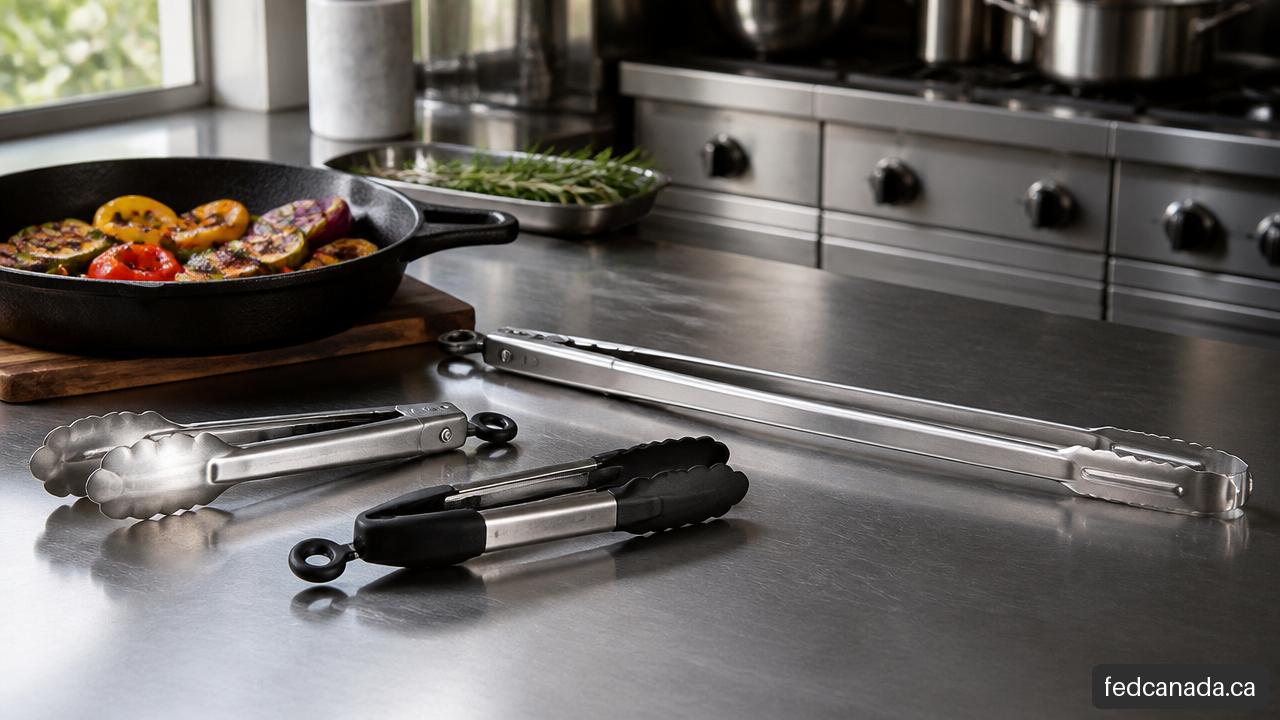
Tongs are one of the simplest utensils in a kitchen, yet the right pair can make turning food, serving portions, reaching into hot cookware, and protecting delicate surfaces much easier. We can think of them as an extension of the hand: they apply controlled clamping force while adding distance between your fingers and heat, oil, steam, or messy ingredients.
Table of Contents
- How Tongs Work and Which Type Fits the Task
- Materials, Tips, and Construction Details
- Length, Reach, and Safe Handling
- Cleaning, Maintenance, and Common Failures
- Key Takeaways
- Frequently Asked Questions
How Tongs Work and Which Type Fits the Task
What are tongs?
Tongs are gripping utensils made from two arms that close around an object when squeezed. Cambridge Dictionary defines tongs as a device with two long pieces joined at one end and pressed together to hold objects. The basic purpose is straightforward: grip food or another item without placing hands directly in the hot, greasy, wet, or contaminated work area.
The design matters because tongs do more than lift. When the arms close, the tips transfer pressure onto the food. A wide, ridged tip spreads that pressure across a larger area, which helps hold a burger, chicken breast, or roasted vegetable. Narrower tips concentrate pressure and provide finer control, which can be useful for smaller foods but may crush delicate ingredients.
Brittanica Dictionary similarly describes tongs as a tool for lifting or holding objects made from two connected pieces. In a kitchen, that two arm design makes tongs different from a spatula, spoon, or fork:
| Utensil | Best use | Where it is less effective than tongs |
|---|---|---|
| Tongs | Gripping, turning, tossing, lifting, and serving | Very fragile foods that break under pressure |
| Spatula | Sliding under fish, pancakes, eggs, and flat foods | Rounded or uneven foods that need a secure clamp |
| Spoon | Scooping liquids, grains, and sauces | Turning or lifting slippery solid foods |
| Fork | Piercing and moving firm foods | Foods that should not be punctured or lose juices |
| Kitchen tweezers | Precise placement of small foods | Heavy portions, large meat cuts, or high volume service |
Spring tongs, hinged tongs, and serving tongs
Most kitchen tongs are spring tongs. Their arms naturally reopen after being squeezed, allowing repeated gripping with one hand. This is useful when turning food in a pan or assembling plates quickly. The spring action should feel smooth and consistent. If the arms bind, remain partly closed, or open unevenly, grip control becomes less predictable.
Hinged tongs pivot around a central joint rather than flexing from one joined end. They are often used for serving salads, pastries, ice, or buffet items. Their movement can feel more like scissors, and some models provide strong leverage. However, the pivot is also a point that can loosen, corrode, or trap residue if poorly maintained.
Serving tongs may have spoon shaped, scalloped, perforated, or flat ends. These designs are purpose built for specific food textures:
- Scalloped ends work well for gripping roasted vegetables, buns, proteins, and many buffet foods.
- Flat ends are useful for delicate items such as pastries or thin slices that could slip through wider gaps.
- Perforated ends help drain excess liquid from pasta, vegetables, or items stored in brine.
- Spoon shaped ends are practical for salads, grains, and loose serving portions.
Build a task based tong setup instead of seeking one universal pair
One pair of tongs can handle many jobs, but no single design is ideal for every surface, food size, and heat level. A practical setup separates cooking tasks by grip demands, cookware protection, and reach.
For example, a rigid stainless steel pair may be the better choice for turning thick steaks in a heavy skillet. The food is substantial, the surface may be slippery with rendered fat, and the gripping force needs to be firm. That same pair may be a poor match for a nonstick pan where metal tips could damage the coating. A silicone tipped pair may suit that pan better, provided the tips remain secure and do not feel too flexible for the food being handled.
Community discussions reflect this task based approach. In one r/Cooking conversation about preferred tongs, users described keeping different tong lengths and tip types for different cooking situations. These are preferences rather than controlled product tests, but the underlying decision method is useful: match the tool to the work rather than expecting every pair to perform equally well.
Materials, Tips, and Construction Details
Stainless steel tongs: rigidity and direct control
Stainless steel is common in kitchenware because it offers a rigid body and is generally suited to repeated food handling when maintained properly. With tongs, rigidity affects how accurately force moves from the handle to the tip. When you squeeze, the arms should close without excessive twisting or flexing.
Metal only tongs are often favored for high force tasks such as turning steaks, moving grilled vegetables, lifting baked potatoes, or retrieving food from deep pots. Their firm edges can also provide reliable contact with irregular foods. The tradeoff is surface protection. Metal edges can scratch coated cookware, especially when dragged across the pan rather than lifted vertically.
Thickness alone does not determine performance. A tong may look heavy but still feel unstable if its arms flex unevenly, its spring is weak, or its joint is loose. Before relying on a pair for demanding kitchen work, close it several times and check for these signs:
- The two tips meet evenly rather than crossing or shifting sideways.
- The arms reopen smoothly after each squeeze.
- The handle does not rotate in the hand when pressure is applied.
- The locking mechanism does not engage unexpectedly.
- The body does not show sharp edges, cracks, bent arms, or loose hardware.
Silicone tips: cookware protection with tradeoffs
Silicone tipped tongs are commonly chosen for nonstick cookware because the soft tip can reduce the chance of scratching the cooking surface. Their value is not that they are universally safer or stronger. Their value is surface compatibility.
The compromise is tip compliance, meaning how much the tip flexes when clamped against food. A flexible tip can conform gently to a mushroom, piece of fish, or soft vegetable. But the same flexibility may reduce edge control when lifting a heavy steak or turning a slick piece of chicken. If the silicone is loose, stretched, torn, or partially detached, it can further interfere with a secure grip.
Fair warning: there is no universal evidence that one tong material is best for every kitchen task. The choice depends on the pan surface, food weight, heat exposure, and the degree of control needed. For instance, a silicone tipped pair can be a sensible option for eggs in a coated skillet, while a metal pair may offer more decisive control over charred corn or thick meat on a grill grate.
Plastic, nylon, and mixed material tongs
Plastic and nylon tongs are lightweight and can be appropriate for cold food service or cookware where metal contact is undesirable. They may be useful for salads, pastries, buffet service, or gentle handling. Still, they require careful product specific review when used near high heat. Heat resistance varies by product, and it should not be assumed from the material name alone.
Mixed material tongs may pair stainless steel arms with silicone, nylon, or plastic tips. This design can balance strength in the body with gentler food contact at the tip. The weak point can become the connection between materials. Inspect for separation, movement, cracking, or discoloration around the tip attachment.
Locking mechanisms and pivot quality
A locking mechanism keeps tongs closed for storage. It is convenient in crowded drawers, but it can also become a failure point. Some locks use a pull ring at the handle end. Others use a sliding tab or similar mechanism. Choose one that can be operated easily without interfering with your grip.
The lock should hold the tongs closed only when intended. If it slips into place while turning food, the arms may not open properly at the moment control is needed. If it cannot stay closed, storage becomes inconvenient but the tong may still work. If it jams during use, replacement is usually the more practical option.
A separate concern is joint quality. A r/Cooking discussion about kitchen tongs documents user complaints involving failed joints and informal pivot repairs. That discussion is anecdotal, not a repair standard, but it highlights an important buying and inspection point: examine the pivot, rivet, spring area, and locking hardware independently of the tong material. Stainless steel arms cannot compensate for a weak joint.
Length, Reach, and Safe Handling
Select length based on the heat zone, not just the appliance
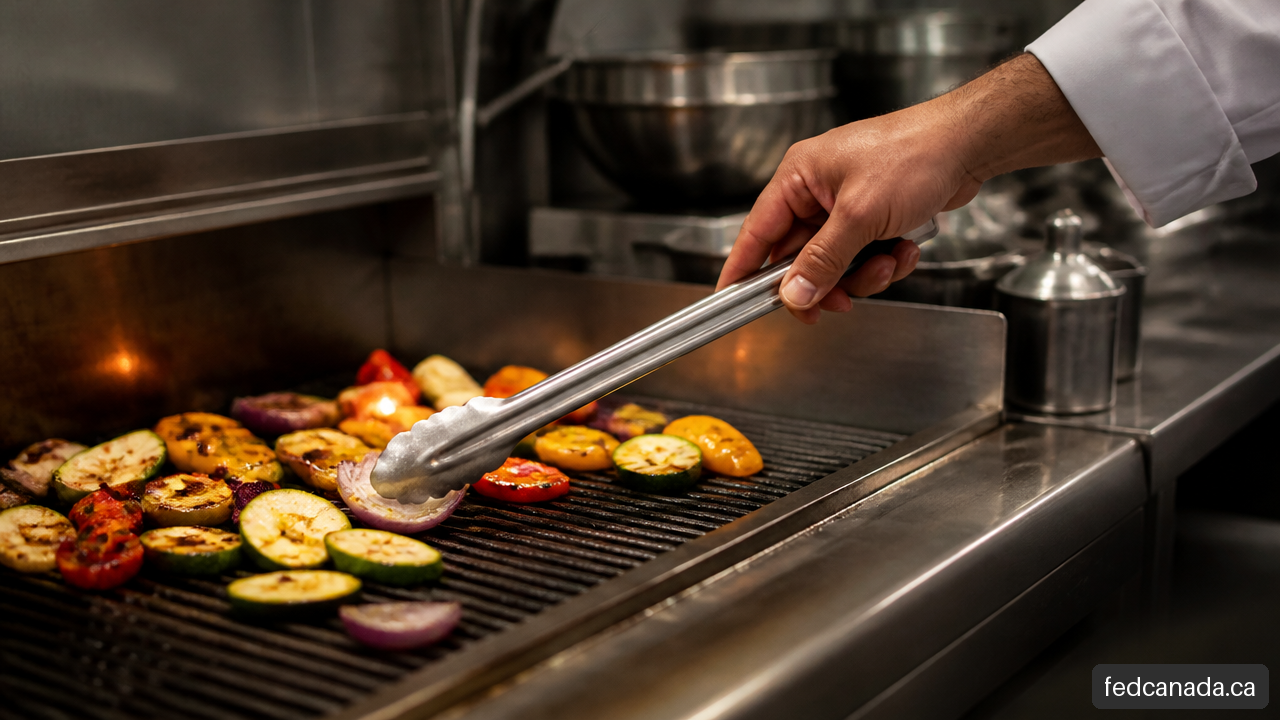
Tong length is often discussed as a grill issue, but the more useful question is: How close will your hand be to the hazard? Heat, splatter, steam, flare ups, and vessel depth all affect the answer.
Shorter tongs provide more direct control near a prep station, shallow skillet, or serving tray. Longer tongs increase reach, which can be helpful at a barbecue, in a deep pot, or when reaching through an oven opening. Extra length is not automatically better. As the distance from hand to tip increases, fine control may decrease, particularly when lifting smaller foods.
| Cooking situation | Useful tong characteristic | Why it helps |
|---|---|---|
| Shallow skillet | Standard length with controlled spring action | Keeps the wrist close enough for accurate turning |
| Nonstick pan | Silicone or other pan compatible tips | Helps avoid direct metal contact with the coating |
| Deep stockpot | Longer reach and firm grip | Reduces the need to place hands close to steam and hot liquid |
| Grill grate | Longer, rigid tongs | Creates more hand distance from heat and supports firmer gripping |
| Buffet or salad station | Medium length serving tongs | Balances reach, portion control, and presentation |
| Fine plating | Narrow tongs or kitchen tweezers | Allows precise placement with less bulk |
For a deep pot, consider the depth of the food rather than simply choosing the longest available pair. A very long tong can make it harder to retrieve a small item from the bottom because the grip feels less responsive. A medium long pair with a stable spring may offer better control if the pot is not unusually deep.
Grip food deliberately, not aggressively
Tongs work best when the tips meet the food near its center of mass. A steak should be clamped near the thickest stable section, not at a thin edge that can tear. A chicken wing may need to be gripped across a joint rather than by loose skin. A slippery mushroom can be picked up more reliably by approaching from the side and using a gentle but complete squeeze.
Avoid repeatedly stabbing, crushing, or squeezing food to compensate for poor tong control. If an item keeps slipping, reassess the setup:
- Check whether the tips are oily, wet, bent, or worn.
- Make sure the tong length suits the task and is not reducing wrist control.
- Use a wider or more rigid tip for a larger or heavier food.
- Switch to a spatula if the food needs support from below rather than pressure from the sides.
- Use kitchen tweezers only when the food is light enough for their narrower grip.
When tweezers are better than tongs
Kitchen tweezers are not simply small tongs. They are precision tools. Their narrow ends can place herbs, arrange small vegetables, turn a scallop gently, or remove a small garnish from hot oil with more accuracy than a bulky scalloped tong.
A r/Cooking discussion comparing long kitchen tweezers and tongs includes user perspectives that tweezers can be useful for smaller foods, raw food task separation, and hot items, while still falling short for larger cuts of meat in hot oil. That distinction is practical. Use tweezers when precision is the limiting factor. Use tongs when load capacity, reach, and a broader gripping surface are more important.
Cleaning, Maintenance, and Common Failures
Clean tongs immediately after messy tasks
Tongs contact raw proteins, cooked foods, oil, sauces, and acidic ingredients. Their joints, springs, silicone seams, and locking areas can trap residue if cleaning is delayed. Follow the product manufacturer’s cleaning instructions, especially for dishwasher use. Stainless steel construction alone does not confirm that a specific tong is dishwasher safe.
For hand washing, use this process:
- Unlock the tongs fully and open the arms.
- Wash both arms, the tips, handle grooves, and locking area with warm water and dish detergent.
- Work a soft brush or cloth around pivots, springs, and seams where residue can collect.
- Rinse thoroughly, then dry the tongs open when possible.
- Store only after the tool is dry and the lock operates smoothly.
If tongs were used with raw meat, do not use the same unwashed pair to move cooked food or garnish a finished plate. Assigning separate utensils during prep can reduce avoidable cross contact. In a busy kitchen, color coding or placing used tongs in a designated wash area can make this workflow easier to follow.
Inspect the tip, spring, and joint
Most tong problems appear in three places: the tips, the spring action, and the joint or lock. Inspecting these areas regularly can prevent a failure during service or while handling hot food.
| Area to inspect | What to look for | Practical response |
|---|---|---|
| Silicone tip | Stretching, cracks, looseness, missing sections | Replace if grip is compromised or the tip is detaching |
| Metal tip | Bent edges, sharp burrs, misalignment | Stop using on coated cookware; replace if alignment affects control |
| Spring action | Slow reopening, binding, uneven closure | Clean thoroughly; replace if function does not return |
| Pivot or rivet | Side to side movement, corrosion, looseness | Retire from demanding hot food tasks and assess replacement |
| Lock | Accidental engagement, jamming, failure to close | Replace if it interferes with safe operation |
A silicone tip with slight discoloration may be mostly cosmetic, depending on the product and cleaning result. A tip that twists around the metal core, separates at the edge, or changes how the tong grips is different. That is a functional problem, not merely an appearance issue.
Know when replacement is safer than repair
A loose pivot, detached tip, broken spring, or sharp damaged edge can turn a basic utensil into a handling risk. Informal repairs may be discussed online, but repair quality depends on the design, materials, hardware, and intended use. For foodservice environments, replacing a compromised tong is often the clearer choice when sanitation, dependable gripping, and workflow consistency matter.
Key Takeaways
The practical selection rule
Choose tongs by matching food size, cookware surface, reach, and grip force. A heavy food in a hot setting calls for a more rigid, secure tool. A delicate food in coated cookware calls for gentler tips and controlled pressure.
The most useful tong set for many kitchens
A versatile setup often includes:
- A standard stainless steel pair for everyday turning, grilling, and firm foods.
- A silicone tipped pair for nonstick cookware and gentler handling.
- A longer pair for grills, ovens, deep pots, or other situations where reach matters.
- Kitchen tweezers for small ingredients and detailed plating work.
The maintenance rule that prevents most problems
Clean tongs open, dry them thoroughly, and inspect the tips, spring, pivot, and lock. The body material may look sound while the moving parts are already affecting grip and control.
The best tongs are not necessarily the longest, softest, or heaviest pair. They are the pair that gives you secure control without damaging the food, cookware, or workflow.
Frequently Asked Questions
What are kitchen tongs used for?
Kitchen tongs are used to grip, lift, turn, toss, serve, and retrieve food. Common uses include turning proteins in a pan, moving food on a grill, tossing vegetables, serving salads, retrieving items from hot liquid, and transferring food between cookware and plates.
Which tongs are best for cooking steak?
Rigid stainless steel tongs are often a practical choice for steak because they provide firm gripping and direct control. Choose tips that close evenly and do not flex excessively. Avoid using metal tips in nonstick cookware if they could scratch the coating; in that situation, a heat suitable silicone tipped pair may be more appropriate, though grip may feel less firm.
Are silicone tipped tongs safer for nonstick pans?
Silicone tipped tongs can help reduce direct metal contact with a nonstick cooking surface, which is why they are commonly selected for coated pans. They are not automatically safer in every respect. Check that the tips are secure, not worn, and suitable for the intended cooking conditions according to the manufacturer.
Are metal tongs better than silicone tongs?
Neither is universally better. Metal tongs generally provide more rigid control for firm, heavy, or high force tasks. Silicone tipped tongs are often more suitable when protecting a coated cookware surface is the priority. Many kitchens benefit from having both rather than forcing one style to do every job.
What length of tongs is best for a barbecue?
Choose a length that keeps your hand comfortably away from the hottest part of the grill while still allowing accurate control. Longer tongs are often helpful around grill grates, but overly long tongs can feel awkward for smaller foods. Consider grill depth, flare up exposure, and the size of the food you are turning.
Should kitchen tongs have a locking mechanism?
A lock is useful for compact storage, especially in drawers or crowded utensil bins. It is not essential for gripping performance. Choose a locking mechanism that does not engage accidentally and that can be operated without disrupting your hold on the handles.
Why do tongs lose their grip or stop closing properly?
Common causes include worn silicone tips, bent metal arms, a weak spring, residue in the joint, a loose pivot, or a malfunctioning lock. Clean the tong first, then inspect alignment and moving parts. Replace it if the tips no longer meet properly or the mechanism affects safe handling.
When should I use tongs instead of a spatula?
Use tongs when you need to grip food from the sides, turn irregular shapes, lift items from a pot, or keep your hand farther from heat. Use a spatula when food needs broad support from underneath, such as pancakes, fragile fish fillets, eggs, or soft baked items.
Sources and References
- Cambridge Dictionary — TONGS | English meaning: https://dictionary.cambridge.org/dictionary/english/tongs
- Britannica Dictionary — Tongs Definition & Meaning: https://www.britannica.com/dictionary/tongs
- Reddit r/Cooking — What kind of tongs do you love?: https://www.reddit.com/r/Cooking/comments/se1crh/what_kind_of_tongs_do_you_love/
- Reddit r/Cooking — Kitchen Tongs: https://www.reddit.com/r/Cooking/comments/1lrfazj/kitchen_tongs/
- Reddit r/Cooking — I think I’m done with tongs: https://www.reddit.com/r/Cooking/comments/1li5jx6/i_think_im_done_with_tongs/
Recent Posts
Leave a Comment
Your email address will not be published. Required fields are marked *