





Commercial Kitchen Preventative Maintenance That Prevents Downtime
Commercial kitchen preventative maintenance is the practical work of cleaning, inspecting, testing, and servicing equipment before a small fault becomes a shutdown. We recommend treating it as an operating system, not a stack of cleaning chores: every task should protect food safety, equipment safety, service continuity, energy use, or compliance.
Table of Contents
- Key Takeaways
- Build a Maintenance Plan Around Real Kitchen Risk
- Prioritize Maintenance by Equipment Class
- Create a Schedule, Assign Ownership, and Keep Records
- FAQ: Commercial Kitchen Preventative Maintenance
Key Takeaways
Prevent failure before service is affected
Preventative maintenance is scheduled work performed while equipment is still operating. Corrective maintenance starts after a fault appears. The difference matters when a cooler begins drifting upward overnight, a fryer heats unevenly during a rush, or a dishwasher misses final rinse performance. A planned inspection may catch the issue while there is still time to clean, calibrate, order a part, or arrange service.
Match the frequency to use, grease, and water conditions
A generic monthly checklist is only a starting point. A café using a light menu and a high volume restaurant producing fried foods do not create the same grease load. Likewise, hard water can accelerate scale buildup in dishmachines, combi ovens, and steam equipment. Increase attention where the operating conditions create faster wear.
Separate operator tasks from contractor work
Kitchen teams can safely handle routine cleaning, visual inspections, temperature verification, filter cleaning where permitted, and documentation. Licensed or qualified technicians should handle gas connections, electrical diagnostics, refrigeration sealed systems, combustion adjustments, fire suppression servicing, and repairs that could affect warranty coverage or liability.
A useful rule: if a task requires opening a sealed system, changing a safety control, working on gas or electrical components, or resetting a recurring fault, it belongs in a qualified service work order.
Build A Maintenance Plan Around Real Kitchen Risk
Start with the five assets that can stop service
Most commercial kitchens have many pieces of equipment, but not every asset deserves the same maintenance urgency. Begin with the equipment whose failure would immediately threaten food safety, fire safety, or the ability to serve customers:
- Refrigerators, walk ins, freezers, and refrigerated prep tables
- Cooking equipment, including ranges, fryers, ovens, griddles, and combi ovens
- Warewashing equipment and its water heating components
- Exhaust hoods, grease filters, and make up air equipment
- Fire suppression equipment and related safety components
This approach avoids a common failure mode: investing time in low consequence tasks while overlooking an asset that can close a station or spoil inventory. For example, polishing stainless panels can wait if a reach in cooler has a torn gasket, a dirty condenser coil, and unexplained temperature swings.
Use failure modes, not only calendar dates
A maintenance schedule should answer two questions: What tends to go wrong? and What early sign would reveal it? This is the logic that turns a checklist into a preventive program.
| Asset class | Typical early warning | Likely consequence if ignored | Practical response |
|---|---|---|---|
| Refrigeration | Long run times, warm spots, torn gasket, water near drain | Temperature loss, product waste, compressor strain | Verify temperature, inspect seals and drains, clean accessible coils, escalate abnormalities |
| Fryer | Dark oil, slow recovery, sediment buildup, unusual heat behavior | Food quality issues, excess energy use, equipment damage | Filter oil as appropriate, remove debris, clean surfaces, schedule service for control or burner faults |
| Dishmachine | Poor wash results, scale, leaks, inconsistent rinse performance | Sanitation risk, rewash labor, downtime | Clean filters, inspect spray arms, descale as needed, verify required operating performance |
| Hood system | Grease accumulation, restricted airflow, persistent smoke | Fire risk, poor capture, heat buildup | Clean filters often, document hood service, keep suppression maintenance separate |
| Oven or range | Uneven cooking, ignition delay, damaged door seal | Slow production, inconsistent food, safety concern | Clean, inspect, verify controls, call qualified service for gas or electrical faults |
The calendar still matters, but condition matters too. A refrigerator that suddenly runs longer than normal should not wait for next month's checklist. That is a trigger for investigation.
Connect maintenance to energy and operating performance
Maintenance is not just an equipment life strategy. It is also an energy management practice. Natural Resources Canada notes in its ENERGY STAR Guide for Commercial Kitchens that regular maintenance and cleaning can improve efficiency and extend commercial kitchen equipment life. The mechanism is straightforward. Dirty heat transfer surfaces make motors, compressors, burners, and fans work harder to deliver the same result. A damaged door gasket leaks cold air. Scale insulates water heating surfaces. Grease loaded filters can restrict airflow. Each problem may look minor on its own, but together they increase run time and make performance less predictable.
Canadian commercial kitchen energy guidance also connects maintenance with reduced waste and better operating performance in its commercial kitchen energy efficiency guidance. We recommend reviewing utility use alongside maintenance records when practical. A rising energy bill is not proof of one specific fault, but it can support an investigation when paired with longer refrigeration run times, slow heat recovery, or ventilation issues.
Prioritize Maintenance by Equipment Class
Refrigeration: treat temperature verification as an early warning system
Temperature logs support food safety, but they also act as maintenance evidence. Repeated temperature drift can signal a failing gasket, blocked airflow, coil fouling, a drain issue, a damaged fan, or a refrigeration fault. The goal is not simply to record a number. It is to notice a trend early enough to prevent product loss and emergency service.
Use a reliable, appropriately calibrated thermometer and compare readings at consistent times. If a unit is warm after a heavy delivery or prolonged door opening, allow for recovery time before assuming failure. If it repeatedly cannot recover under ordinary use, document the reading and operating conditions, then arrange qualified service.
Routine refrigeration care commonly includes temperature checks, gasket inspection, interior cleaning, coil cleaning, and drain cleaning, as outlined in this commercial kitchen refrigeration maintenance checklist. Avoid aggressive coil cleaning or dismantling components unless the manufacturer's instructions support it. Bent fins, damaged wiring, and incorrect reassembly can create a bigger problem than the dust did.
Cooking equipment: clean for heat transfer, then inspect for safe control
Cooking equipment faces grease, carbon, food debris, high heat, and frequent mechanical use. Daily cleaning protects surfaces and food quality, but the maintenance plan should go further. Check knobs, hinges, doors, burners, ignition behavior, thermostatic controls, and visible gas or electrical connection concerns.
Fair warning: staff should not attempt to diagnose a recurring ignition delay, gas odour, tripped breaker, exposed wiring, or unreliable thermostat by trial and error. Remove the equipment from use where appropriate and contact a qualified technician. For warranty sensitive equipment, use service providers approved or accepted under the manufacturer's requirements.
Descaling deserves its own place in the plan for water using equipment. Mineral buildup can reduce heat transfer, restrict water flow, affect sensors, and make cleaning less effective. The correct product, concentration, and cycle depend on the equipment manual and local water conditions. Over descaling or using an incompatible chemical can damage components, so this is not an area for guesswork.
Warewashing: verify results, not just whether the machine turns on
A dishmachine can run a complete cycle and still perform poorly. Filters may be blocked, spray arms may be obstructed, scale may be present, chemical dispensing may be inconsistent, or rinse performance may fall outside the operating target set for that machine and sanitation process.
Operator checks should include cleaning scrap screens and filters, checking spray arms for obstruction, inspecting door seals, watching for leaks, and confirming that readings and wash results are consistent. When issues persist, involve a qualified service provider rather than repeatedly restarting the machine. A recurring fault usually needs diagnosis, not another reset.
Ventilation and fire suppression: related systems, separate maintenance tracks
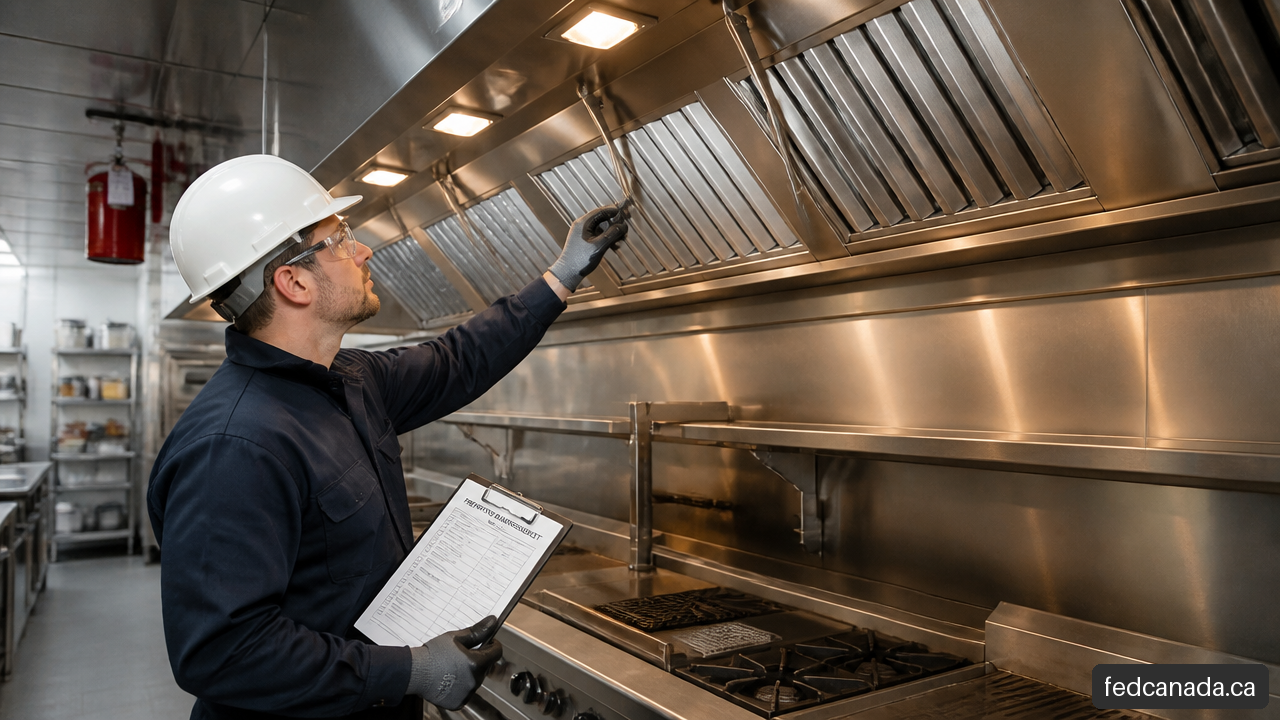
Hood cleaning and fire suppression maintenance are connected by grease and fire risk, but they are not interchangeable jobs. Hood and duct cleaning focuses on removing grease accumulation from the exhaust system. Fire suppression inspection and testing concerns the system designed to respond if a cooking fire occurs. Each needs its own schedule, vendor documentation, and corrective actions.
Grease filter cleaning frequency should reflect cooking volume and menu mix. A kitchen producing large volumes of fried or greasy foods may need cleaning weekly or more often, while a lighter operation may require a different cadence. Do not use a low grease menu schedule for a high grease line simply because it is easier to administer.
Create a Schedule, Assign Ownership, and Keep Records
Build a practical cadence instead of one oversized checklist
A useful maintenance schedule divides work by who can perform it, how often it is needed, and what happens when an issue is found. Keep the daily tasks short enough to complete during real service operations. Place longer cleaning, calibration, and inspection work into planned weekly, monthly, quarterly, or annual windows.
| Cadence | Core purpose | Examples |
|---|---|---|
| Daily | Detect operating problems and remove routine buildup | Log temperatures, clean food contact and exterior surfaces, inspect doors and gaskets, empty debris, check for leaks or unusual noises |
| Weekly | Address use related buildup and visible wear | Clean grease filters as needed, inspect fryer sediment, clean accessible refrigeration areas, check spray arms and dishmachine filters |
| Monthly | Inspect performance and developing faults | Review temperature trends, examine hinges and seals, inspect accessible coil condition, descale where required, review open work orders |
| Quarterly or seasonal | Plan deeper maintenance around workload | Professional refrigeration, cooking, ventilation, and water system servicing as warranted by equipment, use, and manufacturer guidance |
| Annual | Review system condition and compliance records | Audit service history, warranty requirements, critical spare parts, contractor coverage, and equipment replacement risks |
Avoid copying these intervals blindly. A food truck has vibration, compact ventilation, and limited downtime constraints. A hotel kitchen may have seasonal load swings. A high volume restaurant may need more frequent grease, refrigeration, and warewashing checks. The schedule should follow the asset's workload and consequence of failure.
Assign ownership and create escalation rules
Every task needs one named role, even if several people can perform it. Shared responsibility often becomes no responsibility during a busy shift. Use a simple ownership structure:
- Operators complete daily checks, basic cleaning, visual inspections, and temperature logging.
- Kitchen managers review exceptions, confirm completion, and create work orders for unresolved issues.
- Qualified technicians or contractors perform specialized diagnostics, repairs, calibration, safety related work, and manufacturer required service.
- Management or facilities leads approve downtime windows, monitor costs, retain records, and decide when repair no longer makes economic sense.
Define escalation triggers in writing. Examples include repeated temperature excursions, visible electrical damage, gas odour, leaking refrigeration equipment, persistent error codes, poor wash results, damaged safety interlocks, or a hood that does not capture smoke normally. Clear triggers prevent staff from normalizing a problem because the kitchen is busy.
Make service records inspection ready and decision useful
A maintenance log should record the asset, date, task completed, person or vendor, readings where relevant, parts used, faults found, corrective action, and follow up date. Store manuals, invoices, warranty documentation, and vendor reports with the same asset record when possible.
Records are more than proof that a box was checked. They create an auditable history for maintenance review and can help demonstrate proactive care during operational or compliance discussions. They also make equipment decisions clearer. If the same unit has three service calls for similar faults in a short period, the record shows a pattern that memory may miss.
A basic digital work order system is often enough. The important point is consistency. One shared location is more useful than scattered paper logs, text messages, invoices, and undocumented verbal reports.
FAQ: Commercial Kitchen Preventative Maintenance
What is commercial kitchen preventative maintenance?
Commercial kitchen preventative maintenance is planned cleaning, inspection, adjustment, testing, and servicing performed before equipment fails. It aims to find wear, buildup, temperature drift, leaks, and safety concerns early, when the repair is usually easier to schedule and less disruptive.
What should be included in a commercial kitchen maintenance checklist?
Include equipment identification, task frequency, assigned owner, safe operating checks, cleaning requirements, readings to record, escalation triggers, and confirmation of completed work. Cover refrigeration, cooking equipment, warewashing, ventilation, grease management, and fire safety as separate asset groups.
How often should commercial kitchen equipment be serviced?
Service frequency depends on manufacturer instructions, menu, volume, grease load, water hardness, age, and the consequence of failure. Daily operator checks are common, while deeper work may be weekly, monthly, quarterly, or annual. Increase frequency when equipment shows repeat issues or operates under unusually demanding conditions.
What equipment needs the most preventative maintenance in a commercial kitchen?
Refrigeration, fryers, ovens and ranges, dishmachines, exhaust systems, and fire safety equipment are usually high priority because failures can affect food safety, service capacity, sanitation, or fire risk. The most critical asset in your kitchen is the one without a practical backup during service.
Is hood cleaning part of preventative maintenance?
Yes. Hood and grease filter cleaning are preventive tasks because they manage grease buildup and support proper airflow. However, hood cleaning should not be used as a substitute for scheduled inspection and testing of the fire suppression system. Maintain separate records for each activity.
How do you document commercial kitchen maintenance?
Use a paper log or digital work order system that records the equipment, date, task, person or vendor, readings, fault details, parts, corrective action, and next due date. Attach invoices, service reports, and warranty related documents. Consistent records are more valuable than a complex system that staff stop using.
When should a kitchen call a technician instead of fixing it in house?
Call qualified service for gas, electrical, sealed refrigeration, combustion, control board, recurring error code, fire suppression, and safety interlock issues. Also call for problems that repeat after basic cleaning and operator checks, or when self repair could void a warranty or create a safety concern.
Recent Posts

Leave a Comment
Your email address will not be published. Required fields are marked *