Pizza Pan: How to Choose the Right Pan for Consistent Results
A pizza pan affects how heat reaches the dough, how the crust develops, and how easily a finished pizza can be removed from the pan. For restaurants, pizzerias, cafeterias, and other foodservice operations, choosing the right pan can help support consistent baking results and efficient service.
The best pizza pan depends on the style of pizza being made, the oven being used, expected production volume, and the amount of maintenance staff can manage. Pan material, shape, depth, surface finish, and perforations all influence performance.
Table of Contents
- Key Takeaways
- Choosing the Right Pizza Pan
- How Pizza Pan Design Affects Baking Results
- Pizza Pan Use and Maintenance
- Frequently Asked Questions
- References
Key Takeaways
- Match the pan to the pizza style: Thin-crust, thick-crust, deep-dish, and pan pizzas can require different pan designs.
- Choose the right material: Aluminum and other metals differ in heat transfer, durability, and handling requirements.
- Consider perforations: Holes can increase airflow around the dough and help produce a crisper crust.
- Check pan dimensions: Pan diameter, depth, and shape should suit the recipe, portion size, and oven capacity.
- Follow care instructions: Appropriate cleaning, storage, and seasoning practices can help maintain pan performance.
Choosing the Right Pizza Pan
Start by identifying the pizza styles your kitchen prepares most often. A pan designed for a thin, crisp crust may not produce the same results as one intended for a thicker, oil-rich pan pizza. Selecting equipment around the menu helps reduce inconsistencies between batches.
Solid Pizza Pans
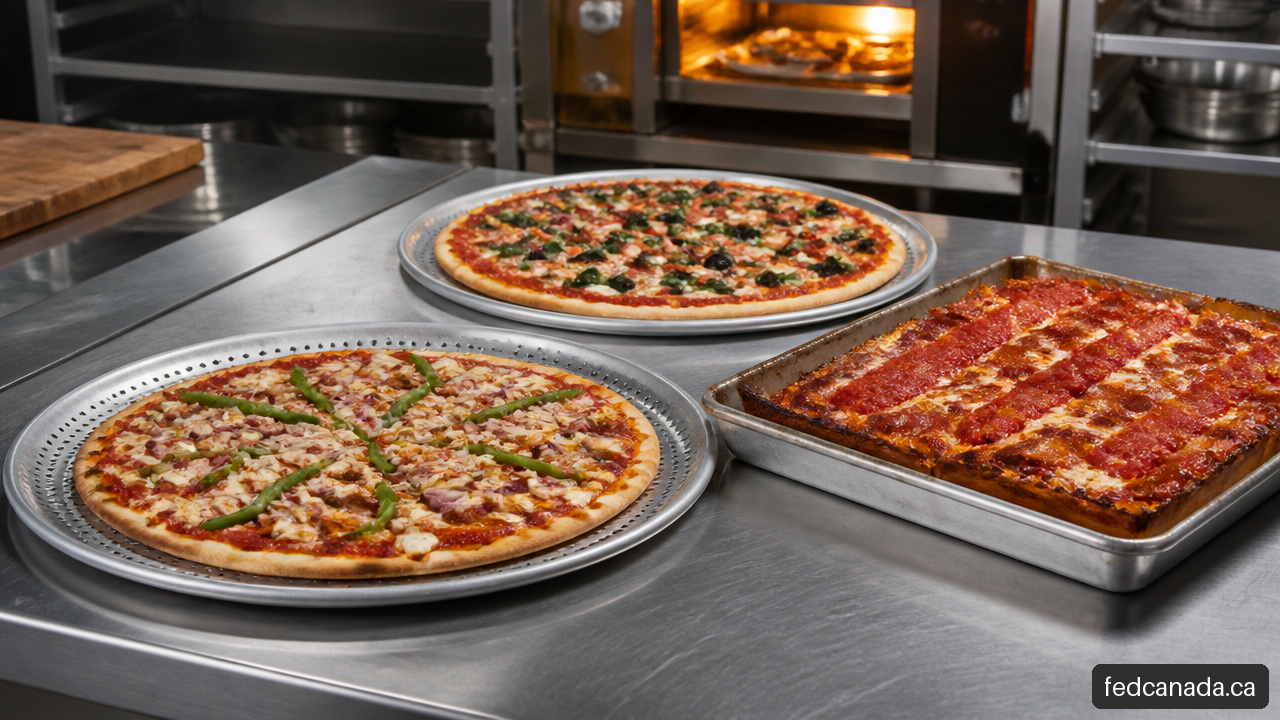
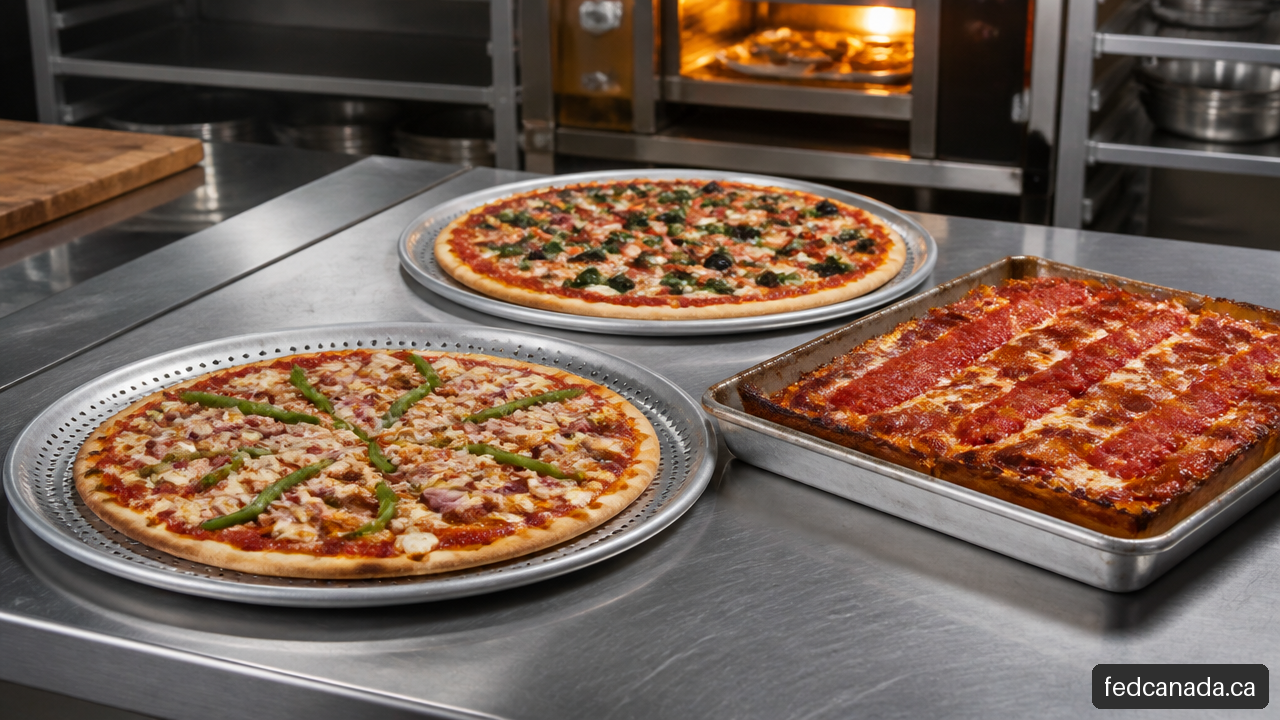
Solid pizza pans have an uninterrupted baking surface. They are a versatile option for many pizza styles and can help support dough, sauce, cheese, and toppings during preparation and baking. The final crust texture depends on the pan material, oven temperature, dough formulation, and baking method.
Perforated Pizza Pans
Perforated pizza pans contain small holes that allow more air to circulate around the underside of the dough. Depending on the oven and recipe, this design can help moisture escape and promote a crispier base.
Perforated pans may be useful for kitchens that prioritize a crisp crust, but they are not ideal for every recipe. Very wet doughs or toppings may require a different pan design or careful handling.
Deep Pizza Pans
Deep pizza pans have taller sides to accommodate thicker dough, additional toppings, or styles that require more room for oil and filling. They are commonly considered for pan-style and deep-dish pizzas.
When selecting a deep pan, account for the full height of the prepared pizza and confirm that the pan fits comfortably inside the oven. The depth should suit the recipe without making loading, baking, or removing the finished pizza difficult.
Round and Rectangular Pans
Round pans suit conventional round pizzas and can help standardize portion sizes. Rectangular pans may be useful for sheet-style pizza, batch production, or kitchens that want to maximize available oven space.
Before purchasing, measure the oven's usable interior dimensions, racks, and clearances. A pan's listed dimensions do not always account for handles, rolled edges, or other features that affect fit.
How Pizza Pan Design Affects Baking Results
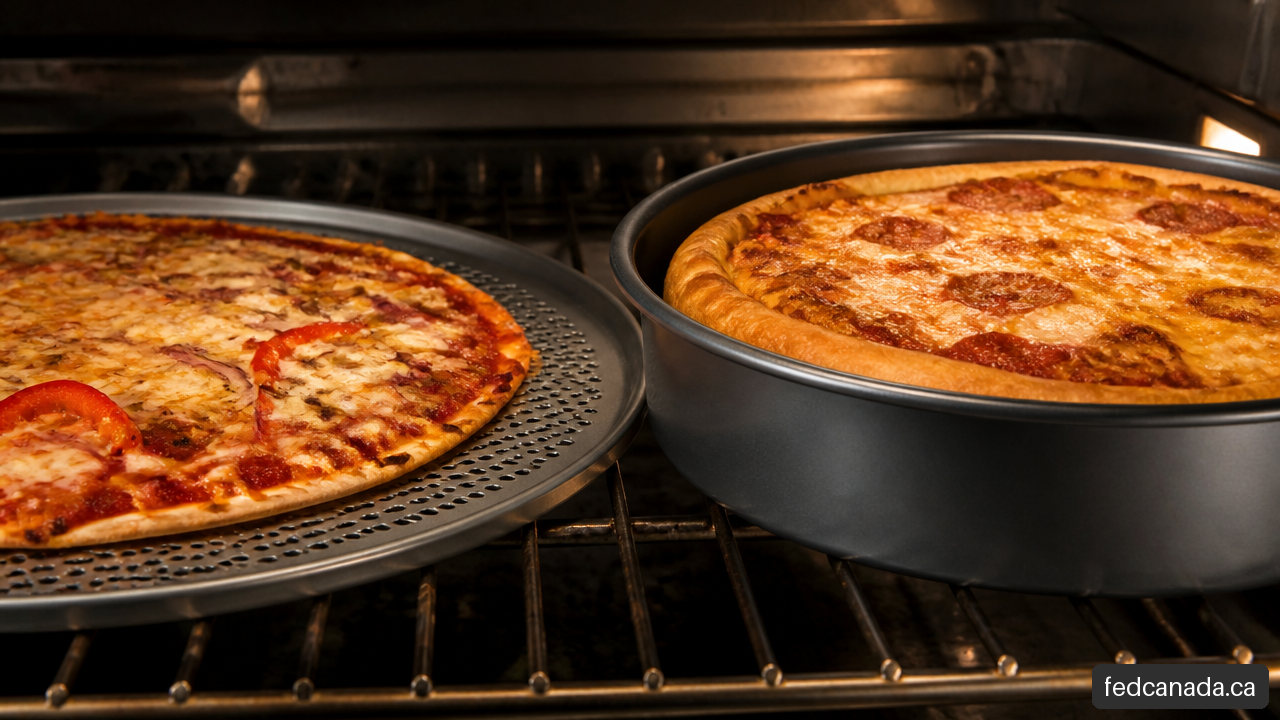
Pizza pans are not interchangeable in every application. Their construction influences heat transfer, moisture release, crust development, and how the finished pizza is handled. A suitable pan helps staff repeat the same process during busy service periods.
Material and Heat Transfer
Metal construction affects how quickly a pan responds to oven heat and how evenly heat is transferred to the dough. Aluminum pans are commonly used in foodservice because aluminum transfers heat efficiently and is relatively lightweight. Other metals and finishes may offer different durability and handling characteristics.
Pan material alone does not determine baking performance. Dough thickness, ingredient temperature, oven type, rack position, and baking time also influence the finished crust. Test pans under the actual operating conditions before standardizing a recipe.
Thickness and Durability
Pan thickness affects rigidity, handling, and how the pan responds to repeated heating and cooling. In a commercial kitchen, frequent stacking, loading, unloading, and washing can place considerable demands on equipment.
Choose pans that can withstand the workload and cleaning methods used in your operation. Inspect them regularly for warping, damaged edges, corrosion, or deterioration of any coating.
Surface Finish and Release
Surface finish can influence dough release, cleaning, and the need for oil or other preparation steps. Some pans require seasoning, while others have finishes designed to reduce sticking. Always follow the manufacturer's instructions for the specific pan.
Avoid assuming that every pan should be treated in the same way. Using an unsuitable coating, abrasive cleaner, or high-temperature method can damage certain finishes and shorten the pan's useful life.
Size, Capacity, and Workflow
Pan size should match the intended pizza diameter or portion size, the available oven space, and the kitchen's production process. Standardizing pan sizes can simplify dough portioning, topping quantities, baking procedures, and inventory management.
For higher-volume operations, consider how pans move through preparation, baking, cooling, and cleaning. Consistent dimensions can make storage and stacking easier, provided the pans are designed to stack safely.
Pizza Pan Use and Maintenance
Correct use and routine maintenance help preserve pan performance and support food safety. Staff should follow the manufacturer's instructions and use procedures suited to the pan's material and finish.
Prepare Pans Consistently
- Check whether the pan needs oiling, seasoning, or another preparation step.
- Use consistent dough weights and portion sizes to support repeatable results.
- Distribute dough and toppings according to the recipe.
- Use the recommended oven temperature and baking time as a starting point, then validate results in your own oven.
- Avoid overloading pans or stacking hot pans in a way that creates a handling hazard.
Clean and Store Pans Properly
- Allow pans to cool to a safe handling temperature before cleaning, unless the manufacturer's instructions specify otherwise.
- Remove food residue using cleaning tools suitable for the pan's material and coating.
- Avoid abrasive products or chemicals that could damage the surface.
- Dry pans thoroughly when required to reduce the risk of corrosion.
- Store pans in a stable, organized location where they will not be bent or damaged.
- Inspect pans routinely and remove damaged pans from service when they can no longer be used safely or reliably.
Common Pizza Pan Problems
Crust is too soft: Review dough hydration, baking time, oven temperature, and pan design. A perforated pan may help with moisture release in some applications, but recipe and oven adjustments may also be needed.
Dough sticks to the pan: Check preparation and seasoning requirements, surface condition, and whether the pan is being cleaned according to the manufacturer's instructions.
Crust bakes unevenly: Check oven loading, pan placement, pan dimensions, dough thickness, and the oven's temperature consistency. Standardizing portion sizes and placement can help reduce variation.
Pans warp or deteriorate: Confirm that the pans are suitable for the operating temperature and cleaning process. Avoid handling practices or temperature changes that conflict with the manufacturer's guidance.
Frequently Asked Questions
What type of pizza pan is best for a crispy crust?
A perforated pizza pan can help promote airflow and moisture release beneath the dough, which may support a crispier crust. Results also depend on the dough recipe, oven, temperature, and baking time.
Are aluminum pizza pans suitable for commercial kitchens?
Aluminum pans are widely used in foodservice because they transfer heat efficiently and are relatively lightweight. Confirm that the specific pan's construction, finish, and temperature rating suit your kitchen's workload and cleaning practices.
Should a pizza pan be greased before use?
That depends on the pan's surface, the recipe, and the manufacturer's instructions. Some pans require oil or seasoning, while others are designed for different preparation methods. Follow the product guidance and test the procedure with your recipe.
How do I choose the right pizza pan size?
Choose a size that matches your target pizza dimensions, portion standards, and oven capacity. Check the pan's actual outside dimensions and allow sufficient clearance for loading and unloading.
How should commercial pizza pans be cleaned?
Use cleaning methods and products approved for the pan's material and finish. Avoid harsh abrasives or chemicals unless the manufacturer confirms they are suitable, and dry and store pans according to the product instructions.
When should a pizza pan be replaced?
Replacement may be necessary when a pan is badly warped, damaged, corroded, or has a deteriorating coating that affects safe and consistent use. Follow the manufacturer's recommendations and your kitchen's equipment inspection procedures.
References
- Nordic Ware — Bakeware products and care information.
- King Arthur Baking — Baking guidance and techniques.
- WebstaurantStore — Commercial kitchen supplies and pizza pans.
- Health Canada — Food safety information and guidance.