




Potato Ricer: How to Make Fluffy, Smooth Potatoes
A Potato Ricer is a simple manual press that can make mashed potatoes noticeably lighter, smoother, and more consistent. It is not essential for every kitchen, but it earns its storage space when we want lump-free mash, delicate gnocchi dough, or evenly processed soft vegetables without relying on a blade appliance.
Table of Contents
- How a Potato Ricer Works
- Using a Potato Ricer for Better Texture
- Choosing, Cleaning, and Maintaining a Potato Ricer
- Key Takeaways
- Potato Ricer FAQ
How a Potato Ricer Works
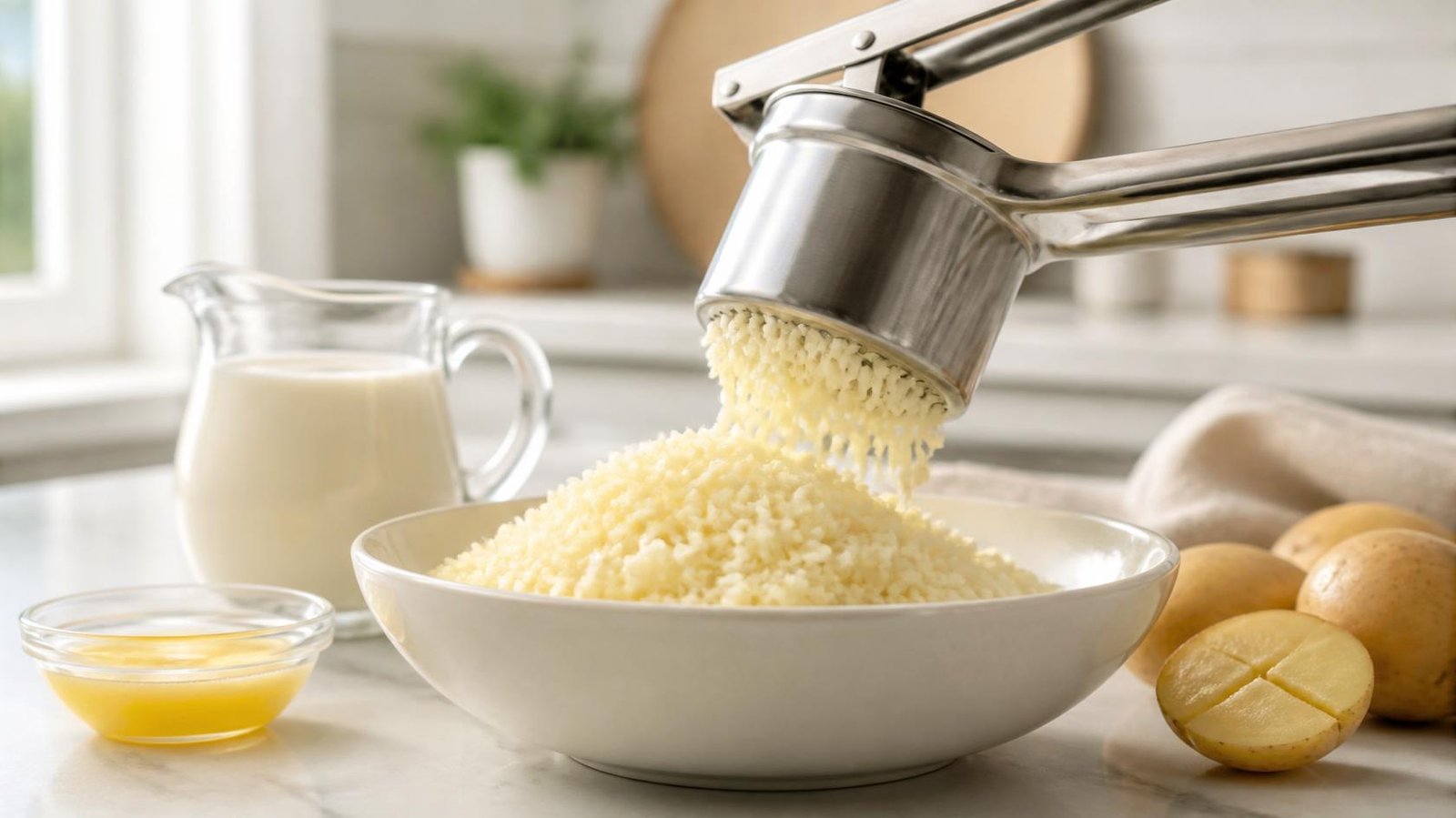
A potato ricer works by forcing cooked food through a perforated plate. The result looks like small strands of potato, which is why the tool is called a ricer. Those strands separate the potato into small, even pieces before butter, cream, milk, or seasoning is folded in.
Unlike a food processor, a ricer does not use spinning blades. Unlike a conventional masher, it does not repeatedly crush the potatoes in the same bowl. That difference matters because potatoes can turn dense or pasty when their starch is aggressively worked after cooking.
The parts that control performance
Most potato ricers have four basic components:
- Hopper or basket: The chamber that holds cooked potato before pressing.
- Perforated disc: The plate with holes that determines how fine or coarse the potato emerges.
- Plunger: The fitted pressing surface that pushes potato through the holes.
- Handles and hinge: The leverage system that lets us close the ricer with both hands.
A well-fitted plunger leaves less potato behind in the hopper. A loose fit may leave a thick layer of unpressed potato around the basket wall. That is not always a defect, but excessive residue can mean the hopper is overfilled, the potatoes are too cool, or the plunger and disc are poorly aligned.
The hole size affects both texture and effort. Fine holes make very smooth potato strands, which are useful for refined mashed potatoes and gnocchi. They also create more resistance during pressing. Larger holes are easier to press through and create a more rustic texture, though the mash may need more gentle folding afterward.
Why the texture is different
The ricer performs two jobs at once: it breaks apart cooked potato and spreads it evenly across a broad area. Instead of leaving a few large chunks to be crushed later, the tool creates thin strands that accept fat and liquid more evenly.
That is especially useful when making mashed potatoes with butter and warm dairy. If we pour liquid into large chunks and then mash hard to eliminate lumps, the potato can become overly worked. With riced potatoes, the pieces are already small. The mixing stage can be brief and gentle.
A ricer improves texture because it reduces the need for heavy mixing after the potatoes are cooked.
The tool is commonly associated with smooth mashed potatoes, gnocchi, and dumplings. Food Network notes these common potato ricer uses, which explains why the utensil is often found in kitchens that make potato dumplings or large holiday meals.
Potatoes that rice well
Floury, starchy potatoes generally create the lightest result because their cooked flesh breaks apart readily. Russets are often chosen for airy mashed potatoes, while Yukon Gold potatoes can produce a richer, creamier mash with more natural body.
Waxy potatoes are firmer and more cohesive. They can still go through a ricer, but pressing may take more effort and the finished mash may feel denser. For a mixed potato mash, combining a floury potato with a naturally buttery variety can balance fluffiness and flavour.
Temperature also changes the outcome. Potatoes are easiest to rice while hot or very warm. Once chilled, starch firms up and the pressure needed rises sharply. A cold leftover potato can be riced, but it may be better warmed first with a little butter or milk rather than forced through the tool.
Using a Potato Ricer for Better Texture
The best way to use a potato ricer is to treat it as the final potato-breaking step, not as a substitute for proper cooking and draining. A ricer cannot correct undercooked centers, waterlogged potatoes, or potatoes left sitting in a pot of cooking water.
A reliable workflow for mashed potatoes
For most batches, this sequence keeps the texture light while limiting cleanup:
- Cook potatoes until a knife slides through with little resistance. They should be tender throughout but not falling apart in the water.
- Drain thoroughly. Return the potatoes to the warm pot briefly over low heat, if needed, to evaporate surface moisture.
- Peel while hot if using potatoes with thicker skins. Cut large potatoes into manageable pieces rather than trying to force an oversized whole potato into the hopper.
- Fill the hopper only partway. An overfilled ricer creates more resistance, strains the hinge, and can push potato out around the plunger.
- Press the potato into a warm bowl or pot. Release the handles, remove the compacted residue, and repeat.
- Fold in warm butter first, then add warmed milk, cream, or stock gradually. Stop as soon as the potatoes are smooth and properly seasoned.
The order of ingredients is practical. Butter coats some of the potato particles before more liquid is added, helping preserve a soft, rich mouthfeel. Cold dairy can cool the potatoes quickly and make the mash feel less cohesive, so warming it first is usually the safer choice.
Avoiding watery or gluey mashed potatoes
A ricer can create excellent mash, but it cannot overcome every preparation error. Watery potatoes often start with excess moisture from boiling, insufficient draining, or adding too much liquid at once. If the potato strands look wet before any dairy is added, pause and let steam escape rather than immediately adding more butter or cream.
Gluey potatoes are more often linked to overmixing after ricing. The mistake is understandable: riced potatoes look like separate strands, so it can seem as though they need vigorous stirring. They do not. Fold rather than whip.
Consider a practical example. If a batch of riced potatoes receives cream and butter, then is beaten repeatedly with a spoon until glossy, the texture may become elastic and dense. If the same potatoes are folded just until the ingredients are incorporated, the finished mash is more likely to stay soft and fluffy.
Potato ricer versus other tools
The right tool depends on the desired texture, batch size, and tolerance for cleanup. There is no universal winner.
| Tool | Best use | Strength | Trade-off |
|---|---|---|---|
| Potato ricer | Smooth mashed potatoes, gnocchi, small to medium batches | Fine, even potato with minimal mixing | Requires repeated pressing and cleaning small holes |
| Potato masher | Rustic mash and quick weeknight cooking | Inexpensive, fast, easy to store | More lumps and less uniform texture |
| Food mill | Larger batches, purées, potatoes with skins | Handles volume well and can separate some skins | More parts and more counter space |
| Food processor | Some vegetable purées, sauces, quick blending | Fast and powered | Can overprocess cooked potatoes very quickly |
A conventional masher is the sensible choice when texture can be rustic. A food mill is often more practical when preparing a large quantity of purée or when skins need to stay behind. A ricer sits between those tools: it is precise and gentle, but its hopper limits how much food can be processed at once.
Food processors deserve caution for mashed potatoes. Their blades work rapidly, and the line between smooth and overly processed can be very short. A processor is better reserved for preparations where a silky, blended texture is the goal and potato starch is not the main concern.
Beyond white potatoes
A potato ricer can be useful for other soft foods, but suitability depends on moisture level and fiber. OXO states that its ricer can be used for potatoes, fruits, vegetables, and baby food. OXO’s stated range of ricer uses is broad, but not every ingredient behaves the same way.
Sweet potatoes generally work well when fully cooked, though they can be denser and stickier than white potatoes. Cooked squash, cauliflower, and turnip can also be pressed, but watery vegetables may need draining first. Fibrous vegetables, raw carrots, and ingredients with tough skins are poor candidates because they can clog the holes or require excessive force.
For gnocchi, rice the potato while warm and let it release steam before adding flour. Excess moisture calls for more flour, and more flour can make gnocchi heavy. The aim is not to dry the potato completely; it is to avoid trapping unnecessary water in the dough.
Choosing, Cleaning, and Maintaining a Potato Ricer
A potato ricer is a modest purchase, but construction details affect comfort and lifespan. We should choose based on the foods we make, how much storage space is available, and whether the tool will be washed immediately after use.
What to look for before buying
For routine mashed potatoes, a sturdy single-disc stainless-steel model is often enough. Stainless steel is common because it is easy to clean and resists staining better than many basic metals. Still, “stainless” does not automatically mean indestructible. Thin handles can flex, weak hinges can loosen, and sharp unfinished edges can make cleanup unpleasant.
Use these buying priorities as a practical order of importance:
- Hinge strength: The hinge absorbs repeated pressing force. Check that it opens smoothly without side-to-side wobble.
- Handle length and grip: Longer handles increase leverage. Soft or non-slip grips can help, particularly when hands are wet or when processing dense sweet potatoes.
- Hopper size: A larger basket means fewer pressing cycles, but it also makes the tool bulkier to store.
- Disc design: A single fixed disc is simpler. Interchangeable discs offer texture options but add parts that can be misplaced or cleaned separately.
- Resting edge: A stable lip or grooved edge can help the ricer sit over a pot or bowl. RICARDO Cuisine describes its model as having a grooved edge designed for that purpose. RICARDO Cuisine’s grooved resting-edge design illustrates why this small feature can improve control during repeated presses.
For Canadian buyers, availability, returns, and replacement parts may vary by retailer and brand. There is no reliable, universal comparison of Canadian ricer warranties or spare-disc availability. If a model uses removable discs or specialized parts, check whether those items can be replaced locally before treating the feature as a long-term advantage.
A simple capacity and effort check
Published product information does not provide a consistent way to compare pressing force, hopper capacity, or residue left inside ricers. We can still compare models methodically before committing to one.
When evaluating a ricer in person, or after purchase during the return period, note three practical things:
- How many medium cooked potato pieces fit without overfilling the hopper.
- Whether the handles close evenly or twist sideways under pressure.
- How much potato remains trapped around the disc after a normal press.
For example, a model that holds less potato but closes smoothly may be more comfortable than a larger ricer with stiff handles. The bigger hopper does not help if every press requires excessive force or leaves a thick ring of waste around the basket.
Cleaning without creating a clogging problem
Clean the ricer immediately after use whenever possible. Potato starch dries into the small holes and becomes much harder to remove later. Start by opening the handles fully and scraping out the compacted potato puck with a spatula, spoon edge, or soft brush.
Then follow this order:
- Rinse the hopper and disc under warm running water before residue dries.
- Use a dish brush to sweep across the perforations from both sides.
- Wash the hinge, handle joints, and underside of the plunger where food can collect.
- Dry the tool completely before storage, especially around the hinge and removable disc connections.
- If the manufacturer permits dishwasher cleaning, place parts so water can reach both sides of the perforated plate. Handwashing may still be preferable for models with coated grips, complex hinges, or removable pieces.
If the ricer is used for baby food, spinach, flavored butter mixtures, or allergen-containing ingredients, clean it before switching tasks. Small perforations can retain residue even when the main chamber looks clean. Disassembly is advisable whenever the particular model allows it, followed by careful brushing and inspection under good light.
Troubleshooting difficult pressing and clogs
When a ricer becomes hard to press, do not force the handles. Excess pressure can bend the plunger, damage the hinge, or make the tool slip over the bowl.
| Problem | Likely cause | Recovery step |
|---|---|---|
| Handles are difficult to close | Hopper is overfilled or potato is cold | Remove some potato, warm it if needed, and press smaller portions |
| Potato pushes around the plunger | Plunger is misaligned or basket is too full | Open the tool, reseat components, and reduce the load |
| Holes clog repeatedly | Potato is undercooked, fibrous, or too sticky | Cook until fully tender, drain well, or choose a different tool |
| Large amount remains in hopper | Potato pieces are too large or plunger fit is inefficient | Cut pieces smaller and check alignment before pressing |
| Mash is wet | Potatoes retained excess water | Drain, steam dry briefly, and add liquid gradually |
A clog is often a preparation problem, not a broken ricer. Fully cooked, properly drained potatoes should press with steady resistance rather than a sudden stop. If the tool binds with ordinary hot potatoes even when lightly filled, inspect for a bent disc, warped basket, or plunger that no longer meets the perforated surface evenly.
Key Takeaways
When a potato ricer is worth owning
A potato ricer is worth considering when we regularly make smooth mashed potatoes, gnocchi, or vegetable purées where even texture matters. It is less compelling for occasional rustic mash, very large batches, or kitchens with limited storage.
The habits that make it work best
- Rice potatoes while hot or warm, not chilled.
- Drain cooked potatoes thoroughly before pressing.
- Fill the hopper partway rather than packing it tightly.
- Fold in warm butter and liquid gently after ricing.
- Clean the perforations right away before starch dries.
- Stop using force if the handles bind, twist, or resist unusually.
The most useful mindset is simple: a ricer is a texture tool, not a shortcut around cooking technique. Good potatoes, controlled moisture, and gentle finishing still determine whether the final mash feels light or heavy.
Potato Ricer FAQ
What is a potato ricer?
A potato ricer is a hand-operated press with a perforated basket and plunger. It forces cooked potato through small holes, producing thin strands that can be folded into smooth mashed potatoes or mixed into gnocchi dough.
Does a potato ricer make better mashed potatoes?
It can make smoother and fluffier mashed potatoes because it reduces the need for aggressive mashing after cooking. “Better” depends on preference, though. If we enjoy rustic mashed potatoes with a few soft pieces, a basic masher may be the better tool.
Should potatoes be hot before using a ricer?
Yes. Warm potatoes generally pass through the holes more easily and leave less residue. Cold potatoes become firmer and require more pressure, increasing the risk of a clogged basket or strained handles.
Do potatoes need to be peeled before ricing?
For the cleanest result, peel potatoes before ricing unless the ricer is specifically being used as a skin-separating tool. Thick or tough skins can block holes and interfere with smooth pressing. Thin-skinned potatoes may be manageable, but results vary by variety and ricer design.
Can a potato ricer handle whole potatoes?
It can handle small, fully cooked potatoes if they fit comfortably inside the hopper. Large whole potatoes should be cut into halves or quarters. Overstuffing makes the ricer harder to close and can push potato out around the plunger.
Why is my potato ricer difficult to press?
The usual causes are cold potatoes, undercooked centers, an overfilled hopper, or a food that is too fibrous for the disc. Use smaller portions, confirm the potato is fully tender, and check that the plunger is correctly aligned.
Is a food mill better than a potato ricer for large batches?
Often, yes. A food mill can be more efficient for a large pot of potatoes because it has a larger processing area and continuous turning motion. A ricer is usually easier to control for smaller batches and very fine, even potato strands.
Can a potato ricer be used for sweet potatoes and vegetables?
It can work with fully cooked sweet potatoes, squash, cauliflower, and similar soft vegetables. Avoid forcing raw, fibrous, or poorly drained ingredients through it. If a vegetable releases a lot of liquid, drain it before ricing to avoid a loose purée.
Sources/References
- foodnetwork.com — https://www.foodnetwork.com/how-to/packages/shopping/product-reviews/best-potato-ricer
- oxo.com — https://www.oxo.com/potato-ricer.html
- boutique.ricardocuisine.com — https://boutique.ricardocuisine.com/en/potato-ricer.html
Recent Posts
Leave a Comment
Your email address will not be published. Required fields are marked *