




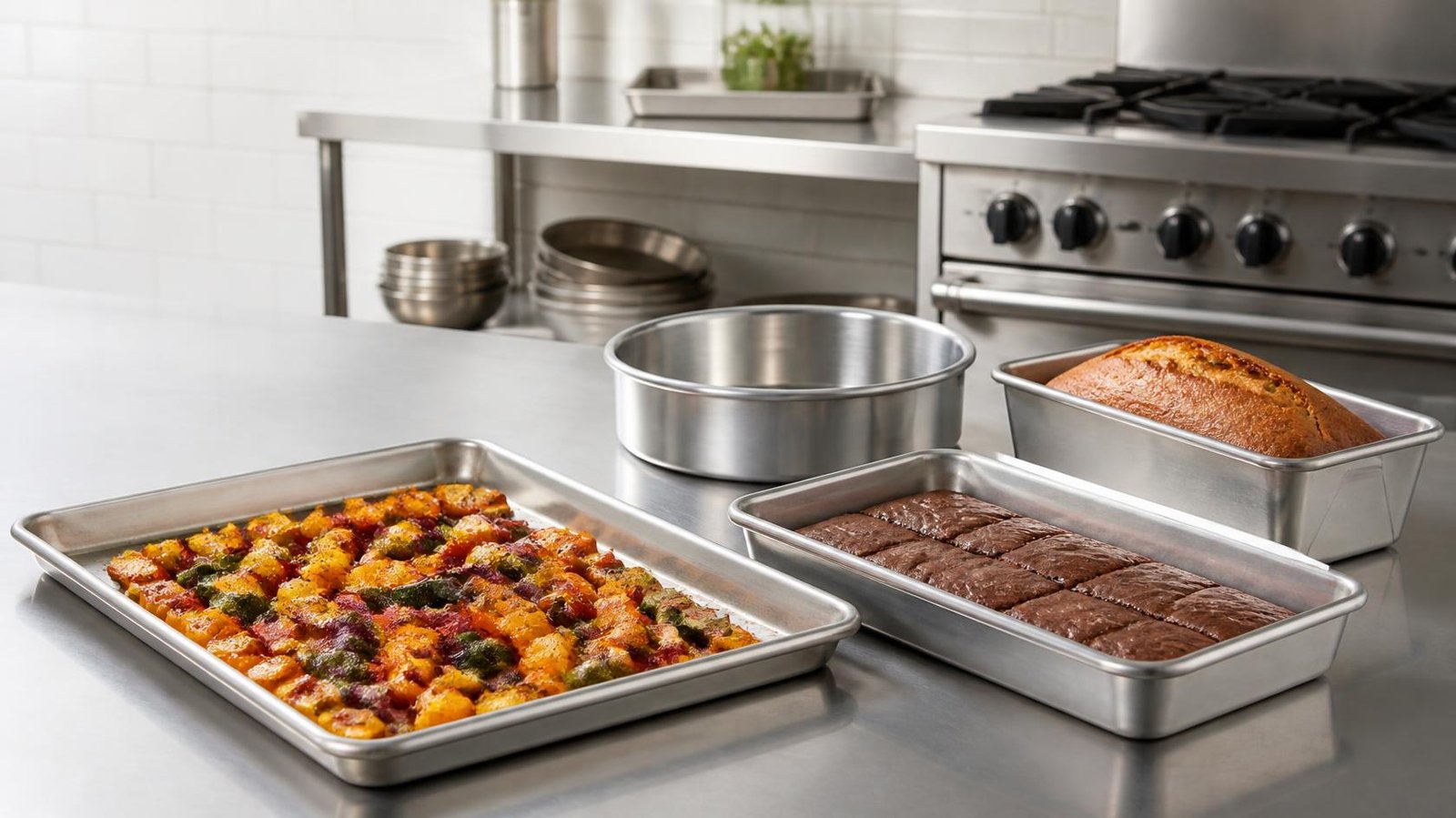
Stainless Steel Bakeware: A Practical Buying and Care Guide
Stainless Steel Bakeware is a durable, versatile option for cookies, cakes, breads, casseroles, roasted vegetables, and sheet-pan meals. Still, the label alone does not tell the whole story. A thin single-layer pan, a heavy bonded pan with an aluminum core, and a stainless steel dish can all bake differently. I recommend choosing based on construction, recipe type, and the release method you are willing to use.
Key Takeaways
The short answer
Stainless steel bakeware is a strong long-term choice when durability, corrosion resistance, and oven versatility matter more than effortless food release. It is especially useful for roasting, savory baking, sheet-pan meals, bread, and recipes where parchment paper is practical.
Bare stainless steel is not naturally non-stick. Cakes, brownies, delicate cookies, muffins, and sticky glazes usually need parchment, a well-greased surface, or both. That extra preparation is the trade-off for a surface that does not depend on a non-stick coating.
What matters most before buying
- Construction matters as much as material. A stainless exterior with a bonded aluminum core will generally respond to oven heat differently than a thin stainless sheet.
- Pan depth changes results. Shallow pans encourage surface browning and evaporation, while deep pans protect moist batters and casseroles from drying too quickly.
- The exact product rating controls. Oven-safe does not automatically mean broiler-safe, dishwasher-safe, or safe at every high temperature.
- A liner is a useful tool, not a failure. Parchment provides reliable release, reduces cleanup, and makes repeatable baking easier.
A dependable pan is not necessarily the one that does everything. It is the one whose construction and shape fit the recipe you make most often.
Who should consider it
I would prioritize stainless steel bakeware for cooks who want a long-lasting pan, foodservice operators who need durable equipment, and home bakers who prefer uncoated cooking surfaces. It can also make sense for smaller commercial kitchens where one pan may move from baking to roasting to serving.
Avoid assuming it is the best choice for every job. If you frequently bake fragile layer cakes or large batches of delicate cookies and want easy release with minimal preparation, aluminum or high-quality non-stick bakeware may be more convenient.
How Stainless Steel Bakeware Performs
Stainless steel is the material, not the complete heat story
Stainless steel is valued because it is durable, corrosion-resistant, and generally easy to maintain when cleaned gently. But stainless steel does not conduct heat as quickly as aluminum. That matters because baking is controlled heat transfer: the pan must absorb oven heat, move it across its surface, and deliver it into the food.
A basic single-layer stainless steel sheet may heat and cool more slowly or less uniformly than an aluminum sheet of similar size. This does not make it unusable. It means the pan benefits from thoughtful placement, preheating when appropriate, and attention to browning during the first few uses.
Some products solve this issue with bonded layers. All-Clad's stainless steel bakeware overview describes formats and uses that include bonded construction, where stainless steel is paired with an aluminum layer to improve heat conduction. The practical lesson is simple: “stainless steel” describes the cooking surface or exterior, while the pan's internal construction determines much of its heat behavior.
Why an aluminum core can change baking results
Aluminum transfers heat efficiently. In a bonded stainless steel pan, an aluminum core can help distribute incoming heat across the base and walls more evenly. This can be helpful with recipes that need consistent edge-to-center baking, such as brownies, coffee cakes, shortbread, and roasted vegetables.
Consider two square pans holding the same brownie batter. A lighter, single-layer pan may heat in a more direct pattern, while a heavier bonded pan can retain and spread heat differently. Neither result is automatically better. A fudgy brownie may benefit from gentler baking and careful timing, while a pan of roasted vegetables may benefit from a more responsive, sturdy surface.
Weight is part of the trade-off. Heavier pans can feel stable and durable, but they cost more, take more storage space, and may be less convenient for frequent lifting. In an anecdotal AskBaking discussion about stainless steel cake pans, users mentioned perceived durability and evenness alongside concerns about weight, scratching, cost, and more involved cleaning. Those are individual reports, not controlled tests, but they reflect reasonable purchase questions.
Heat distribution versus browning
Even heat distribution and browning are related, but they are not identical. A pan can spread heat relatively well while still produce a different crust or edge color than aluminum, glass, ceramic, or coated non-stick bakeware.
Color, thickness, finish, batter sugar content, oven calibration, and rack location all affect the outcome. Stainless steel may produce different browning patterns because of its thermal behavior and surface finish. For a new pan, I recommend treating the first recipe as a calibration bake: use a familiar cookie, bar, or roasted vegetable recipe, note the timing, and adjust one variable at a time.
Verify temperature and broiler limits product by product
Do not generalize one brand's temperature rating to every stainless steel pan. All-Clad's stainless bakeware collection lists specific tri-ply products rated for oven and broiler use up to 600°F, but that rating applies to those products rather than every pan described as stainless steel.
Check the manufacturer's instructions before using a pan under a broiler or at very high heat. Handles, lids, rivets, silicone grips, coatings, and accessories may have lower limits than the pan body. If the documentation says only “oven-safe,” treat broiler use as unconfirmed.
Choosing the Right Pan for Each Recipe
Match construction, shape, and depth to the food
The best stainless steel pan is usually the one that solves a specific cooking task. A shallow sheet pan supports evaporation and browning. A deep loaf pan contains batter and supports upward rise. A heavy square pan is useful when you want stable edges and clean portions.
| Recipe or task | Best stainless steel format | What to look for | When to consider another material |
|---|---|---|---|
| Cookies and crackers | Half-sheet or quarter-sheet pan | Flat base, rolled rim, parchment compatibility | Choose aluminum for very delicate cookies that depend on predictable browning |
| Roasted vegetables | Heavy sheet pan | Raised rim, sturdy construction, room for airflow | Choose a roasting pan for large cuts of meat or heavy juices |
| Brownies and bar cookies | Square or rectangular pan | Straight sides, parchment sling, bonded base if available | Choose non-stick when easy release is the priority |
| Quick breads and yeast breads | Loaf pan | Even wall thickness, adequate depth, parchment option | Choose aluminized steel or aluminum when a recipe is developed specifically for it |
| Cakes | Round or square cake pan | Precise dimensions, parchment-lined base, good side release plan | Choose aluminum for light-colored, delicate layer cakes |
| Casseroles and baked pasta | Deep rectangular or oval dish | Depth, handles, serving appearance | Choose glass or ceramic when table presentation and heat retention matter most |
Sheet pans: choose size for batch volume and oven fit
A half-sheet pan is commonly about 11 by 17 inches, while quarter-sheet pans are smaller and easier to fit into compact ovens or crowded prep areas. Pan dimensions vary by brand, especially when rims and handles are included, so measure both the usable oven rack and storage area before ordering.
Williams Sonoma's stainless steel bakeware selection includes formats such as sheet pans, loaf pans, round and square cake pans, muffin pans, and several sheet sizes. That variety matters because using a correctly sized pan can be more useful than buying one oversized piece that rarely fits the recipe or oven.
For foodservice use, standardizing around two or three pan sizes can simplify liner purchasing, recipe scaling, cooling-rack setup, and storage. A quarter-sheet pan is particularly useful for small prep batches, test bakes, reheating, and limited oven capacity.
Cakes, breads, and bars need a release plan
For cakes and quick breads, pan release should be planned before batter is mixed. Stainless steel surfaces can grip sugar-rich batters and proteins more than coated bakeware. A light coating of fat may be enough for some recipes, but it may not be enough for a delicate cake with a detailed shape.
Use these choices deliberately:
- Parchment-lined base: Best for layer cakes, brownies, bars, and loaf cakes where clean removal matters.
- Grease plus parchment: Best for fragile cakes or sticky batters. Grease helps parchment stay in place and protects exposed sides.
- Grease and flour: Useful for some traditional cakes, though it can leave a visible coating on dark batters.
- Parchment sling: Best for brownies, bars, and baked squares. Leave enough overhang to lift the cooled bake from the pan.
For muffins, stainless steel can work, but paper liners are usually the simplest solution. Without liners, each cavity needs thorough greasing, and baked goods should cool briefly before careful removal.
Canadian buying checks that prevent surprises
Canadian shoppers should confirm the final delivered details, not just the headline product description. Stainless steel bakeware can be sold through Canadian retailers, including Williams Sonoma Canada's stainless steel bakeware category, but stock, shipping eligibility, return conditions, and prices can vary.
Before ordering, verify:
- Exterior dimensions and interior cooking dimensions
- Oven, broiler, dishwasher, and utensil guidance
- Construction details, including whether an aluminum core is present
- Warranty terms and whether they apply to commercial or foodservice use
- Return restrictions for used cookware or items damaged in transit
- Freight charges, remote-area delivery conditions, and estimated replacement timing
For a restaurant or catering operation, replacement timing deserves special attention. A durable pan is valuable, but a pan that cannot be replaced quickly during a busy season can still create operational friction.
Preventing Sticking, Uneven Browning, and Warping
A repeatable anti-sticking protocol
Bare stainless steel performs best when the preparation matches the recipe. The goal is not to make every pan behave like non-stick cookware. The goal is to create a reliable release surface where it matters.
- Start with a clean, dry pan. Residue, water droplets, or old cooking fats can create uneven contact points.
- Choose the release method before preheating. Use parchment for cookies, cakes, bars, and sticky foods. Use oil or butter for roasting and savory baking.
- Preheat only when the recipe benefits from it. Preheating a sheet pan can help vegetables begin sizzling quickly, but it is usually not needed for cake batter or cookie dough.
- Do not crowd the pan. Packed vegetables steam before they roast. Cookies placed too closely may spread together and bake unevenly.
- Use the center rack as the default. This offers balanced airflow in many ovens. Adjust only when a recipe or oven behavior calls for it.
- Cool baked goods strategically. Let cakes and bars set briefly, then use parchment or a thin offset tool to release them before sugars harden fully against the pan.
Preventing uneven browning and thermal distortion
Even a well-built pan can perform poorly if it is exposed to abrupt temperature changes. Thermal stress occurs when one part of the pan expands or contracts faster than another. Moving a very hot pan directly onto a cold, wet surface is a common example.
To reduce the risk:
- Place pans on dry oven racks and stable, heat-safe surfaces.
- Allow hot bakeware to cool before soaking or washing.
- Avoid putting a cold pan into an aggressively preheated broiler unless the manufacturer specifically permits that use.
- Rotate pans only if your oven has clear hot spots and the recipe can tolerate movement.
- Use the center rack for most baking unless a recipe specifies otherwise.
Stainless steel products are often promoted as resistant to warping, but resistance is not immunity. Thin construction, repeated temperature shocks, dents, and uneven loading can all affect flatness over time.
Cleaning without dulling the finish
Warm water, mild dish soap, a soft sponge, and prompt drying are usually enough for routine cleanup. Williams Sonoma's care guidance for stainless steel bakeware recommends gentle cleaning and thorough drying, which helps preserve the appearance of uncoated surfaces.
For baked-on residue, try a gradual approach:
- Soak the pan in warm, soapy water after it has cooled.
- Lift softened residue with a non-abrasive sponge or nylon scrubber.
- Make a paste of baking soda and water for stubborn spots, then rub gently.
- Rinse thoroughly and dry immediately with a soft towel.
- Repeat rather than escalating to harsh abrasives too quickly.
Water spots are usually cosmetic mineral residue rather than rust. Drying promptly is the simplest prevention. If discoloration persists, use a cleaner suitable for stainless steel and follow the product directions. Avoid steel wool or highly abrasive tools unless the manufacturer specifically permits them, since scratches can change the appearance and create more places for residue to cling.
FAQ: Stainless Steel Bakeware
Is stainless steel bakeware good for cakes, cookies, and bread?
Yes, but it works best with recipe-aware preparation. It is well suited to breads, cookies on parchment, brownies, bars, and many cakes. For delicate layer cakes, use parchment on the base and grease the sides. If you want the most familiar behavior for recipes written around aluminum pans, aluminum may still be the easier default.
Does stainless steel bakeware stick more than aluminum or non-stick pans?
Bare stainless steel can stick more than coated non-stick bakeware because it does not have a release coating. Aluminum can also require greasing or parchment, but pan finish and recipe composition matter. Sugary, egg-rich, and low-fat batters are more likely to need a liner or thorough greasing.
Is tri-ply stainless steel bakeware better than single-layer stainless steel?
Tri-ply is not universally better, but it can be a better choice when heat distribution and thermal stability are priorities. A bonded aluminum core may help spread heat across the pan. Single-layer stainless steel can be sufficient for lighter tasks, serving dishes, and recipes that already use parchment or moderate oven temperatures.
Why does stainless steel bakeware brown food differently?
The pan's thickness, surface finish, core materials, oven temperature, and food moisture all influence browning. Stainless steel conducts heat differently from aluminum, while glass and ceramic hold heat differently again. For example, a cookie recipe may need a slightly different bake time on a heavy stainless steel sheet than on a thin aluminum sheet. Test one tray before committing to a full production batch.
Should stainless steel baking pans be greased or lined with parchment paper?
For cakes, bars, cookies, sticky foods, and delicate baked goods, parchment is usually the most dependable choice. Grease is often enough for roasting vegetables or savory dishes. Use both grease and parchment for recipes where clean release is essential, such as layer cakes or dense brownies.
Can stainless steel bakeware go under the broiler?
Only if the specific product is rated for broiler use. Some stainless steel products are designed for high oven and broiler temperatures, but handles, lids, and accessories may have different limits. Check the exact pan documentation rather than relying on the material name.
Does stainless steel bakeware rust or develop water spots?
Quality stainless steel is corrosion-resistant, but it can develop water spots, heat tint, scratches, or stubborn residue. Water spots are commonly cosmetic and can often be reduced through gentle cleaning and prompt drying. Persistent rust-like marks, pitting, or flaking should be reviewed against the manufacturer's care and warranty guidance.
How do I remove baked-on food from a stainless steel pan?
Cool the pan first, soak it in warm soapy water, and use a non-abrasive sponge. For tougher residue, apply a baking soda paste and work gradually. Avoid aggressive scraping when possible. Slow cleaning is usually better than damaging the finish for one stubborn patch.
Sources and References
- All-Clad — Stainless Bakeware collection
- All-Clad — Stainless Steel Bakeware: Professional Quality
- Williams Sonoma — Stainless Steel Bakeware & Baking Pans
- Williams Sonoma Canada — Stainless Steel Bakeware
- Reddit — Thoughts on stainless steel cake pans? Are they any good?
Recent Posts
Leave a Comment
Your email address will not be published. Required fields are marked *