




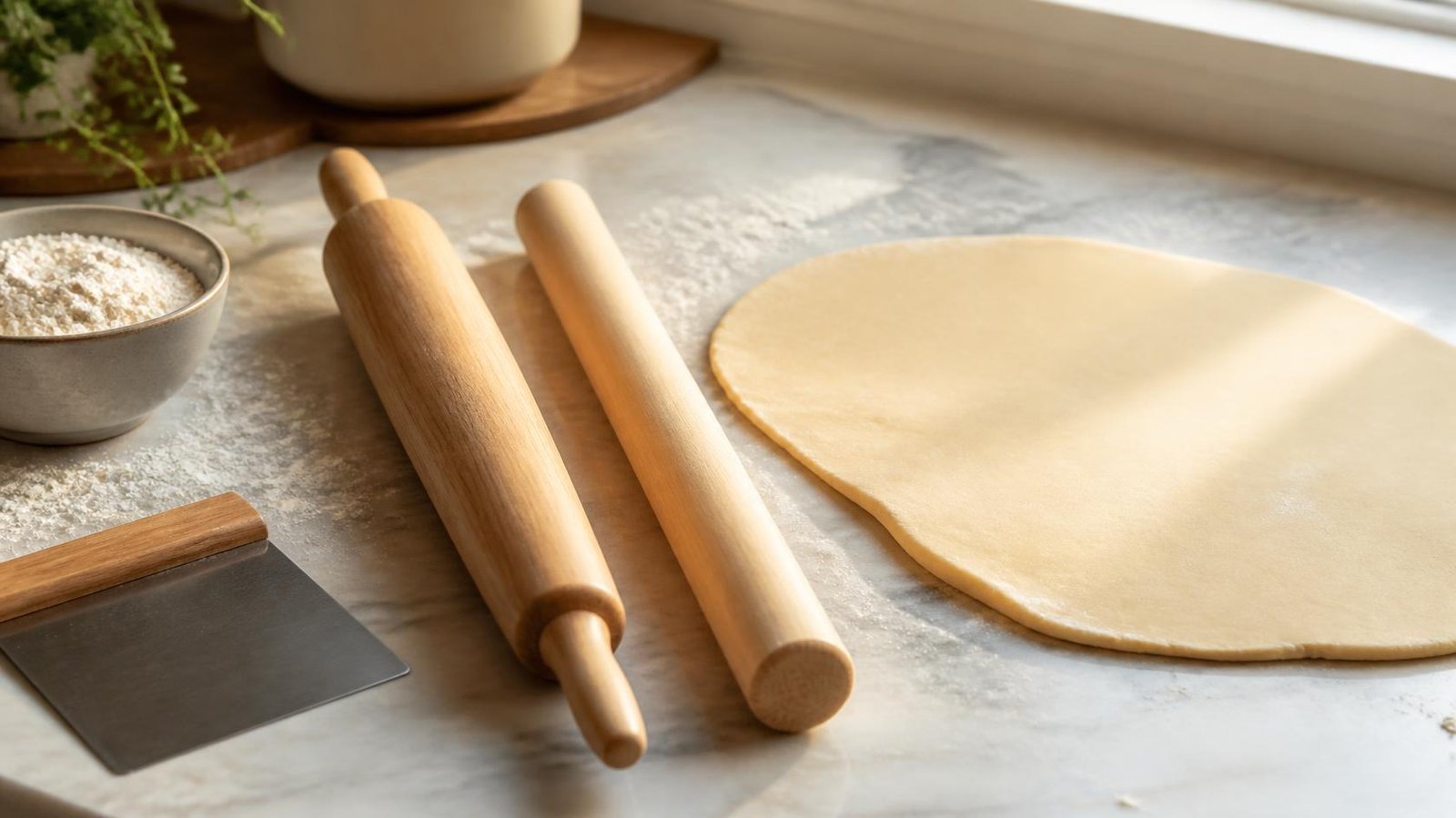
Rolling Pins: How to Choose, Use, and Care for the Right One
Rolling pins look simple, but their shape, material, temperature, and size can change how dough behaves under your hands. I recommend choosing a rolling pin based on the dough you make most often, the space available on your counter, and the control you need—not simply on appearance.
Table of Contents
- Choose a rolling pin by dough and task
- Compare rolling pin styles and materials
- Roll dough evenly without sticking or tearing
- Clean and maintain rolling pins
- Rolling pins FAQ
- Sources
Choose a Rolling Pin by Dough and Task
A rolling pin is a tool for flattening and shaping dough, but “best” depends on the job. Pie pastry needs gentle pressure and careful temperature control. Cookie dough benefits from consistent thickness. Pizza dough often needs a wider rolling surface. Dumpling wrappers need a small tool that works in tight, precise movements.
America’s Test Kitchen’s rolling pin guide notes that rolling pins are used across many doughs, including pie and tart dough, cookies, biscuits, tortillas, and yeast raised doughs; it also notes that wood can retain a light dusting of flour. That range of uses is exactly why one universal recommendation falls short.
Match the pin to the dough’s behavior
Dough hydration, fat content, batch size, and target thickness should guide the choice. A sticky, high hydration dough needs a different approach than a cool, butter rich pie crust.
| Dough or task | Useful pin style | Why it works | When to avoid it |
|---|---|---|---|
| Pie crust and tart pastry | French, tapered, marble, or chilled stainless steel | Tapered ends help shape rounds; cool materials can help keep butter firm | Avoid a very heavy pin if it crushes delicate pastry layers |
| Cutout cookies | Straight dowel with thickness rings | A uniform pin diameter supports consistent thickness | Avoid narrow pins for very large sheets |
| Pizza dough | Long dowel or French pin | Covers a broad rolling surface efficiently | Avoid over rolling if you want a more open, airy crust |
| Tortillas and flatbreads | Belan, tapered pin, or dowel | Easy to pivot and shape into rounds | Avoid a bulky handled pin if close edge control matters |
| Dumpling wrappers | Small dumpling pin | Supports one handed rolling while the other hand rotates the dough | Avoid using it as the only pin for large batches |
| Fondant and sugar work | Smooth silicone, plastic, or polyurethane pin | Smooth surface can reduce marks on the finished sheet | Avoid rough wood if the finish must look perfectly polished |
For a home kitchen that makes several kinds of dough, I would start with a medium length wooden French pin or straight dowel. For a bakery or foodservice prep station, it can be more practical to keep more than one design: a long pin for sheet work, a smaller pin for detail work, and a temperature responsive pin for pastry.
Let workspace set a real limit
Pin length should fit the counter, not just the recipe. A pin that is too long can strike backsplash, shelves, mixer bowls, sheet pan edges, or nearby equipment. It may also force you to roll from an awkward angle.
Measure the usable width of the rolling surface and leave room for your hands at both ends. For example, if a prep table has only 24 inches of clear width, a very long pin can become frustrating even if it performs well on a large dough sheet. A more compact 16 to 20 inch pin may give better control.
Counter depth matters too. If dough is close to the front edge of the table, the pin may collide with the counter lip or pull the dough out of position. Move the dough farther back, clear the surrounding tools, and give yourself enough space to roll outward from the center.
Key Takeaways
- Choose rolling pins by dough type, desired thickness, workspace, and comfort—not by material alone.
- French pins offer control for rounds and edge shaping, while straight dowels are useful for broad, even sheets.
- Cool marble or stainless steel can help with butter rich pastry, but temperature control is not necessary for every dough.
- Thickness rings are worthwhile when repeatable cookie, cracker, fondant, or pastry thickness matters.
- A short dumpling pin is a specialized tool for small wrappers, not merely a smaller all purpose rolling pin.
Compare Rolling Pin Styles and Materials
The main differences between rolling pins are geometry, weight, surface texture, and how the pin transfers pressure into the dough. Those details determine whether the dough stretches smoothly, sticks, warms up, or develops uneven thin spots.
French, dowel, and handled rolling pins
A French rolling pin is handle free and tapers toward both ends. A dowel rolling pin is a straight cylinder with the same diameter from end to end. A handled rolling pin has a central roller mounted between two end handles.
The Washington Post’s guide to pin styles explains that dowel, tapered, and handled designs differ in shape, weight, and handling characteristics. In practice, that means a pin changes not only the dough but also how your wrists, palms, and forearms apply force.
A French pin gives direct contact with the dough. You can rock it, pivot it, and slightly adjust pressure as you roll toward the edge. That makes it especially useful for pie rounds, galette dough, tortillas, and other shapes that need gradual correction.
A straight dowel applies pressure more evenly across a wide strip. It is often the clearest choice for cookie dough, laminated dough sheets, crackers, and pizza dough where a consistent thickness matters across a larger area.
Handled pins can feel more familiar and may reduce friction when the center roller spins freely. The Strategist’s discussion of belan and dumpling pins also notes that handled designs may suit some people with wrist or hand mobility concerns, while dumpling pins are typically shorter and narrower for small rounds.
Wood, stone, metal, silicone, and plastic
Materials affect more than cleanup. They influence flour adhesion, temperature, pin weight, and the speed at which dough can warm during rolling.
| Material | Strengths | Trade offs | Best suited to |
|---|---|---|---|
| Wood | Comfortable grip, light flour adhesion, classic feel | Needs careful drying and may need oiling | Pie dough, cookies, flatbreads, general use |
| Marble | Heavy and naturally cool | Heavy to lift, can chip, requires careful handling | Cool pastry work and firm doughs |
| Stainless steel | Smooth, durable, can be chilled | Very smooth surfaces may need thoughtful flouring | Pastry, sticky doughs, easy cleanup |
| Silicone | Smooth and often easy to clean | Dough can still stick if warm or wet | Fondant, sticky dough, occasional baking |
| Plastic or polyurethane | Smooth and useful for decorative work | May offer less flour grip than wood | Fondant, sugar paste, specialty applications |
BBC Good Food’s comparison of pastry rolling pins describes marble and stainless steel as cool surface options, while also distinguishing the pressure and control offered by handled and tapered designs.
Temperature is most useful when dough contains a substantial amount of butter or another firm fat. Cold fat stays in distinct pieces or layers longer; warm fat smears into the flour, which can make pastry harder to handle. A chilled metal pin may help during a warm kitchen session, but it will not rescue dough that has already become greasy and soft. At that point, cover the dough and refrigerate it briefly before continuing.
Surface texture creates another trade off. Wood’s fine texture can hold a small veil of flour, reducing direct dough to pin contact. Extremely smooth silicone or steel may feel non stick at first, yet wet dough can still cling if it is warm, under floured, or overworked. “Non stick” is helpful, not magical.
Roll Dough Evenly Without Sticking or Tearing
Even thickness is a process. The rolling pin matters, but the sequence matters more. I recommend using a repeatable method instead of pressing harder whenever the dough refuses to cooperate.
Start with dough that is ready to roll
Dough that is too cold cracks at the edges because it cannot flex. Dough that is too warm sticks and stretches because its fat softens and its structure weakens. The right readiness point varies by recipe, so look for behavior rather than a fixed number of minutes.
For pie dough, it should bend slightly when pressed at the edge without feeling greasy. For cookie dough, it should flatten with moderate pressure rather than shatter. For pizza dough, it should relax after a short pause instead of snapping back immediately.
Use a consistent rolling sequence
- Lightly flour the rolling surface, the dough, and the pin. Use only enough flour to prevent sticking; too much can dry the exterior and leave a dusty finish.
- Press the dough into a rough disk or rectangle before rolling. This gives the pin less work to do and reduces deep edge cracks.
- Roll from the center outward in short passes. Do not repeatedly drive the pin from one end to the other with maximum force.
- Rotate the dough a quarter turn after several passes. This helps maintain a round shape and reveals areas that are sticking.
- Lift or loosen the dough periodically with a bench scraper or thin spatula. Add a small amount of flour only where it is needed.
- Check thickness in several places. If the center is thin and the edges are thick, make shorter strokes over the edges rather than continuing to flatten the middle.
Thickness rings can make this easier for cookies, crackers, fondant, and pie crusts that need reliable depth. They limit how close the pin can move to the rolling surface. They do not fix lopsided dough automatically, though. If the dough begins thicker on one side, rings will preserve that imbalance unless you redistribute the dough first.
Fix common rolling problems
If dough sticks, tears, or springs back, pause before adding more pressure. The problem is often temperature, hydration, or resting time—not a lack of strength.
| Problem | Likely cause | Practical recovery |
|---|---|---|
| Dough sticks to pin | Warm dough, high hydration, too little flour | Lift dough, flour lightly, chill briefly if greasy |
| Dough tears in the center | Pin pressure is too aggressive or dough is too thin | Patch gently, rotate dough, use shorter strokes |
| Edges crack | Dough is too cold or dry | Let it soften slightly, press cracks together before rolling |
| Dough springs back | Gluten has not relaxed | Cover and rest briefly, then resume rolling |
| Sheet is uneven | Pressure stays in the center | Rotate often and target thick edges with short passes |
For thin pastry, lighter pins may offer more delicate control because they require intentional pressure. For dense dough, a heavier dowel or marble pin can reduce the effort needed to flatten the sheet. Neither choice is universally better; the right tool depends on how easily the dough deforms and how much precision the finished product requires.
Clean and Maintain Rolling Pins
Good care keeps a rolling pin smooth, sanitary, and stable. The exact routine should match the material and construction. Treating every pin the same can shorten its life.
Care for wooden rolling pins
Wood should generally be cleaned promptly after use. Scrape away dried dough gently, wipe the surface with a damp cloth or hand wash quickly if needed, then dry thoroughly. Wirecutter’s wooden rolling pin care guidance advises wiping or hand washing wooden pins rather than submerging them or placing them in a dishwasher, because wood can warp.
Do not leave a wooden pin soaking in a sink. Water enters the wood unevenly, then the surface dries unevenly. That movement can create warping, raised grain, or cracking.
Untreated or porous wood may benefit from occasional food safe mineral oil when it looks dry. Apply a very small amount, let it absorb, and buff away excess. Avoid coating the pin so heavily that it feels oily; oil should condition the wood, not transfer to dough.
Care for metal, marble, silicone, and plastic
Metal and silicone pins are typically simpler to wash, but check any manufacturer instructions for seams, bearings, decorative coatings, or thickness rings. Dry metal thoroughly to avoid water spots. Wash marble carefully and avoid sharp impacts against hard counters or sinks. Silicone and plastic should be cleaned well around handles, joints, and textured patterns where residue can collect.
Store every pin completely dry. A drawer is fine if the tool is protected from heavy objects that could dent a wooden surface, chip marble, or bend removable rings. For commercial settings, keeping pins assigned by task—pastry, fondant, savory dough, or allergen controlled production—can also make cleanup and workflow easier.
Rolling Pins FAQ
What is the best type of rolling pin for pie crust?
A French pin or straight wooden dowel is a strong all purpose choice for pie crust. Choose a French pin when shaping a round and correcting edges matters. Choose a chilled stainless steel or marble pin when butter rich pastry is warming too quickly, but chill the dough itself if it becomes soft.
Is a French rolling pin better than a handled rolling pin?
Neither is objectively better. A French rolling pin gives direct control and easy pivoting. A handled pin may feel more comfortable if you prefer a separated grip or want the roller to spin independently. The better option is the one that lets you apply even pressure without straining your hands.
What is the difference between a dowel and a French rolling pin?
A dowel is straight with a consistent pin diameter from end to end. A French rolling pin narrows toward both ends. The dowel is useful for broad, even sheets; the French design is useful for steering dough into rounds and working near edges.
Are wooden rolling pins better than silicone ones?
Wood is often better for general dough work because it offers a natural grip and can hold a light dusting of flour. Silicone is useful when you want a smooth, easy to clean surface, especially for fondant or sticky mixtures. Sticky dough can still cling to silicone if it is warm or overly wet.
Should a rolling pin be chilled for pastry?
Chill a metal or marble pin when working with butter rich pastry in a warm room or when the dough is softening quickly. It is less necessary for bread dough, pizza dough, tortillas, or cookie dough that is already firm and manageable.
What rolling pin works best for dumpling wrappers?
A short dumpling pin is usually the best choice. Its compact size lets you roll the outer edge of a small wrapper while rotating the dough with the other hand. This leaves the center slightly thicker, which can help support filling and sealing.
How do I stop dough from sticking to a rolling pin?
Use a light dusting of flour, keep the dough at the right temperature, and lift it often to prevent it from bonding to the work surface. If flour changes the recipe’s finish or texture, roll between parchment or food safe plastic sheets instead.
Sources
- America’s Test Kitchen — The Best Rolling Pins: https://www.americastestkitchen.com/equipment_reviews/2638-the-best-rolling-pins
- The Washington Post — How to choose the rolling pin that’s right for you and your baking style: https://www.washingtonpost.com/food/2021/06/28/rolling-pins-types-tips/
- Wirecutter — The Best Rolling Pin: https://www.nytimes.com/wirecutter/reviews/best-rolling-pin/
- BBC Good Food — 8 of the best rolling pins for pastry and more: https://tollbit.bbcgoodfood.com/review/test-best-rolling-pins
- The Strategist — Best Belan Rolling Pin: https://nymag.com/strategist/article/best-rolling-pins.html
Recent Posts
Leave a Comment
Your email address will not be published. Required fields are marked *