




Salad Spinner Guide: Crisp Greens, Cleaner Prep
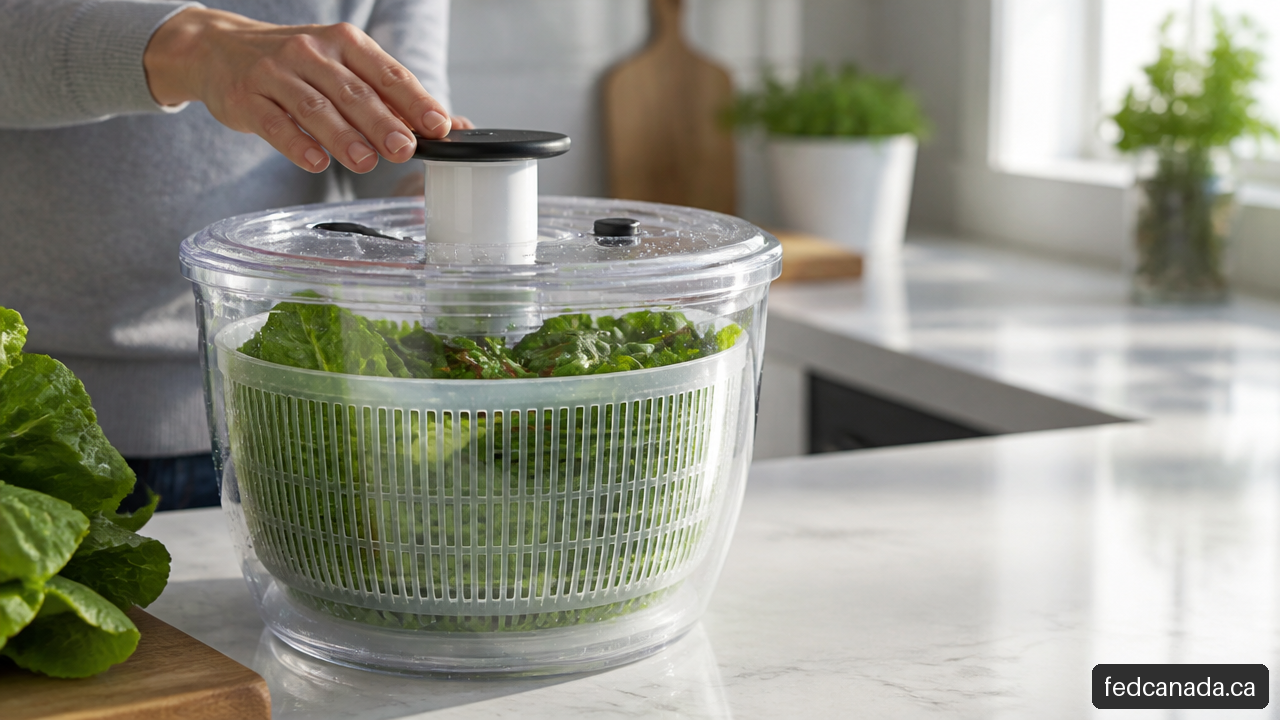
A Salad Spinner is a simple manual tool that removes surface water from washed greens, herbs, and small produce. It can make salads less watery, help dressing cling to leaves, and reduce the need to dry lettuce with paper towels. The real value, though, depends on how often you wash produce, how much refrigerator space you have, and whether you choose a model that is easy to load and clean.
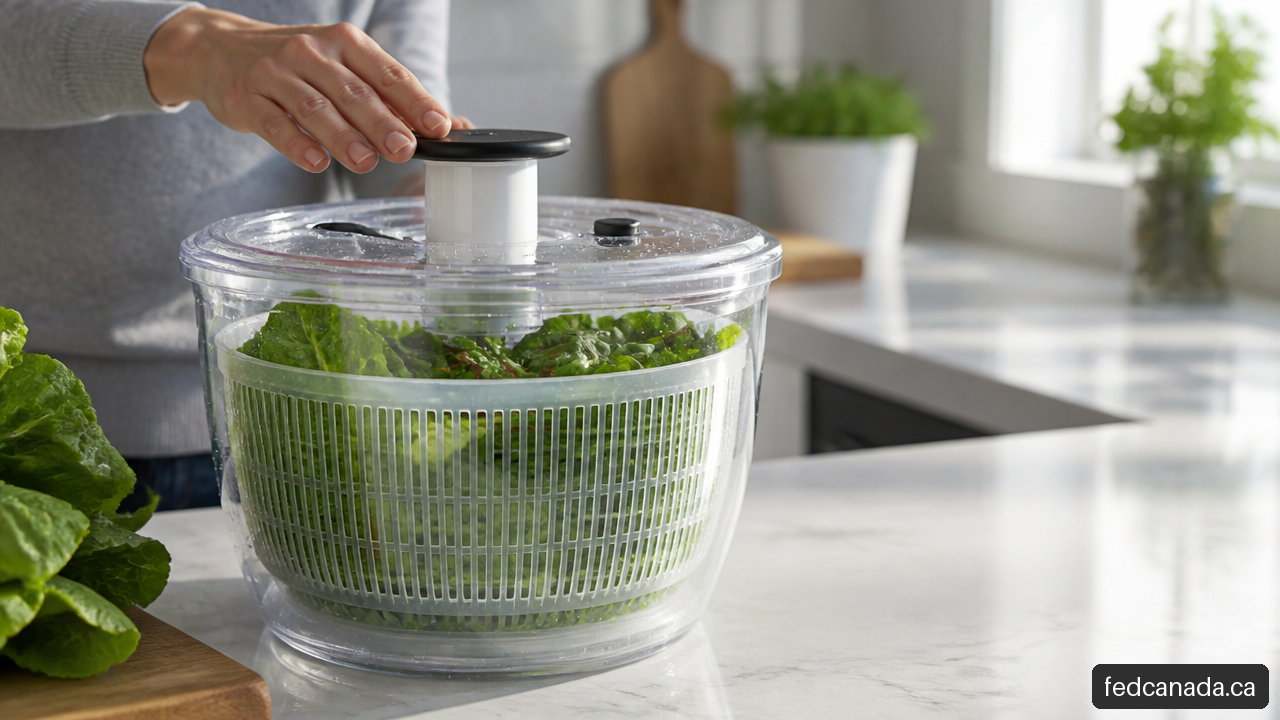
Table of Contents
- How a Salad Spinner Works
- How to Use a Salad Spinner for Better Results
- Choosing the Right Salad Spinner
- Cleaning, Food Safety, and Storage
- Key Takeaways
- Frequently Asked Questions
How a Salad Spinner Works
A salad spinner has three working parts: an outer bowl, a perforated inner basket, and a lid that turns the basket. The washed produce sits in the basket while water is pushed through the perforations and caught by the bowl.
GEFU explains that its salad spinner design uses a bowl, sieve basket, and spinning lid to separate water from washed leaves through centrifugal action. Put simply, when the basket turns, water moves outward more readily than the leaves do. The basket holds the produce in place, while water escapes through its openings.
What happens during spinning
The process is mechanical rather than electric. You create the rotation with a hand crank, pump, or pull cord, and the spinning basket does the rest.
- Water clings to washed leaves after rinsing or soaking.
- The basket accelerates when the lid mechanism is operated.
- Water moves outward toward the basket wall as the produce rotates.
- Water passes through the basket holes into the outer bowl.
- The leaves remain in the basket with less residual surface moisture.
The goal is not perfectly dry produce in every case. A sturdy head of romaine may come out nearly dry after a few controlled spins, while frilly herbs can retain droplets in tight leaves. What matters is removing enough surface water to prevent a pool of diluted dressing at the bottom of a bowl or excess moisture in stored greens.
A spinner dries produce, but does not sanitize it
This distinction matters. A salad spinner removes rinse water and loose surface moisture; it does not reliably sanitize contaminated produce or guarantee the removal of microorganisms. Washing greens properly before spinning remains essential, and drying is a separate step.
> Think of a salad spinner as a drying tool, not a food-safety treatment.
If lettuce is visibly dirty, separate the leaves first and rinse them thoroughly. For greens with sand trapped near the stem, a brief soak in clean water can help loosen grit before the leaves go into the basket. Spinning dirty leaves without washing them first can spread soil around the basket and bowl instead of solving the problem.
Why dry greens change the finished salad
Wet leaves affect more than appearance. Water left on lettuce can thin vinaigrettes, make creamy dressings slide off, and leave delicate greens limp sooner after dressing. Thoroughly drying washed greens before storage can also improve their practical usability, as noted in Wirecutter's salad spinner guidance.
For a quick weeknight salad, the difference may be modest. For a large bowl of greens dressed with a light vinaigrette, it is easier to notice: dry leaves hold a more even coating, while wet leaves tend to shed dressing into the bowl.
How to Use a Salad Spinner for Better Results
A spinner works best when it is treated as part of a wash, drain, dry workflow. Overfilling it or spinning fragile produce too aggressively can leave water behind or damage tender leaves.
Start with clean, separated leaves
We recommend separating leaves before washing whenever possible. Whole lettuce heads can trap dirt and water between layers, while separated leaves rinse and dry more evenly.
- Remove wilted or damaged outer leaves.
- Separate the remaining leaves into manageable pieces.
- Rinse under cool running water or soak briefly in a clean bowl of water.
- Lift greens out of the wash water rather than pouring them through it if sand has settled at the bottom.
- Place the washed produce loosely in the spinner basket.
Loose loading is more effective than compacting. Leaves need room for water to move away from them. If the basket is packed tightly, the outer leaves may dry while the compressed center stays wet.
Treat load size as an operating variable
Basket capacity tells you the maximum volume a spinner can hold. It does not tell you how well it will dry a packed basket. A large capacity is useful, but it is not automatically better if it encourages overloading.
For example, a family size spinner may hold enough lettuce for several servings, but a basket crammed with wet spinach can behave like a single dense mass. The leaves cannot separate, and trapped water remains between them. Splitting that load into two smaller batches often produces drier greens with less forceful spinning.
A practical approach is to fill the basket loosely enough that the lid closes without pressing hard on the produce. If the leaves are pressed against the lid or the basket struggles to turn smoothly, reduce the load.
Spin in short, controlled rounds
There is no universal number of spins that works for every spinner, leaf type, and load size. A crank model, pump model, and pull cord model all deliver rotation differently. Instead of relying on a fixed count, inspect the collected water and the leaves.
- Spin for a short round.
- Stop the basket and pour out the water in the outer bowl.
- Gently lift or redistribute compacted leaves.
- Spin again if droplets remain visible.
- Stop once the greens are mostly dry instead of continuing unnecessarily.
This process is especially useful with dense greens such as spinach, kale, or mixed baby greens. Their folded surfaces can hold water in places that a single quick spin does not reach.
Use a gentler approach for tender produce
Delicate herbs, microgreens, and soft leaves need more care than romaine or iceberg lettuce. High speed, overfilling, or rough handling can bruise them. Wirecutter notes that delicate herbs can be dried with appropriate spinner control, which points to the larger principle: reduce both load size and spinning force for fragile produce.
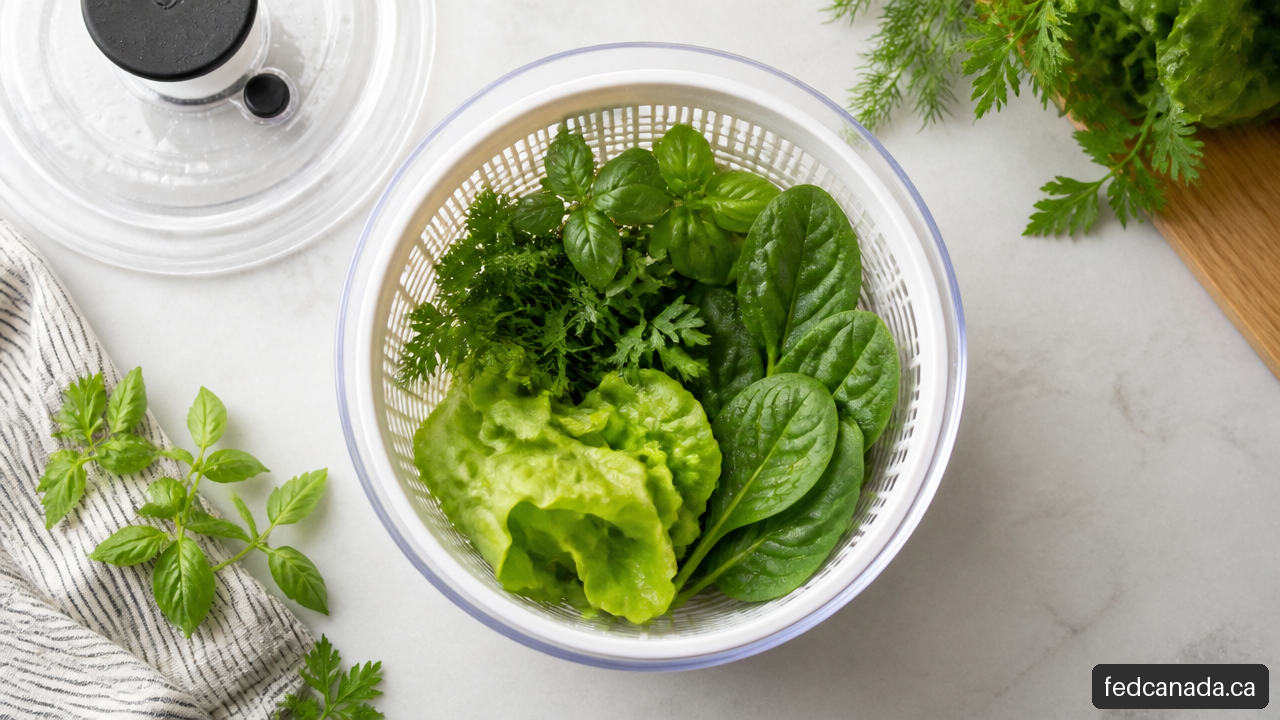
For parsley, cilantro, dill, or basil, use a small loose batch and short spinning intervals. If an herb has very fragile leaves, it may be better to stop after one gentle cycle and let it finish air drying on a clean towel rather than forcing additional spins.
Choosing the Right Salad Spinner
The best salad spinner is not necessarily the largest or fastest one. It is the one that matches your typical workload, counter space, storage habits, and comfort with the operating mechanism.
Compare pump, crank, and pull cord designs
Each mechanism can dry greens effectively, but each creates a different user experience.
| Feature | Pump mechanism | Crank mechanism | Pull cord mechanism |
|---|---|---|---|
| How it operates | Press a top button repeatedly | Turn a side or top handle | Pull a retractable cord |
| Best for | Quick one handed starts and frequent use | Direct speed control | Compact operation and short bursts |
| Main advantage | Often convenient with a brake | Simple, familiar control | Can produce fast rotation with limited movement |
| Watch for | Taller lid profile and more mechanism parts | Handle clearance during storage | Cord wear or tangling over time |
| Good choice when | You want easy repeated use | You prefer to control pace manually | You have limited counter space or prefer pull action |
A push style model can be convenient for frequent salad preparation. For example, Those features matter most if you want the bowl to stay steady on a smooth countertop and want to stop rotation quickly before opening the lid.
Match capacity to your real meal routine
Capacity should reflect the amount of produce you usually wash at one time, not the largest possible meal you might make once a year.
| Household or use case | Practical capacity direction | What to prioritize |
|---|---|---|
| One or two people | Compact bowl | Easy storage and fast cleanup |
| Regular family salads | Medium to large bowl | Loose loading room and stable base |
| Meal prep for several days | Large bowl | Lid cleaning and refrigerator storage planning |
| Herbs and small produce | Compact or medium basket | Gentle control and smaller batches |
A model above 4 quarts can be useful when preparing salad for multiple people, based on Wirecutter's capacity guidance for larger servings. Still, a larger bowl only helps if you leave enough space for leaves to circulate. For a couple making one salad at a time, a very large spinner may take up more cabinet space than it saves in effort.
Look beyond capacity labels
Before choosing a spinner, consider these functional details:
- Non-slip base: Helps the bowl stay in place during use, especially on polished counters.
- Brake: Lets you stop the basket promptly. This is useful when checking whether greens need another cycle and can make operation feel more controlled.
- Basket perforations: Holes should drain water efficiently without letting small produce escape.
- Lid shape: Flat lids may stack more easily, while tall mechanisms can take more cabinet room.
- Removable parts: A simple disassembly process makes cleaning less frustrating.
- Bowl usability: Some bowls can double as serving bowls, but clear plastic can show scratches over time and may not suit every table setting.
The storage question is worth asking early. A salad spinner can replace repeated paper towel use for people who wash greens often, but it is a bulky bowl shaped tool. In a Reddit discussion, users described effective lettuce drying and less dependence on disposable towels, while also acknowledging that some kitchens may not need another large item to store. The community discussion about salad spinner usefulness reflects a realistic tradeoff: convenience rises with frequent use, while occasional users may prefer towel drying.
Cleaning, Food Safety, and Storage
A spinner that is not cleaned and dried properly can create its own frustration. The basket and bowl are usually straightforward; the lid mechanism needs more attention because water can remain in enclosed spaces.
Clean the basket, bowl, and lid separately
After use, empty the water immediately. Leaving damp leaves or standing water in the bowl can cause odors and make cleanup harder.
- Remove leftover produce and discard damaged leaves.
- Separate the basket, bowl, and lid if the design allows it.
- Wash the basket and bowl with warm water and dish soap.
- Rinse the lid carefully, paying attention to seams, buttons, cords, and gears.
- Allow every part to dry fully before reassembling and storing.
Even when a manufacturer describes a spinner as dishwasher safe, the mechanism containing the moving parts may need gentler treatment. Wirecutter specifically advises considering hand washing for the top portion of a lid where the spinning mechanism can retain water. Its cleaning advice for mechanism-containing lids is a useful reminder that dishwasher-safe labeling does not automatically mean every crevice dries completely.
Solve common drying problems
| Problem | Likely cause | Practical fix |
|---|---|---|
| Greens are still wet | Basket is overfilled | Divide the greens into smaller batches |
| Water pools in leaves | Leaves are compacted | Redistribute leaves between spins |
| Spinner wobbles | Counter is wet or base lacks grip | Dry the counter and check the non-slip ring |
| Herbs look bruised | Spin was too forceful | Use a smaller load and shorter cycle |
| Lid smells musty | Moisture remained in the mechanism | Wash, drain, and air dry the lid fully |
Store greens with moisture in mind
A spinner can help prepare greens for short term refrigerator storage, but it cannot reverse spoilage or make old leaves fresh again. Once greens are reasonably dry, transfer them to a clean storage container or produce bag lined as appropriate for the produce type. Avoid sealing leaves while they are visibly wet.
For example, if you wash lettuce for lunches, spin it in two light batches rather than one compressed batch. Then store the dry leaves loosely enough that they are not crushed. This approach may be more useful than trying to achieve absolute dryness in a single long spin.
Key Takeaways
The most useful rule: wash first, spin second
A salad spinner removes water from washed produce. It does not replace washing, and it should not be treated as a sanitizing device. Clean leaves and a clean spinner work together.
Better results come from lighter loads
- Load greens loosely rather than packing the basket.
- Use short spinning rounds and drain the bowl between rounds.
- Reduce speed and batch size for herbs and tender leaves.
- Choose a size based on typical meal volume and available storage space.
- Give extra attention to the lid mechanism after washing.
Frequently Asked Questions
What is a salad spinner?
A salad spinner is a manual kitchen tool with an outer bowl, perforated basket, and rotating lid. It uses spinning motion to remove surface water from washed lettuce, herbs, berries, and other small produce.
Should lettuce be washed before putting it in a salad spinner?
Yes. Wash lettuce before spinning it. The spinner is designed to remove rinse water, not dirt or contaminants. Separate leaves first when possible so water can reach trapped soil near the stems and between leaf layers.
Why are my greens still wet after spinning?
The most common reasons are overfilling, compacted leaves, and water trapped in folded surfaces. Use a smaller batch, loosen the leaves after the first spin, drain the bowl, and run another short cycle. Dense spinach and mixed baby greens often need more than one round.
Can a salad spinner damage lettuce or herbs?
It can if the basket is overloaded or the produce is spun too aggressively. Sturdy lettuce usually tolerates normal spinning well. Tender herbs, microgreens, and fragile leaves should be dried in smaller loads with gentler, shorter cycles.
What is the difference between a pump, crank, and pull cord salad spinner?
A pump model spins when you press a top button, a crank model spins when you turn a handle, and a pull cord model spins when you pull a retractable cord. The drying principle is the same; the main differences are control, storage shape, and ease of operation.
Is a larger salad spinner always better?
No. A larger bowl is useful for family meals and batch prep, but it takes up more storage space and can encourage overloading. A compact or medium size model may be more practical for one or two people who wash smaller portions.
Can I use a salad spinner for berries, herbs, or cherry tomatoes?
Often, yes. Small sturdy produce can be dried in a spinner, but inspect the basket holes first so items cannot slip through. Use gentle spinning for soft berries and tender herbs to reduce bruising or surface damage.
Are salad spinners dishwasher safe?
Some are labeled dishwasher safe, but care varies by model. The bowl and basket are typically simpler to wash, while lids with gears, buttons, or cords may need hand washing and thorough air drying to prevent trapped moisture.
Sources/References
- GEFU — Salad Spinner: https://www.gefu.com/en/salatschleuder
- Wirecutter, The New York Times — The 3 Best Salad Spinners of 2026: https://www.nytimes.com/wirecutter/reviews/best-salad-spinner/
- Reddit — Do you have a salad spinner, and do you like it?: https://www.reddit.com/r/salads/comments/1jj7b62/do_you_have_a_salad_spinner_and_do_you_like_it/
Recent Posts
Leave a Comment
Your email address will not be published. Required fields are marked *