




School Cafeteria Equipment: A Practical Buying Guide
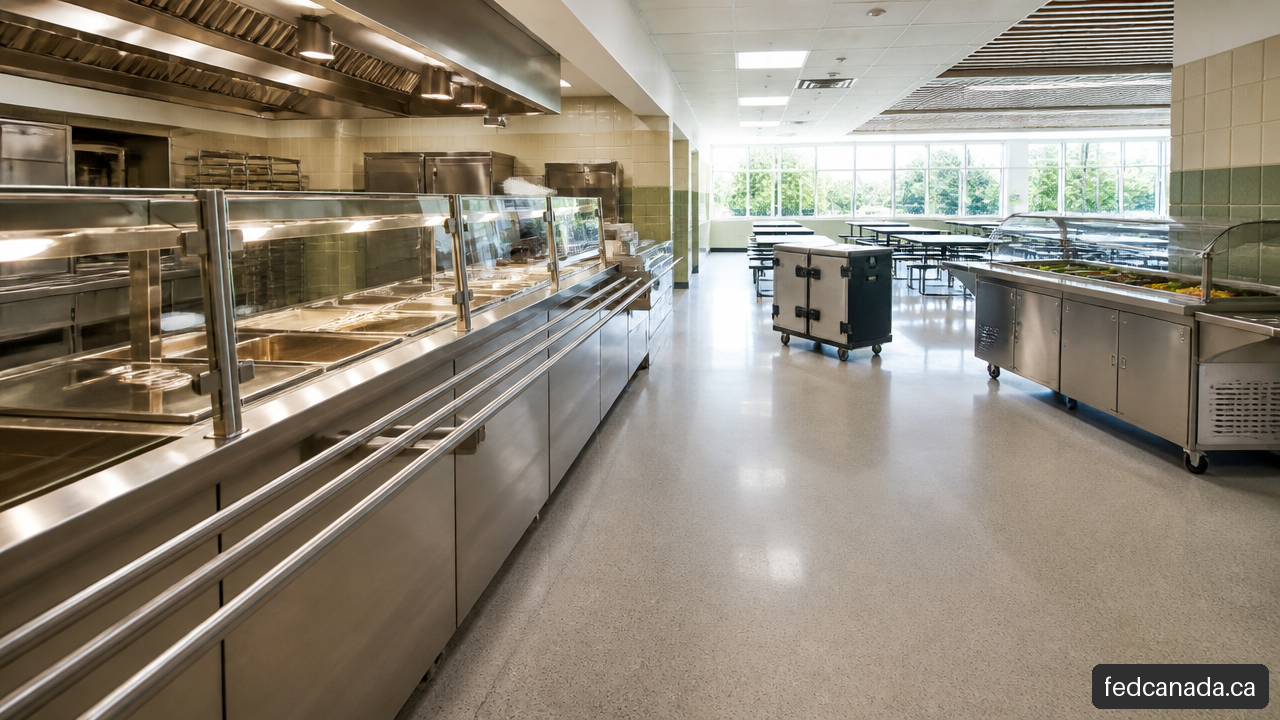
School cafeteria equipment has to do more than cook and serve meals. It must keep food within safe temperatures, move students through limited lunch periods, support cleaning routines, and fit the building’s utility, ventilation, and accessibility constraints. A well-planned equipment package turns a short service window into a repeatable process instead of a daily bottleneck.
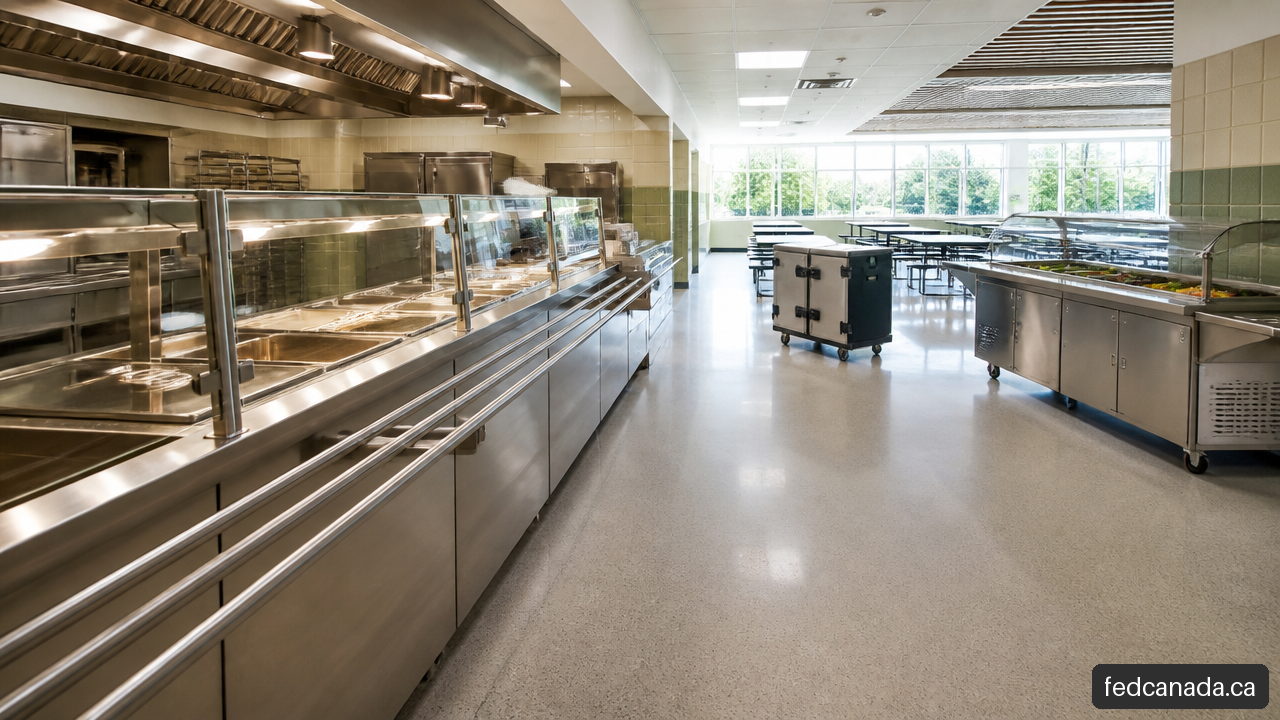
Table of Contents
- Key Takeaways
- Plan Equipment Around Service, Not Product Categories
- Build the Right Mix of Kitchen and Serving Equipment
- Protect Food Safety, Accessibility, and Building Performance
- Evaluate Lifecycle Cost and Service Disruption Risk
- Frequently Asked Questions
- Sources
Key Takeaways
Design for the busiest 20 minutes
The best school cafeteria equipment plan starts with the peak lunch period, not a catalog. Count the students expected in the busiest wave, identify the menu format, and map every handoff from cooking to service to dish return. A line that serves 250 students across multiple lunch periods needs a different layout than one that must serve the same number in a single, compressed window.
Treat temperature control as a workflow
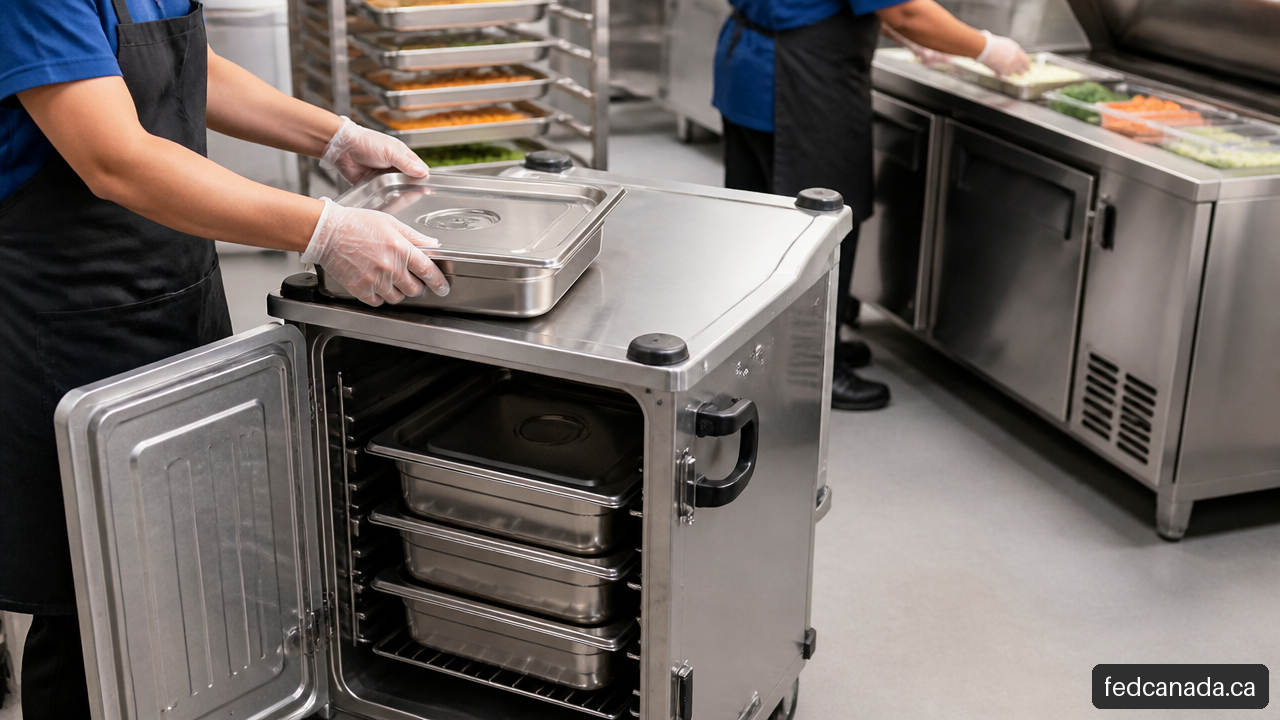
Hot holding, cold holding, transport, staging, and serving are one temperature-control system. If food leaves a combi oven safely but waits uncovered on a cart, the equipment plan has failed at the handoff. We recommend planning where food is checked, covered, moved, held, and replenished before selecting individual units.
Buy flexibility where the menu may change
Mobile serving equipment can be especially useful for smaller schools, breakfast programs, classroom distribution, and multipurpose cafeterias. Fixed lines make sense when meal volume and the service pattern are stable. The right choice depends on traffic flow, storage space, utilities, and who will move the equipment.
Plan Equipment Around Service, Not Product Categories
Start with meal volume, menu, and the service window
A cafeteria equipment list is only useful when it reflects how meals actually move. Before comparing brands or features, define three operating facts:
- Peak student count: How many students arrive during the busiest service period?
- Menu format: Are meals plated, served from pans, assembled as sandwiches, packed for grab-and-go, or delivered to classrooms?
- Production model: Is food prepared on site, finished from transported components, or received ready for service?
These decisions determine capacity. For example, a school serving chili, rice, and vegetables from a traditional line needs enough heated wells, pan staging, serving utensils, and replenishment space to avoid pauses. A school centered on wraps, fruit, milk, and packaged entrées may need more refrigerated display capacity, prep tables, point-of-sale space, and mobile carts than hot wells.
A practical rule is to size the line around the peak rather than average daily participation. Average counts can hide the real problem: 180 students may arrive in 25 minutes, while the rest of the school arrives later. If one serving point handles too many decisions, such as selecting an entrée, side, milk, and utensils at the same station, the queue grows even when the kitchen has adequate cooking capacity.
Separate the prep kitchen from the serving line
The prep kitchen produces, portions, assembles, chills, cooks, and washes. The serving line holds finished food and moves students through selection. Combining both functions in the same narrow space usually creates crossed traffic: staff replenish food while students reach for trays, or clean wares pass beside ready-to-eat meals.
| Area | Primary job | Equipment priorities | Common problem when undersized |
|---|---|---|---|
| Prep kitchen | Produce and assemble food | Prep tables, refrigeration, sinks, ovens, storage | Staff take too many steps and prep backs up |
| Hot production | Cook batch meals | Combi ovens, kettles, tilt skillets, hot holding | Finished food waits without protected staging |
| Serving line | Present and dispense meals | Heated wells, cold pans, tray dispensers, sneeze guards | Student queues and food replenishment collisions |
| Dish and cleanup | Recover trays and wares | Dish machines, sorting tables, soiled-tray carts | Dirty trays accumulate near dining traffic |
For high-volume operations, the equipment categories commonly include cooking, hot holding, refrigeration, refrigerated prep tables, tray handling, and warewashing. This broader view is reflected in RTI’s overview of high-volume cafeteria equipment, which groups equipment around the full service process rather than only the serving counter.
Account for Canadian procurement and renovation constraints
In Canada, school equipment purchases may be managed through formal board or district procurement processes. That means a specification should be clear enough to compare bids fairly while still allowing equivalent equipment where appropriate. Instead of writing a vague request for a “large warmer,” specify the needed pan capacity, electrical requirements, door configuration, temperature-control features, mobility, cleaning access, and warranty expectations.
Renovations need additional caution. A replacement unit may fit the room but exceed available electrical capacity, require a larger hood, block an accessible path, or prevent a door from opening fully. New construction offers more freedom to align utilities and equipment locations, but it also makes early coordination more important. Moving a drain, floor sink, electrical feed, or ventilation connection after walls are finished can be far more expensive than revising an equipment layout on paper.
Build the Right Mix of Kitchen and Serving Equipment
Match hot and cold holding to the menu
Hot holding cabinets, pass-thru warmers, heated serving wells, speed lines, and transport carts are all used in K-12 meal service, as shown in FWE’s school foodservice equipment examples. The important distinction is not simply whether a unit is heated. It is whether the unit supports the next step in the workflow.
A pass-thru warmer may suit a kitchen separated from the serving area because staff can load it from the production side and retrieve pans from the cafeteria side. A mobile heated cabinet may suit a school with changing service locations. Heated wells work best when food is already ready to serve and can be replenished in smaller pans without interrupting the line.
Cold service needs the same attention. Refrigerated prep tables make sense for high-frequency sandwich or salad assembly because ingredients stay close to the work surface. A reach-in refrigerator may be enough for near-line backup stock. Cold wells and refrigerated display cases support self-service only when students can select items without creating congestion or leaving doors open for long periods.
Practical check: Holding equipment maintains food that has already been cooked or chilled correctly. It is not a substitute for safe cooking, rapid cooling, or controlled transport.
Choose mobile or fixed equipment deliberately
Mobile equipment is not automatically a lower-cost substitute for built-in service lines. It requires clear routes, storage locations, stable floors, and staff time to set up, sanitize, move, and secure it. Fixed equipment has its own trade-off: it can make a cafeteria less adaptable if menus, student traffic, or meal programs change.
| Choose mobile equipment when | Choose fixed equipment when |
|---|---|
| Breakfast is delivered to classrooms | The cafeteria uses the same line every day |
| The dining room also serves as a gym or meeting space | High meal volume demands dedicated service points |
| Menus rotate between hot, cold, and packaged formats | Utilities and ventilation are already planned for the line |
| Storage and travel paths can support carts safely | Permanent counters improve queue organization and cleaning |
Mobile carts, racks, caddies, and share carts can support food distribution and staging in K-12 settings. New Age Industrial’s K-12 cart and rack options illustrate the range of transport tools used for pans, trays, supplies, and shared food programs.
For example, a small school using breakfast-in-the-classroom may benefit from insulated or heated carts that leave the kitchen in sequence: milk and cold items, packaged goods, then hot items. A large secondary school with a predictable lunch crowd may gain more from a fixed serving line with separate stations for entrées, sides, beverages, and payment.
Use carts and racks to remove hidden delays
Carts and racks often look secondary compared with ovens and refrigerators, but they control the space between major equipment. Sheet pan racks can stage baked items. Dunnage racks keep dry goods off the floor. Soiled-tray carts keep dish return from spilling into student traffic. Utility carts reduce repeated walking for supplies.
The failure mode is easy to spot: food pans are stacked on counters, staff search for clean trays, or replenishment supplies sit in the aisle. The solution is not always more square footage. Often, it is assigning a specific staging tool and parking location to each recurring task.
Protect Food Safety, Accessibility, and Building Performance
Build HACCP-style control points into the route
A HACCP-style approach identifies points where a food safety hazard is most likely to develop and assigns a control measure. In cafeteria service, the highest-risk moments often occur during transitions rather than cooking itself.
- After cooking: Verify food reaches the required safe endpoint before it enters holding equipment.
- During transfer: Use covered pans, insulated carriers, or heated transport when the kitchen and serving line are separated.
- At the serving line: Check holding temperatures on a defined schedule and replenish in smaller batches when practical.
- After service: Move leftovers promptly into the correct cooling, disposal, or storage process rather than leaving pans on an inactive line.
Local public health rules and provincial or territorial food safety requirements should guide the exact procedures, temperatures, records, and staff training. Equipment supports the program, but it cannot replace monitoring. A cabinet with a digital display may show air temperature, while the food itself can cool faster near an open door or in a shallow pan.
Plan accessible self-service and circulation
Self-service equipment should work for more than the average-height student. Consider counter and reach ranges, knee clearance where needed, clear travel paths, tray handling, queue turns, and whether a student using a mobility device can approach the line without being trapped by other traffic.
Accessibility decisions are particularly important for salad bars, beverage stations, condiment areas, tray dispensers, and payment points. A visually appealing display loses value if students cannot safely reach it or if the line narrows so much that one wheelchair stops the entire flow. Specific requirements can vary by jurisdiction and project type, so accessibility review should happen during layout development rather than after equipment is installed.
Consider energy, ventilation, and indoor conditions early
Energy-efficient commercial kitchen equipment can lower operating costs, but the purchase decision should include the room around the appliance. Cooking equipment can add heat and moisture to the kitchen, affect ventilation demand, and increase cooling loads elsewhere in the building. A high-output appliance may offer production capacity that a school does not actually need, while a smaller or more versatile unit could better match the menu.
Ask facilities staff to review electrical service, gas availability where applicable, hood requirements, make-up air, drainage, and heat rejection from refrigeration before a purchase order is issued. This matters most in renovation projects. A new combi oven or dish machine can be an operational improvement, but only if the building can support its utility and ventilation requirements.
Evaluate Lifecycle Cost and Service Disruption Risk
Compare total cost of ownership, not just price
Upfront price is visible. The less visible costs appear throughout the equipment’s useful life: energy use, water use, cleaning time, preventive maintenance, repair visits, replacement parts, downtime, and eventual replacement.
| Cost factor | Questions to ask before buying | Why it changes the real cost |
|---|---|---|
| Energy and water | What utilities does the equipment require during peak use? | Operating costs repeat every school day |
| Cleaning labor | Can staff reach surfaces, drains, gaskets, and under-counter areas? | Difficult cleaning consumes labor and can affect sanitation |
| Maintenance | Are common wear parts and service support reasonably available? | Delayed repairs can disrupt meal service |
| Capacity | Does it handle the peak service period without oversized idle capacity? | Too little capacity causes queues; too much wastes space and utilities |
| Replacement planning | Can the unit be removed or replaced without major demolition? | Installation constraints can magnify future costs |
We recommend evaluating a few equipment choices against the same simple worksheet: purchase and installation cost, estimated utility demand, daily cleaning steps, planned maintenance, expected replacement difficulty, and the operational consequence if the unit fails on lunch day.
Prepare for the failures that stop lunch service
Some failures are inconvenient. Others stop service immediately. Refrigeration temperature drift threatens cold food safety. A dish machine outage can leave a school short on trays or utensils. A failed hot well can create a service bottleneck even if food is still safe in the kitchen. A cart with damaged casters can delay a whole route.
The response should be planned before the failure occurs:
- Keep calibrated thermometers and written temperature-check procedures available.
- Identify backup cold storage, insulated carriers, or alternate serving locations.
- Use smaller, separate holding units where one large failure would halt every menu item.
- Schedule preventive cleaning of refrigeration coils, door gaskets, drains, casters, and dish machine components according to manufacturer instructions.
- Keep service contacts, equipment model information, and warranty records accessible to managers.
Equipment planning for schools should also address safe food handling, layout, and meal-pattern needs. Vollrath’s K-12 planning resources emphasize these connected decisions, which is useful because no single appliance solves a workflow problem alone.
Frequently Asked Questions
What equipment does a school cafeteria need?
Most schools need a combination of production equipment, refrigeration, food prep surfaces, handwashing and warewashing equipment, storage, hot and cold holding, serving-line equipment, and carts or racks. The exact mix depends on whether meals are cooked on site, assembled, reheated, transported, or served as grab-and-go items.
What is the difference between a cafeteria serving line and a prep kitchen?
The prep kitchen is where staff prepare, cook, portion, and assemble food. The serving line is where students select and receive finished meals. Separating these functions reduces traffic conflicts and gives staff space to replenish food without blocking students.
Which equipment keeps hot food safe in a school cafeteria?
Heated holding cabinets, pass-thru warmers, heated wells, steam tables, and insulated or heated transport carts can maintain hot food during service. Select the equipment based on transfer distance, menu type, pan volume, and how often food must be replenished.
Which equipment keeps cold food safe in a school cafeteria?
Walk-in coolers, reach-in refrigerators, refrigerated prep tables, cold wells, and refrigerated display units support cold food service. Cold items should be staged close enough to the line that staff do not leave doors open or make repeated long trips during peak service.
How do you size cafeteria equipment for student headcount?
Size equipment for the busiest lunch wave, not total enrollment alone. Estimate students per minute, the number of menu choices at each point, replenishment intervals, and the time available to reset between periods. A small line with multiple independent stations can outperform one long line if it reduces decision congestion.
Should a school buy mobile or fixed serving equipment?
Choose mobile equipment when service locations, menus, or room uses change frequently and staff can move and store units safely. Choose fixed equipment when volume is high, service is predictable, and permanent utilities support a stable line. Some schools benefit from a hybrid approach: a fixed core line plus mobile carts for breakfast, satellite service, or overflow.
What equipment is best for breakfast and grab-and-go meals?
Breakfast and grab-and-go programs often benefit from mobile carts, cold display equipment, refrigerated storage near assembly, packaging work surfaces, and compact holding equipment for hot items. The priority is fast, safe distribution with minimal setup, especially when meals move beyond the cafeteria.
Sources
Equipment and K-12 planning references
- FWE — Schools: https://www.fwe.com/applications/schools
- New Age Industrial — K-12 School Cafeteria Carts, Racks & Caddies: https://www.newageindustrial.com/industry/foodservice/k-12-schools/
- RTI — Cafeteria Equipment List: Essential Tools for High-Volume Service: https://www.rti-inc.com/blog/cafeteria-equipment-list/
- Vollrath — K-12: https://www.vollrathfoodservice.com/food-service-industries/school-cafeteria-equipment
Recent Posts

Leave a Comment
Your email address will not be published. Required fields are marked *