





Traulsen Refrigeration: Settings, Troubleshooting and Buying Guide
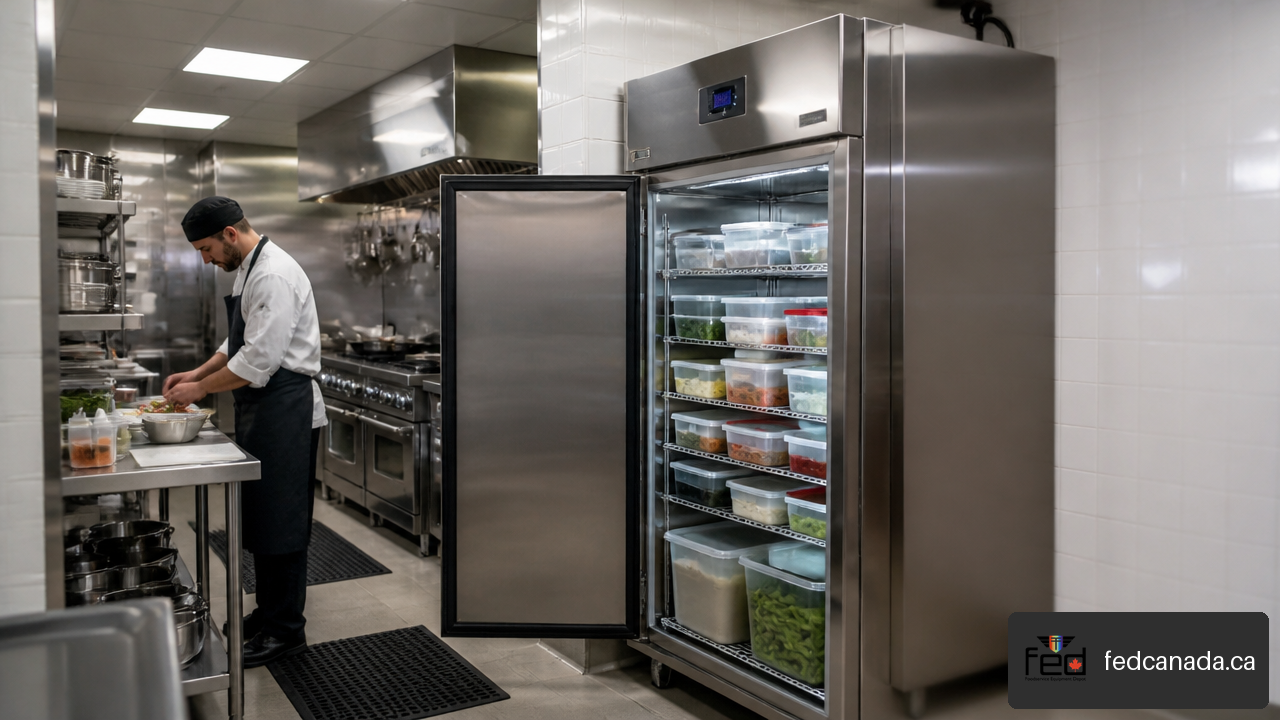
Traulsen Refrigeration: Settings, Troubleshooting and Buying Guide starts with one practical rule: identify the exact model and controller before changing any temperature, defrost, or service parameter. A reach in refrigerator that is warm, noisy, frosted, or showing an alarm may have a simple airflow issue, but the same symptom can also point to a sensor, fan, control, or sealed system fault.
We recommend treating the cabinet display as one clue, not the final answer. Verify the actual product zone temperature, inspect airflow, and work from low risk checks toward qualified service work. That approach protects food, reduces unnecessary parts replacement, and avoids changing settings that were correct for a different Traulsen controller.
Table of Contents
- Traulsen settings and temperature verification
- Troubleshooting Traulsen refrigeration problems
- Maintenance and service boundaries
- Traulsen buying guide for commercial kitchens
- Key Takeaways
- Frequently asked questions
Traulsen Settings and Temperature Verification
Start with the model and controller
Traulsen makes more than one cabinet style and uses different electronic controls across product generations. This matters because controller menus, access levels, sensor logic, alarm behaviour, and defrost functions are not universal.
Before touching settings, record the following from the data plate and controller:
Full model number
Serial number
Cabinet type: refrigerator, freezer, undercounter, reach in, roll in, or specialty unit
Controller brand or display type
Current displayed temperature and any alarm code
Whether the issue affects the whole cabinet or only one area
The TU Series service documentation, for example, covers specific models including TU044HT, TU072HT, TU100HT, TU044LT, and TU072LT. Its TU Series service manual guidance calls for checking power, the switch, condenser cleanliness, controller values, and defrost settings in an ordered preliminary process. It also directs users to separate controller documentation when an Intela Traul microprocessor is installed.
That distinction is more than paperwork. A setting sequence that works on one control may be inaccessible, inappropriate, or damaging on another. If you cannot confirm the controller family, avoid factory resets and advanced parameter changes.
Set the cabinet temperature carefully
For food safety, the correct temperature is determined by the food being stored, local health requirements, and the equipment’s intended application. In many commercial kitchens, refrigerated food storage is commonly maintained at or below 4°C or 40°F, while frozen food storage is generally held at or below minus 18°C or 0°F. Your operational target may be slightly different to allow for product loading, door openings, and recovery time.
Use this sequence for ordinary setpoint adjustment:
Confirm the controller is in normal operating mode, not an alarm, defrost, or programming screen.
Locate the setpoint function using the manual that matches your controller.
Change only the temperature setpoint first. Do not change differential, defrost, calibration, compressor delay, or alarm parameters unless the model specific documentation directs you to do so.
Allow the cabinet to stabilize with doors closed and normal airflow.
Verify the actual cabinet temperature independently before making another adjustment.
A refrigerator setpoint is not a promise that every shelf is at that exact temperature every minute. Product load, frequent door openings, blocked air channels, warm pans, and a unit installed beside heat producing equipment can all change recovery performance.
Verify the display with an independent probe
A separate temperature probe is one of the most useful diagnostic tools an operator can own. The display reports what its cabinet sensor sees; it does not necessarily represent the warmest food package in the cabinet.
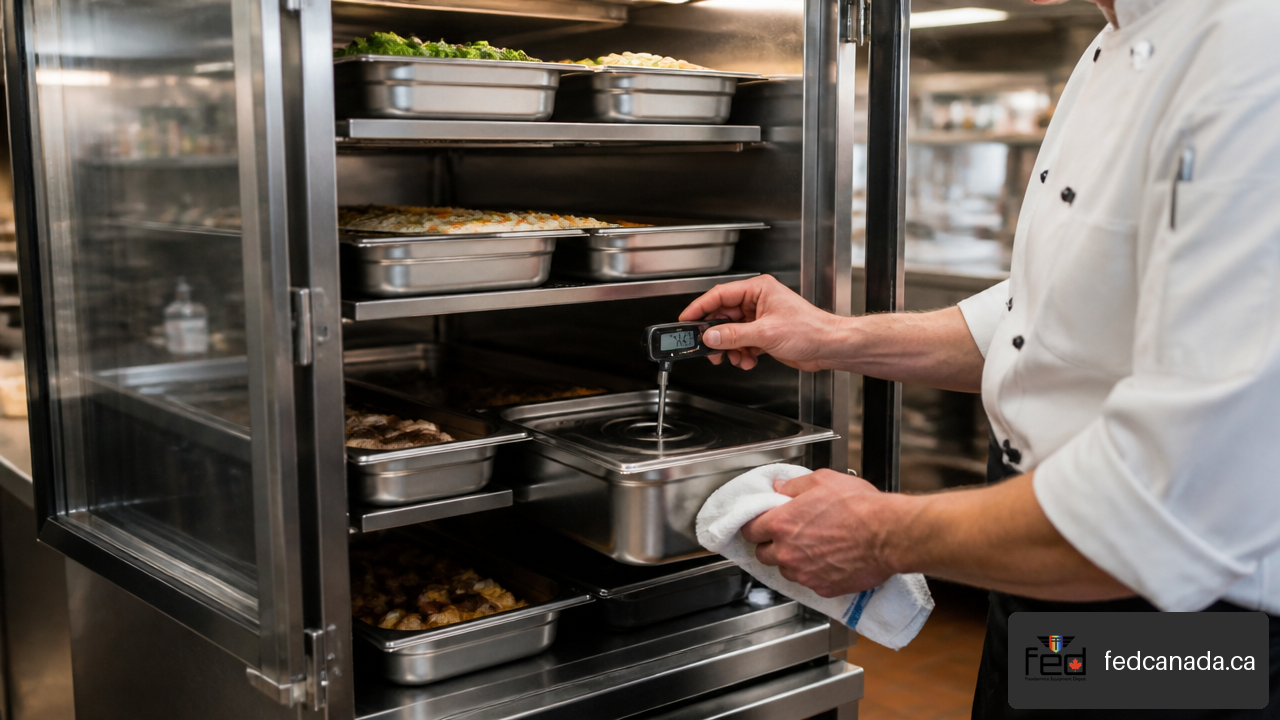
For a meaningful reading, place a calibrated probe or thermometer in a container of product simulant, such as water for refrigerated storage, near the middle of the cabinet. Keep it away from direct evaporator discharge, walls, door openings, and the floor. Leave it long enough to stabilize, then compare it with the display.
A display reading and an independent thermometer reading that differ slightly may be normal. A persistent, material gap deserves investigation before you assume the controller has failed.
A practitioner discussion about a Traulsen reach in freezer specifically recommends checking actual cabinet temperature and both cabinet and evaporator sensors before replacing controls. That is sensible diagnostic order: first establish whether the cabinet is actually warm, then determine whether the control system is being given accurate information.
Troubleshooting Traulsen Refrigeration Problems
Use a symptom to component sequence
When a Traulsen refrigerator is running but not cold enough, avoid jumping directly to “low refrigerant.” Cooling depends on heat leaving the cabinet at the evaporator and being rejected at the condenser. A blocked coil, failed fan, iced evaporator, open door, failed sensor, or controller issue can all interrupt that process.
| Symptom | First checks | Likely system area | Escalate when |
|---|---|---|---|
| Cabinet is warm and compressor runs | Actual temperature, door seal, condenser airflow | Airflow, loading, condenser | Coil is clean and airflow is normal but temperature remains high |
| Cabinet is warm with little airflow inside | Evaporator fan, frost pattern, blocked vents | Evaporator fan or defrost | Fan is not operating or evaporator is heavily iced |
| Compressor will not start | Plug, breaker, switch, display, alarm state | Power, controller, relay | Electrical diagnosis or component replacement is needed |
| Cabinet is too cold | Independent probe, setpoint, sensor position | Control setting or sensor | Temperature remains low after verified settings |
| Freezer has heavy frost | Door gasket, door closing, evaporator condition | Air infiltration or defrost | Ice returns quickly after a proper defrost |
We recommend beginning with what can be seen and measured without dismantling equipment: actual cabinet temperature, controller display, door closure, airflow, condenser condition, and obvious frost. These checks have high diagnostic value and low risk.
When the cabinet is warm but equipment is running
First, check whether air can move across both sides of the refrigeration system.
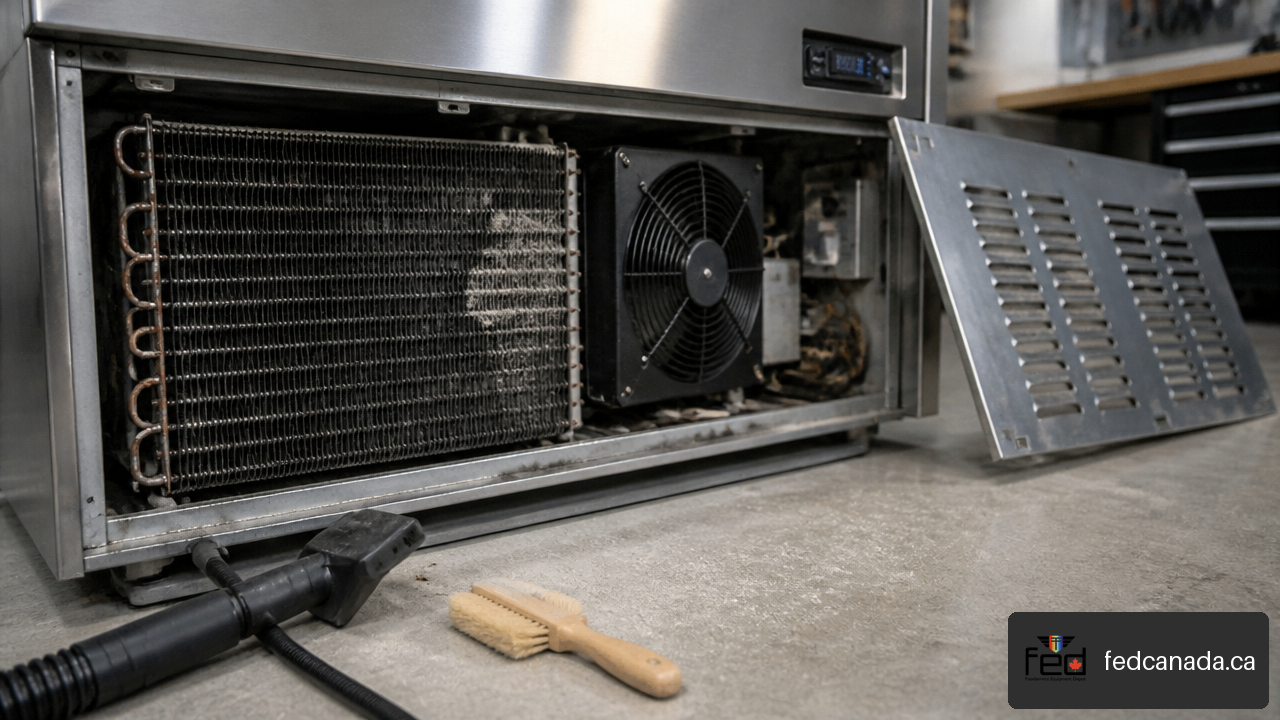
At the condenser side, inspect for grease, dust, paper, or stored items restricting ventilation. A dirty condenser cannot reject heat efficiently, so head pressure rises and cooling capacity falls. The compressor may run longer, cabinet recovery slows, and protective overloads may eventually occur.
At the evaporator side, check for internal airflow. If the evaporator fan is not moving air, the cabinet may feel uneven: one area becomes very cold while another becomes warm. Frost on the evaporator can create the same result because ice blocks the paths that cold air needs to travel.
A community troubleshooting discussion warns that a failed condenser fan can contribute to compressor overload and that broader diagnosis should wait until fan operation is restored. The condenser fan troubleshooting scenario is a useful reminder: fix the missing airflow first, then reassess cooling performance. Otherwise, a technician may be evaluating a compressor that is shutting down to protect itself from an abnormal condition.
Freezer icing and uneven temperatures
Heavy frost is not simply a cosmetic problem. Ice acts as insulation on the evaporator coil and can block fan airflow. The refrigeration system may still run, yet the cabinet no longer transfers enough heat from the stored product to the coil.
Look for these clues:
Frost concentrated around the door opening may indicate warm, humid air entering through a damaged gasket or a door that is not closing fully.
Frost covering the evaporator area can point toward a defrost, sensor, heater, drain, or fan issue.
A warmer lower section can suggest poor air circulation, product blocking return paths, or a fan problem.
A cabinet that cools well after manual defrost but becomes warm again shortly afterward may have an unresolved defrost or air infiltration fault.
Gaskets are the easiest prevention step. Wipe door gaskets regularly, look for tears, gaps or hardened sections, and confirm the door closes fully with the seal sitting flush all the way around. A door that is propped, overloaded against, or not latching lets in humid air that turns into frost.
Do not chip ice from an evaporator with sharp tools. Coil damage can turn a manageable airflow problem into a refrigerant repair. Move food to safe backup storage if needed, then follow the manufacturer’s approved defrost instructions or arrange service.
Alarms, sensors, and fan faults
An alarm should be documented before it is cleared. Take a photo of the code, record the displayed temperature, and note whether the cabinet was recently loaded, left open, moved, or cleaned. Context helps separate a temporary high temperature alarm from an electrical or sensor issue.
Cabinet and evaporator sensors do different jobs. The cabinet sensor influences temperature control and display accuracy. The evaporator sensor may influence fan operation, defrost termination, and protection logic. A faulty sensor can therefore mimic a bad controller or a refrigeration problem.
Fan diagnosis often requires electrical measurement, which is technician work. In a freezer discussion, practitioners note that fan motor voltage should be checked from line to neutral when diagnosing operation, rather than relying only on a line to ground reading. That fan relay diagnostic detail matters because an apparently energized circuit may still have a neutral or wiring fault.
Maintenance and Service Boundaries
Preventive maintenance that operators can handle
A short maintenance routine prevents many avoidable temperature complaints. Frequency depends on grease exposure, ambient dust, and how heavily the kitchen operates, but a busy kitchen usually needs more attention than a low volume prep area.
| Task | Why it matters | Operator safe? |
|---|---|---|
| Wipe door gaskets and inspect for tears | Limits warm air infiltration and frost | Yes |
| Keep interior vents clear of food pans and boxes | Preserves evaporator airflow | Yes |
| Clean accessible condenser surfaces using approved methods | Supports heat rejection and recovery | Yes, with power isolated and instructions followed |
| Check cabinet temperature with an independent thermometer | Confirms food storage conditions | Yes |
| Inspect drain areas for visible blockage | Helps prevent water and ice buildup | Usually, if accessible |
| Test voltage, replace relays, or work on wiring | Involves electrical hazards and diagnostic skill | No |
For condenser cleaning, isolate power as directed by the equipment documentation. Use a soft brush or vacuum where appropriate, and avoid bending fins or forcing debris deeper into the coil. If the coil is greasy, cleaning may require methods suited to commercial refrigeration equipment rather than a quick surface wipe.
Know when to stop and call for service
We recommend qualified refrigeration service when the diagnosis moves beyond inspection, cleaning, and approved user settings. That includes:
Electrical testing inside panels
Replacement of fan motors, relays, sensors, heaters, or controls
Controller programming beyond the documented operator menu
Refrigerant leak testing, evacuation, vacuuming, and charging
Compressor replacement or overload diagnosis
Repeated defrost failures or heavy evaporator icing
Fair warning: a factory reset is not a universal cure. It may restore incorrect parameters on a supported controller, but it can also erase field settings that were intentionally configured for the cabinet. Record existing values and use the correct model specific manual before proceeding.
Protect food while the fault is being diagnosed
Equipment troubleshooting and food safety run in parallel. If product temperature is outside your safe operating range, move food to another verified refrigerator or freezer. Do not rely on a display that is under question, and do not wait for a cabinet to “catch up” if it has been warm for an extended period.
A useful practical record includes the time of the alarm, independent temperature readings, door activity, maintenance performed, and photos of frost or error codes. It gives a service technician a clearer starting point and can shorten downtime.
Traulsen Buying Guide for Commercial Kitchens
Choose cabinet style before comparing features
The right Traulsen unit depends on workflow more than brand preference alone. Start with where staff will stand, what food will be stored, and how often doors will open.
| Cabinet type | Best fit | Main advantage | Watch for |
|---|---|---|---|
| Reach in refrigerator or freezer | General storage, prep kitchens, high volume operations | High vertical capacity and organized shelving | Door swing, aisle clearance, frequent access |
| Undercounter unit | Line stations, bars, compact prep areas | Keeps ingredients close to the work surface | Lower capacity and ventilation clearance |
| Roll in or roll through cabinet | Bakeries, institutions, tray or rack workflows | Handles rack based production efficiently | Space, delivery access, and larger utility requirements |
| Specialty or remote application | Site specific layouts and production needs | Can match a specialized workflow | More complex installation and service planning |
For example, a busy sandwich line may benefit more from an undercounter refrigerator close to prep than from a larger reach in across the kitchen. A bakery moving sheet pan racks may need a roll in configuration even if a reach in has a lower purchase price.
Compare the factors that affect daily ownership
Published model wide comparisons for current Traulsen units are not always standardized across capacity, energy use, warranty, and lifecycle cost. We would therefore compare the exact specification sheets and dealer documentation for the models under consideration rather than assuming one product family is always less expensive to operate.
Focus on these decision points:
Capacity and shelf layout: Measure usable interior space, not just exterior width. Consider pan sizes, bakery racks, beverage cases, and the height of product containers.
Door configuration: Solid doors generally prioritize insulated storage; glass doors can improve visibility in appropriate applications. Consider whether visibility reduces door openings enough to justify the choice.
Temperature class: Buy a freezer for frozen storage and a refrigerator for refrigerated storage. Do not expect one cabinet to reliably serve both roles without a model specifically designed for it.
Controller and serviceability: Ask which controller is installed, whether manuals are readily available, and whether local service providers can obtain common parts.
Ventilation and location: Verify clearance needs, room temperature, heat sources, floor condition, doorway dimensions, and electrical requirements before ordering.
Condition and budget: New equipment may suit long term buildouts, while used, open box, scratch and dent, or clearance equipment can be practical when budget or replacement urgency is the main constraint. At Foodservice Equipment Depot in Calgary we carry new, used and clearance commercial refrigeration, and you can browse our Traulsen listings.
When Traulsen is the right fit
Traulsen refrigeration can be a strong choice when you need commercial grade construction, a configuration suited to demanding foodservice storage, and supportable controls and parts. It is particularly worth considering when a kitchen needs organized high capacity cold storage and the operator can maintain clear airflow around the cabinet.
Avoid buying solely on exterior dimensions or the lowest initial price. A cabinet that fits physically but cannot accommodate your sheet pans, food bins, opening pattern, or service access creates daily friction. The better purchase is the one that matches product volume, kitchen workflow, utility conditions, and realistic maintenance capacity.
Questions about a Traulsen unit, or looking for a specific model? Contact Foodservice Equipment Depot or call us at (403) 923-2270.
Key Takeaways
Use the lowest risk diagnostic path first
Identify the model and controller before changing settings or attempting a reset.
Verify actual cabinet temperature with an independent probe before replacing sensors or controls.
Restore condenser and evaporator airflow before drawing conclusions about compressor or refrigerant problems.
Treat frost as an airflow and defrost symptom, not merely an ice removal task.
Keep operator work limited to inspection, cleaning, approved settings, and temperature verification.
Buy for workflow, not just capacity
The best Traulsen refrigerator or freezer is the one that holds the right product, supports the way staff work, fits the installation space, and can be serviced without major disruption. If two units have similar capacity, choose based on door access, shelf layout, ventilation requirements, controller support, and available service options.
Frequently Asked Questions
How do I set the temperature on a Traulsen refrigerator?
Confirm the exact model and controller first, then use the matching operator documentation to adjust only the normal temperature setpoint. Let the unit stabilize with doors closed and verify the cabinet with an independent thermometer. Avoid changing advanced controller parameters unless model specific instructions call for it.
What temperature should a Traulsen refrigerator or freezer maintain?
Set the cabinet for the food category and applicable local food safety requirements. Refrigerated storage is commonly operated at or below 4°C or 40°F, while frozen storage is commonly maintained at or below minus 18°C or 0°F. Check actual product zone temperature, not only the controller display.
Why is my Traulsen refrigerator running but not getting cold?
Start with condenser cleanliness, condenser fan operation, door seals, blocked vents, product loading, evaporator fan operation, and frost. If airflow is normal and the cabinet remains warm, a qualified technician should evaluate controls, sensors, electrical components, and the refrigeration system.
Why is my Traulsen freezer icing up?
Common causes include humid air entering through a poor door seal, a door left open, blocked airflow, or a defrost related fault. Do not use sharp tools to remove ice from the evaporator. If frost returns quickly after approved defrosting, arrange service.
How do I know if the display temperature is accurate?
Place an independent calibrated probe in a stable location near the centre of the cabinet, away from direct airflow and door openings. Compare it with the display after stabilization. A persistent difference may indicate sensor position, sensor accuracy, airflow, or controller issues.
What should I do if the compressor will not start?
Check the plug, circuit breaker or fuse, power switch, controller display, and alarm state. If those basics are normal, stop before opening electrical panels. Compressor starting circuits, relays, overloads, and control outputs require qualified diagnosis.
Can I change defrost settings on a Traulsen freezer?
Only if you have documentation for the exact model and controller and a clear reason to change them. Incorrect defrost timing can cause ice buildup, unnecessary warming, or poor energy performance. In most cases, repeated icing should be diagnosed rather than treated by adjusting parameters blindly.
Recent Posts


Leave a Comment
Your email address will not be published. Required fields are marked *