




Types of Wine: A Clear Guide to Styles, Labels, and Pairing
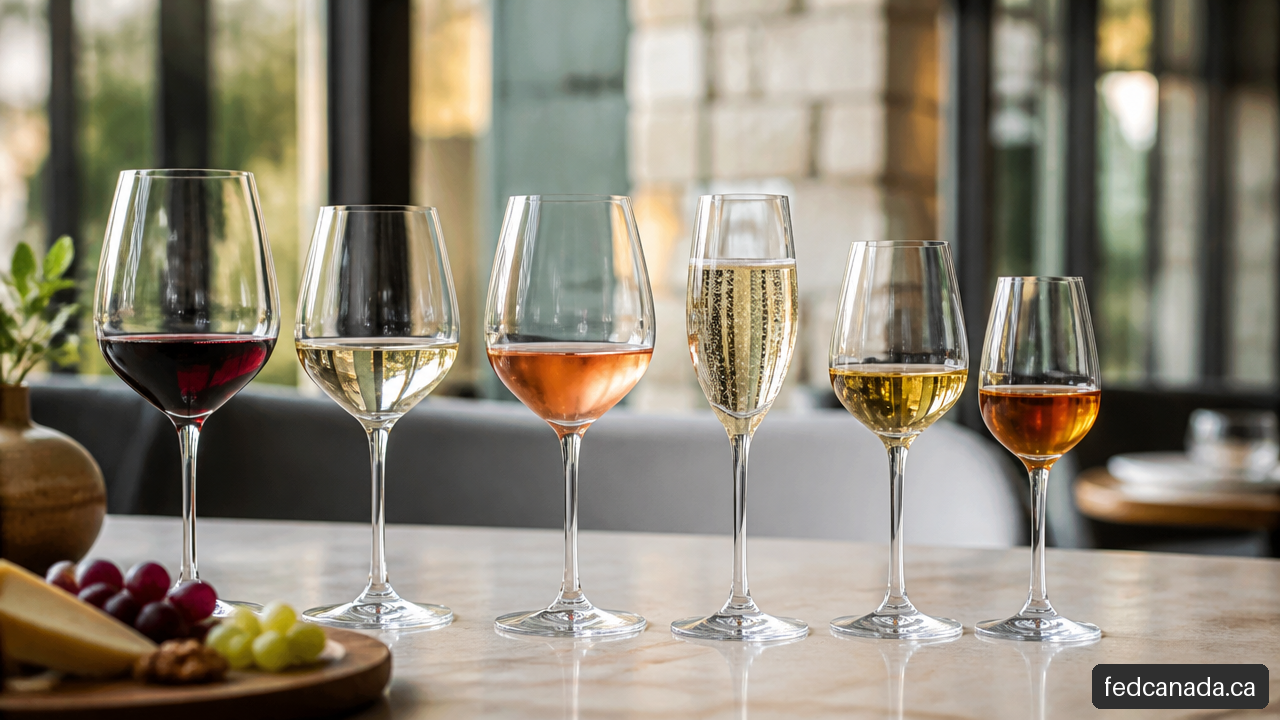
Wine can seem simple until one bottle is described as a dry sparkling rosé, another as a late-harvest Riesling, and a third as a fortified dessert wine. The key to understanding Types of Wine is realizing that these descriptions are not competing categories. They are different ways of describing the same bottle: its colour, carbonation, sweetness, production method, alcohol level, grape variety, and place of origin.
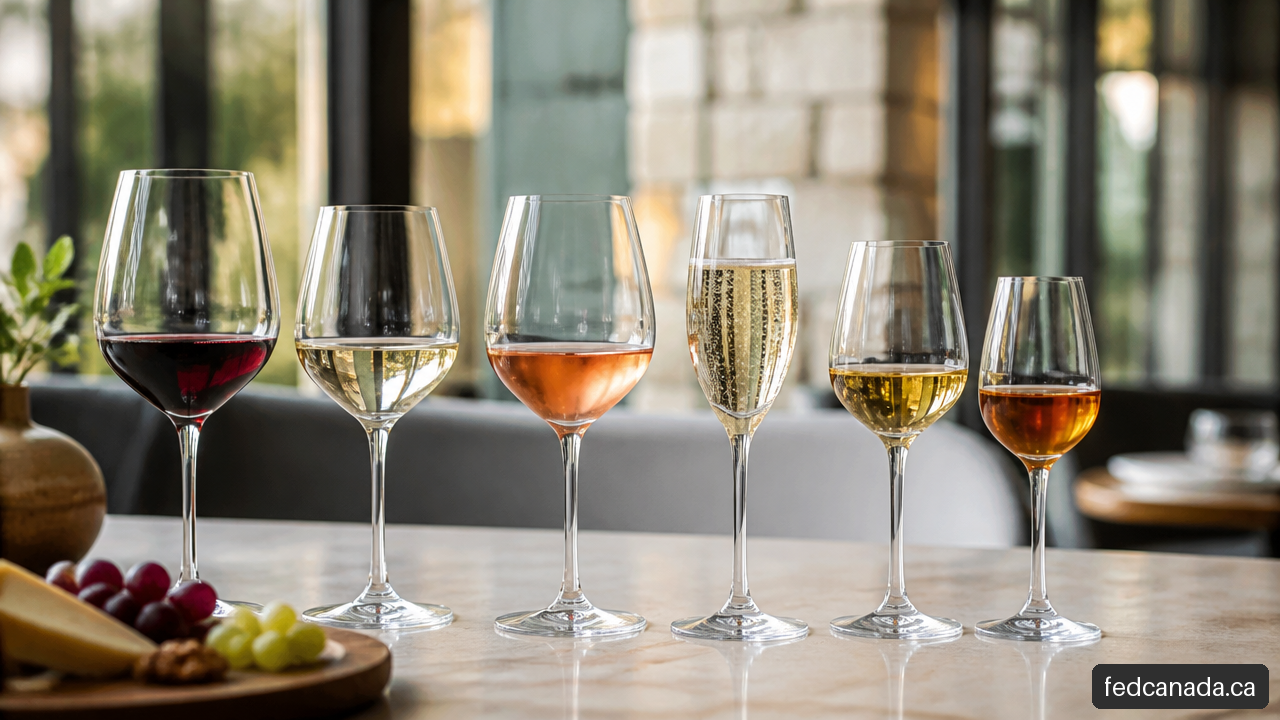
Table of Contents
- Key Takeaways
- How Wine Types Actually Fit Together
- The Main Wine Styles and What Creates Them
- How to Choose Wine for Food, Preferences, and Canadian Labels
- Frequently Asked Questions
- Sources
Key Takeaways
The simplest way to classify wine
Wine is commonly sorted by colour, bubbles, sweetness, and alcohol level. Red, white, and rosé describe colour. Still and sparkling describe carbonation. Dry, off-dry, and sweet describe residual sugar. Fortified describes wine with grape spirit added.
One bottle can belong to several types
A wine does not have to fit into only one category. A bottle can be a white wine, sparkling wine, dry wine, Chardonnay, and Ontario VQA wine all at once. Think of wine labels like a restaurant menu description: each word adds a useful detail rather than replacing the others.
Structure matters more than colour alone
When choosing a wine, focus on the elements that affect taste and food pairing:
- Acidity creates freshness and lift.
- Tannins create grip and a drying sensation, especially in many red wines.
- Body describes weight and richness in the mouth.
- Residual sugar affects perceived sweetness.
- Alcohol adds warmth and can make a wine feel fuller.
How Wine Types Actually Fit Together
Wine categories overlap instead of competing
The familiar list of red, white, rosé, sparkling, and dessert wines is a useful starting point, but it can cause confusion when treated as a fixed list. In reality, these wine types describe different characteristics.
| Classification lens | What it tells you | Examples |
|---|---|---|
| Colour | How the wine looks and usually how it was made | Red, white, rosé, orange or skin-fermented white |
| Carbonation | Whether the wine has bubbles | Still, sparkling |
| Sweetness | How much sugar remains after fermentation | Dry, off-dry, sweet |
| Alcohol treatment | Whether grape spirit was added | Unfortified, fortified |
| Production method | What happened to the grapes or wine during production | Traditional Method, tank method, appassimento, late harvest |
| Grape and origin | Which grapes were used and where they were grown | Cabernet Sauvignon, Chardonnay, Niagara Peninsula, Okanagan Valley |
For example, a bottle labelled sparkling rosé is both sparkling and pink in colour. A bottle of Icewine is usually sweet, but it may also be identified by its grape variety, vintage, and growing region. A white wine made from dark grapes can be called Blanc de Noirs, which literally means “white from black.”
This layered approach makes labels less intimidating. Instead of asking, “What type of wine is this?” ask a sequence of smaller questions: Is it still or sparkling? Dry or sweet? Light-bodied or full-bodied? What grape and region does it name?
Colour comes from grape skins, not just grape colour
Red wine is generally made from dark-skinned grapes fermented with their skins. The skins contribute pigment, flavour compounds, and tannins. Cabernet Sauvignon, Merlot, Syrah, and Pinot Noir are familiar red varietals, but they can produce very different styles depending on climate, ripeness, oak use, and winemaking choices.
White wine is usually fermented without skins, which helps explain its lighter colour and generally lower tannin. Chardonnay, Sauvignon Blanc, Riesling, Pinot Grigio, and Chenin Blanc are common examples. Still, grape colour is not a perfect shortcut. White wine can be made from dark grapes when the juice is separated from skins quickly enough.
Rosé is commonly made from red grapes with brief skin contact. That limited contact gives the wine its pink hue while usually keeping tannins gentler than in red wine. Rosé is not normally made by mixing finished red and white wine, although blending can be used in limited sparkling-wine contexts.
A less familiar style is skin-fermented white wine, often called orange wine. Here, white grapes ferment with their skins, adding colour, texture, tannin, and savoury complexity. It can be an interesting bridge for someone who enjoys white-wine acidity but wants more structure.
Still, sparkling, and fortified are separate decisions
Still wine has no noticeable carbonation. Most red, white, and rosé wine served with meals is still wine.
Sparkling wine contains carbon dioxide, but the source of those bubbles matters. In naturally produced sparkling wine, carbon dioxide develops through fermentation. Bottle-fermented wines undergo secondary fermentation in the bottle, while tank-fermented wines develop bubbles in a pressurized tank. The latter approach is often associated with fruit-forward, fresh styles, while bottle fermentation can create more bakery-like or brioche notes over time.
Under the VQA Ontario framework, VQA wine categories and labelling rules recognize sparkling wine made through secondary fermentation in a tank or bottle, with naturally created carbonation rather than simple carbon dioxide addition. The same framework covers specialized categories including Icewine, Late Harvest Wine, Appassimento Wine, and Skin Fermented White Wine.
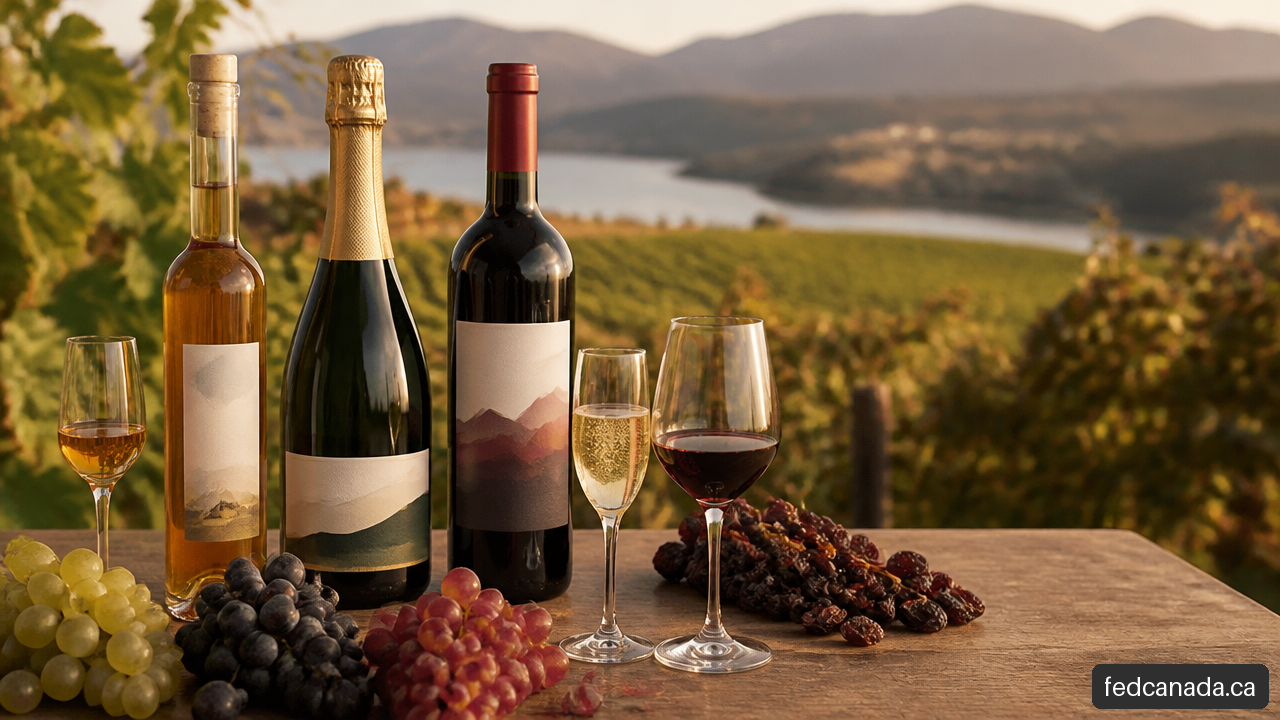
Fortified wine is made by adding grape spirit, raising alcohol and changing the wine’s balance. Port, Sherry, Marsala, and Madeira are well-known fortified styles. Some are sweet, some are dry, and some range between the two. That distinction matters: fortified does not automatically mean dessert wine.
A useful rule: colour tells you how wine looks, bubbles tell you about carbonation, and sweetness tells you about sugar. None of those terms alone tells the entire story.
The Main Wine Styles and What Creates Them
Red wine: tannin, depth, and savoury pairings
Red wine often has more tannin because of skin and seed contact during fermentation. Tannin is the drying sensation that can make your gums feel slightly grippy after a sip of young Cabernet Sauvignon or Syrah. It is not a flaw. With the right food, tannin can make a rich dish feel less heavy.
Red wine styles vary widely:
| Style | Common examples | Typical structure | Good match |
|---|---|---|---|
| Light-bodied red | Pinot Noir, Gamay | Lower tannin, bright acidity | Salmon, roast chicken, mushrooms |
| Medium-bodied red | Merlot, Sangiovese | Moderate tannin and fruit | Pizza, burgers, tomato sauces |
| Full-bodied red | Cabernet Sauvignon, Syrah | Firmer tannin, deeper fruit, more alcohol | Steak, lamb, braised dishes |
Terroir makes a real difference here. Terroir includes climate, soil, topography, and local growing conditions. A cool-climate Pinot Noir may show tart cherry and earthy notes, while a warmer-climate Pinot Noir may feel riper and more fruit-driven. The grape name stays the same; the expression changes.
Choose lighter reds when the meal is delicate or when you dislike strong tannin. Choose fuller reds when the food has fat, char, smoke, or concentrated flavour. Fair warning: serving a big, high-tannin red beside a light white fish can make both the wine and the food seem harsher.
White and rosé wine: freshness, texture, and flexibility
White wine is often the easiest place to start if you prefer lower tannin and brighter acidity. Acidity is the mouthwatering quality that keeps wine lively. It acts like a squeeze of lemon on food: it does not merely add sharpness; it can make flavours feel clearer.
Sauvignon Blanc often leans crisp and citrusy. Riesling can range from bone-dry to sweet, usually with pronounced acidity. Chardonnay may be lean and mineral-driven or richer and creamier, especially when oak or malolactic fermentation contributes buttery or toasted notes.
Rosé spans more than one flavour profile. A pale, dry rosé may taste refreshing and herbal, while a deeper-coloured rosé can be fuller and more berry-driven. Colour alone does not reliably predict sweetness, so look for terms such as dry, off-dry, or residual-sugar information where provided.
When pairing, use intensity as your guide:
- Crisp, dry whites work well with shellfish, salads, goat cheese, and fried foods.
- Richer whites suit roast poultry, creamy sauces, corn, squash, and lobster.
- Dry rosé can handle grilled vegetables, charcuterie, spicy dishes, and casual patio meals.
- Off-dry whites can soften the heat of spicy Thai, Indian, or Korean dishes.
Sweet wine is a style, not one production method
“Dessert wine” is best understood as a serving and sweetness description, not a single technical category. Sweetness can be created in several ways: grapes can be harvested late, concentrated by freezing, affected by botrytis, dried after harvest, or used in fortified wine production.
The Spruce Eats’ overview of dessert-wine styles notes that sweetness may come from botrytis, frozen grapes, or fortification, while Port, Sherry, Marsala, and Madeira are common fortified examples. That is why a sweet wine should not automatically be called fortified, and a fortified wine should not automatically be assumed sweet.
Icewine is especially relevant in Canada. It is made from grapes that freeze naturally on the vine before pressing, concentrating sugar and acidity in the juice. The result is typically intensely sweet, but good examples also retain enough acidity to avoid tasting flat. Icewine is generally served in small pours because of its concentration.
Late-harvest wine comes from grapes left on the vine longer to ripen. Botrytized wine uses grapes affected by Botrytis cinerea, sometimes called noble rot, which can concentrate sugars and create honeyed, dried-fruit notes under suitable conditions. Appassimento wine uses grapes dried after harvest before pressing, concentrating flavour and sugar potential.
How to Choose Wine for Food, Preferences, and Canadian Labels
Start with what you want to avoid
The fastest way to narrow wine choices is often to identify the structure you dislike.
| If you dislike... | Look for... | Be cautious with... |
|---|---|---|
| Sweetness | Dry Sauvignon Blanc, dry sparkling wine, Pinot Noir | Late harvest, Icewine, many sweet Moscato styles |
| Tannin | Riesling, Pinot Grigio, rosé, lighter Pinot Noir | Cabernet Sauvignon, young Syrah, Nebbiolo |
| High alcohol warmth | Cooler-climate whites, lighter reds, lower-alcohol styles | Some full-bodied reds and fortified wines |
| Sharp acidity | Rounder Chardonnay, Merlot, some richer rosés | Very crisp Sauvignon Blanc or dry Riesling |
| Heavy oak flavour | Unoaked Chardonnay, Gamay, Beaujolais-style reds | Wines described as heavily oaked or barrel-aged |
This is not an exact formula. A dry Riesling may still taste fruity, and a high-acid Chardonnay may feel rich if it has spent time in oak. The point is to use labels and shelf descriptions as clues, then adjust after a few bottles.
Pair by structure before matching flavours
Food pairing becomes more dependable when you match the wine’s structure to the dish rather than chasing flavour words alone.
- Match body to food weight. A delicate fish dish generally needs a lighter wine than a slow-braised beef dish.
- Use acidity for fatty, salty, or fried food. A bright white or sparkling wine can refresh the palate between bites.
- Use tannin with protein and fat. Steak, lamb, and aged cheese can soften the drying grip of tannic red wine.
- Keep wine sweeter than spicy food. A dry, high-alcohol red can make chili heat feel more intense, while an off-dry Riesling may provide relief.
- Match sweet wine to desserts that are no sweeter than the wine. A delicate late-harvest wine can seem thin beside an extremely sugary dessert.
Consider fried chicken as a practical example. A tannic Cabernet Sauvignon may dominate it, but dry sparkling wine can cut through the crust and richness. If the chicken is heavily spiced, an off-dry aromatic white may make more sense. One dish, three plausible wines, and the seasoning changes the answer.
Read Canadian labels as a set of clues
Canadian wine labels can tell you more than the grape variety. For VQA Ontario wines, the front label must display the applicable viticultural area or geographical indication. This can be as broad as Ontario or as specific as a recognized growing area.
Vintage is another useful clue, though its role depends on the wine category. Under the VQA Ontario rules, specialized styles such as Icewine, Botrytized Wine, Late Harvest Wine, Appassimento Wine, Nouveau Red Wine, Blanc de Noirs Wine, and Skin Fermented White Wine require a vintage date. Sparkling, fortified, and liqueur wines may have optional vintage dating under those rules.
When reading a label, work through this short sequence:
- Identify the wine style: red, white, rosé, sparkling, fortified, or a specialty category.
- Check the sweetness cue: dry, off-dry, late harvest, Icewine, or dessert wine.
- Note the grape variety when stated: Cabernet Sauvignon, Merlot, Chardonnay, Riesling, Syrah, or Pinot Noir.
- Find the geographical indication to understand origin and possible climate influence.
- Look for the vintage, especially with wines where seasonal conditions may influence ripeness and acidity.
A label cannot predict every aroma in the bouquet, but it can help you avoid common mismatches. Someone wanting a dry, crisp white should not choose a bottle marked late harvest merely because it is made from a favourite grape.
Frequently Asked Questions
What are the main types of wine?
The broad introductory types are red, white, rosé, sparkling, fortified, and sweet or dessert wine. Still wine is another foundational term, meaning wine without noticeable bubbles. These categories overlap, so one wine may be sparkling, rosé, dry, and made from Pinot Noir at the same time.
What is the difference between red, white, rosé, and sparkling wine?
Red, white, and rosé primarily describe colour and skin contact during winemaking. Sparkling describes carbonation. A sparkling wine can therefore be white, rosé, or red. Red wine is generally more tannic, while white and rosé usually have less tannin, though skin-fermented whites are an important exception.
Is rosé made by mixing red and white wine?
Usually, no. Most rosé is made from red grapes with limited skin contact, then the juice is separated from the skins before it becomes a full red wine. Mixing finished red and white wine is not the standard method for still rosé, though blending can be used in certain sparkling-wine production contexts.
What makes a wine dry, off-dry, or sweet?
These terms describe residual sugar, meaning sugar left after fermentation. Dry wines have little perceptible sweetness. Off-dry wines have a gentle sweetness, often balanced by acidity. Sweet wines have more noticeable sweetness, although high acidity can make even a very sweet wine taste fresh rather than syrupy.
Which types of wine have the least tannin?
Most white wines, rosés, sparkling wines, and sweet wines have relatively low tannin because they usually have limited contact with grape skins. Among reds, Pinot Noir and Gamay are often gentler choices than Cabernet Sauvignon, Syrah, or Nebbiolo. Skin-fermented white wine can have more tannin than a conventional white wine.
What is the difference between fortified wine and dessert wine?
Fortified wine has grape spirit added, which increases alcohol. Dessert wine is a broad term for wines commonly served with dessert or enjoyed in small sweet pours. A wine can be both fortified and sweet, as with many Ports, but sweet wines can also be made through late harvest, frozen grapes, botrytis, or grape drying.
Is Icewine always a dessert wine?
Icewine is generally treated as a sweet wine and is often served as a dessert wine because it is intensely concentrated. Still, it can also work with blue cheese, foie gras, salty nuts, or fruit-based desserts. The best pairing depends on whether the food is less sweet than the wine and whether its saltiness or richness benefits from the wine’s acidity.
Sources
- Vintners Quality Alliance Ontario — Wine Categories and Labelling: https://vqaontario.ca/vqa-wine-program/wine-categories-and-labelling/
- The Spruce Eats — Here’s a Quick Education on the 5 Main Types of Wine: https://www.thespruceeats.com/types-of-wine-styles-3511359
Recent Posts
Leave a Comment
Your email address will not be published. Required fields are marked *