




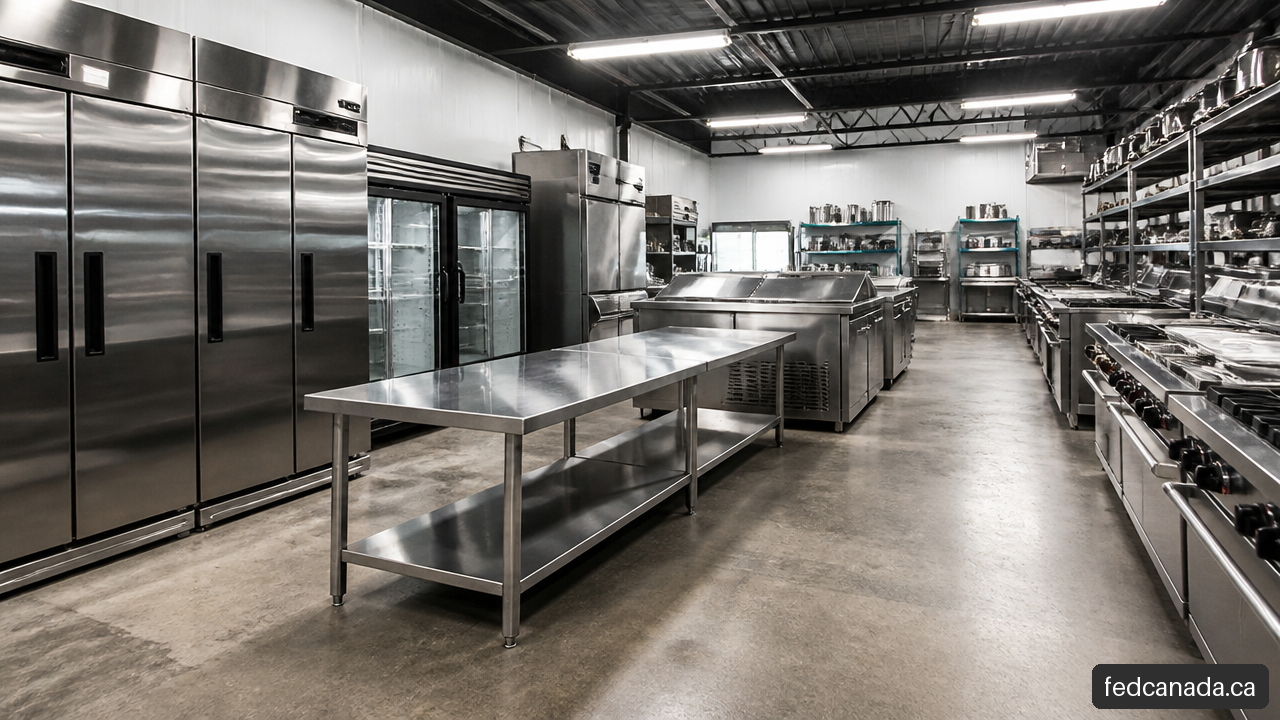
Used Restaurant Supply Vancouver: Buy Smarter, Avoid Costly Mistakes
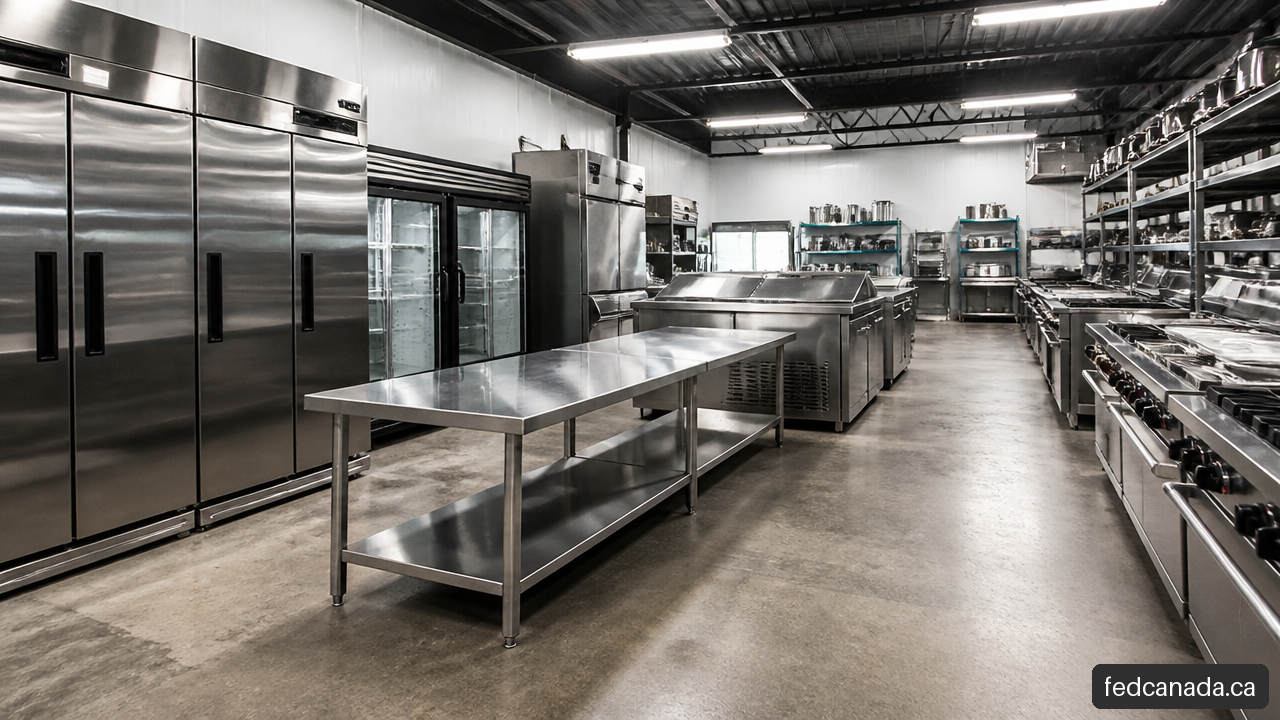
Used Restaurant Supply Vancouver can be a practical way to equip a commercial kitchen, replace a failed appliance, or control opening costs. The best purchase is not always the cheapest listing. It is the item that fits the kitchen, meets operational needs, can be serviced, and remains affordable after transport, installation, repairs, and disposal are considered.
## Table of Contents
• [Key Takeaways](#key-takeaways)
• [Where to Find Used Restaurant Supply in Vancouver](#where-to-find-used-restaurant-supply-in-vancouver)
• [How to Inspect Used Commercial Kitchen Equipment](#how-to-inspect-used-commercial-kitchen-equipment)
• [Calculate the Real Cost Before You Buy](#calculate-the-real-cost-before-you-buy)
• [A Practical Vancouver Buying Workflow](#a-practical-vancouver-buying-workflow)
• [Frequently Asked Questions](#frequently-asked-questions)
## Key Takeaways
Buying used restaurant equipment can reduce upfront spending and keep functional commercial assets in use rather than sending them to disposal. That said, used inventory is not a single condition category. A stainless prep table with surface scratches is very different from a reach in freezer with an unknown compressor history.
The most reliable approach is to treat every purchase as a fit, condition, and total cost decision.
• **Buy used confidently** when equipment is mechanically simple, easy to inspect, broadly serviceable, and compatible with the existing kitchen.
• **Be more cautious** with refrigeration, ice machines, dishwashers, fryers, and electronic controls because hidden defects can be expensive or disruptive.
• **Confirm the model number first.** It helps verify dimensions, electrical requirements, fuel type, replacement parts, and manufacturer documentation.
• **Ask what “tested,” “inspected,” or “refurbished” means.** These terms do not always describe the same level of work.
• **Budget beyond the sale price.** Delivery, rigging, electrical work, gas connections, venting, plumbing, cleaning, repairs, and removal of old equipment can change the value calculation.
• **Use a dealer when risk reduction matters.** A private listing may cost less, but a dealer may provide more documentation, delivery options, condition disclosure, or limited warranty coverage.
> A used commercial appliance is a value purchase only when it can be installed safely, used reliably, and repaired reasonably if something fails.
## Where to Find Used Restaurant Supply in Vancouver
### Start with the right type of seller
Vancouver and the Lower Mainland have several channels for sourcing pre owned restaurant equipment. Each channel can serve a different need, from urgent replacement equipment to lower risk stainless furniture and smallwares.
A commercial equipment dealer is often the best starting point when you need help confirming specifications, arranging delivery, or comparing alternatives. For example, Paragon Direct identifies its Vancouver commercial equipment location at 760 East Hastings Street. Local suppliers can be useful even when the exact item is unavailable because they may help identify compatible new, open box, clearance, or incoming inventory options.
Business directories can also help buyers create a local call list. The Better Business Bureau’s Vancouver restaurant supplies directory lists businesses including Westcoast Restaurant Equipment, Pacific Restaurant Supply, Vortex Restaurant Equipment, and ABM Food Equipment. Directory inclusion is not a guarantee of condition, price, or service quality, but it can help identify local businesses to contact when inventory is changing quickly.
Private marketplace listings can be useful for buyers who already know exactly what they need. They may include equipment from restaurant closures, renovations, liquidations, or surplus stock. The tradeoff is that private sellers may offer limited testing, no warranty, and limited help with loading or installation.
### Dealer, marketplace, or liquidation: compare the risk
| Buying channel | Best for | Potential advantages | Main risks | When to avoid it |
|---|---|---|---|---|
| Commercial dealer | High value equipment, urgent replacements, first time buyers | More product information, possible warranty, delivery coordination | Higher asking price than private sales | Avoid only when the seller cannot explain condition or specifications |
| Private marketplace | Buyers who know the exact model and can inspect it | Lower asking price, local pickup opportunities | As is terms, unclear history, difficult recourse | Avoid for untested refrigeration, gas equipment, or complex machines |
| Restaurant closure or liquidation | Bulk purchases and furniture packages | Multiple matching items may be available | Time pressure, unknown maintenance, missing accessories | Avoid if equipment cannot be powered on or measured before purchase |
| Auction style sale | Experienced buyers with transport capacity | Possible value on surplus inventory | Fees, limited inspection time, no returns | Avoid if you cannot verify fit, condition, and removal requirements |
### Know what is generally safer to buy used
Some items are usually easier to assess because they have fewer mechanical systems. Stainless work tables, shelving, dunnage racks, wall shelves, sheet pan racks, hand sinks, compartment sinks, bus carts, food pans, and many smallwares can be sensible used purchases if they are structurally sound and cleanable.
Equipment with motors, refrigeration circuits, heating systems, pumps, gas controls, or computerized boards requires a deeper review. This does not mean those items should always be bought new. It means the purchase should include more verification.
For instance, a used 72 inch stainless prep table may need only a level surface and basic cleaning. A refrigerated prep table of the same size also needs temperature testing, electrical confirmation, condenser inspection, clearance for airflow, and a plan for service if it fails during a busy weekend.
### Consider the sustainability benefit realistically
Used supplies can reduce waste by extending the useful life of durable commercial equipment. Reusing a functional stainless sink, shelf, oven, or prep table can also reduce demand for new materials and manufacturing resources.
The environmental case is strongest when the item remains reliable and appropriate for the job. Keeping an inefficient or repeatedly failing appliance in service can create a different kind of waste through spoiled food, repeat repair trips, and premature replacement. Condition matters as much as reuse.
## How to Inspect Used Commercial Kitchen Equipment
### Verify identity before appearance
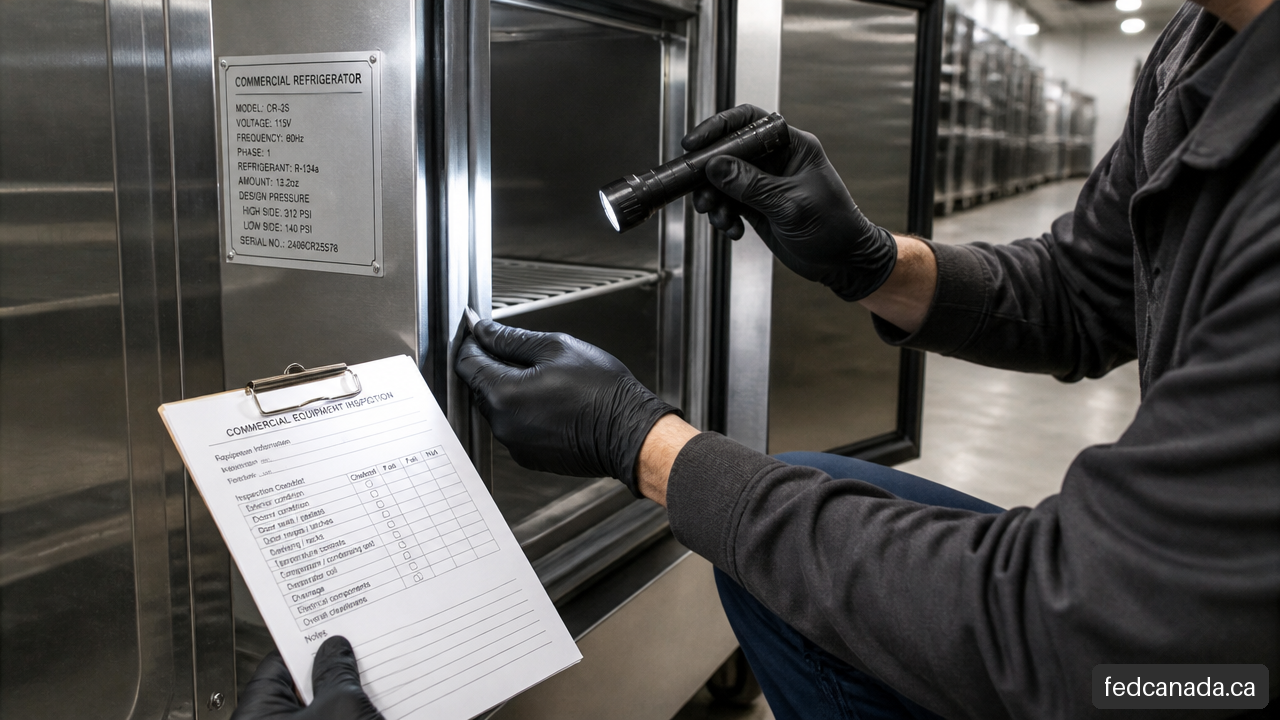
A clean exterior is not enough. Begin with the manufacturer name, model number, serial number, and fuel or electrical rating plate. Ask the seller to provide clear photographs if you are reviewing inventory remotely.
The model number is the practical key to the purchase. It can help you determine:
• Overall dimensions and door swing
• Electrical voltage, phase, amperage, and plug configuration
• Gas type and input requirements where applicable
• Drain, water, ventilation, or clearance needs
• Availability of manuals, accessories, replacement parts, and service information
• Whether the listed item matches the product being sold
If the label is missing or unreadable, treat that as a warning sign. It may still be possible to buy the item, but the uncertainty should affect the price and your willingness to take on installation risk.
### Inspect by equipment category
#### Refrigerators, freezers, and prep coolers
Ask to see the unit operating long enough to demonstrate stable temperature recovery. Listen for unusual compressor cycling, rattling fans, or loud vibration. Check door gaskets, hinges, shelving, interior liners, drain lines, and condenser cleanliness.
A refrigeration unit can appear cold during a brief viewing but still struggle under load. If possible, ask whether the seller can provide temperature readings over time or allow an independent technician to inspect the unit. Confirm that the doors close properly and that the condenser has adequate airflow once installed.
#### Ovens, ranges, griddles, and fryers
Confirm the fuel type before arranging transport. Natural gas, propane, and electric units are not interchangeable without appropriate evaluation and permitted work. Inspect burners, igniters, pilots, valves, thermostatic controls, door seals, fryer baskets, tank condition, and visible corrosion.
For a fryer, look carefully for leaks, damaged welds, warped baskets, and unreliable temperature control. For an oven, check that the door seals, racks, fan system, and controls work as expected. A cheap unit becomes costly quickly if it cannot be connected to the kitchen’s utility setup or hood system.
#### Dishwashers and ice machines
These items deserve extra caution. They depend on water supply, drainage, pumps, heating elements, seals, and regular sanitation practices. Ask whether the unit was drained properly before storage and whether accessories, racks, hoses, pumps, and control components are included.
Ice machines may require water filtration, drainage, ventilation clearance, cleaning, and sanitation before use. If the maintenance history is unclear, budget for professional cleaning and inspection rather than assuming it is ready to operate.
#### Sinks, tables, shelving, and smallwares
Check for sharp edges, bent legs, unstable welds, deep corrosion, dents that trap debris, and damaged adjustable feet. Verify sink bowl dimensions, drain placement, faucet hole configuration, backsplash height, and whether the item will fit your plumbing layout.
### Understand condition and warranty language
Used equipment descriptions are not standardized. The terms below should be treated as questions, not automatic assurances.
| Seller term | What it may mean | What to ask before buying |
|---|---|---|
| Used | Previously operated equipment | Is it working now, and what repairs are known? |
| As is | Sold without broad seller responsibility | Can it be tested before payment, and are returns excluded? |
| Tested | Seller ran some functions | Which functions were tested, for how long, and under what conditions? |
| Inspected | Seller reviewed the item | What inspection steps were completed, and is there a written record? |
| Refurbished | Repairs or restoration may have been completed | Which parts were replaced, cleaned, repaired, or calibrated? |
| Warrantied | Some coverage is offered | What is covered, for how long, and who pays labor or transport? |
One Vancouver example shows why the details matter. Husky Food Equipment describes certain pre owned equipment as inspected and photographed in actual condition, and its Husky Select program states a 30 day parts warranty. That is more specific than a generic “used” label, but buyers should still confirm exclusions, labor coverage, transportation responsibility, and whether installation affects coverage.
## Calculate the Real Cost Before You Buy
### Use total cost of ownership, not sticker price
The purchase price is only one line in the budget. A used appliance that costs less than new equipment may still be the better value, but only after the full acquisition and operating picture is clear.
Use this simple planning formula:
**Total acquisition cost = purchase price + taxes + delivery + rigging + installation + utility work + cleaning or repairs + removal of old equipment**
The exact amounts vary widely. There is no reliable Vancouver wide average that can predict the cost of every installation because a ground floor delivery into an open kitchen is very different from moving a heavy appliance through a narrow hallway, elevator, or loading bay.
Consider a used commercial freezer offered at an attractive price. If it requires a liftgate truck, two movers, doorway modifications, a dedicated electrical circuit, and immediate gasket replacement, the savings may narrow. If it is a matching model that fits an existing space and uses the same connection, it may be a strong replacement choice.
### Ask who owns each part of the job
Before paying a deposit, clarify responsibilities in writing.
1. **Seller responsibility:** Is the item tested, cleaned, wrapped, palletized, loaded, delivered, or placed inside the building?
2. **Buyer responsibility:** Who measures access, prepares utilities, hires technicians, removes packaging, and disposes of old equipment?
3. **Installer responsibility:** Does the installer connect the equipment, test it, perform required adjustments, and document the work?
4. **Warranty responsibility:** If a covered part fails, who diagnoses the problem, supplies the part, and pays labor or travel costs?
A seller may reasonably offer curbside delivery only. That can work well, but it is not the same as installation. A commercial kitchen owner should not assume that delivery personnel can place equipment under a hood, connect utilities, or move it through difficult access points.
### When buying new may be the better decision
Used inventory is not automatically the right choice. Consider new, open box, or scratch and dent equipment when one or more of these conditions apply:
• The equipment is business critical and downtime would stop service.
• The item needs a manufacturer warranty or predictable service support.
• Energy performance or utility compatibility is a major operating concern.
• The kitchen requires exact dimensions, certifications, or custom features.
• The available used item has uncertain age, missing identification, or hard to source parts.
The right comparison is not *used versus new in general*. It is the specific used item versus the specific alternative that can be delivered, installed, serviced, and operated in your kitchen.
## A Practical Vancouver Buying Workflow
### Measure the route, not just the kitchen space
Before arranging pickup or delivery, measure every restriction between the truck and the final location. This includes parking access, loading bays, gates, stairs, corridors, elevators, doorways, turns, ceiling height, floor transitions, and the equipment’s final clearance requirements.
Record both the appliance dimensions and the path dimensions. Include handles, casters, door swing, crate size, and the angle needed to turn into the kitchen. A refrigerator that fits the floor plan may still fail to pass through the back door.
### Confirm utilities and ventilation early
Commercial cooking and refrigeration equipment can require specific electrical, gas, water, drainage, ventilation, and clearance conditions. Confirm these with qualified installers and, where needed, the relevant local authorities before committing to a purchase.
Do not assume an appliance can be converted, plugged in, or placed under an existing hood without review. An electric appliance may require a different voltage or phase than the site provides. A gas appliance may need compatible fuel supply, shutoff access, and professional connection. A dishwasher may need correctly located water and drain lines.
### Follow a deposit checklist
Use this sequence when the item is a serious candidate:
1. Request current photos of the exact unit, including all sides, interior, controls, data plate, damage, accessories, and serial number.
2. Confirm the model number against manufacturer specifications or available documentation.
3. Ask what was tested, what was repaired, and what is not guaranteed.
4. Confirm the sale price, taxes, payment terms, warranty terms, return policy, delivery scope, and pickup deadline.
5. Measure delivery access and final placement space before scheduling transport.
6. Confirm electrical, gas, plumbing, drainage, and ventilation compatibility.
7. Arrange installation and service support before the equipment arrives.
8. Keep the invoice, condition photos, model details, and correspondence in one equipment file.
### Plan for urgent replacement situations
When a refrigerator, fryer, or oven fails, speed matters. Still, a rushed purchase should not skip the basics. Prioritize in stock equipment that matches existing utility connections and physical dimensions. A temporary substitution may be better than buying an incompatible unit that creates another outage.
For example, if a prep cooler fails before a weekend, a same size replacement with compatible power and sufficient capacity may be the priority. A larger discounted unit is not helpful if it blocks a doorway, overloads available power, or cannot be serviced promptly.
If you are selling surplus equipment, document model numbers, working status, dimensions, accessories, known repairs, and clear photos. Vancouver area businesses that buy, sell, service, or trade equipment may be worth contacting when you want a simpler exit route than listing individual items yourself. The Better Business Bureau also lists ABM Food Equipment at 1774 East Hastings Street in Vancouver under restaurant equipment related categories, which may help when building a local contact list for equipment and service inquiries.
## Frequently Asked Questions
### Where can I buy used restaurant equipment in Vancouver?
You can look through commercial equipment dealers, used equipment suppliers, restaurant closure sales, liquidation channels, and marketplace listings across Vancouver and the Lower Mainland. Start with dealers when you need guidance, delivery, or clearer terms. Consider private listings when you can inspect the exact item, verify compatibility, and manage pickup yourself.
### Is used restaurant equipment actually cheaper after delivery and installation?
Sometimes, but not always. Compare the full cost, including taxes, delivery, rigging, electrical or gas work, plumbing, cleaning, repairs, and removal of existing equipment. A used stainless work table often has few added costs. A used gas fryer or commercial freezer can involve considerably more setup and repair exposure.
### What should I inspect before buying a used commercial refrigerator?
Verify the model and serial information, operating temperature, door gaskets, hinges, interior condition, fans, condenser cleanliness, drainage, electrical requirements, and visible signs of corrosion or repair. Ask to see the equipment running and clarify whether any warranty applies to parts, labor, or transport.
### How can I tell whether a used oven or fryer is reliable?
Confirm the fuel type, inspect controls and visible components, and ask the seller to demonstrate operation where possible. Look for leaks, corrosion, damaged doors, unstable temperature controls, missing parts, or unclear service history. If a repair would be difficult or the item is essential to daily service, arrange a qualified inspection before purchase.
### Is it better to buy from a dealer or a private seller?
Choose a dealer when documentation, condition disclosure, delivery support, warranty terms, and problem resolution matter most. Choose a private seller only when the lower price justifies the added responsibility and you can verify the item thoroughly. For complex equipment, the risk difference can outweigh the initial price difference.
### Do used equipment dealers offer warranties or returns?
Terms vary by seller and item. Some dealers may offer a limited parts warranty, while other used equipment is sold as is. Ask for the warranty duration, covered components, exclusions, return conditions, labor coverage, transport obligations, and whether installation by a qualified technician is required.
### Can a seller deliver and install used restaurant equipment in Vancouver?
Delivery and installation are separate services unless the seller states otherwise. Confirm whether delivery is curbside, inside placement, or final positioning. Then separately confirm who will make electrical, gas, plumbing, drainage, and ventilation connections. Never assume a delivery crew is authorized or equipped to complete installation.
### Can I sell or trade in surplus restaurant equipment?
Potentially. Dealers, service businesses, buyers of used equipment, and private marketplace buyers may be options. Provide accurate model numbers, dimensions, condition details, accessories, photos, and known defects. Equipment that is clean, complete, identifiable, and easy to demonstrate is generally easier to evaluate and resell.
### Sources/References
• paragondirect.ca
• bbb.org restaurant supplies directory
• bbb.org restaurant equipment directory
Recent Posts
Tongs: How to Choose, Use, and Maintain the Right Pair
14th October, 2026
Funnel: From Physical Tool to Marketing System
14th October, 2026
Butane: Properties, Uses, Safety, and Cold Weather Limi...
14th October, 2026
Colander Guide: Drain Faster, Retain More Food
14th October, 2026
Leave a Comment
Your email address will not be published. Required fields are marked *