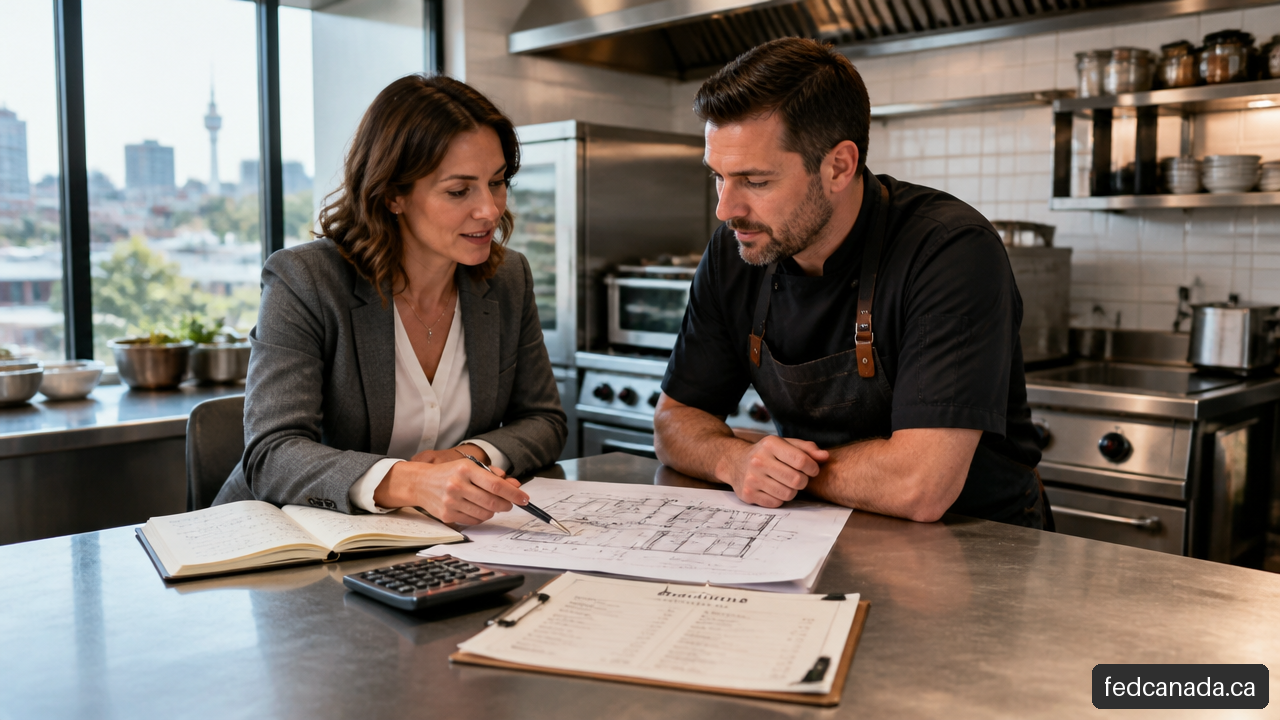
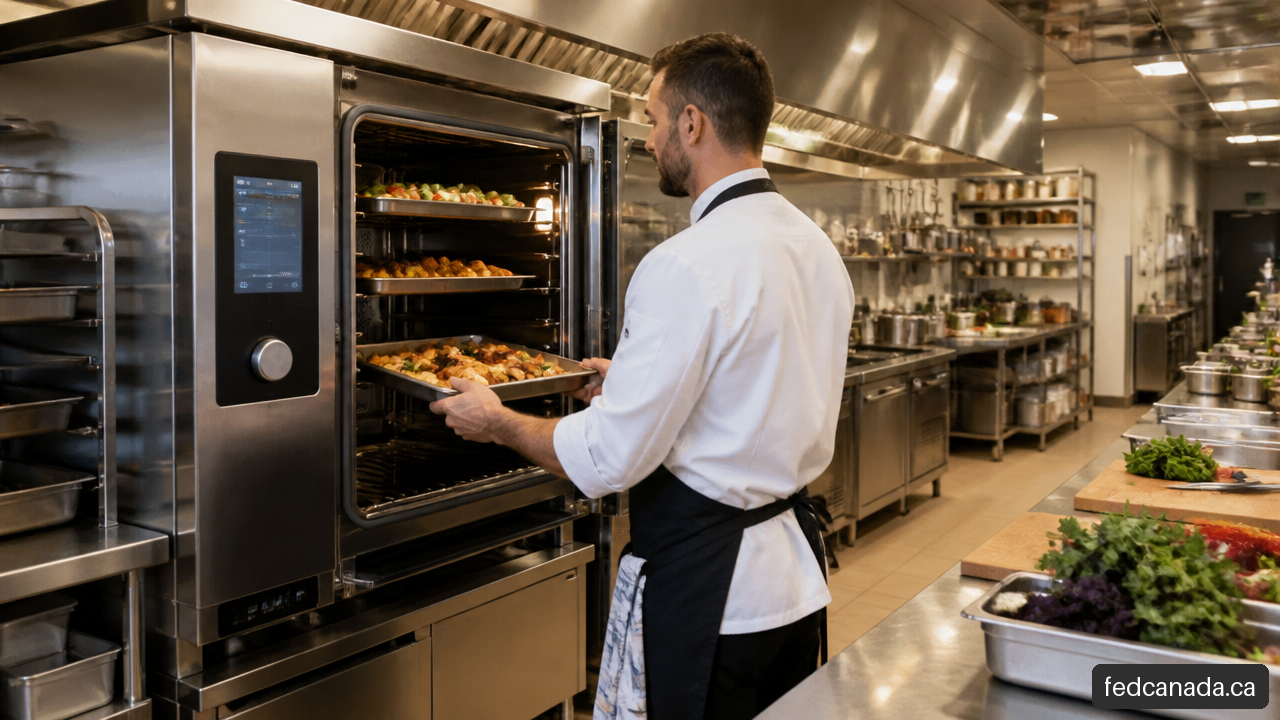
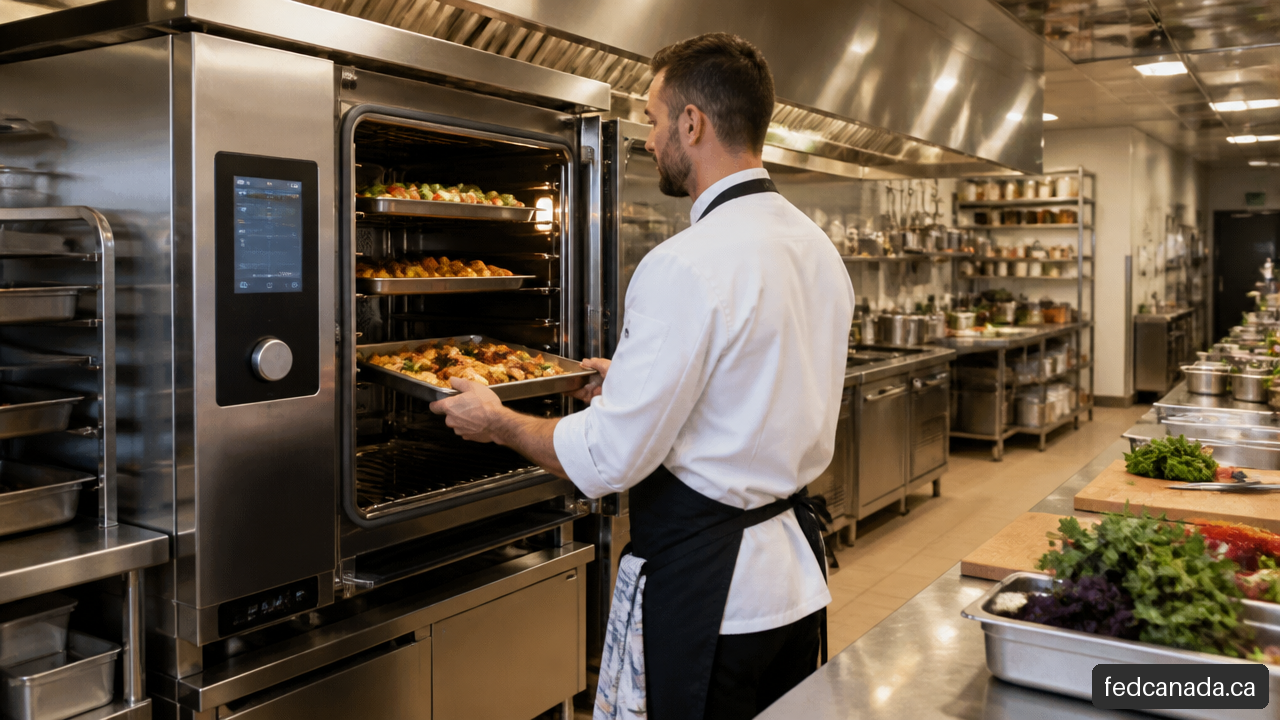
Rational usually refers to RATIONAL commercial cooking equipment in a foodservice context, not the everyday adjective. For operators considering a major kitchen purchase, the useful question is not simply whether a Rational unit can cook many products. It can. The question is whether its cooking format, capacity, utility needs, labour model, and service support fit the operation you run.
Key Takeaways
The buying priorities that matter most
- Choose equipment by the menu bottleneck, not by the longest feature list.
- Treat pan capacity as a starting point. Actual output depends on batch time, loading discipline, recovery time, and service timing.
- Verify utilities, drainage, ventilation, delivery access, water conditions, and local service before placing an order.
- Compare the full cost of ownership: equipment, installation, accessories, cleaning, maintenance, and potential downtime.
- A Rational system may consolidate equipment in the right kitchen, but it does not automatically replace every oven, fryer, kettle, or cooktop.
A commercial cooking system is most valuable when it removes a real production constraint. If the constraint is prep labour, cold storage, dishwashing, or delivery timing, a new oven alone may not solve it.
What Rational Equipment Is Designed to Do
Rational in the commercial kitchen
RATIONAL manufactures professional cooking systems for foodservice operations. Its Canadian product range centers on combi cooking and multifunctional cooking equipment intended for restaurants, institutional kitchens, supermarkets, convenience operations, bakeries, and other professional settings. The company describes the iCombi Pro as a system that combines steaming, roasting, baking, grilling, and related sous vide workflows, while the iVario Pro is positioned as a multifunctional pan based cooking system. See RATIONAL Canada’s overview of its professional cooking equipment and iCombi Pro functions for the manufacturer’s category descriptions.
The distinction matters because these systems address different forms of work. A combi oven manages the climate inside a cooking cabinet. It applies dry heat, steam, or a controlled combination of both. That makes it useful when humidity, browning, tray loading, and repeatable cabinet conditions shape the result.
A multifunctional cooking system works more like an advanced, programmable cooking pan. It is generally a better conceptual fit for foods that are stirred, simmered, shallow fried, boiled, braised, or cooked in liquid. Soup, sauce, rice, pasta, braised proteins, and large batch components are different operational problems from roasting chicken or baking croissants.
Why climate control changes the workflow
In a conventional oven, cooks manage heat, timing, pan placement, opening the door, and product condition. A combi system adds humidity and cooking cabinet climate control to that process. The practical benefit is not magic. It is repeatability when the process is defined well.
Consider two trays of chicken portions. Dry heat can brown the exterior, but the surface may dry before the interior reaches the required temperature. Steam can protect moisture but will not create the same browned finish. A combi sequence can use humidity during part of the cook, then shift toward drier heat for finishing. Whether that improves the result depends on the recipe, load size, seasoning, product temperature, and desired finish.
That is why programmed cooking should be treated as a controlled production method, not a substitute for recipe development. Staff still need to load product consistently, use the correct pan or tray, avoid crowding, and verify food safety procedures.
Connected systems and accessories
RATIONAL’s baking materials describe a wireless interface for supported equipment and access to ConnectedCooking. They also identify accessories such as baking sheets, grill and pizza trays, and roasting or baking pans for applications including rolls, croissants, pizzas, flatbreads, quiche, pancakes, and small cakes. The manufacturer’s iCombi Pro baking guide is useful because it shows that accessories are part of the production setup, not an afterthought.
A pizza tray, for example, may matter more to a pizza focused café than an additional generic pan. A mobile rack can matter more to a high volume kitchen where staff need to move large loads safely between prep, cooking, and holding. Buying the appliance without matching the accessories to the menu can leave capacity on paper but not in practice.
Choosing Between iCombi Pro and iVario Pro
Start with the menu bottleneck
I would begin with a blunt operational question: Which food category creates the most pressure during service or prep? The answer points toward the system that deserves the closest evaluation.
| Dominant production need | Better starting point to evaluate | Why |
|---|---|---|
| Roasted proteins, baked goods, tray meals, vegetables | iCombi Pro | Cabinet climate and multi tray cooking are central to the workflow. |
| Soups, sauces, braises, pasta, rice, stews | iVario Pro | Pan based batch production and liquid cooking are central. |
| Fresh pizza, flatbreads, café baking | iCombi Pro with relevant trays | Product format and accessory choice influence results. |
| Retail hot food with varied menu items | Evaluate both systems | The best fit depends on whether tray cooking or pan cooking causes the constraint. |
| Fry heavy quick service menu | Neither automatically replaces a fryer | Frying output, oil management, and hold time remain separate considerations. |
For example, a bakery café producing breakfast sandwiches, pastries, roasted vegetables, and lunch trays may gain more from a combi workflow than from a large pan system. A commissary producing soup, chili, pasta sauces, braised meat, and rice may find the pan based workflow more relevant. A full service restaurant with both needs may benefit from both categories, but only after confirming space, utilities, budget, and projected use.
What each system may replace, and what it may not
An iCombi Pro can potentially take on work normally assigned to a convection oven, steamer, roasting oven, or certain grill oriented tray applications. That does not mean it will replace every piece of equipment without tradeoffs.
A fryer is designed around hot oil, recovery, basket handling, and crispness. A range is designed for fast, variable, pan by pan cooking. A charbroiler creates direct radiant heat and smoke characteristics that a cabinet system does not reproduce in the same way. A rational purchasing decision recognizes these boundaries.
The iVario Pro may consolidate boiling, sautéing, braising, simmering, and shallow frying functions for some operations. But it is not automatically the right answer for a kitchen that depends on many simultaneous à la carte pans. The key is to map the work: batch production, finishing, service cooking, and holding are separate stages.
Sector labels are less useful than workflow evidence
RATIONAL markets equipment for supermarkets and food to go operations, where operators may need to produce varied prepared foods with consistent presentation. Its supermarket material positions the iVario Pro around safe, ergonomic, efficient, and energy saving kitchen operation. Those are manufacturer positioning statements, not independent performance measurements, but the RATIONAL supermarket brochure illustrates why mixed menu operations should assess both equipment types.
A supermarket, restaurant, hotel, and cafeteria can all buy the same model. They do not necessarily need it for the same reason. Use the actual production sequence as the decision tool.
Capacity Planning Beyond Pan Count
Nominal capacity is not service capacity
A six pan unit sounds straightforward, but it does not answer the operational question: How much food can this kitchen reliably produce before the lunch rush?
One Canadian retailer listing for a demonstration iCombi Pro identifies capacity for six half size sheet pans or six GN 1/1 pans and showed a price of CAD 14,500 at the time of listing. That is a model specific retailer example, not a standard Canadian price or a forecast of installed cost.
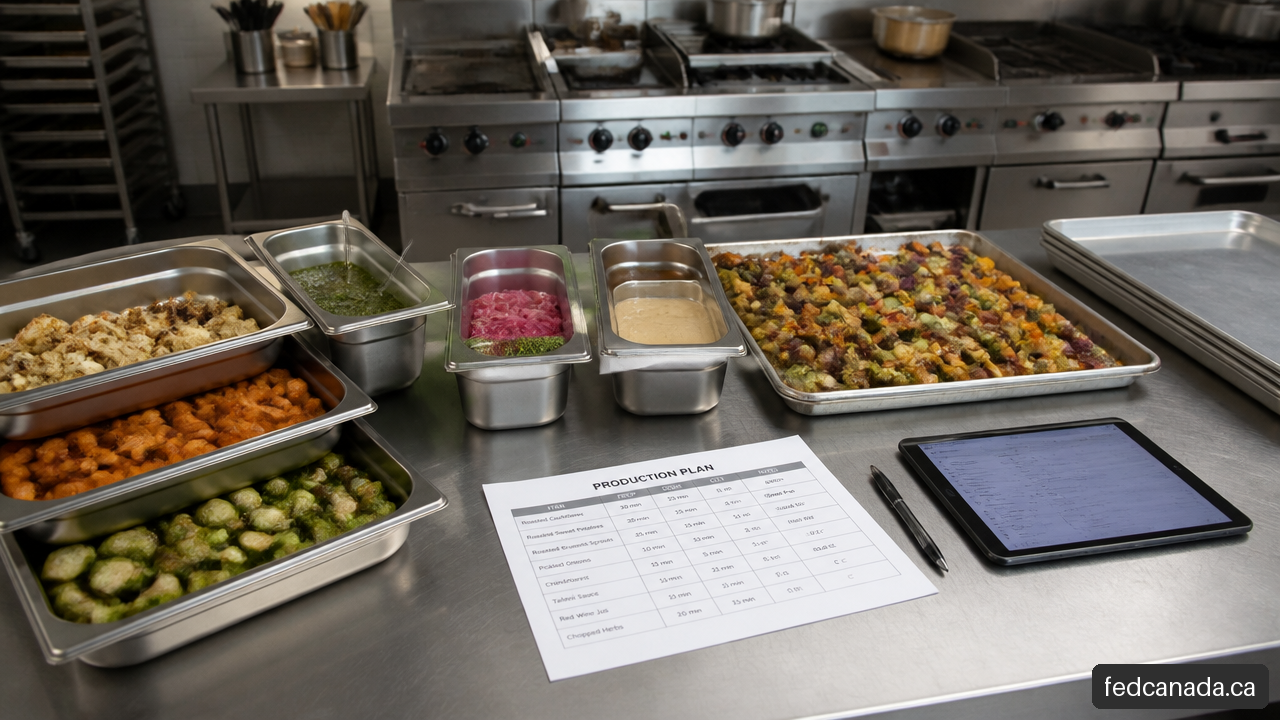
To translate pan count into useful output, calculate the production cycle rather than relying on the cabinet size alone:
- Define the product load per pan, using the actual product and pan format.
- Record cook time, including any preheat, loading, and finishing stage.
- Estimate how many complete cycles fit into the prep window or service period.
- Allow for unloading, cleaning between products where needed, and staff availability.
- Compare the resulting output with peak demand, not daily average sales.
Suppose an operator needs 120 portions of roasted vegetables before lunch. If one pan holds 20 portions at the required spacing, six pans provide 120 portions in one cabinet load. That appears sufficient. But if the vegetables require a different climate than the chicken scheduled at the same time, or if staff cannot prep all six pans before loading, the apparent capacity disappears. This is why menu compatibility matters as much as cabinet volume.
Use batch time and recovery time
The useful capacity formula is simple:
Practical output = portions per pan × pans per load × completed loads within the production window.
Then reduce that theoretical figure for reality: uneven prep, door openings, different product requirements, sanitation steps, and staff breaks. The reduction will vary by operation, so there is no trustworthy universal percentage.
A caterer may value long, planned batch cycles with a mobile rack. A quick service operation may value shorter cycles and rapid reloading. A school cafeteria may prioritize predictable production before a narrow service window. All can use the same general equation, but each produces a different purchasing answer.
Match accessories to product geometry
The pan format affects airflow, browning, drainage, and handling. Dense foods piled too deeply may cook less evenly than shallow, evenly spaced products. A perforated pan, solid pan, grill tray, pizza tray, or baking sheet changes the heat transfer and workflow.
I recommend building a short test menu before requesting a quote. Include the five to ten items that generate the most volume or labour. For each item, identify the desired pan, load quantity, cook stage, finishing requirement, and expected service time. That document turns a product demonstration into a meaningful capacity discussion.
Site Readiness and Total Ownership Cost
Confirm installation constraints before choosing a model
A Rational purchase begins with the cooking system but ends with a functioning installation. Canadian requirements can differ by model, fuel type, municipality, building condition, and local code interpretation. Model specific documentation and qualified local trades should determine the final installation plan.
Before committing, verify these items:
- Electrical supply, voltage, amperage, disconnect requirements, and panel capacity.
- Gas supply where applicable, including the correct installation and inspection path.
- Water connection, water pressure, filtration or treatment requirements, and shutoff access.
- Drainage route, floor drainage considerations, and the practical path for condensate or cleaning water.
- Ventilation and whether the local authority, building design, and selected cooking process require a hood or another ventilation approach.
- Finished floor space, side and rear clearances, door swing, mobile rack movement, and access for cleaning.
- Delivery route dimensions, elevator capacity where relevant, doorway widths, thresholds, and safe placement.
Fair warning: a unit that fits on a floor plan can still fail the delivery route. A basement kitchen with a narrow stair turn, for instance, may require a different delivery approach or equipment configuration. Confirming access early is usually far less costly than discovering it after delivery is scheduled.
Build a total cost model, not a purchase price comparison
The equipment price is visible. The ownership costs often are not. A practical comparison separates one time costs from recurring costs.
| Cost area | What to include | Why it changes the decision |
|---|---|---|
| Purchase | Unit, stands, racks, trays, baskets, probes | Required accessories can materially change the usable configuration. |
| Installation | Electrical, gas, plumbing, drainage, ventilation, permits | Site work can exceed expectations in older spaces. |
| Operation | Cleaning supplies, water treatment, utilities, labour | Savings depend on actual loading and staff practices. |
| Maintenance | Scheduled service, wear items, repairs | Equipment availability matters during peak service. |
| Downtime | Temporary production plan, lost sales, alternate equipment | A low purchase price can be costly if recovery is slow. |
There is limited independently verified Canadian evidence establishing universal Rational energy, labour, yield, or waste savings. Treat broad savings claims as estimates to validate in your own kitchen. For instance, if a combi system reduces labour on roasted vegetables but needs a dedicated cleaning cycle at the end of every day, both sides belong in the calculation.
Service resilience is part of the specification
Before ordering, ask the dealer and manufacturer support contacts specific questions rather than accepting a general assurance of service:
- Who performs warranty work in the operator’s postal code?
- Is there an authorized technician nearby, and what are normal service procedures?
- Which consumable and wear parts should be kept on site?
- What is the expected process if a critical component is unavailable?
- Who commissions the unit and trains staff on daily operation and cleaning?
RATIONAL Canada states that its Canadian operation was founded in 1999 and supports a customer base ranging from independent restaurants to national operations. Its Canadian company profile provides that local context, but buyers should still confirm service coverage for their specific city or remote location.
Frequently Asked Questions
What is Rational in the commercial kitchen industry?
Rational is commonly used to refer to RATIONAL, a manufacturer of professional cooking equipment. Its major categories include combi cooking systems, such as the iCombi Pro, and multifunctional cooking systems, such as the iVario Pro.
What is the difference between the iCombi Pro and iVario Pro?
The iCombi Pro is primarily a climate controlled cooking cabinet for tray based steaming, roasting, baking, grilling, and similar work. The iVario Pro is primarily a multifunctional cooking pan system for boiling, simmering, braising, sautéing, and related batch tasks. Choose based on the food production bottleneck.
Is a Rational oven worth the price for a small restaurant?
It can be, but only if it replaces enough constrained work to justify the investment. A small restaurant with a compact menu built around roasted proteins, vegetables, baking, and batch prep may benefit more than a restaurant whose main constraint is fry capacity, refrigeration, or line cooking speed.
How many meals can a Rational iCombi Pro produce per day?
There is no dependable universal meal count. It depends on pan size, portions per pan, product density, cycle time, menu compatibility, staff loading, and service schedule. Calculate output from actual menu items and your peak production window.
What foods can be cooked in an iCombi Pro?
The system is used for products such as roasted proteins, vegetables, baked goods, rolls, pastries, pizza, flatbreads, quiche, and tray meals. The correct tray or pan matters because it affects airflow, browning, and product handling.
Does a Rational system need water treatment and daily cleaning?
Water quality and cleaning practices can affect equipment performance and longevity, but the exact requirements are model and site specific. Confirm the manufacturer’s current specifications, local water conditions, cleaning procedure, and recommended consumables before installation.
Does a Rational oven require a hood or ventilation system?
Possibly. Ventilation requirements depend on the model, cooking application, local authority requirements, building conditions, and applicable codes. Do not assume that one installation approach applies to every Canadian kitchen.
Where should Canadian operators obtain service and parts?
Start with the authorized dealer and manufacturer support channels, then verify who serves the exact location. Ask about commissioning, warranty handling, technician coverage, parts ordering, and an emergency plan for a unit outage.
Sources
Verified external sources
- RATIONAL Canada — The world market leader in commercial kitchen appliances: https://www.rational-online.com/en_ca/company/
- RATIONAL Canada — RATIONAL in Canada: https://www.rational-online.com/en_ca/company/about-us/
- RATIONAL Canada — Supermarkets brochure: View supermarket brochure (PDF)
- RATIONAL Canada — Baking with the iCombi Pro: View iCombi Pro baking guide (PDF)