



Bake vs Convection Bake: What's the Difference?
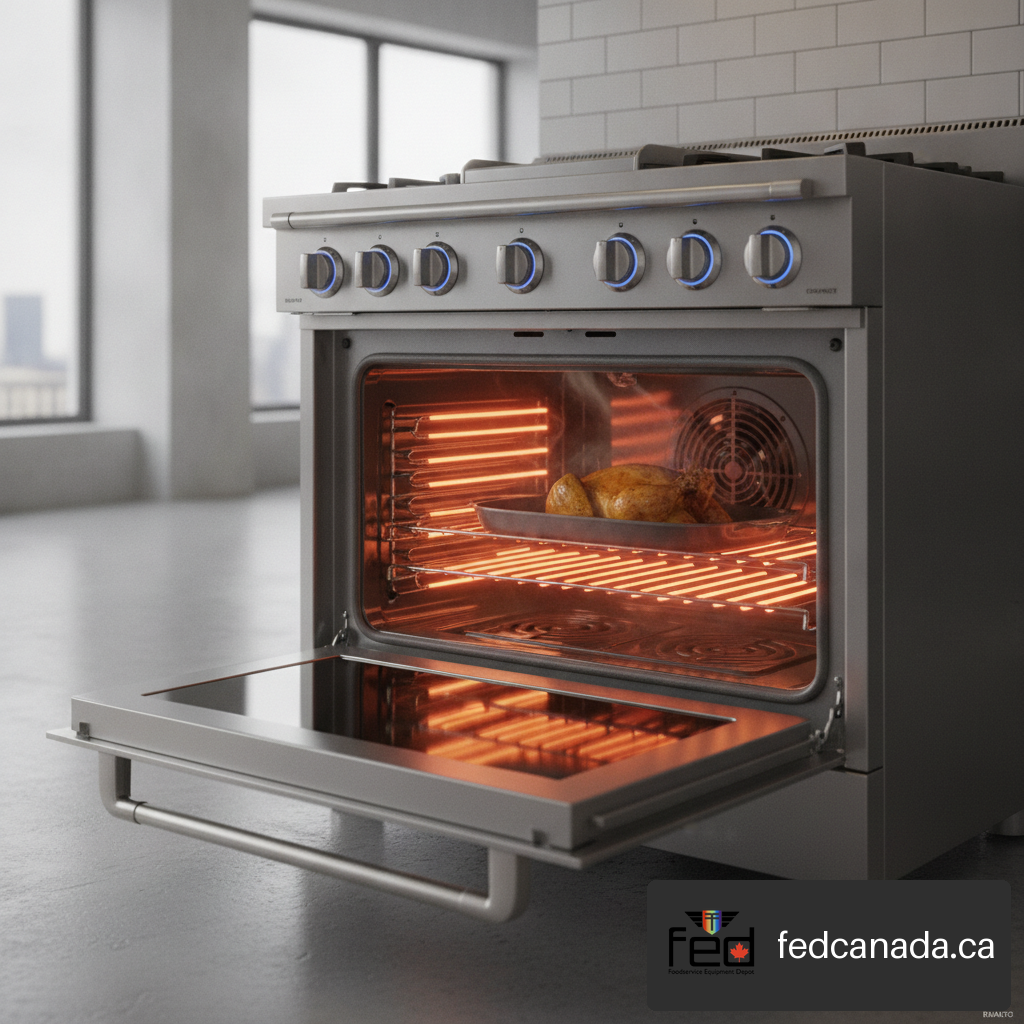
When evaluating bake vs convection bake, the core distinction boils down to how thermal energy is moved around inside the oven cavity. Standard baking relies on radiant heat emitting from stationary heating elements located at the top and bottom of the appliance. In contrast, convection baking incorporates an integrated internal fan to actively circulate heated air throughout the cooking space. This continuous airflow breaks down the blanket of cooler, stagnant air—known as the boundary layer—that naturally wraps around unheated food, significantly accelerating thermal transfer.
Understanding this mechanical difference helps explain why switching between modes alters baking speed, surface texture, moisture retention, and heat distribution. While convection excels at crisping roasted meats, caramelizing vegetables, and evenly cooking multiple trays of cookies simultaneously, its continuous airflow can disrupt delicate batters, blow light crusts off-center, or dry out moisture-heavy dishes like custards. Selecting the correct mode requires evaluating food structure, pan material, and oven mechanics.
Table of Contents
- Key Takeaways
- Thermal Dynamics: How Bake and Convection Bake Transfer Heat
- Temperature Adjustments, Time Management, and Pan Dynamics
- Food-Structure Decision Matrix: Choosing the Right Setting
- Comprehensive Comparison: Bake vs Convection Bake
- Step-by-Step Conversion and Doneness Verification Protocol
- Frequently Asked Questions
- Sources / References
Key Takeaways
Heat Circulation Dynamics: Regular bake relies on static radiant heat from top and bottom elements, whereas convection bake uses fan-forced hot air to equalize temperature throughout the oven cavity.
Temperature & Time Calibration: Convection cooking typically requires reducing the target recipe temperature by 25°F (14°C) and checking doneness 10% to 25% earlier than traditional instructions dictate.
Optimal Convection Applications: Convection bake shines when multi-rack cooking, roasting proteins, browning pies, and crisping cookies or sheet-pan meals.
Optimal Regular Bake Applications: Standard bake provides a gentle, breeze-free environment essential for high-rising cakes, quick breads, soufflés, meringues, and delicate custards.
Auto-Conversion Watchout: Modern ranges often include automatic convection conversion features; verifying whether your oven auto-adjusts prevents accidental double-reduction of cooking temperatures.
Thermal Dynamics: How Bake and Convection Bake Transfer Heat
To understand why dishes turn out differently on each setting, we must examine the physical heat-transfer mechanisms occurring inside the oven.
Radiant Heat vs. Forced Thermal Convection
In a standard conventional oven set to regular bake, heat radiates primarily from the bottom heating element, supplemented periodically by top elements to maintain ambient cavity temperature. As air heats near the bottom element, it slowly expands and rises through natural thermal convection, while cooler air drops toward the bottom. This process creates passive thermal currents. However, these natural currents move slowly, leaving stagnant zones where temperatures can vary by several degrees. Furthermore, cold food placed in a conventional oven retains an insulating envelope of cool air around its surface. Heat must penetrate this boundary layer slowly through passive absorption.
Convection bake alters this dynamic entirely by introducing an internal fan assembly. The fan forces hot air into active motion across every exposed surface inside the chamber. This continuous airflow strips away the cold boundary layer, exposing the surface of the food to direct thermal energy immediately. According to KitchenAid's comparison guide, convection circulates air and generally provides faster, more even cooking, while regular bake may suit delicate baked goods. The continuous movement prevents hot and cold pockets from forming, which explains why items placed on different racks brown much more uniformly in convection mode.
Standard Convection vs. True Convection (European Convection)
Not all convection systems operate using identical heating architectures. Appliance designs generally fall into two categories: fan-assisted standard convection and True Convection (often called European Convection).
- Standard Fan-Assisted Convection: This design features a standard oven heating layout (bottom burner or element plus top broil element) with a simple circulation fan mounted on the back wall. The fan blows air that has already been heated by the top or bottom elements across the cavity. While effective at moving air, temperature fluctuations can still occur when elements cycle on and off to maintain heat.
- True Convection (European Convection): This advanced configuration incorporates an additional heating element wrapped directly around the circulation fan itself. As the fan pulls air in, it passes directly across this dedicated heating element before being evenly blown outward across the cavity. As explained by KitchenAid's guide to appliance modes, true convection adds a rear heating element, while convection airflow can improve uniformity and crisping. This dedicated rear element ensures that the circulating air introduced into the chamber remains at a consistent, precise temperature, eliminating the directional blast of radiant heat that occurs when traditional top or bottom elements cycle on.
+-----------------------------------------------------------------------+ | OVEN HEATING SYSTEMS | +-----------------------------------------------------------------------+ | STANDARD BAKE STANDARD CONVECTION TRUE CONVECTION | | +---------------------+ +---------------------+ +---------------------+| | | [Top Element] | | [Top Element] | | [Top Element] || | | | | (Fan) | | (Fan + Rear Element)|| | | Static Radiant Heat| | Circulated Air | | Pure Heated Air Flow|| | | | | | | || | | [Bottom Element] | | [Bottom Element] | | [Bottom Element] || | +---------------------+ +---------------------+ +---------------------+| +-----------------------------------------------------------------------+
Temperature Adjustments, Time Management, and Pan Dynamics
Transitioning a conventional recipe to a convection environment requires deliberate modifications. Simply selecting convection bake without adjusting recipe parameters often leads to over-browned exteriors and raw interiors.
The 25°F Rule and Appliance Auto-Conversion
Because fan-driven convection transfers thermal energy into food far more efficiently than still air, cooking at standard recipe temperatures will overcook surface tissues before internal structures fully heat. The established standard for converting conventional recipes to manual convection bake is to reduce the set temperature by 25°F (approximately 14°C). For example, a standard recipe calling for 350°F (177°C) in a conventional oven should be set to 325°F (163°C) on manual convection bake.
However, modern digital ranges handle this conversion differently depending on their internal software programming. Many mid-to-high-tier appliances feature built-in "Auto Convection Conversion." When auto-conversion is enabled, entering "350°F" into the control panel causes the oven software to automatically set the actual cavity target to 325°F.
Documentation from LG USA Support notes that some LG ovens automatically reduce convection temperature by 25°F, and recommended converted temperatures vary by food. Similarly, Samsung Support details that Samsung convection ovens with automatic conversion may change a set recipe temperature of 350°F to 325°F internally. If an operator manually subtracts 25°F and enters 325°F on a range with auto-conversion active, the oven will actually set itself to 300°F—resulting in undercooked food and collapsed structures. Checking your appliance manual to confirm whether your specific range automatically converts temperature entries is a critical first step.
Managing Moisture Loss and Cooking Speed
Airflow accelerates moisture evaporation from exposed food surfaces. In high-moisture items or roasted meats, this rapid evaporation encourages desirable browning and crispy skin through the Maillard reaction. In delicate baked items, however, unmanaged moisture loss causes early crusting, preventing proper expansion.
Because forced convection accelerates thermal absorption, cooking times drop noticeably. While internet formulas often claim a blanket 25% reduction in total time, real-world results vary significantly depending on food mass, pan material, and oven calibration. A reliable strategy is to leave the timer set for the original duration, but perform your first physical doneness check when 75% to 80% of the original cooking time has elapsed.
Pan Material, Surface Color, and Airflow Obstruction
The performance of convection bake is intimately tied to pan selection and arrangement. Choosing the wrong bake ware can defeat the advantages of circulating air:
Low-Rimmed vs. High-Sided Pans: High rimmed roasting pans and deep casserole dishes create sheltered pockets that block air movement across the bottom and sides of food. For maximum convection benefit, select low-rimmed rimmed baking sheets or wire roasting racks resting inside shallow pans to allow air to pass under the food.
Dark Matte Metal vs. Shiny Aluminum: Dark or anodized metal pans absorb radiant heat rapidly, while bright, polished aluminum reflects radiant energy. When combined with convection airflow, dark metal pans increase the risk of burnt bottom crusts. If baking on dark pans under convection, lower the set temperature by an additional 10°F or monitor bottom browning closely.
Glassware and Ceramic Ware: Glass and ceramic absorb heat slowly but retain it exceptionally well. When converting glass-dish casseroles to convection, keep the 25°F temperature reduction but anticipate minimal time savings, as the thermal mass of the dish governs heat transfer more than external airflow.
Food-Structure Decision Matrix: Choosing the Right Setting
Choosing between regular bake and convection bake depends on the chemical and physical composition of the food item being prepared.
When Standard Bake is Essential (Breeze-Sensitive Systems)
Standard bake provides a stationary thermal environment without physical air movement. This motionless air is vital for foods that rely on gradual surface development, delicate gas-trapping structures, or high-moisture interiors.
A clear distinction in kitchen applications is drawn by Mayo Clinic Press, whose food examples distinguish common convection choices such as pizza and roasted vegetables from regular-bake choices such as casseroles, bread, and muffins.
Standard bake is strictly recommended for:
High-Rising Cakes and Cupcakes: Batters with high moisture and high sugar content need to expand vertically before their exterior shell sets. Convection airflow can push liquid batter to one side, causing lopsided tops. Additionally, rapid surface drying forms a prematurely rigid crust, causing cakes to crack severely as internal gasses force their way out later.
Soufflés and Meringues: Whipped egg-white matrices rely on delicate air pockets. Physical airflow pushing against the exterior can cause structural collapse before the proteins fully set.
Quick Breads and Muffins: Gentle, non-circulating heat allows chemically leavened (baking powder/soda) quick breads to achieve full volumetric rise without developing tough, thick exterior skins.
Delicate Custards and Cheesecake: These items require gentle, damp heat (often in a water bath). Convection airflow causes unwanted surface ripple marks, accelerates skin formation, and increases the likelihood of top cracks.
When Convection Bake Superiority Shines (Crisping & Browning)
Convection bake excels whenever rapid surface moisture removal, accelerated browning, crisp crust development, or even heat distribution across multi-rack arrangements is desired.
Optimal applications for convection bake include:
Cookies and Biscuits: Convection rapidly sets fat structures while drying out the surface skin, producing crisp edges, chewy centers, and exceptionally uniform browning across every tray.
Pies and Flaky Pastries: Cold butter pockets inside puff pastry, pie dough, and croissants yield steam when heated. Convection's fast heat transfer causes rapid steam generation, expanding flour layers for maximum height and leafing while baking crisp bottom crusts.
Roasted Meats and Poultry: Airflow dries surface moisture instantly, rendering subcutaneous fat efficiently for exceptionally crispy chicken skin and deeply caramelized roast beef crusts while trapping internal juices.
Roasted Vegetables: High heat combined with circulating air browns vegetable edges through caramelization without overcooking internal tissues into mush.
Pizzas and Flatbreads: Fast heat transfer yields crisp bottom crusts and perfectly melted, browned cheese tops without sogginess.
Multi-Rack Baking and Oven Loading Strategies
One of convection baking's greatest strengths is its capacity to handle multi-rack cooking without requiring constant manual tray swapping. In a regular bake oven, placing three sheets of cookies on upper, middle, and lower racks creates severe heat shadows: the bottom pan blocks upward radiant heat, burning its own bottom while leaving the middle tray undercooked.
Convection airflow moves horizontally and vertically around obstruction points. However, achieving ideal multi-rack convection results requires adhering to spatial loading rules:
- Maintain Wall Clearance: Ensure at least 1.5 to 2 inches of open air space between the edges of your baking sheets and the interior side walls, back wall, and front glass door of the oven. If pans touch walls, airflow is choked off.
- Stagger Pan Positions: When using multiple racks, offset pans slightly so that top-level pans are not positioned directly above lower pans whenever possible.
- Rack Tiering:
Single Tray: Use middle rack (Level 3 on a standard 5-rack range).
Two Trays: Position racks at Level 2 and Level 4.
Three Trays: Position racks at Level 1, Level 3, and Level 5, using low-rimmed aluminum half-sheet pans to optimize clearance.
+-----------------------------------------------------------------------+ | OVEN RACK LOADING STRATEGIES | +-----------------------------------------------------------------------+ | SINGLE-RACK (BAKE/CONV) TWO-RACK (CONVECTION) THREE-RACK (TRUE CONV)| | +---------------------+ +---------------------+ +---------------------+| | | | | [Rack 4] [Pan] | | [Rack 5] [Pan] || | | | | | | || | | [Rack 3] [Pan] | | | | [Rack 3] [Pan] || | | | | [Rack 2] [Pan] | | || | | | | | | [Rack 1] [Pan] || +--+---------------------+------+---------------------+--+---------------------++
Comprehensive Comparison: Bake vs Convection Bake
To summarize the technical, operational, and practical differences, the following comparison matrix details how standard bake, standard fan-assisted convection, and True Convection operate across kitchen environments.
| Performance Parameter | Standard Conventional Bake | Standard Convection Bake | True Convection (European) |
|---|---|---|---|
| Primary Heat Source | Top & bottom static elements | Top & bottom static elements | Top, bottom & dedicated rear element |
| Air Movement Mechanism | Natural passive rise (still air) | Rear-mounted single fan | Rear-mounted fan + heating coil |
| Temperature Distribution | Variable; prone to hot/cold spots | Improved; reduced hot spots | Highly uniform; eliminates hot spots |
| Recipe Conversion Rule | Baseline (use recipe temp) | Reduce set temp by 25°F (14°C) | Reduce set temp by 25°F (14°C) |
| Baking Speed | Baseline recipe timing | 10% to 20% faster | 15% to 25% faster |
| Multi-Rack Efficiency | Poor (requires frequent pan rotation) | Good (occasional tray rotation) | Superior (no tray rotation required) |
| Surface Moisture Removal | Slow; preserves ambient dampness | Rapid; accelerates browning | Optimized; maximum even crisping |
| Best Food Applications | Cakes, quick breads, custards | Cookies, roasted meats, pies | Multi-rack cookies, pastries, roasts |
| Primary Failure Risk | Uneven browning across racks | Lopsided rise on delicate batters | Over-drying items if temp is unadjusted |
Step-by-Step Conversion and Doneness Verification Protocol
Converting traditional recipes to convection mode requires a methodical workflow rather than simple guesswork. Follow this structured protocol to guarantee consistent baking results.
+-----------------------------------------------------------------------+ | CONVECTION CONVERSION WORKFLOW | +-----------------------------------------------------------------------+ | [Step 1: Verify Range] --> [Step 2: Set Temp] --> [Step 3: Adjust Time] | | Check manual for Subtract 25°F Check food at 75% | | Auto-Conversion (if manual mode) of original duration| | | | | v | | [Step 4: Assess] | | Check visual color &| | internal temperature| +-----------------------------------------------------------------------+
Step 1: Verify Range Auto-Conversion Status
Before heating the oven, determine if your appliance automatically adjusts set temperatures. Access your range's settings menu or consult the user manual:
If Auto-Conversion is ON: Enter the exact temperature printed on the standard recipe (e.g., enter 350°F). The machine lowers the cavity target to 325°F automatically.
If Auto-Conversion is OFF/Manual: Subtract 25°F from the recipe target and enter the reduced number manually (e.g., enter 325°F for a 350°F recipe).
Step 2: Select the Proper Cookware
Choose light-colored aluminum baking sheets for cookies and pastries to prevent burnt undersides. Ensure pans have low borders (1 inch or lower) when roasting proteins or baking sheet meals so circulating air sweeps cleanly over the food surface.
Step 3: Calibrate Timer and Doneness Checks
Set your primary kitchen timer for 75% of the total cooking time indicated in the original recipe. For example, if a casserole recipe specifies 40 minutes, set your first alarm for 30 minutes.
Step 4: Perform Physical Doneness Verification
When your early alarm sounds, assess doneness using concrete physical metrics rather than reliance on clock timing alone:
Internal Temperature: Insert an instant-read digital probe thermometer into the center of proteins, baked breads, or casseroles (e.g., 165°F for poultry; 190°F–200°F for lean artisan breads).
Structural Resistance: Gently touch the center of baked goods. Cookies should yield slightly under light pressure with firm edges; cakes (if baked on convection) should spring back completely.
Visual Surface Cues: Look for even golden-brown browning across edges and crisp surface rendering on meats.
Diagnostic Guide for Common Convection Failures
When converting recipes, unexpected results occasionally happen. Use this diagnostic reference to correct future attempts:
Symptom: Dark outer edges with wet, raw centers:
Root Cause: Oven temperature was too high (failure to reduce temperature by 25°F). The exterior browned before heat could penetrate the core via conduction.
Corrective Action: Reduce set temperature by an extra 10°F to 15°F and extend time slightly.
Symptom: Cakes tilted or lopsided with cracked tops:
Root Cause: High velocity airflow pushed wet batter aside before it set, while surface drying caused premature top shell cracking.
Corrective Action: Switch to Standard Bake for batter-based desserts.
Symptom: Excessive bottom browning or burnt undersides:
Root Cause: Dark, heavy metal baking sheets absorbed excessive radiant heat from bottom elements during cycling.
Corrective Action: Switch to bright, rimless aluminum baking sheets or line pans with parchment paper.
Frequently Asked Questions
What is the main difference between bake and convection bake?
Regular bake heats the oven cavity using static top and bottom heating elements without active air movement. Convection bake uses an internal fan to continuously circulate hot air throughout the cavity. This continuous airflow strips away cold air pockets surrounding food, speeding up heat transfer, promoting uniform browning, and reducing overall cooking time.
Does convection bake always cook faster than regular bake?
In most cases, yes. Convection bake transfers thermal energy into food more efficiently than still air, typically reducing total cooking times by 10% to 25%. However, dense foods like deep-dish lasagna or large ceramic casseroles may show minimal time savings because the thermal conduction through the heavy dish governs total heating speed more than external airflow.
Should I lower the temperature when using convection bake?
Yes. You should generally reduce the set temperature by 25°F (14°C) when converting standard baking recipes to manual convection bake. Lowering the temperature prevents the fan-driven exterior heat from over-browning or burning the surface of your food before the interior is thoroughly cooked. Always check if your appliance features automatic convection conversion before manually adjusting temperatures.
Why did my cake rise unevenly on convection bake?
Convection fans create directional airflow that can physically push liquid cake batter toward one side of the pan before the structure sets in heat. Furthermore, circulating air rapidly dries out the top surface of the batter, causing a rigid crust to form prematurely. As internal steam expands later, it breaks through this rigid crust, causing cracks and lopsided tops. Standard bake is strongly recommended for high-rising cakes and delicate batters.
Which setting is better for baking cookies?
Convection bake is generally superior for baking cookies, particularly when using multiple racks simultaneously. The circulating air ensures even heat distribution across every tray, drying surface moisture quickly to yield crisp edges, chewy centers, and uniform golden-brown browning without requiring you to rotate baking sheets halfway through.
Can I use convection bake for casseroles and lasagna?
You can use convection bake for covered casseroles and lasagna, but it offers minimal benefits unless the dish is uncovered. If covered with aluminum foil, circulating air cannot touch the food directly. Once uncovered during the final 10 to 15 minutes of baking, switching to convection bake is beneficial for quickly melting and browning cheese toppings.
How do I know if my oven automatically converts convection temperatures?
Consult your oven owner's manual or examine the digital control panel options. On ranges equipped with auto-conversion, entering a temperature under "Convection Bake" causes the display to show a prompt indicating the set target has been automatically adjusted 25°F lower. If your panel lacks this software feature, you must subtract 25°F manually when setting the temperature.
Sources / References
KitchenAid: Convection bake vs. bake: What's the difference?
LG USA Support: LG Range - Understanding Convection Cooking
Samsung Support: How to use your Samsung convection oven
KitchenAid: Bake vs. Broil vs. Roast: What's the Difference?
Mayo Clinic Press: Bake vs convection bake: Know the difference!
Recent Posts

Leave a Comment
Your email address will not be published. Required fields are marked *