




Ice Maker Machine Guide: Commercial vs Residential Performance
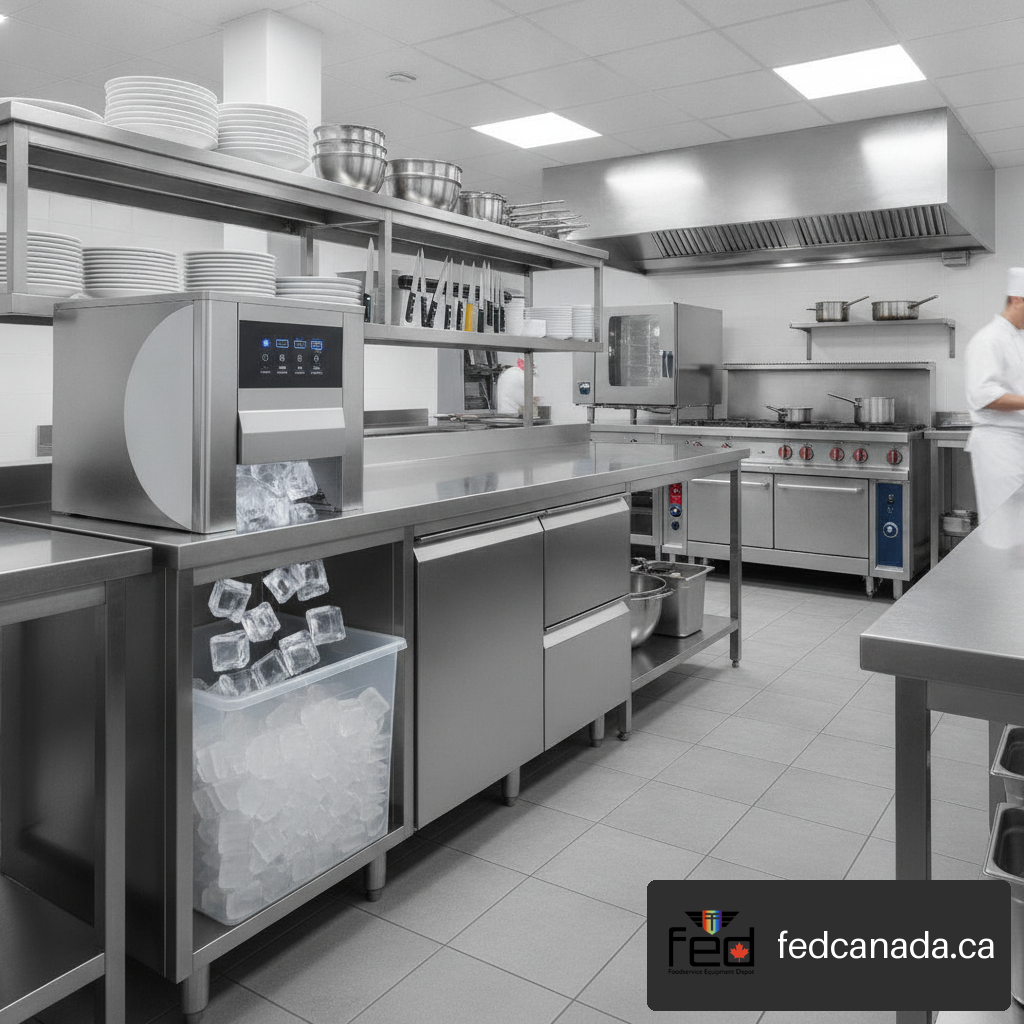
Selecting the right ice maker machine requires understanding the technical boundaries between residential units and high-capacity commercial systems. While portable countertop models deliver basic convenience for low-volume settings, commercial ice equipment is engineered for continuous freezing cycles, aggressive thermal management, and heavy daily demands. Evaluating water supply demands, refrigeration architecture, storage limits, and routine sanitation protects your investment and prevents unexpected downtime.
## Table of Contents
• [Key Takeaways](#key-takeaways)
• [Architectural Differences: Commercial vs. Residential Ice Makers](#architectural-differences-commercial-vs-residential-ice-makers)
• [Ice Production Capacity vs. Usable Storage](#ice-production-capacity-vs-usable-storage)
• [Diagnostic Workflows for Common Equipment Failures](#diagnostic-workflows-for-common-equipment-failures)
• [Maintenance Protocols: Hygiene and Equipment Protection](#maintenance-protocols-hygiene-and-equipment-protection)
• [Frequently Asked Questions](#frequently-asked-questions)
• [Sources](#sources)
## Key Takeaways
• **Production Rate vs. Storage:** A machine's 24-hour production rating reflects ideal laboratory output, whereas usable ice is strictly limited by storage bin volume and ambient thermal loss.
• **Water Path Diagnostics:** Most operational failures originate in water lines, inlet valves, pumps, or scale buildup rather than sealed refrigeration circuits.
• **Sensor Protection:** Malfunctioning full-bin and autofill sensors can cause mechanical ice backups, leading to tray deformation and bent linkage components.
• **Maintenance Frequency:** Descaling schedules must adapt to water hardness; while standard installations require maintenance every 9 months, hard water demands intervention every 6 months or sooner.
• **Drain Sealing:** A misaligned or loose drain cap starves the freezing assembly of recirculating water, causing thin, fragile ice or complete harvest failure.
## Architectural Differences: Commercial vs. Residential Ice Makers
When we evaluate an ice maker machine, comparing household units to commercial systems reveals fundamental differences in refrigeration design, component duty cycles, and water circulation systems.
### Water Supply and Refrigeration Loops
Residential countertop and portable ice makers typically utilize a closed manual reservoir. Water is pumped from a lower basin into an upper freezing tray where cold finger evaporators immerse into the water. Once frozen, a hot-gas bypass valve routes warm refrigerant through the evaporator pins to drop the ice into a basket.
In contrast, commercial and undercounter ice machines connect directly to a pressurized water line. They use open-water distribution tubes that continuously cascade water over a vertical grid evaporator plate. Unfrozen water drains back into a sump basin to recirculate, while impurities fall past the freezing plane. This open circulation system produces clearer ice cubes and higher volume, but it demands continuous water flow and precise inlet valve control.
### Evaporator Assemblies and Harvest Cycles
The physical construction of the evaporator determines both ice shape and production speed. Household countertop units rely on nickel-plated copper rods that form bullet-shaped ice with hollow centers. These thin-walled bullets freeze quickly but melt rapidly in warm beverages.
Commercial evaporators feature heavy-gauge copper plates coated in nickel or stainless steel, forming solid cubes, half-dice, or compressed nuggets. The harvest cycle on commercial equipment uses an electronic control board to actuate a hot-gas solenoid valve while engaging a mechanical harvest assist pin or water curtain switch to clear the evaporator surface quickly.
### Condenser Cooling and Ventilation Demands
Refrigeration systems must reject the heat absorbed during the freezing process. Small portable models rely on compact air-cooled condensers equipped with small axial fans. Because these machines lack thermal insulation in their storage compartments, they run frequent freezing cycles to replenish melted ice.
Commercial ice equipment utilizes larger air-cooled condensers with high-static-pressure fans, or water-cooled condenser loops for environments with high ambient temperatures. Proper installation requires defined spatial clearances—typically 6 to 12 inches around intake vents—to prevent thermal overload and long freezing cycles.
| Feature | Portable / Countertop Residential | Built-in / Undercounter | Commercial Machine |
| :--- | :--- | :--- | :--- |
| **Water Source** | Manual fill reservoir | Dedicated water line | Dedicated pressurized plumbing |
| **Daily Output Range** | 20 to 45 lbs / 24 hours | 50 to 100 lbs / 24 hours | 150 to 2,000+ lbs / 24 hours |
| **Freezing Mechanism** | Immersed finger evaporator | Vertical slab grid evaporator | Heavy-duty slab or flake drum |
| **Drainage Need** | Direct manual drain | Gravity or drain pump | Dedicated floor drain required |
| **Ice Bin Type** | Uninsulated plastic basket | Insulated bin (active or passive) | Heavy insulated modular bin |
| **Duty Cycle** | Intermittent household use | Moderate continuous use | 100% continuous heavy usage |
## Ice Production Capacity vs. Usable Storage
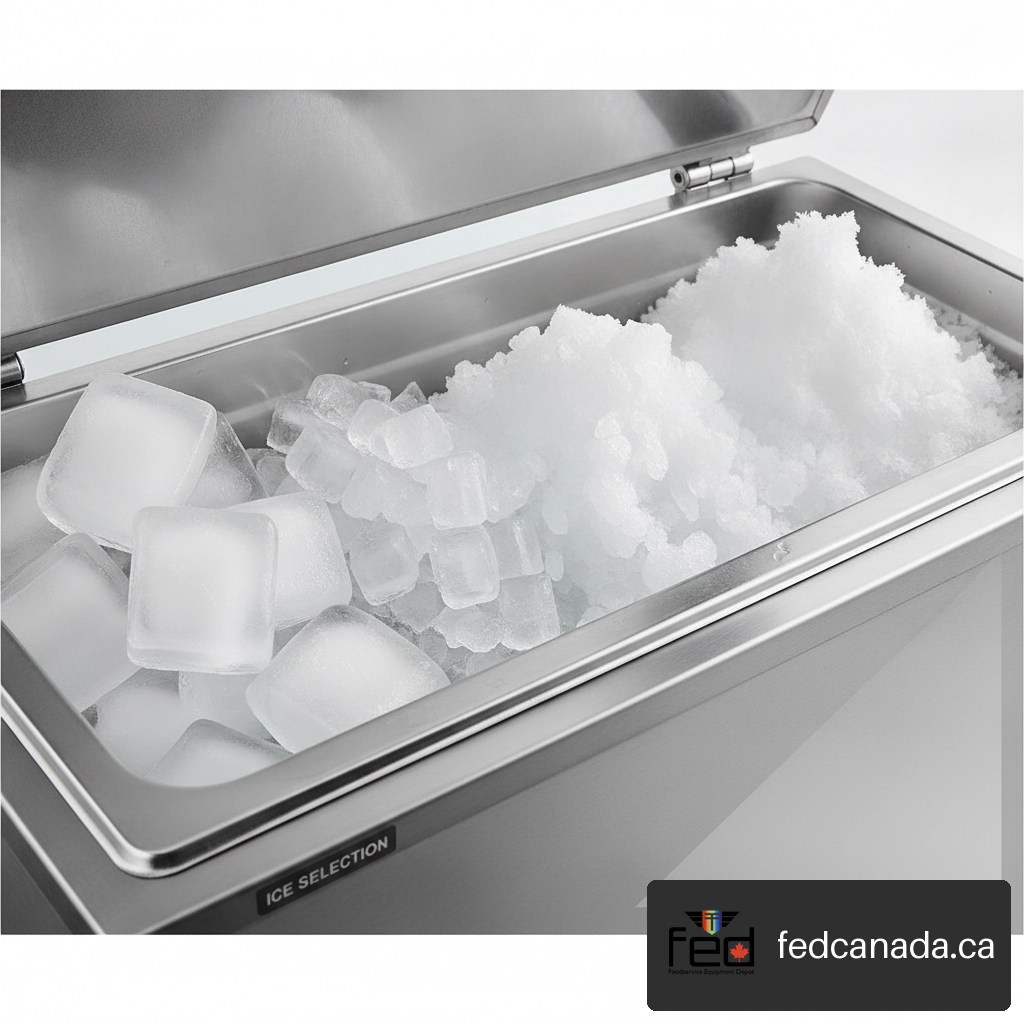
One of the most frequent points of confusion when specifying an ice maker machine is the distinction between 24-hour production capability and actual bin storage capacity.
### 24-Hour Production Ratings vs. Bin Limits
Manufacturer specifications state production capacity based on ideal operating parameters: typically 70°F (21°C) ambient room temperature and 50°F (10°C) incoming water temperature. If your equipment operates in a hot kitchen environment reaching 90°F (32°C) with warmer water lines, actual output drops by 15% to 30%.
Furthermore, the storage bin holds only a portion of daily production. For example, a machine rated for 300 lbs per day may sit atop a bin that holds 100 lbs of ice. Once the bin fills and triggers the shutoff sensor, production stops completely until ice is removed.
### Thermal Melt Losses and Bin Insulation
Most non-refrigerated ice bins operate as passive coolers. They rely on high-density polyurethane insulation to retard melting, but ice continually melts over time, draining through a bottom orifice. Countertop machines lack active refrigeration entirely; melted ice simply drips back into the lower reservoir to be refrozen in subsequent cycles.
Because storage bins lose ice to ambient heat transfer, usable ice availability fluctuates throughout operational hours. Calculating required ice output requires accounting for both peak demand windows and thermal melt loss rates.
### Matching Ice Types to Application Needs
Matching ice morphology to your application prevents wasted energy and preserves beverage quality. Different ice shapes perform distinct thermal and displacement roles:
1. **Gourmet / Top-Hat Ice:** Dense, crystal-clear, slow-melting ice ideal for premium spirits and cocktail presentation.
2. **Cube / Half-Dice Ice:** High displacement, versatile ice standard for carbonated soft drinks and general beverage service.
3. **Nugget / Sonic-Style Ice:** Soft, chewable ice that absorbs beverage flavors; popular in healthcare facilities and quick-service dining.
4. **Flake Ice:** Moldable, fast-chilling ice designed for seafood displays, salad bars, and medical cold packs.
## Diagnostic Workflows for Common Equipment Failures
When troubleshooting an ice maker machine that fails to produce ice or delivers poor quality ice, applying a systematic diagnostic sequence isolates the root cause before attempting costly repairs.
### Water-Delivery vs. Cooling System Troubleshooting
When a unit runs continuously without making ice, technicians isolate water delivery issues before conducting high-pressure refrigeration measurements. According to technician discussions on r/refrigeration, water-path and electrical causes should be investigated before advanced refrigeration-gauge testing; this is community evidence rather than an official service standard.
To isolate the root cause, follow this step-by-step physical check:
1. **Inspect Water Supply:** Verify shutoff valves are open and line pressure meets the manufacturer threshold (typically 20 to 80 PSI).
2. **Examine Water Inlet Solenoid:** Test voltage to the solenoid coil during fill cycles. If voltage is present but water does not flow, clean the internal filter screen or replace the valve.
3. **Verify Circulation Pump Operation:** On countertop and commercial units, listen for pump actuation. As highlighted in repair insights on r/appliancerepair, a countertop machine may appear to cycle while failing to pump water or operate its fan.
4. **Check Condenser Fan Airflow:** Inspect the condenser fan motor. A locked rotor or failed motor prevents heat rejection, causing high-pressure cutouts.
5. **Evaluate Control Board Outputs:** Check for output voltage from the control board to components like the auger motor, water solenoid, and fan.
### Sensor Failures and Mechanical Backups
Full-bin sensors—whether optical curtains, thermal probes, or mechanical bail arms—signal the control module to stop ice production when the bin reaches capacity. If these sensors fail or accumulate scale, the machine can misread bin status.
If the sensor falsely reads "bin full," production halts indefinitely. Conversely, if an autofill sensor fails to open, the machine continues freezing and harvesting ice into an already packed space. In documented commercial settings, such as operator experiences shared on r/BarOwners, a malfunctioning autofill sensor was reported to allow ice backup that stretched mechanical springs and damaged linkage assemblies.
### Ice-Release Blockages and Mechanical Harvest Issues
Sometimes an ice maker machine completes its freezing cycle successfully, but the formed ice fails to drop from the evaporator plate. This failure mode leads to frozen slab buildup and eventual equipment freeze-up.
Common causes of harvest failures include:
• **Scale Accumulation on Evaporator:** Mineral deposits create rough surface friction, preventing smooth ice release during hot-gas bypass.
• **Failed Hot-Gas Bypass Solenoid:** If the valve fails to open, warm refrigerant never enters the evaporator grid to melt the ice bond.
• **Defective Mechanical Evictors or Harvest Pins:** Wear on mechanical push rods leaves ice hanging on the grid.
• **Improper Ambient Operating Temperatures:** Cold surrounding air prevents the evaporator from reaching adequate harvest temperature.
## Maintenance Protocols: Hygiene and Equipment Protection
Regular sanitation maintains water quality and prevents mineral scale from causing component degradation, pump binding, and evaporator pitting.
### Hardness-Based Descaling Schedules
Dissolved minerals—primarily calcium and magnesium—precipitate out of water during the freezing process, forming hard scale on internal components. Establishing a routine descaling protocol is vital for long-term reliability.
According to Whirlpool's freestanding ice maker documentation, Whirlpool recommends cleaning after nine months, when indicated, or when production declines, and notes that hard water may require cleaning every six months.
| Water Hardness Level | Mineral Grains Per Gallon (GPG) | Recommended Descaling Frequency | Preventive Action Required |
| :--- | :--- | :--- | :--- |
| **Soft Water** | 0 to 3 GPG | Every 9 to 12 months | Standard cleaning cycle |
| **Moderate Water** | 3.5 to 7 GPG | Every 6 months | In-line sediment filtration |
| **Hard Water** | 7.5 to 14 GPG | Every 3 to 4 months | Polyphosphate scale-inhibiting filter |
| **Very Hard Water** | 15+ GPG | Every 60 to 90 days | Commercial water softener system |
### Step-by-Step Sanitization and Condenser Cleaning
Cleaning an ice machine involves two distinct chemical phases: an acid-based descaler to remove scale deposits, followed by an EPA-registered sanitizer to destroy biofilm, algae, and mold. Never mix descaling chemicals with bleach or sanitizers.
1. **Prepare Machine:** Turn off the freezing cycle, allow existing ice to drop, and manually remove all remaining ice from the storage bin.
2. **Circulate Cleaner Solution:** Pour approved chemical descaler into the water sump basin. As detailed in KitchenAid's ice maker maintenance guide, an improperly secured drain cap can cause thin ice or no ice; the documented cleaning process uses 16 ounces/473 mL of cleaner and takes approximately 70 minutes.
3. **Flush Water Circuit:** Run clean water rinse cycles to purge residual acid cleaner from distribution tubes and the evaporator basin.
4. **Apply Sanitizing Solution:** Circulate food-grade sanitizer through the water paths, letting it contact all internal surfaces before flushing.
5. **Clean Condenser Coils:** Disconnect power from the unit. Use a soft vacuum brush attachment to remove dust, grease, and lint from the exterior condenser fins.
### Drain Caps and Water Level Integrity
A overlooked failure point on reservoir and undercounter machines involves internal drainage fittings. If an internal drain plug or rubber cap is loose, water slowly bypasses the reservoir during freezing cycles.
This continuous water loss starves the circulation pump, preventing complete ice sheet formation and producing thin, hollow cubes or empty harvest cycles. Ensuring all drain plugs, caps, and standpipes are firmly seated after cleaning restores proper basin water depth and consistent freezing cycles.
## Frequently Asked Questions
### What is an ice maker machine and how does its freezing cycle work?
An ice maker machine is an automated refrigeration appliance that circulates water over an evaporator surface to form ice. Once the freezing cycle completes, the machine uses hot refrigerant gas or a mechanical mechanism to harvest the ice into an internal storage bin.
### Which type of ice maker machine is best suited for residential home kitchens?
For high-volume home entertaining or kitchen integration, a built-in undercounter ice maker machine connected to a plumbed water line provides high production rates and clear cubes. For occasional portable use, a compact countertop model offers flexibility without permanent plumbing.
### How much ice can a commercial ice maker machine produce within 24 hours?
Commercial ice machines produce anywhere from 150 lbs to over 2,000 lbs of ice per 24 hours depending on the compressor tonnage and evaporator design. Actual output varies based on surrounding ambient temperatures and incoming water temperature.
### How long does a countertop ice maker take to freeze its first batch of ice?
A countertop ice maker machine typically completes its initial freezing batch within 6 to 15 minutes of startup. Early batches may yield smaller bullet ice until the reservoir water and evaporator reach operating temperature.
### Why is my ice maker machine running but failing to drop ice into the bin?
This issue typically stems from scale buildup on the evaporator plate, a defective hot-gas bypass valve that fails to heat the freezing grid, or an ambient temperature that is too low to facilitate thermal release during harvest.
### Can I use vinegar to descale an ice maker machine?
While diluted white vinegar can dissolve minor mineral film in basic countertop reservoirs, commercial machines require nickel-safe commercial descaling solutions. Vinegar is often insufficiently concentrated for heavy scale and can degrade internal seals or nickel coatings.
### Why is my ice maker producing thin, hollow, or misshapen ice cubes?
Thin ice indicates insufficient water flow across the freezing evaporator. Check for clogged water filters, restricted inlet valves, a weak circulation pump, or a loose reservoir drain cap allowing water leakage.
### How does hard water impact the lifespan of an ice maker machine?
Hard water deposits calcium carbonate on heating elements, sensors, pumps, and evaporator grids. Left untreated, scale causes heat transfer inefficiencies, sensor misreadings, premature pump failure, and permanent evaporator pitting.
## Sources
• KitchenAid Product Help: https://producthelp.kitchenaid.com/Refrigeration/Ice_Makers/Product_Info/Cleaning_and_Care/Cleaning_the_Ice_Maker
• Whirlpool Product Help: https://producthelp.whirlpool.com/Refrigeration/Ice_Makers/Cleaning_and_Maintenance/Interior/Information_on_the_Cleaning_Cycle/Information_on_the_Cleaning_Cycle_-_Freestanding_Ice_Maker
• Reddit r/refrigeration (Ice Machine Troubleshooting): https://www.reddit.com/r/refrigeration/comments/1mg9iwj/ice_machine_troubleshooting/
• Reddit r/BarOwners (Ice Machine Sensor Issues): https://www.reddit.com/r/BarOwners/comments/1b1irqp/ice_machine/
• Reddit r/appliancerepair (Countertop Ice Maker Fixes): https://www.reddit.com/r/appliancerepair/comments/1w4q1vu/any_advice_on_fixing_a_countertop_ice_maker/
Recent Posts
Ice Maker Machine Guide: Commercial vs Residential Perf...
31st October, 2026
Santoku Knives: What They Are and How to Choose
31st October, 2026
Restaurant BBQ Equipment: Choosing a Commercial Barbecu...
31st October, 2026
Atosa Freezer Settings, Temperature Controls, Reset & T...
31st October, 2026
Leave a Comment
Your email address will not be published. Required fields are marked *