



Baking Rack Guide: Better Cooling, Baking, and Bakery Workflow
A Baking Rack can refer to two very different tools: the removable rack inside an oven or the raised wire rack used to cool baked goods. Both influence airflow, browning, texture, safety, and workflow. Choosing the right one starts with knowing which job it needs to do.
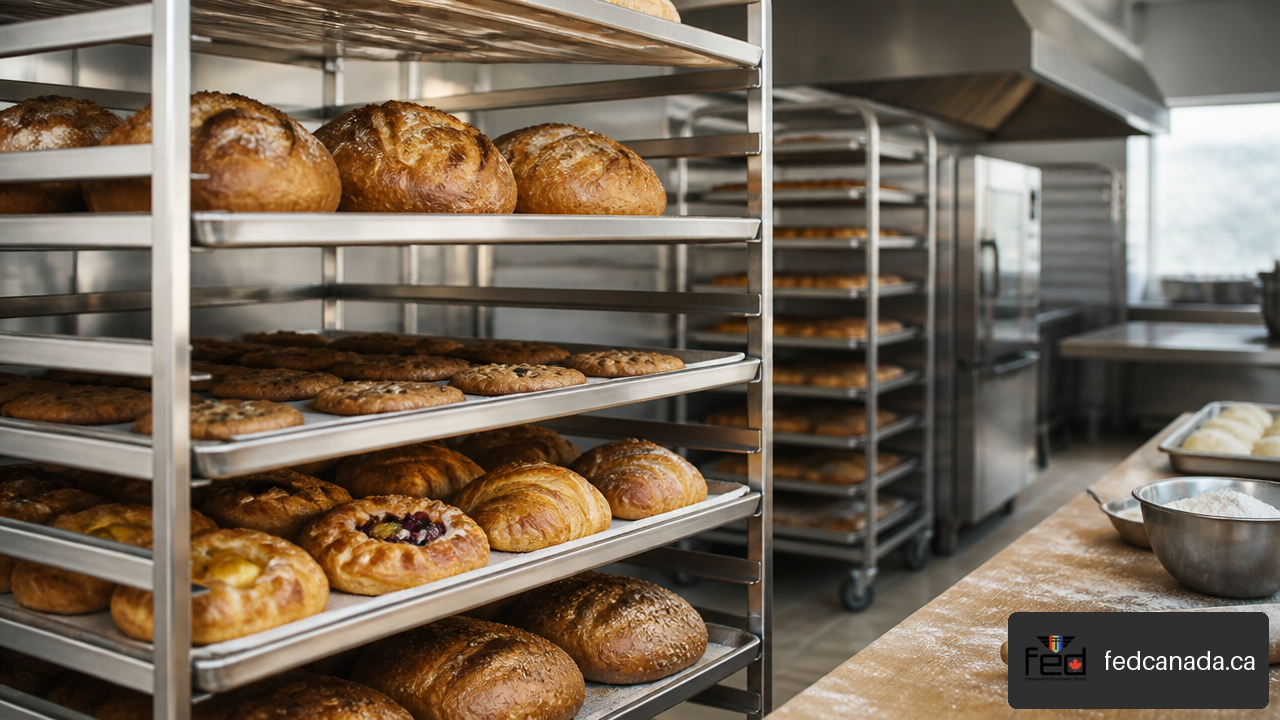
Table of Contents
- Understanding oven racks, cooling racks, and bakery racks
- Choosing the right oven rack position
- Using cooling racks for better texture and safer handling
- Maintaining baking racks in home and commercial kitchens
- Key Takeaways
- FAQ
- Sources and References
Understanding Baking Rack Types and Their Uses
A baking rack is not a one size fits all tool. An oven rack supports pans during baking, while a cooling rack lifts finished products above the counter so steam can escape from underneath. In a bakery, a mobile rack may hold multiple sheet pans for staging, cooling, proofing, transport, or storage.
The distinction matters. A cooling rack is not automatically safe for oven use, and an oven rack is not always suitable for cooling delicate cakes. Before loading any rack, confirm its intended purpose, dimensions, load capacity, coating condition, and manufacturer guidance.
Oven racks: heat exposure and pan support
An oven rack sits on side supports called rack guides. It holds bakeware at a selected height within the oven cavity, changing how close the food is to upper or lower heat sources.
For most conventional baking, a central oven position is the starting point because it gives the pan more balanced exposure to the cavity’s heat. Frigidaire’s Electric Wall Oven Complete Owner’s Guide advises centering a one rack load in the oven while following the model’s specific rack placement instructions.
That last point is worth emphasizing: rack positions are not universal. One oven may identify a middle position as slot 3, while another uses a different numbering system or includes an offset rack that changes the actual height of the cooking surface. If the manual gives a rack position for cakes, cookies, bread, convection baking, or two rack baking, use that instruction before relying on generic top, middle, or bottom advice.
Cooling racks: protecting texture after baking
A cooling rack creates open space beneath baked goods. As a cake layer, loaf, pie, cookie, or pastry cools, moisture inside the product moves outward as steam. If the bottom remains against a solid sheet pan or countertop, that steam can condense and soften the crust.
A raised rack helps in several ways:
- It allows air to move beneath the product.
- It reduces trapped steam under crusts and cookies.
- It lets pans cool more evenly when the pan is set directly on the rack.
- It creates a stable surface for glazing, icing, draining, or finishing.
For cookies, transfer timing depends on the recipe. Very soft cookies may need a brief rest on the sheet pan so they set before being moved. Crisp cookies often benefit from earlier transfer because leaving them on a hot pan can continue cooking their bottoms.
Bakery racks: capacity and workflow
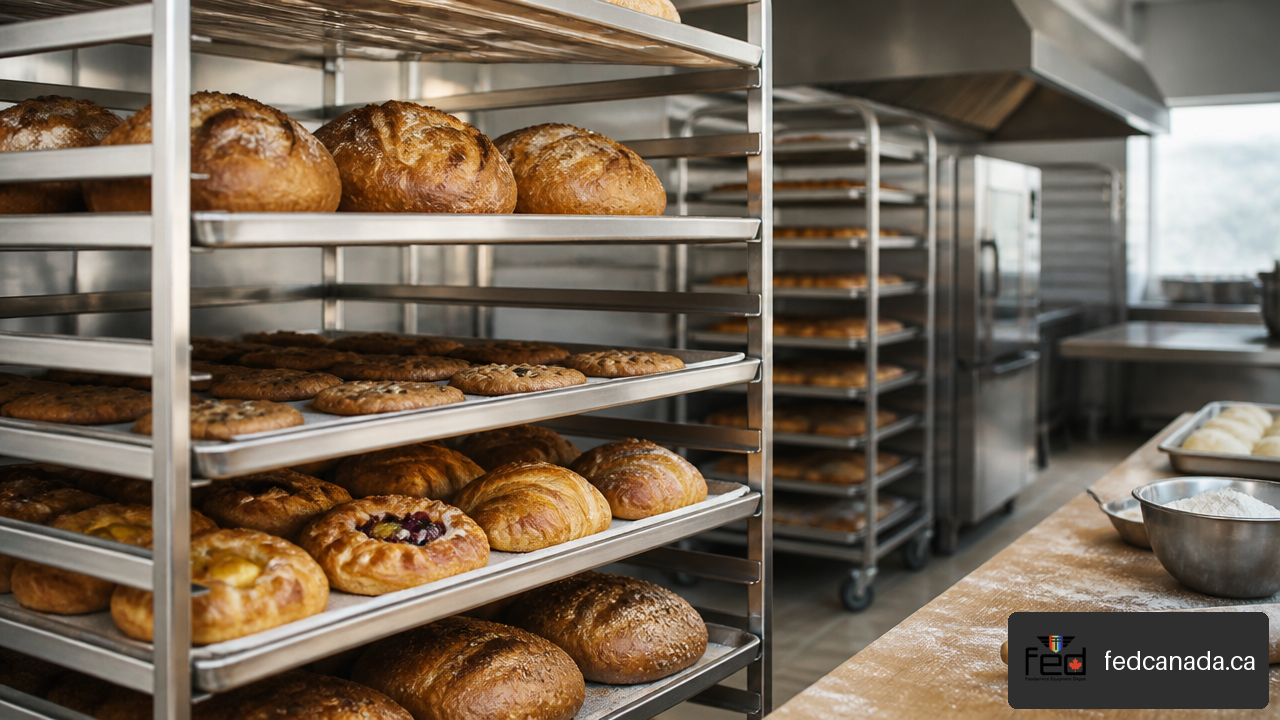
Commercial bakery racks are larger, mobile versions of the same airflow principle. They often use vertical pan slides or shelves to hold multiple full size or half size sheet pans. Their value is not only capacity. A well positioned bakery rack separates hot, cooling, finished, and ready to decorate products so the production line does not become a crowded counter.
For example, a small bakery producing morning pastries may use one rack for empty pans, another for cooling croissants, and a third for finished trays awaiting display or packaging. Keeping those stages separate reduces handling and makes it easier to spot a missed batch.
This is part of the broader importance of food preparation equipment. The right rack does not make a recipe better on its own, but it prevents avoidable problems after the oven timer ends.
| Rack type | Best use | What to check before buying or using | When to avoid it |
|---|---|---|---|
| Oven rack | Supporting bakeware inside an oven | Oven model compatibility, rack guide fit, level position | Do not use if bent, unstable, or incorrectly installed |
| Cooling rack | Cooling cakes, cookies, breads, and pastries | Grid spacing, stability, coating condition, oven suitability if applicable | Avoid using as an oven rack unless explicitly rated for oven temperatures |
| Sheet pan rack | Holding multiple pans during bakery production | Pan size, slide spacing, load capacity, footprint | Avoid overloading or moving it with unstable pans |
| Mobile bakery rack | Transporting and staging baked goods | Wheel condition, brakes, frame stability, clearance through doors | Avoid use if wheels bind, wobble, or show visible damage |
Choosing the Right Oven Rack Position
The middle rack is a useful default, not a rule that overrides your oven manual. Rack position changes heat exposure, airflow around pans, and how quickly the top or bottom surface sets.
A cake on a rack too close to an upper heating source may brown on top while the center is still underbaked. A pizza or bread placed too low may develop a darker base before the top reaches the desired color. The goal is not simply “more heat” or “less heat.” It is balanced heat around the pan.
One rack baking: start centered, then adjust with evidence
For a single pan of cake, cookies, muffins, quick bread, or brownies, begin with the manufacturer’s recommended central position. Keep the pan centered on the rack rather than pushed against the side wall.
Frigidaire’s Canadian Wall Oven Owner’s Guide advises leaving about 2 to 4 inches, or 5 to 10 cm, of clearance around cookware for air circulation and keeping pans away from one another, the door, and oven walls.
That clearance is more than a browning preference. Heated air needs pathways around the pan. When a sheet pan sits tightly against an oven wall, the air flow becomes uneven and the pan can receive more direct radiant heat on one side. With delicate sponge cakes, that can contribute to uneven rise or a darker edge. With cookies, it may produce a batch where one side finishes before the other.
Two rack baking: use the manual, not universal slot numbers
Two rack baking is useful when output matters, but it adds variables. The upper pan receives more exposure to upper heat, while the lower pan receives more exposure to lower heat. Convection can improve circulation, but it does not eliminate differences created by pan placement, load size, pan color, or oven geometry.
Maytag’s Lower Oven User Instructions specify particular positions for regular two rack baking on that model and instruct users to position racks while the oven is cool. Other oven models use different positions, which is why copying a rack number from another oven can create poor results.
For two trays of cookies or rolls, follow this practical sequence:
- Set both racks while the oven is cool.
- Use the manufacturer’s recommended two rack positions.
- Place pans so they are not directly blocking each other’s airflow.
- Leave open space around every pan.
- Check both trays before the stated recipe time ends.
- Rotate or swap pans only if the recipe and oven guidance support it and the products are stable enough to move.
Avoid opening the oven repeatedly in the first phase of baking, especially for cakes, soufflés, cream puffs, or other products that depend on early structure development. A cookie sheet can usually tolerate a quick rotation. A delicate cake may not.
When top browning is happening too soon
If the top of a cake browns before the center is baked, moving the pan toward the center of the oven is usually the first adjustment. Do not immediately reduce the recipe temperature unless the oven temperature has been verified or the recipe is known to run hot.
Check these conditions instead:
- Is the pan too close to the broiler area or upper heating element?
- Is the rack fully seated and level on both rack guides?
- Is the pan oversized for the oven cavity?
- Is dark or thin bakeware absorbing heat aggressively?
- Is the oven using a convection mode that requires a different rack position?
If the upper rack sits unusually close to the broiler, inspect the rack guides and consult the appliance manual before trying to compensate with major recipe changes. The problem may be the rack setup rather than the recipe.
Cooling Racks, Airflow, and Product Quality
A cooling rack is most useful when the product’s bottom needs to stay dry, crisp, or structurally sound. Bread, cookies, pie crusts, pastries, and baked pizza benefit from air reaching the underside as they cool.
How airflow changes the final result
Fresh baked goods contain retained heat and moisture. Once removed from the oven, the temperature begins to drop, but steam is still moving from the interior toward the surface. On a solid surface, steam can collect under the item. On a rack, the steam has a path to disperse.
Think of a loaf of bread resting directly on a sheet pan. The top and sides release heat into the room, but the bottom remains above a warm metal surface. That slows cooling and can soften the bottom crust. Raising the loaf on a rack helps the whole product cool more evenly.
This does not mean every item should leave its pan immediately. Bundt cakes, layer cakes, and fragile quick breads often need time in the pan before removal. The pan provides structure while the crumb firms.
Preventing cooling rack marks on cakes
Rack imprints are a common issue with soft cakes, especially when the surface is still warm and delicate. Community suggestions in this r/Baking discussion about preventing cooling rack imprints include cooling a cake in its pan for 10 to 15 minutes, using a finer mesh rack, using a parchment sling, or placing the firmer side of the cake against the rack.
These are practical options rather than universal rules. Waiting longer may reduce marks because the cake has more time to firm, but an overly long rest can make some cakes harder to release cleanly. A good compromise is to follow the recipe’s cooling window, then use a rack with a fine, even grid rather than wide bars.
For a frosted layer cake, it is often best to cool the layers fully before frosting. For a glazed loaf, place parchment beneath the rack to catch excess glaze without trapping moisture under the loaf.
Selecting a cooling rack for the job
Choose a cooling rack based on the smallest item you plan to place on it. A large open grid can work well for loaves and sheet cakes but may allow small cookies, profiteroles, or delicate pastry pieces to sag or catch.
| Product | Useful rack feature | Why it matters | Watch for |
|---|---|---|---|
| Cookies | Close grid spacing | Prevents small cookies from dipping between wires | Narrow feet that make the rack unstable |
| Layer cakes | Fine, flat surface | Reduces visible impressions and supports delicate crumb | Transferring too early |
| Bread and rolls | Raised feet and rigid frame | Lets steam leave the underside | Crowding several loaves together |
| Glazed pastries | Stable grid with drip space below | Keeps glaze from pooling under the pastry | Coatings that are damaged or flaking |
| Pizza and flatbread | Large, sturdy surface | Supports shape while releasing bottom steam | Using a rack too small for the product |
For pizza prep, racks can also support a cleaner staging area by separating dough trays, baked crusts, and finished pies. Pairing that layout with tips for utilizing prep tables effectively can reduce congestion between the make line and oven.
Baking Rack Care, Safety, and Commercial Capacity
A rack works best when it stays level, clean, stable, and suited to the load placed on it. Bent wires, baked on residue, loose rack guides, damaged coatings, or failing wheels can turn a simple support tool into a quality or safety issue.
Safe handling of a hot oven rack
The safest approach is simple: decide the rack position before preheating, then avoid moving it during baking unless there is a real need.
KitchenAid’s Double Wall Electric Oven Use and Care Guide advises removing bakeware or utensils before removing the rack itself and ensuring racks are level before use.
If a rack must be adjusted while hot, use dry oven mitts or potholders, remove the pan first when practical, and keep the fabric away from heating elements. Do not pull a loaded rack halfway out and try to reposition it with one hand. A hot pan can slide, and a mitt can catch on a rack edge.
Fair warning: A rack that seems level when empty can tilt under a heavy roasting pan, sheet tray, or Dutch oven. Confirm that both sides are seated in the same rack guide before loading it.
Cleaning without damaging the rack
Cleaning methods depend on the rack material and coating. When manufacturer instructions are available, follow them first. In general, remove loose crumbs promptly and clean grease before it hardens into a sticky film.
- Let the rack cool completely.
- Brush away crumbs and dry debris.
- Wash with warm water, mild dish soap, and a nonabrasive sponge where appropriate.
- Rinse thoroughly so detergent does not remain in wire intersections.
- Dry completely before returning the rack to service.
- Inspect for rust, flaking coating, sharp edges, warping, or loose welds.
Avoid forcing a heavily soiled rack into a dishwasher unless the manufacturer confirms it is dishwasher safe. Some finishes can discolor, corrode, or degrade after repeated harsh cleaning cycles.
Mobile bakery rack checks
For commercial racks, capacity is only useful when the frame and wheels remain stable. Inspect the rack before a busy shift, particularly when it holds hot sheet pans or is moved through narrow aisles.
Use this short inspection routine:
- Confirm all casters roll smoothly and swivel as intended.
- Check that brakes engage, if the rack includes them.
- Look for cracked wheels, loose fasteners, bent pan slides, or frame movement.
- Verify that sheet pans sit fully on their slides.
- Load heavier pans lower when practical to reduce top heaviness.
- Move the rack slowly over thresholds, drains, ramps, and uneven flooring.
A damaged wheel is not merely an inconvenience. It can make a loaded rack harder to steer and more likely to tip. If a wheel binds, wobbles, or has visible damage, remove the rack from service until it can be inspected or repaired according to the equipment manufacturer’s guidance.
Key Takeaways
- A baking rack may mean an oven rack, a cooling rack, or a multi pan bakery rack. Use each only for its intended job.
- For one rack baking, a centered pan and clear space around the bakeware are usually the best starting point.
- For two rack baking and convection settings, use your specific oven manual because rack positions vary by model.
- Cooling racks protect texture by allowing steam to escape from the underside of baked goods.
- Delicate cakes may need 10 to 15 minutes in the pan before transfer to reduce rack marks.
- Clean racks thoroughly, keep oven racks level, and remove damaged mobile racks from service until repaired.
FAQ
What is a baking rack?
A baking rack is either an oven rack that supports bakeware inside an oven or a raised wire rack used to cool baked goods after baking. In commercial settings, it can also mean a larger bakery rack designed to hold multiple pans.
Is an oven rack the same thing as a cooling rack?
No. An oven rack is designed for the oven’s rack guides and heat conditions. A cooling rack is designed to raise food above a counter for airflow. Some wire racks may be oven safe, but only use one in the oven if the manufacturer specifically states that it is suitable for that temperature and use.
Which oven rack position is best for most baking?
The center position is generally the best starting point for a single pan of cakes, cookies, muffins, quick breads, and brownies. Use your oven manual if it gives a different position for the recipe type or cooking mode.
Should a cake bake on the middle rack?
Usually, yes. A centered rack position helps reduce excessive top or bottom heat exposure. If the top browns too quickly, confirm that the pan is not too close to the broiler area and that the oven rack is seated correctly.
Which rack should I use when baking on two racks?
Use the pair of rack positions recommended by your oven manufacturer. Two rack guidance is model specific because cavity size, fan placement, heating elements, and rack geometry differ. Keep pans separated and leave clear space around them.
Does convection baking change the best rack position?
It can. Convection moves heated air mechanically, and some ovens specify different rack positions for convection baking than for conventional baking. Follow the oven’s convection instructions rather than assuming the same rack position will work for both modes.
Can I move an oven rack while the oven is hot?
It is safer to set the rack position before preheating. If you must move a hot rack, use dry mitts or potholders, remove the bakeware first when practical, and avoid contact between fabric and heating elements.
Why does my cooling rack leave marks on a cake?
The cake was likely transferred while its surface was still soft. Let it cool in the pan for the recipe’s recommended period, use a finer mesh rack, or place the firmer side against the rack. A parchment sling can also reduce handling when removing delicate cakes from their pans.
Sources and References
Frigidaire Canada / Canadian Appliance Source — Electric Wall Oven Complete Owner’s Guide: https://www.canadianappliance.ca/pdf/frigidaire/single-wall-electric-oven/FGEW3069UF-complete-owners-guide-english-1.pdf
Maytag Canada — Lower Oven User Instructions: https://www.maytag.ca/content/dam/global/documents/201608/owners-manual-W10875903-RevB.pdf
Frigidaire Canada / Canadian Appliance Source — Canadian Wall Oven Owner’s Guide: https://www.canadianappliance.ca/pdf/frigidaire/single-wall-electric-oven/CGEW3065KW-complete-owners-guide-english-canada.pdf
KitchenAid / Canadian Appliance Source — Double Wall Electric Oven Use and Care Guide: https://www.canadianappliance.ca/pdf/kitchenaid/double-wall-electric-oven/KEBS208SSS-use-care-guide-canada.pdf
Reddit, r/Baking — How to prevent cooling rack imprints in cakes?: https://www.reddit.com/r/Baking/comments/199x4c0/how_to_prevent_cooling_rack_imprints_in_cakes/
Recent Posts

Leave a Comment
Your email address will not be published. Required fields are marked *