




Bar Fridge Buying Guide: Size, Cooling, and Placement
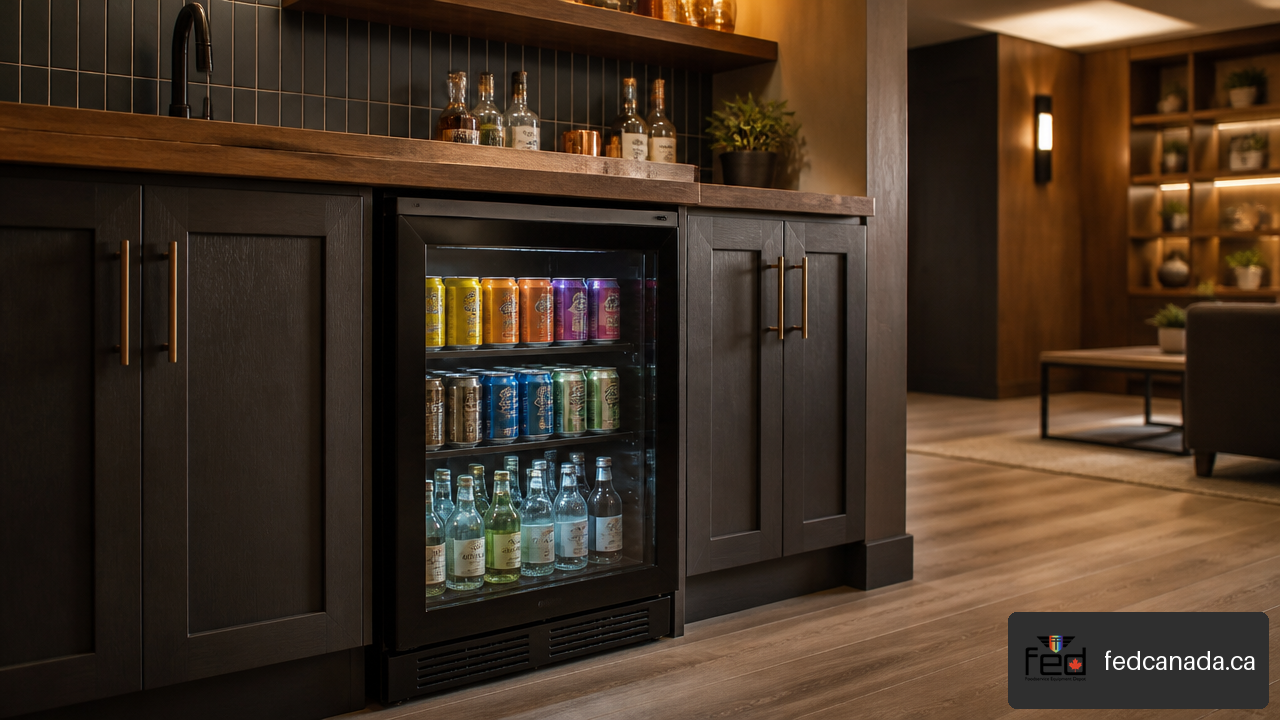
A bar fridge is a compact refrigerator designed for beverages, snacks, and limited food storage where a full-size refrigerator would take up too much room. The right one can make a home bar, office, basement, dorm, guest suite, or hospitality space more functional. The wrong one can create noise, poor cooling, wasted shelf space, or ventilation problems.
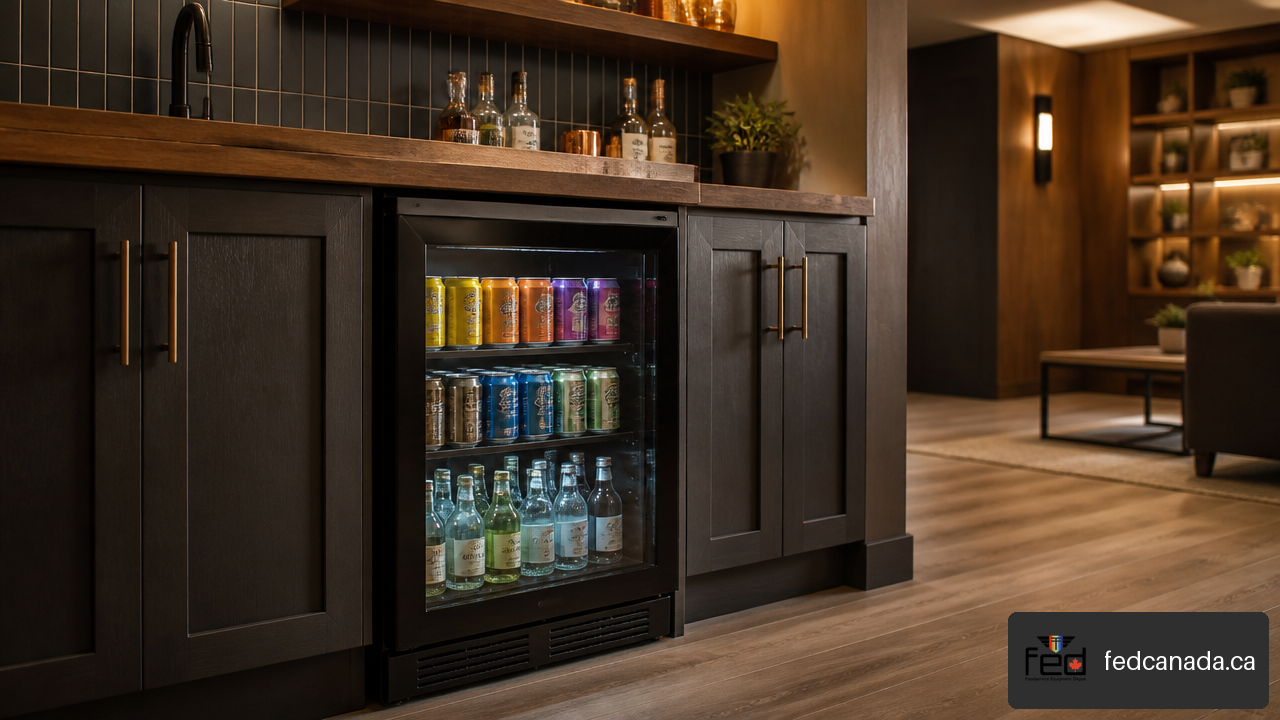
Table of Contents
- Key Takeaways
- Bar Fridge Types and What They Do Best
- How to Choose the Right Size and Storage Layout
- Temperature, Energy Efficiency, and Installation
- When a Commercial Back Bar Cooler Makes More Sense
- Frequently Asked Questions
Key Takeaways
A bar fridge should be selected around the items you need to store, not just its advertised cubic-foot capacity. A compact refrigerator with 3 cubic feet of capacity may hold many cans but still fail to fit tall bottles, meal containers, or a fermentation vessel.
Measure interior clearance as well as exterior dimensions. Shelf spacing, door racks, and the compressor housing can reduce usable storage more than expected.
Choose freestanding or built-in installation correctly. A freestanding bar fridge needs open space around its ventilation points, while a built-in model is designed for enclosed cabinetry with front-facing ventilation.
Use a beverage refrigerator for drinks first. It may have flatter shelves, can organizers, and glass doors, but it may not offer the same food-storage flexibility as a compact refrigerator.
Skip the freezer compartment if beverage space is the priority. In a small cabinet, a freezer section can take away a meaningful amount of vertical shelf space.
Treat garages, patios, and seasonal rooms cautiously. Performance depends on the unit’s specified ambient operating range, not simply whether it is labeled as a garage or outdoor option.
Consider commercial equipment for high-volume service. A household bar fridge is suitable for occasional use, while a commercial back-bar cooler is intended for frequent opening, heavier beverage loads, and faster access.
A useful rule: buy for the tallest, widest, and most frequently used item first. Cans are easy to fit. A 2-litre bottle, wine bottle, food pan, or keg is where many compact refrigerators become restrictive.
Bar Fridge Types and What They Do Best
Bar fridge, mini-fridge, beverage cooler, or wine cooler?
These names overlap in retail listings, so the intended use matters more than the label.
| Type | Best use | Main advantage | Main limitation |
|---|---|---|---|
| Bar fridge or compact refrigerator | Drinks, snacks, leftovers, small food items | Flexible shelf and door storage | Limited capacity for entertaining or bulk storage |
| Beverage refrigerator | Cans, beer, soda, bottled water | Organized drink storage and visibility | May be less practical for food containers |
| Wine cooler | Wine and selected beverages | Shelving and temperature settings suited to bottles | Often inefficient for cans, tall food, or mixed storage |
| Dual-zone cooler | Different beverage categories | Separate temperature areas | Less usable room per zone and a higher price point |
| Back-bar cooler | Bars, restaurants, event service | High capacity and quick beverage access | Larger footprint and commercial-equipment cost |
A mini-fridge is a broad term. In practice, it can describe anything from a tiny bedside unit to a compact refrigerator with a small freezer compartment. A bar fridge usually implies beverage-focused storage, but there is no universal technical line separating the two.
A beverage refrigerator is usually the better match when most of the load is cans, beer bottles, sparkling water, mixers, or ready-to-serve drinks. Many models use flat shelves or wire racks that display labels and make inventory easier to see. A compact refrigerator is more versatile when you also need yogurt, fruit, sandwich ingredients, medication requiring refrigeration, or leftovers.
Single-zone versus dual-zone cooling
A single-zone bar fridge uses one temperature setting for the entire cabinet. It is simpler, generally easier to organize, and often the better value when everything inside is meant to be served at roughly the same temperature.
A dual-zone model has independently controlled sections. As Best Buy Canada’s dual-zone bar-fridge category explains, these units provide separate temperature zones, and capacity, dimensions, and temperature range should all be compared before purchase.
I would choose dual-zone cooling when you regularly store products with genuinely different needs. For example, one compartment may hold beer and canned drinks while another is reserved for wine or less-chilled beverages. Avoid it if you simply want the largest possible can count. Two zones require partitions, separate controls, and dedicated airflow paths, all of which can reduce uninterrupted storage space.
Glass doors and solid doors
Glass doors make sense when visibility changes behavior. In a home bar, game room, café counter, or hotel suite, being able to see beverage choices can reduce the time the door stays open. In commercial settings, they also help staff spot low inventory quickly.
That said, a glass door is not automatically more efficient. The actual energy effect depends on insulation, door construction, room temperature, how often the fridge is opened, and the quality of the door seal. A solid door may better suit a utility room or office break area where product display does not matter.
Freezer compartments: useful, but often a trade-off
A freezer compartment can be helpful for ice packs, a small frozen snack, or a limited amount of ice. But compact refrigerators have little spare volume. The freezer box often consumes upper-shelf height and can make it difficult to stand bottles upright.
For a drinks-first setup, I would usually prioritize full-height refrigerated storage. For a small office fridge used for lunches, a freezer compartment can be worthwhile. The decision is less about whether a freezer is “better” and more about what would otherwise occupy that room.
How to Choose the Right Size and Storage Layout
Start with the actual items, not the cubic-foot label
Cubic feet describe total internal volume, but they do not reveal the shape of that volume. A narrow, tall cabinet and a short, deep cabinet can have similar capacity while storing very different items.
Before buying, list what needs to fit:
Standard cans and slim cans
Beer bottles and tall beverage bottles
Wine or sparkling-wine bottles
2-litre soft-drink bottles
Meal containers and snack trays
Tall mixers, syrups, or condiments
Specialty items such as kegs, carboys, or fermentation vessels
Then compare the manufacturer’s internal dimensions where available. Measure height, width, and depth, including the area above shelves and the depth lost to the compressor bulge at the back of the cabinet.
A community discussion about fermentation offers a useful example. In a Homebrewing discussion about fridge clearance, contributors noted that internal height and airlock clearance can matter more than nominal capacity when using a refrigerator for fermentation. This is a niche use, but the lesson applies broadly: an appliance can have enough total volume and still not fit the one object you care about most.
Use external dimensions to protect the room
A compact fridge can look small online and still be awkward in a narrow basement bar or apartment kitchen. Record these measurements before shopping:
| Measurement | Why it matters |
|---|---|
| Width | Determines whether the fridge fits between cabinets or furniture |
| Height | Matters beneath counters, desks, and wall-mounted shelving |
| Depth with door closed | Prevents the unit from protruding into walkways |
| Depth with door open | Ensures drawers, cabinets, and traffic paths remain usable |
| Ventilation clearance | Allows heat to escape so the compressor can operate properly |
| Door swing direction | Affects access in tight corners and against walls |
For reference, a listed 2.7-cubic-foot compact model from Best Buy Canada’s Insignia 2.7-cubic-foot bar fridge listing includes two glass shelves, five door racks, and a 32°F to 50°F temperature-control range. That illustrates why storage layout deserves scrutiny: door racks can be highly useful for cans and condiments, but they do not replace full-depth shelf space.
Organize for airflow, not just maximum packing
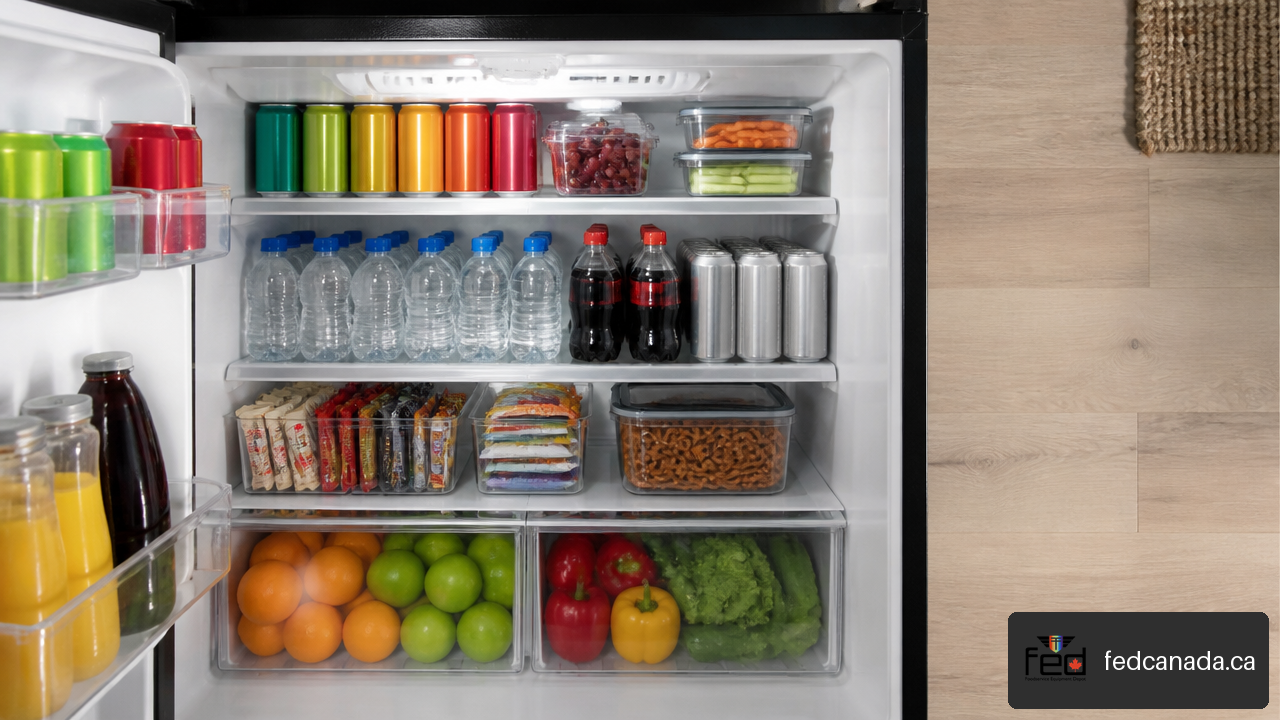
A bar fridge cools by moving chilled air around the cabinet. When cans or containers are packed tightly against vents, cold air circulation can be reduced. Items near the back may freeze while items near the door stay warmer.
Use this arrangement to keep storage practical:
- Put frequently used cans and bottles at the front.
- Keep a small gap around interior vents and the rear wall.
- Store heavier bottles on the lowest shelf where possible.
- Use door racks for lighter items, condiments, or slim cans if the rack design allows.
- Reserve one clear zone for larger items rather than constantly rebuilding the shelf layout.
Temperature, Energy Efficiency, and Installation
Set the temperature for the job
For general refrigerated food storage, the goal is to keep the cabinet cold enough for safe storage. A beverage-only setup may be set based on serving preference, but food items should not be treated as an afterthought.
A mechanical dial is not always a precise temperature readout. The number on the dial may represent a relative setting rather than an exact temperature. Use a refrigerator thermometer for a few days after installation, especially if you are storing food, medication, or temperature-sensitive ingredients.
The listed Insignia model above has a stated 32°F to 50°F adjustment range. Actual cabinet temperature can still vary depending on room heat, how full the fridge is, door-opening frequency, and where the thermometer sits. The warmest area is often near the door, while the back wall can be colder.
Energy efficiency: focus on the conditions that drive consumption
Reliable Canada-wide energy-use comparisons for all bar-fridge types are limited because models vary substantially in size, insulation, compressor design, door style, and operating conditions. Still, the main drivers are straightforward.
Larger cabinets generally require more energy than smaller ones.
Glass doors can add heat gain depending on their construction and room conditions.
Frequent door opening forces the refrigerator to remove warm air repeatedly.
A hot garage, sunny patio, or enclosed cabinet makes the compressor work harder.
Dirty condenser coils and blocked vents can reduce heat rejection.
An overfilled cabinet may restrict airflow, while an almost empty cabinet can have larger temperature swings after the door opens.
Energy efficiency is not just an environmental consideration. It also affects operating cost and compressor workload. A fridge placed beside a heat register, dishwasher, range, or south-facing window may consume more energy and struggle to maintain stable cooling.
Freestanding versus built-in ventilation
This distinction is one of the most important buying decisions.
A freestanding bar fridge normally releases heat from the rear, sides, or top. It needs the clearance specified in its manual. If it is pushed tightly into a cabinet opening, warm air can become trapped around the condenser area. The compressor may run longer, cabinet temperatures may rise, and long-term wear can increase.
A built-in bar fridge is engineered for installation inside cabinetry, usually with front ventilation through a grille. It is the appropriate choice for a flush under-counter installation. Do not assume a freestanding appliance becomes built-in simply because it physically fits below a counter.
Beverage refrigerators are often marketed for compact placements such as under-counter areas, corners, and covered patios, as shown in Best Buy Canada’s beverage refrigerator category. The individual model’s installation instructions still control. “Under counter” can mean nearby or beneath a counter, not necessarily enclosed on all sides.
Garages, basements, and seasonal rooms
A basement is often suitable because its temperature may remain relatively stable. Garages and covered patios are more complicated. Canadian seasonal temperatures can fall below or rise above the ambient range a typical compact refrigerator is designed to handle.
Fair warning: a fridge can appear to work during mild weather and perform poorly during a heat wave or cold snap. In a very cold garage, the thermostat may not call for cooling often enough. In a hot garage, the compressor may run continuously or struggle to pull the cabinet temperature down.
Before placing a bar fridge in these spaces:
- Check the manufacturer’s stated ambient operating range.
- Keep the appliance level so doors seal and condensate drains correctly.
- Use a properly grounded wall outlet rather than relying on an extension cord.
- Keep it protected from rain, direct sun, and standing water unless the model is specifically rated for outdoor use.
- Leave the required ventilation clearance and clean dust from accessible condenser areas.
When a Commercial Back Bar Cooler Makes More Sense
Household bar fridge versus commercial equipment
A household bar fridge is built for modest beverage storage and intermittent opening. A commercial back-bar cooler is intended for more demanding service: repeated door cycles, larger beverage inventories, employee access, and visible product display.
| Consideration | Household bar fridge | Commercial back-bar cooler |
|---|---|---|
| Best setting | Home bar, office, dorm, guest area | Restaurant, pub, hotel, event venue |
| Typical workload | Occasional access | Frequent service and restocking |
| Storage layout | Compact shelves and door racks | Wider shelves, sliding doors, high-volume display |
| Service expectations | Consumer appliance support | Commercial equipment support and parts planning |
| Cost and footprint | Usually lower and smaller | Usually higher and larger |
For a bar, restaurant, or event space, a back bar beverage cooler can provide more practical beverage capacity than several compact units. Sliding glass doors are especially useful behind a counter where a swinging door could interfere with staff movement.
A back bar glass cooler may also suit operations that need secure, visible beverage storage in a smaller footprint. Look beyond the exterior finish. Consider door style, lock requirements, shelf loading, cleaning access, ventilation location, and the available service path if the equipment needs maintenance.
Do not confuse a back-bar cooler with a prep refrigerator
Beverage storage and food preparation involve different workflows. A back-bar cooler is designed for bottles, cans, and quick drink service. A prep unit supports ingredients and assembly work.
For example, a sandwich salad prep refrigerator may be more appropriate for a café, deli, or bar that regularly prepares garnishes, sandwiches, salads, or cold menu items. It can support a beverage program, but it should not be chosen solely as a substitute for a dedicated back-bar refrigerator.
Basic troubleshooting before calling for service
If a bar fridge runs but does not cool properly, begin with simple checks that do not involve electrical disassembly or refrigerant work:
- Confirm the outlet has power and the temperature control has not been set too warm.
- Check whether the door gasket is clean, intact, and sealing all the way around.
- Move the unit away from walls or cabinetry if ventilation is blocked.
- Remove heavy frost if the appliance manual allows manual defrosting.
- Inspect accessible condenser areas for dust buildup.
- Listen for fan operation where the model uses a fan.
In an appliance-repair discussion about a bar fridge cooling only to about 15°C, commenters suggested checking the coils and fan as early diagnostic steps. That is sensible basic triage, but it is not a confirmed repair diagnosis. Compressor, thermostat, control-board, fan, and sealed-system faults can produce similar symptoms. Electrical repairs and sealed-system work should be handled by a qualified technician.
Frequently Asked Questions
What is a bar fridge?
A bar fridge is a compact refrigerator used mainly for beverages, snacks, and limited food storage. It may be a general-purpose mini-fridge, a glass-door beverage cooler, or a commercial back-bar unit depending on its size and intended workload.
How many cans or bottles fit in a typical bar fridge?
It depends on shelf design, bottle shape, door racks, and whether the fridge includes a freezer compartment. Can-count claims are useful for beverage-only storage, but they are less useful if you need tall bottles, food containers, or mixed storage. Check interior dimensions and shelving before relying on a capacity estimate.
Should I buy a bar fridge with or without a freezer?
Choose a freezer compartment if you need small frozen items or ice packs. Choose a freezer-free model if drinks are the priority. A freezer section can reduce usable shelf height significantly in a compact cabinet.
Can a bar fridge keep food safely cold?
It can if the model is capable of maintaining an appropriate refrigerated temperature in its actual location. Use a refrigerator thermometer rather than assuming the dial setting is exact, and avoid storing perishable food in a unit that cannot stay consistently cold.
Can I install a bar fridge under a counter?
Yes, but only if the installation type matches the space. Built-in models are designed for enclosed under-counter use with front ventilation. Freestanding models need the manufacturer-specified open clearance around their vents and should not be sealed into cabinetry.
Can I use a bar fridge in a garage in Canada?
Possibly, but only if the manufacturer allows the expected ambient temperatures. Standard compact refrigerators may struggle in extreme cold or heat. A stable basement is usually a less demanding environment than an unheated garage.
Why is my bar fridge making excessive noise?
Some compressor cycling, fan noise, and occasional clicks are normal. Excessive vibration may come from an uneven floor, contact with cabinetry, loose items on top, or a fridge pushed against a wall. Persistent grinding, loud rattling, or repeated failed-start clicking should be assessed by a qualified technician.
How do I reduce frost and condensation inside a bar fridge?
Make sure the door closes fully, avoid leaving it open while choosing drinks, keep warm items out until they cool, and defrost when ice buildup becomes noticeable. Condensation can also increase in humid rooms or when a glass-door unit is frequently opened.
Sources and References
Best Buy Canada — Dual Zone Bar Fridges: https://www.bestbuy.ca/en-ca/shop/dual-zone-bar-fridges
Best Buy Canada — Beverage Refrigerators for Small Bars: https://www.bestbuy.ca/en-ca/shop/appliances/beverage-refrigerators-for-small-bars
Best Buy Canada — Insignia 2.7 Cu. Ft. Freestanding Bar Fridge: https://www.bestbuy.ca/en-ca/product/insignia-2-7-cu-ft-freestanding-bar-fridge-ns-cf27bk6-c-black-only-at-best-buy/19276300
Reddit, r/Homebrewing — Fermenting beer fridge: https://www.reddit.com/r/Homebrewing/comments/1v9f74p/fermenting_beer_fridge/
Reddit, r/appliancerepair — Bar fridge help: https://www.reddit.com/r/appliancerepair/comments/1u20wvb/bar_fridge_help/
Recent Posts

Leave a Comment
Your email address will not be published. Required fields are marked *