



Cambro Food Storage: How to Choose the Right Container
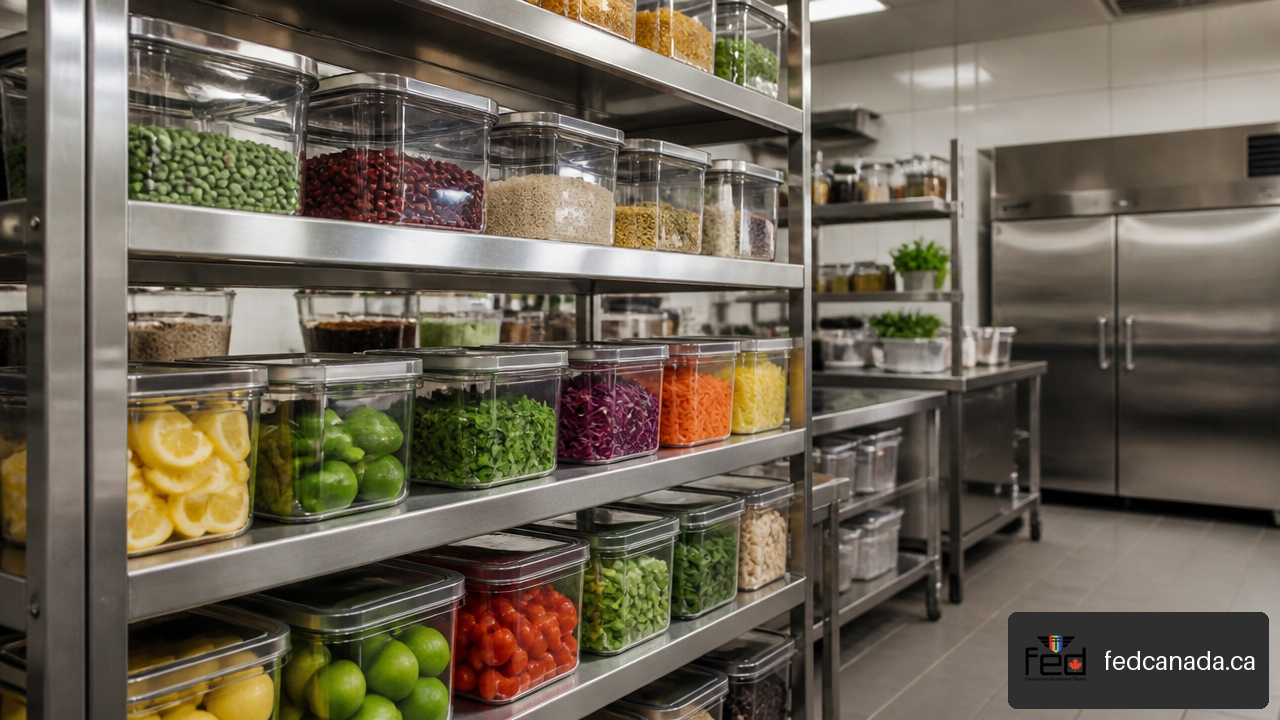
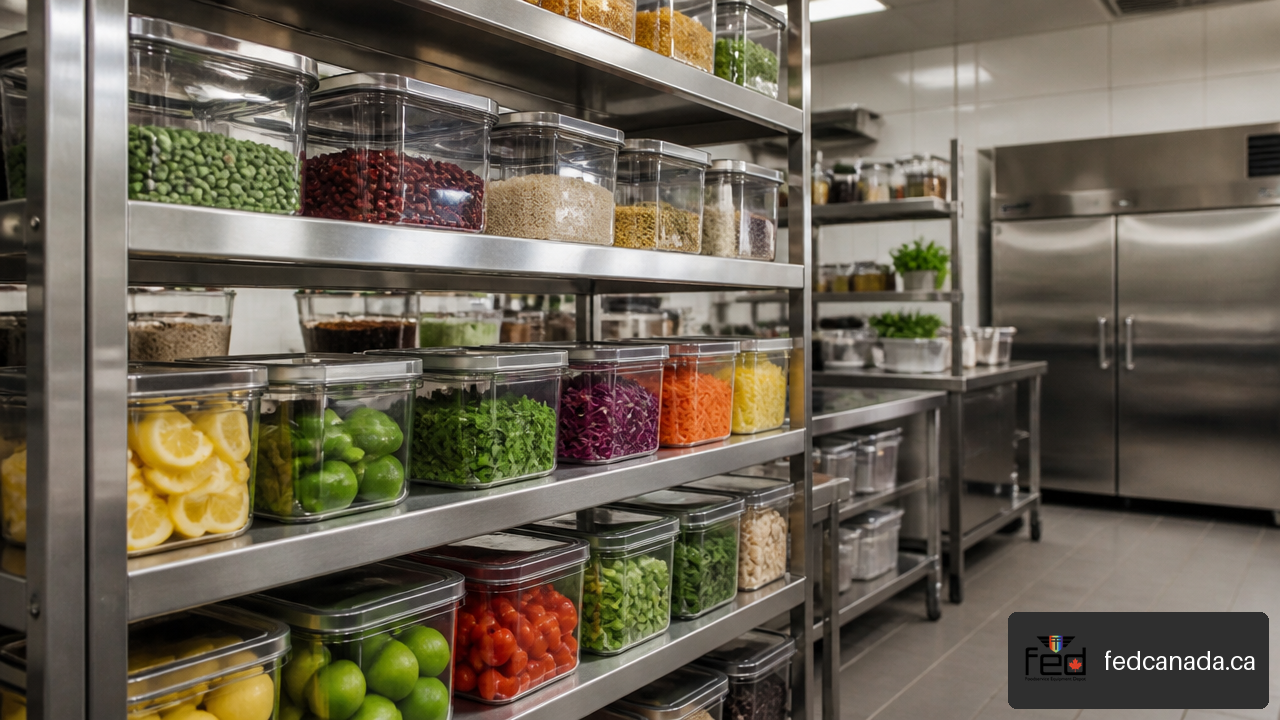
Cambro is one of the most recognized names in commercial food storage, but selecting the right container is more involved than choosing a size and adding a lid. I recommend looking at the material, shape, intended temperature range, lid compatibility, storage workflow, and cleaning routine before ordering. A clear container that works well for prep may not be the best choice for freezer storage, liquids, or frequent transport.
For restaurants, bakeries, caterers, institutions, and serious home cooks, the value of Cambro is usually not just the container itself. It is the ability to standardize food storage, make inventory visible, reduce spills, and keep a kitchen organized during busy service.
Table of Contents
Choosing Cambro by Kitchen Task
Cambro containers work best when the format matches the workflow. A square container can maximize shelf space, while a round container may be easier to stir, pour from, or clean. Food pans serve a different operational role again: they are built around standardized pan sizing for prep tables, holding equipment, buffet lines, and compatible lids.
Start with the food, not the container size
The first decision should be what you are storing and how often it moves. Dry ingredients, liquids, prepared foods, cut produce, raw proteins, sauces, and bulk prep each create different requirements.
| Kitchen task | Often practical container choice | Why it may fit | Watch for |
|---|---|---|---|
| Flour, sugar, grains, and dry mixes | Square storage containers | Square walls use shelving efficiently and make portion planning easier | Choose a lid that closes securely and confirm the capacity suits your ingredient bag size |
| Soup, sauce, stock, or dressing | Round storage containers | The round format can be convenient for stirring, ladling, and pouring | Do not assume every model is appropriate for every hot-food workflow |
| Cut produce and prepared ingredients | Clear or translucent containers with compatible lids | Visibility can speed up identification and inventory checks | Use labels and dates rather than relying on appearance alone |
| Holding ingredients in a prep table | Food pans | Standardized pan sizing supports equipment compatibility | Verify pan fraction, depth, and cover style before ordering |
| Transporting prepared foods | Properly covered containers or insulated transport equipment | A stable lid and appropriate product category can help limit spills | Storage containers are not automatically a substitute for dedicated transport products |
For a bakery, for example, a container system may start with square containers for flour and sugar, then use food pans for toppings and mise en place near the line. A soup-focused operation may use round containers for batch cooling and cold storage, but still rely on food pans for steam-table or prep-table compatibility.
The point is simple: one container family does not need to do every job. Trying to force a single format across dry storage, prep, service, and transport can create awkward shelving, mismatched lids, and slower prep work.
CamSquares, CamRounds, FreshPro, and Classic
Cambro organizes storage products into families, and those family names matter when ordering lids or replacement components. Square containers are commonly associated with efficient shelf use. Round containers suit many liquid and bulk-prep tasks. Product families may also have different accessories and design details.
Cambro’s food storage collection includes FreshPro and Classic families, plus covers, drain shelves, and related formats. FreshPro is especially relevant when moisture management or a more structured ingredient-storage setup is needed, because the range includes square containers, round containers, seal covers, pails with bails, and drain shelves.
A drain shelf can be useful when the goal is to keep a product raised above collected liquid. Consider washed produce or thawing ingredients: separating food from runoff may support a cleaner storage process. It is not a universal accessory, though. For dry goods, a drain shelf generally adds cost and takes up usable volume without solving a real problem.
Cambro compared with generic plastic storage
Cambro is often compared with Rubbermaid-style food containers or unbranded polycarbonate storage. The useful comparison is not brand reputation alone. I would compare the complete system: container geometry, lid availability, replacement options, temperature rating, visible measurement marks, and whether the product fits existing kitchen equipment.
| Comparison point | Cambro system approach | What to verify with alternatives |
|---|---|---|
| Product range | Storage containers, food pans, covers, accessories, and transport categories | Whether matching components remain available over time |
| Lid matching | Often tied to a specific shape, series, or size | Whether lids are truly interchangeable or only look similar |
| Commercial workflow | Designed around repeated storage, prep, service, and organization tasks | Whether the product suits dishwasher use and commercial handling |
| Replacement planning | Some Cambro categories have replacement parts available | Whether replacement lids or parts can be purchased separately |
| Equipment compatibility | Food pan formats can align with standardized service equipment | Whether dimensions fit your prep table, rail, cooler, or shelving |
Price still matters. But buying a lower-cost container that requires a second storage format, does not stack well, or leaves no replacement-lid path can cost more in wasted space and extra purchasing later. This is the same logic behind broader purchasing decisions covered in Crucial factors to consider when buying restaurant equipment.
Materials, Temperature Limits, and NSF Distinctions
Container material affects visibility, temperature capability, weight, durability expectations, and use case. It should not be treated as a cosmetic difference.
Why the material label matters
Cambro round containers are available in more than one material, and the stated temperature capability can range from minus 40°F to 210°F, depending on the material and product configuration. Cambro outlines these round-container material, dishwasher, NSF, and temperature distinctions on its product page.
That range should not be read as a blanket rating for every Cambro container. The name on the container is not enough. A buyer should check the specific series, material, item number, and manufacturer guidance before placing hot food into a container or moving it from freezer to wash area.
The same caution applies to square formats. Cambro states that its square food-storage containers use multiple materials and that performance ranges vary by material, including ratings from minus 40°F to 210°F for applicable models. Review the square-container temperature and material specifications rather than assuming every square unit performs the same way.
Polycarbonate, translucent plastic, and polyethylene
Cambro uses materials such as polycarbonate, translucent plastic, and polyethylene across parts of its storage range. Here is the practical distinction I would make during a purchase review.
| Material category | Practical strength | Best fit | Decision caution |
|---|---|---|---|
| Polycarbonate, including Camwear products | Clear visibility and a rigid commercial feel | Ingredient identification, prep visibility, organized cold storage | Confirm the exact product rating before high-heat use |
| Translucent plastic | A balance of visibility and utility | General back-of-house storage where full clarity is not essential | Do not assume it performs exactly like polycarbonate |
| Polyethylene | Often useful where a less-clear, durable storage option is acceptable | Bulk ingredients and general storage tasks | Verify model-specific temperature and dishwasher guidance |
Visibility has operational value. When containers look similar, staff may open several lids to find one ingredient. That adds handling and can slow prep. Clear containers can reduce that friction, but labels still matter because appearance does not reliably identify age, allergens, recipe version, or whether an item is raw or cooked.
NSF-listed is helpful, but not a universal approval
Many Cambro storage models are described as NSF-listed, which can be relevant for foodservice buyers looking for products designed for sanitation-focused commercial environments. Still, NSF status should be checked at the individual model level.
Fair warning: NSF listing does not replace local food-premises requirements, staff training, cooling procedures, cleaning schedules, or temperature controls.
A container may be suitable for food contact and commercial sanitation expectations while still being unsuitable for a particular heating application. For example, a container’s NSF listing does not automatically mean it can go into any oven, microwave, dishwasher cycle, or hot holding unit. The exact equipment instructions remain the deciding factor.
For Canadian operators, the better approach is to treat the container as one part of a food-safety system. Use it with correct cooling methods, covered storage, separation of raw and cooked foods, accurate labels, and local public-health requirements.
Lids, Food Pans, and Compatibility Checks
The most frustrating storage mistake is often not choosing the wrong container. It is ordering lids that do not match the series, size, or intended function.
Use a lid-and-container verification workflow
Before ordering, I recommend following this sequence:
Identify the container family, such as CamSquares, CamRounds, FreshPro, Classic, or a specific food-pan line.
Confirm the capacity or pan size, not just the outer dimensions.
Match the lid or cover to that exact series and size.
Decide whether you need a standard cover, a seal cover, or a food-pan lid.
Check whether the container will be stacked, transported, stored in a cooler, or used in a prep rail.
Keep item numbers for commonly replaced lids in the purchasing file.
This workflow matters because lids can appear nearly identical while fitting differently. A lid that sits loosely may reduce spill control and compromise the storage routine. A lid that fits too tightly or is forced into place may wear sooner or make quick access difficult during service.
If a lid becomes difficult to remove or no longer seems to seal properly, avoid treating it as a universal defect. Check whether the lid was paired with the correct container family, whether it has been exposed to temperatures outside its specifications, and whether the rim is warped, cracked, or carrying residue. When in doubt, replacing the component is more reliable than trying to modify it.
Food pans are not ordinary storage containers
Food pans are designed around commercial pan sizing rather than just volume. This is where gastronorm sizing matters. A food pan may fit a steam table, prep table, refrigerated rail, buffet unit, or compatible cover system, while a standard storage container may not.
Cambro’s Camwear food pans are offered in multiple size families and depths, including commonly listed depths of approximately 2.5, 4, 6, and 8 inches for several pan formats. Depth changes the usable volume, product exposure, and holding capacity. It also affects whether the pan fits a particular rail or lid arrangement.
For instance, a shallow pan may suit toppings on a sandwich line because employees can reach ingredients quickly. A deeper pan may make more sense for batch prep or chilled holding, but it may be inefficient for a low-volume topping that needs frequent replenishment. The deeper option can also make it harder to maintain a neat, accessible product layer during a rush.
Cooler organization and storage discipline
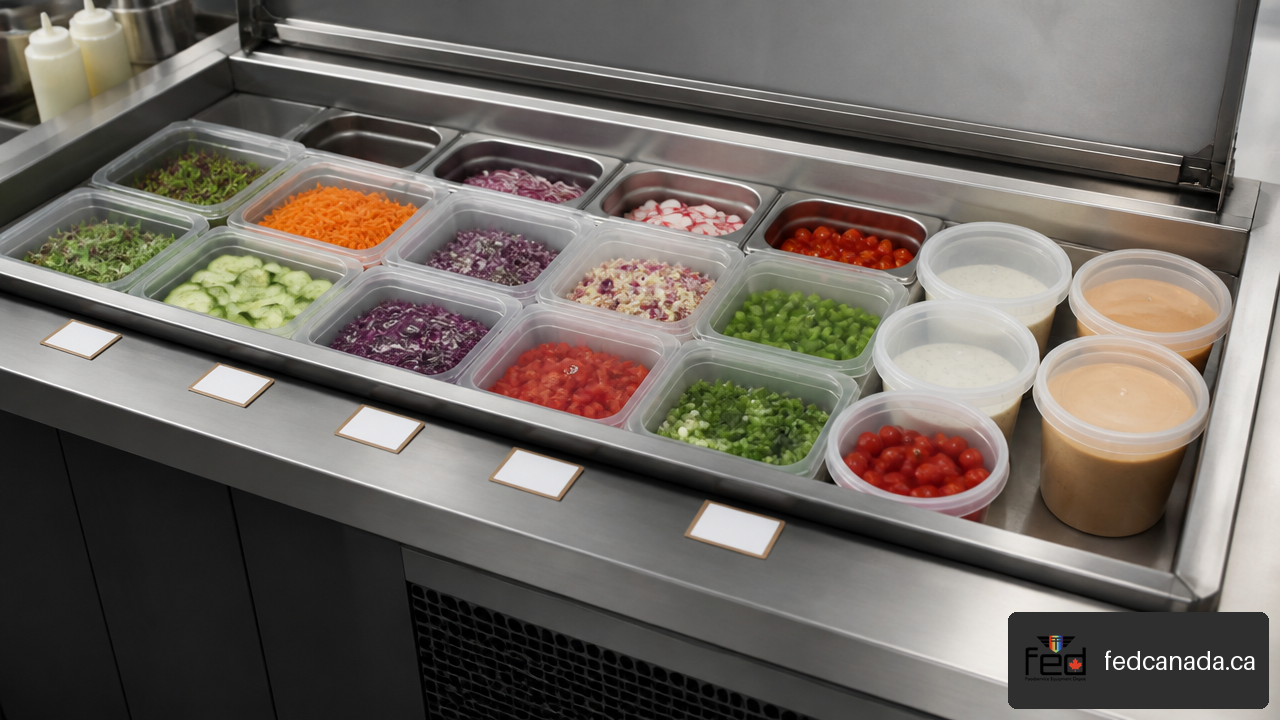
The container system should work with the cooler, not fight it. A reach-in refrigerator may reward smaller, frequently accessed containers, while a walk-in cooler can accommodate bulk storage and more deliberate shelf zoning. For more equipment-level planning, see Choosing between reach-in and walk-in coolers.
Cambro’s storage guidance recommends tight-fitting lids, separation of raw and cooked foods, labelling, dating, and FIFO rotation. These food-storage practices from Cambro StoreSafe are operationally useful because containers alone do not prevent cross-contamination or inventory loss.
A practical cooler setup might include:
Raw proteins stored separately from ready-to-eat food
Covered containers labeled with item name, prep date, and discard date according to the operation’s procedures
Older product placed ahead of newer product for FIFO use
Container shapes standardized by shelf zone where possible
Lid types kept together so replacements are easy to identify
For a new kitchen, food storage should be considered alongside refrigeration, prep surfaces, shelving, and sanitation equipment. Top 10 essential pieces of equipment for any commercial kitchen provides useful context for building that larger equipment plan.
Key Takeaways
The buying decision in brief
Choose square Cambro containers when shelf efficiency and organized dry or prepared-food storage are priorities.
Choose round containers when stirring, pouring, or storing soups, sauces, and liquids is a major part of the workflow.
Choose food pans when the container must fit a prep table, holding unit, buffet setup, or standardized pan system.
Check the exact material and product family before relying on temperature, dishwasher-safe, freezer, or NSF-related claims.
Match every container to its specific lid or cover. Similar-looking lids are not necessarily compatible.
A better way to control long-term cost
The purchase price is only one part of the equation. A useful container system reduces time spent searching for ingredients, minimizes awkward stacking, and makes it easier to replace a missing lid without replacing an entire assortment.
I would prioritize a smaller, repeatable set of container sizes over a collection of random formats. For example, a café may standardize on a few square sizes for dry goods, a few round sizes for sauces, and a defined food-pan setup for the line. That approach is easier to train, label, wash, store, and reorder.
Frequently Asked Questions
What is Cambro used for?
Cambro is used across foodservice for food storage, preparation, holding, transport, service, and kitchen organization. Its storage containers, lids, food pans, and accessories can support restaurants, catering operations, bakeries, cafeterias, healthcare foodservice, and home kitchens that want commercial-grade storage options.
Are Cambro containers safe for hot food?
Some Cambro containers may be suitable within their stated temperature ratings, but the answer depends on the exact material and product family. Check the manufacturer’s specifications for the specific model before using it with hot food. Do not apply one container’s temperature range to every Cambro product.
What is the difference between Camwear and translucent Cambro containers?
Camwear refers to Cambro’s polycarbonate-based product material and family, often selected for clarity and visibility. Translucent containers provide a different balance of visibility and material characteristics. Both can be useful, but they should be compared by the actual item specifications, not appearance alone.
Are all Cambro containers dishwasher-safe?
No blanket assumption is appropriate. Many Cambro storage models are dishwasher-safe, but dishwasher suitability can vary by item, material, and manufacturer instructions. Confirm the specific container and lid before setting a purchasing or cleaning standard.
Are Cambro lids interchangeable between product lines?
Not necessarily. Lids are commonly designed around a specific container shape, size, and family. Confirm the item number and compatible series before ordering replacements. A square lid is not automatically compatible with every square container, and the same applies to round formats.
Which Cambro container is best for dry ingredients?
Square containers are often a practical choice for dry ingredients because they can use shelf space efficiently and support neat ingredient zoning. Select a capacity that matches how quickly the product is used, and avoid overfilling containers that need room for scoops or frequent access.
Which Cambro container is best for soups and sauces?
Round containers are often convenient for soups, sauces, stocks, and dressings because the shape can make stirring and pouring more straightforward. Still, confirm the material rating, compatible lid, and intended temperature use before choosing a specific model.
Can Cambro containers be used in Canadian restaurants?
Cambro containers can be part of a Canadian restaurant’s food-storage program, provided the operation follows applicable local food-safety requirements and uses each product as intended. The container should support, not replace, procedures for cooling, labeling, dating, raw-food separation, sanitation, and temperature control.
Sources
Cambro product resources
Cambro — Round Food Storage Containers and Lids: https://www.cambro.com/products/food-storage/round-storage-containers/
Cambro — Square Food Storage Containers and Lids: https://www.cambro.com/Products/food-storage/square-food-storage-containers/
Cambro — Food Storage Containers: Squares, Rounds and Food Boxes: https://www.cambro.com/products/food-storage
Cambro operational guidance
Cambro — Camwear Food Pans: https://www.cambro.com/Products/food-pans-and-lids/food-pans/camwear-pans/
Cambro StoreSafe — Storage Containers: https://www.cambro.com/storesafe-old/storage-containers/
Recent Posts

Leave a Comment
Your email address will not be published. Required fields are marked *