



Carbon Steel Pan Guide for Better Searing and Everyday Cooking
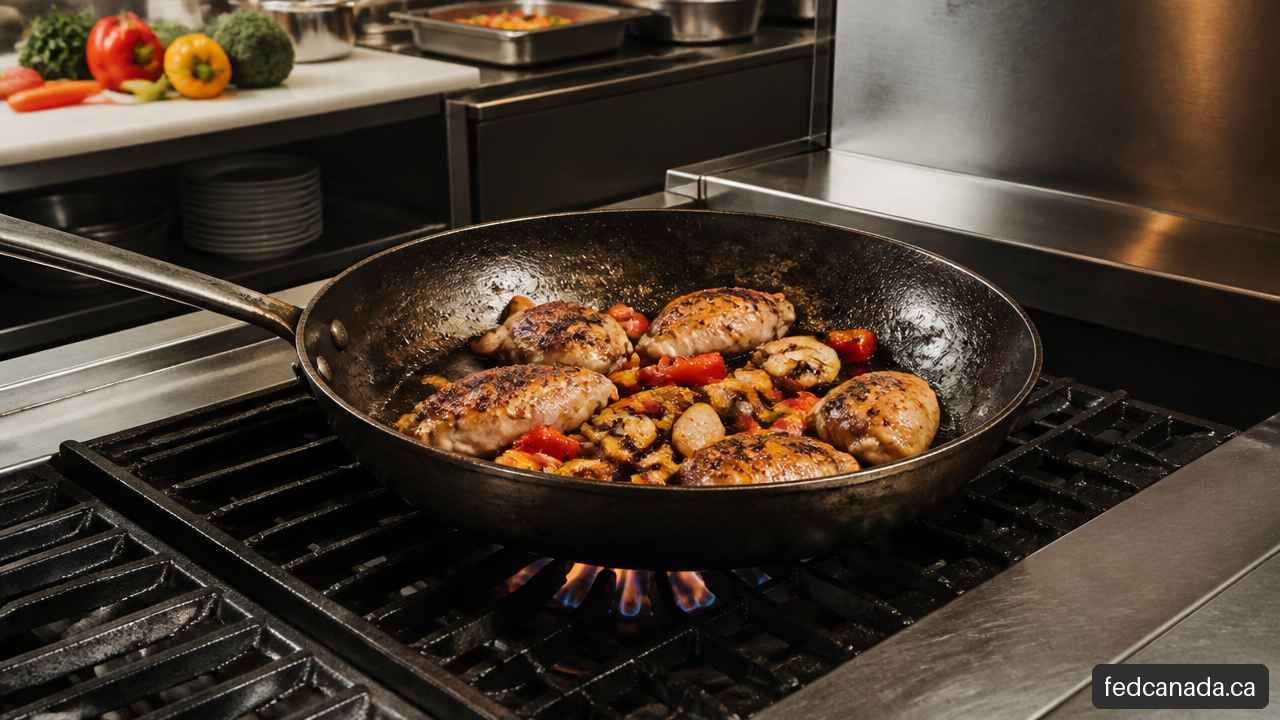
A Carbon Steel Pan is a practical choice when you want strong browning, quick responsiveness to burner changes, oven flexibility, and a cooking surface that can improve with regular care. It is not maintenance-free cookware, but its demands are straightforward: build seasoning, control heat, dry it thoroughly, and correct small problems before they become large ones.
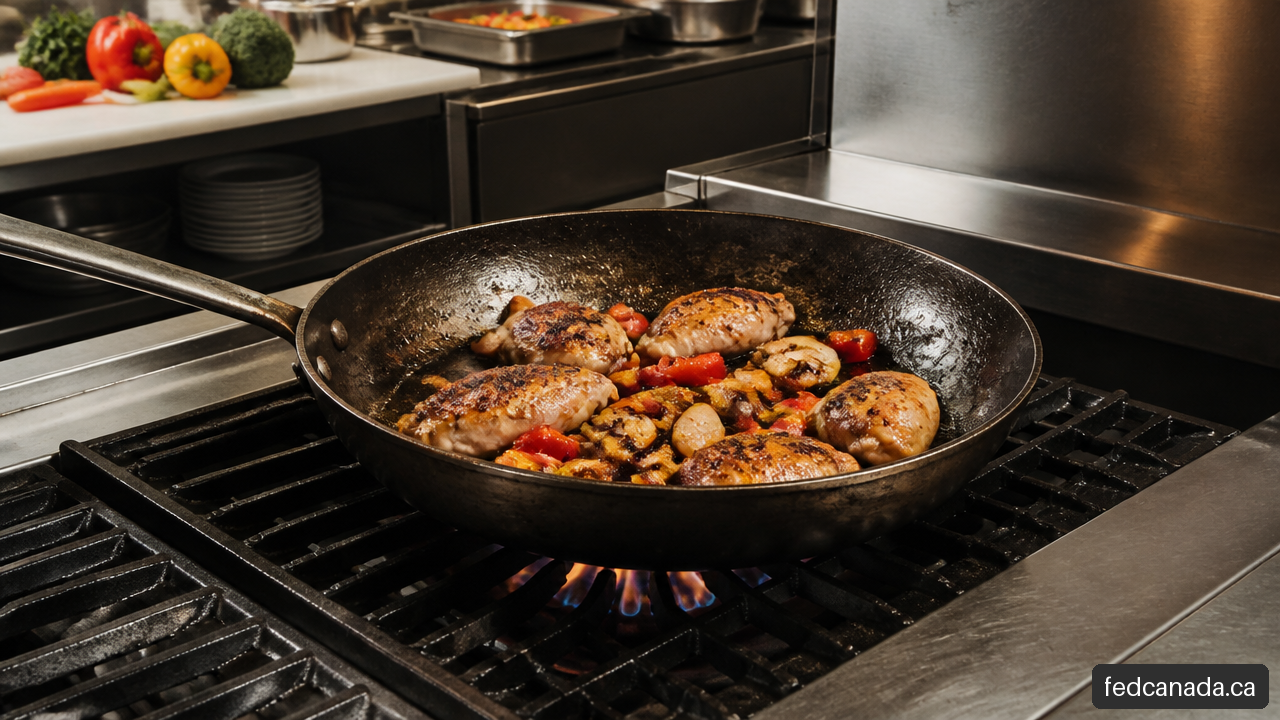
Table of Contents
- Key Takeaways
- What Makes a Carbon Steel Pan Different
- How to Choose the Right Carbon Steel Pan
- Seasoning and Maintaining the Cooking Surface
- Cooking Techniques, Heat Control, and Common Problems
- Carbon Steel Pan FAQ
Key Takeaways
A carbon steel pan rewards repeat use
I would treat carbon steel as a working pan rather than decorative cookware. Its bare steel surface needs protection from moisture, but a thin layer of polymerized oil, known as seasoning, gradually creates a darker patina that improves food release and helps limit surface oxidation.
It suits high-heat tasks especially well
Carbon steel is well suited to sautéing vegetables, browning proteins, frying potatoes, cooking burgers, and finishing dishes in the oven. It generally responds to changes in burner output more quickly than heavy cast iron, while still holding useful heat once fully preheated.
Technique matters as much as the pan
A seasoned carbon steel pan can become impressively low-stick, but it is not identical to factory-coated non-stick cookware. Eggs, delicate fish, and pancakes can work well when the pan is properly preheated and lubricated. They are more likely to stick when cold food hits an underheated pan, when moisture remains on the food, or when the seasoning is thin.
Maintenance is simple but not optional
For routine use, I recommend four habits:
- Clean the pan soon after it cools enough to handle safely.
- Dry it completely, including around the handle rivets and outer base.
- Warm it briefly to drive off hidden moisture.
- Wipe on an extremely thin film of cooking oil before storage if the surface looks dry.
What Makes a Carbon Steel Pan Different
Carbon steel combines steel construction with a seasoned surface
A carbon steel pan is iron-based cookware made from relatively thin steel. Unlike coated non-stick cookware, its release properties come from a heat-created oil film rather than a manufactured coating. When oil is applied sparingly and heated, it changes into a more durable film bonded to the cooking surface. Repeated cooking adds to that film unevenly at first, then gradually builds a more stable patina.
The result is a pan with two distinct characteristics:
- The metal body transfers and stores heat.
- The seasoning layer helps reduce sticking and protects exposed steel from rust.
That distinction explains many common frustrations. A dark pan is not automatically well seasoned if its oil layer is thick, gummy, or patchy. Likewise, a pan with visible brown or blue heat marks is not necessarily damaged. Heat discoloration and seasoning are different things.
Heat behavior: responsiveness versus heat retention
No cookware material eliminates the need for heat management. Carbon steel heats with the burner, then cools somewhat when cold food is added. A thicker pan holds more heat and is less prone to sudden temperature drops, but it is also heavier and slower to respond. A thinner pan heats rapidly and is easier to move, though it can develop concentrated hot areas on a small, powerful burner.
For example, a thin 10-inch pan may be excellent for a two-egg omelet or a quick vegetable sauté. The same pan can struggle if several cold chicken thighs are crowded into it at once. The food releases moisture, the pan temperature falls, and steaming replaces browning. The solution is not always more burner power. Cooking in batches or moving to a larger, heavier pan is often more effective.
Carbon steel compared with cast iron, stainless steel, and non-stick
The best choice depends on the food, cooktop, cleaning routine, and expected service. This comparison focuses on practical kitchen behavior rather than declaring one material universally better.
| Cookware type | Main strength | Main trade-off | Best fit |
|---|---|---|---|
| Carbon steel | High-heat searing, oven use, developing low-stick seasoning | Requires drying and periodic seasoning | Eggs, proteins, potatoes, stir-frying, sautéing |
| Cast iron | High thermal mass and steady heat | Heavy, slower to react, also needs seasoning | Searing, shallow frying, baking, long cooking |
| Stainless steel | Durable, non-reactive cooking surface, suitable for acidic foods | Requires more temperature and fat control for delicate foods | Pan sauces, tomatoes, wine reductions, everyday sautéing |
| Coated non-stick | Easy release at lower to moderate heat | Coating can wear and may limit very high-heat use | Delicate eggs, pancakes, gentle fish cookery |
I would choose carbon steel when a kitchen needs a pan that can move from stovetop searing to oven finishing and tolerate regular, demanding use. I would choose stainless steel for long tomato sauces, citrus-heavy reductions, or vinegar-based braises. A dedicated non-stick pan may still make sense for high-volume eggs where simple release and fast cleanup matter more than a hard sear.
How to Choose the Right Carbon Steel Pan
Start with diameter, not just advertised capacity
The stated diameter of a Carbon Steel Pan can be misleading because sloped sides reduce the flat cooking area. A 12-inch pan may have a considerably smaller flat base than its rim suggests. For restaurant prep or family meals, that usable base matters most.
| Pan size | Practical use | Consider before buying |
|---|---|---|
| 8 to 9 inches | One or two portions, fried eggs, small sauces | Limited room for browning without crowding |
| 10 to 11 inches | Everyday home cooking, two to four servings | Often the most versatile compromise of weight and area |
| 12 inches and larger | Batch cooking, proteins, restaurant stations | Can be heavy and may heat unevenly on a small burner |
For a foodservice operation, I would match pan diameter to the station and burner rather than buying the largest option by default. A wide pan on a narrow electric element can brown intensely in the center while leaving a cooler outer ring. On induction, a flat base that closely matches the induction zone usually matters more than the pan’s rim diameter.
Consider thickness and base geometry
Thickness is a trade-off, not a quality score. Thicker carbon steel generally offers more resistance to warping and better heat recovery when food is added. It also demands more energy to heat and can become tiring during repeated service. Thinner steel feels agile and may be ideal for tossing vegetables or making omelets, but abrupt temperature changes can put greater stress on the base.
To reduce warping risk, I recommend avoiding a few habits:
- Do not place a hot empty pan under cold water.
- Do not heat an empty pan aggressively for long periods on the smallest burner setting area.
- Do not use a pan whose base is far wider than the active heating zone for prolonged high heat.
- Let the pan cool naturally before washing whenever practical.
A slightly convex or concave base may affect contact on glass, ceramic, electric, or induction cooktops. A pan that rocks visibly on a flat surface is worth addressing, particularly in commercial settings where stable placement and even heating affect consistency.
Check handles, oven limits, and induction compatibility
Most uncoated carbon steel pans are magnetic and can work on induction cooktops, but I would still confirm the manufacturer’s stated compatibility. A magnetic material alone does not guarantee ideal performance if the base is warped or poorly matched to the cooking zone.
Handle shape changes daily usability. A long handle provides leverage but requires clearance on crowded ranges. A helper handle makes a larger pan easier to transfer when loaded. Bare metal handles are normally oven-safe, but they become hot on the stovetop and in the oven. Silicone sleeves may improve grip but can impose their own temperature limits.
For Canadian foodservice buyers, also consider the practical delivery path: pan weight, storage space, oven dimensions, and whether the range has induction, gas, coil electric, or glass-ceramic elements. The right pan is the one that fits the actual station, not merely the specification sheet.
Seasoning and Maintaining the Cooking Surface
First seasoning: thin coats work better than thick coats
Some carbon steel pans arrive pre-seasoned, while others have a protective factory coating that needs removal before cooking. Follow the maker’s preparation instructions first. If initial seasoning is needed, the objective is a very thin, dry-looking oil film heated until it darkens and bonds to the steel.
A reliable process is:
- Wash off any shipping residue or protective coating as directed.
- Dry the pan fully over low heat.
- Add a small amount of cooking oil with a high smoke point.
- Wipe the oil over the interior, then wipe again until the pan looks almost dry.
- Heat until the oil smokes lightly and the surface begins to darken.
- Allow the pan to cool, then repeat with one or two additional thin coats if needed.
The second wipe is the step many people skip. Excess oil can form sticky patches because the layer is too thick to cure evenly. A smooth, thin coating is more useful than a dark, tacky one.
Everyday cleaning without stripping useful seasoning
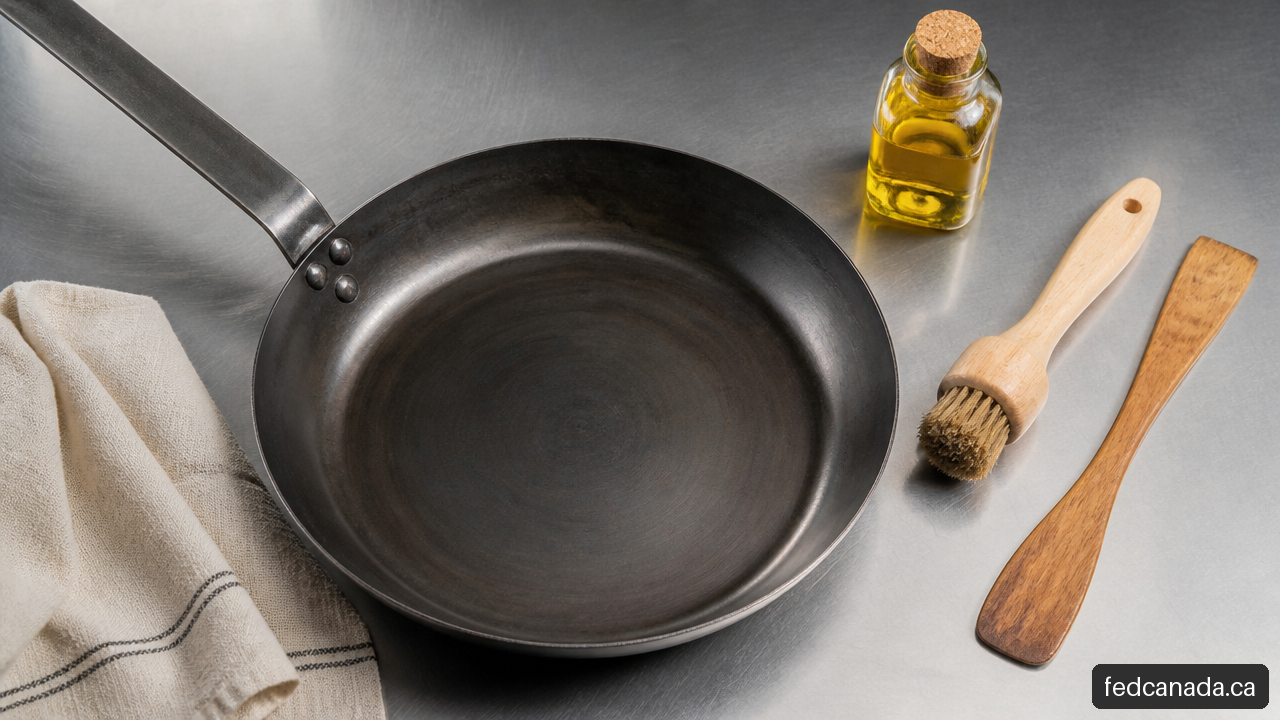
A carbon steel pan does not need to be treated as fragile. It does, however, need to be dried promptly. Warm water, a soft brush, and gentle scrubbing are usually enough for normal cleanup. For stuck food, add water to the pan, warm it briefly, and loosen residue with a wood or silicone utensil.
Small amounts of mild dish soap may be useful when grease needs removal, especially if the seasoning is well established. What matters is the result: if repeated washing leaves the surface dull, dry, or prone to sticking, refresh it with a thin stovetop seasoning coat.
A clean pan is not the same as a stripped pan. Remove food residue and excess grease, then preserve a dry, lightly protected cooking surface.
Rust, patchiness, and discoloration are recoverable
Rust is surface oxidation caused by moisture reaching exposed steel. Small orange spots are usually fixable. Scrub the affected area with a nonmetal brush, coarse salt, or a suitable abrasive pad, rinse quickly, dry over heat, and reseason the exposed area. Heavy corrosion, deep pitting, or a distorted base may require more extensive restoration or replacement.
Patchy seasoning is normal during early use. Acidic foods, aggressive scrubbing, and high-heat cooking can remove or thin parts of the patina. Tomatoes, citrus, wine, and vinegar are not automatically forbidden, but prolonged acidic cooking can affect weak seasoning and sometimes add a metallic taste. I would use stainless steel for a long tomato braise and reserve carbon steel for quick acidic additions, such as a brief squeeze of lemon near the end of cooking.
Cooking Techniques, Heat Control, and Common Problems
Use a simple preheat sequence
For most sautéing and searing, begin with a dry pan over moderate heat. Let the metal warm gradually, then add oil once the surface is hot enough for the oil to flow easily. Add food after the oil shimmers but before it produces excessive smoke.
There is no universal number of minutes because burner output, pan thickness, food temperature, and pan diameter vary. Instead, use observable cues. Oil should spread readily. A small test piece of food should sizzle rather than sit silently. If oil smokes aggressively before food is added, lower the heat and let the pan settle.
Diagnose sticking before changing the pan
Sticking usually has more than one cause. The following table separates the common failure modes so you can correct the right one.
| What you see | Likely cause | Practical correction |
|---|---|---|
| Egg whites bond immediately | Pan was underheated, seasoning is immature, or too little fat was used | Preheat gently, add enough fat, and rebuild seasoning through regular cooking |
| Chicken tears when turned | Protein has not browned enough to release | Leave it longer before moving it; reduce crowding |
| Vegetables steam instead of brown | Pan is crowded or food is wet | Cook smaller batches and dry ingredients before cooking |
| Brown sticky residue after cooking | Heat was too high or sugary ingredients scorched | Deglaze while warm, then clean and use lower heat next time |
| Surface feels tacky after seasoning | Oil coat was too thick | Scrub lightly if needed, then apply a much thinner coat |
Eggs and fish are achievable, but they demand more precision than a steak. A practical progression is to build seasoning through potatoes, onions, sautéed vegetables, and proteins before expecting flawless omelets. This is not a limitation of the material alone; it is the interaction of temperature, moisture, fat, and surface condition.
Use the pan where it has an advantage
For a restaurant or foodservice kitchen, carbon steel can be especially useful where speed and versatility matter. Consider a line cook searing a chicken cutlet, moving the pan into the oven to finish, then deglazing quickly with a small amount of stock. The pan supports the sear and oven transfer well. If the next dish requires a long lemon-and-wine reduction, switching to stainless steel may be the cleaner operational choice.
I would avoid using carbon steel as the only pan for every task. Its value comes from covering a demanding middle ground: more rugged and high-heat capable than coated non-stick, generally easier to maneuver than heavy cast iron, and more naturally low-stick over time than bare stainless steel. A well-planned cookware setup can include all three materials.
Carbon Steel Pan FAQ
Does a carbon steel pan need to be seasoned?
Yes. Seasoning helps protect exposed steel from moisture and improves food release. Pre-seasoned pans still benefit from continued cooking and occasional touch-ups because the patina changes with use.
Can a carbon steel pan go in the oven?
Usually, yes, if the entire pan and handle are bare metal and the manufacturer permits the temperature you plan to use. Check for wood, plastic, silicone, painted finishes, or handle coverings that may have lower oven limits.
Can carbon steel pans be used on induction cooktops?
Most carbon steel pans are suitable for induction because steel is magnetic. Confirm compatibility with the manufacturer and use a flat-based pan on an appropriately sized induction zone for the best contact.
Can acidic foods be cooked in carbon steel?
Brief exposure is often manageable once seasoning is established, but long cooking times with tomatoes, vinegar, citrus, or wine can weaken seasoning. Use stainless steel for extended acidic sauces and re-season carbon steel if the surface becomes dry or patchy.
Why is food sticking to my carbon steel pan?
The most common reasons are insufficient preheating, inadequate fat, wet or cold food, crowding, and immature seasoning. Check those factors before assuming the pan is defective. For proteins, wait until browning creates a natural release point before turning.
What should you do if a carbon steel pan rusts?
Remove light rust with gentle abrasion, rinse briefly, dry the pan over heat, and apply a thin seasoning coat. Do not store the pan wet or leave it soaking. Prompt drying is the most reliable prevention.
Why is my carbon steel pan turning blue, brown, or black?
Blue and brown tones can be heat discoloration in the steel. Black areas often reflect seasoning buildup. Color alone does not determine performance; the useful signs are a dry surface, stable seasoning, and reasonably consistent food release.
Is a carbon steel pan suitable for eggs, fish, and pancakes?
It can be, particularly after seasoning has developed. Use moderate heat, adequate butter or oil, and avoid rushing the release. For extremely delicate preparations or high-volume egg service, a dedicated coated non-stick pan may remain the more efficient tool.
Recent Posts
Leave a Comment
Your email address will not be published. Required fields are marked *