



Convection Oven Guide: Settings, Timing, and Better Results
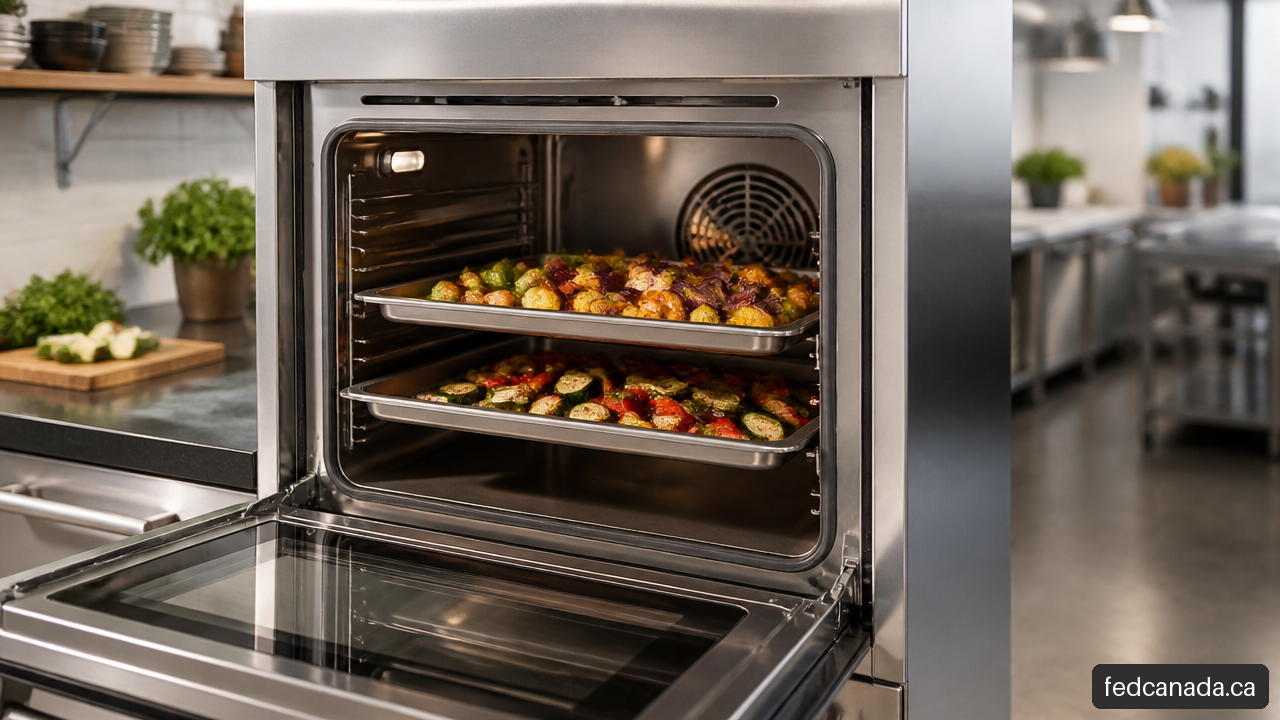
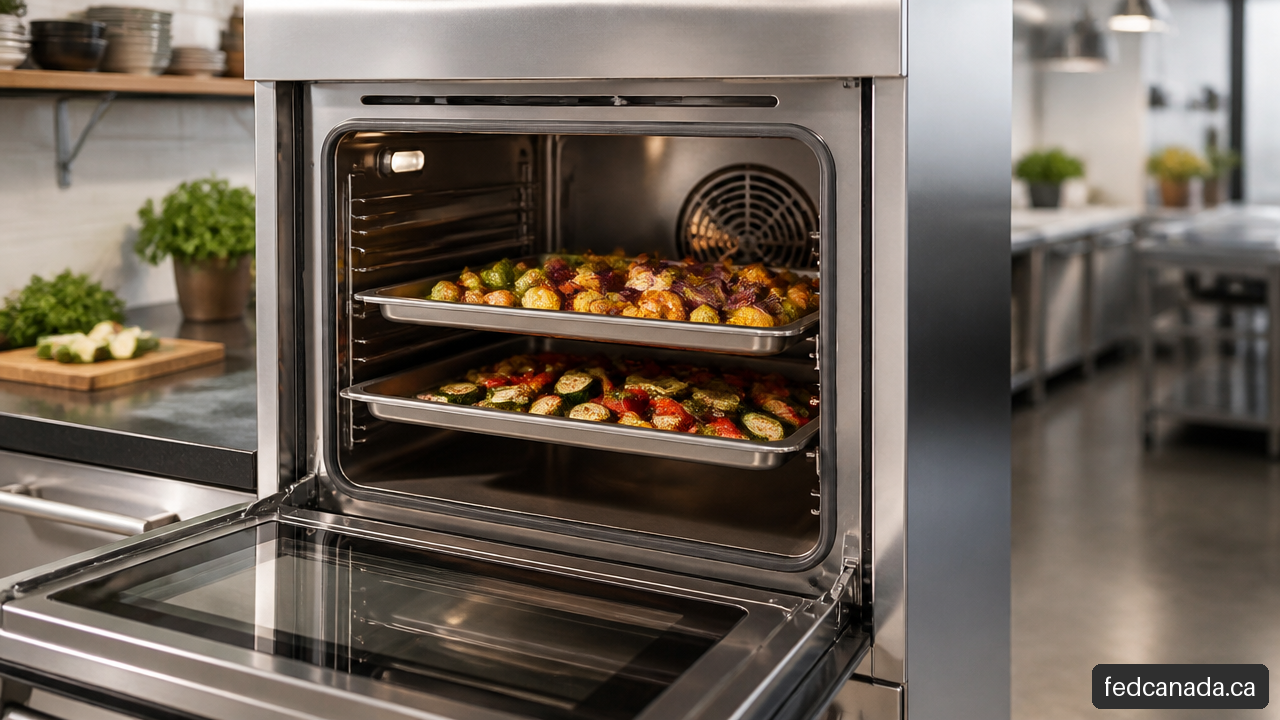
A Convection Oven uses a fan to move heated air around food. That simple change affects far more than cooking speed: it can alter browning, moisture loss, rack placement, pan choice, and the way a conventional recipe should be adjusted. I recommend treating convection as a useful cooking mode rather than an automatic upgrade for every dish.
For roasted vegetables, sheet pan meals, cookies, and multi rack baking, circulating air can produce efficient, even results. For delicate cakes, custards, soufflés, and items that need a gentle, stable rise, regular bake may be the safer choice. The goal is not to use convection every time. It is to match the mode to the food and the result you want.
Table of Contents
- How a Convection Oven Moves Heat
- How to Convert Conventional Recipes
- Racks, Pans, and Multi Rack Cooking
- Troubleshooting Convection Oven Problems
- Key Takeaways
- Convection Oven FAQ
How a Convection Oven Moves Heat
The fan changes the heat transfer process
A conventional oven heats food mostly through radiant heat from oven walls and heating elements, plus the natural movement of hot air. Hot air rises, cooler air sinks, and the oven cavity gradually develops areas that may cook somewhat faster or slower.
A convection oven adds forced air movement. The fan moves hot air across the surface of the food, helping heat reach exposed areas more consistently. This can reduce some hot spots, improve surface browning, and speed up evaporation from the food’s exterior.
That last point matters. Faster evaporation is useful when you want crisp roasted potatoes or deeply browned vegetables. It can be less useful when baking a sponge cake that needs moisture and gentle heat to rise before the outside sets.
Frigidaire owner documentation notes that convection cooking can help food brown more evenly and may reduce oven hot spots. Its explanation of convection browning and hot spot reduction is a helpful reminder that airflow improves consistency, but does not make every oven perfectly uniform.
Fan assisted convection versus true convection
Not every convection oven works in exactly the same way. Before applying a recipe conversion, identify which system your appliance uses.
| Convection design | How it generally works | Practical implication |
|---|---|---|
| Fan assisted convection | A fan circulates air while the oven relies mainly on its standard heating elements | Results can vary more by oven design and rack position |
| True convection | A fan is paired with an additional heating element, often near the rear of the oven | Air entering the cavity may be heated more directly and consistently |
| Convection roast | Fan movement is combined with a roasting focused heating pattern | Often useful for larger cuts of meat and vegetables, but timing still needs checking |
| Convection convert mode | The appliance automatically adjusts a conventional temperature setting | Useful as a starting point, not a substitute for checking doneness |
“European style convection” and “true convection” are common names for a fan and rear element arrangement. The names are helpful, but they are not a promise that every oven will cook identically. Fan strength, cavity size, heating element layout, sensor accuracy, pan material, and food load all influence the result.
Why food can brown before the center is cooked
A convection oven can create a surface to interior mismatch. The exterior browns, dries, or crisps quickly while the middle still needs time. This usually happens when the airflow and oven temperature are too aggressive for the size, density, or moisture level of the food.
Consider a thick casserole topped with cheese. At a high convection temperature, the top may become deeply browned before the center is fully hot. The same problem can occur with dense muffins, stuffed poultry, thick loaves, and large baked pasta dishes.
When this happens, do not assume convection is failing. First, lower the temperature modestly, move the pan away from the strongest heat zone if your manual identifies one, and allow enough time for the center to cook. If the surface has reached the desired color, loosely cover it only if the cookware and appliance instructions allow it. Keep loose paper products away from the fan and heating elements.
Convection improves heat movement around food. It does not eliminate the time needed for heat to travel into a thick or dense center.
How to Convert Conventional Recipes
Start with one adjustment, not two
The familiar convection rule is to reduce a conventional oven temperature by 25°F, which is roughly 14°C. Maytag Canada describes a 25°F reduction as a common convection adjustment in its guidance on convection temperature conversion.
That rule is useful, but it is not universal. I recommend choosing one primary adjustment first:
- Lower the temperature by about 25°F or 14°C while using the original time range.
- Or, keep the recipe temperature and begin checking substantially earlier.
- Avoid automatically lowering the temperature and cutting time by a large amount before you know how your oven behaves.
Using both adjustments too aggressively can leave the center underdone, particularly in thick baked goods or dishes with a lot of moisture. Think of the 25°F or 14°C conversion as a controlled starting point, not a fixed law.
Use food type to choose the conversion method
Different foods respond to airflow differently because they have different cooking goals. A roasted carrot needs surface dehydration and browning. A cheesecake needs slow, controlled setting. A cookie needs enough surface heat to spread and brown without becoming dry.
| Food or cooking goal | Suitable mode | Starting adjustment | What to watch for |
|---|---|---|---|
| Roasted vegetables | Convection roast or bake | Lower temperature about 25°F or 14°C | Browning, crisp edges, pan crowding |
| Sheet pan proteins | Convection roast | Check early rather than relying on a fixed time cut | Safe internal temperature and surface color |
| Cookies on multiple pans | Convection bake | Lower temperature modestly | Uneven bottoms and overbrowned edges |
| Bread with a firm crust | Convection bake, depending on recipe | Start with a modest temperature reduction | Crust setting too early or excess drying |
| Cakes and delicate pastries | Regular bake is often safer | Use convection only when recipe or appliance guidance supports it | Doming, uneven rise, dry edges |
| Casseroles and baked pasta | Either mode, depending on depth | Lower temperature if using convection | Brown top with a cool center |
For roasting, some guidance suggests reducing conventional cooking time by roughly 20 percent. That can be a useful planning estimate, especially for smaller roasts and vegetables, but it should not replace a thermometer or doneness test. Thickness, starting temperature, bone structure, moisture, and pan depth matter more than a single percentage.
Check early and use doneness signals
The best practical habit is simple: begin checking food earlier than you normally would. Frigidaire Canada specifically advises cooks to check food at the minimum suggested cooking time when using convection bake to help avoid overbaking.
Use the doneness signal that fits the food:
- Use an instant read thermometer for meat, poultry, fish, and many baked goods.
- Check vegetables for tenderness and browning rather than relying only on the clock.
- Test cakes and quick breads near the center, not at the browned edge.
- Check cookies before removing the pan because carryover heat can continue cooking their bottoms.
- Let larger roasts rest before slicing so heat and juices can redistribute.
A recipe written specifically for convection is usually the best fit for convection mode. If the recipe does not identify the oven type, make a note of your temperature and actual finish time. After two or three uses, those notes become more reliable than generic conversion charts.
Racks, Pans, and Multi Rack Cooking
Make room for airflow
Convection only works as intended when air can move. A tightly packed oven turns the fan into a limited advantage because pans, tall casserole dishes, and oversized roasting pans block circulation.
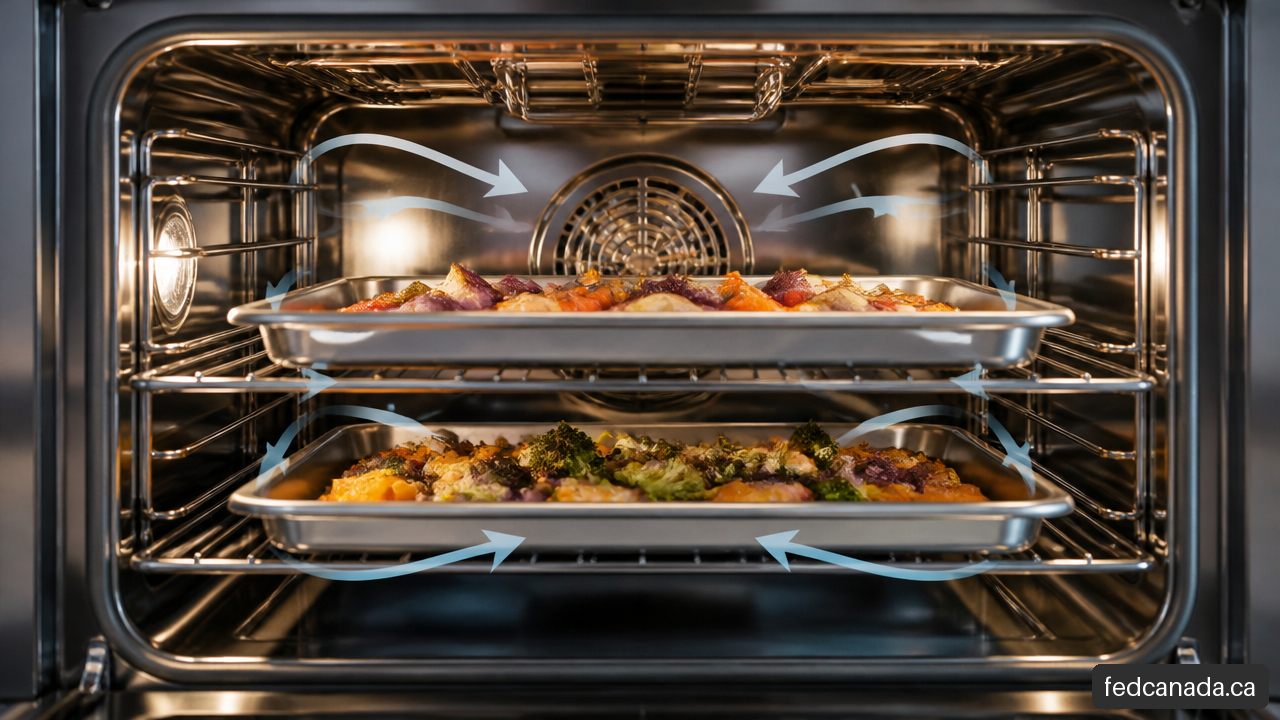
For single pan cooking, place the cookware where it has open space around it. For multiple racks, stagger pans rather than lining them up directly above one another. This creates channels for air to move through the oven cavity.
A practical multi rack arrangement looks like this:
- Leave visible space between pans and the oven walls.
- Avoid placing two large sheet pans directly on top of each other.
- Use racks recommended by the appliance manual for multi rack convection cooking.
- Rotate pans only if your oven instructions permit it and the food needs correction.
- Check items on separate racks individually because exposure is not always identical.
Match the pan to the task
Pan material and color can change results. Dark metal pans often absorb and transfer heat more aggressively than shiny aluminum pans. Glass and ceramic dishes can retain heat longer after removal. Those factors can amplify the effect of convection airflow.
For example, cookies baked on a dark sheet pan near the lower part of the oven may brown excessively underneath even when their tops look right. A lighter pan, a middle rack position, or a double pan setup may help moderate bottom heat. Community baking discussions have suggested stacked sheet pans as a possible workaround for overly browned bottoms, but it is not a universal fix. Test it with one batch before relying on it for production quantities.
When multi rack cooking helps and when it does not
Multi rack cooking is one of convection’s strongest practical advantages, especially for cookies, roasted vegetables, hors d’oeuvres, and sheet pan components prepared at the same temperature. It can reduce the need to bake in separate batches.
It is less useful when foods require different temperature settings, release a lot of moisture, or have delicate surfaces. For instance, baking a tray of cookies above a deep pan of roasting vegetables may expose the cookies to extra humidity and cooking odors. Two trays may fit, but they are not necessarily compatible.
For commercial foodservice applications, this distinction is especially useful. A convection oven supports throughput best when the menu items share similar temperature, timing, and airflow needs. Loading unrelated products just because there is space can create inconsistent results and more waste.
Troubleshooting Convection Oven Problems
Use a measurement first diagnosis
When results are disappointing, change one variable at a time. Do not keep lowering the temperature, shortening the time, moving racks, and switching cookware all in the same attempt. That makes it impossible to know what solved the problem.
I recommend this sequence:
- Confirm the selected cooking mode. Make sure the oven is actually set to convection bake or convection roast, not regular bake.
- Verify the cavity temperature with an oven thermometer after the oven has stabilized.
- Listen and look for normal fan operation, following the appliance manual’s safe inspection guidance.
- Confirm that pans are not blocking airflow.
- Review the recipe’s expected oven type and make one conversion change.
- Record the setting, rack position, cookware, and actual finish time for the next attempt.
This separates temperature accuracy from fan performance. A recipe conversion cannot correct an oven that is running significantly hot or cool. Likewise, recalibrating temperature will not restore the airflow benefit if the convection fan is not operating as expected.
Fast browning, pale bottoms, or slow cooking
| Symptom | Likely contributing factors | Practical response |
|---|---|---|
| Top browns too quickly | Temperature too high, upper rack placement, strong airflow | Lower temperature modestly, move rack if appropriate, check center doneness |
| Bottoms brown too much | Dark pan, low rack, concentrated bottom heat | Try a lighter pan, middle rack, or an insulating second sheet pan |
| Outside is cooked, center is raw | Surface heat is outpacing interior cooking | Reduce temperature, extend cooking, verify oven temperature |
| Food cooks slowly | Oven running cool, fan issue, crowded cavity, dense food | Verify temperature, check fan operation, create more airflow clearance |
| Results vary by rack | Airflow obstruction, oven hot spots, uneven pan loading | Stagger pans, reduce load, test rack positions separately |
There is no single controlled performance number that applies to all consumer convection ovens. A 25°F reduction or a 20 percent time estimate can be useful, but the reliable method is to observe your own appliance with measured temperature and repeatable notes.
When to use regular bake instead
Choose regular bake when gentle heat and moisture retention matter more than speed or browning. This often includes fragile custards, soufflés, some cheesecakes, delicate sponge cakes, and recipes with highly specific baking instructions.
That does not mean convection will always fail for those foods. It means the margin for error is smaller. A fan can set the outer structure before the interior has fully expanded, or it can dry exposed edges before the center finishes.
A useful test is to bake one small batch in each mode using the same pan and rack position. Compare color, rise, texture, and finish time. If convection produces the result you want consistently, keep the notes. If it adds variability, regular bake may be the more dependable setting.
Key Takeaways
- A convection oven uses fan driven air movement to improve heat distribution around food, but appliance designs and fan strength vary.
- Start conventional recipe conversion by reducing the temperature about 25°F or 14°C, or by checking earlier. Avoid making large temperature and time reductions at once.
- Convection is especially useful for roasted vegetables, sheet pan meals, cookies, and compatible multi rack cooking.
- Regular bake is often a safer choice for delicate, moisture sensitive, or rise dependent baked goods.
- Leave open space around pans. Stagger multi rack cookware so the fan can move air through the oven cavity.
- When results are inconsistent, verify actual oven temperature and fan operation before blaming the recipe conversion.
- Surface browning is not proof that the interior is done. Use food specific doneness checks, especially for thick dishes and proteins.
Convection Oven FAQ
What is a convection oven?
A convection oven is an oven that uses a fan to circulate heated air around food. The moving air can improve heat distribution, support browning, and make multi rack cooking more practical than it is in many conventional oven settings.
Do I reduce the temperature when using convection?
Usually, yes. A common starting point is reducing a conventional recipe temperature by 25°F, or approximately 14°C. However, use that as a starting adjustment. Dense casseroles, delicate cakes, and ovens with strong airflow may need a different approach.
How much faster does a convection oven cook food?
There is no universal answer. Some roasting guidance uses an estimate of about 20 percent less time, but actual timing depends on the food’s thickness, moisture, pan type, oven design, and whether the oven is crowded. Start checking early instead of assuming a fixed reduction.
Should I reduce both the temperature and cooking time?
Not automatically. Lowering temperature and shortening time at the same time may undercook the center. Start with a moderate temperature reduction, then monitor doneness earlier. Once you know how your oven performs, refine the timing.
Is convection better for roasting meat and vegetables?
It can be. Moving air helps dry and brown surfaces, which suits roasted vegetables and many cuts of meat. Use an appropriate food thermometer for proteins, because a browned exterior does not confirm a safe or finished center.
Can I use multiple racks in a convection oven?
Yes, particularly for similar foods that cook at the same temperature. Leave space around pans, stagger them between racks, and avoid combining foods that release very different amounts of moisture or need different timing.
Why is my food browning too quickly in convection mode?
The temperature may be too high for the airflow, the rack may be too close to a strong heat source, or the pan may absorb heat aggressively. Lower the temperature modestly, use the middle rack where appropriate, and verify actual oven temperature with an oven thermometer.
How can I tell whether the convection fan is working?
Use the appliance manual’s guidance for your specific model. In many ovens, the fan can be heard or observed operating during the convection cycle, although some models cycle the fan rather than running continuously. If cooking is unexpectedly slow or uneven, verify fan operation separately from oven temperature accuracy.
Sources and References
- support.frigidaire.ca — https://support.frigidaire.ca/support-articles/article/1847373-ovens-how-do-i-use-convection-bake-
- maytag.ca — https://www.maytag.ca/en_ca/blog/kitchen/convection-vs-regular-oven.html
- canadianappliance.ca — https://www.canadianappliance.ca/pdf/frigidaire/wall-oven/GCWS276SAF_user-manual.pdf
Recent Posts
Leave a Comment
Your email address will not be published. Required fields are marked *