



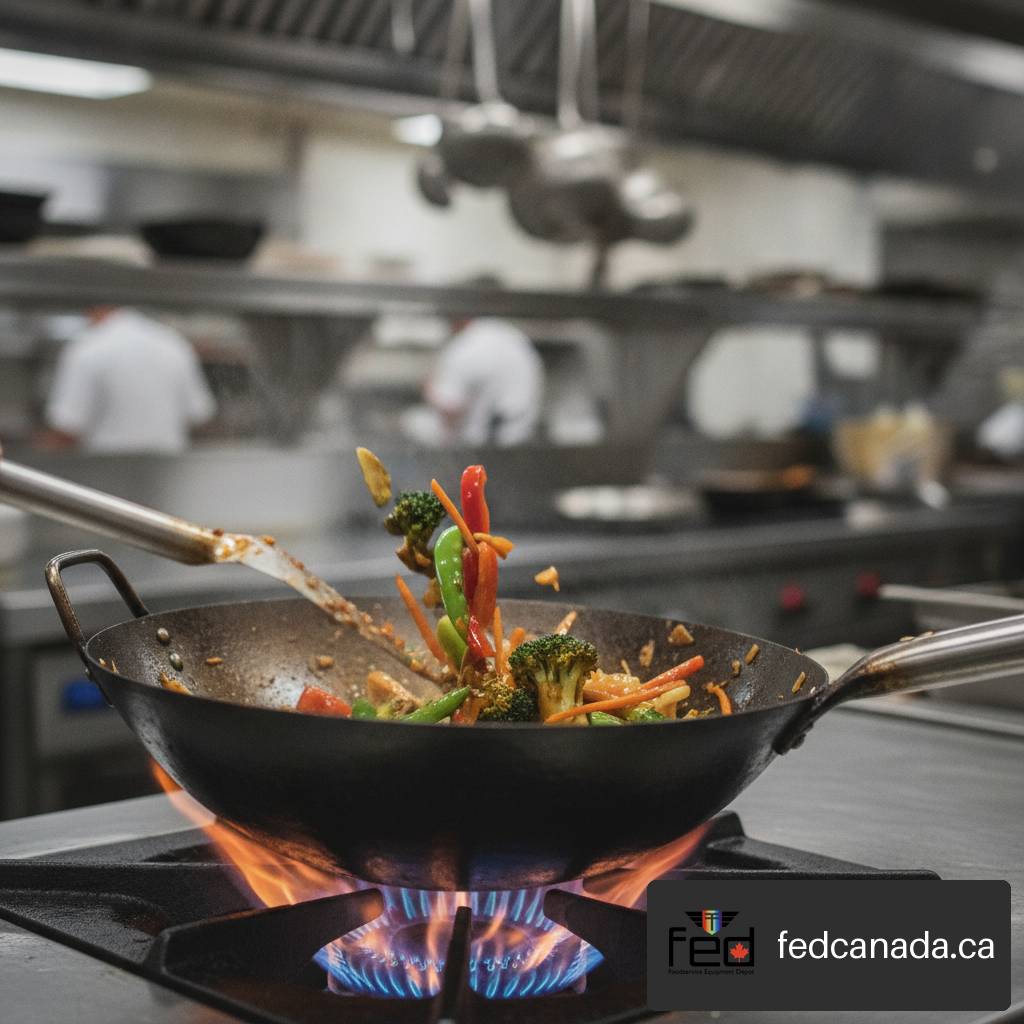
Carbon Steel Woks: Seasoning, Sizes & Commercial Use
High-heat cooking relies on precise temperature control, rapid heat distribution, and durable tools. A carbon steel wok stands out as an essential piece of cookware in both home kitchens and high-volume commercial lines. Known for its quick thermal response and lightweight maneuverability, carbon steel bridges the gap between the heavy heat retention of cast iron and the swift agility of stainless steel. Selecting, seasoning, and maintaining the right pan requires an understanding of metal treatments, bottom geometry, stove heat output, and polymer chemistry.
Table of Contents
- Key Takeaways
- Understanding Wok Materials, Nitriding, and Heat Dynamics
- Sizing, Bottom Geometry, and Heat Zone Alignment
- The Chemistry and Mechanics of Wok Seasoning
- Cleaning, Maintenance, and Flash Rust Recovery
- Commercial Wok Ranges vs. Residential Cooktops
- Frequently Asked Questions
- Sources & References
Key Takeaways
Carbon steel provides rapid thermal responsiveness, making it superior to cast iron for fast stir-frying and heat-sensitive tossing.
Bottom shape dictates burner compatibility: flat bottoms suit induction, ceramic, and electric stoves, while round bottoms require ring supports or recessed gas burners.
Surface finishes differ significantly: untreated steel requires manual bluing and seasoning, whereas pre-seasoned or nitrided treatments offer immediate corrosion resistance.
Overcrowding a wok causes severe thermal drops, turning high-heat searing into unwanted steaming on standard burners.
Seasoning failures stem from excess oil or inadequate heating; correct application involves ultra-thin oil layers polymerized under high heat.
Accessory materials dictate temperature ceilings; while a wok body may withstand extreme heat, wooden handles and glass lids have much lower tolerances.
Understanding Wok Materials, Nitriding, and Heat Dynamics
Carbon Steel vs. Cast Iron and Stainless Steel
Selecting the right cookware material for high-temperature technique comes down to thermal conductivity, density, and wall thickness. Carbon steel consists primarily of iron with a carbon content typically under two percent. This composition allows manufacturers to press or spin thin sheets of steel that heat rapidly and react almost instantly to changes in burner output.
Compared to cast iron, carbon steel features much lower thermal mass. Cast iron holds onto heat longer, which is ideal for slow searing or shallow frying, but it responds sluggishly when you need to drop burner temperature quickly to prevent garlic or delicate sauces from scorching. Stainless steel, on the other hand, lacks the porous surface structure required to build a natural, hydrophobic oil patina. Nonstick aluminum pans handle low-temp eggs cleanly, but synthetic coatings degrade at temperatures necessary for authentic stir-frying.
| Cookware Material | Thermal Response | Weight & Maneuverability | Patina Development | High-Heat Resistance |
|---|---|---|---|---|
| Carbon Steel | Very Rapid | Moderate / Lightweight | Excellent (Polymerized Oil) | Exceptional (Bare Steel) |
| Cast Iron | Slow | Heavy | Excellent (Polymerized Oil) | Exceptional |
| Stainless Steel | Moderate | Moderate | Poor (No Natural Release) | High |
| Nonstick Aluminum | Rapid | Lightweight | None (Coated Surface) | Low (Fails above 500°F) |
Factory Seasoning vs. Nitriding vs. User-Built Patina
When evaluating a carbon steel wok, you will encounter three distinct surface conditions: untreated bare steel, factory-seasoned steel, and nitrided steel.
- Bare Carbon Steel: Shipped with a protective coating of industrial mineral oil or wax to prevent oxidation during transit. This coating must be thoroughly scrubbed off before the initial seasoning process.
- Factory Pre-Seasoned Steel: Received with a baked-on vegetable oil coating. While ready for light cooking out of the box, this initial layer is thin and requires careful maintenance to build long-term durability.
- Nitrided Carbon Steel: Undergoes a specialized thermochemical treatment where nitrogen is diffused into the steel surface. As noted in YETI's product specifications, the product is pre-seasoned, nitrided for rust resistance, and intended for high-heat cooking with gradual preheating. Nitriding alters the micro-structure of the metal, creating a hardened, dark finish that resists rust even if the seasoning layer is temporarily compromised.
Thermal Mass, Recovery, and the Tossing Weight Trade-Off
The gauge (thickness) of carbon steel directly shapes kitchen performance. Standard woks range from 1.2 mm to 2.0 mm in thickness. A thinner pan (1.2 mm to 1.5 mm) weighs less—often around 2 to 3 pounds—allowing cooks to toss ingredients effortlessly without wrist strain. However, thin steel loses temperature quickly when cold ingredients enter the pan.
A thicker pan (1.8 mm to 2.0 mm) retains more thermal energy, ensuring faster heat recovery when searing larger batches. The trade-off is physical weight: heavier woks put greater leverage on the wrist and forearm, making frequent tossing challenging over extended shifts. Balance your physical preference against your heat source capability when selecting a pan gauge.
Sizing, Bottom Geometry, and Heat Zone Alignment
Round-Bottom vs. Flat-Bottom Woks Across Burner Types
Wok geometry affects how heat transfers from the stove to your food. Traditional round-bottom woks concentrate oil and ingredients into a deep central point. This shape requires a dedicated concave wok burner or a metal wok ring placed over a gas grate. Without proper support, a round-bottom wok will wobble dangerously on standard flat stovetops.
Flat-bottom woks feature a flattened base—typically 4 to 6 inches in diameter—that rests directly on electric coils, glass cooktops, and induction surfaces. As detailed in the Our Place carbon steel wok guidelines, the wok body is rated to 750°F (400°C), while its flat bottom is designed for multiple stovetop types. The flat surface provides conductive contact with the burner, creating a stable high-heat zone while sloped sidewalls allow food to be pushed away from direct heat.
Sizing and Capacity for Household and Commercial Workflows
Selecting the correct wok diameter depends on serving size, burner size, and spatial clearance in your kitchen setup. Using a wok that is too large for your heat source creates cold sidewalls, while a wok that is too small leads to overcrowding.
| Wok Diameter | Base Diameter (Flat) | Usable Capacity | Target Batch Size | Ideal Application |
|---|---|---|---|---|
| 10 Inch | 4.0 - 4.5 Inches | ~2.5 - 3 Quarts | 1 Serving | Single-portion stir-fry, side dishes, small apartments |
| 12 Inch | 4.5 - 5.0 Inches | ~4.0 - 4.5 Quarts | 1 to 2 Servings | Standard domestic households, quick sautéing |
| 14 Inch | 5.0 - 5.5 Inches | ~5.5 - 6.0 Quarts | 3 to 4 Servings | Family meals, high-output residential gas ranges |
| 16+ Inch | 6.0+ Inches (or Round) | 7.0+ Quarts | 5+ Servings | Commercial restaurant lines, outdoor jet burners |
For example, Crate & Barrel's product listing highlights models featuring a 6-quart capacity alongside distinct temperature limits for accessory components.
Burner Energy, Batch Sizes, and Preventing Heat Drop
A primary cause of poor stir-fry texture is overcrowding the pan. Residential burners produce between 7,000 and 18,000 BTUs, compared to commercial wok ranges that produce 50,000 to 100,000+ BTUs. When a large load of cold vegetables or protein hits a domestic wok, the temperature drops rapidly.
If the pan cannot recover its temperature instantly, moisture released from the food pools in the base. Instead of quick searing and rapid evaporation, the food boils and steams in its own liquids. To prevent this heat loss on domestic ranges:
Limit protein batches to no more than 8 to 10 ounces at a time.
Pre-cook or blanch dense vegetables before adding them to the final stir-fry.
Allow the wok to regain high heat between adding different ingredient layers.
Sear ingredients in stages, set them aside, and combine everything in the final 30 seconds of cooking.
Component-Specific Heat Limits and Handle Configurations
While a bare carbon steel pan body can endure severe thermal exposure, auxiliary parts set clear functional boundaries. Always check the thermal limits of handle materials, rivets, and accessories before placing cookware into high-heat environments or ovens.
Wooden Handles: Offer excellent thermal insulation for hands during stovetop tossing, but they cannot go into ovens and can char if exposed to rising flames on gas burners.
Steel Helper Handles: Allow secure two-handed lifting of heavy loads, but they conduct heat quickly and require heat-resistant towels or silicone grips.
Glass Lids: Retain steam for braising or dumplings, but temper-glass lids often carry lower maximum temperature limits (typically 350°F to 400°F) than the steel body itself.
The Chemistry and Mechanics of Wok Seasoning
Initial Seasoning Step-by-Step for Untreated Steel
Seasoning carbon steel is the process of bonding thin layers of oil to the metal through heat, transforming liquid fats into a hard, slick polymer matrix. For an untreated, unseasoned carbon steel wok, perform the following procedure:
- Scrub Away Factory Oils: Wash the interior and exterior thoroughly with hot water, stiff bristle brushes, and dish soap to remove shipping grease. Dry completely with towels.
- Blue the Steel: Place the bare dry wok over your highest heat source. The metal will change color—turning gray, then blue, brown, and deep violet—as an oxide layer forms. Rotate the wok constantly so heat hits the bottom and all sloped sides evenly.
- Apply Initial Oil: Lower the heat. Add half a teaspoon of a high-smoke-point oil (such as canola, avocado, or refined peanut oil) to the pan. Using a wad of paper towels held by long tongs, rub the oil vigorously over every interior inch.
- Heat to Polymerize: Turn the burner up until the oil smokes heavily. Continue wiping the oil until the surface looks glossy, dark, and smooth with no liquid puddles.
- Repeat: Cool slightly, then repeat the oiling and smoking sequence 2 to 3 times until a bronze-brown patina covers the cooking surface.
Troubleshooting Seasoning Failures: Gummy Layers vs. Bare Steel
Understanding how seasoning fails helps you correct surface problems quickly before rust or sticking occurs.
| Failure Symptom | Visual & Tactile Appearance | Underlying Root Cause | Corrective Action | |---|---|---|---|| | Gummy / Sticky Layer | Tacky surface, dark soft patches, thick oil residue | Excess oil applied during heating; incomplete oil polymerization | Scrub with hot water and coarse salt; reheat pan until smoke clears entirely | | Flaking / Peeling | Black specks lifting off metal into food | Seasoning applied over uncleaned factory wax, or layer baked too thick | Scrape away loose patches with a steel pad; re-season thin layers | | Flash Rusting | Bright orange-brown dusty film on bare metal | Damp storage or air drying without immediate oil application | Wipe clean with warm oil; dry over heat and rub thin oil coating | | Stripped Spot | Bright bare steel exposed in central heat zone | Concentrated extreme heat burned off oil; cooking highly acidic sauces | Re-season exposed spot immediately with thin oil over direct stove heat |
Acidic Foods and Young Polymerized Layers
A newly seasoned carbon steel wok features a thin, delicate polymer film. Acidic ingredients—such as vinegars, citrus juices, tomato pastes, and wine sauces—react chemically with bare iron and fresh seasoning layers. Acids break down immature oil bonds, lifting the patina and imparting a metallic taste to white rice or pale liquids.
Avoid braising heavily acidic sauces in a new carbon steel wok during its first few weeks of use. Once the wok has developed a dark, mature patina over months of frying, sautéing, and oil cooking, it can withstand brief additions of acidic liquids in finishing sauces without damaging its nonstick surface.
Cleaning, Maintenance, and Flash Rust Recovery
Routine Washing, Drying, and Oiling Protocols
Proper post-cooking cleanup preserves the wok's nonstick patina while preventing moisture-induced corrosion. Follow this standardized routine after every cooking session:
- Rinse Hot: Wash the warm wok under hot tap water using a bamboo wok brush, soft sponge, or non-abrasive pad. Avoid soap for routine cleaning, though mild soap will not harm a fully cured patina.
- Remove Debris: For stubborn stuck-on food, add water to the wok and bring it to a brief boil on the stove to loosen food particles. Never soak carbon steel in a sink filled with water.
- Heat Dry Completely: Place the washed wok back onto a warm burner for 1 to 2 minutes until all surface water droplets evaporate completely.
- Oil Lightly: While the pan is warm, apply 2 to 3 drops of cooking oil onto a paper towel and wipe the entire interior surface. The pan should look matte-matte glossy, not wet.
Diagnosing Surface Degradation: Flash Rust vs. Pitting
Not all corrosion on steel requires the same level of restoration. Differentiating surface flash rust from structural pitting dictates how aggressively you must scrub.
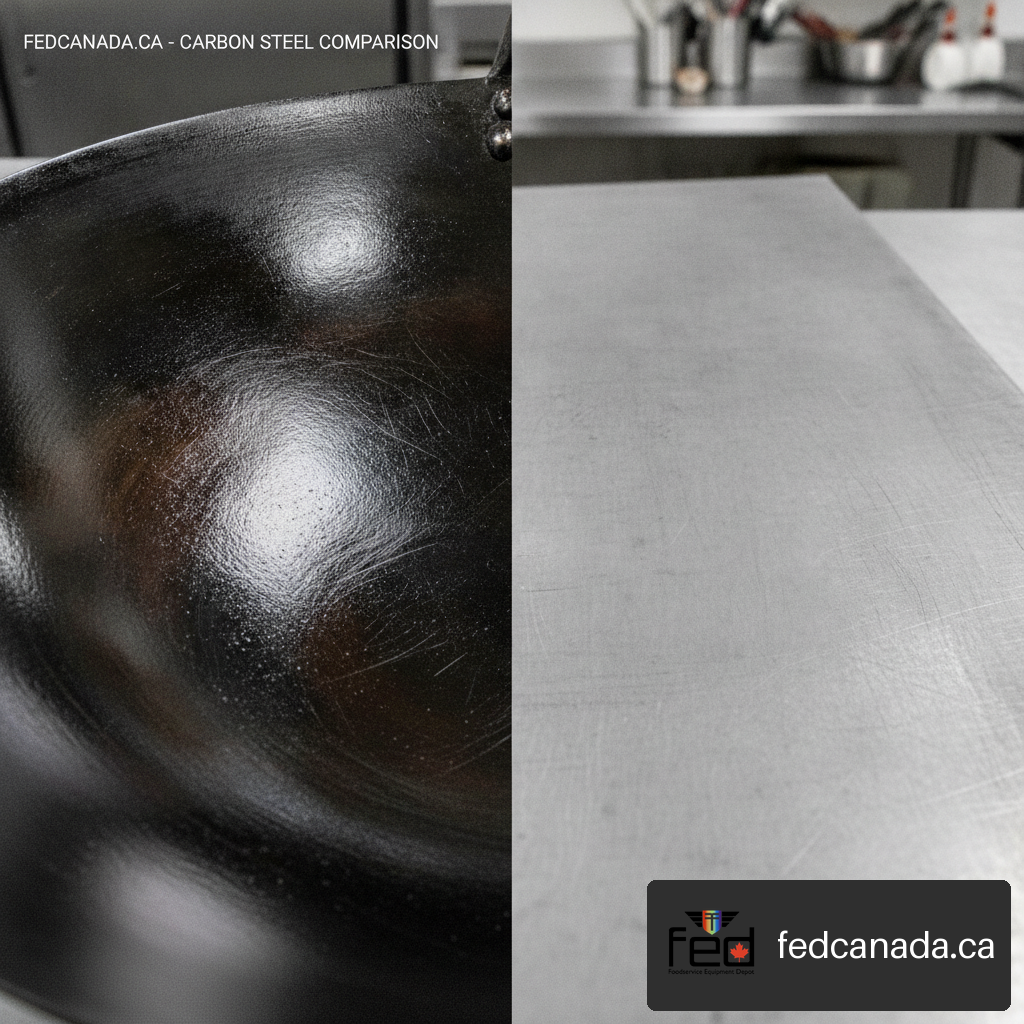
Flash rust is an ultra-thin, powdery orange layer caused by rapid surface oxidation when wet raw steel meets oxygen. It does not bite deeply into the metal and can be wiped away easily with an oiled paper towel or light scouring pad. Flash rust requires only a light re-oiling over heat.
Pitting occurs when rust sits untreated over extended periods, eating physical divots into the metal matrix. Pitted steel exhibits rough, cratered textures that snag food and disrupt heat transfer. Pitting requires deep abrasive mechanical sanding, chemical rust removal, and a full bottom-up re-seasoning cycle.
Complete Stripping and Re-Seasoning Protocol
If a wok suffers from severe pitting, flaking burnt seasoning, or heavy oxidation, follow this complete restoration procedure:
- Abrasive Scrub: Use steel wool, coarse abrasive pads, and dish soap to scrub away all existing rust, burnt residue, and flaking seasoning down to the bare, shiny steel.
- Vinegar Soak (If Pitted): If rust is deep, soak a cloth in a 1:1 mixture of warm water and white vinegar, place it over the rust for 20 minutes, then scrub thoroughly. Neutralize with plain water.
- Complete Drying: Dry the raw steel completely over high burner flame.
- Re-Blue and Re-Season: Heat the bare metal until it shifts color to blue-gray, then apply 3 to 4 ultra-thin layers of high-smoke-point oil, heating each layer until it stops smoking.
Commercial Wok Ranges vs. Residential Cooktops
High-Btu Jet Burners and Wok Ring Requirements
Commercial Asian kitchens utilize specialized wok ranges engineered for extreme energy output. These setups feature jet or ring burners that produce between 50,000 and 150,000 BTUs of thermal power. This rapid heat input allows chefs to cook meals in seconds, creating wok hei—the distinct smoky flavor generated by oil atomization and high-temperature Maillard reactions.
Commercial wok ranges utilize built-in heavy cast-iron rings that cradle traditional round-bottom woks, directing fire up the sloped sidewalls. On standard residential gas ranges (which top out around 12,000 to 18,000 BTUs), placing a round-bottom wok on a removable ring lifts the pan further away from the flame, reducing effective heat transfer. For home gas stoves, flat-bottom woks generally yield superior thermal performance because their base rests closer to the heat source.
Adapting Flat-Bottom Woks for Domestic Induction and Electric Surfaces
Domestic electric and induction cooktops present unique heat-transfer challenges for wok cooking. Induction systems rely on magnetic fields to heat the pan directly, making carbon steel an excellent magnetic fit. However, heat transfer occurs only where the flat base contacts the glass.
To maximize performance on induction and electric cooktops:
Match Base to Element: Choose a flat-bottom wok whose base diameter matches your cooktop's induction coil or electric element ring.
Avoid Rapid Thermal Shock: Never blast a cold carbon steel wok on maximum induction power immediately. Preheat gradually on medium power for 2 minutes to prevent the flat base from warping or bowing downward.
Keep Contact Uniform: Avoid lifting and slamming the wok on glass cooktops during tossing; instead, use high-heat spatulas (wok chanas) to move food around the hot base and walls.
Heavy-Duty Commercial Maintenance Routines
In high-volume commercial kitchens, woks undergo extreme heat cycles for hours at a time. Commercial maintenance routines prioritize continuous workflow and rapid turnarounds:
Water Deck Cooling: Commercial wok ranges incorporate continuous cold-water deck streams that sweep underneath the wok ring, keeping the stainless steel cooktop cool while washing away food drips.
Between-Order Swilling: Line cooks clean the wok between dishes using warm water and bamboo brushes, dumping waste into the rear range trough before immediately starting the next dish.
End-of-Shift Oil Protection: At closing, woks are scrubbed clean, heat-dried over dying range flames, and coated with a protective oil film to prevent corrosion overnight in humid kitchen environments.
Frequently Asked Questions
What is a carbon steel wok?
A carbon steel wok is a traditional, bowl-shaped pan made from a thin alloy of iron and carbon. It combines rapid heating, responsive temperature control, and lightweight maneuverability, making it ideal for stir-frying, deep-frying, steaming, and searing.
Is carbon steel better than cast iron for a wok?
Carbon steel is generally better suited for traditional wok techniques than cast iron. Carbon steel is lighter, making it easier to toss ingredients, and it heats up and cools down much faster, allowing for precise control over heat-sensitive dishes.
Does a carbon steel wok need to be seasoned?
Yes. Unless your wok has a specialized factory nonstick coating, carbon steel requires seasoning. Heating oil on the bare metal forms a protective, nonstick layer of polymerized oil that prevents rust and keeps food from sticking.
Can I use a carbon steel wok on an induction cooktop?
Yes, provided the wok has a flat bottom. Carbon steel is naturally magnetic and heats quickly on induction stoves. Round-bottom woks require dedicated concave induction burners to function properly.
Why is my carbon steel wok sticky after seasoning?
A sticky surface indicates that too much oil was applied or the pan was not heated long enough. To fix sticky seasoning, scrub the pan with hot water and a bristle brush, dry it over heat, and re-heat it until the oil fully polymerizes and stops smoking.
How do I remove rust from a carbon steel wok?
For minor surface flash rust, scrub the pan with an oiled towel or fine abrasive pad. For deep rust, scrub with steel wool and a mild vinegar-water solution, dry completely over stove heat, and re-apply a fresh layer of seasoning.
Can I cook tomatoes or acidic foods in a carbon steel wok?
Avoid cooking highly acidic foods like tomatoes, vinegar, or citrus sauces in a newly seasoned wok. Acids can dissolve young seasoning layers and impart a metallic taste to food. Once a wok has developed a thick, dark, mature patina over months of use, brief cooking with acids is fine.
Can a carbon steel wok go in the oven?
Bare carbon steel woks with metal handles are oven-safe to very high temperatures. However, woks with wooden handles, synthetic grips, or glass lids should not be placed in ovens above their rated temperature limits.
Sources & References
YETI — Carbon Steel Wok: https://www.yeti.com/kitchen/cookware/carbon-steel-wok.html
Our Place — Carbon Steel Wok with Lid: https://fromourplace.com/products/carbon-steel-wok
Crate & Barrel — Our Place Carbon Steel Wok: https://www.crateandbarrel.com/our-place-carbon-steel-wok/s476607
Recent Posts

Leave a Comment
Your email address will not be published. Required fields are marked *