




Commercial Freezer Not Defrosting: Ice Buildup Causes and Fixes
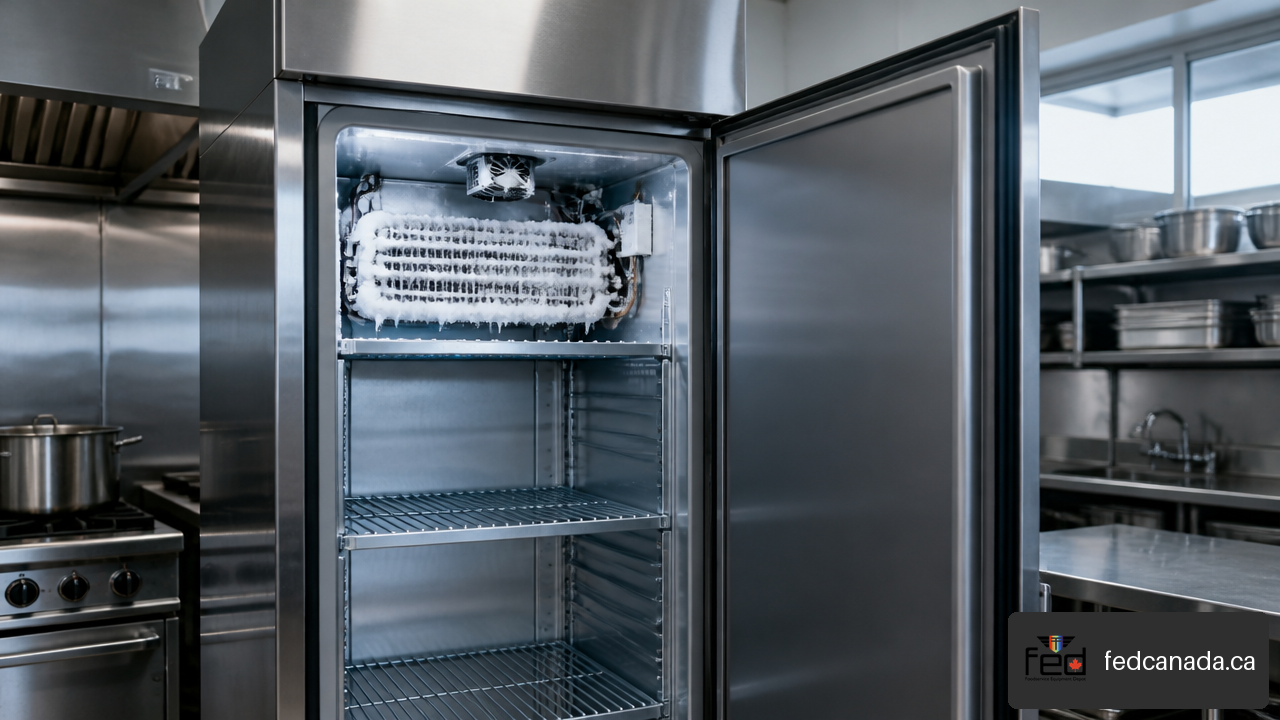
Commercial Freezer Not Defrosting: Ice Buildup Causes and Fixes starts with one practical question: where is the ice forming? Ice on the evaporator coil, around the door, under the coil, or inside the drain area points to different faults. A manual defrost can restore airflow, but it will not solve a failed component, a leaking gasket, or a drainage problem.
Table of Contents
- Key Takeaways
- Why Commercial Freezers Build Up Ice
- How to Diagnose a Freezer That Will Not Defrost
- Safe Recovery and Manual Defrost Steps
- Preventing Repeat Ice Buildup
- FAQ
Key Takeaways
Start with the location of the ice
Ice is evidence, not the diagnosis. Frost covering the evaporator coil usually means the freezer cannot complete a defrost cycle or cannot move enough air through the coil. Ice around a door frame often points to warm, humid air entering through a damaged gasket, a door left ajar, or excessive traffic. Ice concentrated below the coil may be a drain problem rather than a heater failure.
A manual defrost is a recovery step, not always a repair
If the freezer runs normally for several days after thawing and then freezes over again, the underlying issue is still present. The next inspection should focus on what changed after restart: frost pattern, fan operation, drainage, door sealing, and temperature recovery.
Avoid damaging the refrigeration system
Do not chip ice with knives, screwdrivers, picks, or other sharp tools. An evaporator puncture can release refrigerant and turn a manageable frost issue into a major repair. Controlled thawing, water removal, cleaning, and temperature monitoring are safer.
Know the boundary between operator checks and service work
We can safely inspect door seals, airflow paths, cabinet cleanliness, visible drain blockage, and controller messages. Electrical testing of heaters and sensors, refrigeration pressure checks, refrigerant charging, TXV or EEV diagnosis, and control-board replacement should be handled by a qualified refrigeration technician.
Why Commercial Freezers Build Up Ice
Defrost-system faults leave the evaporator buried in frost
Most commercial reach-in freezers use an automatic defrost system. At scheduled intervals, refrigeration pauses and a defrost heater warms the evaporator coil enough to melt accumulated frost. A timer or electronic controller initiates the cycle, while a termination sensor or thermostat ends it once the coil reaches the intended condition.
When any part of that sequence fails, moisture freezes layer by layer. A failed heater may leave the coil fully white and packed with ice. A failed timer or controller may never call for defrost. A faulty termination sensor can end defrost too early, so only part of the frost melts before refrigeration restarts.
The visible symptom can look identical, but the repair is different. That is why replacing a heater without confirming whether the controller is initiating defrost may waste time and money.
Warm-air infiltration creates more frost than the system can clear
Every time humid kitchen air enters a freezer, its moisture condenses and freezes on the coldest surfaces. The evaporator coil is usually the first major surface affected. A small gasket gap can seem minor during a quick inspection, but over a long service day it can introduce a steady moisture load.
Check these common entry points:
Torn, flattened, hardened, or dirty door gaskets
Doors that do not self-close or sit unevenly on hinges
Product, racks, or packaging preventing the door from closing
Damaged strip curtains on walk-ins
Frequent door opening near dishwashing, cooking steam, or humid prep areas
A gasket problem often creates frost near the door opening before the evaporator becomes heavily iced. That pattern matters. It suggests the freezer may be working mechanically but is being overloaded by infiltration.
Drain problems can refreeze after an apparently successful defrost
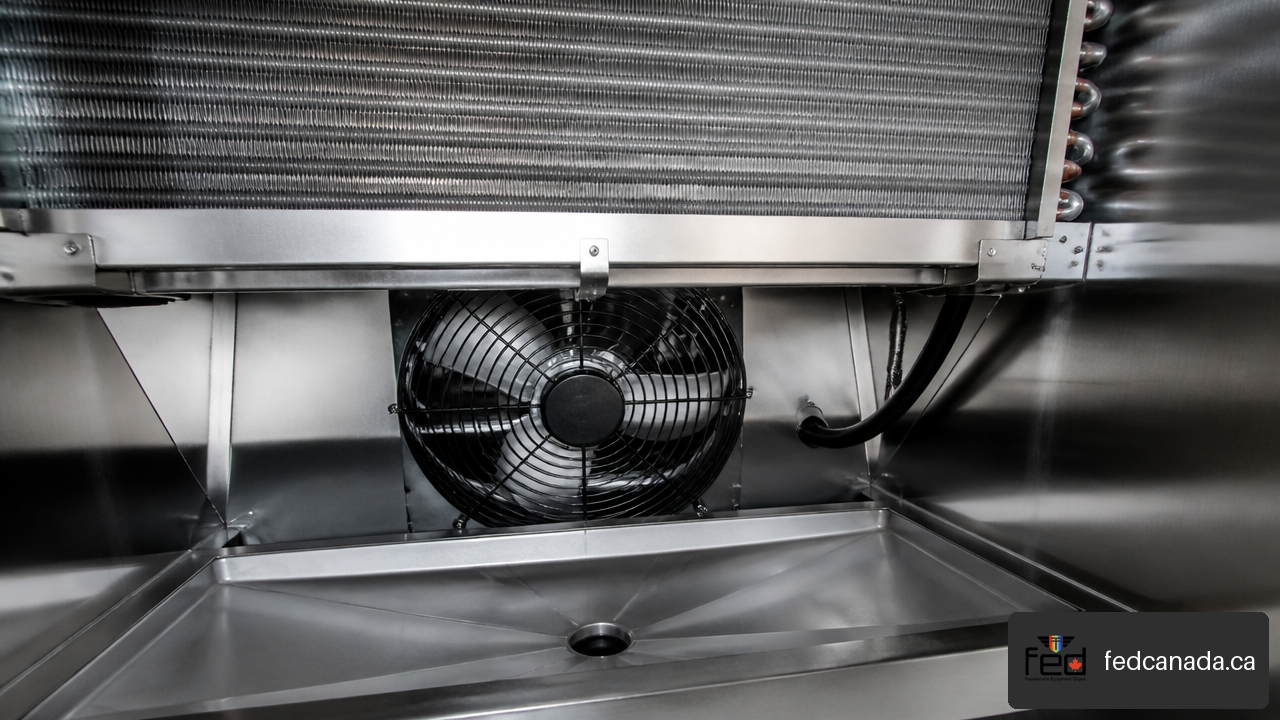
A freezer can enter defrost, melt ice from the coil, and still develop a solid ice mass below the evaporator. In that case, the water has nowhere to go or freezes before it exits the cabinet.
Danfoss cold-room fault guidance notes that evaporator icing can persist despite active defrost when air infiltration, poor airflow, drain faults, low evaporating temperature, or incorrect refrigerant feed are involved. This is the reason a working heater should not automatically end the investigation.
Drain refreezing may involve a blocked drain line, frozen trap, failed drain heater, misaligned drain pan, or insufficient slope in the drain path. For example, the coil may look clear immediately after defrost, but water pooled in the pan freezes once refrigeration resumes. That growing ice block can eventually contact the coil, restrict fan airflow, and make the freezer appear to have a defrost failure.
Airflow and refrigeration faults can mimic a defrost issue
The evaporator fan pulls cabinet air across the evaporator coil. If the fan is not running, is obstructed by ice, or has a failing motor, frost can build unevenly. Product stacked against air paths can create a similar result by preventing return air from reaching the coil.
An abnormal frost pattern can also indicate a refrigeration problem. Frost mainly on one small section of the coil, rather than across the coil, may suggest refrigerant-feed or low-charge issues. A technician may need to evaluate the refrigerant circuit, the TXV or EEV, evaporating temperature, and system pressures.
Fair warning: frost pattern is a diagnostic clue, not proof. Coil design, lighting, defrost timing, and how long the door has been open can change what you see.
How to Diagnose a Freezer That Will Not Defrost
Separate coil icing, cabinet icing, and drain icing
Start with the freezer switched on and operating normally. Do not remove electrical covers or touch wiring. Record the cabinet temperature, listen for fan operation, and inspect accessible areas with a flashlight.
| Ice location or pattern | Likely direction | Practical next step |
|---|---|---|
| Evaporator fully covered in heavy frost | Incomplete or missing defrost, high moisture load | Check controller history, door seal, fan airflow, and arrange component testing if needed |
| Frost around door frame or on nearby product | Gasket leak, door alignment, frequent access | Clean gasket, inspect closure, reduce door-open time |
| Ice below evaporator or in drain trough | Drain blockage, drain heater, trapped water | Inspect visible drain opening and schedule service if refreezing returns |
| Frost only on part of coil | Airflow or refrigerant-feed issue | Avoid guessing; request refrigeration diagnosis |
| Ice returns immediately after thawing | Moisture infiltration, airflow, drain, or refrigeration fault | Monitor pattern during the first operating day |
This location-based approach prevents a common mistake: treating all ice as a failed defrost heater.
Check the simplest external causes first
Before scheduling a shutdown, inspect conditions that can be corrected without entering the refrigeration circuit:
Confirm door closure. Close the door on a strip of paper in several locations. If it slides out with little resistance, clean the gasket and inspect it for tears or deformation.
Check product loading. Do not block fan guards, return-air openings, or discharge vents. A tightly packed freezer may hold plenty of product yet cool poorly because air cannot circulate.
Look for visible drainage problems. Standing water, an iced drain trough, or an ice block under the evaporator supports a drainage diagnosis.
Review operating conditions. A freezer beside a steamy dish area or used continuously during service has a greater moisture load than one in a dry storage area.
Observe the controller. Some controls display alarms or defrost indicators. Follow the unit manual rather than assuming that every controller uses the same buttons or labels.
Use frost distribution as a decision tool
A fully frosted coil after many days of operation can fit a missed defrost cycle, especially if cabinet airflow has dropped and fan noise sounds strained. In contrast, a coil that is mostly clear but has a thick ice ridge below it points more strongly toward trapped meltwater.
Consider two similar-looking reach-in freezers. The first has frost around the full coil face, dry cabinet surfaces, and a door that seals properly. The most likely next step is to verify the defrost heater, termination sensor, timer, or controller. The second has a mostly clear coil but a frozen drain pan and a puddle that refreezes after every cycle. Replacing the defrost heater first would miss the likely fault.
When the fault needs a technician
Call for qualified service promptly when any of these conditions apply:
The evaporator fan does not run after ice has been cleared
The freezer cannot return to its normal operating temperature
Frost is limited to one part of the evaporator coil
Electrical connectors, heater wiring, or sensors appear damaged
The controller will not initiate defrost as described in the model manual
Ice returns quickly despite a clean gasket, clear airflow path, and complete thaw
You suspect refrigerant leakage, a TXV or EEV issue, or compressor trouble
A technician can test heater continuity, sensor response, defrost control output, fan motor operation, evaporator temperature, pressures, and refrigerant feed. Those measurements distinguish a control issue from a refrigeration-system issue.
Safe Recovery and Manual Defrost Steps
Protect inventory before shutting down
Move frozen inventory to another suitable freezer or approved cold-storage solution before beginning a full manual defrost. Keep product protected from temperature abuse, label temporary storage clearly, and minimize handling time.
The correct frost thickness for manual defrost is not universal. The Summit commercial manual-defrost chest freezer instructions specify defrosting at roughly 1/4 to 1/2 inch of frost, transferring food before unplugging, and allowing warm rather than boiling water to speed melting. By comparison, this commercial refrigerator and freezer user manual specifies defrosting at approximately 1/8 inch of ice. The manufacturer instructions for the exact model should control the decision.
Follow a controlled thawing process
A manual defrost should be deliberate, not rushed. The basic process is straightforward:
Transfer food and turn off or unplug the unit as directed by its manual.
Open the door, place towels and shallow pans where meltwater will collect, and protect nearby flooring.
Let frost melt naturally. Warm water may be used only where the manufacturer permits it; never use boiling water on cold liners or glass components.
Remove water regularly so it does not overflow, enter electrical areas, or refreeze in the drain path.
Clean and sanitize interior surfaces once ice has melted.
Dry the cabinet thoroughly, restart the freezer, and return product only after safe operating temperature is restored.
Avoid heat guns, propane torches, and uncontrolled high heat. A hair dryer also creates risks around moisture and electrical equipment, and concentrated heat can damage plastic liners, wiring, or insulation. If ice will not release safely, wait longer or arrange service.
Verify recovery instead of declaring success too early
The freezer is not fixed merely because the ice is gone. After restart, confirm that the evaporator fan runs, doors close tightly, drain areas remain clear, and the cabinet pulls down to its required operating temperature.
Commercial freezer recovery guidance from Mr. Appliance recommends transferring inventory, powering down, allowing ice to thaw without sharp tools, removing water, sanitizing, restarting, and monitoring temperature recovery. The recovery time varies by model, product load, room conditions, and how warm the cabinet became, so there is no reliable universal number of minutes to promise.
For example, an empty reach-in in a cool room may recover far differently from a heavily loaded unit restarted during a hot dinner rush. What matters is whether it reaches and holds the set operating temperature without new frost forming rapidly.
Preventing Repeat Ice Buildup
Match daily practices to the freezer's moisture load
Defrost scheduling depends on cabinet design, use patterns, room humidity, and manufacturer settings. Do not copy another kitchen's defrost schedule without considering how your unit is used. A high-traffic freezer near steam-producing equipment may need a different strategy than a freezer in a dry stock room.
Practical prevention measures include:
Keep doors closed except during loading and retrieval
Stage ingredients before opening the freezer door
Replace damaged gaskets and correct sagging hinges promptly
Keep cartons and pans away from evaporator covers and return-air paths
Check that fan guards and interior vents are not blocked
Remove standing water and investigate recurring drain ice early
Clean condenser areas as directed by the equipment manufacturer
Build a short inspection routine
A simple documented routine catches small issues before a coil freezes solid. Daily checks can focus on door closure, temperature display, unusual fan sounds, water on the floor, and visible frost. Weekly checks can include gasket cleaning, airflow clearance, and drain-area inspection where accessible.
Monthly review is useful when the same freezer repeatedly needs manual defrosting. Compare when the problem appears with door traffic, menu changes, seasonal humidity, or a recently altered temperature setpoint. The goal is not to force a diagnosis from a calendar; it is to identify repeat conditions.
Do not adjust defrost settings blindly
Increasing defrost frequency can help in a genuinely humid, high-traffic application, but it is not a universal cure. Too little defrost leaves frost behind. Excessive or poorly terminated defrost can raise cabinet temperature, increase energy use, and create more meltwater than the drain system can manage.
Choose setting changes only when the equipment manual permits them and the reason is clear. Avoid controller changes when frost pattern suggests a refrigerant-feed issue, when the drain is frozen, or when the evaporator fan is not moving air. In those cases, longer defrost may hide the symptom while the underlying defect worsens.
FAQ
Why is my commercial freezer building ice even with automatic defrost?
Automatic defrost only removes frost if the heater, controller or timer, termination sensor, drainage system, and airflow are all working. A leaking door gasket or repeated humid-air entry can also create frost faster than the system can clear it.
Can a damaged door gasket stop a freezer from defrosting properly?
Indirectly, yes. The gasket does not control the heater, but it can admit enough humid air to overwhelm an otherwise functional defrost system. Look for frost near the door frame, condensation, poor door closure, or hardened gasket material.
What does an uneven frost pattern on the evaporator mean?
An uneven pattern can indicate restricted airflow or a refrigeration-feed problem. Frost only near one end of the coil should not be assumed to be a defrost fault. A technician should assess refrigerant charge, evaporating temperature, and the TXV or EEV if the pattern persists after a full thaw.
Why does the drain pan freeze after the evaporator clears?
Defrost water may be trapped in the pan or drain line, then refreeze when refrigeration resumes. Possible causes include a blocked line, failed drain heater, poor drain slope, or a frozen trap. This is a separate fault from a failed defrost heater.
Is it safe to pour warm water on ice in a commercial freezer?
Only if the manufacturer permits it and the water is warm, not boiling. Protect electrical areas, collect meltwater, and never pour water directly onto wiring, controls, or fan motors. Boiling water and uncontrolled heat can damage components.
How often should a commercial freezer defrost?
There is no universal schedule. Follow the model manual and consider humidity, door traffic, product loading, and cabinet design. A freezer used constantly during service may need different settings from a low-traffic storage unit, but changes should be made carefully and ideally with service guidance.
When should I stop troubleshooting and call a technician?
Call when you suspect electrical failure, refrigerant loss, expansion-valve trouble, a failed fan motor, persistent drain refreezing, or poor temperature recovery after a complete thaw. These issues require testing beyond safe operator-level inspection.
Sources/References
Verified reference documents
Danfoss — Troubleshoot Cold Room Faults: https://www.danfoss.com/en-us/industries/food-and-beverage/dcs/cold-rooms/system-design-component-selection/application-vertical-market-sizing/troubleshooting-fault-diagnosis/
Summit Appliance — Commercial Manual Defrost Chest Freezer Manual: https://www.summitappliance.com/document/413?m=SCFM182
Commercial Refrigerator / Freezer User Manual: https://images.thdstatic.com/catalog/pdfImages/f0/f091c01e-4496-4a14-b9a2-c31f79fef01a.pdf
Mr. Appliance — Commercial Freezer Repair Services: https://www.mrappliance.com/commercial-services/kitchen/freezers/
Recent Posts
Leave a Comment
Your email address will not be published. Required fields are marked *