



Equipment Checklist Before Your Alberta Health Inspection
An Alberta Health inspection is easier to prepare for when you treat it as a proof of readiness, not a last minute cleaning task. This Equipment Checklist Before Your Alberta Health Inspection helps you confirm that every essential item is installed, clean, accessible, and demonstrably functional before an Alberta Health Services approval or routine inspection.
A refrigerator that looks clean but cannot maintain temperature, a hand sink blocked by boxes, or a dishwasher without a workable sanitizing process can create problems even when the rest of the kitchen appears ready. Start early enough to correct issues, test equipment under normal operating conditions, and gather records that show how you monitor food safety.
Table of Contents
- Start with approval readiness
- Follow an equipment by equipment inspection route
- Test the systems that must work
- Key Takeaways
- FAQ
- Sources and References
Start With Approval Readiness
Confirm the kitchen is complete before inspection
The first question is simple: can every required piece of equipment be used safely today? For an approval inspection, unfinished construction, disconnected plumbing, missing fixtures, unopened equipment packaging, or untested appliances can slow the process down.
Alberta Health Services expects equipment and fixtures to be installed and operating before approval inspection, with readiness requirements covering refrigeration, thermometers, shelving, ventilation, cleanliness, and other core systems in its food business startup guidance.
We recommend walking through the kitchen as if service were about to begin. Turn on equipment, run water, open every door and drawer, and check whether a staff member could use each station without moving boxes or temporary tools.
Use this initial pass to sort issues into three groups:
| Status | What it means | What to do before inspection |
|---|---|---|
| Ready | Installed, clean, accessible, and working as intended | Record temperatures and keep the area clear |
| Needs correction | Functional but incomplete, dirty, blocked, or difficult to clean | Correct the issue and retest it |
| Not ready | Missing, disconnected, damaged, leaking, or unable to perform its purpose | Repair, replace, or obtain direction before inspection |
A practical rule: do not rely on an item being “almost ready.” If a refrigerator, sink, canopy, dishwasher, or drainage connection is not usable during the walkthrough, treat it as unfinished.
Choose equipment for cleanability, not just capacity
Capacity matters, especially in busy kitchens. Yet inspection readiness also depends on whether equipment can be cleaned and maintained properly. A large prep table with exposed particleboard edges, a corroded shelf, or a freezer with torn door seals can create sanitation concerns that extra storage space does not solve.
The Government of Alberta’s new equipment checklist example describes equipment design expectations that include smooth, non absorbent, corrosion resistant materials, cleanable construction, accessible parts, drainage, and the avoidance of cracks, gaps, recesses, and similar contamination retaining niches.
Before buying or installing equipment at the last minute, ask these questions:
Can food residue, moisture, grease, or cleaning solution collect in seams, damaged joints, or recessed areas?
Can staff reach the underside, rear, legs, drain connection, door gaskets, and controls for cleaning and maintenance?
Does the material tolerate the intended cleaning chemicals and moisture exposure?
Can liquids drain away rather than pool inside, beneath, or around the unit?
For example, a reach in refrigerator pushed tightly against a wall may fit the floor plan, but it may leave no practical way to clean behind it, inspect a drain line, or access the condenser area. The issue is not simply spacing. It is whether the installation supports sanitation, inspection, repair, and routine maintenance.
Build an evidence folder before inspection day
Not every inspection requires a formal binder, but an organized evidence folder can make it easier to answer questions and show that equipment is being managed deliberately. Keep it current rather than creating it only the night before.
Include these useful records:
Temperature logs for each cooler and freezer
Probe thermometer checks and any corrective actions
Cleaning and sanitizing procedures
Dishwasher operating instructions and test information, where applicable
Service invoices or maintenance records for refrigeration, ventilation, or fire protection equipment
Applicable approvals, water information, or documentation for non municipal water sources
Photos or receipts showing corrected equipment issues, if a prior concern required follow up
The value is practical. If a temperature reading is questioned, you can show what was measured, when it was measured, and what happened if a unit drifted outside its target range.
Follow an Equipment by Equipment Inspection Route
Begin at receiving, storage, and refrigeration
Start at the back door or receiving area and move forward in the same direction food normally travels. This route reduces the chance of overlooking a cooler, shelf, cart, or dry storage corner.
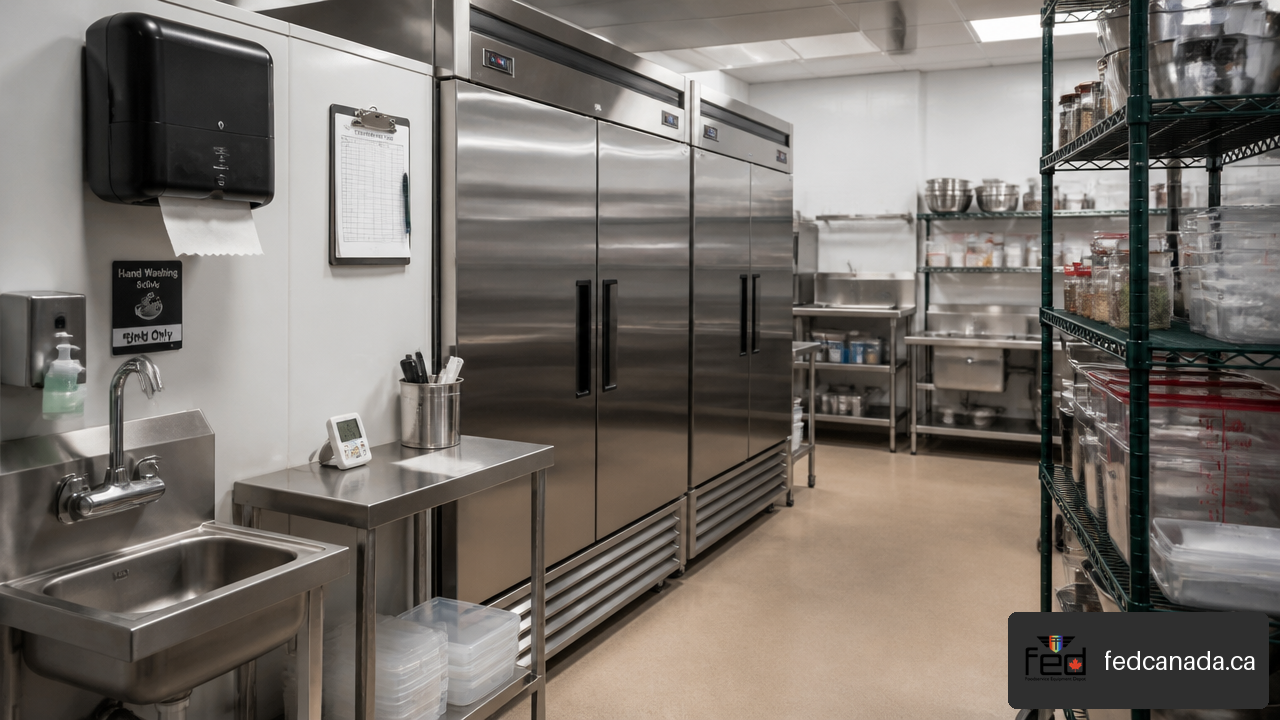
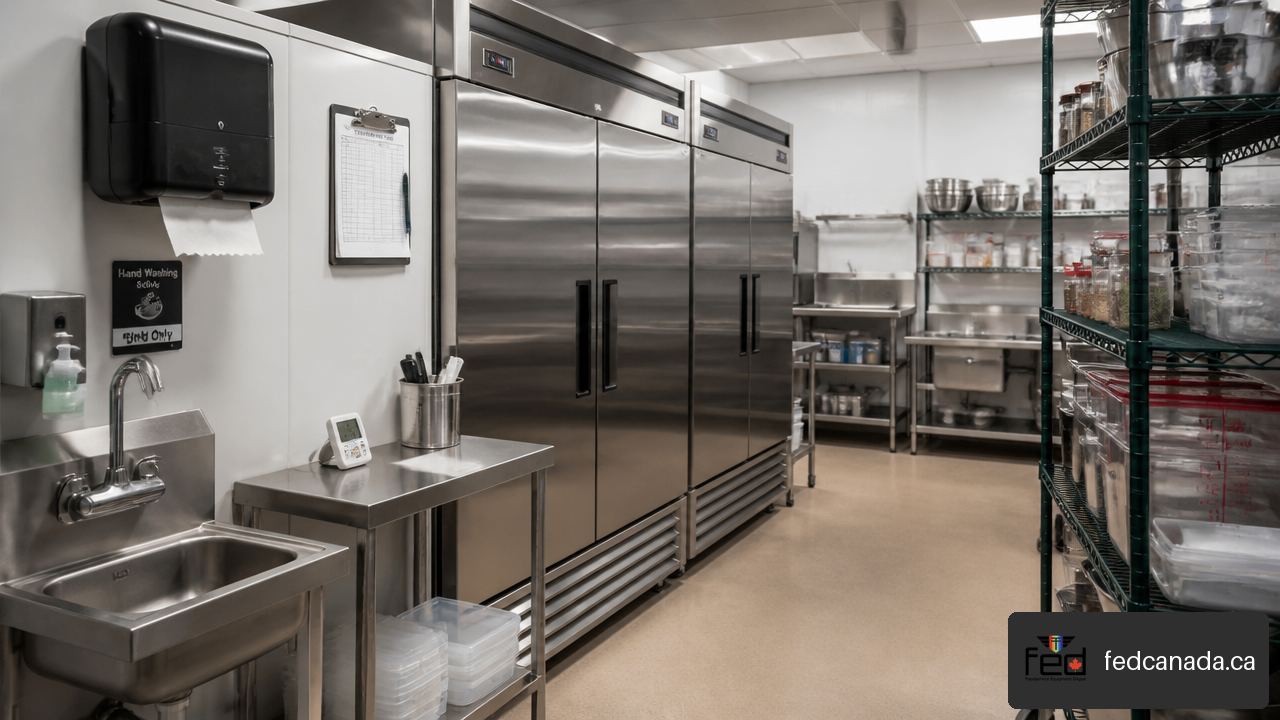
For refrigeration, check both the equipment display and a separate internal thermometer. Alberta Health Services states that coolers should hold food at 4°C or less, freezers should operate below 0°C and ideally at −18°C or colder, and each cooler and freezer should have a thermometer separate from its built in gauge.
Use this pass fail route:
Check the independent thermometer in each unit, not just the digital display on the appliance.
Confirm food is not packed so tightly that cold air cannot circulate.
Inspect shelving for cleanliness, rust, peeling coatings, damage, and food safe construction.
Check door seals, hinges, latches, drains, and interior panels for cracks, residue, condensation, or standing water.
Confirm raw foods, ready to eat foods, and ingredients are stored in a way that limits cross contamination.
Record the reading after the unit has been operating normally, not immediately after loading warm product or holding the door open.
A temperature reading alone does not tell the whole story. A cooler can read 3°C near its sensor while containers at the front, top, or door area experience warmer conditions. Place the independent thermometer where it reflects the storage environment, keep it visible, and avoid burying it behind product.
Inspect shelving, worktables, and food contact equipment
Next, review everything that touches food or supports food preparation: prep tables, cutting boards, mixers, slicers, utensils, ingredient bins, racks, carts, containers, and shelving.
The inspection question is not only “Is it clean right now?” It is also “Can it be kept clean after a busy shift?” Look for hidden failure points:
Cracked cutting boards that retain debris in deep grooves
Corroded racks or flaking shelf coatings
Tape, cardboard, absorbent wood, or damaged plastic used as a permanent surface repair
Equipment feet or casters that trap grease and cannot be reached
Food residue beneath mixer guards, slicer components, seals, handles, and removable parts
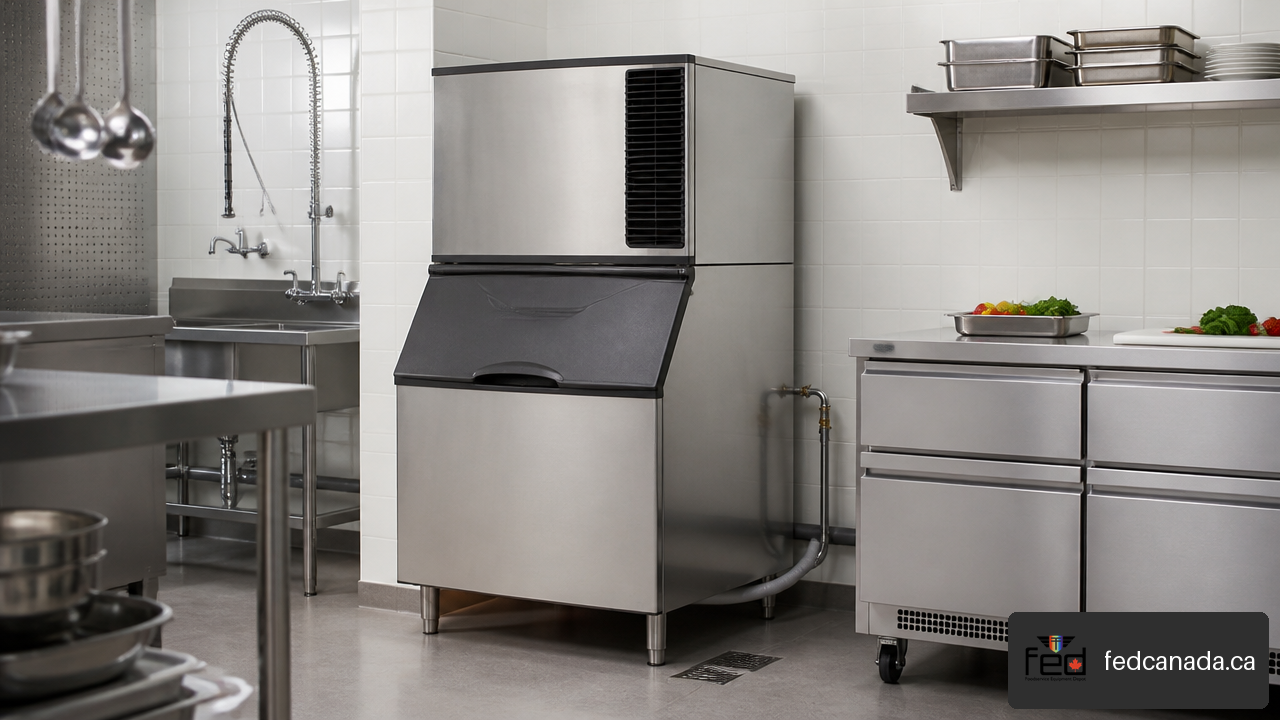
Standing water below ice machines, sinks, dish areas, or refrigeration drains
The Alberta Health Services inspection baseline includes properly supplied handwashing facilities, correct washing and sanitizing of dishes and equipment, clean and sanitized kitchen surfaces, and food preparation equipment kept in good condition. These expectations are outlined in AHS’s inspection criteria overview.
If a surface cannot be adequately cleaned, replacement is often a safer decision than cosmetic repair. This is especially true for damaged food contact surfaces and equipment with corrosion or permanent residue in inaccessible seams.
Check handwashing and warewashing stations separately
A handwashing basin is not an overflow prep sink, utensil soaking sink, or storage shelf. It needs to be easy for food handlers to reach when they need it. Check that it has hot running water, soap, paper towels, and a clear route of access.
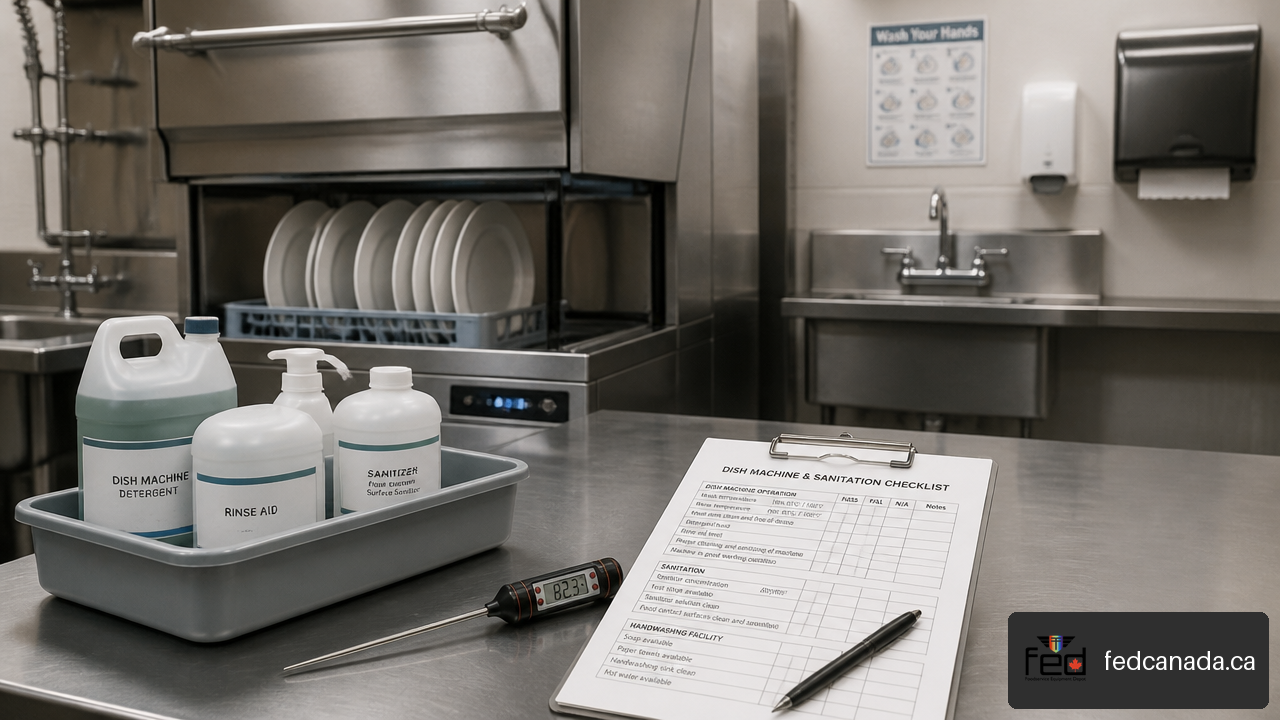
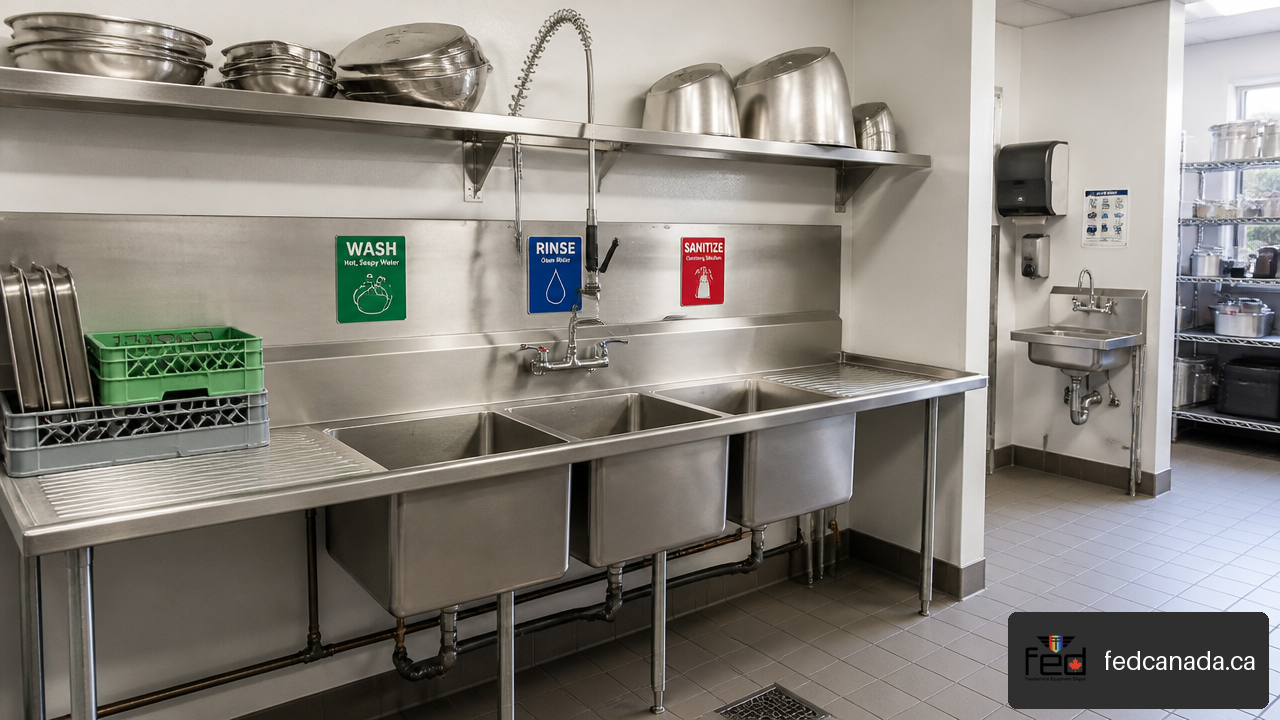
Then inspect warewashing separately. Whether your operation uses manual washing or a mechanical dishwasher, the process must allow dishes and equipment to be washed and sanitized correctly.
| Station | What to verify | Common problem to correct |
|---|---|---|
| Handwashing basin | Hot running water, soap, paper towels, accessibility | Boxes, pails, or equipment blocking the basin |
| Manual warewashing | Required sink setup, wash and sanitize supplies, drying area | Using a sink compartment for storage or skipping sanitizing steps |
| Mechanical dishwasher | Water supply, drainage, cycle operation, cleaning access | Assuming a clean exterior proves the machine sanitizes correctly |
| Mop or utility sink | Drainage, condition, separation from food handling | Storing food equipment or chemicals inappropriately nearby |
Fair warning: a dishwasher can run a cycle and still need further review if temperatures, chemical dispensing, drainage, or the intended sanitizing process are uncertain. Follow the manufacturer’s operating instructions, ensure staff understand the process, and maintain any applicable test materials or service records.
Test the Systems That Must Work
Use a functional test matrix
Equipment present is not the same as equipment proven functional. We recommend testing each major system in a way that mirrors ordinary use. This approach reveals problems that a visual check can miss.
| System | Functional test | What a failure may look like | Practical recovery step |
|---|---|---|---|
| Cooler | Run during normal loading and verify independent thermometer | Display says cold but internal reading rises | Reduce load, inspect seals and airflow, arrange service if needed |
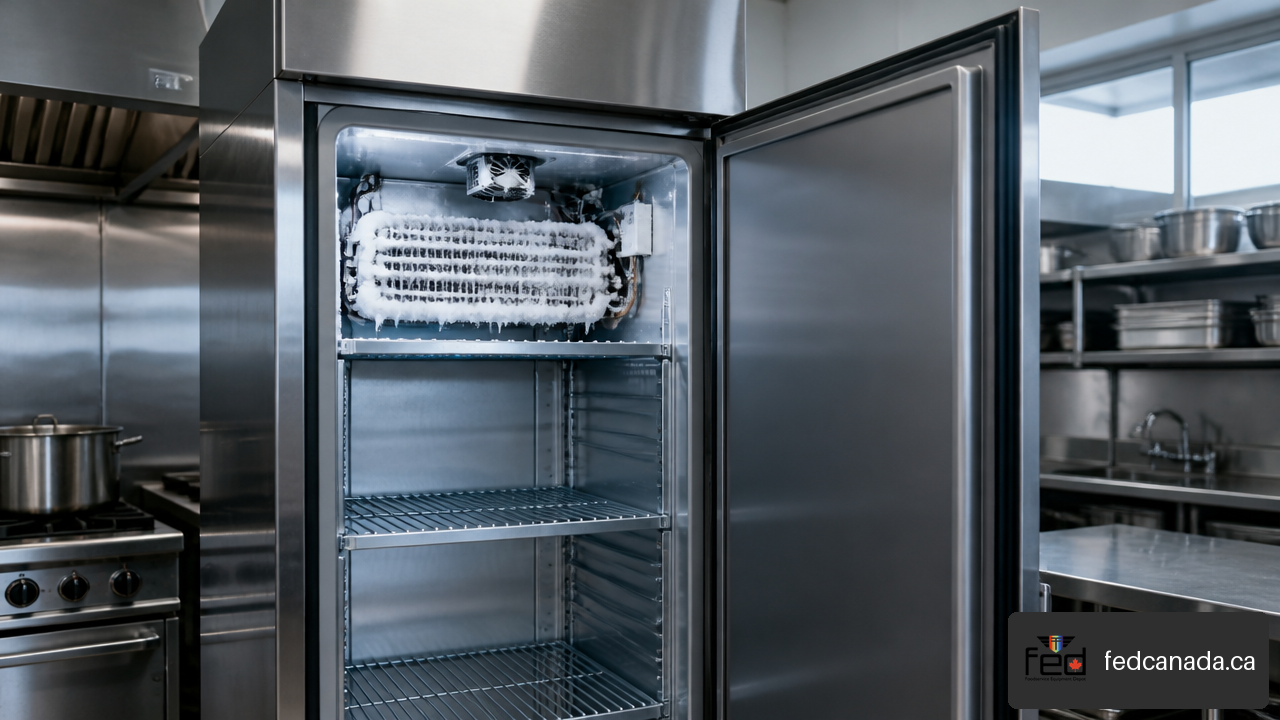
| Freezer | Confirm stable internal reading and door closure | Frost buildup, soft product, damaged gasket | Remove affected stock as needed and repair the source of temperature loss |
| Hand sink | Run hot and cold water, use soap dispenser and towel supply | No hot water, weak flow, blocked access | Repair supply issue and remove obstructions |
| Dishwasher | Run a full operating cycle and inspect wash, rinse, drainage, and sanitizer process | Poor drainage, empty chemical feed, residue on items | Stop relying on the unit until the process is corrected |
| Ventilation | Operate canopy with cooking equipment on | Weak capture, grease buildup, unreachable controls | Clean, service, or obtain qualified review as appropriate |
| Drainage | Run water through sinks and inspect surrounding floor | Slow draining, leaks, pooling water | Correct plumbing or drainage before service |
Verify thermometers and document what they show
A probe thermometer is essential because appliance gauges only measure equipment conditions, while a probe can check food temperatures and investigate questionable readings. AHS specifies at least one probe thermometer capable of measuring from 0°C to 100°C.
Before inspection, make sure the probe is clean, intact, readable, and stored where staff can access it. Check whether its reading appears plausible against a known cold or hot reference method that follows the thermometer manufacturer’s instructions. There is no single universal AHS published calibration procedure identified here, so do not improvise a method that conflicts with the device instructions.
A sensible record includes:
Date and time
Unit or food checked
Temperature observed
Initials of the person checking
Corrective action if the reading was outside the required range
Consider a cooler reading 6°C in the morning. Recording “6°C” alone leaves the next step unclear. A stronger entry notes that food was moved to another functioning unit, the cooler was taken out of use or adjusted, and a later recheck confirmed whether it returned to safe operation.
Address ventilation, fire protection, and grease control together
Cooking equipment often sits at the intersection of public health, building, plumbing, and fire requirements. This depends on the equipment type, fuel source, menu, building design, and local authority requirements. A countertop appliance may have different requirements from a full commercial cooking line, so avoid assuming that one kitchen’s setup applies to another.
The City of Calgary notes that mechanical equipment should be operational and accessible for maintenance. Its restaurant guidance also identifies ventilation and automatic fire suppression for applicable cooking equipment, along with grease interceptors for certain grease discharging fixtures in its restaurant and food establishment code information.
Before inspection, verify these practical points:
The ventilation canopy is installed where applicable and operates with the cooking equipment.
Fire suppression components and pull stations, where required, are visible and not obstructed.
Filters, hoods, ducts, and grease exposed surfaces are maintained according to the applicable service plan.
Equipment is not installed so tightly that service access is impossible.
Floor drains, plumbing connections, and grease management components are accessible and not leaking.
Adapt the checklist for mobile and temporary food businesses
Mobile units, market vendors, and temporary setups still need sound, operational equipment, but the layout and utility constraints are different. Water capacity, power supply, cold holding, handwashing, waste water handling, and transport stability become more visible risks.
For vendor and market operations, the Government of Alberta’s market startup food safety checklist specifies sound and operational equipment, refrigeration operating between 0°C and 4°C, freezers at −18°C or colder, and written cleaning and sanitizing procedures.
For a mobile unit, test the system in the condition in which it will operate: tanks filled, power connected as planned, refrigeration loaded realistically, and handwashing supplies in place. A unit that works in a commissary yard may perform differently during service if electrical capacity, generator output, water supply, or space limitations change.
Key Takeaways
The inspection ready equipment standard
Use these points as the final decision test before requesting or preparing for inspection:
Installed is not enough. Equipment should be connected, operating, and ready to use under normal conditions.
Measure independently. Use separate cooler and freezer thermometers, plus a clean and functional probe thermometer.
Check cleanability at the edges. Gaskets, undersides, seams, drains, handles, wheels, joints, and service panels often reveal issues a quick visual sweep misses.
Keep handwashing available. A supplied hand sink must remain accessible throughout preparation and service.
Test sanitation systems. Confirm manual warewashing or mechanical dishwashing can complete the intended washing and sanitizing process.
Protect access. Equipment must be reachable for cleaning, inspection, repair, and maintenance, not merely placed in the room.
Treat ventilation and drainage as operating systems. Test them rather than assuming installation means compliance.
Keep simple proof. Temperature logs, cleaning procedures, maintenance records, and corrective actions help demonstrate control of the operation.
FAQ
What equipment does Alberta Health Services check before approving a food business?
AHS may review refrigeration and freezer equipment, independent thermometers, probe thermometers, shelving, handwashing facilities, warewashing equipment, food preparation surfaces, ventilation where applicable, storage, and the overall condition and cleanliness of equipment. For approval inspection, equipment and fixtures should already be installed and operating.
What temperature must my cooler hold during an Alberta health inspection?
Coolers should hold food at 4°C or less. Check this with an independent thermometer inside the unit, not only the appliance display. Keep food arranged to allow air circulation and investigate readings that rise during normal use.
How cold must my freezer be?
Freezers should operate below 0°C, with −18°C or colder identified as the ideal target. A unit can appear frozen while still operating warmer than expected, so check the internal thermometer and inspect for damaged seals, frost buildup, or airflow restrictions.
Do I need a separate thermometer inside every cooler and freezer?
Yes. Alberta Health Services identifies a separate thermometer for each cooler and freezer in addition to the built in gauge. The independent thermometer provides a second check on actual storage conditions.
What type of probe thermometer should I have available?
Have at least one probe thermometer capable of measuring from 0°C to 100°C. Keep it clean, readable, accessible, and suitable for checking food temperatures. Follow the manufacturer’s guidance when verifying its accuracy.
How can I test whether my commercial dishwasher is sanitizing properly?
Run a complete cycle and verify that the machine fills, washes, rinses, drains, and delivers its intended sanitizing process. Review the manufacturer instructions, check chemical supply if chemical sanitizing is used, and keep any applicable test materials or maintenance documentation available. If the outcome is uncertain, do not assume a clean looking machine is performing correctly.
What supplies must be beside each handwashing sink?
Food handlers need easy access to a handwashing sink with hot running water, soap, and paper towels. Keep the area clear. Do not use the sink as a storage space or place equipment where it blocks access.
Are mobile food units inspected differently from permanent restaurants?
The food safety outcome remains similar, but mobile and temporary operations need additional attention to water supply, waste water, power, refrigeration during transport or service, space limitations, and stable access to handwashing. Test the unit in realistic operating conditions rather than only while parked or unloaded.
Sources and References
Verified guidance used in this article
Alberta Health Services — Starting a Food Business: https://www.albertahealthservices.ca/assets/wf/eph/wf-eph-start-food-business.pdf
Alberta Health Services — Food Safety Inspection Report: What We Look for During an Inspection: https://www.albertahealthservices.ca/assets/wf/eph/wf-eph-what-we-look-for-during-an-inspection.pdf
Government of Alberta — New Equipment Checklist Example: https://www.alberta.ca/system/files/agi-v-new-equipment-checklist-example.docx
Government of Alberta — Market Startup Food Safety Checklist for Vendors: https://www.alberta.ca/system/files/agi-food-safety-checklist-vendor-startup.pdf
City of Calgary — National Building Code: 2023 Alberta Edition Information for Restaurants and Food Establishments: https://www.calgary.ca/for-business/licences/food-establishment-building-code.html
Recent Posts
Leave a Comment
Your email address will not be published. Required fields are marked *