




Commercial Pizza Oven Buying Guide: Deck, Conveyor, or Countertop?
Commercial Pizza Oven Buying Guide: Deck, Conveyor, or Countertop?
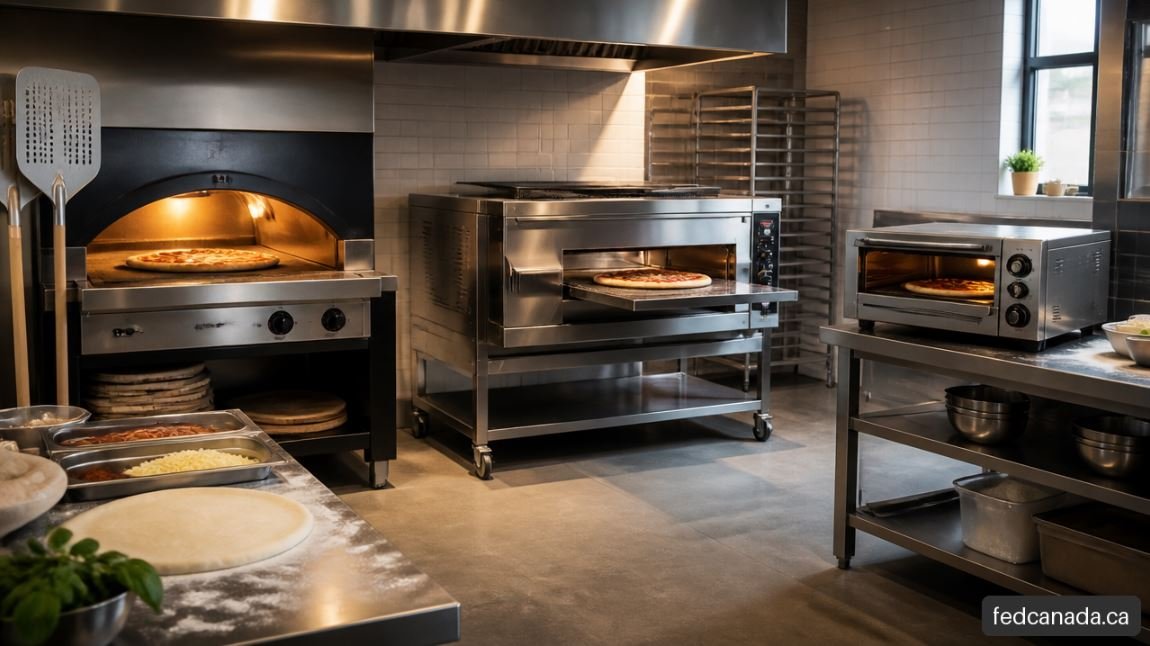
A commercial pizza oven buying guide should start with one question: what must the oven do during your busiest hour? The right unit is not simply the hottest, largest, or most expensive option. It must match your pizza style, projected peak sales volume, staff workflow, available utilities, and building constraints. I recommend treating the purchase as an operating-system decision, not just an equipment purchase. A deck oven may deliver the hearth character an artisan menu needs. A conveyor oven may protect speed and consistency during a heavy delivery rush. A compact countertop unit may be the practical choice for a café, bar, food truck, or limited pizza program. Each can be the right answer in the right kitchen.
Table of Contents
- Key Takeaways
- Choose the Oven Type Around Your Menu and Service Model
- Size the Oven for Real Peak Hour Demand
- Confirm Installation, Utilities, and Ventilation Before Ordering
- Compare Total Cost of Ownership and Long Term Reliability
- FAQ
- Sources
Key Takeaways
- Choose by service model first. Deck ovens suit hands-on artisan production, conveyor ovens suit repeatable high-volume output, and countertop ovens work best for lower-volume or space-limited operations.
- Use peak-hour demand, not daily sales, to size capacity. A unit that can handle a quiet afternoon may become a bottleneck during a 60-minute dinner rush.
- Verify the building before choosing the oven. Gas pressure, voltage, phase, amperage, hood requirements, floor load, doorway clearance, and service access can all change the viable options.
- Do not compare ovens on purchase price alone. Installation, ventilation, energy consumption, replacement parts, training time, and downtime risk often determine the more economical choice over several years.
- Heavy ovens create heavy consequences. Deck and brick-lined models can require a floor-load review and careful delivery planning well before the purchase order is placed.
- A used oven can be good value only when its working parts are inspected. Stones, seals, burners, controls, hinges, and insulation matter more than exterior appearance.
Choose the Oven Type Around Your Menu and Service Model
The best commercial pizza oven depends on the pizza you sell, the consistency your brand promises, and the pace your kitchen can support. Start with your menu rather than a manufacturer’s capacity claim.
Deck ovens: Best for hearth baking and operator control
A deck oven uses one or more baking chambers, often with stone or stone-like decks that store and release heat. That heat retention helps create a crisp base and gives cooks more control over bake position, deck temperature, and finish. I would prioritize a deck oven when your menu depends on characteristics such as a firm bottom crust, visible spotting, slower fermentation, or a more handcrafted bake. It can suit New York style, artisan pies, pan pizza, and other formats where the operator needs to adjust placement or timing. The trade-off is labor. A deck oven requires staff who can load, turn, monitor, and pull pizzas consistently. During a rush, the oven is only as productive as the prep line and person running it.
| Factor | Deck Oven | What It Means for Buyers |
|---|---|---|
| Heat delivery | Radiant heat plus stored deck heat | Strong crust development and manual bake control |
| Best fit | Artisan, hearth-style, and menu-driven pizza programs | Choose it when product character matters more than automation |
| Staff demand | Moderate to high | Training and station discipline affect output |
| Footprint and weight | Often substantial | Check floors, doors, corridors, and installation route |
| Recovery | Varies by insulation, burners, elements, and loading pattern | Test recovery with your own dough if possible |
Fair warning: a deck oven’s listed capacity may assume ideal loading. A kitchen making several pizza sizes, substitutions, and special finishes will usually have a less tidy production pattern than a specification sheet suggests.
Conveyor ovens: Best for standardized volume and repeatability
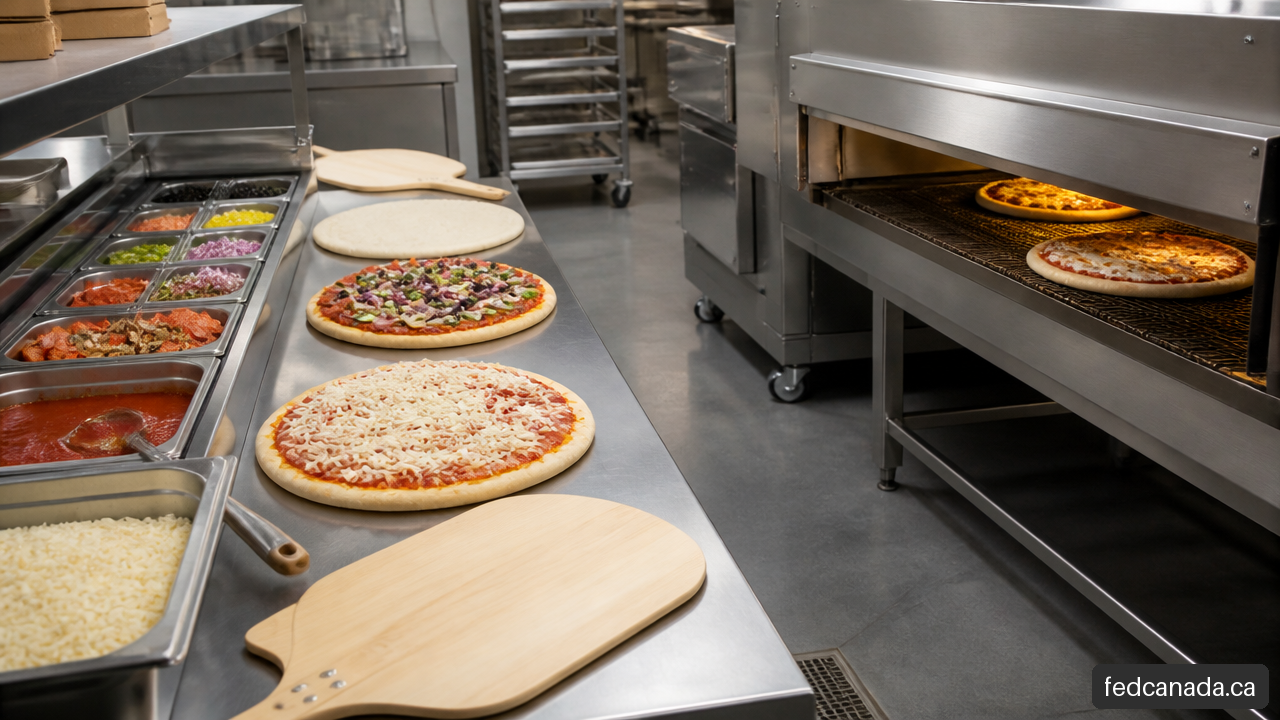
A conveyor oven moves pizzas through a controlled baking chamber on a belt. Operators set belt speed and temperature, then use that repeatable cycle to produce a consistent result. This makes conveyor ovens especially useful for delivery-focused restaurants, chains, concession operations, campuses, and busy quick-service programs. Choose a conveyor oven when the priority is predictable throughput with less dependence on one highly skilled pizza cook. The oven can help standardize results across shifts because the bake time is governed by belt speed rather than an employee deciding when each pizza is done. That consistency has limits. Dough thickness, sauce volume, cheese coverage, and product temperature still affect the result. A cold, heavily topped pizza can bake differently from a lightly topped one, even with identical controls.
| Factor | Conveyor Oven | What It Means for Buyers |
|---|---|---|
| Heat delivery | Forced air and controlled belt movement | Fast, repeatable baking for standardized products |
| Best fit | High-volume delivery, takeout, quick service | Useful when speed and consistency lead the decision |
| Staff demand | Lower than a manual deck line | Easier cross-training, but prep standards remain essential |
| Capacity | Continuous production | Evaluate belt width, bake time, and actual product mix |
| Menu flexibility | Moderate | Confirm it handles every crust, topping load, and side item you plan to sell |
A conveyor oven can also be a poor fit for an artisan concept that depends on irregular shapes, very high hearth temperatures, or a visibly hand-finished bake. The question is not whether conveyors make good pizza. It is whether they make your intended pizza.
Countertop and convection ovens: Best for constrained spaces and smaller programs
Countertop pizza ovens and compact convection units can be sensible for cafés, bars, food trucks, hotels, commissary support kitchens, and restaurants where pizza is an add-on rather than the core business. They generally need less floor space and may have a lower entry cost than larger deck or conveyor systems. A countertop unit works best when production is modest and the menu is intentionally narrow. For example, a café selling flatbreads, reheated slices, personal pizzas, or a few made-to-order pies may not need a full floor model. The operator should still verify recovery time. A compact oven can produce a strong first pizza, then slow down after repeated loads if it cannot recover heat quickly enough. Convection ovens circulate hot air and can offer menu flexibility beyond pizza. They are practical where one appliance must support baking, roasting, or reheating. Still, they rarely replace the deck effect for a crust program built around a hot baking surface.
Wood-fired, gas, and electric: Fuel is an operational decision
Wood-fired ovens create a distinctive visual experience and can support very high-temperature pizza styles, but they also introduce fuel handling, ash management, fire-safety planning, and a more demanding training requirement. They are usually best for concepts where the oven is central to both the product and guest experience. Gas pizza ovens provide responsive heat and are common in many commercial settings, assuming the gas supply and pressure meet the manufacturer’s requirements. Electric pizza ovens can offer precise control and may be practical where gas is unavailable or undesirable, but electrical capacity must be confirmed before purchase.
Choose the fuel your building can reliably support, not the fuel type that merely sounds ideal on paper.
Size the Oven for Real Peak Hour Demand
A realistic capacity plan starts with the busiest 60 to 90 minutes of service. Daily volume is useful for forecasting ingredients and labor, but it does not tell you whether customers will wait too long on a Friday evening.
Build a peak-hour production estimate
I recommend working backward from the number of pizzas you expect to sell during the busiest period. Then account for pizza size, bake time, loading pattern, side items, and the number of people available to run the station. Use this simple planning sequence:
- Estimate the highest expected pizza count in one hour.
- Separate the count by pizza diameter, crust style, and topping load.
- Identify the bake time your product actually needs.
- Calculate how many pizzas fit per deck, belt lane, or batch.
- Reduce the theoretical result for loading gaps, turning, quality checks, and order variability.
- Add a practical buffer for growth, delivery spikes, and equipment recovery.
For instance, a deck that physically fits six 12-inch pizzas does not necessarily produce six pizzas every five minutes all night. Some orders may need longer bakes, a cook may hold space for a pan pizza, and the oven may lose temperature after repeated door openings. The useful question is: can the full station keep pace without compromising the product?
Test the whole workflow, not only the oven
Pizza output is constrained by more than heat. Dough stretching, sauce application, topping assembly, screens or pans, peel handling, cutting, boxing, and order handoff can all restrict production. Consider a delivery-heavy shop with a conveyor oven rated for continuous output. If only one person is assembling pizzas and another is cutting and boxing, the belt may not be the bottleneck. In that case, buying a wider conveyor may not improve ticket times as much as redesigning the make line or adding refrigerated topping capacity. A demo using your own dough, sauce, cheese, and common toppings can expose differences that specifications cannot show. Watch for crust color, cheese finish, bake uniformity, recovery after repeated loading, and how easily staff can move product through the station.
Leave room for growth without oversizing blindly
Oversizing can be expensive. A larger oven may require more utilities, a bigger hood, more make-line space, and higher operating costs. It may also be harder to justify during slow periods. On the other hand, choosing only for today’s sales can trap an otherwise successful operation. A moderate growth allowance is sensible when the business plan supports it, particularly if the kitchen cannot easily expand later. The right buffer depends on lease terms, local delivery demand, menu plans, and the ability to add a second oven in the future.
Confirm Installation, Utilities, and Ventilation Before Ordering
An oven that fits the menu can still fail the building test. Installation readiness should be confirmed before the order is finalized, especially for heavy deck units, conveyor systems, and any oven that may require ventilation changes.
Start with delivery path and floor load
Measure more than the final footprint. Document the narrowest doorway, hallway turns, elevators, ramps, stairs, ceiling heights, and the route from the delivery truck to the cook line. Also include the stand, casters, legs, hood clearances, and service access in your layout. For a heavy deck or brick-lined oven, verify floor-load capacity with the appropriate building or structural professional. The appliance may be manageable on a ground-level slab but unsuitable for an upper floor or a location with unknown structural limits. This is a planning gate, not a detail to solve after delivery arrives.
Verify gas and electrical service against the data plate
Before selecting a model, compare its published requirements with what the site can provide. Do not rely on a general statement that the building “has gas” or “has enough power.” The installer needs specific information.
- Gas type and available pressure
- Gas line size and shutoff location
- Electrical voltage
- Single-phase or three-phase service
- Available amperage and panel capacity
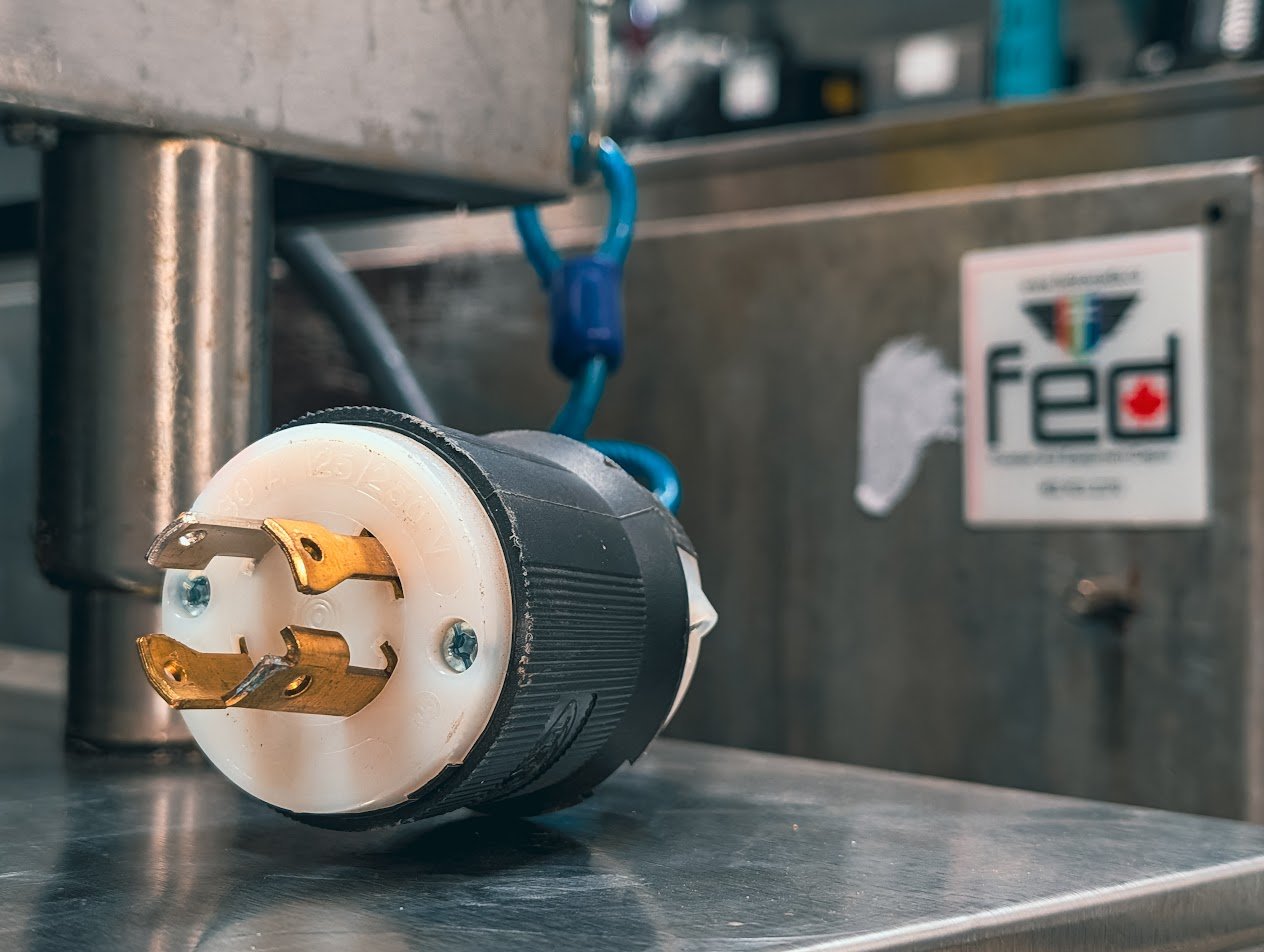
- Receptacle or hardwire requirements
- Location of utility connections relative to the oven
An electric oven may require a service upgrade if the panel lacks capacity. A gas oven may need a properly sized line or changes to meet its required input. These projects can affect opening schedules and total cost, so confirm them early.
Understand when ventilation requirements apply
Ventilation is not a box to check after choosing the appliance. It can determine whether a model is feasible at a particular address. The City of Burnaby’s commercial conveyor pizza oven bulletin states that commercial cooking equipment producing smoke or grease-laden vapours must comply with ventilation requirements tied to NFPA 96. A separate building and fire code enforcement worksheet on NFPA 96 systems clarifies that the standard applies to cooking operations producing smoke or grease-laden vapours. This does not mean every pizza oven has identical hood requirements. Oven design, fuel, product, local authority interpretation, and the building’s existing systems all matter. A listed ventless appliance may have a different pathway than a wood-fired oven or a conveyor producing grease-laden vapours. Confirm requirements with the local authority having jurisdiction, landlord, mechanical contractor, and equipment documentation before committing.
Compare Total Cost of Ownership and Long Term Reliability
The purchase price is only the first line of the budget. A dependable comparison looks at total cost of ownership: acquisition, delivery, installation, utilities, energy, maintenance, repairs, and lost sales when the oven is unavailable.
Compare costs that do not appear on the quote
| Cost Area | Questions to Ask | Why It Changes the Decision |
|---|---|---|
| Purchase and delivery | Does pricing include stand, casters, stones, and freight? | Required accessories can materially change the initial budget |
| Installation | Is gas work, electrical work, hood modification, or commissioning needed? | Site work can exceed expectations if identified late |
| Energy | How well insulated is the oven, and how long does it operate each day? | Insulation and recovery influence operating cost and kitchen heat |
| Maintenance | Which parts wear first, and how quickly are replacements available? | Small failures can stop production during peak service |
| Labor | How much training does the oven require? | A highly manual oven may increase staffing pressure |
| Downtime | Is qualified local service available? | A low-cost oven is not a bargain if it sits idle waiting for parts |
A well-insulated oven generally retains heat better, which can support recovery and reduce heat escaping into the kitchen. Actual energy cost will still vary with production volume, operating hours, local utility rates, opening frequency, and operator habits. For example, an oven left hot for a long quiet service may have a different cost profile from one run intensively during a short delivery window.
Buy for serviceability, not just warranty length
Warranty matters, but it is not the only uptime protection. Ask who performs warranty work locally, whether common parts are stocked in Canada, and how quickly a technician can respond. Controls, igniters, burners, heating elements, fans, belts, door gaskets, hinges, stones, and thermostats can all affect production. A practical maintenance plan should include:
- Daily cleaning of food debris and exterior surfaces
- Routine inspection of door seals, hinges, and moving components
- Scheduled checks of burners, elements, ignition systems, belts, and controls
- Stone care appropriate to the manufacturer’s instructions
- Clear records of service calls and recurring faults
Ignoring a worn gasket can seem minor until heat loss lengthens bakes and makes color inconsistent. Ignoring a loose conveyor belt or failing fan can stop service altogether. The objective is not perfect maintenance paperwork; it is catching predictable wear before the dinner rush does.
New versus used: inspect failure points closely
Used commercial pizza ovens can reduce upfront cost, especially for a startup or secondary production line. But photos rarely show the issues that matter most. Inspect the unit in person whenever possible, power it up, and confirm its condition with a qualified technician if the purchase risk is significant. Check these areas before buying:
- Decks or stones: Look for major cracks, uneven surfaces, excessive chipping, or signs of poor repair.
- Doors and hinges: Confirm smooth movement, alignment, and complete closure.
- Gaskets and insulation: Look for flattened or damaged seals that allow excessive heat loss.
- Burners or elements: Verify ignition, heating pattern, and safe operation.
- Controls and displays: Test thermostats, timers, sensors, and programmable settings.
- Conveyor components: Inspect belts, motors, sprockets, and belt tracking on conveyor models.
- Service history: Ask for maintenance records, serial information, and available manuals.
A used oven with a cosmetic scratch may be fine. A discounted oven with failing controls, damaged stones, and unavailable parts can quickly consume the savings.
FAQ
What type of commercial pizza oven is best for my menu?
Choose a deck oven for manual control and hearth-style baking, a conveyor oven for consistent high-volume output, and a countertop or convection unit for limited space or a smaller pizza program. Wood-fired ovens suit concepts where high-heat baking and visual theatre are central to the menu. The best choice depends on the pizza you intend to sell repeatedly, not a universal ranking.
How do I estimate pizzas per hour realistically?
Start with peak-hour orders, then test bake time, oven capacity, loading gaps, and staff workflow. Reduce theoretical capacity for different pizza sizes, heavy toppings, special orders, door openings, and recovery time. A live demo with your dough is often more useful than relying solely on a published pizzas-per-hour figure.
Do I need a hood for a commercial pizza oven?
Possibly. Requirements depend on the oven, fuel source, food production, local code enforcement, and whether the operation produces smoke or grease-laden vapours. Confirm the requirement with local authorities and qualified mechanical professionals before purchase. Do not assume a building’s existing hood can support another appliance.
What utilities should I verify before purchasing?
For gas models, verify gas type, available pressure, line size, shutoff location, and installation requirements. For electric models, verify voltage, phase, amperage, panel capacity, and connection method. Obtain the exact requirements for the specific model rather than planning from a generic category description.
Can one oven handle artisan pizza and high-volume service?
Sometimes, but it depends on product and workflow. A large deck oven can support strong artisan production if the team is trained and the make line keeps pace. A conveyor can manage high volume efficiently but may not replicate every hearth-style result. If both needs are equally important, test the actual menu and consider whether separate production methods are justified.
How much space should I leave around the oven?
Follow the manufacturer’s clearance requirements, then add practical room for loading, cleaning, repairs, ventilation connections, and safe movement. Measure the delivery path as carefully as the final footprint. An oven can fit on the plan but still be impossible to move through a narrow door or around a hallway turn.
What causes the most pizza oven downtime?
Common causes include worn door gaskets, failed igniters, burner or element problems, control faults, fan failures, conveyor belt issues, and delayed replacement parts. Preventive cleaning, routine inspection, and access to qualified local service reduce the chance that a small fault becomes a full service interruption.
Sources
- Government of British Columbia / Burnaby — Commercial Conveyor Pizza Oven Bulletin: https://www.burnaby.ca/sites/default/files/acquiadam/2021-08/Commercial-Conveyor-Pizza-Oven-Bulletin.pdf
- BuildTech Inspections — Building and Fire Code Enforcement: https://buildtechinspections.ca/wp-content/uploads/2019/01/BT-Info-Worksheet-NFPA-96-Systems.pdf
Recent Posts
Leave a Comment
Your email address will not be published. Required fields are marked *