




Commercial Refrigerator Not Cooling: Troubleshooting and When to Call a Technician
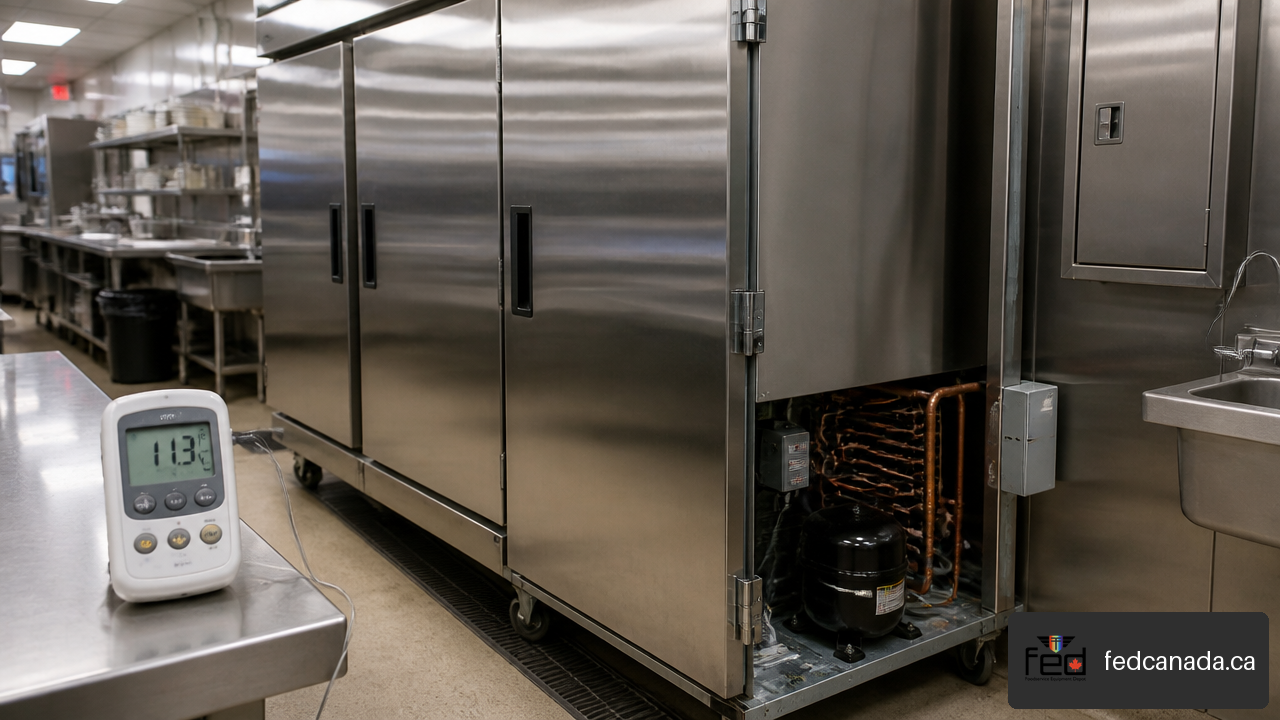
Commercial Refrigerator Not Cooling: Troubleshooting and When to Call a Technician starts with one priority: protect food before trying to protect the equipment. A reach in refrigerator can sound normal, show power, and even have a running compressor while still failing to remove enough heat from the cabinet.
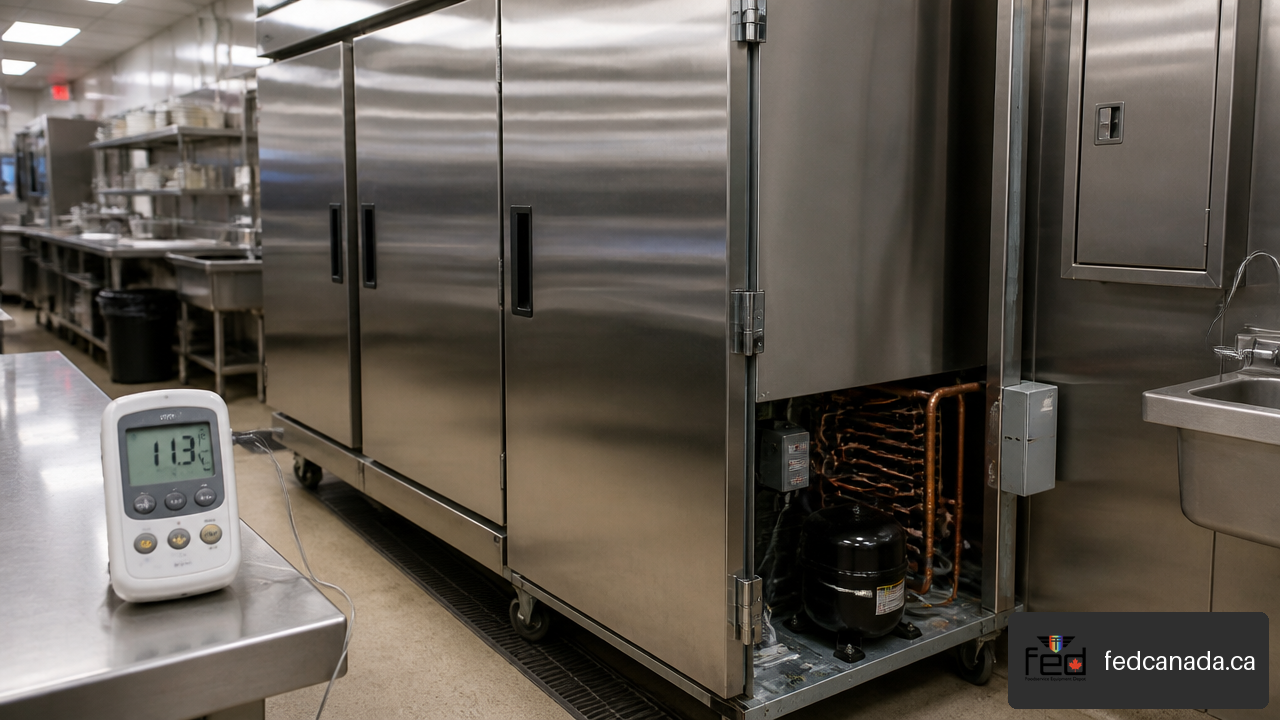
Table of Contents
- Key Takeaways
- Verify the Temperature and Protect Inventory
- Troubleshoot by Symptom Pattern
- When to Stop Troubleshooting and Call a Technician
- FAQ: Commercial Refrigerator Not Cooling
Key Takeaways
Treat temperature as a food safety issue first
I recommend verifying the cabinet temperature with an appliance thermometer before assuming the display, thermostat setting, or compressor sound tells the full story. The U.S. Food and Drug Administration advises operators to use an appliance thermometer and keep refrigerated food at or below 40°F (4.4°C).
A cabinet at 43°F for a few minutes after a busy lunch rush is different from a cabinet that has climbed to 50°F and remains there for hours. The first may be a loading or door use issue. The second requires immediate inventory control and a focused equipment diagnosis.
Match the symptoms to the likely fault class
Most no cooling complaints fit one of four patterns:
| Symptom pattern | What it often points to | Appropriate first action |
|---|---|---|
| Cabinet is warm and fans are not operating | Power, controller, wiring, fan motor, or door switch issue | Confirm power and fan behaviour; arrange service if electrical work is needed |
| Cabinet is somewhat cool but cannot hold setpoint | Dirty condenser, poor ventilation, door leaks, blocked airflow, or heavy loading | Clean safely, improve airflow, and measure the temperature trend |
| Evaporator area is heavily iced | Defrost failure or an airflow blockage | Protect food, document the frost, and schedule service |
| Compressor runs continuously with little temperature drop | Refrigerant leak, restriction, weak compressor, or other sealed system issue | Stop repeated reset attempts and call a qualified technician |
The useful question is not simply, “Is it running?” It is, “Is the unit removing heat steadily enough to hold a safe cabinet temperature under normal use?”
Verify the Temperature and Protect Inventory
Measure the actual cabinet temperature and trend
Place an appliance thermometer in the centre of the cabinet, where it is not touching food, a wall, an evaporator cover, or the direct discharge of a cold air vent. Leave it in place long enough to show the cabinet’s general condition rather than a momentary reading after the door opens.
Record the following before changing settings or unplugging the unit:
- Current cabinet temperature.
- Thermostat or controller setpoint.
- Time of the reading.
- Ambient kitchen temperature.
- Whether the compressor and fans are running.
- How long the refrigerator has been operating since startup, cleaning, loading, or a power interruption.
This log matters because pull down time varies by cabinet size, product load, room temperature, and door traffic. A recently loaded refrigerator may need time to recover. But if the temperature trend is flat or rising while the unit runs, waiting longer usually does not create cooling capacity.
A refrigerator that sounds busy but cannot lower the measured cabinet temperature is not necessarily “almost fixed.” It may be operating under strain while producing little useful refrigeration.
Use an immediate inventory control protocol
Food safety decisions should not wait until the repair is complete. FDA guidance notes that food held above 40°F for more than two hours may no longer be safe. Refrigeration slows bacterial growth but does not eliminate most bacteria; the FDA explains this point in its food safety discussion of refrigeration and bacterial survival.
If the refrigerator rises above 40°F, I recommend taking these steps right away:
- Stop adding warm product to the affected cabinet.
- Keep the door closed except when moving food.
- Move time sensitive foods to a verified cold refrigerator or freezer, if available.
- Segregate product that may have been exposed to unsafe temperatures.
- Record the time the cabinet first exceeded 40°F, if known.
- Follow your applicable food code, hazard analysis plan, and company discard procedure before serving questionable food.
Do not rely on smell or appearance to clear potentially unsafe food. A container can look normal while time and temperature control has been lost.
Rule out a short recovery period
Before calling a fault permanent, consider recent changes. A refrigerator may run longer after a large delivery, a deep cleaning, a power outage, or repeated door openings during service. Check whether pans or boxes are blocking supply and return vents. Cold air needs a path through the cabinet; packing product tightly against the rear wall can turn a capable refrigerator into one with warm zones.
Still, do not confuse a recoverable load issue with a sustained fault. For example, if a cabinet is loaded with room temperature beverages, a temporary rise may be expected. If it cannot return toward setpoint overnight with doors closed, the problem is more likely airflow, heat rejection, controls, defrost, or refrigeration capacity.
Troubleshoot by Symptom Pattern
Pattern 1: The unit has power but does not start cooling
A lit display or interior light proves only that some electrical circuits have power. It does not prove the compressor has started. Listen for a steady compressor hum near the condensing unit and look for the condenser fan, where accessible, to operate during a cooling call.
A repeated click followed by silence can indicate a failed starter, relay, overload, compressor problem, or control issue. Avoid repeatedly cycling the power in hopes that it will catch. Multiple restart attempts can add stress to an already overheated compressor.
Safe operator checks include confirming the outlet and breaker are functioning, ensuring the controller is calling for cooling, and checking that the unit is not in an unusual defrost mode. Beyond that, electrical testing should be handled by a technician. Live electrical panels, capacitors, wiring, and compressor terminals are not suitable for casual inspection.
Pattern 2: The cabinet cools somewhat but stays too warm
This pattern commonly occurs when the refrigeration circuit is working but cannot reject or circulate heat effectively. Start with the condenser coil and the area around it. Depending on the model, the condenser may be on the bottom, top, or side of the cabinet. Dust, grease, lint, cardboard, and restricted clearance limit airflow through the coil. The compressor then runs hotter and the cabinet loses capacity.
Unplug or disconnect power before cleaning accessible components. Use a soft brush or vacuum carefully, following the manufacturer’s instructions. Avoid crushing delicate coil fins or spraying water into electrical areas.
Then inspect the cabinet side of the system:
- Check that door gaskets seal along the full perimeter.
- Make sure doors close without product, shelving, or warped pans interfering.
- Keep interior vents open.
- Confirm the evaporator fan is operating when the door switch allows it.
- Remove boxes stored directly against the condenser intake or exhaust.
A dirty condenser can cause poor cooling, but it is not a universal answer. If the coil is clean, the fans run, the doors seal, and the cabinet still cannot approach its setpoint, treat the situation as a possible capacity or control failure rather than continuing to adjust the thermostat.
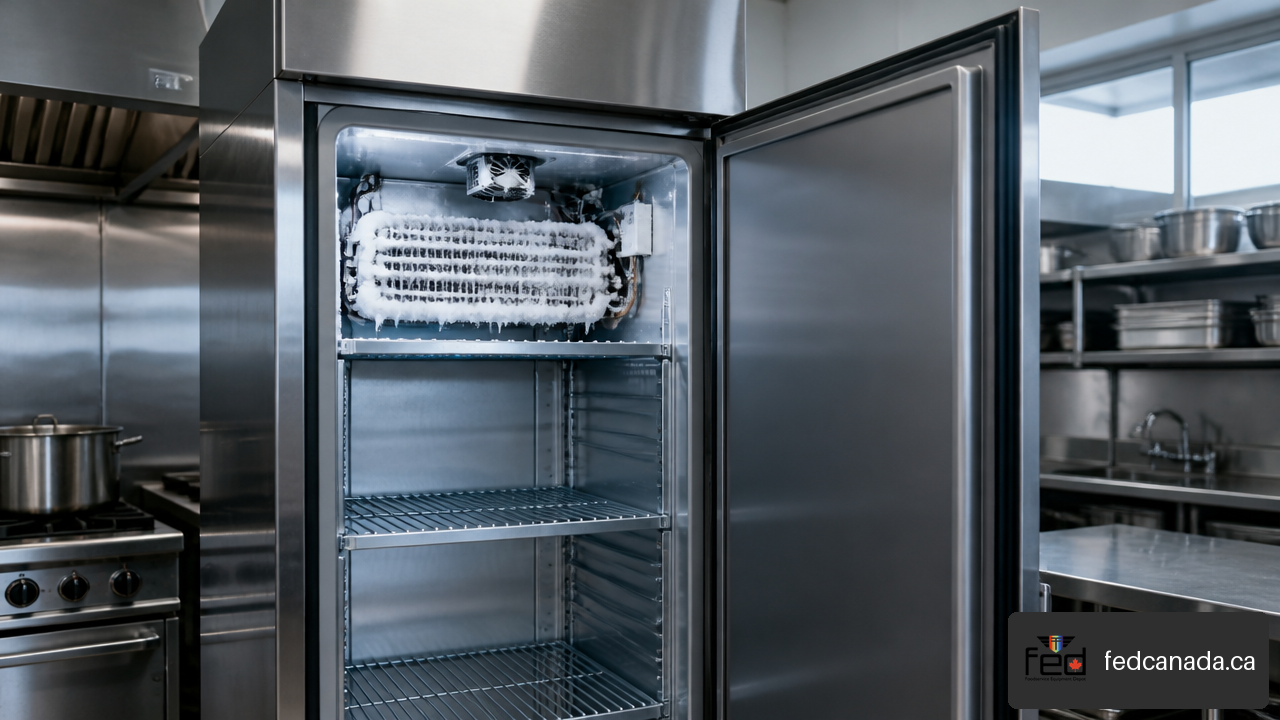
Pattern 3: Heavy ice or frost is visible at the evaporator
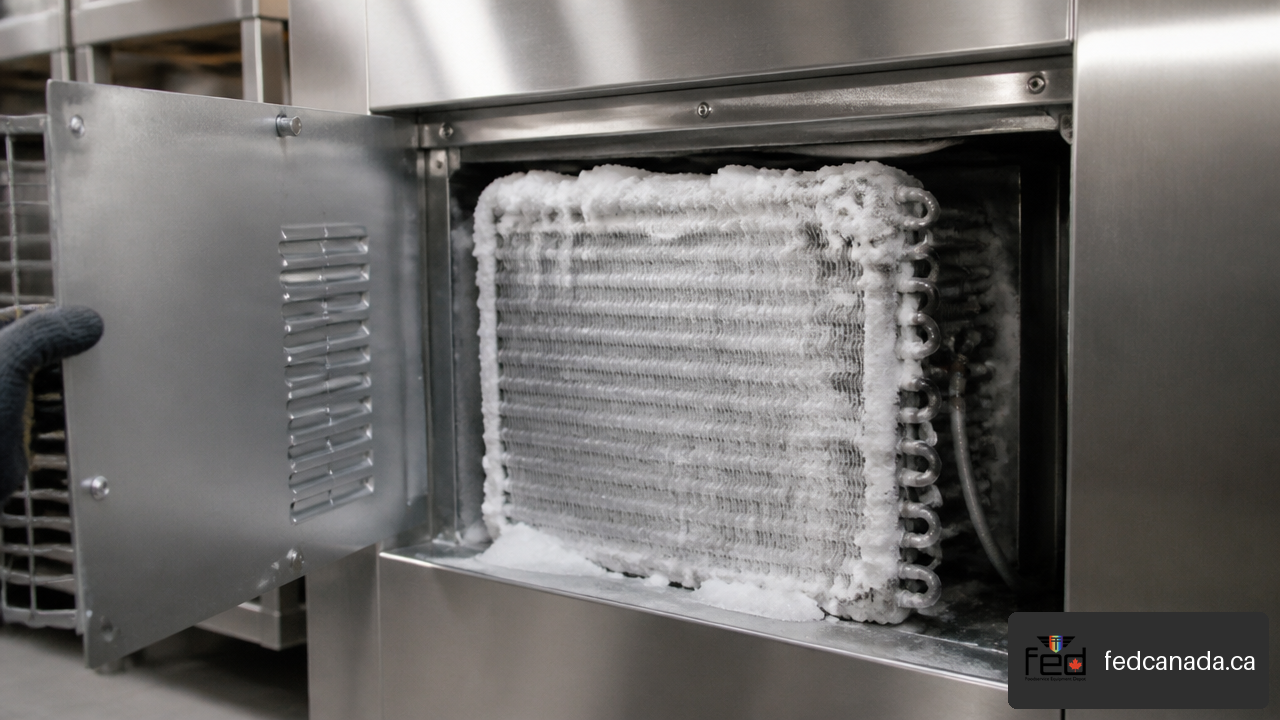
The evaporator coil absorbs heat from cabinet air. When the coil becomes packed with frost, air cannot pass through it properly. The refrigeration circuit may still make the coil cold, yet the cabinet warms because circulation has been choked off.
This usually points toward a defrost system problem, such as a heater, timer, sensor, controller, wiring connection, or drainage issue. It may also follow a door that has been left ajar for an extended period. The important distinction is the frost pattern. A uniformly iced coil often suggests a defrost or air infiltration problem, while an unusual patchy pattern may give a technician a reason to investigate sealed system performance.
I would document the frost with a photo before defrosting, if it is safe to do so. Do not chip ice with knives, screwdrivers, or sharp tools. Puncturing an evaporator coil converts an airflow issue into a major sealed system repair.
Pattern 4: The compressor runs constantly but cooling is weak
A continuously running compressor with only minor temperature improvement is a technician call. The cause may be an undercharged system from a leak, a restriction in the metering device or filter drier, contamination after a previous repair, incorrect refrigerant charge, or a compressor that no longer pumps effectively.
A community troubleshooting discussion illustrates why this cannot be resolved by sound alone: sealed system measurements such as pressures, superheat, subcooling, frost behaviour, and airflow may be needed even when a commercial refrigerator runs. Those readings must be interpreted against the manufacturer’s specifications and the refrigerant used in that particular unit.
Do not add refrigerant as a general maintenance step. Refrigerant does not normally get “used up.” If the charge is low, a leak or another underlying issue may need correction. A recharge without repair can create a brief improvement while leaving the actual fault in place.
When to Stop Troubleshooting and Call a Technician
Stop operating for electrical, overheating, or refrigerant warning signs
Some symptoms justify shutting the unit down, moving food, and arranging prompt professional service rather than trying more adjustments:
- Burning smell, smoke, sparks, or a tripped breaker that returns after reset.
- Hot electrical components, damaged wiring, or repeated compressor clicking.
- A compressor that is excessively hot and runs without meaningful cooling.
- Oil residue around refrigeration tubing or fittings, which can be a possible sign of a leak.
- A sharp loss of cooling after recent sealed system work.
- A unit that barely lowers temperature despite running for an extended period.
In a documented discussion of an Arctic Air reach in that ran but barely cooled, technicians raised the possibility of leaks, compressor weakness, and other sealed system failures requiring diagnostic testing rather than unattended operation. That scenario supports a practical rule: a refrigerator that runs but barely lowers temperature may need leak testing, pressure diagnosis, and compressor evaluation.
Understand what a qualified technician should evaluate
A qualified refrigeration technician can check items that are not safely or reliably diagnosed from the cabinet exterior. This may include compressor current draw, fan motor performance, controls, defrost components, line temperatures, system pressures, and the refrigerant charge.
For sealed system repairs, correct process matters as much as the replacement part. A technician may need to recover refrigerant, pressure test with nitrogen, repair a leak, replace a filter drier when appropriate, evacuate moisture and air, and weigh in the specified refrigerant charge. Generic pressure targets are not reliable across equipment models, refrigerants, and ambient conditions.
A recharge alone can fail when a system has moisture, debris, a restriction, or an unresolved leak. A practitioner discussion on post repair issues notes that restrictions, contamination, evacuation problems, and charging errors can leave a sealed system underperforming after service.
Give the service technician useful information
A well prepared service call can reduce diagnostic time and prevent vague descriptions such as “it is not cold enough.” Provide:
| Information to provide | Why it helps |
|---|---|
| Model and serial number | Identifies wiring diagrams, parts, refrigerant type, and specifications |
| Measured cabinet temperature and setpoint | Separates a display issue from an actual temperature failure |
| Ambient temperature and ventilation conditions | Helps assess heat load and condenser performance |
| When the fault started | Connects the issue to a power loss, cleaning, loading event, or repair |
| Compressor and fan behaviour | Helps narrow electrical, airflow, and capacity problems |
| Photos of frost, coil condition, and model plate | Preserves useful observations before conditions change |
| Recent repairs or refrigerant work | Alerts the technician to possible restrictions, contamination, or charge errors |
For an older refrigerator, repair versus replacement is not a simple age calculation. Compare the repair scope, cabinet condition, door and gasket condition, availability of parts, expected downtime, energy use, and the value of inventory at risk. A relatively modest fan or control repair may be sensible. A failed compressor combined with extensive cabinet wear or repeated cooling faults may justify pricing replacement options.
FAQ: Commercial Refrigerator Not Cooling
Why is my commercial refrigerator running but not getting cold?
A running compressor only confirms that the unit is attempting to cool. Poor cooling can still result from restricted condenser airflow, an iced evaporator, failed fans, a defrost fault, low refrigerant charge, a restriction, weak compressor performance, or a control problem. Measure the cabinet temperature and look for the symptom pattern before assuming the compressor itself has failed.
What temperature should a commercial refrigerator maintain?
For food safety, keep refrigerated food at or below 40°F (4.4°C). Many commercial operations choose a lower operating target to allow for door openings and product load, but the right setpoint depends on the food being stored, local requirements, and the equipment specification. Verify the actual cabinet temperature rather than relying only on the controller display.
How can I tell whether the problem is airflow or refrigeration capacity?
Airflow problems often involve blocked vents, dirty condenser coils, failed fans, poor door seals, or a uniformly iced evaporator. Refrigeration capacity problems are more likely when the condenser is clean, airflow is normal, the compressor runs continuously, and the cabinet temperature barely improves. The distinction is not absolute, so persistent weak cooling needs a technician’s measurements.
What does heavy frost on the evaporator coil mean?
Heavy frost usually means airflow through the evaporator has been restricted. A defrost system failure is a common reason, although prolonged door opening or gasket leaks can add moisture and frost. Photograph the coil condition, protect the food, and avoid using sharp objects to remove ice.
Can a dirty condenser coil cause a commercial refrigerator to stop cooling?
Yes. A dirty condenser prevents heat from leaving the refrigeration system efficiently. The compressor may run longer, operate hotter, and lose cooling capacity. Cleaning an accessible condenser is worthwhile, but it will not fix a refrigerant leak, restriction, failed fan motor, or weak compressor.
Is it safe to add refrigerant myself?
No. Refrigerant diagnosis and charging require correct equipment, refrigerant handling practices, leak testing, evacuation, and a manufacturer specified charge. Adding refrigerant without identifying the cause of a low charge can mask a leak and lead to repeated failure.
When should I call a technician immediately?
Call promptly if the cabinet remains above safe temperature, the compressor runs constantly with little cooling, the evaporator is heavily iced, electrical components smell hot, the unit repeatedly trips a breaker, or there are signs of a refrigerant leak. Move food first if temperature control has been lost.
What maintenance helps prevent another cooling failure?
Keep condenser areas clear, clean accessible condenser coils on a schedule suited to the kitchen environment, inspect door gaskets, avoid blocking interior vents, monitor cabinet temperatures with a thermometer, and investigate small temperature changes before they become inventory losses. In greasy kitchens or high dust areas, condenser maintenance may be needed more often than in a low volume setting.
Sources/References
- U.S. Food and Drug Administration — Refrigerator Thermometers: Cold Facts about Food Safety — https://www.fda.gov/food/buy-store-serve-safe-food/refrigerator-thermometers-cold-facts-about-food-safety
- Reddit r/refrigeration — Standup Commercial fridge not cooling right — https://www.reddit.com/r/refrigeration/comments/18qy8bc/standup_commercial_fridge_not_cooling_right/
- Reddit r/hvacadvice — Arctic Air AR49E commercial refrigerator running but not cooling — https://www.reddit.com/r/hvacadvice/comments/1x4mfug/arctic_air_ar49e_commercial_refrigerator_running/
- Reddit r/refrigeration — New commercial refrigerator died — trying to repair — https://www.reddit.com/r/refrigeration/comments/g681mp/new-commercial-refrigerator-died-trying-to-repair/
- fda.gov — https://www.fda.gov/food/risk-and-safety-assessments-food/listeria-monocytogenes-risk-assessment-questions-and-answers
Recent Posts
Leave a Comment
Your email address will not be published. Required fields are marked *