



Deli Case and Bakery Display Case Buying Guide
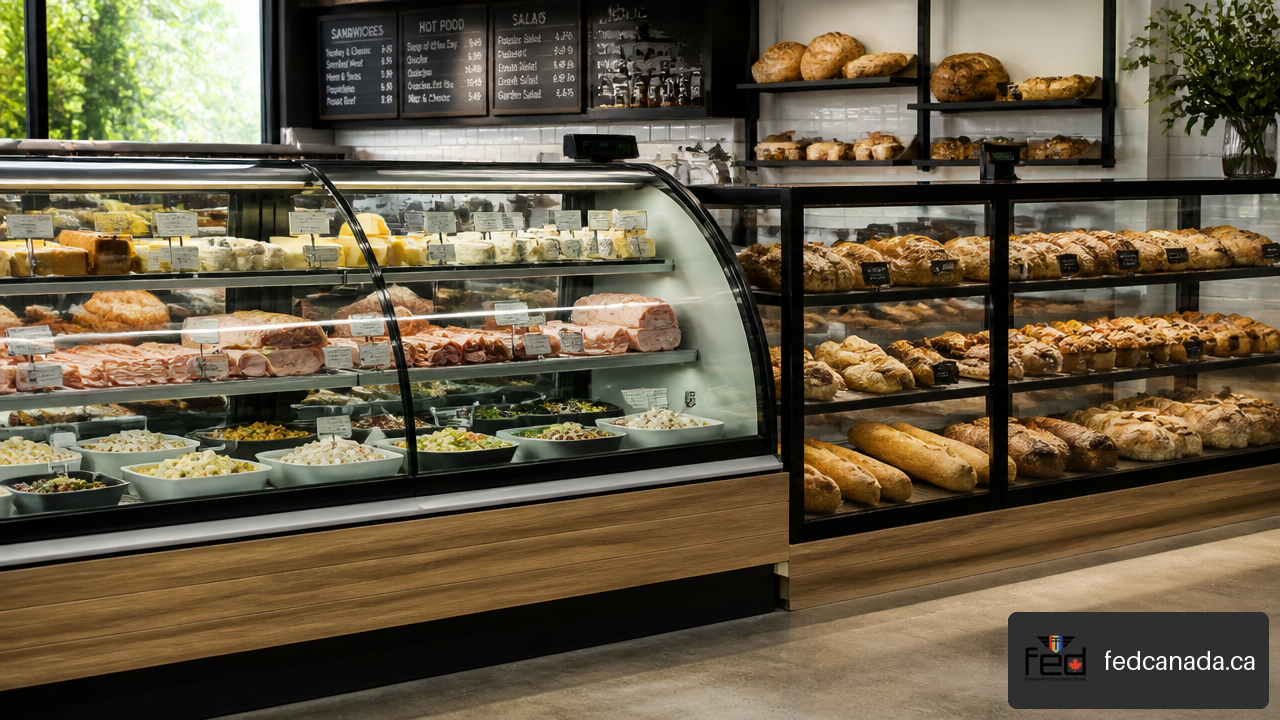
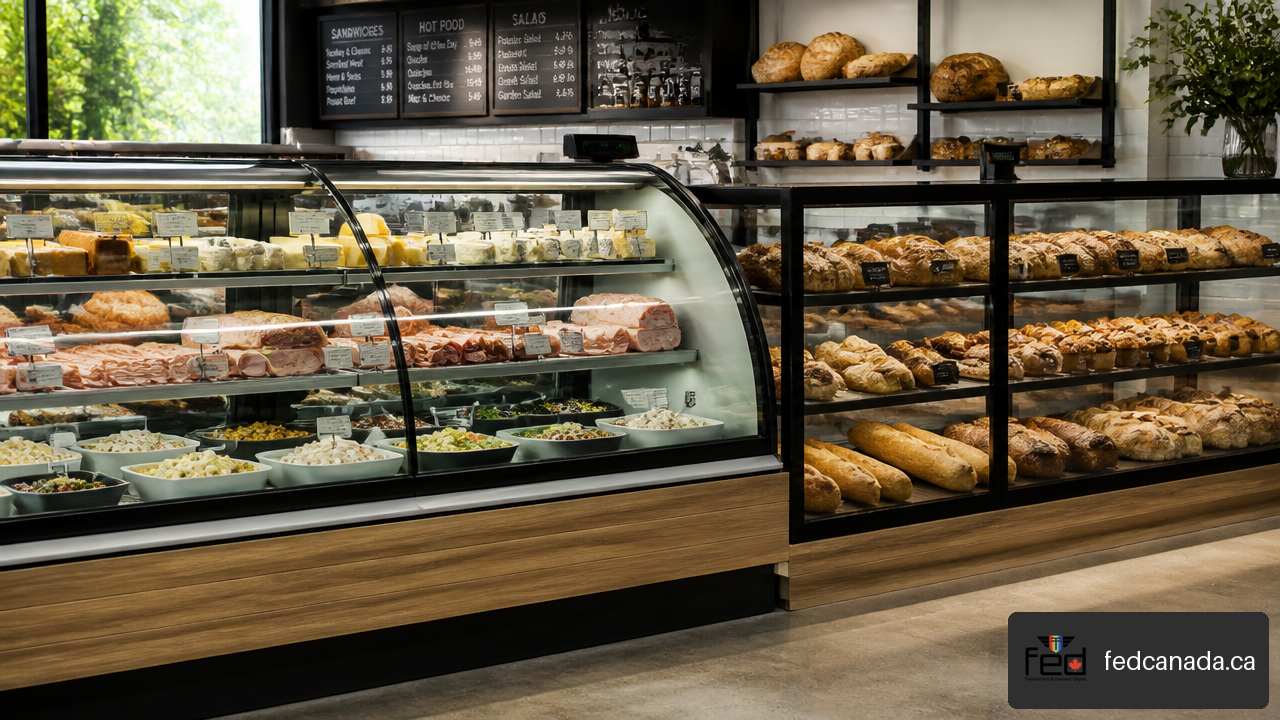
Choosing a display case is not simply a question of finding one that fits the floor plan. A well-chosen case protects food quality, supports safe holding, speeds up service, and makes the products you want to sell look worth choosing. This Deli Case and Bakery Display Case Buying Guide explains how I would evaluate case type, refrigeration, capacity, access, installation, and maintenance before placing an order.
A display case should be treated as part refrigerator, part merchandising fixture, and part workflow tool. A beautiful case that dries out pastries, blocks employee movement, or cannot maintain product temperature is not a good fit, regardless of its price.
Table of Contents
- Key Takeaways
- Choose the Case Around the Product
- Match Refrigeration to Food Quality
- Plan Capacity, Access, and Merchandising
- Verify Installation and Maintenance Requirements
- Frequently Asked Questions
Key Takeaways
Choose the display case by the foods it will hold, not by appearance alone. Perishable deli foods, cream-filled desserts, dairy-based items, and prepared meals need reliable cold holding.
Use a product-by-product approach for mixed menus. A dry bakery case may suit bread and cookies, while chilled cheesecakes or deli salads may require separate refrigerated equipment.
Capacity should reflect turnover. A smaller case that is replenished throughout service can protect freshness better than a large case filled far beyond realistic daily demand.
Refrigeration type matters. Forced-air and gravity-coil systems can suit different products, but neither is universally best. Product packaging, humidity, menu mix, and display duration all affect the decision.
Protect airflow. Overpacking shelves or blocking the air return and discharge can create warm zones, uneven cooling, and unnecessary service issues.
Confirm the delivery path, electrical requirements, ventilation clearance, loaded weight, and service access before ordering. The case has to fit through the building before it can improve the sales floor.
Practical rule: A display case is for presenting a controlled amount of inventory. It should not automatically replace dedicated back-of-house refrigeration for bulk storage.
Choose the Case Around the Product
Start with the food safety and quality requirement
The first decision is whether products need refrigeration, not whether they would look better behind glass. Deli meats, cheeses, seafood, salads, dairy-based desserts, cut produce, and prepared foods generally require cold holding. Dry cases are better suited to products that are shelf-stable and maintain their intended quality at room temperature, such as many breads, cookies, muffins, and packaged goods.
That distinction sounds straightforward, but mixed menus complicate it. A café may sell croissants, cookies, cheesecakes, bottled drinks, sandwiches, and pasta salads from the same counter. One large display case may look convenient on a drawing, yet it can force very different products into the same temperature and airflow environment.
KaTom’s overview of deli and bakery case sizing and configurations notes the practical distinction between refrigerated cases for perishables and non-refrigerated cases for foods that do not need refrigeration. That is the correct starting point, but product quality deserves equal weight. Chilling may be safe for a product while still being less than ideal for its texture, crust, or appearance.
Compare the main display case formats
| Case format | Best fit | Main advantage | Watch for |
|---|---|---|---|
| Refrigerated deli case | Meats, cheese, salads, prepared foods, seafood | Controlled cold holding and professional presentation | Requires airflow protection, cleaning, and ventilation clearance |
| Refrigerated bakery case | Cream desserts, cakes, chilled pies, beverages | Keeps chilled bakery products visible | Some baked goods can dry or lose texture during extended display |
| Dry bakery case | Bread, muffins, cookies, shelf-stable pastries | Supports ambient merchandising without refrigeration | Not suitable for products requiring temperature control |
| Full-service case | Sliced deli items, premium cakes, assisted service | Limits customer handling and supports staff portioning | Requires employee coverage and rear counter space |
| Self-service case | Grab-and-go items, packaged bakery goods, drinks | Faster customer access and lower service pressure | Requires organized replenishment and suitable packaging |
| Dual-service case | Operations needing customer access and rear replenishment | Flexible loading and service flow | Can demand more careful cleaning and traffic management |
Choose access based on labor and handling
Case access affects more than convenience. It determines who touches the product, how quickly staff can replenish it, and whether customers crowd the service area.
A full-service deli case is usually the better option when products must be sliced, portioned, wrapped, or explained before purchase. It also creates separation between customers and exposed foods. A self-service case works best when products are individually packaged, clearly labeled, and easy to select without disrupting the rest of the display.
A dual-service model can be useful for packaged bakery goods or prepared meals where staff replenish from the rear while customers shop from the front. Still, I would avoid assuming dual access solves every workflow problem. If employees need to reach across trays, move around customers, or reload during a busy rush, the case may create congestion instead of convenience.
ChefEquipment’s explanation of full-service, self-service, and dual-service access describes the basic customer and employee access patterns. The buying decision should then extend to the actual workflow: who loads the case, when replenishment happens, where packaging is stored, and how often doors or service panels will be opened.
Match Refrigeration to Food Quality
Forced-air versus gravity-coil refrigeration
Refrigeration does more than lower air temperature. It moves heat away from products, and the way air circulates inside the case can influence how evenly food cools and how exposed surfaces behave over time.
Forced-air refrigeration circulates cooled air through the display zone. It is commonly used for bakery products such as pies, cakes, and Danishes. Gravity-coil refrigeration relies more on natural movement of cooled air and is commonly associated with meats, cheeses, salads, seafood, and deli products. WebstaurantStore’s guide to refrigeration methods, service styles, and case sizing outlines these typical applications.
That does not mean every cake belongs in forced air or every cheese belongs in gravity coil. The evidence does not support a universal winner across every recipe, packaging method, or store environment. Consider a cream-filled cake held for several hours in a busy, warm café. Refrigeration may be necessary, but direct airflow and repeated door opening can affect its finish or create condensation when products are moved between temperatures. By contrast, prepackaged chilled slices may tolerate that environment more easily.
The right question is: What must this product look and feel like at the moment of sale?
| Product group | Typical case direction | Quality issue to test before buying |
|---|---|---|
| Sliced meats and prepared salads | Refrigerated deli case, often gravity-coil application | Product core temperature, exposed-surface drying, pan layout |
| Cheese | Refrigerated deli case | Airflow, wrapping method, condensation, serving access |
| Cream cakes and chilled desserts | Refrigerated bakery case | Frosting condition, condensation, temperature recovery after loading |
| Bread and croissants | Dry bakery case in many applications | Crust texture, freshness cycle, protection from handling |
| Packaged grab-and-go meals | Refrigerated self-service case | Shelf organization, airflow lanes, label visibility |
| Cookies and packaged snacks | Dry self-service case | Visibility, crumbs, cleaning, customer access |
Temperature is not the whole answer
A digital readout shows case air temperature, but food safety depends on the food itself reaching and staying at the required temperature. For many refrigerated foods, the FDA Food Code requirement cited in the ASHRAE retail food refrigeration guidance is a maximum product core temperature of 41°F or 5°C during handling and storage.
The product core temperature can differ from the air temperature shown on the controller. Warm product loaded after prep, crowded pans, blocked vents, sun exposure, frequent service, and an overloaded case can all slow cooling or create inconsistent zones.
I would look for a case with a readable temperature display and a practical way to verify actual product temperature with a thermometer or probe. It is also worth deciding at the buying stage who will log temperatures, how often they will do so, and what corrective action will happen if readings are out of range. A case without an operating routine is only part of a cold-holding system.
Do not ignore the room around the case
Ambient conditions influence performance. A refrigerated case positioned beside an oven bank, under direct sunlight, or in a humid entrance area may work harder than it would in a stable, climate-controlled retail area. Open-front refrigeration can be especially sensitive to drafts and warm customer traffic.
This does not make open-air merchandising unsuitable. It means the case location has to be treated as part of the specification. Before selecting an open-front unit for perishable grab-and-go products, compare its intended operating environment with the manufacturer’s requirements and consider whether doors would better protect the product and reduce exposure.
Plan Capacity, Access, and Merchandising
Size the display for turnover, not maximum inventory
The largest case is not always the most useful case. Display capacity should be based on the amount of product you can sell while it remains safe, attractive, and easy to rotate.
A bakery selling 30 slices of cake per day does not necessarily benefit from displaying 90 slices at opening. The fuller case may look abundant, but slow-moving pieces spend longer under lighting and refrigeration. A smaller display, replenished from properly stored backstock, can provide better freshness control and cleaner presentation.
To make a practical estimate, work through this sequence:
- List each product and the maximum number likely to be displayed at one time.
- Separate fast-turning items from products that may sit longer.
- Estimate the pan, tray, cake stand, or package footprint rather than counting items alone.
- Reserve visible gaps for restocking and airflow.
- Plan backstock refrigeration for items that should not stay on display all day.
Case widths vary substantially. KaTom identifies refrigerated case widths ranging approximately from 36.25 to 144 inches, while non-refrigerated models can range from roughly 8 to 75.625 inches. The meaningful measurement, however, is not width alone. Shelf depth, number of levels, usable clearance between shelves, product packaging, and loading direction decide how much sellable merchandise the case can actually hold.
Protect airflow while merchandising
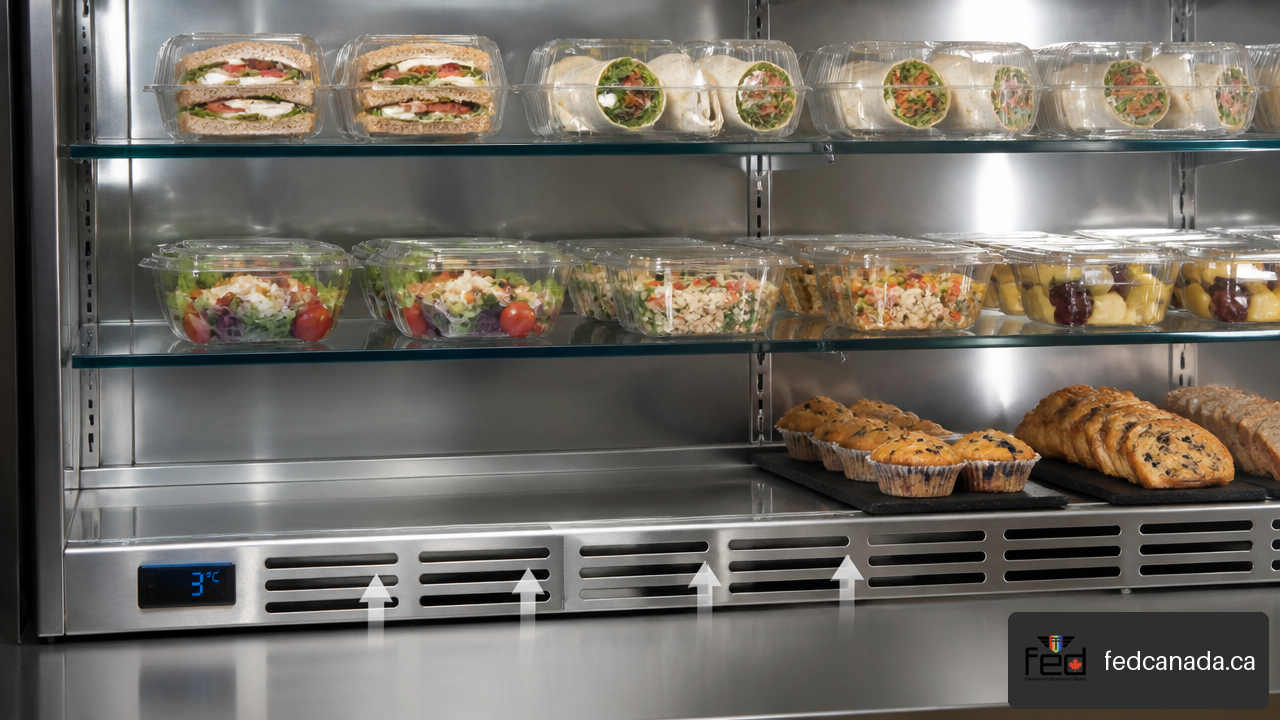
A display case is not a sealed box of cold air. It depends on air returning to the refrigeration system and discharging back into the display zone. When pans, price tags, risers, product packages, or decorative liners block those paths, some products may receive less cooling than others.
Supermarket Perimeter’s deli food safety guidance recommends regular temperature recording, avoiding overpacking or blocked air paths, and leaving about one inch between the bottom of a shelf and the product below it to preserve airflow.
That one-inch guidance illustrates an often-missed point: visual density can interfere with refrigeration geometry. A heavily packed cheese display may look generous but perform poorly if packages rise into the air discharge. A tiered cake stand may be attractive but unsuitable if it blocks circulation across the shelf.
Design for visibility without creating glare
Glass shape, shelf angle, lighting, and product height influence whether customers can see what they are buying. Straight glass usually provides a clean, modern profile and can simplify certain counter layouts. Curved glass can soften reflections and create a more traditional bakery appearance. Neither shape is automatically better; the better choice is the one that shows your actual products clearly from the customer’s typical viewing angle.
Use lighting to reveal colour and detail, not to overpower the display. Bright lighting can make decorated cakes, fruit tarts, and prepared foods more noticeable, but glare on curved glass, fingerprints, and heat from poorly placed lighting can undermine the effect. Ask to see lighting specifications and consider how the case will look under your store’s existing ceiling lights.
Verify Installation and Maintenance Requirements
Complete a site-readiness check before ordering
A display case can fit the planned counter opening and still fail at delivery or commissioning. Verify the entire route, from the delivery vehicle to the final position.
| Site item | What to confirm | Why it matters |
|---|---|---|
| Delivery path | Doorway width, hallway turns, elevators, ramps, thresholds | A large case may not fit through the entrance even if it fits the sales floor |
| Final footprint | Width, depth, height, door swing, counter clearance | Prevents blocked aisles and inaccessible controls |
| Electrical supply | Voltage, plug type, dedicated circuit requirements | Avoids installation delays and unsafe temporary connections |
| Ventilation clearance | Intake, exhaust, rear, side, and top spacing | Supports condenser performance and service access |
| Floor support | Equipment weight plus product and shelving load | Protects flooring and ensures safe placement |
| Heat and sun exposure | Ovens, windows, HVAC vents, entry doors | Reduces unnecessary refrigeration stress |
The manufacturer’s specification sheet should be the final authority for dimensions, electrical needs, clearances, and installation instructions. KaTom also emphasizes checking fully loaded floor support and providing adequate breathing room for refrigeration equipment, while WebstaurantStore advises verifying intake and exhaust clearance plus the doorway route before purchase.
Fair warning: clearance is not unused space. It is working space for heat rejection, airflow, cleaning, and future repair. Pushing a case tight against a wall may make the floor plan look cleaner while making the refrigeration system work harder.
Build maintenance into the buying decision
The easiest case to clean is more likely to stay clean. Before choosing a model, inspect or ask about removable shelves, pan access, drainage, interior corners, door tracks, glass access, condenser cleaning access, and replacement-part availability.
A practical maintenance routine includes:
Wiping spills, crumbs, and fingerprints during service rather than allowing buildup.
Cleaning shelves, pans, gaskets, glass, and drains on a scheduled basis using methods suitable for the equipment materials.
Checking that vents, air returns, and air discharges remain clear after every major reset of the display.
Recording temperatures at defined intervals and responding promptly to abnormal readings.
Scheduling qualified service when cooling performance changes, frost accumulates unexpectedly, or the unit shows persistent alarms.
Do not use the display case as long-term bulk storage simply because there appears to be spare room. Backstock held in dedicated refrigeration is usually easier to rotate, organize, and protect from customer-facing disruptions. The display should carry the amount needed to sell well, not every item you own.
Frequently Asked Questions
What is the difference between a deli case and a bakery display case?
A deli case is generally selected for refrigerated meats, cheeses, salads, seafood, and prepared foods. A bakery display case may be dry or refrigerated depending on the products. The major difference is the food being held and the quality conditions it needs, not simply the label on the case.
Do I need a refrigerated case for cakes and pastries?
Use refrigeration when the product requires cold holding, such as cream-filled cakes, cheesecakes, mousse desserts, or other temperature-sensitive items. Many breads, cookies, and pastries may be better in a dry case if refrigeration would reduce the desired texture. Review the recipe, packaging, holding time, and local food safety requirements before deciding.
When should I choose forced-air refrigeration instead of gravity-coil refrigeration?
Forced-air refrigeration is commonly used for bakery items such as cakes and pies, while gravity-coil refrigeration is often used for deli products including meats, salads, cheese, and seafood. The decision should remain product-specific. Test or confirm how your products tolerate airflow, especially if they are uncovered, delicate, or displayed for extended periods.
Can one case safely hold both bakery products and deli foods?
Sometimes, but it is rarely the simplest option. Packaged refrigerated bakery products and prepared foods may share a suitable refrigerated case if temperature control, sanitation, packaging, and airflow are appropriate. Exposed deli foods alongside dry baked goods are usually a poor match because their refrigeration and handling needs differ.
How do I calculate the right display-case size?
Start with peak display quantity, not total daily production. Calculate how many trays, pans, packages, or cake stands must be visible at one time, then leave room for airflow and replenishment. Consider product turnover and backstock capacity. If you restock often, a smaller case may be more efficient than a large unit kept full all day.
Is an open-air case safe for perishable foods?
An open-air case can be suitable when it is designed for the product, installed in an appropriate environment, loaded correctly, and operated within its specified conditions. It is not a substitute for temperature monitoring. Heat, drafts, direct sunlight, overcrowding, and blocked airflow can make performance more difficult to maintain.
Why are products drying out or becoming warm inside a display case?
Drying can result from product exposure, prolonged display time, airflow, packaging choices, or the wrong type of case for the item. Warming can occur when vents are blocked, the case is overpacked, warm food is loaded in, doors are opened frequently, or installation clearance is inadequate. Check product core temperature, not only the controller display.
What should I check in the specification sheet before ordering?
Confirm external dimensions, usable shelf dimensions, temperature range, refrigeration method, electrical requirements, plug type, shipping weight, ventilation clearance, access side, shelf configuration, drain requirements, and warranty details. Also compare those specifications against the actual doorway route and final installation location.
Sources and References
KaTom Restaurant Supply — Deli & Bakery Case Types, Sizes & Features: https://www.katom.com/learning-center/deli-display-cases-buyers-guide-2.html
WebstaurantStore — Bakery & Deli Case Buying Guide: https://www.webstaurantstore.com/guide/565/deli-cases-and-bakery-display-cases-buying-guide.html
Supermarket Perimeter — Top Food Safety Practices in the Deli: https://www.supermarketperimeter.com/articles/5836-top-food-safety-practices-in-the-deli
ASHRAE Handbook — Retail Food Store Refrigeration and Equipment: https://handbook.ashrae.org/Handbooks/R18/IP/r18_ch15/r18_ch15_ip.aspx
ChefEquipment.com — Bakery Display Cases Buying Guide: https://chefequipment.com/blogs/resources/bakery-display-cases-buying-guide
Recent Posts
Leave a Comment
Your email address will not be published. Required fields are marked *