




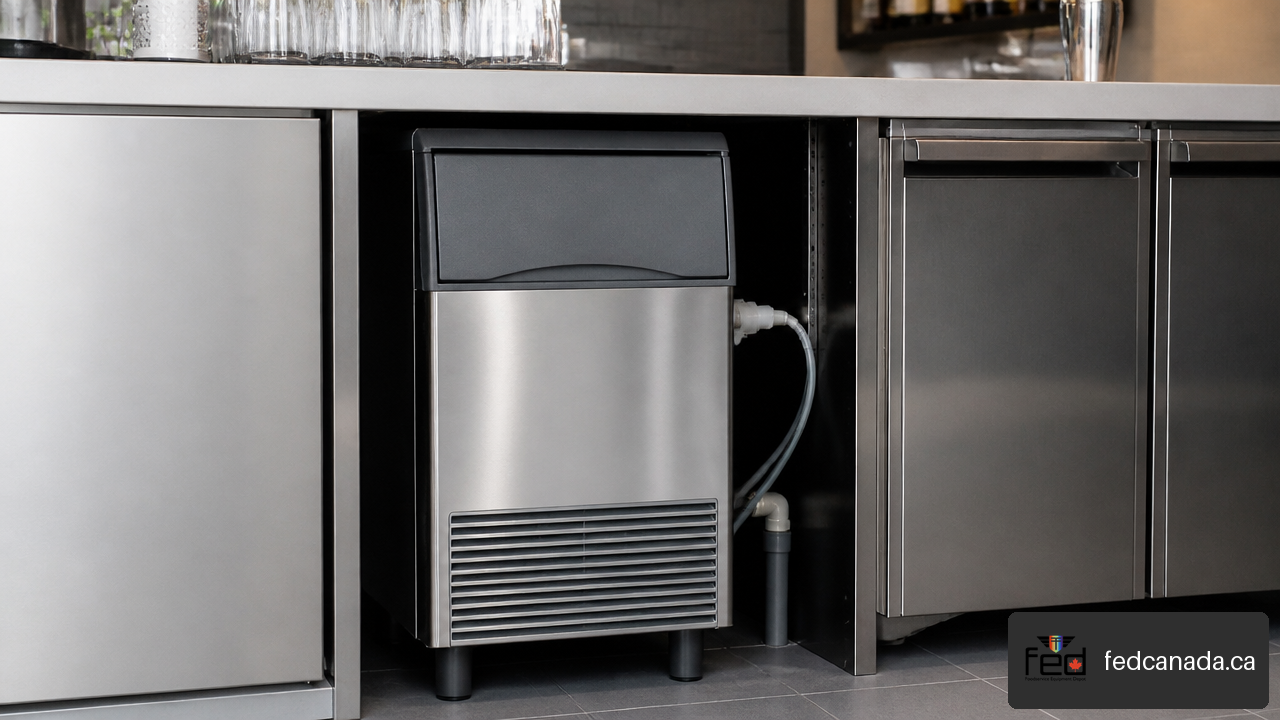
Scotsman Ice Machines: Settings, Troubleshooting and Buying Guide
Scotsman Ice Machines: Settings, Troubleshooting and Buying Guide starts with one practical rule: treat the model number as part of every decision. Scotsman cube makers, nugget machines, flake machines, undercounter units, and dispensers do not share one universal control layout or service procedure. The right setting, cleaning process, and troubleshooting path depend on the exact machine family.
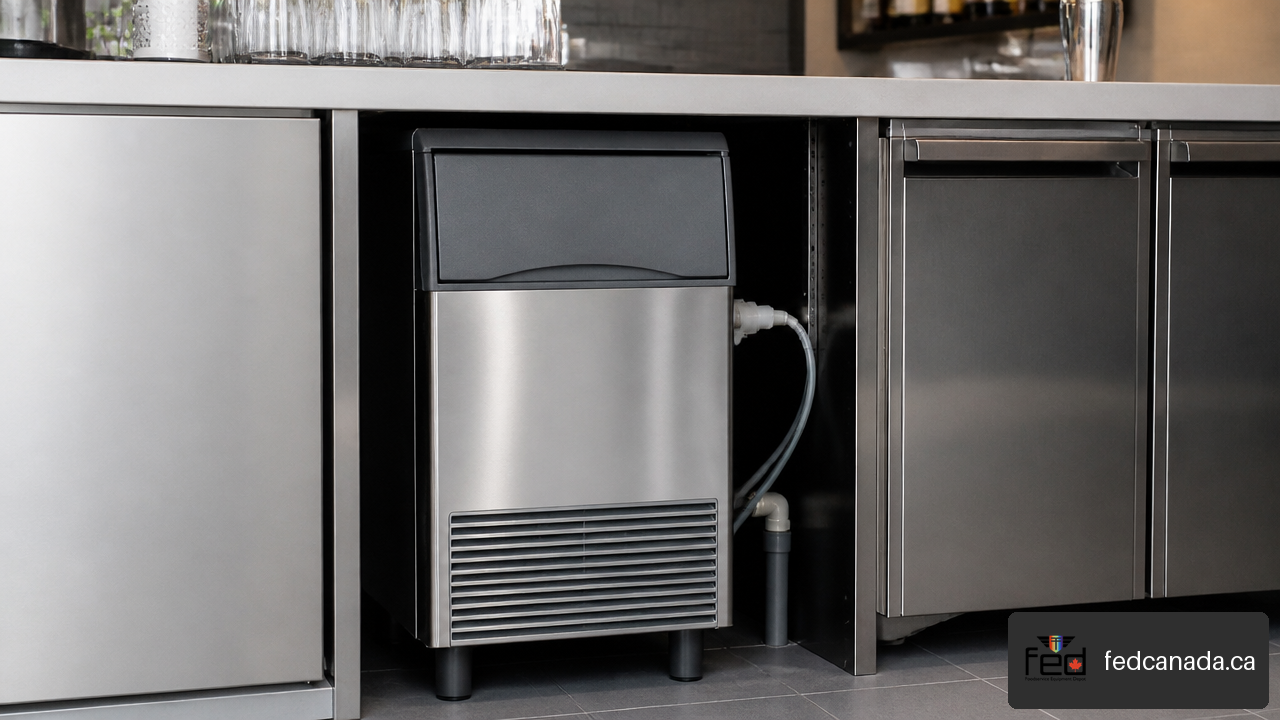
Table of Contents
- Settings and installation checks
- Troubleshooting no ice and slow production
- Cleaning and maintenance
- Buying the right Scotsman ice machine
- Key takeaways and FAQ
- Sources
Settings and installation checks
Start with the machine family, not a generic control sequence
I recommend identifying the full model number, serial number, voltage, and ice style before changing any setting. These details are normally found on the machine data plate. They matter because a control that is normal on one Scotsman unit may not exist on another.
A useful way to group Scotsman machines is by operating design:
| Machine family | Typical use | Settings and checks that matter most |
|---|---|---|
| Cube ice machine | Restaurants, bars, hotels, kitchens | Freeze and harvest operation, bin sensing, condenser airflow, water distribution |
| Nugget or flake machine | Healthcare, beverage service, self serve stations | Water system, auger operation, gearbox condition, bin or dispenser controls |
| Undercounter machine | Small bars, cafés, offices, homes | Water supply, drain, cleaning cycle, room temperature, bin sensor |
| Ice dispenser | Hospitals, cafeterias, break rooms | Ice level, chute operation, motor, door or solenoid controls |
The owner safe controls are typically limited to power, cleaning mode, ice making mode, and settings specified in the user manual. Internal timers, pressure controls, wiring terminals, refrigeration controls, and voltage specific parts should not be adjusted casually. A small setting change can mask the real fault and make later diagnosis harder.
Confirm the installation conditions before changing settings
Poor installation can look exactly like a machine fault. Before adjusting controls, confirm that the ice machine has potable water, a functioning drain, the correct electrical supply, and clear ventilation openings. For applicable equipment, the Scotsman SRC035 service manual installation requirements specify cold potable water, drainage, correct electrical supply, and airflow through the front vents.
These conditions affect the machine in different ways:
Warm incoming water increases the refrigeration load and may reduce production.
A restricted drain can interrupt harvest, cause water backup, or create leaks.
Low voltage or an incorrect circuit can prevent motors, controls, or compressors from operating as intended.
Blocked front ventilation traps heat around the condenser, extending freeze cycles and lowering output.
Consider an undercounter machine pushed tightly into a cabinet opening. It may receive water and power, but if its front air path is obstructed, the refrigeration system cannot reject heat efficiently. The result may be smaller batches, longer cycles, or a safety shutdown. Turning a timer will not solve that problem.
Adjust harvest timing only when the model permits it
Harvest timing determines how long a cube machine remains in the ice release stage. It is not a universal user setting. Some models use fixed electronic logic, while certain serviceable models use an adjustable harvest timer.
On the Scotsman SRC035, the timer is adjusted counterclockwise to reduce harvest time and clockwise to increase it. The same service manual provides a useful model specific reference point: when ice takes about 2.5 minutes to release, the harvest setting should be about 3 minutes. That relationship is a calibration aid for that model, not a rule for every Scotsman machine.
Before changing an applicable timer:
- Verify that water flow, condenser cleanliness, and room conditions are normal.
- Watch several complete cycles rather than judging one unusual batch.
- Record the observed release time and existing adjustment position.
- Make one small adjustment only if the manual permits it.
- Recheck ice release and bin operation before making another change.
Fair warning: a harvest issue can come from scale on the evaporator, poor water distribution, sensor faults, refrigeration trouble, or a control problem. Timer adjustment should refine a healthy system, not compensate for one that needs repair.
Troubleshooting no ice and slow production
Use a low cost diagnostic order first
When a Scotsman ice machine is running but not making ice, I suggest starting with what can be confirmed without opening sealed refrigeration components. This avoids buying a valve, pump, or control board based only on a symptom.
- Confirm that the machine has power and is switched to its normal ice making mode.
- Check that the water supply valve is open and that any external filter is not restricted.
- Look for obvious drain backup, standing water, or a disconnected drain line.
- Check that air vents and condenser access areas are not blocked by dust, cartons, or cabinetry.
- Inspect visible sensors and water paths using the model manual.
- Observe what water actually does during a cycle: fill, hold, circulate, drain, or overflow.
- Stop and arrange qualified service if electrical, compressor, sealed refrigeration, or gearbox work is indicated.
Scotsman’s installation and user manual troubleshooting guidance supports checking the water supply, inspecting installed water filters, carefully cleaning optical sensors without scraping them, and cleaning a dirty condenser when production slows.
No water, no ice, or a reservoir that will not fill
Start by separating a true no water condition from a no circulation condition. If no water enters at all, check the supply shutoff, filter, inlet line, and visible connections. A fill valve or water level sensor may be involved, but neither should be assumed first.
If water enters but the machine stops before reaching the expected level, a sensor issue, control issue, restricted supply, or fill valve problem may be possible. If water continues to enter or overflows, shut off the water supply if needed and stop using the machine until the cause is identified. Continuous fill can lead to water damage quickly.
A refrigeration community discussion provides a useful caution: technicians discussing similar Scotsman fill faults noted that water level sensors and fill valves can create similar symptoms, and that voltage should be confirmed before ordering a replacement. This is anecdotal field discussion, not a substitute for the applicable manual, but the buying lesson is sound: match replacement parts to the exact model and electrical specification.
A full reservoir does not prove good water circulation
Water can be visible in the reservoir while the evaporator receives too little moving water. That distinction is especially useful when a machine appears full but forms thin ice, makes weak batches, or fails to freeze consistently.
Possible causes can include:
A restricted water filter limiting refill flow.
Scale or debris blocking water distribution holes.
A weak circulation pump or worn pump impeller.
A dump valve allowing water to leave when it should remain in the system.
A sensor or control ending the cycle at the wrong point.
For example, a cube machine may fill normally, then circulate poorly because distribution holes are partially clogged. The reservoir looks normal, yet water does not sheet evenly across the freezing surface. Replacing the fill valve would not correct that issue.
Slow production, warm ice, and unusual cycling
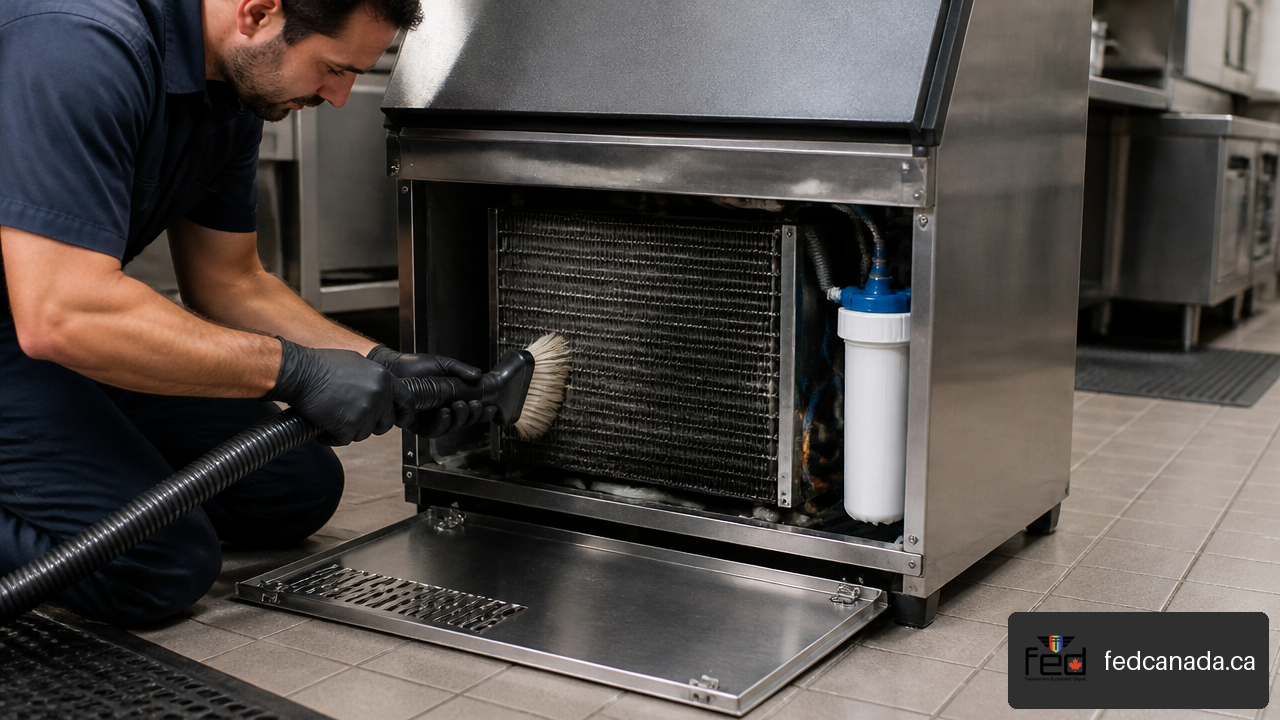
Slow production often points to heat removal, water quality, or installation conditions before it points to compressor failure. Check the condenser and ventilation path, then confirm the water supply and filter condition. A dirty condenser keeps heat inside the system, which lengthens the freeze cycle. A restricted filter reduces the water available for consistent ice formation.
If the compressor does not start, trips protection, runs unusually hot, or repeatedly cycles without producing ice, do not bypass electrical controls. The Scotsman Ice Machine Service Handbook diagnostic sequence includes checks of power, fuses, breakers, contactors, controls, circuit continuity, and compressor temperature. Those are technician level checks because they involve live electrical circuits and refrigeration components.
Dispenser, nugget, and flake machine warning signs
Dispenser faults differ from ice making faults. If a dispenser has ice but will not dispense, remove excess ice if the bin is overfilled and inspect the chute area for a visible blockage. The Scotsman IOD Series user manual troubleshooting instructions note that an overloaded dispenser may stop until excess ice is removed, while motor faults can require checks of thermal protection, the motor, and capacitor. Door, rocking chute, solenoid, and switch faults may also prevent dispensing.
For nugget and flake machines, pay attention to grinding noise, oil contamination, water near the drive assembly, or an auger that will not turn. Community reports suggest that an auger evaporator seal failure can allow water into gearbox oil and eventually contribute to gearbox damage. Because this is a potentially costly mechanical path, stop operation and arrange service rather than continuing to run a noisy auger system.
Cleaning and maintenance
Clean for scale control, sanitation, and ice quality
Cleaning is not only about appearance. Mineral scale can reduce water movement, interfere with sensors, restrict distribution openings, and make harvest less predictable. Sanitizing addresses microbial growth in food contact areas after the cleaning process removes scale and residue.
The exact procedure, cleaner concentration, dwell time, and rinse sequence must follow the manual for your model. Avoid assuming that a residential procedure applies to a commercial cuber, nugget machine, or dispenser.
A practical maintenance routine includes:
Inspect the bin and ice contact surfaces regularly for residue or visible buildup.
Replace or service water filters according to local water conditions and the filter manufacturer’s schedule.
Clean the condenser and maintain clear airflow around ventilation openings.
Run the manufacturer specified cleaning and sanitizing procedure whenever scale or sanitation conditions require it.
Record the date, cleaner used, filter changes, and any operating symptoms.
Clean sensors gently and keep water paths open
Some Scotsman models use optical sensing components. Scale or film can interfere with what the sensor detects, causing incorrect ice level or water related behavior. Clean these components only as directed, using nonabrasive materials. Do not scrape optical surfaces with sharp tools.
Water distribution components deserve the same attention. If a machine has uneven ice thickness or a weak freeze pattern, inspect accessible water distribution openings after the unit is safely shut down and cleaned. The goal is consistent flow, not simply a reservoir that appears full.
Know when maintenance becomes service work
Owner safe work generally includes exterior cleaning, bin cleaning, filter replacement where designed for user access, condenser cleaning when the manual permits it, and the approved cleaning cycle. Stop before work involves exposed wiring, capacitor testing, sealed refrigeration, compressor replacement, internal pressure controls, or gearbox disassembly.
The distinction matters. Cleaning a condenser can restore airflow. Trying to diagnose a compressor with improvised electrical testing can create shock, fire, or equipment damage risks.
Buying the right Scotsman ice machine
Choose ice type based on service, not appearance
The best ice type depends on what the ice must do after it leaves the machine.
| Ice type | Best fit | When to avoid it |
|---|---|---|
| Cube ice | Cocktails, self serve beverages, general foodservice | Avoid if chewable ice is a core customer expectation |
| Nugget ice | Fountain drinks, healthcare, quick service, chewable ice programs | Avoid if your primary need is clear presentation cubes |
| Flake ice | Seafood displays, produce displays, healthcare applications | Avoid for most standard beverage programs |
Cube machines are often the broadest choice for restaurants and bars because they suit drinks and routine kitchen use. Nugget ice is popular where texture and easy chewing matter. Flake ice is designed more for display and packing applications than beverage presentation.
Size production and storage separately
Production capacity answers, “How much ice can the machine make under stated test conditions?” Storage capacity answers, “How much ice can be held for service?” They are related but not interchangeable.
Estimate daily demand by looking at peak service rather than average traffic. A café may need modest daily production but a large enough bin to handle a concentrated morning rush. A catering operation may need production capacity that can rebuild between events, while a hotel breakfast station may need storage for a short but heavy service window.
Use this planning sequence:
- Estimate drinks, food display needs, and staff use during the busiest period.
- Add a reasonable buffer for hot weather, special events, and unexpected demand.
- Compare rated production at the manufacturer’s listed conditions, not just the biggest number in a product title.
- Choose bin capacity based on when demand occurs.
- Confirm that the room can support the water, drain, electrical, and ventilation requirements.
Screen the site before ordering
Measure the location, including doorways, cabinet openings, service access, drain route, electrical supply, water line route, and airflow clearance. For air cooled equipment, ventilation is not optional spare space. It is part of the refrigeration system’s operating environment.
Also consider service access. A machine that fits tightly beneath a counter but leaves no room to remove panels, clean the condenser, or reach the water filter may cost more downtime later. If space is tight, an undercounter model with accessible front service areas may be a better fit than a larger unit that technically fits the opening.
Verify parts before you buy replacements
For replacement parts, record these details before ordering:
Full model number and serial number.
Electrical voltage and frequency from the data plate.
Part number from the machine documentation, if available.
Clear symptom description and when it occurs in the cycle.
Photos of connectors, labels, and the existing part when practical.
This prevents a common mistake: ordering a part that looks correct but has the wrong electrical rating, connector, or control logic. If diagnosis is uncertain, it is usually better to confirm the failure path before purchasing a valve, pump, sensor, motor, or board.
Key takeaways and FAQ
Key takeaways
The quickest path to dependable ice is usually not a parts replacement. Confirm the model, installation conditions, water behavior, airflow, and cleaning status before changing controls or ordering components.
Match every setting and replacement part to the exact Scotsman model and voltage.
Check water supply, drainage, filters, sensor cleanliness, and condenser airflow before suspecting major refrigeration faults.
A full reservoir does not guarantee proper circulation through the pump and distribution system.
Adjust harvest timing only on models that permit it and only after basic operating conditions are verified.
Treat compressor, live electrical, sealed refrigeration, auger seal, and gearbox problems as qualified service work.
How do I adjust the settings on my Scotsman ice machine?
Use the owner manual for the exact model. Most users should limit adjustments to normal operating mode, cleaning mode, and settings specifically identified as user accessible. Some models have adjustable harvest timing, but that is not universal. Do not alter internal refrigeration or electrical controls without qualified service guidance.
Why is my Scotsman ice machine running but not making ice?
Start with water supply, filter restriction, drain condition, sensor cleanliness, condenser airflow, and room conditions. If those are normal, observe whether the machine fills, circulates water, freezes, harvests, or shuts down at a particular stage. That sequence helps separate a water path issue from a control or refrigeration fault.
What should I check first when a Scotsman machine has no water?
Check that the water shutoff is open, the supply line is not kinked, and any filter is not restricted. Then observe whether the machine calls for water. If the machine should fill but does not, a fill valve, water level sensor, control, or electrical issue may need diagnosis.
Why is my Scotsman producing ice more slowly than usual?
Inspect condenser cleanliness and airflow first, then check incoming water conditions and the filter. Slow production can also occur when ambient conditions are warmer than expected, the unit is installed too tightly, or scale is affecting water distribution. If the machine has an electrical or refrigeration fault, professional service is appropriate.
How do I clean and sanitize a Scotsman ice machine?
Use the cleaner, sanitizer, sequence, and rinse instructions specified for the machine model. Generally, cleaning removes mineral scale and residue, while sanitizing follows to address food contact hygiene. Do not use sharp tools on sensors or substitute chemicals unless the manufacturer documentation permits them.
How often should a Scotsman ice machine be descaled?
There is no single reliable interval for every Scotsman model and water supply. Hard water locations may need attention more often than sites with softer, well filtered water. A practical approach is to follow the model manual, inspect regularly, and act sooner when scale, reduced water flow, uneven ice, or abnormal harvest behavior appears.
When should I stop troubleshooting and call a qualified technician?
Stop when the work involves live voltage, capacitors, compressor circuits, refrigerant components, internal control diagnosis, repeated breaker trips, gearbox noise, or water contamination near an auger drive. Also call for service when basic checks are complete but the machine still cannot freeze, harvest, or dispense reliably.
Sources
Scotsman Ice Systems + Installation and User Manual: https://portal.scotsman-ice.com/ResourceCenter/Files/GetFile/6D63EA7F-B241-4D45-866B-41B6EBBBFE38
Scotsman Ice Systems + ICE MACHINE SERVICE HANDBOOK: https://www.scotsman-ice.com/service/Miscellaneous/HANDBOOK.PDF
Scotsman Ice Systems + Service Manual SRC035: https://www.scotsman-ice.com/service/Service%20Manuals/SRC035_service.pdf?t=1786838400108
Scotsman Ice Systems + IOD Series User Manual: https://www.scotsman-ice.com/service/User%20Manuals/IOD_userman.pdf
Reddit, r/refrigeration + Scotsman ice machine issues: https://www.reddit.com/r/refrigeration/comments/12a2h5b/scotsman_ice_machine_issues/
Recent Posts



Leave a Comment
Your email address will not be published. Required fields are marked *