



Fire Suppression and Hood Cleaning Basics for Restaurants
Fire Suppression and Hood Cleaning Basics for Restaurants come down to one practical goal: keep grease from becoming fuel while making sure the equipment designed to control a fire will work when needed. I recommend treating hood cleaning and fire suppression maintenance as connected, but separate, safety programs. A clean hood does not prove a suppression system is ready. A recently serviced suppression system does not remove grease from ducts.
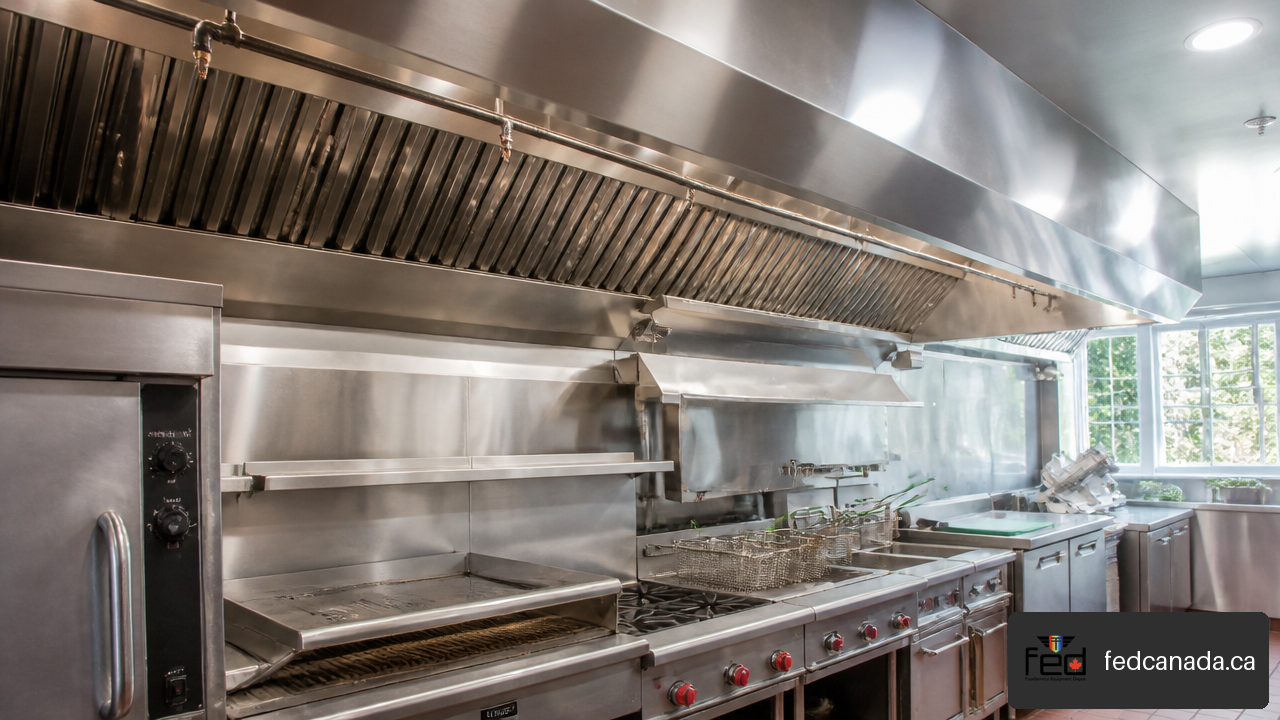
Table of Contents
- Key Takeaways
- How Restaurant Exhaust and Fire Suppression Work Together
- Set the Right Cleaning and Inspection Schedule
- What a Complete Hood Cleaning Service Should Cover
- Coordinate Cleaning Around Fire Protection Equipment
- Restaurant Fire Suppression and Hood Cleaning FAQ
Key Takeaways
Treat cleaning and suppression service as separate jobs
The exhaust system manages grease laden vapours during normal cooking. The suppression system is a fixed fire protection system intended to activate when a cooking fire reaches a dangerous point. Both matter, but they require different scopes, training, service intervals, and records.
A useful rule is simple: cleaning removes combustible deposits; fire suppression maintenance verifies that the emergency system can operate. Neither substitutes for the other.
Build records that stand up to inspection
I suggest keeping a dedicated fire safety file, whether it is digital or paper based. It should include:
Hood cleaning reports and invoices
Before and after photographs of hard to see areas
Fire suppression inspection tags and service reports
Deficiency notices, repair records, and return to service confirmation
Contractor licensing or credential information where required
Staff training records for manual pull stations and portable extinguishers
A signed invoice alone is weak evidence. A useful service record identifies the equipment cleaned or inspected, the date, the areas accessed, deficiencies found, corrective work completed, and the person or company responsible.
How Restaurant Exhaust and Fire Suppression Work Together
The exhaust path is longer than the visible hood
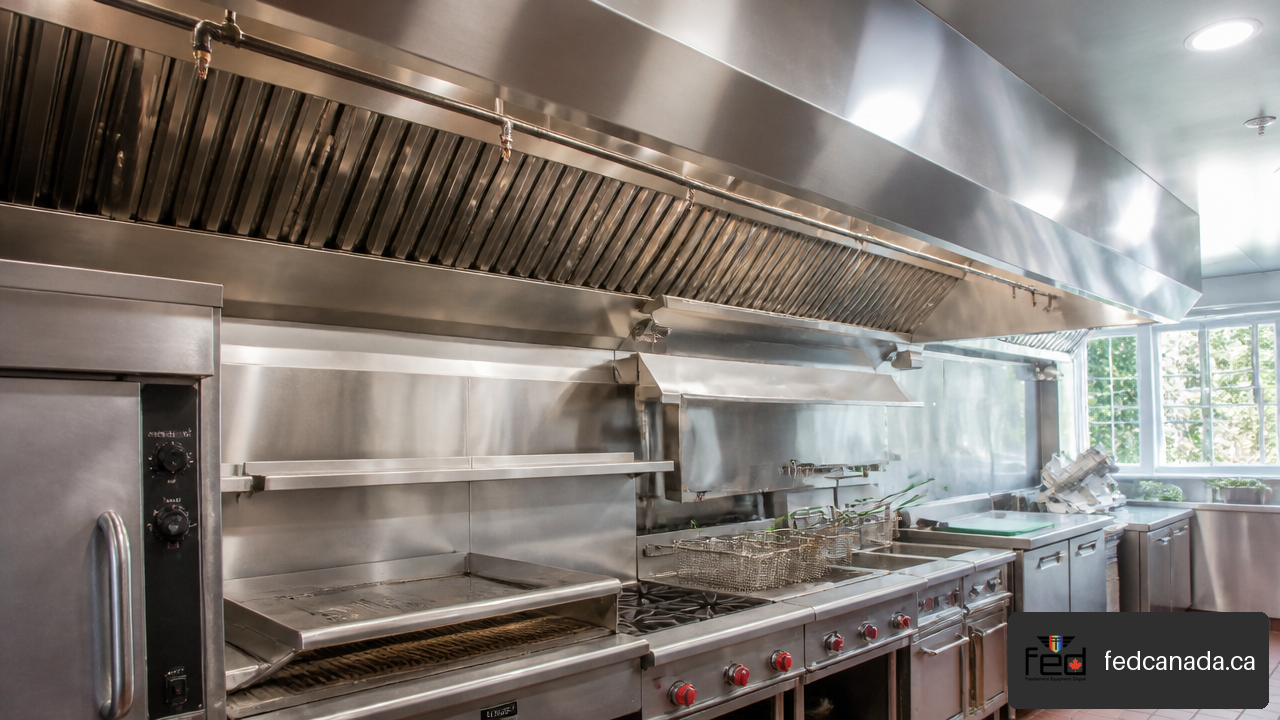
The hood over a range or fryer is only the front end of the exhaust system. Grease can travel beyond the filters and settle wherever airflow slows, changes direction, or cools. That means a kitchen can look clean at eye level while deposits remain above the hood line or farther up the duct.
The typical path includes:
Cooking equipment and surrounding splash areas
Grease filters
Hood canopy and interior surfaces
Plenum, the collection area behind the filters
Exhaust ducts
Exhaust fan blades and fan housing
Roof discharge area
A complete cleaning scope should follow grease through this entire path. The Utah State Fire Marshal commercial kitchen guidance identifies the hood, plenum, ducts, fans, fan housing, roof discharge areas, and other contaminated portions as potential cleaning areas. This is why “we cleaned the hood” is not enough detail for an operator reviewing a service report.
What the fixed suppression system does
Modern commercial cooking fire suppression systems commonly use wet chemical agent discharged through fixed nozzles aimed at appliances such as fryers, griddles, ranges, and woks. Detection components respond to excessive heat, and the system can also be manually activated through a pull station.
When the system activates, it may release agent over the cooking hazard and trigger fuel or power shutoff functions tied to the protected appliances. The agent is designed for commercial cooking hazards, but it is not a substitute for everyday grease control. A fire can travel into grease deposits within a duct, beyond the zone where suppression nozzles discharge.
The National Fire Protection Association explains that cooking equipment producing grease vapours requires ventilation and fire protection, and that suppression systems require maintenance at least every six months while hood inspection frequency varies with cooking type and volume. See the NFPA restaurant fire protection basics for that distinction.
Why a clean looking kitchen can still have a fire hazard
Grease buildup is not always obvious. Filters can be washed regularly while the plenum, duct elbows, fan, and roof discharge area continue collecting deposits. The risk rises when an operation changes its menu or hours without changing its cleaning schedule.
Consider a café that adds evening service and begins using a fryer every day. Its original cleaning interval may have suited light daytime baking and sandwich prep. Once frying becomes routine, airflow carries more grease into the exhaust path. The schedule should be reassessed rather than left on autopilot.
Set the Right Cleaning and Inspection Schedule
Use cooking activity, not calendar habit, to set hood cleaning frequency
There is no single interval that fits every restaurant. Cooking volume, appliance type, hours of operation, menu changes, and local requirements all affect the proper schedule. In general, greasy, high heat, and high volume cooking produces deposits faster than low volume warming or seasonal use.
| Operation type | Typical cleaning frequency guide | Why the interval changes |
|---|---|---|
| Solid fuel cooking | Monthly | Wood, charcoal, and similar fuel create heavy grease and particulate accumulation. |
| Charbroiling, wok cooking, or high volume cooking | Quarterly | High heat and sustained grease production load the exhaust system quickly. |
| Moderate volume commercial cooking | Semiannually | Grease production is substantial but generally less intensive than high volume operations. |
| Seasonal or low volume operations | Annually in some cases | Limited operating hours may reduce deposit accumulation, subject to local approval. |
These ranges reflect the frequency examples in the Utah State Fire Marshal guidance, but local fire authorities can set different requirements. Use them as a decision framework, not as permission to delay cleaning when grease is visible or found during inspection.
Keep suppression inspection on its own timetable
A hood cleaning schedule should not automatically determine the suppression service date. Fixed fire suppression equipment commonly needs at least six month maintenance, including checks of actuation and control components. That work is about the system’s ability to detect, discharge, shut down appliances where applicable, and remain ready for an emergency.
| Maintenance activity | Main purpose | Who should perform it | Trigger for earlier action |
|---|---|---|---|
| Hood and exhaust cleaning | Remove grease deposits from contaminated exhaust surfaces | Qualified hood cleaning provider, subject to local rules | Grease found during inspection, menu expansion, high volume periods |
| Suppression system inspection | Verify readiness of nozzles, detection, actuation, agent system, and controls | Qualified fire protection technician | Damage, discharge, modification, failed inspection, appliance changes |
| Filter cleaning | Keep airflow moving and reduce grease accumulation near the hood | Trained staff or service provider | Visible buildup, reduced airflow, heavy cooking shifts |
| Portable extinguisher checks | Confirm accessible extinguishers remain in serviceable condition | Staff visual checks plus qualified inspection as required | Missing seal, damage, low pressure indication, use or discharge |
Do not assume semiannual hood cleaning is automatically correct because semiannual suppression service is common. Those intervals may happen to align for some restaurants, but they measure different risks.
Reassess after operational changes
I recommend reviewing cleaning frequency whenever you make a meaningful kitchen change. Examples include:
Adding a fryer, charbroiler, wok range, or solid fuel appliance
Extending hours into late night service
Increasing catering or delivery production
Replacing cooking equipment with higher output units
Reopening after a seasonal shutdown
Receiving an inspection deficiency or finding grease deposits before the scheduled cleaning
The practical question is not, “When is the next appointment?” It is, “Has the amount or type of grease entering the system changed?”
What a Complete Hood Cleaning Service Should Cover
Define the scope before the contractor arrives
A strong cleaning agreement identifies the full exhaust route, access panels, fan location, roof access needs, appliances under the hood, and any areas excluded from service. It should also establish who is responsible for moving equipment, protecting nearby surfaces, restoring appliance positions, and removing wastewater and grease residue.
The intended result is often described as bare metal clean. This does not mean every surface must look cosmetically new. It means grease deposits are removed from relevant contaminated exhaust surfaces so they are not left as combustible fuel. Paint, corrosion, inaccessible building components, and manufacturer restrictions can affect what is possible, so any limitation should be documented rather than ignored.
Verify each component, from cookline to discharge
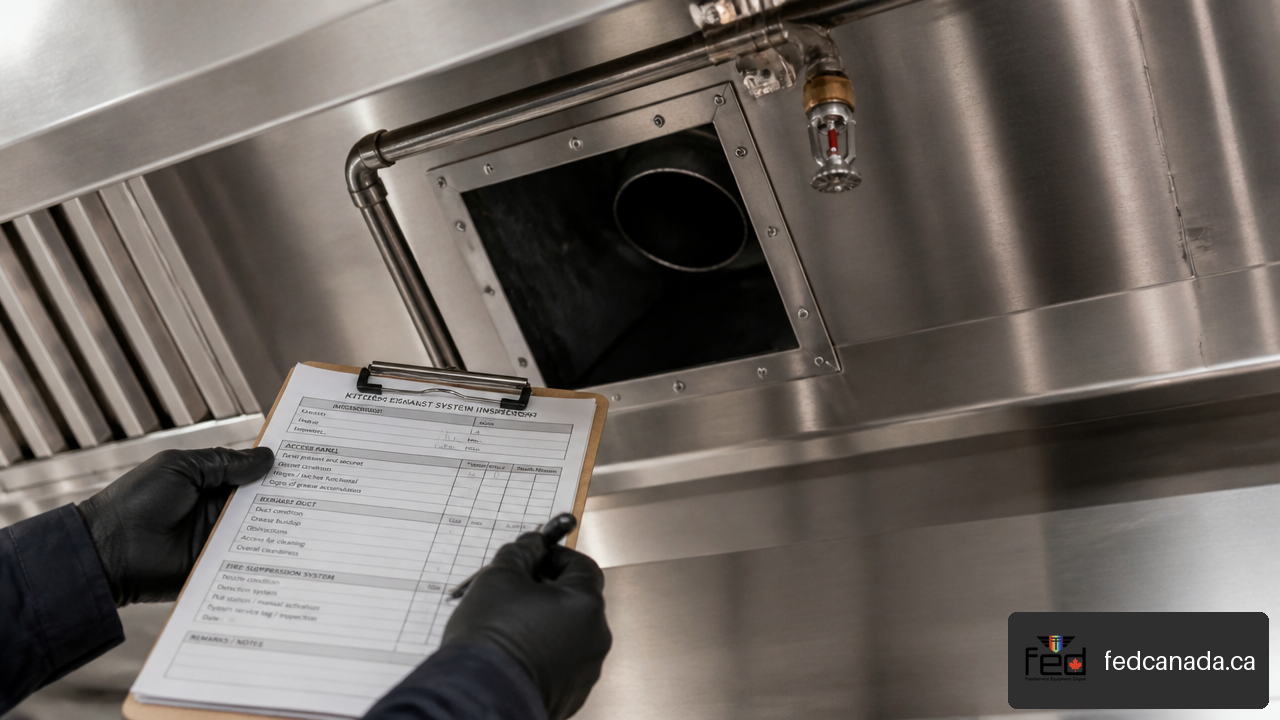
Use this acceptance checklist after cleaning:
Filters: Confirm they are cleaned, reinstalled correctly, and seated without gaps.
Hood interior and plenum: Look beyond the visible front edge. The interior collection space should not retain grease film or pooled residue.
Duct access points: Verify that access panels were opened where needed and securely closed afterward.
Exhaust fan and housing: Confirm grease was removed from blades, housing, hinges, and surrounding accessible surfaces.
Roof discharge area: Check that the discharge zone and containment arrangements are not coated with grease residue.
Cooking line restoration: Ensure appliances, filters, lights, and removable components are returned to usable condition.
Suppression components: Confirm no nozzles, detection devices, fusible links, piping, or pull stations appear bent, covered, missing, or obstructed.
Ask for evidence, not only reassurance
Photographs are especially useful for ducts, roof fans, and plenum areas that a manager cannot easily inspect. Request before and after images that are clearly tied to your site and service date. Ask the contractor to identify inaccessible areas, damaged access doors, grease leaks, fan defects, or surfaces that could not be cleaned.
A service provider should also explain whether its work includes filters, fan cleaning, roof discharge cleanup, appliance movement, or only the hood and accessible duct sections. Price comparisons without scope comparisons can be misleading. A lower quote may omit roof work, fan cleaning, containment, or difficult access.
Verify credentials locally
Licensing and registration rules differ by province, municipality, and fire authority. Some jurisdictions regulate both companies and individuals performing commercial hood cleaning. The Massachusetts restaurant fire prevention requirements illustrate the broader principle: commercial cooking exhaust hoods should be inspected and cleaned by appropriately licensed or credentialed providers under applicable local rules.
Before booking, ask:
What credentials or approvals apply in this jurisdiction?
Does the quoted scope include the exhaust fan and roof discharge area?
How will the contractor protect fire suppression components?
What documentation will be provided after service?
Who handles a discovered deficiency, and is that work included or separate?
Coordinate Cleaning Around Fire Protection Equipment
Do not improvise around an armed suppression system
Hood cleaning can occur close to nozzles, fusible links, detection lines, and actuation equipment. Grease removal methods may involve water, pressure, scraping, and physical access in confined areas. Careless contact can damage components or, in some circumstances, contribute to an accidental discharge.
The right procedure depends on the system manufacturer, local rules, alarm monitoring arrangements, and the specific work planned. There is no universal do it yourself shutdown sequence that is safe for every restaurant. The operator should coordinate the work in advance with the hood cleaner, the qualified fire protection provider, and any alarm monitoring contact that must be notified.
Use a pre work coordination protocol
Before cleaning begins, I recommend confirming these points in writing or by documented work order:
Identify the exact suppression system, protected appliances, pull station, detection components, and any connected fuel or electrical shutoffs.
Confirm who is authorized to place the system into the required service condition, if any change is necessary.
Confirm whether alarm monitoring needs to be placed on test or otherwise managed by an authorized party.
Specify that suppression nozzles, fusible links, detection devices, and piping must be protected from cleaning agents and physical damage.
Confirm who will inspect, restore, and document the system’s status before cooking resumes.
Keep the manual pull station accessible throughout the work unless qualified personnel direct otherwise.
This process may feel formal for a routine cleaning appointment, but it prevents a common failure: one contractor assumes another has handled the fire protection side of the work.
Know what to do after an accidental discharge or damage
If a suppression system discharges, stop cooking in the affected area and follow your emergency procedures. Do not simply clean up the agent, reset equipment, and reopen. The system may need agent recharge, replacement parts, functional testing, and return to service documentation from a qualified fire protection technician.
The same caution applies if a nozzle is knocked loose, a detection component is coated with cleaning residue, piping is damaged, or protected appliances are moved or replaced. A modified system may no longer match the hazards it was designed to protect.
Fair warning: downtime after a discharge can be longer than the cleanup itself. For example, a fryer line may look ready after surfaces are washed, but cooking should not resume until the suppression system and any required appliance shutoffs have been restored and verified.
Restaurant Fire Suppression and Hood Cleaning FAQ
What is the difference between hood cleaning and fire suppression inspection?
Hood cleaning removes grease from the hood, plenum, ducts, exhaust fan, and related exhaust surfaces. Fire suppression inspection checks the readiness and condition of the fixed extinguishing system, including its detection, actuation, nozzles, agent components, and related controls. Schedule and document both services separately, even when they occur near the same date.
How often should a commercial kitchen hood be cleaned?
It depends on cooking type, volume, operating hours, and local requirements. Solid fuel cooking may require monthly cleaning, while charbroiling, wok cooking, and high volume operations may require quarterly service. Moderate volume operations are often on a semiannual cycle, and some seasonal or low volume facilities may qualify for annual service. If an inspection finds grease deposits, cleaning should not wait for the calendar date.
Does a fryer, wok, or charbroiler require more frequent hood cleaning?
Often, yes. These appliances can produce more grease laden vapours or operate at higher heat for longer periods. A restaurant that adds one high output fryer may need a shorter interval even if the rest of the menu stays the same. Review the full cooking load, not just the number of appliances.
Can restaurant employees clean the hood themselves?
Staff can usually handle routine filter cleaning and visible surface cleanup when trained and when manufacturer instructions allow it. Deep cleaning of the contaminated exhaust path is different. Ducts, roof fans, access panels, containment, wastewater handling, and nearby suppression components create technical and regulatory issues. Use a qualified provider for the full exhaust cleaning required by your jurisdiction.
Can hood cleaners work while the suppression system is armed?
That depends on the system, the cleaning method, local requirements, and the responsibilities of qualified personnel. Do not assume it is safe or permitted without coordination. The operator should confirm the planned system status, alarm monitoring process, component protection measures, and restoration steps before work begins.
What should happen after a suppression system discharges accidentally?
Stop using the affected cooking equipment, clean the discharged agent as appropriate, and contact a qualified fire protection technician. The system may require repair, recharge, testing, and documented return to service before the cooking line can reopen. Also inspect why the discharge occurred, particularly if cleaning, equipment movement, or damaged components were involved.
Does a clean hood mean the fire suppression system is compliant?
No. A clean hood reduces combustible grease deposits in the exhaust system. It does not verify that detection components, nozzles, manual pull stations, agent supply, appliance shutoffs, or control equipment will operate correctly. Fire protection compliance requires its own inspection and maintenance process.
What should I check before reopening after cleaning or suppression service?
Confirm that filters are installed, duct access doors are closed, fans operate normally, appliances are positioned correctly, and all suppression components are intact and unobstructed. If the system was serviced, modified, discharged, or placed out of service, obtain confirmation that it has been restored by qualified personnel before cooking resumes.
Sources and References
Massachusetts Division of Fire Safety — Restaurant Fire Prevention: https://www.mass.gov/info-details/restaurant-fire-prevention
National Fire Protection Association — Restaurant Fire Protection Basics: https://www.nfpa.org/news-blogs-and-articles/blogs/2021/04/27/restaurant-fire-protection-basics
Utah State Fire Marshal — Restaurant & Commercial Kitchen Inspection & Cleaning: https://firemarshal.utah.gov/wp-content/uploads/Restaurant-and-Commercial-Kitchen-Guidelines.pdf
Recent Posts
Leave a Comment
Your email address will not be published. Required fields are marked *