




Food Truck Equipment Checklist for a Smart Mobile Kitchen
Food Truck Equipment Checklist for a Smart Mobile Kitchen
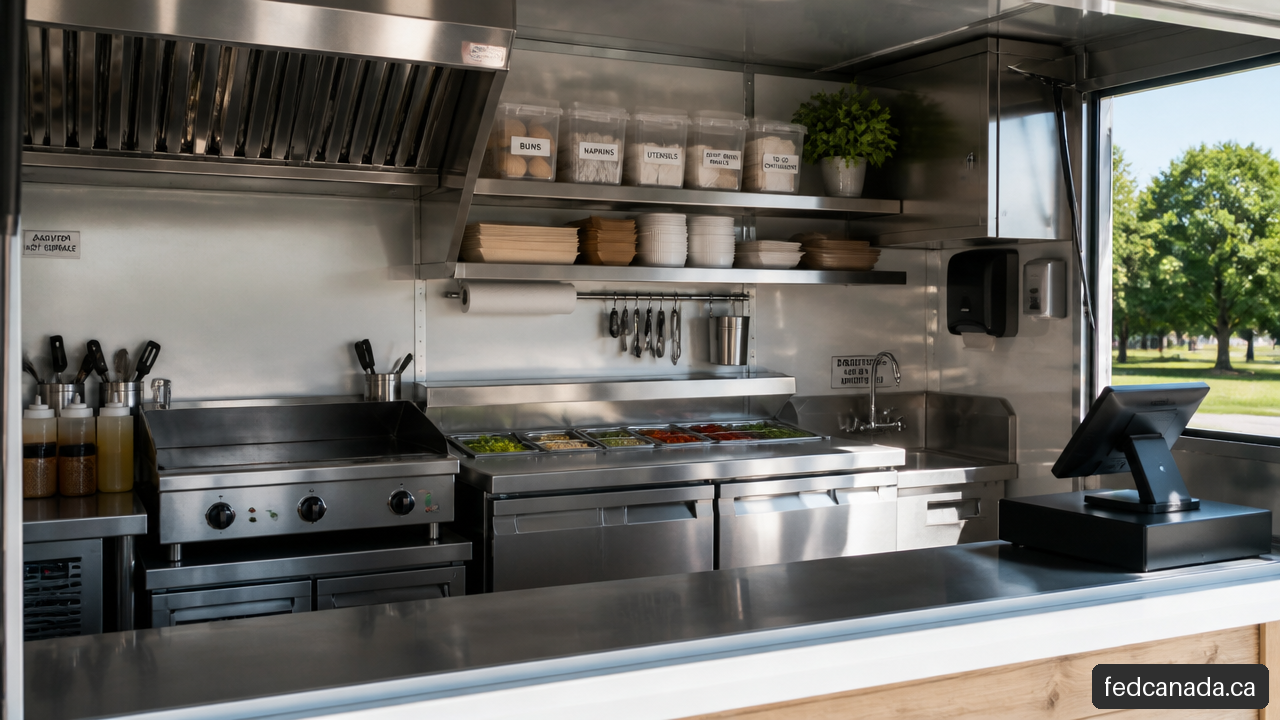
A practical food truck equipment checklist starts with more than a shopping list. I recommend building it around your menu, service volume, truck layout, power capacity, water system, and local approval process. A compact mobile kitchen has little room for equipment that does not earn its footprint.
Key Takeaways
- Start with the menu and expected peak orders, then select cooking appliances, refrigeration, prep space, and serving equipment.
- Treat sinks, fresh water, wastewater, ventilation, fire suppression, and electrical planning as build requirements rather than late additions.
- Separate permanently installed truck equipment from commissary equipment, backup stock, and off truck washing support.
- Avoid buying a fryer, oven, freezer, or large generator simply because it appears on a generic checklist. Each item should solve a real menu or operational need.
- Before inspection, test small but essential items: probe thermometers, sanitizer, labels, hand sink access, extinguisher access, tank function, and POS connectivity.
Table of Contents
- Plan the truck before purchasing equipment
- Choose cooking and cold storage around the menu
- Build water power and fire systems into the layout
- Finish the mobile kitchen with workflow and service equipment
- FAQ: Food truck equipment checklist
- Sources and References
Plan the Truck Before Purchasing Equipment
Build the checklist from your actual service model
The right equipment list depends on what you make, where ingredients are prepared, how long you operate between stops, and how many orders arrive during a rush. A coffee truck, taco truck, burger truck, and smoothie truck may occupy similar vehicle sizes while needing very different systems.
I recommend writing down four operating facts before comparing equipment:
- Menu steps: Identify every action required to receive, store, prep, cook, hold, assemble, package, and serve each item.
- Peak demand: Estimate how many orders must move through the truck during the busiest 15 to 30 minutes.
- Service environment: Confirm whether reliable shore power, potable water filling, wastewater disposal, and a commissary are available.
- Truck constraints: Measure usable floor space, wall space, door clearance, ceiling height, axle capacity, and ventilation path.
For example, a short menu built around grilled sandwiches may need a griddle, refrigerated prep table, hand sink, sandwich press, and dry storage. Adding a fryer “just in case” can consume counter space, propane capacity, hood coverage, electrical headroom, and cleaning time without improving the core menu.
The goal is not to fit every possible appliance into a truck. The goal is to create a repeatable production line that can safely deliver your menu at the speed customers expect.
Use the permitting order to prevent expensive rework
For California operators, equipment selection should begin with local health and fire review requirements, not with appliance deals. The California Department of Public Health provides the broader California food safety program context relevant to sanitation and inspection expectations, while local agencies commonly control the specific mobile food facility plan review process.
In practice, local plan packages often need to show the equipment layout, sink locations, water and wastewater tanks, cooking appliance placement, and workflow. Portable equipment can also matter if it changes sanitation, service flow, or where food is handled.
Use this sequence:
- Contact the local health department and fire authority serving your intended operating area.
- Obtain their current mobile food facility plan and inspection requirements.
- Draw the truck layout to scale, including equipment dimensions, doors, aisles, tanks, hood area, utility connections, and storage.
- Confirm appliance specifications before framing cabinets, installing gas lines, or ordering a hood.
- Submit plans when required, then purchase and install equipment that matches the approved layout.
This order matters because a late appliance swap can create several problems at once. A deeper fryer might no longer sit under the hood’s protected zone. A larger refrigerator can block access to the hand sink. A higher electrical load can force generator or panel changes.
Split onboard equipment from commissary support
A commissary kitchen can reduce the amount of storage and washing capacity needed on the truck, but it does not eliminate onboard sanitation or safe service requirements. Treat the commissary as a support facility, not a reason to leave necessary service equipment out of the build.
| Equipment group | Usually truck mounted | Often commissary supported | Decision point |
|---|---|---|---|
| Cooking line | Yes | Backup equipment only | Required when cooking occurs on truck |
| Handwashing | Yes | No substitute during service | Must remain accessible to employees |
| Cold holding | Usually yes | Bulk backup inventory | Depends on service inventory and replenishment |
| Warewashing | May be required onboard | Larger washing volume | Confirm local requirements and utensil use |
| Dry storage | Limited daily stock | Bulk paper goods and ingredients | Use route length and menu volume |
| Prep production | Limited finishing prep | Batch prep and portioning | Depends on approved commissary arrangement |
Keep fixed equipment, loose tools, and commissary inventory on separate lists. This makes purchasing clearer and helps reviewers understand what stays in the vehicle versus what is cleaned, stored, or replenished elsewhere.
Choose Cooking and Cold Storage Around the Menu
Select appliances by production step, not popularity
Cooking appliances should match the food’s actual heat method. A griddle supports burgers, breakfast items, tortillas, cheesesteaks, and seared proteins. A fryer is useful when fried items are central to sales volume. A range provides flexibility for pans, sauces, and sauté work. An oven or conveyor unit can make sense for baked, roasted, or finishing tasks.
A useful selection rule is simple: buy an appliance when it is necessary for the menu, throughput, or product consistency; omit it when another installed appliance can handle the task without slowing service or compromising quality.
| Menu situation | Strong equipment choice | Equipment to question |
|---|---|---|
| Burgers, breakfast, grilled sandwiches | Griddle with refrigerated prep | Fryer if fried sides are not sold |
| Tacos, rice bowls, sautéed proteins | Range or plancha, steam table | Large oven if cooking is completed at commissary |
| Fried chicken, fries, churros | Fryer with appropriate hood coverage | Extra griddle unless it supports a major item |
| Smoothies, coffee, cold drinks | Blenders, ice machine or ice storage, refrigeration | Heavy cookline equipment |
| Pizza or baked flatbreads | Oven designed for the product | Fryer if it adds little revenue |
Common food truck lists include cooking, prep, and supply categories, as summarized in this food truck equipment checklist overview. The practical decision is narrower: choose the smallest commercial setup that reliably completes your menu at peak volume.
Refrigerate for access and replenishment patterns
Refrigeration is not one category. A refrigerated prep table keeps frequently used ingredients near assembly. An undercounter refrigerator saves vertical space and can create a usable worktop. A reach in refrigerator carries more inventory but takes more room and may interrupt the service path.
For a small menu with daily commissary replenishment, a prep table plus compact undercounter cold storage may be enough. A beverage heavy truck may need more refrigeration than cooking capacity. A truck operating long routes with limited restocking may need a reach in unit or additional cold holding.
Use this cold storage checklist:
- Refrigerated prep table sized for active ingredients
- Refrigerated storage for raw proteins, dairy, sauces, and ready to eat foods as applicable
- Freezer only if frozen inventory, ice cream, batch storage, or product handling truly requires it
- Accurate appliance thermometers and a separate probe thermometer
- Food pans, lids, labels, date marking tools, and containers that fit the selected unit
- Space to open doors fully and remove pans without blocking the aisle
A freezer is often unnecessary for a short same day inventory cycle. It becomes valuable when the menu depends on frozen products, remote routes, or frozen desserts. The trade off is substantial: freezers add cost, weight, power demand, heat output, and precious storage volume.
Protect prep capacity and food safety
Prep space is often the first thing lost when a truck is over equipped. Leave enough work surface to receive food, portion ingredients, assemble orders, and stage packaging without placing raw and ready to eat items in conflict. Food truck essentials commonly include sinks and handwashing equipment alongside major appliances, as outlined in this guide to essential food truck equipment categories.
Small items deserve the same attention because they support daily safe operation:
- Color coded cutting boards where useful for the menu
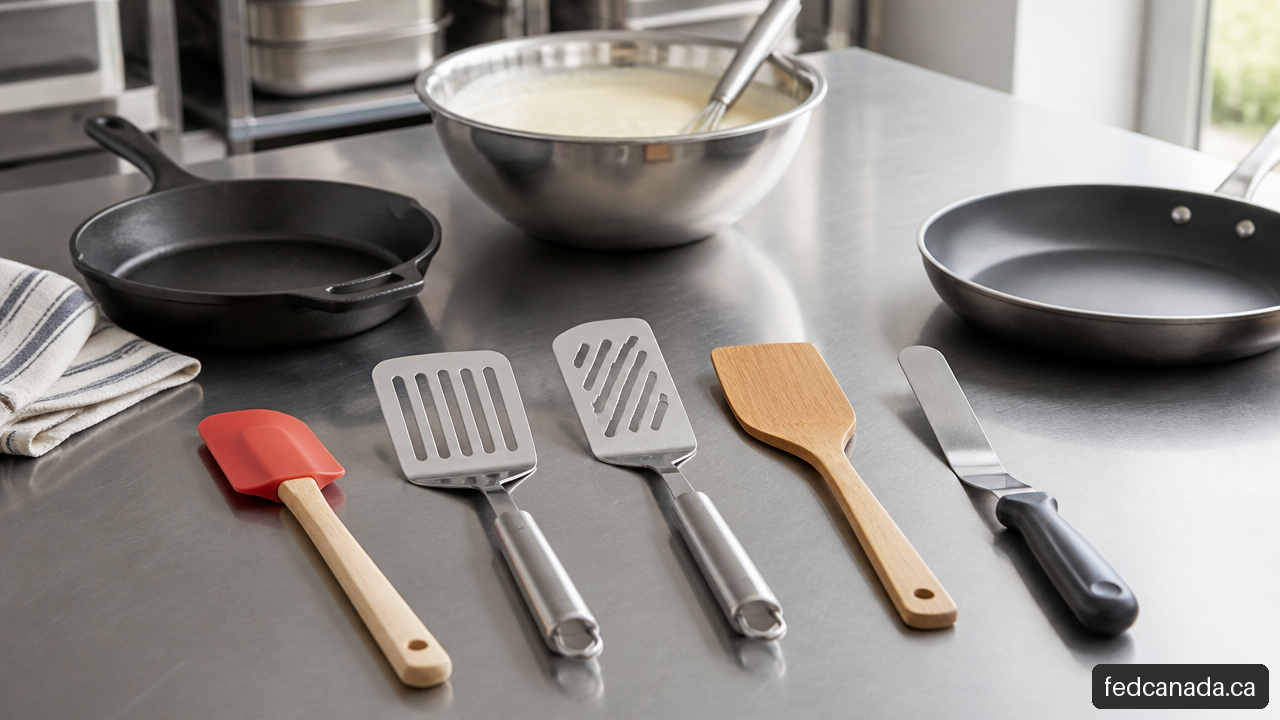
- Commercial knives, knife storage, tongs, spatulas, ladles, and portion tools
- Food grade containers with tight fitting lids
- Probe thermometers, sanitizer test supplies, labels, and markers
- Shelving or dunnage storage that keeps food and packaging organized
- Covered waste bins and a clear route for removing garbage
If a tool has no assigned storage location, it will likely migrate to a prep counter during a rush. That is a workflow problem before it becomes a sanitation problem.
Build Water, Power, and Fire Systems Into the Layout
Size fresh water and wastewater together
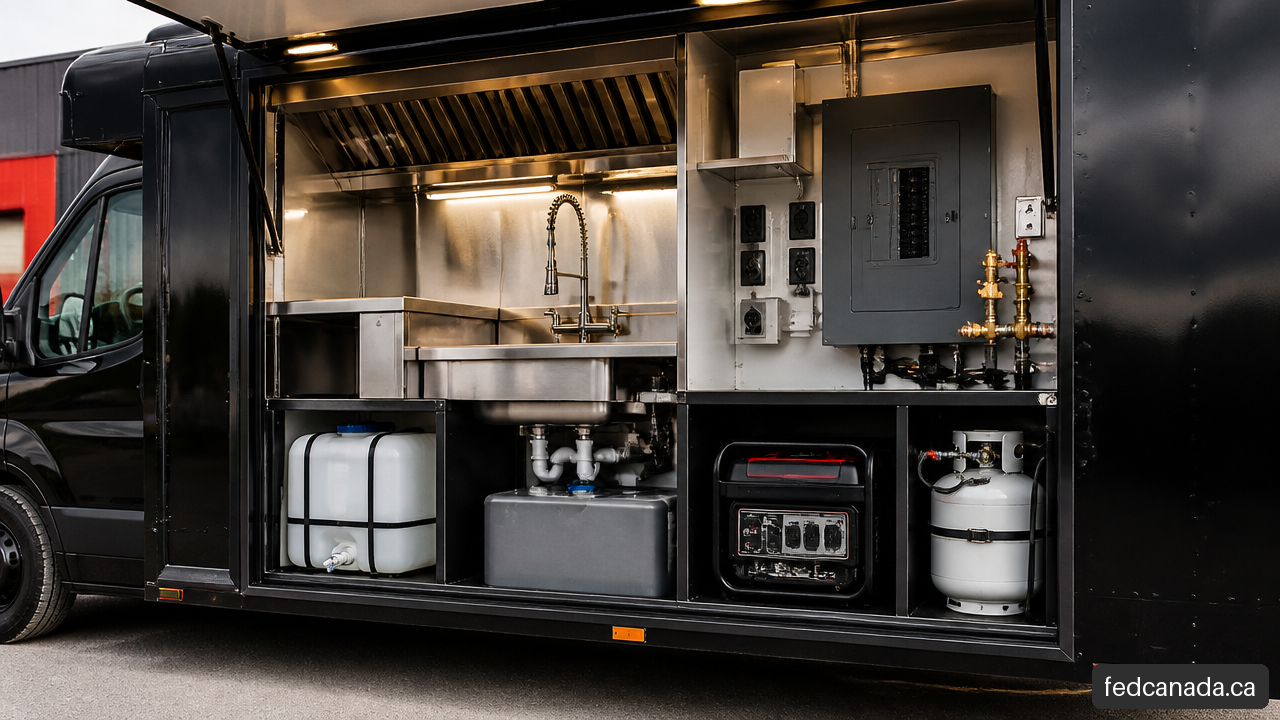
Your fresh water tank determines how long the truck can operate without refilling. Your wastewater tank determines how long you can operate without dumping. These systems must be planned together because every gallon used for handwashing, utensil washing, cleaning, and food preparation has to go somewhere afterward.
I recommend mapping water demand by service period rather than choosing tanks by guesswork. Consider handwashing frequency, menu prep, three compartment sink use, cleaning needs, ice handling, and the number of staff. Then add an operating margin for unexpected demand.
A practical planning checklist includes:
- Fresh potable water tank capacity.
- Wastewater tank capacity appropriate to expected water use and local rules.
- Pump, water heater, plumbing, drains, fill connection, and accessible shutoffs.
- Dedicated handwashing sink with soap, paper towels, and waste bin access.
- Three compartment sink or the locally approved warewashing arrangement for reusable utensils and equipment.
- A refill and disposal plan for every operating route.
A truck that can serve food for six hours but runs out of water after three hours has a route planning failure, not just a tank problem. Confirm local capacity requirements before installation because jurisdictions can differ.
Calculate power before choosing a generator
A generator is not selected by looking at the largest appliance alone. Start with a load calculation that lists every electrical device, its running wattage or amperage, startup demand where relevant, voltage, and expected simultaneous use.
| Load planning step | What to record | Why it matters |
|---|---|---|
| Fixed appliances | Refrigeration, cooking, water heater, hood | Baseline operating load |
| Intermittent appliances | Blenders, microwaves, coffee equipment | Peak demand can overlap |
| Support equipment | POS, lighting, chargers, fans | Small loads add up |
| Startup demand | Motors and compressors | May exceed running draw briefly |
| Future margin | Planned phase two equipment | Avoids immediate rewiring |
If reliable shore power is available at every service location, a generator may be less central. If shore power is uncertain, generator capacity becomes a core utility decision. Do not wait until the equipment is installed to test whether the truck can run the hood, refrigeration, water heater, POS system, and cooking equipment at the same time.
Match hood suppression to the cookline
Ventilation and fire protection must be designed around the appliances beneath them. A hood mounted suppression system is not a universal accessory that can be added after the cookline is finalized. Appliance type, location, grease production, heat output, and hood coverage all affect whether the system is suitable. This mobile kitchen equipment guide includes ventilation, suppression, refrigeration, sinks, and prep workflow among its key categories.
For your build, verify the exact layout with the applicable fire authority and installer. Include these fire and fuel checks:
- Hood and exhaust system sized and positioned for the cooking line
- Fire suppression components compatible with appliances under the hood
- Accessible required extinguishers, including a Class K extinguisher where grease producing cooking creates that need
- Propane cylinders, regulators, fittings, lines, and shutoffs compatible with the planned appliance load
- Clearances around hot equipment, exits, and fuel storage
- Staff procedures for emergency shutoff, extinguisher access, and generator safety
Fair warning: moving a fryer, griddle, or range after suppression installation can trigger rework. Confirm final appliance dimensions and placement before the system is commissioned.
Finish the Mobile Kitchen With Workflow and Service Equipment
Add equipment that keeps orders moving
Customers see the serving window, but operational bottlenecks often begin behind it. Your service equipment should reduce handoffs, prevent order errors, and keep payment, packaging, and finished food from colliding on the same surface.
A practical service setup includes:
- POS system, card reader, receipt option, backup charging method, and stable connectivity plan
- Order tickets or kitchen display process suited to order volume
- Packaging sized for the menu, including lids, napkins, utensils, carriers, and condiment containers
- Finished order shelf or pass through area separate from raw prep space
- Exterior menu display, lighting, and customer queue considerations
- Cash handling process if cash is accepted
Choose packaging and serving utensils together. A large bowl may protect a loaded meal but consume much more cabinet space than a compact clamshell. A drink carrier can speed handoff for multi beverage orders but requires a dry, accessible storage location.
Create a launch critical and phase two list
Phased purchasing can protect the startup budget without weakening food safety or inspection readiness. The dividing line is whether the item is necessary to legally and reliably serve the initial menu.
| Buy before launch | Consider after sales patterns stabilize |
|---|---|
| Required sinks, water system, sanitation supplies | Extra specialty appliances |
| Approved cooking line and fire protection | Larger backup refrigeration |
| Refrigeration needed for daily inventory | Secondary POS hardware |
| Core prep tools and food storage containers | Decorative upgrades |
| Generator or shore power connection needed to operate | Menu expansion equipment |
| POS, packaging, thermometers, labels | High volume serving accessories |
Do not phase essential compliance items. A hand sink, food temperature tools, required fire protection, or adequate cold holding cannot be treated as optional. Phase two is for equipment that improves convenience, capacity, or menu breadth after the base operation is proven.
Run a pre inspection walk through
The last check should be operational, not cosmetic. Turn everything on, fill the fresh water system, test drainage, operate refrigeration, run the hood, and simulate a normal service period.
Check the following before inspection or opening day:
- Hand sink is reachable and stocked with soap and paper towels
- Hot and cold water systems work as intended
- Wastewater drains correctly with no leaks
- Refrigerators hold safe temperatures and thermometers are readable
- Sanitizer, test supplies, labels, and probe thermometers are present
- Hood coverage, suppression equipment, extinguishers, and shutoffs are accessible
- Electrical circuits do not trip when normal equipment runs together
- Loose tools, dry goods, chemicals, and packaging have secure storage
The overlooked items are often the ones that slow an inspection or disrupt the first service. A small checklist taped inside a cabinet door can be more useful than a large equipment purchase made too late.
FAQ: Food Truck Equipment Checklist
What equipment do I need for a food truck?
You need equipment for cooking or assembly, cold storage, prep, handwashing, warewashing where required, potable water, wastewater storage, ventilation and fire protection where applicable, power, food storage, service, and payment. The exact list should follow your menu and local requirements rather than a generic template.
Which sinks are required on a food truck?
A dedicated handwashing sink is a core sanitation requirement for food employees. A three compartment sink is commonly included for wash, rinse, and sanitize steps when reusable utensils and equipment are washed onboard. Local health authorities determine the final configuration, so confirm it before the build begins.
Do I need a hood and fire suppression system?
You may need them when your cooking equipment produces grease laden vapors, substantial heat, open flame, or other conditions covered by local fire requirements. Fryers, griddles, and ranges often affect this decision. Confirm hood coverage and suppression compatibility with the final appliance layout.
How big should fresh water and wastewater tanks be?
Tank size depends on your expected service duration, staff count, menu, sink use, cleaning requirements, and local rules. Plan both tanks together, then test whether the truck can complete a full route without refilling or dumping. Do not select capacity based only on available cabinet space.
What size generator do I need?
Choose generator capacity after calculating the load of all equipment that may run at the same time, including refrigeration, hood, water heater, cooking equipment, lighting, POS devices, and startup demand. Build in margin for future equipment and avoid assuming that listed appliance wattages will never overlap.
What can stay at the commissary instead of the truck?
Bulk ingredients, backup packaging, large batch prep tools, backup equipment, and some washing or storage tasks may stay at an approved commissary, depending on your operating arrangement and local rules. The truck still needs the equipment required to safely prepare, hold, serve, and sanitize during service.
What should I buy first if my budget is limited?
Buy launch critical items first: approved cooking equipment, cold holding, sanitation equipment, water and wastewater systems, required ventilation and fire protection, power equipment, core prep tools, temperature controls, and payment tools. Delay specialty appliances and capacity upgrades until sales data supports them.
Sources and References
Verified Sources
Recent Posts

Leave a Comment
Your email address will not be published. Required fields are marked *