




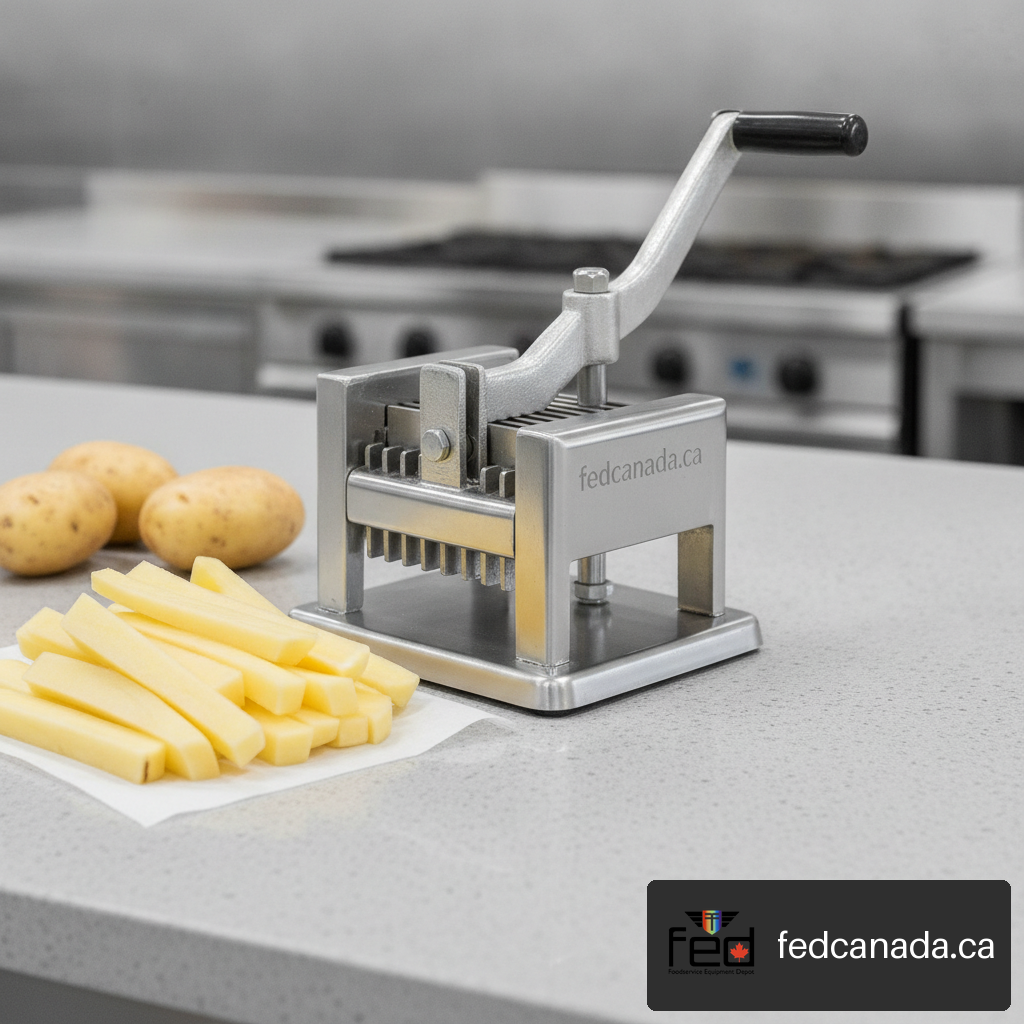
French Fry Cutters: Manual vs Commercial Equipment Comparison
Selecting the right french fry cutter can transform potato prep from a labor-intensive chore into an efficient, repeatable routine. Whether equipping a commercial kitchen processing hundreds of pounds of potatoes daily or seeking precise cut uniformity for home air frying, matching equipment mechanics to volume requirements is critical for operational success.
Table of Contents
- Key Takeaways
- Understanding French Fry Cutter Mechanics and Blade Grids
- Comparing Manual vs Commercial French Fry Cutters
- Critical Selection Criteria: Chamber Geometry and Surface Stability
- Maintenance, Safety, and Long-Term Operation
- Frequently Asked Questions
- Sources and References
Key Takeaways
Mechanical Leverage vs Power: Manual lever cutters rely on mechanical advantage and weight to press potatoes through grid plates, whereas electric commercial cutters deliver automated force for high-volume prep.
Sizing Precision: Standard blade grid sizes of 1/4-inch, 3/8-inch, and 1/2-inch dictate fry texture, cook times, and oil absorption during frying.
Chamber Dimensions Matter: Cutting chamber geometry determines maximum potato size; raw potatoes exceeding chamber length or diameter cause mechanical jams and incomplete cuts.
Mounting Requirements: Suction feet require smooth, non-porous surfaces, while heavy-duty commercial cutters benefit from fixed countertop or wall mounting to handle continuous force.
Density Limitations: Dense root vegetables like sweet potatoes and yams exceed the structural tolerances of standard manual cutters and require specialized heavy-duty or electric models.
Sanitation Protocols: Stainless steel blade assemblies and push blocks often support dishwasher cleaning, but cast-iron frames require dedicated hand washing and thorough drying.
Understanding French Fry Cutter Mechanics and Blade Grids
How a French Fry Cutter Works Under the Hood
A french fry cutter operates on a straight forward mechanical principle: displacing solid vegetable tissue by driving a potato through a stationary grid of sharpened stainless-steel blades. The assembly consists of three primary interactive elements:
- The Pusher Plate: A block engineered with raised grid patterns that mesh perfectly into the opposing blade matrix.
- The Cutting Chamber: The hollow bay where raw, trimmed potatoes rest prior to compression.
- The Blade Grid: Intersecting vertical and horizontal stainless-steel knives held under tension within a steel frame.
When force is applied—either manually through a mechanical lever arm or via an electric motor drive—the pusher plate advances. The raised teeth of the pusher plate pass completely between the individual knife blades. This complete stroke forces the potato entirely through the grid, creating uniform rectangular potato sticks while minimizing waste. The geometric precision of this process ensures uniform heat distribution during deep frying or oven roasting.
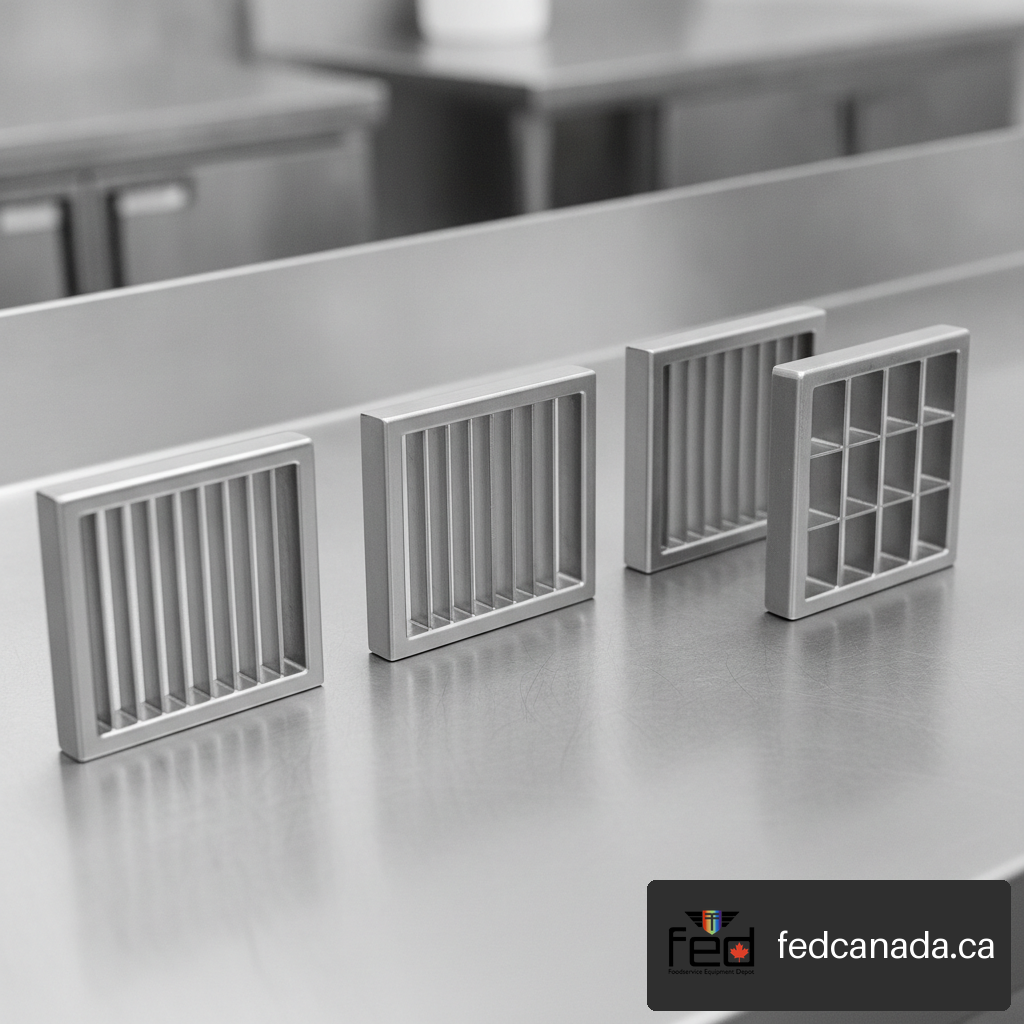
Blade Grid Options: 1/4-Inch, 3/8-Inch, and 1/2-Inch Cuts
The choice of blade grid thickness governs both culinary outcomes and mechanical resistance during prep. Standard commercial and domestic fry cutters utilize interchangeable grid sizes, each serving specific kitchen goals:
1/4-Inch Grids (Shoestring Cut): Yield thin, high-surface-area fries that cook rapidly and achieve maximum crispness. Because raw potato tissue is divided into numerous small columns, passing a raw potato through a 1/4-inch grid generates significant mechanical friction.
3/8-Inch Grids (Medium Cut): Represent the industry standard for traditional French fries. This thickness strikes a practical balance between interior fluffiness and exterior crunch, offering moderate resistance during manual cutting.
1/2-Inch Grids (Thick Cut / Steak Fry): Produce heavy, rustic potato sticks with soft interiors. Larger grid openings generate less shearing friction, making 1/2-inch plates the easiest to press manually.
Wedge Cutting and Specialty Blades
Beyond square-cut fry grids, many versatile cutters accept specialized blade attachments designed for alternative vegetable geometries. Wedge cutting plates replace the square lattice with radial blades radiating from a central point. Common configurations include:
8-Wedge Cutters: Divide whole potatoes, apples, or citrus fruits into eight uniform wedge portions in a single stroke.
6-Wedge Cutters: Ideal for thicker steak wedges or specialty appetizer preparations.
Core-and-Wedge Combinations: Simultaneously remove central fruit cores while slicing equal outer segments.
When deploying wedge plates, alignment between the customized pusher block and radial blades is vital. Using a standard square pusher block with a radial wedge grid will destroy the pusher teeth and damage blade edges.
Comparing Manual vs Commercial French Fry Cutters
Manual Lever Cutters: Mechanics, Throughput, and Use Cases
Manual french fry cutters are the workhorses of small restaurants, food trucks, and dedicated home kitchens. These units utilize a long handle connected to a pivot hinge or rack-and-pinion assembly, multiplying human input force. A operator can process approximately 10 to 15 pounds of potatoes per minute once a steady loading cadence is established.
According to a guide on the best French fry cutters, manual and electric cutters suit different preparation volumes, while most standard models perform best with raw potatoes measuring approximately 6 to 8 inches in length.
Manual units offer notable advantages: they operate without electrical outlets, feature compact footprints, and contain fewer electronic parts prone to failure. However, processing large batches relies entirely on operator physical strength, which can lead to fatigue during high-volume prep shifts.
Commercial Electric and Heavy-Duty Cast-Iron Cutters
Commercial electric french fry cutters replace human physical lever force with automated hydraulic or motor-driven pushers. Designed for high-volume foodservice operations—such as sports arenas, high-volume burger chains, and institutional cafeterias—electric cutters process hundreds of pounds of potatoes per hour with zero operator exertion.
Heavy-duty manual commercial models retain lever action but construct the frame out of heavy cast iron and high-grade stainless steel. Cast-iron frames absorb structural stress without flexing, allowing operators to exert maximal downward pressure without skewing blade alignment or damaging internal components.
Countertop vs Wall-Mounted Workflows
Physical installation impacts kitchen workflow and ergonomic efficiency. French fry cutters generally support two mounting configurations:
- Countertop Setup: Offers portability and straightforward cleanup. Countertop units rely on suction feet or rubber bumpers to remain stationary during operation.
- Wall-Mounted Setup: Secures the cutter frame directly to structural wall studs or dedicated equipment racks. Wall mounting allows gravity to assist the pulling stroke, reducing arm fatigue and dropping processed fries directly into underlying storage tubs.
Comprehensive Comparison: Manual vs Commercial Cutters
| Feature / Metric | Entry-Level Manual | Heavy-Duty Cast-Iron | Commercial Electric |
|---|---|---|---|
| Primary Frame Material | Engineered Plastic / Thin Aluminum | Heavy Cast Iron / Cast Aluminum | Stainless Steel / Heavy Alloy |
| Throughput Capacity | 5–10 lbs / minute | 15–20 lbs / minute | 40+ lbs / minute |
| Operator Fatigue | High during large batches | Moderate (assisted by weight) | Minimal (automated stroke) |
| Mounting Options | Suction feet / Countertop | Countertop or Wall-Mounted | Heavy Countertop Stationary |
| Power Requirements | None | None | Standard 120V / 240V Outlet |
| Dense Veggie Compatibility | Soft / Medium potatoes only | Firm potatoes / Limited sweet potato | High-density root vegetables |
| Relative Cost | Low | Moderate | High |
Critical Selection Criteria: Chamber Geometry and Surface Stability
Potato Geometry and Chamber Size Limitations
A frequent operational breakdown occurs when raw potato dimensions exceed the interior physical capacity of the cutter's cutting chamber. If a potato is wider than the frame opening or longer than the stroke distance of the pusher plate, mechanical failure occurs. The pusher cannot advance fully, trapping the partially cut potato against the blades.
To prevent operational jams, evaluate chamber specs prior to purchase. Standard commercial cutters accommodate a cutting area of roughly 3.375 inches by 3.375 inches, fitting large Russet potatoes cleanly. When processing oversized potatoes in smaller chambers, kitchen staff must pre-trim potato ends and sides, adding labor time to raw ingredient preparation.
Suction Base Physics and Countertop Mounting Constraints
Suction mounting systems provide temporary stability on smooth surfaces without drilling hardware holes. However, suction strength depends entirely on surface porosity and ambient environment:
Optimal Surfaces: Smooth stainless steel prep tables, polished granite, quartz, and sealed solid laminate.
Sub-Optimal Surfaces: Textured plastic laminates, unsealed wood block, tile surfaces with grout lines, and wet or dusty countertops.
When a suction base loses seal during a manual stroke, the entire cutter shifts forward. This sudden movement dissipates leverage, risks operator injury, and causes uneven cuts. For commercial environments, bolting the unit directly to a countertop or mounting it securely to a wall provides consistent stability.
Food Compatibility Edge Cases: Sweet Potatoes and Yams
Sweet potatoes and yams possess dense cellular structures and low moisture contents, creating significantly higher shearing resistance than standard white or Russet potatoes. Attempting to force raw sweet potatoes through a light-duty manual cutter can bend individual blade wires, snap pusher block teeth, or crack aluminum frame housings.
For instance, LEM Products' French fry cutter specifications state that while the unit includes interchangeable 3/8-inch and 1/2-inch stainless-steel plates, suction base attachment, and dishwasher-safe blades and push plates, the frame itself requires hand washing and the tool explicitly excludes hard yams and sweet potatoes.
When sweet potatoes are a menu staple, kitchens should invest in heavy-duty commercial cutters explicitly rated for dense root vegetables, or pre-soften sweet potatoes via brief blanching procedures before slicing.
Maintenance, Safety, and Long-Term Operation
Cleaning Dynamics: Disassembly, Dishwasher Limits, and Starch Removal
Potato starch accumulates rapidly inside blade assemblies, forming a sticky film that attracts food debris and harbors bacteria if unaddressed. Effective sanitation relies on proper material care:
- Disassemble Removable Grids: Release wing nuts or quick-disconnect pins to remove the blade grid and pusher plate from the chassis.
- Rinse Starch Promptly: Wash components immediately after prep cycles using hot water to prevent starch from hardening inside grid corners.
- Sanitize Components: Stainless steel grids and plastic push plates are commonly safe for commercial dishwashers. However, cast-iron or raw aluminum frames must be washed by hand with mild detergent and dried immediately to prevent oxidation and rust.
- Utilize Cleaning Combs: Plastic cleaning combs engineered to match pusher grid spacing safely remove trapped potato residue without risking hand contact with sharp blade edges.
Troubleshooting Blade Dullness vs Leverage Failure
When a french fry cutter begins requiring excessive force, operators should systematically diagnose the root cause rather than applying destructive pressure:
Diagnosing Blade Dullness: Inspect stainless-steel blade edges for microscopic rolls, nicks, or dulling. Dull blades crush raw potato tissue instead of shearing it cleanly, squeezing out water and yielding ragged fry surfaces.
Diagnosing Mechanical Misalignment: Check guide rods, arm pins, and pusher alignment. If guide rods become bent or unlubricated, mechanical friction increases along the stroke path, mimicking a dull blade.
Diagnosing Structural Flex: Examine frame cast lines for hairline cracks. Frame flex misaligns the pusher plate relative to the blade matrix, causing pusher teeth to strike steel blades directly.
Replacement Parts, Maintenance, and Total Cost of Ownership
Long-term value depends on the availability of individual replacement components. Commercial-grade equipment suppliers maintain inventories of standalone replacement parts, including:
Replacement Blade Assemblies: Single grid replacements avoid the cost of replacing entire cutter frames.
Pusher Block Sets: Easily replaceable when teeth wear down over time.
Guide Bushings and Springs: Wear items that can be swapped during routine kitchen maintenance.
Replacement Suction Feet: Ensure ongoing stability on portable surfaces.
Choosing a cutter backed by available spare parts lowers total cost of ownership, ensuring the tool remains operational for years of daily kitchen service.
Frequently Asked Questions
What is a French fry cutter and how does it work?
A French fry cutter is a manual or motorized kitchen device designed to push whole potatoes through a grid of sharp stainless-steel blades. The pusher block forces the vegetable through the grid matrix in a single stroke, instantly producing uniform square fries or wedge shapes.
Which French fry cutter makes the most even fries?
Commercial-grade cutters with rigid cast-iron or heavy stainless-steel frames deliver the most consistent cuts. These rigid frames prevent flex during execution, keeping the pusher plate aligned perfectly with the blade grid throughout the stroke.
Is a 1/4-inch, 3/8-inch, or 1/2-inch blade best?
The ideal size depends on your culinary goals. A 1/4-inch grid makes crispy shoestring fries; a 3/8-inch grid produces standard restaurant-style fries; and a 1/2-inch grid creates thick steak-cut fries with soft, fluffy interiors.
Can a French fry cutter cut whole potatoes?
Yes, provided the potato's diameter and length fit inside the cutter's cutting chamber. Potatoes exceeding chamber dimensions must be trimmed down prior to cutting to prevent mechanical jams.
Do potatoes need to be peeled or trimmed first?
Peeling is optional and depends on preferences for skin-on or classic fries. However, trimming flat ends on exceptionally long or misshapen potatoes helps position them securely against the pusher plate before applying force.
Why does my potato get stuck in the cutter?
Potatoes get stuck when raw dimensions exceed chamber capacity, blades become dull, or dense vegetable tissue creates more friction than the manual lever can overcome. Misaligned pusher teeth can also bind against blade plates.
Can a French fry cutter cut sweet potatoes or yams?
Only heavy-duty or commercial models specifically rated for dense root vegetables can process raw sweet potatoes. Light-duty manual cutters can suffer bent blades or cracked frames due to the high density of yams and sweet potatoes.
Are manual lever cutters better than electric cutters?
Manual lever cutters are cost-effective, portable, and reliable for small to medium prep volumes. Electric cutters excel in high-volume commercial kitchens where processing hundreds of pounds of potatoes daily without operator fatigue is essential.
Sources and References
Culinary Hill — The 6 Best French Fry Cutters of 2026: https://www.culinaryhill.com/best-french-fry-cutters/
LEM Products — French Fry Cutter: https://lemproducts.com/products/french-fry-cutter.html
Recent Posts

Leave a Comment
Your email address will not be published. Required fields are marked *