



Gas vs Electric Commercial Range Oven: Which Fits Your Kitchen?
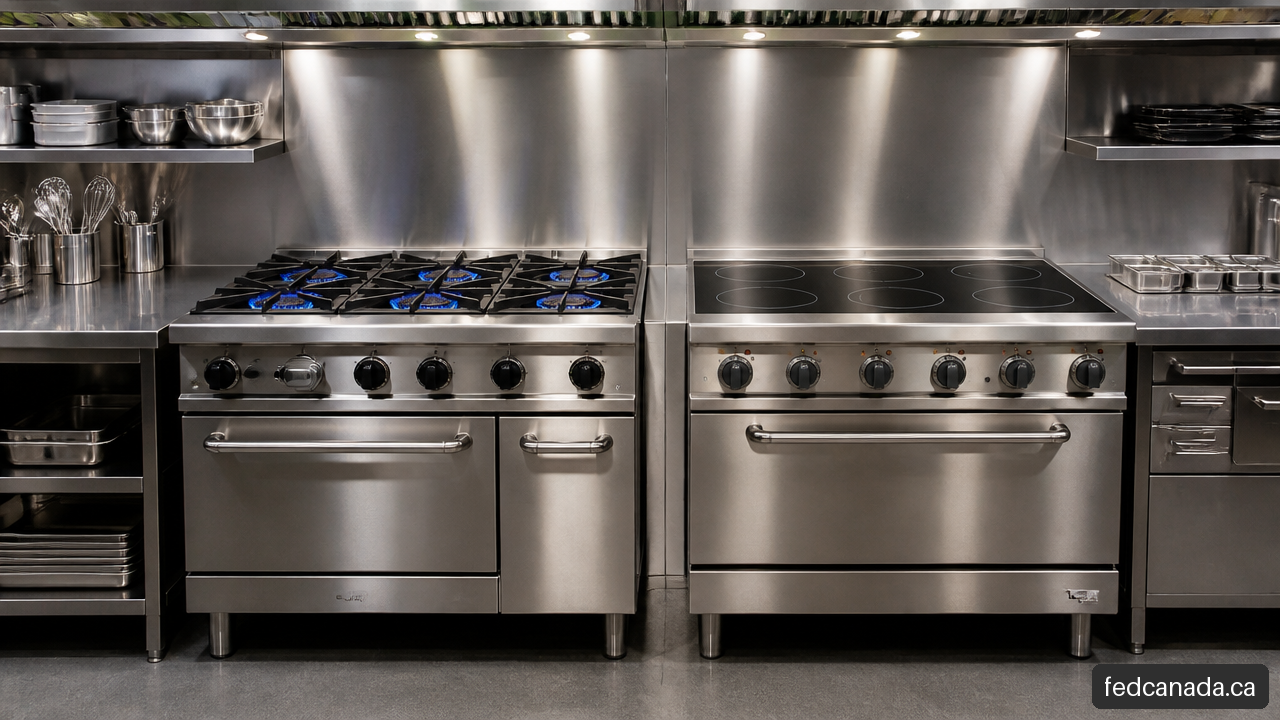
Choosing a gas vs electric commercial range oven is not simply a question of flame versus heating elements. The cooktop, oven cavity, utility infrastructure, ventilation system, menu, and utility bill all affect the right answer. I would treat this as a production and facility decision, not just an appliance purchase. A gas range may suit a line built around sautéing, searing, and quick heat adjustments. An electric range may better support repeatable baking, roasting, and kitchens pursuing electrification. The best choice depends on where consistency, capacity, speed, and installation cost matter most.
Table of Contents
Key Takeaways
- Choose gas when open-flame responsiveness, rapid burner adjustment, and high-heat stovetop work drive service.
- Choose electric when oven consistency, tray-to-tray uniformity, baking results, or avoiding a new gas connection matter more than live-flame cooking.
- Separate the cooktop decision from the oven decision. A gas burner’s response does not automatically mean a gas oven is the best baking chamber.
- Compare total installed cost, not appliance price alone. Gas piping, electrical panels, ventilation, makeup air, permits, and commissioning can outweigh the initial price difference.
- Do not assume gas costs less. Local commercial electricity and natural-gas prices, usage patterns, and demand charges can change the economics.
Sections
- Cooking Performance: Burners and Oven Cavities
- Installation and Utility Planning
- Operating Cost and Production Economics
- Safety, Ventilation, and Maintenance
- FAQ: Gas vs Electric Commercial Range Oven
Cooking Performance: Burners and Oven Cavities
Gas wins on visible, immediate cooktop response
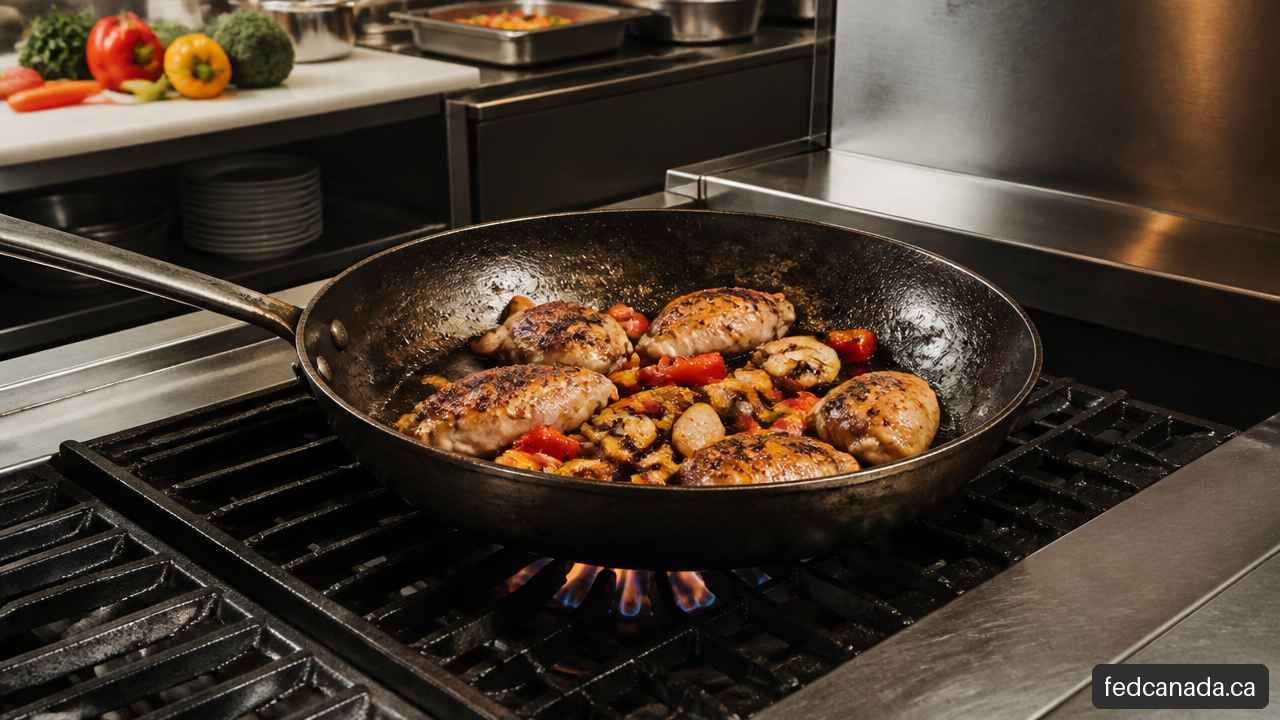
For the top of the range, gas has a practical advantage: cooks can see the flame and make an immediate adjustment. Turn the control down, and heat input to the pan drops quickly. That behavior is useful for sauté stations, pan sauces, stir-frying, and searing proteins where the cook is constantly changing intensity. Gas output is commonly stated in BTU, or British thermal units. A higher BTU rating can indicate more available heat, but it does not guarantee better results. Pan material, burner design, grate height, airflow, and the cook’s technique all affect how much of that heat reaches food.
A powerful burner helps only when the pan can receive and manage the heat. A thin pan over an aggressive burner can scorch sauce just as easily as it can sear steak.
Electric cooktops heat differently. Resistance elements convert electrical energy into heat at the appliance, but the cooking surface and cookware retain heat after the control changes. That can make fine adjustments feel less immediate than a gas flame. For steady simmering, griddling, and repeatable settings, however, that stored heat can be useful rather than limiting.
The oven cavity is a separate decision
The most common mistake in this comparison is treating cooktop response and oven performance as the same issue. They are not. A commercial range oven is two connected systems: the top cooking surface and the oven cavity beneath it.
Gas ovens are often described as heating quickly and producing somewhat more humid heat. The combustion process adds moisture to the oven environment, which can be useful for certain roasting and covered preparations. Yet the same humidity may make dry surface development less predictable for delicate pastries, crisp crusts, or products that need a particularly dry bake.
Electric ovens generally provide dry heat and may offer steadier temperature cycling. As heating elements cycle on and off, the cavity can maintain a more uniform environment, particularly during baking and roasting. KitchenAid describes the basic distinction between gas-line ovens and 240-volt electric ovens, including their different heat and moisture behavior, in its guide to gas and electric oven types.
Why even heat changes production results
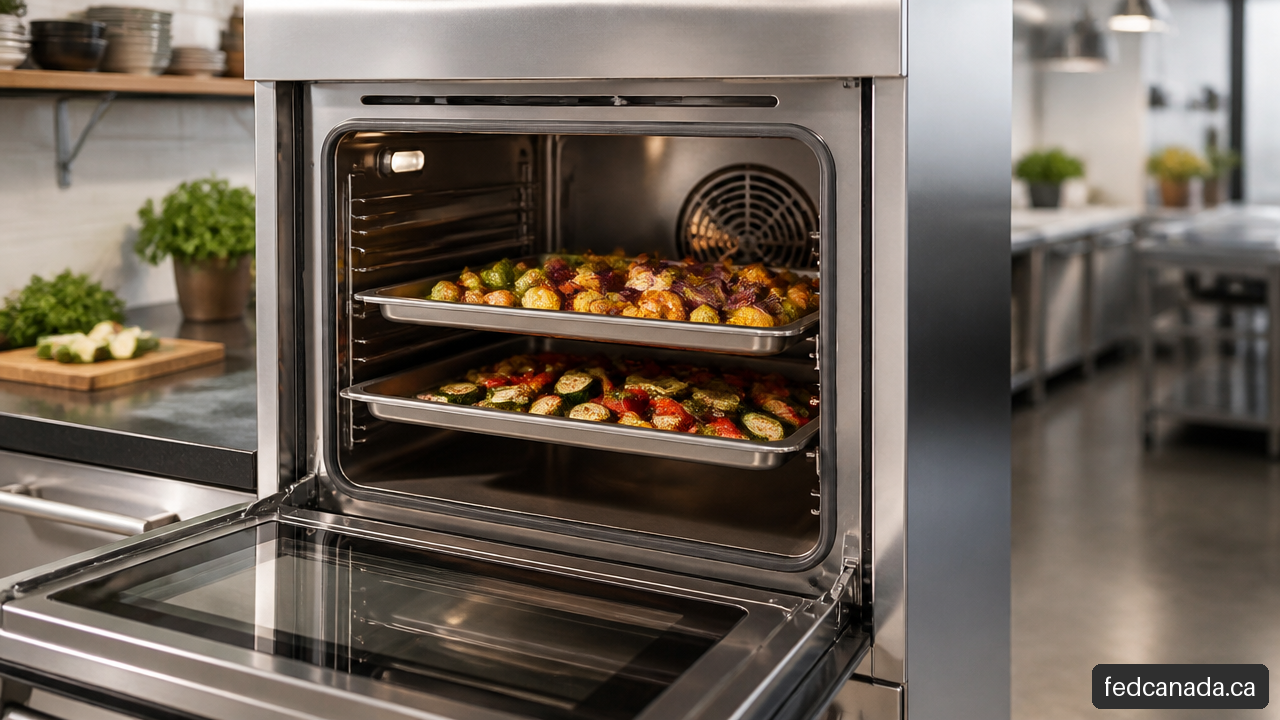
For a restaurant baking sheet pans of cookies, roasting vegetables, or finishing multiple trays of chicken, oven uniformity affects more than appearance. Uneven heat can require pan rotation, longer cook times, closer supervision, and more discarded product at the edges of a batch.
Consider a café producing muffins before opening. If one tray browns early while another remains pale, staff must rotate pans mid-bake or run smaller batches. That takes labor and oven capacity. A well-designed electric oven can reduce those adjustments when the menu relies on consistent dry heat.
This does not mean every electric commercial range oven bakes better than every gas model. Oven insulation, burner or element placement, thermostat accuracy, fan design, door seals, rack position, and load size all matter. Still, electric is often the safer default when repeatable baking performance is the primary requirement. JLA similarly frames commercial gas and electric ranges as alternatives with different preheat and baking-consistency tradeoffs in its overview of commercial range oven options.
Match the fuel to the work, not the label
| Kitchen priority | Gas commercial range oven | Electric commercial range oven |
|---|---|---|
| Sautéing and rapid flame changes | Strong fit because burner output changes quickly | Can work, but surface response may feel less immediate |
| High-heat searing | Often preferred for visible flame control | Depends heavily on element design and cookware |
| Baking and pastry production | Can work, but humidity and heat variation may need more management | Often a stronger fit for dry, steady baking heat |
| Roasting large batches | Effective, especially for humid roasting environments | Often useful where even browning and repeatability matter |
| Mixed menu | Good if stovetop work dominates | Good if oven production dominates |
A mixed menu creates the strongest case for considering a dual-fuel configuration, where available. Pairing gas burners with an electric oven can address the most common compromise: cooks get flame responsiveness on top while the operation gets a more stable baking chamber below.
Installation and Utility Planning
Start with the building, not the spec sheet
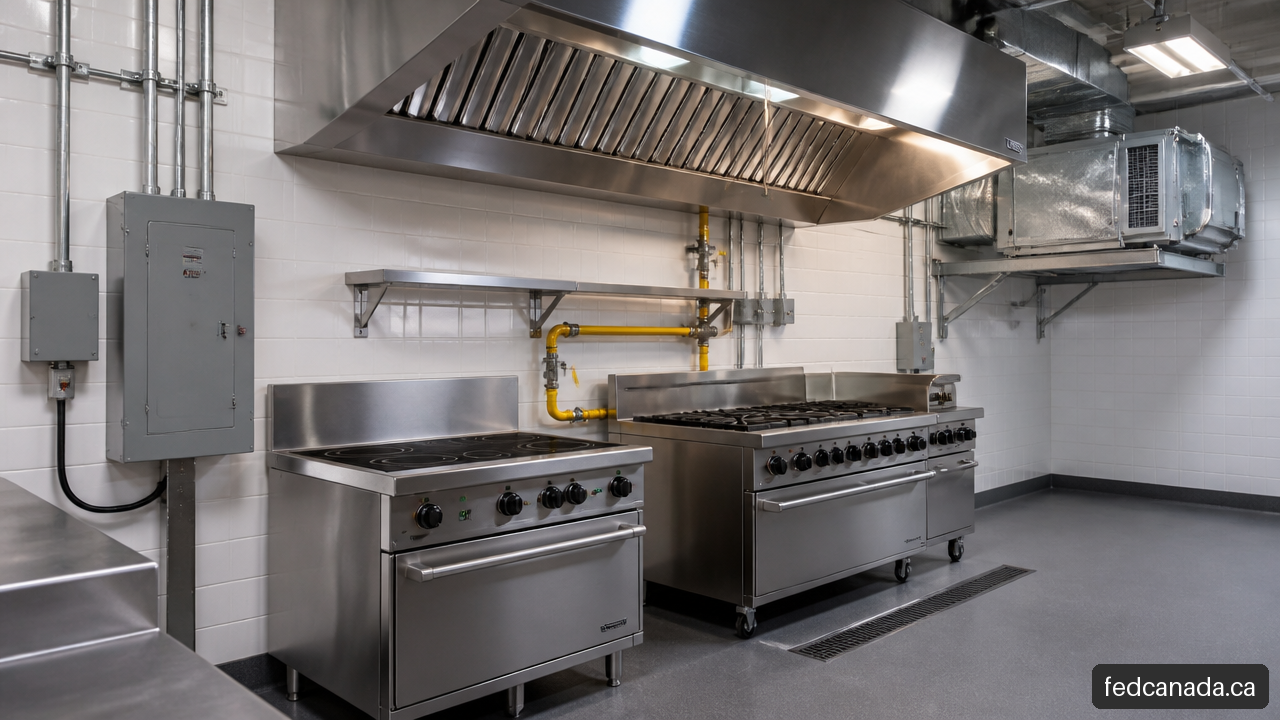
I would confirm site capacity before narrowing the equipment list. A range that looks affordable can become expensive if the building needs a new gas branch, upgraded electrical service, hood modifications, or makeup-air work.
A gas range requires a properly sized fuel connection, shutoff arrangement, and professional installation. Some commercial models can use natural gas or LP propane, but the appliance must be configured for the fuel supplied. Converting between fuels is not a casual adjustment; it should follow the manufacturer’s requirements and be completed by qualified personnel.
Electric equipment requires adequate voltage, amperage, and panel capacity. A 240-volt outlet is a familiar residential reference point, but commercial range ovens can represent a substantial electrical load. The real question is whether the electrical panel, feeder, and service have enough capacity after accounting for refrigeration, HVAC, dishwashing, lighting, water heating, and every other demand in the building.
Electrical upgrades can have long lead times
An electric range may be straightforward in a newer all-electric kitchen with spare panel capacity. In an older restaurant, it may trigger panel upgrades, new conduit runs, utility coordination, or design changes. Those items can take longer than the appliance delivery itself. A practical review should include:
- The range’s voltage, phase, and kilowatt rating.
- Available capacity at the electrical panel.
- Existing and planned peak loads from other equipment.
- The route and cost for conduit and disconnect installation.
- Whether a service upgrade requires utility involvement.
Fair warning: electric resistance equipment is efficient at converting electricity to heat at the appliance, but that does not mean the site is automatically ready for the electrical load. Infrastructure capacity remains the limiting factor.
Gas installation involves more than a pipe
Gas installation planning should include piping capacity, regulator requirements, shutoff access, appliance clearance, and combustion air and ventilation considerations. In California and other jurisdictions with active electrification policies, permit requirements and replacement rules can vary by city, building type, and project scope. I would verify requirements with the local authority having jurisdiction before ordering equipment, especially for remodels or fuel-switching projects.
Installation cost depends on what already exists
| Existing site condition | Usually favors gas | Usually favors electric |
|---|---|---|
| Adequate natural-gas line near the cook line | Yes, provided venting is suitable | Only if electrical capacity is also available |
| Spare electrical capacity near the cook line | Possible, but a gas line is still needed | Yes, often avoids new fuel piping |
| No gas service to the building | Usually costly or impractical | Often the simpler path |
| Constrained electrical panel or service | Often avoids major electrical upgrades | May require expensive electrical work |
| Major renovation with new mechanical systems | Depends on design and local requirements | Can align with an all-electric plan |
The lowest installed-cost choice is often the fuel the building already supports. That is why “gas is cheaper” and “electric is easier” are both incomplete statements.
Operating Cost and Production Economics
Compare delivered heat cost, not fuel price alone
Gas is often less expensive per unit of energy than electricity in some markets, but a restaurant should not make a fuel decision from a generic rule of thumb. Utility pricing varies by region, account type, tariff, season, and time of use. For California operators, I would begin with actual bills and current published data rather than assumptions. The U.S. Energy Information Administration provides commercial electricity and natural-gas price data that can help establish a local comparison point, but the final calculation should use the restaurant’s own tariff and usage profile.
Electricity may also include demand charges. These charges are based on the highest measured power demand during a billing period, not only total kilowatt-hours consumed. If an electric range contributes to a new monthly peak while ovens, HVAC, refrigeration, and dishwashing are operating, the cost impact can exceed what a simple energy-rate comparison suggests.
Use a realistic cost model
A useful operating-cost model compares the following items over a year:
- Appliance input rating in BTU per hour or kilowatts.
- Average daily operating hours and idle time.
- Estimated utilization during prep, service, and cleaning.
- Gas and electricity rates from the actual commercial account.
- Applicable electric demand charges.
- Preventive maintenance and expected repair exposure.
- Labor effects from pan rotation, recovery time, and production consistency.
Simply Switch notes that commercial kitchen operating-cost comparisons vary with local utility prices, even when gas is cheaper in some markets. Its discussion of local commercial kitchen energy costs supports the central point: no single fuel-cost answer applies everywhere.
Recovery matters when the oven is loaded
Temperature recovery is the oven’s ability to return to setpoint after a door opens or cold food is loaded. A menu with repeated batch cooking places greater demands on recovery than a menu that uses the oven occasionally. For example, loading six cold sheet pans of roasted vegetables pulls heat from the cavity walls and air. A range oven with weak recovery may extend cook times or produce uneven color between trays. The better choice is not automatically gas or electric; it is the model whose oven design, power input, insulation, and controls meet the production load. That is why I would request performance details from the manufacturer or dealer for the exact model under consideration, rather than assuming fuel type tells the whole story.
Safety, Ventilation, and Maintenance
Gas changes the ventilation conversation
Both gas and electric cooking equipment may require a commercial ventilation hood depending on the appliance, cooking process, and local code. Gas adds combustion products to the kitchen air, so hood performance and makeup air deserve particular attention. Makeup air replaces the air exhausted through the hood. If it is undersized or poorly balanced, doors can become hard to open, hoods can capture smoke poorly, and the kitchen may feel uncomfortably hot or drafty. This is a facility-design issue, not a minor accessory decision.
Gas also introduces flame, ignition, fuel-supply, and carbon-monoxide risks that require correct installation, ventilation, inspection, and staff procedures. Electric removes on-site combustion at the appliance, but it still presents high-voltage, hot-surface, and circuit-protection risks. Avanti Restaurant Solutions describes gas ovens as quicker and more humid, while characterizing electric ovens as more even for baking, in its comparison of gas and electric commercial kitchen equipment. Those cooking differences also affect ventilation and cleaning priorities in a working kitchen.
Expect different failure modes
Neither fuel type is maintenance-free. The service issues are simply different.
| Equipment type | Common maintenance attention areas | Operational symptom |
|---|---|---|
| Gas range oven | Igniters, pilots where fitted, burner ports, valves, regulators, door gaskets | Delayed ignition, weak flame, uneven burner pattern, temperature drift |
| Electric range oven | Heating elements, contactors, relays, wiring, thermostats, control boards | Slow heating, no heat, cycling problems, error codes, uneven element operation |
| Both types | Door seals, thermostats, racks, hinges, calibration, grease accumulation | Longer cook times, inconsistent products, energy waste |
A simple preventive routine reduces avoidable downtime:
- Clean burner ports, oven floors, surfaces, and grease-prone areas according to the manufacturer’s instructions.
- Check door gaskets and hinges so the oven holds heat instead of leaking it.
- Watch for changes in preheat time, ignition behavior, flame appearance, or bake color.
- Schedule qualified service before a small ignition or control problem becomes a service interruption.
Plan for outages and resilience
A gas range with electronic ignition, controls, or fans may still need electricity to operate safely. It should not be assumed to work normally during a power outage. An electric range will not cook during a utility outage unless the facility has appropriately designed backup power. Likewise, a gas interruption stops a gas range even if the building has electricity.
For operators where continuity matters, the right resilience plan may include backup generation, alternate menu procedures, portable equipment where allowed, or a limited no-cook service plan.
FAQ: Gas vs Electric Commercial Range Oven
Which is better for a commercial range oven, gas or electric?
Gas is usually better when the cooktop is central to the menu and cooks need rapid flame changes. Electric is often better when predictable oven heat, baking consistency, and dry roasting performance matter most. A mixed operation may benefit from dual-fuel equipment if the building infrastructure supports it.
Is gas hotter than electric in a commercial oven?
Not necessarily. Gas burners may provide strong and responsive heat, but oven performance depends on the model’s total input, airflow, insulation, controls, and recovery design. Compare the specific oven’s production capacity rather than assuming gas is always hotter.
Does electric baking really come out more evenly?
Often, but not automatically. Electric ovens tend to provide dry, steady cycling heat that can support more consistent baking. Rack placement, pan spacing, loading patterns, door opening, and the individual oven design still affect results.
Is gas better for searing and sautéing in a restaurant kitchen?
Gas is commonly preferred for these tasks because the flame is visible and adjusts quickly. It is particularly useful where cooks repeatedly move pans between high heat, medium heat, and low heat during service.
Which type costs less to operate in California?
There is no universal answer. Compare your commercial gas and electricity rates, daily operating schedule, equipment input rating, and any demand charges. A site with expensive electricity and limited demand exposure may reach one answer; a site with a demand-sensitive tariff and a major electrical upgrade may reach another.
Do gas commercial range ovens need special ventilation?
They may require ventilation arrangements that account for combustion products as well as cooking vapors, heat, and grease. Hood and makeup-air requirements depend on the appliance, menu, building, and local authority. Confirm the design before installation rather than after the range arrives.
Can I switch from gas to electric in an existing kitchen?
Yes, but first confirm electrical service capacity, panel space, voltage, phase, conduit routing, ventilation implications, permits, and utility lead times. In many conversions, the building work determines the schedule and budget more than the range itself.
Are electric commercial range ovens easier to clean or maintain?
Electric units avoid burner ports, pilots, and gas valves, which can simplify some tasks. However, heating elements, relays, wiring, and electronic controls still require maintenance. The better choice is the equipment your staff can clean correctly and your service provider can support promptly.
Recent Posts

Leave a Comment
Your email address will not be published. Required fields are marked *